Month: July 2009

  • Aliyev and Sarksyan Meet in Moscow

    Aliyev and Sarksyan Meet in Moscow

    Aliyev and Sarksyan Meet in Moscow

    Publication: Eurasia Daily Monitor Volume: 6 Issue: 139
    July 21, 2009
    By: Saban Kardas
    Azerbaijan’s President Ilham Aliyev met his Armenian counterpart Serzh Sarksyan in Moscow on July 17 in their latest round of reconciliation talks. Turkey has closely followed the talks between the two presidents, facilitated by the Russian President Dmitry Medvedev, hoping that the resolution of the Karabakh issue might also facilitate Turkish-Armenian rapprochement.

    The meeting was the sixth between Aliyev and Sarksyan since their first meeting in June 2008. As one of the co-chairs of the OSCE Minsk group, Russia accelerated its peacemaking efforts toward finding a solution to the dispute between Armenia and Azerbaijan. Medvedev hosted the two presidents in Moscow for a second time in November 2008, and since then the two leaders have met in Zurich, Prague and St. Petersburg (Trend News, July 17).

    The meeting came in the context of growing international interest. Other major actors had also expressed their support for this mechanism, hoping that it might facilitate a solution. The presidents of Russia, France and the United States issued a statement during the G8 summit in Italy the previous week, and urged all sides to step up their work toward the resolution of the remaining differences on Karabakh, on the basis of the principles outlined in the 2007 Madrid agreement (www.osce.org, July 10).

    Representatives from the other two co-chairs of the Minsk group and the OSCE representatives were also in Moscow. On July 17, the Azeri Foreign Minister Elmar Mammadyarov and his Armenian counterpart Edward Nalbandyan met with the Minsk group co-chairmen Yuri Merzlyakov (Russia), Bernard Fassier (France) and Matthew Bryza (United States), as well as the OSCE Chairman’s Special Envoy Andzey Kasprzyk. The Azeri and Armenian presidents also held bilateral talks, and later the ministers as well as the co-chairs joined them. The following day, the leaders held trilateral talks with the participation of Medvedev.

    No documents were signed at the meeting and no official statement was issued. Medvedev’s spokesperson told reporters that the parties had a chance to discuss in detail the remaining issues. He added that he is optimistic that “it will be possible to settle the Karabakh conflict in the foreseeable future.” According to Armenian diplomatic sources, the presidents instructed their foreign ministers to work in close cooperation with the Minsk group co-chairs to organize a high-level meeting on Karabakh in the fall. The co-chairs of the Minsk group reiterated their support for the ongoing talks. They added that they would continue their contacts in the region. The two presidents might meet again in September, they added (Trend News, ITAR-TASS, www.ntvmsnbc.com, July 18).

    On July 20, Mammadyarov said that some progress was achieved in Moscow. He added that the parties agreed on some principles of a possible solution, but that further work was required on the precise details. He maintained that both sides were working toward a schedule for withdrawal of the Armenian forces from the occupied Azeri territories. Once this is achieved, it will be possible to discuss other issues such as the repatriation of refugees, the rebuilding of the region and determining the status of Karabakh. However, he ruled out independence for Karabakh by saying “whatever its status, Karabakh will remain part of Azerbaijan” (www.ntvmsnbc.com, July 20).

    Swedish Foreign Minister Carl Bildt, the head of the E.U. troika delegation visiting the region, said in Yerevan that the E.U. supported the Minsk group’s activities and was ready to assist in the implementation of an agreement. However, in implicit defiance of Mammadyarov’s statements, Nalbandyan said that the “return of any territories to Azerbaijan was not discussed in Moscow.” He also added that Armenia did not officially endorse the Madrid principles (ANKA, July 20; Trend News, July 21).

    Despite the contradictory accounts from Yerevan and Baku, it appears that the removal of Armenian forces from the occupied Azeri territories has been on the agenda for some time. Prior to the meeting in Moscow, Aliyev had explained the details of the plan to a Russian TV station (www.cnnturk.com, July 8). According to the Turkish press, the two presidents in fact discussed the specifics of Armenian withdrawal from the occupied Azeri territories, even including the deployment of international forces. Whereas, the Armenian side insisted on Russian forces, the Azeris requested Turkish troops. Turkey reportedly expressed its readiness to send troops, if the parties agreed on such a solution (Zaman, July 19). However, no official Turkish diplomatic source has corroborated this proposal.

    Turkey has been supportive of the process led by the Minsk group and Russian initiatives. Ankara reportedly plans to contribute to the initiatives of the Minsk group through a new round of contacts with Baku and Yerevan. Nonetheless, currently the earliest direct talks between Yerevan and Ankara to discuss Turkish-Armenian normalization are scheduled in September at the U.N. General Assembly (Sabah, July 20).

    After intensive diplomatic traffic between Turkey and Armenia, which resulted in the announcement of a roadmap for normalization in April, Ankara had to slow down the process to satisfy concerns in Baku. During his visit to Baku in May, Turkish Prime Minister Recep Tayyip Erdogan underlined clearly that Ankara would not proceed with its Turkish-Armenian rapprochement before a solution over the Karabakh issue could be achieved. Although Ankara came under criticism for stalling its dialogue with Yerevan, diplomatic sources maintain that secret talks between the two countries are continuing (EDM, June 30).

    Commenting on these recent developments, Foreign Minister Ahmet Davutoglu denied that Turkish-Armenian normalization was stalled. He said that “[Turkish-Armenian and Azeri-Armenian] processes would affect each other positively.” Though declining to set a date on the opening of the Turkish-Armenian border, he expressed his hope that positive developments might take place before the end of the year (Hurriyet Daily News, July 20).

    Erdogan took a very clear position, saying that he will maintain his support for Azerbaijan over the Karabakh dispute. It would be difficult for him to step back from this, given the enormous costs of such a move to his popularity at home and in Baku. Therefore, before taking any steps to revitalize its relations with Yerevan, Ankara hopes that the recent initiatives could produce at least partial progress between Baku and Yerevan.
    https://jamestown.org/program/aliyev-and-sarksyan-meet-in-moscow/
  • Israel Seeks Backing for Iran Strike ‘Within the Year’

    Israel Seeks Backing for Iran Strike ‘Within the Year’

    Report:

    Israel is reportedly willing to make concessions in peace negotiations with the Palestinians in return for international backing for an attack on Iran’s nuclear facilities.

    The Times of London quoted an unnamed British official who said the deal could allow Israel to launch an attack on Iran “within the year.”

    The Times report said Israel “was prepared to offer concessions on the formation of a Palestinian state as well as on its settlements policy and ‘issues’ with Arab neighbors, in exchange for international backing for an Israel operation in Iran.”

    One European diplomat declared, “Israel has decided to place the Iranian threat over its settlements.”

    The British newspaper also stated that the recent passage of two Israeli navy ships through the Suez Canal was a message to Iran and should be seen as serious preparations for a strike on Iran.

    According to a report in the German weekly Stern, Germany’s foreign intelligence agency believes Iran is capable of producing and testing an atomic bomb within six months, much sooner than most analysts estimate.
    =============================================================

    Obama: ‘Absolutlely’ no US green light for attacking Iran


    The US has “absolutely not” given Israel a green light for a possible attack on Iran’s nuclear facilities, US President Barack Obama said Tuesday.

    Washington Times: Fearing rejection, Israel won’t seek US OK for possible attack against Iran

    Obama was qualifying comments Vice President Joe Biden had made Sunday that left the impression the US would not stand in the way of an Israeli action.

    “We have said directly to the Israelis that it is important to try and resolve this in an international setting in a way that does not create major conflict in the Middle East,” said Obama, currently in Russia, during a CNN interview.

    Obama said it was “very important that I’m as clear as I can be, and our administration is as consistent as we can [be] on this issue.”

    RELATED
    • Analysis: Is the PM shifting Obama’s attention to Iran?
    • Editorial: Biden’s signal

    The president said that Biden had simply been stating the “categorical fact” that “we can’t dictate to other countries what their security interests are. What is also true is that it is the policy of the United States to resolve the issue of Iran’s nuclear capabilities in a peaceful way through diplomatic channels,” he said.

    On Sunday, Biden was asked on ABC’s This Week whether the US would stand in the way militarily if Israel decided to take out Iran’s nuclear program.

    The US “cannot dictate to another sovereign nation what they can and cannot do,” he said.

    “Israel can determine for itself – it’s a sovereign nation – what’s in their interest and what they decide to do relative to Iran and anyone else,” he said.

    Israel had no formal comment on either the Obama or Biden remarks.

    Nevertheless, the IDF has taken into consideration the possibility that it will not receive US permission to fly over Iraq on the way to Iran, and has drawn up an operational plan for this contingency. While its preference is to coordinate with the US, defense officials have said in the past that Israel was preparing a wide range of options for such an operation.

    The Washington Times reported Tuesday that Prime Minister Binyamin Netanyahu and his top deputies had not formally asked for US aid or permission for a possible military strike on Iran’s nuclear facilities, since they feared the White House would not approve.

    The report quoted two unnamed Israeli officials.

    An anonymous senior Israeli official was quoted as saying that Netanyahu was determined that “it made no sense” to press the matter after the negative response former US president George W. Bush.

    Bush gave the prime minister’s predecessor, Ehud Olmert, a negative answer when he asked early last year for US assistance for possible military strikes on Iran.

    “There was a decision not to press this because it was probably inadequate for the engagement policy and what we know about Obama’s approach to Iran,” the official said.

    Yaakov Katz contributed to this report.

  • The Pope’s Secret War on Radical Islam, Full Details

    The Pope’s Secret War on Radical Islam, Full Details

    The Great Crusader

    Pope Benedict XVI’s historic visit to the United States comes at a critical time for the Roman Catholic Church and the West.

    His visit comes as the Church grapples with a growing secularist trend in the U.S. and Europe – and a rising global threat from militant Islam.

    Newsmax magazine’s special report “The Great Crusader” reveals the behind-the-scenes effort the Pope is making to revitalize the ancient Church for its present battle and the important role he sees the United States and her people playing.

    You can also check out our FREE offer – the Emergency Radio – a $30 value and something every home must have. Go Here Now.

    This exclusive Newsmax report explores:

    • Hidden agenda: why the U.S. is “crucial” to the Catholic Church
    • What Benedict sees as the “central problem of our faith today”
    • The real story: Benedict’s path to the papacy
    • Troubles in the U.S. Church – dwindling mass attendance
    • Benedict’s take on the sexual abuse crisis within the Church
    • America’s most famous Catholic dissenter – Mel Gibson
    • Is Benedict the last “European Pope”?
    • Benedict and the abortion issue in the U.S.
    • The Pope’s experiences with German Nazis
    • Benedict’s plans for China’s “underground” Catholics
    • No coincidence: this is an election year and Hispanic Catholics are key
    • The rise of Islam in Christian Europe: the Church’s plan
    • Why Benedict rues the Second Vatican Council
    • The birth of Catholicism’s “charismatics”
    • The decline of American priests and nuns
    • Benedict’s amazing popularity in Rome
    • Why the Pope “snubbed” the Dalai Lama
    • The “astonishing” growth of Catholicism in Africa
    • “Cafeteria Catholics” who ignore some Church teachings
    • American evangelicals and the Catholic Church
    • Why Benedict’s moves could lead to a “civil war” within Catholicism
    • And much, much more

    Find out how you can get this report FREE – PLUS get an Emergency Radio worth $30 with our FREE offer. Go Here Now.

    This edition of Newsmax magazine is not to be missed.

    In addition to hard-hitting investigative reports and special commentary from Ben Stein, Dick Morris, John Stossel, Bill O’Reilly, Christopher Ruddy, David Limbaugh, Dr. Laura Schlessinger, Ed Koch, James Hirsen and others, you get much more in Newsmax magazine, including:

    • Small nukes are on campus
    • World Bank corruption hurting the poor
    • Do-it-yourself medical tests
    • States challenge the Electoral College
    • Deadline looms for digital TV: Are you ready?
    • U.S. horses slaughtered in Mexico for food
    • Drug smugglers go underwater with submarines
    • Schwarzenegger to Pentagon: Return Humvees
    • U.S. meat: Send in the clones
    • When a predator lives next door
    • Schools teach kids about guns
    • Bill Buckley in 1965: how he discovered the Reagan Democrats
    • C-SPAN’s Brian Lamb talks to Newsmax
    • High-tech device eases water woes
    • Tour America’s favorite ballparks
    • Apple juice does a body good: heart and mind

    PLUS: Ron Kessler’s Washington

    Again, there is so much more in Newsmax magazine, which won a Silver Eddie Award in the News/Commentary category of Folio magazine’s prestigious journalism awards, the Eddies.

    Find out why more than half a million people read Newsmax magazine each month.

    Better: Be one! Get our “Great Crusader” report and an Emergency Radio with our FREE offer – Go Here Now.

  • First piloted aircraft just on fuel cells takes off

    First piloted aircraft just on fuel cells takes off

    Fuel Cells, July  21  2009 (The Hydrogen Journal)

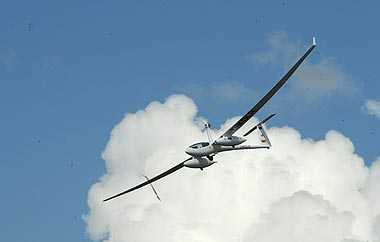
    In another first for Hamburg’s hydrogen fuel cell industry, the first piloted aircraft able to take off just using fuel cell power, has been demonstrated at Hamburg airport on July 7 2009.


    The aircraft, Antares DLR-H2, was developed by the German Aerospace Center (Deutsches Zentrum für Luft- und Raumfahrt; DLR).


    The propulsion system was developed by DLR Institute for Technical Thermodynamics (Institut für Technische Thermodynamik – Stuttgart) in collaboration with its project partners, Lange Aviation, BASF Fuel Cells and Serenergy (Denmark)


    To date, fuel cells have been tested on aircraft to provide auxiliary power (eg cabin lighting), and they have been used to fly unmmaned aerial vehicles (UAVs), but this is the first manned aircraft just using fuel cell power for main propulsion and take-off.


    “We have improved the performance capabilities and efficiency of the fuel cell to such an extent that a piloted aircraft is now able to take off using it,” stated Prof. Dr-Ing Johann-Dietrich Wörner, Chairman of the Executive Board at DLR.


    The aircraft has a wing span of 20m, and was constructed by Lange Aviation. It has a cruising range of 750km, or flying time of 5 hours.


    The fuel cell is hung under the left wing and the hydrogen tank under the right wing – the hydrogen tank has a capacity of either 2 or 4.9kg.


    The total additional weight under the aircraft wings is 100kg – the wings had to be made out of new materials to ensure that it could be safely carried.


    The aircraft can fly at up to 300 km/h without any wing flutter, although the current propulsion system only allows 170 km/h speeds.


    The fuel cell can provide 25 kW of electrical power, but only needs 10kW to fly in a straight line.


    The total efficiency from tank to powertrain (including propeller) is around 44 per cent, compared to 18 to 25 per cent for systems powered by kerosene or diesel.


    The fuel cell was developed by DLR Institute for Technical Thermodynamics in collaboration with BASF Fuel Cells (electrolytic membrane and catalysts) and Serenergy A/S (stack subsystem).


    In the future, DLR hopes to improve efficiency, extend service life, and optimise cooling systems, fuel cell architecture and components. “”At this stage, we have only tapped into a fraction of the performance capabilities of this technology for aerospace applications,” says Project Manager Dr-Ing. Josef Kallo.


    DLR is aiming to demonstrate that fuel cells could be a reliable source of on-board power for commercial aircraft.


    DLR article


    The Hydrogen Journal

  • Kathleen Kennedy Attacks the Pope for Obama

    Kathleen Kennedy Attacks the Pope for Obama

    Kathleen Kennedy Townsend, the former lieutenant governor of Maryland, has sparked controversy — and outrage — by writing that President Barack Obama reflects the views of American Catholics better than the Pope.

    In a column for Newsweek magazine’s Web site, Kennedy Townsend — eldest of Robert Kennedy’s 11 children — asserted: “Obama’s pragmatic approach to divisive policy . . . and his social-justice agenda reflect the views of American Catholic laity much more closely than those vocal bishops and pro-life activists.”

    She noted that while Obama and Pope Benedict XVI “disagree about reproductive freedoms and homosexuality,” American Catholics “know Obama’s on their side. In fact, Obama’s agenda is closer to their views than even the Pope’s.”

    Among the voices decrying Townsend’s column is Judie Brown, president and co-founder of the American Life League, a pro-life organization.

    Writing for CNSNews, she calls Townsend’s views “misguided” and states: “‘Reproductive freedoms,’ for those unfamiliar with the culture of death’s propaganda, is a code phrase for abortion on demand, sex instruction in schools, birth control for kids, and all manner of bizarre propositions that help the purveyors of smut to define the human person as an animal incapable of self-control . . .

    “One can easily tell that her thought process has little to do with Catholic identity and, in fact, is contrary to all that is Catholic. There is no other explanation for her inane claim that President Obama is somehow more in tune with American Catholics than the Pope.”

    Townsend goes on to say that the Church hierarchy “ignores women’s equality and gays’ cry for justice because to heed them would require that it admit error and acknowledge that the self-satisfied edifice constructed around sex and gender has been grievously wrong.”

    She also cites the Pope’s recent encyclical “Charity in Truth,” claiming it gives “moral credence to Obama’s message.”

    But Brown counters, “In fact, the encyclical’s message is something else entirely . . .

    “Without respect for the human person, it is impossible to bring about a just society, and in a just society, there is no room for heinous crimes such as abortion. This is the underlying theme of the entire encyclical, which Kennedy Townsend apparently overlooked entirely.”

    =============================

    Kennedy Townsend urges youth to get into politics

    By Steve Hinnefeld 331-4374 | [email protected]

    Kathleen Kennedy Townsend reflects on the level of
    individual involvement in politics Thursday before speaking
    at a dinner for Ivy Tech’s O’Bannon Institute for Community
    Service. Townsend is a former Maryland lieutenant governor
    and daughter of the late Sen. Robert Kennedy. David
    Snodgress | Herald-Times

    “It’s great that record numbers of young people are involved in community service through volunteer activities”, Kathleen Kennedy Townsend said.

    But it’s a shame that so many steer clear of another means of civic engagement: political activity and government service.

    “Government is where we make our most solemn common decisions,” she said. And when it’s attacked as unworthy, “that hurts our ability to build a strong community.”

    Townsend is the oldest child of the late Sen. Robert Kennedy and Ethel Kennedy and a niece of John F. Kennedy. She was in Bloomington Thursday to speak at a fundraiser dinner for the O’Bannon Institute for Community Service at Ivy Tech Community College.

    She was lieutenant governor of Maryland from 1995 to 2003 and counts as one of her primary achievements that she helped make community service a requirement for high school graduation.

    But she said it’s disappointing that students who boast of their volunteerism — planting trees, tutoring children, delivering meals to the elderly — often won’t dirty their hands with politics.

    “I think that’s a loss of talent and energy and vision,” she said.

    Townsend, a Democrat, attributed the nation’s turn against politics, in part, to strategy by some Republicans. She recalled when Ronald Reagan said government was the problem, not the solution.

    “If you’re good and bright and smart, why do you go to the place where the problem is?” she said.

    Her new book, “Failing America’s Faithful,” is based on a related theme, she said. It argues that churches have “shrunken God” through a narrow focus on sex and abortion.

    She tells how, in 1968, the television interviewer David Frost asked both her father and Reagan, “Why are we on Earth?” Reagan talked about freedom and individual salvation. Robert Kennedy talked about making life better for others.

    “There it is in a nutshell,” she said. “Do I care primarily about me? Or do we care about community?”

  • Palestinian President Abbas visits Ankara

    Palestinian President Abbas visits Ankara

    Palestinian President Abbas visits Ankara

    Publication: Eurasia Daily Monitor Volume: 6 Issue: 138
    July 20, 2009
    By: Saban Kardas

    On July 16-17, the Palestinian President Mahmoud Abbas visited Turkey to hold talks on Middle East peace initiatives and discuss bilateral relations with Turkey. Abbas met President Abdullah Gul, Prime Minister Recep Tayyip Erdogan and Foreign Minister Ahmet Davutoglu. This came amidst speculation that he had supported the Greek Cypriot position on the Cyprus issue. On July 8-9, Abbas met the Greek Cypriot leader Dimitris Christofias. The two leaders supported each other’s stance on international issues. Citing Greek media sources, the Turkish press maintained that Abbas had expressed his support for the Greek Cypriot position on the Cyprus issue (www.ntvmsnbc.com, July 9). Some Turkish media outlets interpreted this attitude as a betrayal and disrespect for Turkey’s earlier support for the Palestinian cause. “Abbas stabbed [Turkey] in the back,” one nationalist newspaper claimed (Yeni Cag, July 10).

    The Turkish foreign ministry summoned the Palestinian Ambassador, Nabil Maarouf, following such news coverage on the issue. Maarouf told Turkish officials that he had investigated the reports by contacting Abbas’ spokesperson and other Palestinian officials. Maarouf said that “Abbas did not make those statements. As a matter of fact, this issue was not even on the agenda. [Palestinians] were never involved in the Cyprus issue and will maintain this attitude” (www.mfa.gov.tr, July 10). On the same day, Maarouf issued a separate statement in which “he reiterated his remarks at the ministry, [and added that] Abbas’ visit to Cyprus was planned one year ago” (Today’s Zaman, July 13). Nonetheless, a statement issued by Christofias after meeting Abbas read: “I wish to warmly thank President Abbas and the Palestinian Authority for their firm and consistent stance in supporting the struggle of the people of Cyprus and the position of the Republic of Cyprus both within the Organization of Islamic Conference and the Arab world in general, as well as internationally” (www.mfa.gov.cy, July 9).

    Nationalist media outlets continued their criticism of Abbas, ahead of his visit (Yeni Cag, July 14). Abbas therefore tried hard to diffuse tensions in Ankara. During his joint press conference with Gul, Abbas firmly denied these claims, and described the media reports as groundless. He also responded to another allegation about himself, which was raised by Fatah sources last week. A Fatah official claimed that Abbas was involved in a conspiracy with Mossad and the CIA, which resulted in the killing of Yasser Arafat (www.israelnationalnews.com, July 14). These reports also led to an intensive debate in the Turkish media, ahead of the visit by Abbas (Milli Gazete, July 16). He reiterated his rejection of those accusations in Ankara, arguing that the document that allegedly supported those claims was circulating on Israeli websites (Hurriyet, July 18).

    Gul emphasized Turkey’s official position that the two-state solution should be the basis of the efforts to resolve the Palestinian issue. He reiterated Ankara’s support for an independent Palestinian state, which would have East Jerusalem as its capital. He called on Israel to stop building new settlements and lift the blockade to allow for the reconstruction of the Gaza Strip and the flow of humanitarian aid (www.tccb.gov.tr, July 17).

    In response to one question, Gul expressed Turkey’s objection to a plan suggested earlier by the E.U.’s Foreign Policy Chief Javier Solana. Solana maintained that if both sides could not reach a solution within a designated period, the U.N. Security Council should endorse the two-state solution and open the way for the recognition of Palestine by the international community (Jerusalem Post, July 12). Gul noted that Turkey would not support efforts for the resolution of the problem which were not approved by all sides. Gul maintained that imposing a non-consensual solution would not prove beneficial and might be harmful. Turkey is ready to support a roadmap toward a Palestinian state, provided that it comes as a result of consensus, Gul added (www.tccb.gov.tr, July 17).

    Abbas also exchanged opinions with Davutoglu on the Middle East. They discussed specific areas in which Turkey could help the Palestinian administration. It was announced that Turkey will release part of the $150 million aid which it had pledged at the Paris conference to relieve the financial burden of the cash-strapped Palestinian authority. Abbas solicited Turkey’s help for building Palestinian state institutions and constructing infrastructure for education and health services as well as creating jobs. Toward this end, Turkey pledged to build a university hospital, a new industrial zone and a conference hall. Moreover, Turkey will help with the infrastructure of Palestinian television and support the foundation of a diplomatic academy in Palestine (Anadolu Ajansi, July 17).

    Davutoglu also emphasized another important pillar of Turkey’s policy toward the Palestine issue: a permanent and sustainable solution to the problem can only emerge as a result of a consensus between the Palestinian factions. He asked Abbas to conclude the talks on the formation of a national unity government soon, and confirmed Ankara’s support for the dialogue between Palestinian groups mediated by Egypt. Turkey and the Palestinian authority also reportedly agreed to form a joint committee to discuss developments within the peace process (www.cnnturk.com, July 18). In a related development, Egyptian diplomatic sources mediating the talks between Hamas and Fatah reportedly asked the parties to reach a consensus on a unity government by August 25. Since the talks reached deadlock because of the parties’ refusal of an earlier proposal, the Egyptian side suspended their mediation efforts (Cihan, July 19).

    Turkish officials managed to put the unpleasant news stories aside and “talk business” with Abbas, in an effort to make a contribution to achieving peace in the Middle East. Official statements demonstrated once again the underlying principles of Turkey’s approach to the Palestinian issue. In Ankara’s view, third parties should only play a facilitator role and refrain from excluding the major stakeholders. It is for these reasons that Turkey seeks to interject itself as peace broker between the Israelis and Palestinians on the one hand, and among the Palestinians on the other. Although those policies frequently lead to the criticism that Turkey is following a pro-Hamas position, Ankara appears determined to maintain dialogue with all parties and refuse any call to exclude Hamas.

    https://jamestown.org/program/palestinian-president-abbas-visits-ankara/