Month: July 2009

  • Once Labeled An AIPAC Spy, Larry Franklin Tells His Story

    Once Labeled An AIPAC Spy, Larry Franklin Tells His Story

    In an Exclusive Interview, Talk of Antisemitism and Betrayal

    By Nathan Guttman
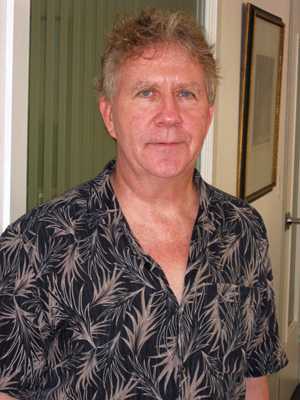
    Speaking Out: Larry Franklin, the former Pentagon analyst at center of AIPAC case, tells his side of the story to the Forward.
    Speaking Out: Larry Franklin, the former Pentagon analyst at center of AIPAC case, tells his side of the story to the Forward.

    WASHINGTON — Former Pentagon Iran analyst Larry Franklin recently quit his job cleaning the restrooms at his local church in West Virginia. He still keeps his weekend job, mopping the floors at a nearby Roy Rogers restaurant. In recent years, Franklin also has gained experience in parking cars, digging trenches and cleaning cesspools. In between, he has been searching for a publisher for his book — a manual for saving America from the Iranian threat.

    On June 30, Franklin marked the fifth anniversary of his meeting with FBI agents, in which he first learned he was a suspect in what would later be known as “the AIPAC case,” referring to the American Israel Public Affairs Committee. Along with Franklin, two of the Washington lobby’s senior officials were charged with violating the seldom-used federal Espionage Act of 1917.

    Although charges against the two other key players, former lobbyists Steve Rosen and Keith Weissman, were ultimately dropped in May, Franklin pleaded guilty early on as part of a plea agreement and is preparing to serve his reduced sentence of 100 hours of community service and 10 months in a halfway house.

    Franklin’s narrative of his ordeal, which started off with him being described on national news as the “Israeli mole” in the Pentagon, reflects a mixture of naiveté, frustration with government bureaucracy and a deep belief that his views must be heard, even if it meant breaking the rules. In retrospect, it was a practice in humility for the devout Catholic military analyst.

    “I’ve learned a lot by crawling on the ground,” the 62-year-old father of five said in his first interview since the affair began in 2004. The lessons that Franklin has learned from his experience include the capacity by his colleagues and partners for — as he sees it — betrayal, and the persistence, he has concluded, of deep-rooted antisemitic sentiment in certain quarters of America’s intelligence community.

    “I was asked about every Jew I knew in OSD [Office of the Secretary of Defense], and that bothered me,” Franklin said. His superiors at the time were both Jewish: Paul Wolfowitz, deputy secretary of defense, and Douglas Feith, undersecretary of defense for policy, whom Franklin believes was a target of the investigation. “One agent asked me, ‘How can a Bronx Irish Catholic get mixed up with…’ and I finished the phrase for him: ‘with these Jews.’” Franklin answered, “Christ was Jewish, too, and all the apostles.” “Later I felt dirty,” he added.

    Bound until recently by a plea agreement that barred him from speaking to the press, Franklin has refrained until now from telling his side of the story. But in the Washington office of his attorney, Plato Cacheris, Franklin seemed eager to share his experience. Cacheris, who took on Franklin’s case pro bono, intervened time and again to warn his client against revealing information that is either classified or under a seal imposed by the court. Franklin was quick to agree, calling Cacheris his “angel” who saved him from prison.

    In exchange for his cooperation with federal prosecutors, Franklin was initially sentenced to 12.5 years in prison as part of his plea agreement. But before entering his plea in 2005, he was approached by two people who suggested he fake his suicide and disappear to avoid testifying in court. At the request of the FBI, to which he immediately reported the encounter, Franklin had several follow-up conversations on the phone with one of them. “I thought I was in a movie,” Franklin said of the episode. Details of the event are still under court seal, and Franklin declined to identify the individuals who approached him or to offer further details.

    Franklin, who speaks seven languages and holds a doctorate in East Asian studies, tends to weave historical references easily into his discourse, from ancient Greece to the modern days. His concern is intense.

    Some in the government, he believes, “had some fantasy of a conspiracy” that had continued, unabated, after the 1985 arrest and 1987 conviction of Pentagon intelligence analyst Jonathan Pollard on charges of spying for Israel.

    According to Franklin, the investigators he dealt with believed “that Pollard had a secret partner, a mole, probably in the OSD.” This quest to expose the mole, Franklin said, was, in part, “energized by a more malevolent emotion — antisemitism.”

    In part, it was also fed by a deep suspicion toward Israel. “In the intelligence community,” he said, “you refer to Israelis as ‘Izzis’ and it doesn’t have a pleasant connotation. They can’t get away with kikes, so they say Izzis.” This suspicion became clear to Franklin as he learned of the way investigators viewed activists of the pro-Israel lobby.

    He said it was made clear to him by the FBI that Rosen, then AIPAC’s foreign policy director, was the target of the investigation and had been followed by the FBI for years. “The bureau told me Rosen was a bad guy,” he said. Believing that he himself had “done wrong,” Franklin agreed to cooperate with the FBI investigation.

    This cooperation culminated in a June 26, 2003, meeting at an Italian restaurant in Arlington, Va., where Franklin was sent by the FBI to carry out a sting operation against the AIPAC lobbyists. Before his meeting with Weissman, agents wired Franklin with microphones and transmitters and provided him with a fake classified document alleging there was clear life-threatening danger posed to Israelis secretly operating in Iraq’s Kurdish region. Passing on the information would help seal the case against the AIPAC staffers.

    “At the time, I believed they were guilty,” Franklin said of Weissman and Rosen. Yet he still came to the meeting with mixed feelings. He put the document on the table, but hoped Weissman would not reach out for it. “And when he did not take the document, I did breath a silent sigh of relief,” he recalled. In retrospect, Franklin sees that moment as “one I am not proud of.”

    Though Weissman didn’t take the document, he read its content, which was allegedly classified, and the sting operation succeeded. Weissman hurried back to AIPAC headquarters with the supposedly classified information disclosed it to Rosen, who subsequently relayed it to an Israeli diplomat. Even without Weissman taking the actual paper, prosecutors, who were wiretapping all the players, felt they had enough of a case to press charges against both Rosen and Weissman for communicating national defense information.

    Franklin said he felt betrayed by the two former AIPAC staffers. He believed that he was sharing information with them so that they could pass it to other government officials, and was disappointed to learn they conveyed it to Israeli diplomats and to the press. “I do think they crossed a line when they went to a foreign official with what they knew was classified information,” Franklin said.

    Rosen told the Forward in response: “Franklin did not expect us to warn the Israelis that they would be kidnapped and killed? That’s like telling officials of the NAACP that there is going to be a lynching, but don’t warn the victims, because it is a secret.”

    For Franklin, ties with Rosen and Weissman were instrumental. He had grown frustrated with decisions made by his Pentagon bosses on Iraq and Iran, believing that regime change in Iran was the course America should pursue.

    Franklin warned that Americans “would return in body bags” from Iraq because of Iranian intervention, and called for a preliminary show of force against Iran before invading Iraq, but got no response. Viewing the AIPAC lobbyists as well connected, Franklin bypassed his superiors and asked Rosen to convey his concerns on Iran to officials at the National Security Council, to whom he believed the influential lobbyist had access.

    “I wanted to kind of shock people at the NSC,” he said, “to shock them into pausing and giving another consideration into why regime change needed to be the policy.” Franklin’s attempt to reach out over the heads of his bosses was unsuccessful and eventually got him in trouble. In the June 11 sentencing session at the U.S. District Court for the Eastern District of Virginia, Judge T.S. Ellis showed little sympathy for Franklin’s explanation of the reasons that led him to disclose the information. “Secrets are important to a nation. If we couldn’t keep our secrets, we would be at great risk,” Ellis said.

    Contact Nathan Guttman at [email protected]
    Source:  www.forward.com, July 01, 2009, issue of July 10, 2009.
  • Turkish PM to raise Uighur mass killing in G8 summit

    Turkish PM to raise Uighur mass killing in G8 summit


    [ 09 Jul 2009 18:25 ]
    Baku – APA. Turkish Prime Minister Recep Tayyip Erdogan will raise the issue of bloody events in Xinjiang-Uighur autonomous region of China in the G8 summit in L’Aquila, Italy.

    On his departure for the G8 summit, Erdogan told journalists that he will raise the issue of mass killing of Uighurs to the G8 leaders, including the US, APA reports quoting Haberturk. “Our foreign ministry invited the Chinese ambassador and gave a notice to him. We demanded to end this wildness soon. I will discuss this issue with the world leaders. It is impossible for Turkey to keep silence toward this wildness”.

    Erdogan said Turkey was ready to give a visa to the leader of World Uighur Congress Rebia Kadeer, who lives in exile in the United States, if she asks them for it. Chinese communist regime accused Kadeer in the masterminding of unrests and said she instigated the Uighurs in China.

  • Equal Partners or Equal Rivals?

    Equal Partners or Equal Rivals?

    By Aaron Mulvihill
    Special to Russia Profile

    July 6, 2009

    As Europe and Russia Manoeuvre for Control of Energy Routes Across the Caucasus and the Black Sea, Turkey Has Emerged as a Key Broker

    As the jet carrying Turkish Foreign Minister Ahmet Davutoglu and Energy Minister Taner Yildiz took off from Moscow after a meeting with their Russian counterparts, reports were already circulating about the conclusion of a deal on the Nabucco gas pipeline, which is to pump gas from the Caspian Sea into Europe, bypassing Russia. A coincidence? Or a sign, perhaps, that the meetings could have gone a little better for the Kremlin?

    The dossiers on energy and foreign relations are never far apart when Russian and Turkish delegations meet. The foreign minister was officially visiting to discuss relations with Armenia and Azerbaijan, and the energy minister was to negotiate the building of Turkey’s first nuclear power plant – but the Nabucco pipeline is central to both issues, and it is unlikely to have been left off the agenda.
    The planned 3,300km Nabucco pipeline, which is to pump natural gas from the Caspian Sea into Europe as far as Austria, is designed to reduce European dependence on Russian energy. The final agreement on the construction of the $7.9 billion conduit is to be signed on 13 July in Ankara, it was revealed last Friday.

    Determined to maintain what the media has termed its “energy weapon,” Russia put forward a rival project: South Stream, which would pump Russian gas through the Black Sea to Bulgaria and beyond, also as far as Austria. Turkish representatives earlier in the year hinted that the country would put its full support behind Nabucco only if given guarantees on EU accession. The plausible alternative of South Stream, then, allowed both Russia and Turkey to exert leverage on Europe: Turkey could hold out for an EU quid-pro-quo, while Russia had time to put obstacles in Nabucco’s path, such as buying up its intended sources of gas. Turkey was last week formally invited to take part in the South Stream project, but it was not announced what form this might take, as the pipeline does not pass through Turkish land in its current draft form.

    It is unclear whether, by dragging its heels, Turkey has secured any EU promises (11 of 35 negotiation “chapters” are now open, but the one on energy, significantly, remains blocked), but it certainly has not damaged relations with the Kremlin.

    Since then-President Vladimir Putin’s landmark visit to Ankara in 2004 – the first by a Russian head of state – trade turnover has multiplied, reaching a total volume of $38 billion dollars in 2008, and with increasing frequency observers began referring to a “special relationship” between the two countries. Turkish President Abdullah Gul paid a state visit to Moscow as recently as February 2009.
    Is the Turkey-Russia “equal partnership” more equal than others, as officia1 announcements from both sides would have observers believe? Or do Russia and Turkey regard each other as equally-matched rivals in a shared exclusion from Europe, as did the Russian and Ottoman Empires? 
    Sinan Ogan, the chairman of the Turkish Centre for International Relations and Strategic Analysis, argues that Russo-Turkish relations exhibit a special character. “Our economic structures complement each other and few countries in the world economy have such a feature. The other interesting thing in this relation is that both cooperation and competition exist at the same time within these relations, especially in the field of energy,” said Ogan.

    Energy

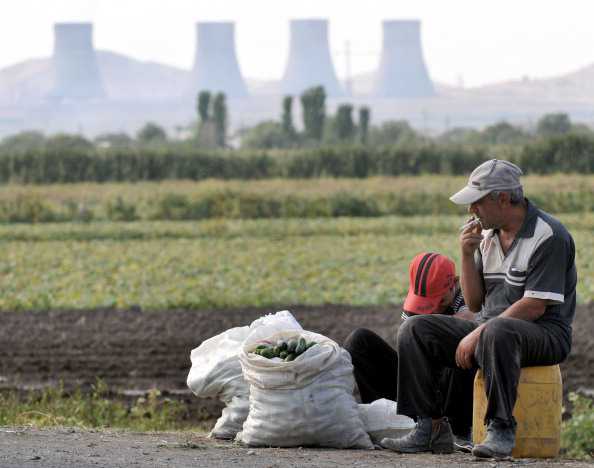
    The construction of Nabucco will not only mean that Europe becomes less reliant on Russian imports – the same applies to Turkey itself. Russia currently supplies Turkey with the bulk of its gas imports. In 2007, Russia overtook Iran to become Turkey’s top oil supplier as well. Turkey has few hydrocarbon resources of its own, yet its domestic demand for energy has risen sharply in recent years. Ankara’s latest answer to energy security is a balanced one: it has demanded that a percentage of the Nabucco capacity be made available for domestic distribution, and even possible re-sale, while at the same time is enlisting Russian help in constructing the republic’s first nuclear plant. Neither plan has yet been officially confirmed.

    Turkey’s role as an energy hub makes it politically perilous to accept overtures from one neighbour over another. Ankara’s balancing act is complicated by its simultaneous membership of several, sometimes conflicting, groups.

    Turkey’s NATO allies frown upon its purchase of Russian military hardware, while conscious that the secular Muslim democracy and leading member of the Organisation of the Islamic Conference is a vital partner in Afghanistan and in the fight against Islamic extremism. Russia and Turkey found themselves on the same side in vocal opposition to the U.S. invasion of Iraq, and Turkey reversed years of close cooperation with the United States by refusing to cooperate in the offensive. But in August 2008, Turkey aggravated the Kremlin by allowing U.S. warships to pass through the Bosporus en route to Georgia, which was then struggling to regain control over the Russian-backed breakaway province of South Ossetia.

    NATO and Russia cut off ties as a result of the Georgia crisis, and formal co-operation resumed only in late June 2009. The continuing thaw, and possible resumption of military cooperation, is heavily dependent on internal lobbying from Turkey, though it has not prevented Russia from expressing its irritation by erecting barriers to trade.

    Trade

    In an almost immediate retaliation for the Georgian incident, in September 2008 Russia turned away convoys of Turkish trucks at its border, claiming the Turkish produce was of poor quality. According to Sinan Ogan, Turkish exporters are still facing problems with customs officials, despite the fact that “measurements made by Turkish official institutions have proved that there is nothing harmful in these products.” Turkish convoys, he added, are singled out for lengthier checks, and “Turkish trucks have to wait for days and sometimes for weeks [before clearing customs].” 

    In trade, as well as energy, Russia holds the trump cards. Turkey’s trade deficit against Russia reached a colossal $18 billion in 2008, giving its northern neighbour significant economic leverage. The three million Russians who holiday in Turkey annually are perhaps the most visible indicator of this booming trade. Turkish companies are key players in the Russian construction market – Terminal 3 of Moscow’s Sheremetyevo airport, due to open shortly, is only the most prominent example of Turkish firms’ appetite for major Russian government tenders.

    But Moscow’s continuing dominance in trade is not assured. Its main exports to Turkey are in the volatile sectors of energy and tourism, while it imports durable goods and foodstuffs from Turkey, the demand for which is more stable in the long term even if it has recently fallen. Analysts and rating agencies such as Fitch and Barclays Capital have tipped Turkey as the first country in the “emerging Europe” region, which includes Russia, to buck the economic downturn with strong growth in 2010. They point to its large domestic consumer base and robust banking system.

    Security

    The need for close cooperation between Ankara and Moscow, if not a “special relationship,” is vividly apparent in the sphere of national security. Chechen terrorist cells are thought to be still active in Turkey, and the armed wing of the Kurdish Workers’ Party (PKK) is known to use Russian territory as a safe haven. It has almost become a ritual to accompany each official state visit with a raid on the respective terrorist group’s hideout and a joint declaration of cooperation in the fight against terror. But Moscow has so far declined to add the PKK to its official list of terrorist organisations, despite token pledges of support.

    Tangible security cooperation on a larger scale in the Caucasus region is fraught with complexity. Turkey and Russia de facto support opposite sides in the Nagorno-Karabakh conflict, which flared up between Armenia and Azerbaijan when they achieved independence from the Soviet Union in 1991. Armenia is Russia’s lone ally in the region, and the republic enjoys generous military support from Moscow. Azerbaijan, whose citizens consider themselves Turkish, rather than Turkic, is the source of much of the crude oil flowing through Turkey, carried by the Baku-Tbilisi-Ceyhan pipeline.
    After a long and bloody stalemate, both Russia and Turkey have begun to promote the OSCE Minsk Group peace process. Pipeline politics certainly have their part to play. The Georgian crisis demonstrated how violence in the Caucasus can play havoc with energy distribution, and consequently Turkey is anxious to normalise its strained relations with Armenia. In its turn, Russia’s state-owned gas giant Gazprom signed a deal with its Azeri counterpart in June 2009 to import 500 million cubic metres of gas in 2010 for eventual resale in Europe.

    Caucasus battleground

    Backers of the Nabucco pipeline are anxious that, with Russia snapping up large chunks of Caspian gas production, they will struggle to fill the pipeline when it opens in 2014. As far as energy competition is concerned, the Caucasus and Black Sea region has become as significant a battleground as it ever was during the rivalry of the Russian and Ottoman Empires.

    Accordingly, the historical logic of Turkey and Russia as “equals apart from Europe” is perhaps as useful now as it was during the 16th century.

  • Tatar Public Center Appeals To U.S. President For Help

    Tatar Public Center Appeals To U.S. President For Help

    U.S. President Barack Obama visited Russia on July 6-7.

    July 08, 2009

    KAZAN, Russia — The Tatar Public Center in Kazan has sent an open letter to U.S. President Barrack Obama asking him to persuade Russian President Dmitry Medvedev to revise recently adopted laws on education in Russia’s ethnic republics, RFE/RL’s Tatar-Bashkir Service reports.

    Russia’s State Duma adopted the new law earlier this year eliminating classes on history, geography, and languages of the ethnic republics.

    Activists in Tatarstan say the law could lead to the complete loss of the ethnic and linguistic identity of indigenous peoples in Russia’s republics.

    The open letter says: “New educational standards exclude the learning of native language, history, and national culture. We hope the United States can help us to protect our rights.”

    https://www.rferl.org/a/Tatar_Public_Center_Appeals_To_US_President_For_Help/1772574.html

  • Ukraine To Host Congress Of World’s Turkic Youth

    Ukraine To Host Congress Of World’s Turkic Youth

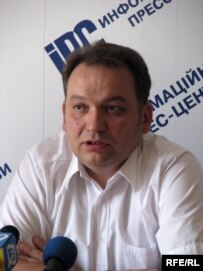
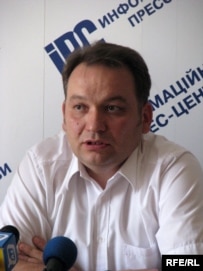
    Eskender Bariyev, a Crimean Tatar activist and head of the congress organizing committee

    July 09, 2009
    SIMFEROPOL, Ukraine — The second World Kurultay (Congress) of the Turkic Youth will be held in Crimea in August, RFE/RL’s Ukrainian Service reports.

    The head of the congress’s organization committee, Eskender Bariyev, told RFE/RL that over 200 delegates from Azerbaijan, Cyprus, Kazakhstan, Kyrgyzstan, Turkey, Uzbekistan, as well as representatives of Turkic minorities from Afghanistan, Bulgaria, China, Iran, Macedonia, Moldova, Romania, Russia, and Ukraine would attend the event.

    The one-week congress is scheduled to start on August 9.

    The first World Congress of the Turkic Youth was held in Tatarstan in 1992.

    https://www.rferl.org/a/Ukraine_To_Host_Congress_Of_Worlds_Turkic_Youth/1773315.html
     
  • Clampdown on Uyghur Cities

    Clampdown on Uyghur Cities

    2009-07-09

    Chinese security forces crack down on cities with large Uyghur populations.

    AFP

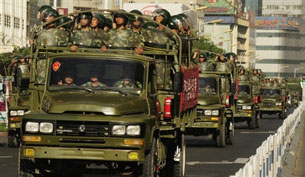
    Chinese paramilitary police trucks drive through downtown Urumqi, July 9, 2009.

    HONG KONG—Chinese security forces imposed an uneasy peace on several major cities in the restive Xinjiang Uyghur Autonomous Region (XUAR) Thursday, with residents reporting a heavy security presence in Kashgar and Ili prefectures.

    Police and armored vehicles were patrolling the streets of Gulja (in Chinese, Yining), capital of the Ili Kazakh Prefecture, residents said.

    “Now the situation in Gulja city is very tense,” one Uyghur man said.

    “When I went out this morning to buy cooking oil, I saw the streets were filled with fully armed police wearing helmets.”

    “I personally saw five armored vehicles driving along the street. There were so many police cars on all of the streets,” he said.
    He said the gates of government buildings in the city were under heavy guard by armed police.

    “Since I was not able to enter from the front gate to the Ili Normal Institute where I live, I came home going through a gate behind the school that was guarded by our school security personnel,” he added.

    Protests spread

    Demonstrations spread out to other Uyghur cities in the region following Sunday’s deadly riots in Urumqi in which at least 156 people died and 1,080 were injured.

    One Uyghur man who called a listener hotline said more than 300 people gathered around Kashgar’s Id Kah Mosque, Guze district, and People’s Square to demonstrate, but were quickly dispersed by security forces.

    He said police were currently conducting house-to-house searches in the city. Detentions have been reported by residents in Yili, Dawan, and Tianshan.

    Official media reported that tourism had been hit by the recent unrest, saying some travel agencies had canceled trips to Ili and Kashgar.

    Police in Gulja recently detained a number of Uyghur youths in an anti-separatism campaign ahead of the sensitive 60th anniversary of communist rule, sources in the region said.

    Overseas rights groups say untold numbers of people were killed in anti-China protests in Gulja in February 1997, in a crackdown that went largely unnoticed by the outside world.

    Meanwhile, in Urumqi, thousands of Chinese paramilitary police rumbled through Urumqi’s riot-battered streets Thursday, blaring propaganda urging ethnic unity.

    Uyghur residents said however that armed majority Han Chinese were still visible on the streets of the city Wednesday.

    “The Chinese are on the streets, holding batons and clubs. They are attacking some shops. But I have not personally seen anyone injured or killed,” one Uyghur man said.

    “When the Chinese came out with batons and clubs, there is no one to stop them. They are pretending to stop them, but they are not really strict,” he said. 

    “If the Uyghurs had come out with batons and clubs, they would immediately be fired upon.”

    Media blamed

    The Uyghur man, a university student, said the relative media freedom around the Urumqi violence still appeared to be inciting further unrest.

    “I think the government and the media are instigating the Chinese to seek revenge,” he said.

    “The government is trying to portray the conflict between itself and the Uyghurs as a conflict among the people.”

    A Uyghur women in Urumqi said some Uyghurs were afraid of further attacks, while others were outraged at a perceived difference in treatment of Uyghurs and Han protesters and rioters.

    “If the government was as cruel towards them as they were towards the Uyghurs, they surely would be able to take care of the problem in a moment,” she said.

    She said many in Urumqi expected worse to come. “It seems that there are going to be big problems. Everyone is talking about it.”

    A second Uyghur student said police had held two groups of Uyghur and Han Chinese students at two universities apart.

    “Today there was some friction between the Uyghur and Chinese students at the Xinjiang University of Medicine and Xinjiang University of Economics (XUE),” he said.

    “Today, the students at XUE were about to go out and confront the Chinese rioters, but the police surrounded them, and did not allow them to go out.”

    He said all able-bodied Uyghur young men had been removed from Uyghur neighborhoods in recent days.

    “It is as if there are no men on our streets. I hope these people don’t come to where we live,” he added.

    Warnings posted

    Authorities posted notices urging rioters to turn themselves in or face stern punishment.

    Urumqi Communist Party chief Li Zhi said he would seek the death penalty for rioters who resorted  to “cruel means” and murdered people.

    The notices, posted on walls in the Chinese and Uyghur languages, said those who hid or protected “criminals” would also be punished.

    The Chinese government has accused exiled Uyghur leader Rebiya Kadeer of inciting the violence.

    But exiled Uyghur groups say the Muslim, Turkic-speaking minority has long suffered ethnic discrimination, religious controls, and continued poverty despite China’s ambitious plans to develop the vast hinterland to the northwest.

    Xinjiang is a strategically crucial vast desert territory that borders Russia, Mongolia, Kazakhstan, Kyrgyzstan, Tajikistan, Afghanistan, Pakistan, and India.

    The region has abundant oil reserves and is China’s largest natural gas-producing region.

    This week’s violence prompted President Hu Jintao to abandon a G8 summit in Italy, and he has returned home to monitor developments in Xinjiang where hundreds have been arrested in the ensuing crackdown.

    Original reporting in Uyghur by Shohret Hoshur and Mehriban. Uyghur service director: Dolkun Kamberi. Written for the Web in English by Luisetta Mudie. Edited by Sarah Jackson-Han.

    https://www.rfa.org/english/news/uyghur/clampdown-07092009101424.html