Month: June 2009

  • Turkish-Azeri Talks on Gas Prices Continue through “Soccer Diplomacy”

    Turkish-Azeri Talks on Gas Prices Continue through “Soccer Diplomacy”

    Turkish-Azeri Talks on Gas Prices Continue through “Soccer Diplomacy”

    Publication: Eurasia Daily Monitor Volume: 6 Issue: 107
    June 4, 2009
    By: Saban Kardas
    Turkish Energy and Natural Resources Minister Taner Yildiz discussed energy issues with Azeri officials on the sidelines of a recent soccer game. Following his talks, Yildiz commented on the status of the Turkish-Azeri talks on pricing gas imports and Turkey’s position on the Nabucco project. The incident echoes what was referred to as the “soccer diplomacy” conducted last year between Turkey and Armenia.

    The Turkish and Azeri national soccer teams played a friendly game in Turkey’s central Anatolian city of Kayseri on June 2. There was huge public interest and over 30,000 spectators decorated the stadium with the Turkish and Azeri flags. They carried placards and chanted slogans reflecting the sense of solidarity between the two nations: “We are all Azeris,” “Karabakh belongs to Turks,” “We cannot be divided” (www.nethaber.com, www.tumspor.com, June 2).

    The sporting fixture also provided an additional venue to discuss contentious bilateral issues. The president of the Azerbaijani state petroleum company (SOCAR) Rovnag Abdullayev (also the head of the Azeri soccer federation), was in the audience. He watched the game alongside the head of the Turkish soccer federation and Yildiz. On the periphery of this event, Yildiz and Abdullayev continued their talks on pricing Turkey’s gas imports from Azerbaijan. Abdullayev flew back to Baku together with the Turkish ambassador to Azerbaijan in the same private jet (Hurriyet, June 3).

    Yildiz told reporters that both sides shared their views as well as new proposals on pricing. He added that the Azeri side will respond after further evaluating the Turkish proposals. Although Yildiz found Azerbaijan’s request for further deliberation quite natural as part of the negotiation process, he also stressed his hope that it might be accelerated. “It will be in both countries’ interest to reach a solution as soon as possible. Over the next week, technical delegations will continue their work on the [mutual] proposals. My opinion is that without losing further time, an agreement on Shahdeniz-I and Shahdeniz-II should be reached. Our Azeri brothers said they would help us on this issue” (Anadolu Ajansi, June 3).

    Abdullayev offered reassurance that no difficult issues existed between the two countries, but he said that there was no reason to rush into the project. He added “a thirty-year agreement and other issues cannot be resolved in one or two days. The game provided an opportunity to discuss these, but commercial matters cannot be concluded in haste… We received Turkey’s proposals on oil and gas and we will study them” (Milliyet, June 4).

    Currently there are two major elements on the agenda of the Turkish-Azeri gas talks. Azerbaijan expects Turkey to revise gas import prices. Moreover, anxious to transport its gas to European markets, Baku wants Ankara to adopt a more cooperative position on the Nabucco project.

    Under the terms of an agreement in 2001, Turkey annually imports 6 billion cubic meters (bcm) of gas from Azerbaijan’s Shahdeniz-I site at a price of $120 per thousand cubic meters, which is far below current global energy prices. Turkey also plans to purchase 8 bcm of gas from the Shahdeniz-II for its domestic consumption. Since the 2001 agreement ended in April 2008, Turkey has continued to import Azeri gas at the old price. In recent months, Baku has demanded the revision of the price to reflect the current market value, although Ankara has reportedly been unenthusiastic (EDM, May 1).

    During his trip to Azerbaijan in May, Turkish Prime Minister Recep Tayyip Erdogan promised that a new and “fair” price will be found (EDM, May 14). Yildiz, who accompanied Erdogan to Baku, later said that “the price [offered] was as fair as possible… I cannot give a figure. But it is not as high as [the price for] the Russian gas. We are trying to agree on a price that is not completely disconnected from world markets and one that will satisfy both us and our Azeri brothers” (Hurriyet, May 16). However, the fact that a final decision has not been reached, shows that Turkey’s price offer did not necessarily satisfy the Azeri side, and they preferred to continue the talks until a “fair” price is agreed.

    During his contacts in Kayseri earlier the same day, Yildiz commented on the future of the Nabucco project. Turkey has been viewed as the main obstacle to the conclusion of the intergovernmental transit agreement for the Nabucco pipeline, yet recent remarks emerging from Ankara has raised hopes for ending the stalemate (EDM, May 15, June 1). Yildiz reiterated Erdogan’s earlier optimism for signing the intergovernmental agreement in June, but added that the continuation of the negotiations indicated that a consensus on the exact date had not been reached (www.ntvmsnbc.com, June 3).

    Yildiz was asked about the Nabucco Managing Director Reinhard Mitschek’s earlier comments that Turkey’s demand for “the 15 percent out-take is not on the table” (Reuters, May 29). In response, Yildiz insisted that Turkey’s demand was still under consideration. After noting that lively bargaining was occurring, he maintained that the Europeans appreciated Turkish concerns. “They are not completely indifferent to 15 percent. The real problem is about its modality… It might be possible to exclude it from the intergovernmental agreement, and then regulate it under another agreement” (Cihan Haber Ajansi, June 3).

    This is not the first time that European and Turkish officials have issued contradictory statements on the Turkish position on the 15 percent issue (EDM, April 20). Ankara appears determined to get the best deal out of the Nabucco negotiations, even at the risk of further stalling the project and perhaps undermining Azerbaijan’s interests. For its own part, Baku also shows that it does not want the “brotherhood” to eclipse the country’s commercial interests, and will continue negotiations until a “fair” deal is finally secured.

    https://jamestown.org/program/turkish-azeri-talks-on-gas-prices-continue-through-soccer-diplomacy/
  • Arinc Demands the Resignation of Turkey’s Media Watchdog

    Arinc Demands the Resignation of Turkey’s Media Watchdog

    Arinc Demands the Resignation of Turkey’s Media Watchdog

    Publication: Eurasia Daily Monitor Volume: 6 Issue: 110
    June 9, 2009
    By: Saban Kardas

    Turkey continues to debate the implications of an ongoing controversial fraud case in the German courts involving, among others, individuals close to the governing Justice and Development Party (AKP). After the Turkish courts launched this case, the Deputy Prime Minister Bulent Arinc added a new dimension to the debate. Arinc has publicly called on the head of the top media watchdog, the Supreme Board of Radio and Television (RTUK), Zahid Akman, who was implicated in the case, to resign from his post, which has reignited tension between the government and the opposition.
    German prosecutors initiated legal proceedings against a charity established by Turks living in Europe. Deniz Feneri e.V. (Lighthouse e.V.) allegedly channeled donations made in Germany to private corporations in Turkey owned by close allies of the AKP. When these reports first emerged, it triggered controversy, since media outlets in the Dogan Media Group questioned the involvement of AKP supporters and the government’s silence over allegations of corruption (EDM, September 11, 2008; February 20).

    The German court requested judicial assistance from the Turkish authorities concerning several individuals, including Akman, for their involvement in the case. The German investigation identified Akman “as the shareholder and executive of three companies in Germany. The German authorities also documented that Akman was the executive of a German-based cooperative, into which another investigation was launched because of fraudulent activities” (Hurriyet Daily News, June 8).

    The opposition and other critics of the AKP accused the government of stalling the investigation into the Turkish side of the Lighthouse case, by using various delaying tactics. They speculated that there might be evidence contained within the dossier sent by the German court establishing links between the Lighthouse case and officials close to Erdogan. If the money transferred to Turkey was used to finance the AKP’s activities, it might have serious political repercussions within the country. Since the Turkish constitution prohibits political parties from receiving funds from foreign countries or organizations, such links might result in another closure case being instigated against the governing AKP (Hurriyet, May 14; Hurriyet Daily News, June 3).

    Although Akman has been the subject of a parliamentary inquiry, and a court case was filed to overthrow him, he has remained defiant (ANKA, May 12). Finally, Arinc said that he had asked Akman to resign during a private meeting, in order to avoid any damage to the RTUK. He added that Akman had agreed (www.haberturk.com, May 21). Arinc is one of the leading figures within the AKP and is known for his strong stance against corruption. Since he was appointed as the deputy prime minister during the last cabinet reshuffle, he has stressed his commitment to pursuing an ethical approach to politics. As the state minister, Arinc also oversees the RTUK.

    Arinc’s statements were welcomed by other members of the AKP government as well as the speaker of the Turkish parliament Koksal Toptan (www.cnnturk.com 22 May). The cabinet speaker Cemil Cicek even implied that Akman could have been asked to resign by the prime minister -prior to Arinc’s request (www.haberturk.com, May 25).

    After one week of silence, Akman spoke to Haberturk in an effort to clear his name. He said he was not asked by Arinc to resign; Arinc only inquired as to “whether he was considering resigning.” Akman refused saying that stepping down would have been perceived as an acknowledgement of guilt. He maintained that the allegations are being used to weaken the RTUK’s reputation. He added that he will remain in his post until his tenure ends on July 14, and he will not seek any extension. Finally, he challenged those “who were seeking to undermine his reputation” and said that “at the right moment,” he will respond to these allegations (www.haberturk.com, May 30).

    Although Haberturk reported that Akman claimed he enjoyed the firm backing of the Prime Minister Recep Tayyip Erdogan, his lawyer denied this (Anadolu Ajansi, May 29). In the meantime, as part of the Turkish investigation, an Ankara court issued precautionary measures against the properties of Akman and other individuals. Responding to a question on these developments, Erdogan said that he was not in a position to defend Akman. “He has continued to defend himself very well and will continue to do so,” Erdogan added (Anadolu Ajansi, June 6).

    On June 6 Arinc repeated his call for Akman’s resignation. He added that he had no authority to remove the RTUK chief because he is appointed by parliament -nor can he be removed by Erdogan. He also emphasized that no AKP member was implicated in the fraud case. Later, Erdogan reacted harshly to speculation that the money from Lighthouse was funneled to the AKP (Anadolu Ajansi, June 6 and June 9).

    The opposition parties, however, did not find the government’s arguments convincing. They believe that the government has failed to adequately address the issue. One CHP representative, Kemal Kilicdaroglu, known for previously publicizing corruption cases involving AKP members, asked Arinc to resign, arguing that it was shameful that a minister was unable to command a bureaucrat under his authority (Anadolu Ajansi, June 1). Moreover, the CHP leader Deniz Baykal, accused the government of failing to force Akman to resign, and argued that the government’s delay had provided an opportunity for Akman to conceal evidence (Taraf, June 8).

    Depending on the progress of the current case, tensions within Turkish politics might increase. The opposition parties will continue to press the government to take action against Akman and the corruption allegations, since such high profile cases allows them to weaken the AKP’s popularity. As Akman struggles to clear his name and leave office with an unblemished record, the AKP will have to protect its image as a corruption-free party -perhaps ultimately by sacrificing Akman.

    https://jamestown.org/program/arinc-demands-the-resignation-of-turkeys-media-watchdog/
  • Kemal Dervis to Address

    Kemal Dervis to Address

    TASSA-TOBB-WITSA Joint Symposium on “Science for Industry… Industry for Peace” Friday, June 12, 2009 5:00-9:00pm, World Bank, Washington DC

    This is to invite you to join us at the first TASSA-TOBB-WITSA Joint Symposium on Friday June 12, 2009 at 5:00-9:00pm at the Eugene R. Black Auditorium (H), The World Bank, 600, 19th St. NW, Washington, DC. The theme of the symposium is “Science for Industry… Industry for Peace”

    Kemal Derviş, Vice President and Director of Global Economy and Development and Edward M. Bernstein Scholar at Brookings Institution will give the Keynote Lecture. For further information, please see the attached flyer or visit www.tassausa.org

    For catering purposes, please RSVP at [email protected] or 215 895 0572.

    It will be our pleasure to welcome you at the first TASSA-TOBB-WITSA Joint Symposium. Kindly forward this notice to others who may be interested to attend.

    Sibel Kulaksız, WITSA Chair
    World Bank – IMF Turkish Staff Association

    Banu Onaral, TASSA President
    Turkish American Scientists and Scholars Association [www.tassausa.org]

    Düden Yeğenoğlu, TOBB US Representative
    Turkish Union of Chambers and Commodity Exchange [www.tobb.org.tr]

  • BNP success ‘damaging’ to Britain

    BNP success ‘damaging’ to Britain

    The UK’s international reputation has suffered “real damage” as a result of the British National Party gaining their first seats in the European Parliament, politicians, unions and race relations groups said.

    Labour MEP for London Claude Moraes said that a threshold had been crossed after the far-right party won two seats.

    BNP leader Nick Griffin picked up the seat in the North West of England region and Andrew Brons won a seat in the Yorkshire and Humber region.

    Peter Hain, the newly-appointed Welsh Secretary, released a statement via United Against Fascism which read: “It’s a shameful stain on Britain that we now have racists and fascists representing our country.

    “It is vital that everyone now isolates and confronts the BNP and works with United Against Fascism to defeat them.”

    At a Unite Against Fascism press conference in Westminster, Mr Moraes went on to acknowledge that the BNP had “jumped upon” Gordon Brown’s slogan “British jobs for British workers” during the election.

    He explained: “That phrase was jumped upon by the BNP, they are trying increasingly to look at what mainstream politicians say to embarrass the politicians as a way of getting support.

    He added: “There is real damage here to Britain because we have never elected fascists in a national election. Fascists in the European Parliament where I sit have long wanted members from Britain to join this transnational group so for those reasons there is deep concern that we have now crossed that threshold.”

    He said that many people would be viewing Britain as a “nastier” place than they had prior to the election. The BNP wins came as the party appeared to attract significant numbers of disaffected Labour voters.

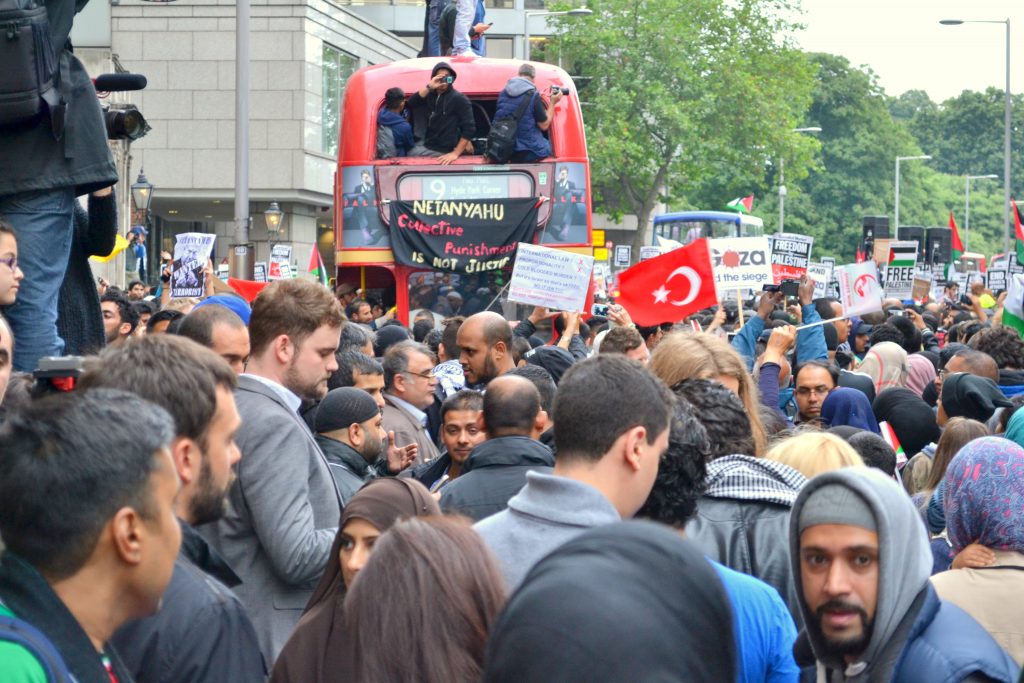
    Meanwhile, hundreds of people voiced their anger at the election of the two BNP members to the European Parliament. Simultaneous protests took place in Manchester, Liverpool, Sheffield, Preston and York in the wake of the far-right party’s propulsion up the political ladder.

    Press Association

  • Horizon fuel cell for unmanned plane

    Horizon fuel cell for unmanned plane

    Fuel Cells, June  05  2009 (The Hydrogen Journal)

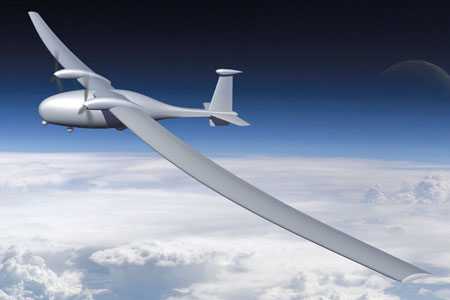
    Horizon Fuel Cell Technologies of Vancouver has announced plans to use its new Aeropak fuel cell system in unmanned aeroplanes, with shipments starting this summer


    Unmanned planes are typically used for security surveillance and intelligence gathering.


    By using fuel cells, the aeroplane will be able to go up to 4 times further than with lithium batteries currently being used for this application, the company says.


    The aeroplanes will carry 900 watt hours of electrical energy, fuelled from a dry fuel cartridge releasing hydrogen, in a fuel cell weighing 2kg.


    Electric powered unmanned planes are much harder to detect than planes powered with combustion engines, because they are quieter and smaller.


    By having more electrical power available, it is easier to add more sensors to the plane, such as infrared cameras and laser designators.


    The plane will be demonstrated at the forthcoming Paris Air Show (June 15-18 2009).


    The company did not announce how the fuel storage technology works, although other companies have announced they use sodium borohydride in their dry fuel cell cartridges.


    Horizon Fuel Cell


     Hydrogen power for shipsHamburg

    Feature Articles, May  15  2009 (The Hydrogen Journal)

    A great deal of research is going on in Hamburg to use hydrogen for ships – with trials on 4 different vessels. We spoke to experts at German energy consultancy Germanischer Lloyd about how it is happening

    With the maritime industry likely to come under pressure to reduce greenhouse gas emissions, experts are looking seriously at the idea of fuelling the ship on hydrogen, so there are no CO2 emissions at all.


    The world’s first hydrogen / fuel cell powered vessel for more than 100 passengers the “Alster Wasser” is already in operation on Hamburg’s Alster Lake. The vessel has been built and is operated within the scope of EC funded ZEMSHIP project.


    Unlike a diesel engine, the fuel cell operates silently. This led to surprising discoveries about how much noise other parts of a vessel make.


    On normal ships, the engine makes so much noise that nobody has worried about the noise which other components (such as pumps) make, says Finn Vogler, project engineer within GL department Risk Assessment and Mechanical Engineering,,


    But on the “Alster Wasser”, people were suddenly aware about how noisy the rest of the ship is – and reducing the overall noise has proved a complex exercise. “As soon as they isolate one noise, they find 3 other noises,” he says.


    The vessel runs on two 48 kW fuel cells and stores hydrogen onboard in 12 x 350 bar (high pressure) hydrogen tanks. The hydrogen is actually supplied to the fuelling station as a liquid, and evaporated and compressed before being pumped onto the vessel.


    Fuel cells are also used in submarines built in Kiel. These submarines are a great commercial success because the fuel cells give the owner the benefit to enhance the duration for diving by a factor of 10. As the first class society GL already published guidelines for using fuel cells on watercraft in 2003 and has certified a number of ships according to these guidelines including the “Alster Wasser”.


    Hydrogen fuel cells are currently not available to power larger ships, but they are close. Development projects have been started and will result in fuel cells for seagoing ships with a power of 500 kW per unit within the next 5 years.


    “GL is contributing to this development by participating in the SchIBZ and Pa-X-ell projects which will start in July 2009” Mr Vogler says.


    The available power of fuel cell systems will be able to cover the auxillary power needs of a large number of vessels. E.g. a typical ROPAX (roll-on, roll-off, passenger carrying) ferry needs from the total installed auxiliary power about 1.5 to 2 MW of constant auxiliary power, which can be provided by 3 or 4 large fuel cells.


    The biggest problem with fuel cells is managing sulphur in the hydrogen supply – it needs to be removed before entering the fuel cell because it can do a lot of damage. There is no sulphur in hydrogen which comes from gas which has been liquefied (because the sulphur is removed in the liquefaction process) and there is no sulphur in hydrogen produced from separating water with electricity (electrolysis).


    Hydrogen might not be the technology for the immediate tomorrow, but the longer term tomorrow. “I think this is on the right track, but it will take some time,” he says.

    “We are getting much more interest in the technology. Every time the oil price rises – people say ‘maybe we need another solution.”


    Hydrogen storage


    It is unlikely that hydrogen will ever be directly stored onboard vessels, due to the amount of storage space required, Mr Vogler says.


    If the hydrogen is made from reformed natural gas, this task could be completed actually onboard the vessel – so the vessel has natural gas storage. Research into the best ways of fuelling vessels with natural gas is already being made (for an anticipated series of vessels which burn the natural gas in a combustion engine).


    If the gas was reformed to hydrogen and then put through a fuel cell to make electricity, it is much easier to reduce emissions of NOx and SOx (nitrous and sulphur oxides), Mr Vogler says, and the overall efficiency will be similar or even better than big diesel generators.


    Another option is to generate the hydrogen onboard from a liquid fuel.


    Demonstration projects


    3 maritime demonstration projects are being planned using hydrogen no ships, funded by the German government.


    The first project, SchIBZ (which stands for ‘ship integration fuel cell’ in German) is to install a fuel cell on a 90m vessel which carries paper from Scandinavia to Germany. The fuel cell will be installed in by Thyssen-Krupp Marine Systems.


    A molten carbonate fuel cell onboard the vessel (a fuel cell which operates at above 600 degrees C). It won’t power the vessel’s propulsion, but it will power everything else – the ‘auxiliaries’ – eg pumps, lights and ramps. The project will start on June 1 2009 and run for up to 4 years. The module will be first tested by German shipbuilder Thyssen-Krupp Marine Systems befor the operation of the system on board.


    The fuelling system will be to use liquid fuels (generated from gas, biomass or coal) which are put through an onboard reformer to make hydrogen, which is then put into the fuel cell to make electricity. The system is called “XTL” – which stands for X to Liquids – where the ‘X’ denotes different substances which might be used to make the liquid (eg gas, biomass or coal).


    A second project, called Pa-X-ell, starting in July 2009, will use a fuel cell on a vessel, running on natural gas – but the reformer is included as part of the fuel cell rather than as a separate piece of equipment. The project will be carried out by the yards Meyer Werft, Friedrich Lürssen Werft and Flensburger Schiffbau Gesellschaft.


    The importance of this project is trying to find ways to include a number of fuel cells and reformer units around the ship – so if one goes out of action, or if there is a fire in one part of the ship, there are others available which can get it to port. This configuration will probably use natural gas cooled down to a liquid.


    The third project, Hy-ferry, realised by Beluga Shipping will be to install a polymer electrolyte membrane (PEM) fuel cell onboard 2 ferries running in coastal waters and the port of Bremen, Germany, using gaseous hydrogen which has been generated from wind power making electricity to electrolyse water.


    All of these projects are funded by the German government, under a mother project called ‘e4ships’. Further information about them (some in English) is available on the website www.now-gmbh.de.

    The German government believes that its financing can get the hydrogen industry started.


    Germanischer Lloyd’s role in these projects is to provide safety analysis and consultancy, covering the fuel cells, reformer technology and overall safety assessment. In other words, it provides usual services which classification societies provide to the maritime industry.


    On the subject of hydrogen safety, Mr Vogler believes that it is no problem with today’s technology. “If you handle it right, it can be safer than gasoline,” he says.


    Germanischer Lloyd recommends double wall pipes, so the hydrogen will be contained if one pipeline fails. It is important to avoid having an explosive mixture of hydrogen and air in the presence of a spark.


    Hamburg has a number of other projects going on, including forklift trucks at Hamburg airport running on hydrogen, and several hydrogen cars and hydrogen buses. “People are very aware of the technology in Hamburg,” he says.


    A further project has been to provide a fuel cell to a whale-watching vessel in Iceland, so it could keep auxiliary power (lights etc) running on the vessel while the engine was switched off during whale-watching, so that it does not disturb them.


    GL Group

    The Hydrogen Journal

  • High-Ranking Obama Official Refuses to Acknowledge the Genocide

    High-Ranking Obama Official Refuses to Acknowledge the Genocide

    By Harut Sassounian
    Publisher, The California Courier
    sassun-21
    Pres. Obama continues to disappoint the Armenian-American community. After breaking two promises in a row on key Armenian issues — not acknowledging the Armenian Genocide and proposing reduced U.S. aid levels to Armenia — he appoints Philip Gordon Assistant Secretary of State for European and Eurasian Affairs.
    Dr. Gordon, a former Director of the Brookings Institution — a think thank partially funded by Turkish sources — has written several pro-Turkish books and articles. He has been an opponent of congressional acknowledgment of the Armenian Genocide and a critic of Greek Cypriot leaders rather than the occupying Turkish forces. Gordon served in the Clinton administration as Director for European Affairs at the National Security Council. During the last presidential campaign, he served as head of the Europe team in Obama’s group of foreign policy advisers.
    During his confirmation hearing by the Senate Foreign Relations Committee at the end of March, Gordon was grilled by Sen. Robert Menendez (D-N.J.) on his views on Armenian and Cypriot issues. Several Senators pointed out that Gordon’s answers contradicted Pres. Obama’s campaign promises. Little did the Senators know that a few weeks later the President himself would not keep his word on these issues! Sen. Menendez submitted over two dozen questions which were to be answered by the nominee in writing after the hearing.
    Sen. John Ensign (R-Nevada) wrote a scathing letter to Gordon on April 7, expressing his dismay that the nominee, during his confirmation hearing, had used the word “tragedy” to refer to the Armenian Genocide. Sen. Ensign demanded to know if Gordon’s position on the Armenian Genocide was consistent with those of Pres. Obama, Vice President Biden, and Secretary of State Clinton all of whom, as Senators and presidential candidates, had strongly acknowledged the Armenian Genocide. Furthermore, referring to the early termination of the career of U.S. Ambassador to Armenia John Evans for saying Armenian Genocide, Sen. Ensign asked if Gordon would “discourage Ambassadors or other Foreign Service personnel from using the term ‘Armenian Genocide.’”
    Sen. Ensign, not satisfied with Gordon’s answers, surprised everyone by placing a hold on his nomination, temporarily blocking his approval by the full Senate. However, just as surprisingly, Sen. Ensign lifted his hold, paving the way for Gordon’s Senate confirmation.
    In the meantime, Gordon answered in writing all 28 questions sent to him by Sen. Menendez, even though his responses were evasive and non-responsive. Regardless of the nature of the question, he mindlessly repeated the same answer over and over again, using just about every word in the dictionary, except “Armenian Genocide,” to describe the mass killings of Armenians.
    Only one of Gordon’s answers was particularly revealing, as he put the blame for the Armenian Genocide on the “officials and soldiers of the Ottoman Empire,” thus inadvertently acknowledging that it was a state sponsored genocide. Here is the verbatim text of that particular exchange:
    Sen. Menendez: “Who was responsible for the death of over 1.5 million Armenians during WWI?”
    Philip Gordon: “This administration, like those before it, does not deny the facts — 1.5 million Armenians were murdered, starved, or deported by civilian officials and soldiers of the Ottoman Empire, some of whom were sentenced to death for committing these crimes. The United States mourns this terrible chapter of history and recognizes that it remains a source of pain for the people of Armenia and of Armenian descent, and all those who believe in the dignity and value of every human life.”
    Gordon also disclosed to the Senate Foreign Relations Committee that the Brookings had received a total of $700,000 from the following Turkish sources 2006-2008:
    — $200,000 from the Turkish Industrialists and Businessmen’s Association;
    — $190,000 from Sabanci University;
    — $150,000 from the Eksiogullari Group (construction company);
    — $100,000 from the Dogan Yayin Holding Company (media-entertainment conglomerate);
    — $30,000 from Nurol Construction and Trading Company;
    — $30,000 from Hedef-Alliance Holding (Pharmaceutical Company).
    A large number of pro-Turkish officials, such as Philip Gordon, can be found throughout the American government. Some of these Turkophiles are leftovers from the cold war era. Others, motivated by personal gain, serve in the government for a while, and then go to work at Washington Think Tanks, some partially funded from Turkish sources, or end up as lobbyists for Turkey.
    Armenian-Americans will continue to face great resistance in their lobbying efforts from pro-Turkish elements in Washington — regardless of which party is in power and who is president — unless they can expand their political influence beyond Congress into the Executive Branch, Think Tanks and the media.