Month: June 2009

  • BNP wins two seats in Europe

    BNP wins two seats in Europe

    Party chairman Nick Griffin was elected an MEP in the northwest of England region with eight percent of the vote, hours after Andrew Brons won the BNP’s first ever European seat in the nearby Yorkshire and the Humber region.

    Griffin had earlier hailed Brons’ win — with almost 10 percent of the vote — as “a huge breakthrough” for his party, and used the victory to reiterate his party’s anti-immigration and anti-Islam stance.

    He denied his party was racist, but said: “We do say this country is full up. The key thing is to shut the door.”

    Griffin told Sky News television: “This is a Christian country and Islam is not welcome, because Islam and Christianity, Islam and democracy, Islam and women’s rights do not mix.

    “That’s a simple fact that the elites of Europe are going to have to get their heads round and deal with over the next few years.”

    The result is a vindication of efforts by Griffin, who was educated at the prestigious Cambridge University, to recast the party since taking over in 1999, emphasising its grassroots activism over extreme-right ideology.

    Amid concerns about soaring unemployment and a deep recession and in particular the demise of the country’s manufacturing base, the BNP has pledged British jobs for British workers.

    It is opposed to European integration and wants to pull Britain out of the European Union and halt all immigration to the country.

    In recent weeks it has also capitalised on public anger over the row over lawmakers’ expenses, which has severely damaged the reputation of parliament and the mainstream Labour and Conservative parties.

    Health minister Andrew Burnham described the BNP’s first MEP victory as a “sad moment, and following Griffin’s success in the northwest, local Labour MP Tony Lloyd said he was ashamed at how some people had voted.

    “I am genuinely not just disappointed, I think it is a matter of shame, this country has a deserved reputation for a tolerant society,” said Lloyd, the Labour MP for Manchester Central.

    “Their (the BNP) vision for Britain is a nightmare for Britain. I think many people will wake up with some sense of shame.”

    Government ministers and the Conservative party had sought to remind voters of the BNP’s policies, which include calls for the immediate halt to all immigration to Britain and the “voluntary resettlement” of all immigrants.

    Source: www.google.com, 08.06.2009

    [2]

    Sarkozy: “Islamization is Inevitable”

    There is nothing new here. We knew what Sarkozy’s vision of the future was: an “Islam of France”, “métissage” between races and ethnic groups, dissolution of nationalist, regional, and ethnic identities, subjugation to Brussels, openness to socialism, and a Turkey as closely aligned with Europe as possible, etc…

    But it’s always sobering to hear it again, from one who knows Sarkozy personally. Philippe de Villiers was interviewed by the weekly Famille Chrétienne. The Catholic blogLe Salon Beige relates part of the interview:

    Why are you so focused on the theme of Turkey and Islamization?

    – Quite simply because we will see the first transformations of churches into mosques in the coming three years. At any rate, that is what Nicolas Sarkozy told me.

    When?

    – I had an in depth discussion with him at Elysée at the end of last year. He said to me: “You have intuition, I have the figures. And your intuition is confirmed by my figures. The Islamization of Europe is inevitable.” Careful: it’s a process that will not occur overnight, but will take decades.

    Why does this issue appear to be of central importance to you?

    – Most politicians have a comforting ignorance of what Islam is and propose transforming Europe into a supermarket of competing religions. Unaware that Islam is not only a religion since, by melding the temporal and the spiritual, it imposes a law. But behind this comforting ignorance of politicians, there are those who know. (…) The reality is that we are headed for a criss-cross [chassé-croisé] with, on one side, Europe and its en masse abortions, its promotion of gay marriage, and on the other, immigration en masse (…)

    Chassé-croisé” is virtually impossible to translate. Originally a choreographic term, it usually refers to a crowded movement in one direction that passes but never encounters a crowded movement in another direction. Sometimes it is just kept as is in English.

    Aren’t you exaggerating the dimensions of the phenomenon?

    – No. The crux of the issue is simple: Europe is refusing its own demographic future. And it is working with a fearsome weapon towards this end, written into the Charter of fundamental rights appended to the treaty of Lisbon: the promotion of gay marriage. This in turn is accomplished through the principle of non-discrimination and the disassociation of marriage from the sex of the spouses (which appears in article 7 of the Charter of fundamental rights). In reality, there are two weapons being used by European leaders to kill Europe demographically: the promotion of gay marriage and en masse abortions. And a third: the recourse to immigration that is 80% Islamic in order to replace the people who are no longer there (…)

    As usual there are LSB readers who question Villiers’ sincerity and motives. But this time, there are also many who applaud his courage. He is certainly putting more muscle into his words on the eve of the election.

    A spokesman for Elysée protested saying: “Philippe de Villiers is not the spokesman for Elysée. He makes multiple declarations on this topic, declarations that obviously need to be regarded with caution.”
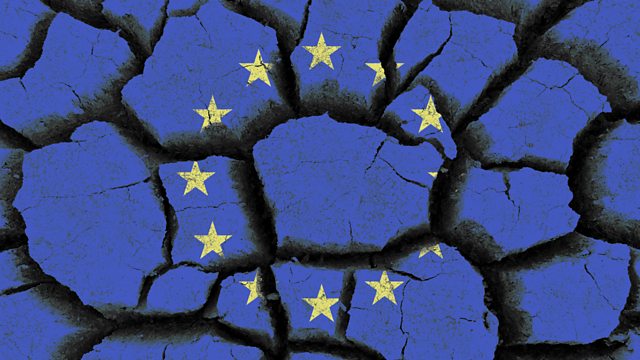
    Source: www.brusselsjournal.com, 06-06-2009

  • Controversy over abuse conviction of BNP candidate

    Controversy over abuse conviction of BNP candidate

    By Tom Smithard

    The lead BNP candidate for Yorkshire in tomorrow’s European elections was once convicted of abusive chanting that included calling a ethnic minority police officer an “inferior being”, it can be revealed.

    Andrew Brons was fined £50 by Leeds magistrates in 1984 for using insulting words and behaviour after a confrontation with police when he was leader of the far-right group the National Front.The 61-year-old, who was 37 at the time, was also found guilty of acting in a manner calculated to blemish the peace.

    Mr Brons, then a politics lecturer at Harrogate College, was leading a group of supporters leafleting in Leeds city centre in October 1983. A shop assistant heard them shouting “National Front” and saw clenched-fist salutes, while a policeman heard other slogans including “white power” and “death to Jews”.

    PC John Raj, the area’s community constable and of Malaysian-origin, told the group to disperse after elderly shoppers voiced their fears. But when he asked Mr Brons to leave, the politician said: “I am aware of my legal rights. Inferior beings like yourself probably do not appreciate the principle of free speech.”

    Since being chosen as the BNP’s lead candidate in this week’s elections, Mr Brons has attempted to skirt over his controversial past. He denied the allegations at the time and last night continued to claim he had not made any abusive statements.

    But Mr Raj’s evidence was accepted over that of Mr Brons by both Leeds magistrates and a Leeds Crown Court judge who heard an appeal.

    Last night Mr Brons said: “I would not have said anything that would have jeopardised my employment at Harrogate College, which lasted from 1970 to 2005. “I categorically denied the allegations at the time which were clearly absurd.”

    But Denis MacShane, the Labour MP for Rotherham and author of a recent book on anti-semitism, said: “How much more proof is needed of the Nazi antecedents of the BNP?

    “The obsession of BNP candidates with Jews and the denial of the Holocaust should not be rewarded on Thursday.”

    Source: www.yorkshirepost.co.uk, 03 June 2009

  • BNP Candidate’s Sickening Holocaust Claims

    BNP Candidate’s Sickening Holocaust Claims

    By Erica Morris

    A British National Party candidate for today’s European election aroused further controversy last week, after a video clip surfaced on YouTube showing her calling “dentistry and plastic surgery” positive outcomes of the Holocaust.

    Marlene Guest from Sheffield made the comments during a television interview for Sky One in January of last year, during which she also minimised the number of Jews murdered in the Nazi death camps.

    She said: “Now Nick Griffin queried numbers… I’ve read a thing called Did 6 Million Jews Really Die?… If they’d have kept the crematorium going in this little camp for 24/7 for 50 years they still couldn’t have burnt that amount of bodies.”

    Guest is standing for the far-right party as its South Yorkshire candidate, acting as the local organiser for the BNP in that area, and has stood as a councillor for the party in five different elections but has never been elected.

    Karen Pollock, chief executive of the Holocaust Educational Trust said: “These comments are pure racism and an insult to the millions who died and survived the Nazi death camps. I encourage people to go out and vote next week and prevent those who espouse racist views from being elected.”
    Sheffield Jewish figures Sir Irvine Patnick, former Hallam MP and current vice president of the Orthodox Synagogue, and John Speyer, chair of the Reform Synagogue, said in an open letter: “In a normal democratic party, a candidate who quoted such material would surely be expelled.

    “We think the electorate should understand that this party remains a fascist organisation, in the tradition of Oswald Mosley.”

    The letter, signed by Jewish residents from across Yorkshire, added: “We believe a party which is so comfortable with neo-Nazi material and denial of the truth of the Holocaust, which decimated Jewish families and communities, is not fit to represent the people of Yorkshire.

    “We call on everyone to go out and vote. A high turnout will ensure the BNP’s message of division and hate is rejected.”

    Gordon Brown also lent his backing to the anti-BNP campaign, urging Britons to get out and vote to ensure the party is blocked from gaining seats in the European Parliament.

    In a letter in The Guardian on Monday, the Prime Minister was joined by sports and entertainment stars including Little Britain’s Matt Lucas and Manchester United defender Gary Neville urging voters to show up en masse and send a clear message rejecting the BNP, who are fielding dozens of candidates in today’s election.

    The letter, which is also signed by Shoah survivor Ben Helfgott, says: “The British National Party and its allies are a threat to everything that makes us proud of this country we love. The BNP is working hard to conceal its extremism because it knows that people in Britain totally reject the politics of racism and hatred.”

    Meanwhile, French comedian Dieudonne M’bala M’bala has found a spot on today’s ballot, drawing on anti-Zionist narrative for his campaign which aims at “wiping out Zionism” and condemns “the pro-Israeli lobby and the tyranny of neo-Liberalism”.

    Calling for the comic’s party to be banned from standing, France’s National Bureau of Vigilance Against Anti-Semitism said images of a crossed out Israeli flag over a map of France “constitute an insult and a threat to oust Jews from their country”.

    Source:  www.totallyjewish.com, 4 June 2009

  • Emergence of a New Middle East Alliance

    Emergence of a New Middle East Alliance

    Patrick Seale

    usWhile U.S. President Barack Obama makes history in Cairo this week, a new regional grouping is taking shape in the northern part of the Middle East which could turn out to be equally significant.

    Turkey, Iran, Iraq and Syria are developing trade, energy and security ties which signal a common will to shape their national destinies free from external – and especially Western — dictation. What are the factors driving this new grouping? They are numerous, and mostly specific to each country.

    Turkey – having faced disagreements and disappointments with the U.S. (over the Iraq war), with the European Union (over the slow pace of accession negotiations) and with Israel (over the Palestine question) — has developed an ambitious regional policy towards its Arab and Islamic neighbours.

    Turkey’s trade with Iran, which was a mere $1bn in 2000 rose to $10bn in 2008, and is projected to double to $20bn in the not too distant future. Turkey is planning to invest $12bn in Iran’s South Pars gas field – a policy strikingly at variance with the call by Israel and its American friends for additional sanctions against Iran. Some one million Iranian tourists visit Turkey each year, and millions more visit Iraq, especially Kerbala, the place where Hussein, grandson of the Prophet Muhammad was martyred in 680. His tomb is the Shi‘is holiest shrine.

    Syria’s strategic partnership with Iran is now 30 years old, and shows no sign of waning. The Tehran-Damascus-Hizballah axis is a geopolitical fact of life in the region and was widely seen, during in the Bush years, as the main obstacle to U.S.-Israeli hegemony. In contrast to his predecessor, Obama is now seeking to reach out to both Iran and Syria, but he is apparently not yet ready to recognise that Hizballah is an unavoidable actor on the Lebanese scene. If Obama’s ambitious Middle East peace plans are to be realised, a U.S. dialogue with both Hizballah and Hamas cannot be long delayed.

    Syria’s relations with Turkey – strained almost to the point of war in 1998 over Syria’s backing of the Kurdish PKK leader, Abdallah Ocalan — have improved dramatically. Two-way trade is flourishing. A straw in the wind was the recent Turkish decision to increase the flow of Euphrates water to Syria’s north-east, which has been badly hit by drought.

    Syrian-Iraqi relations, marked by extreme hostility during Saddam Hussein’s rule, have also greatly improved. Last April, Syria’s Prime Minister Muhammad Naji Otri signed a wide-ranging agreement in Baghdad establishing a free trade zone and providing for cooperation in energy and education. Syria is to participate in the rehabilitation of the Kirkuk to Banias oil pipeline which passes through Syrian territory. Syria’s port at Latakia is to be expanded and road links to Iraq improved, to provide transit facilities for Iraq’s import- export trade. A train carrying 800 tons of steel left the Syrian port of Tartous on 30 May for Baghdad, the first rail freight trip between the two countries in decades.

    Iran, Turkey, and Syria all have a stake in Iraq’s future. Iran would clearly like Iraq to be a friendly neighbour under continued Shi‘i leadership. It wants Iraq to revive, but never again to be so powerful as to pose a threat as deadly as Saddam Hussein’s. Memories of the 1980-88 Iran-Iraq war are still too recent. Iran would probably prefer Iraq to develop into a federal state, and therefore relatively weak, rather than a strong unitary state. There are, however, no illusions in Tehran that Iraq, a major Arab country with a strong nationalist tradition, will ever consent to be an Iranian puppet.

    Whoever wins the Iranian presidential elections on 12 June – whether it is the conservative incumbent Mahmoud Ahmadinejad, or his principal challenger, former premier Mir-Hussein Mousavi, a ‘moderate’ conservative backed by the main reformist parties – the main lines of Iran’s external policy are unlikely to change: close ties with Syria, Iraq and Turkey; opposition to Sunni extremism in Afghanistan and Pakistan; support for Hizballah and the Palestinians; and continued uranium enrichment.

    What sort of Iraq, its neighbours wonder, will emerge from the slaughter, destruction and chaos of the past six years? Can a new regional balance be reached now that Iraq is again able to assert its national interests?

    It seems clear that Iraq has turned a corner. Violent deaths in May, at about 165, were among the lowest for any month since the U.S.-led invasion of 2003. Security is gradually returning, although still marred by horrendous suicide bombings. The Iraqi security forces – army, police, and intelligence — are steadily improving in size and efficiency. The recent conclusion of a Status of Forces Agreement (SOFA) with the United States — with firm deadlines for the withdrawal of American armed forces — was an important expression of Iraqi sovereignty regained.

    But much remains to be done. Sunni-Shi‘i relations in Iraq remain tense, while Arab-Kurdish relations remain problematic; a hydrocarbons law has not yet been passed by parliament (although the central government has thought it best to turn a blind eye to the start of oil exports from the Kurdish region to Turkey.)

    War of Necessity, War of Choice, a recent book by Richard Haas contrasts the 1990 war to free Kuwait with the 2003 war to overthrow Saddam Hussein. The first, he argues was a war of necessity, the second a war of choice — and a very bad choice at that. It had a catastrophic impact on America’s armed forces, on its finances and its reputation. The Iraq war killed hundreds of thousands of Iraqis, displaced millions, shattered the country’s infrastructure, released sectarian demons, and upset the regional balance to Iran’s great benefit.

    Haas, a former senior American official, is now head of the prestigious New York–based Council on Foreign Relations. His book makes clear that Saddam’s alleged possession of Weapons of Mass Destruction was not the real motive for war. Pressure to attack Iraq came essentially from the civilian leadership at the Pentagon – especially from the then deputy defence secretary Paul Wolfowitz – and from other neo-cons in Vice-President Dick Cheney’s office, whose geopolitical fantasy was to overthrow the main Arab regimes, as well as the mullahs in Iran, and restructure the entire area, so as to make it safe for Israel.

    The neo-cons’ opportunity came because of America’s perceived need, after the 9/11 terrorist attacks, to send a big message to the Arab world about U.S. military power. Haas’ book is likely to revive the debate about the role of Israel’s friends in Washington in pushing the U.S. into war in Iraq. It will provide Barack Obama with ammunition to resist Israeli pressure to attack Iran.

    The grouping of Turkey, Iran, Iraq and Syria may not yet be a full-fledged alliance, but numerous common interests are pulling the four states in that direction. Not least is a concern about possible Israeli aggression – directed against Iran and Syria – and of continued uncertainty about the future course of American policy.

    Source:  www.daralhayat.com, 06 June 2009

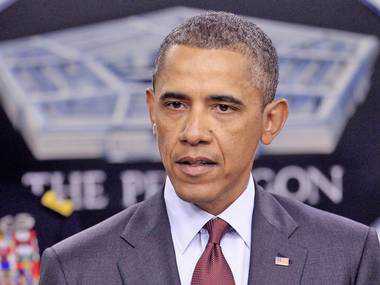
  • Obama, Sarkozy disagree Turkey’s entry to EU

    Obama, Sarkozy disagree Turkey’s entry to EU

    AP foreign

    CAEN, France (AP) – €” President Barack Obama and French President Nicolas Sarkozy don’t see eye to eye on whether Turkey should be allowed to join the European Union.

    Obama supports EU membership for the largely Muslim country. Sarkozy (sahr-koh-ZEE’) opposes it.

    Obama says Turkey is an important NATO ally is helping with the war in Afghanistan. He says Turkey’s economy is growing and that the country wants closer relations with Europe — something Obama says he encourages.

    Sarkozy says he supports Turkey’s integration into Europe, but that he and Obama disagree on how to achieve it.

    The two leaders spoke at a news conference Saturday before D-Day celebrations in Normandy, France.

    Source: www.guardian.co.uk, June 7 2009

  • BNP ‘wife’ hits out at TV show

    BNP ‘wife’ hits out at TV show

    By Richard Marsden
    A BRITISH National Party Euro election candidate from South Yorkshire has been condemned by Jewish leaders for remarks made about the Holocaust in a television documentary.
    Marlene Guest, of Kimberworth Park, Rotherham, claimed ‘dentistry and plastic surgery’ were positives to come out of the genocide, while being filmed for Sky One documentary ‘BNP Wives’.

    Mrs Guest, standing for the far-right party as a candidate in next week’s European Parliament elections, also questioned the scale of the atrocity, saying: “I’ve read a thing called ‘Did Six Million Jews Really Die?’.

    “If they’d have kept the crematorium going 24/7 for 50 years, they still couldn’t have burnt that amount of bodies.”

    Afterwards she claimed her comments had been ‘twisted’ and said that before the offensive remarks she had told film-makers: “You can’t say anything good came out of the Holocaust.”

    But leading Jewish figures from Sheffield, former Hallam MP Sir Irvine Patnick, vice president of the Orthodox Synagogue, and John Speyer, chair of the Reform Synagogue, said: “In a normal democratic party a candidate who quoted such material would surely be expelled.

    “The BNP, on its website, congratulated Marlene Guest on her TV appearance.

    “We think the electorate should understand that this party remains a fascist organisation, in the tradition of Oswald Mosley.”

    In a letter signed by other leading Jews from across Yorkshire, Sir Irvine and Mr Speyer added: “We believe a party which is so comfortable with neo-Nazi material and denial of the truth of the Holocaust, which decimated Jewish families and communities, is not fit to represent the people of Yorkshire.

    “We call on everyone to go out and vote. A high turnout will ensure the BNP’s message of division and hate is rejected.”

    Mrs Guest said: “I am not anti-semitic and never have been. I have grandfathers who fought in both World Wars and I think the Holocaust was a horrible, evil thing.

    “I am sick of people going on about this film.”

    She added she had asked the makers to remove her from the documentary after she caught them looking at her correspondence but they refused to edit her out and she said she ‘couldn’t afford a lawyer to stop them’.

    Source:  www.thestar.co.uk, 27 May 2009