Month: June 2009

  • English Festival June 30 – July 4

    English Festival June 30 – July 4

    This summer Linx Danismanlik is once again hosting a week of free English conversation for those who would like to improve their English speaking abilities. There will be English conversation groups every evening from Tuesday June 30 until Friday July 3 at the Aden Hotel in Kadikoy. On July 4 there will be a boat trip on the Bosphorus for any who would like to attend. These groups will be personally led by native English speakers from America and the United Kingdom as well as experienced speakers of English from other countries.

    Please join us for these fun activities and improve your English at the same time! If you would like more information, please email [email protected]. Or call Steve Van Sloten at 0534 297 1917.

    www.greenhousekitap.info

  • RACIST RANTS OF ELECTED BNP MAN, ANDREW BRONS, REVEALED

    RACIST RANTS OF ELECTED BNP MAN, ANDREW BRONS, REVEALED

    Jamie Doward, home affairs editor

    The Observer, Sunday 14 June 2009

    Yorkshire MEP Andrew Brons drew up some of the National Front’s most inflammatory policies

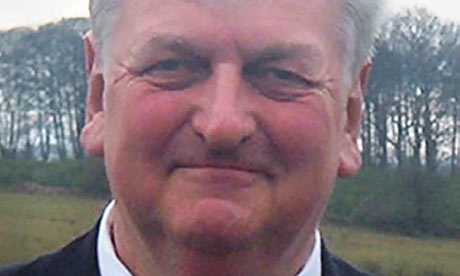
    British National party MEP Andrew Brons. Photograph: BNP/PA
    British National party MEP Andrew Brons. Photograph: BNP/PA

    One of the British National party’s first MEPs’ attempts to play down his past links to the extreme right as “silly” teenage posturing are today exposed as a sham after it emerged that for many years he played a crucial role in shaping the National Front’s most overtly racist policies.

    In 1983, when he was in his late twenties, Andrew Brons edited the National Front’s general election manifesto that called for a global apartheid to prevent the “extinction” of whites everywhere.

    The Let Britain Live! manifesto was prepared by the party’s policy department, chaired by Brons. It outlined a series of hugely controversial positions, crystallised in one of its opening statements: “The National Front rejects the whole concept of multiracialism. We recognise inherent racial differences in Man. The races of Man are profoundly unequal in their characteristics, potential and abilities.”

    The manifesto claimed the UK had been “swamped” by “racially incompatible Afro-Asians” and that “Black muggings of White people, especially elderly ladies, occurs regularly”.

    It continued: “The eruptions in Bristol in 1980 and Brixton in 1981 were just two examples of the ‘cultural enrichment’ promised to us by the multiracialists.” And it claimed: “We believe the gradual dismantlement of the Apartheid system over the last 17 years to be retrograde … The alternative to Apartheid, multiracialism, envisages an extinction of the White man.”

    Brons was also an enthusiastic contributor in the 1970s and 1980s to Spearhead, a far-right magazine considered so extreme even the BNP tried to distance itself from it. In two lengthy polemics for the magazine, Brons outlined the supposed importance of nationalism and interpreted genetic studies to suggest Europeans had a “greater cognitive ability” than non-whites. He attacked the influence of “people of Jewish ethnic origin” and peddled the myth that a number of predominantly Zionist organisations were controlling the world.

    The now retired college lecturer wrote: “One ethnic, national and religious group whose power and influence has undoubtedly increased has been the Jews. It can be no mere coincidence that the number of people of Jewish ethnic origin to be found in internationalist and multiracialist schools of thought and organisations of action is out of all proportion to their numbers in the population.”

    Brons, who was elected as the BNP MEP for Yorkshire and the Humber this month, has tried to distance himself from his National Front days. “People do silly things when they are 17,” he said recently. “Peter Mandelson was once a member of the Young Communist League but we don’t continue to call him a communist.”

    But his critics say his relationship with the National Front was more than a youthful dalliance and question the extent to which he has left his past behind. A 1980 edition of National Front News, the party newspaper, carried an article about Brons saying he was prepared to go to jail for his beliefs. It noted that Brons refused a “Negro reporter permission to attend two National Front ticket-only meetings” and explains that Brons, then 29, has “campaigned against Coloured Immigration since he was a teenager” – suggesting his extremist views have been a feature as much of his adult as his teenage life.

    Brons seized the NF chairmanship in 1980 when John Tyndall quit to form the BNP. In 1984 Brons was convicted of using insulting behaviour towards an ethnic-minority police officer and left the party, citing family problems.

    At the National Front, Brons was a close ally of Richard Verrall, the author of the Holocaust-denial tract Did Six Million Really Die?, who was vice-chairman. In 1981, while Brons was chairman, the NF endorsed We are National Front, a pamphlet carrying an introduction from Verrall. It had photographs of Brons and Verrall as well as a picture of a gorilla and a black man stating: “These two creatures look the same, don’t they?”

    Anti-racism and Jewish support groups yesterday described Brons’s failure to condemn his past activities as disturbing. “From a young man until well into his middle age, Andrew Brons was very much involved in a series of viciously antisemitic and racist far-right movements,” said a spokesman for the Community Security Trust, which monitors attacks on the UK’s Jewish community. “It’s hard to believe he has undergone a serious conversion since then.”

    Searchlight, the anti-fascist organisation, said Brons was influential in shaping the NF and it was important that those voting for him should be aware of his past views. “The fact that Brons is an intellectual fascist and bigot rather than an ignorant fascist and bigot cuts little ice,” a spokesman said. “We are unimpressed by his claims that his prejudice was a result of youthful exuberance.”

    Attempts to contact Brons through the BNP were unsuccessful.

    Source:  www.guardian.co.uk, June 14th, 2009

  • Turkey to buy Russian Night Hunters

    Turkey to buy Russian Night Hunters

    16:02 15/06/2009

    MOSCOW. (RIA Novosti military commentator Ilya Kramnik) – A Turkish military delegation has come to Russia to discuss the possible acquisition of Mi-28 attack helicopters. This is not the first time the two countries have discussed cooperation.

    In the 1970s and the early 1980s, Turkey bought 32 used AH-1P/S Cobra attack helicopters in the United States and later upgraded them to the AH-1F specifications. The Turkish army still has 23 AH-1P/S Cobras. However, Turkish military authorities started thinking about replacing them in the mid-1990s.

    During the subsequent tender they considered several models of combat helicopter, including the Ka-50-2 Erdogan, a version of the Russian Ka-50 Black Shark developed by Russia and Israel for Turkey. Unlike the Ka-50 where the pilots sit side-by-side, the seats in the Erdogan are placed in tandem as in the U.S. Cobra chopper.

    However, Turkey did not choose the Kamov helicopter for political reasons, such as growing U.S. influence in Turkey and, conversely, the lack of Russian influence. Also, Russia could not then guarantee the timely production of the required number of new helicopters or post-sale service. Lastly, the Ka-50 was not mass-produced even for the Russian army at that time.

    An updated Cobra with new weapons and equipment was the most probable winner in the Turkish tender, but the contract was eventually awarded to a European producer, the Anglo-Italian AgustaWestland, which proudly proclaims to be “a total rotorcraft capability provider.”

    AgustaWestland, announced as the winning bidder in March 2007, pledged to assemble 50 T129 prototypes in Turkey. However, the first T129 will be rolled out only in 2015, whereas Turkey needs choppers now to fight Kurdish militants.

    The purchase of seven used AH-1W SuperCobras in 2008 has not solved the problem either. Turkey needs modern attack helicopters to fill the gap until 2015 and for several more years while its pilots learn to fly the T129 choppers.

    As a result, Turkey has decided to purchase Russian machines. It has opted for the Mi-28N Night Hunter, which, unlike the Ka-50, has been mass-produced since the 1990s and is supplied to the Russian Armed Forces.

    Turkey may buy between 12 and 32 helicopters within two or three years. It is unclear if it wants the choppers with or without top-mounted radar, which is an extremely expensive option.

    The Turkish military had once considered buying the Mi-24 Crocodile, which has several common structural elements with the Mi-28. The Mi-17 multirole helicopter is currently used in Turkey for military, police and civilian purposes.

    Significantly, the Mil helicopters have for years been used in similar terrain in the Caucasus, Central Asia and the Middle East. Moreover, Russia’s influence and relations with Turkey have grown dramatically and many contradictions in bilateral ties have been smoothed over since the 1990s.

    Therefore, Turkey could buy the Mi-28, whose track record over the past 20 years and the initial results of its combat use show that this highly versatile helicopter could remain on combat duty even after T129 assembly start-up in Turkey.

    And the final touch: the protection and combat payload specifications of the T129 are below those of the Mi-28.

    The opinions expressed in this article are the author’s and do not necessarily represent those of RIA Novosti.

  • Obama’s link to the Muslim world: Turkey

    Obama’s link to the Muslim world: Turkey

    OPINION

    The West can learn a lot from Ankara’s perspective and democratic successes.

    By Helena Cobban
    As President Obama looks for partners in the Muslim world, he should consider listening to the government of Turkey as much as he listens to Egypt’s president. He could learn a lot from Turkey about how a smart Islamist party can be a valued participant in a democracy.

    Turkey, a NATO ally, has been ruled since 2002 by a moderate Islamist party – the Justice and Development Party (AKP) – that has proved its commitment to democracy and pluralism at home and to an active, nearly always nonviolent, engagement in diplomacy abroad. And that’s why the record of the AKP in Turkey is so compelling.

    At home, after the party first won power, grass-roots supporters tried to leverage that victory to ban alcohol sales in some Turkish cities. The judiciary struck down those regulations – and the national government complied with the ruling.

    Later, the national government tried to lift the country’s longstanding ban on admitting scarf-wearing women to universities or to jobs in government. Once again, the courts struck down the proposal. And once again, the government complied without a protest. (That, though the wives of both the prime minister and the president always wear head scarves in public.)

    In 10 days of travel, in three Turkish cities and vast swaths of countryside, I saw Turkish women wearing clothes that ranged from skimpy Western dress topped by tumbling – sometimes bleached-blond – hairdos, to a stylish version of Muslim hijab that involves an elegantly tied head scarf over a mid-thigh tunic and jeans, to the baggy black coverup of the ultrapious.

    Most Turkish women are near the middle of that spectrum, and in many places young women with and without head scarves mingle easily, chatting and laughing together.

    Regarding domestic affairs, one professor in Istanbul told me, “If you’re a politically liberal Turk who cares about women’s rights, the rights of the Kurdish minority, and religious minorities here, you couldn’t find a better party than the AKP.” I heard versions of that voiced by several other strongly secular Turks.

    Back in early April, Mr. Obama came to Turkey and delivered a first important address to the Muslim world. Turks seemed delighted that he had included their country on his first trip abroad as president, and nearly all appreciated the respectful way he addressed the concerns of Turks and other Muslims.

    On June 4, he gave another major address to the Muslim world in Cairo. Egypt, like Turkey, is a historic center of Muslim life. But the Turkish government follows policies that are much more in line with Obama’s inclusive, diplomacy-focused approach to international affairs.

    Turkey’s two AKP governments have maintained good ties with Europe and with all Turkey’s neighbors – including Greece, Iran, Georgia, Iraq, and Syria. In 2007-08, Ankara also undertook an important mediation effort between Israel and Syria.

    But Ankara fell afoul of the Bush administration in Washington for a number of reasons. Most significantly, in 2003, Ankara – like many other NATO allies – strongly opposed the US invasion of Iraq, and it refused to allow Washington to launch part of the invasion from Turkey.

    The Bush administration also objected to the good ties the AKP maintained with Syria and – after the hard-line faction won the Palestinian elections in 2006 – with Hamas.

    While George W. Bush was president, he seemed to ascribe little value to the inclusive and generally de-escalatory policies the AKP government has pursued at home and in the broader Middle East. He preferred instead an approach to the Middle East that sharpened divisions between the two groups he defined as “moderates” and “extremists.”

    In the former group were the notoriously anti-democratic governments of Egypt and Saudi Arabia. In the latter, any government or party that seemed to support Iran, regardless of whether – like Hamas and Lebanon’s Hezbollah – they might have proved their popular support in democratic elections.

    Indeed, in the Bush years, Washington worked actively to overthrow both Hamas and Hezbollah, and maintained what one Bush White House official has described as “a state of quasi-war” with Syria.

    Several Bush-era officials openly questioned whether the electoral victories of Hamas and Hezbollah actually “proved” that a party could be both dedicated to Islamist principles and democratic rule over the longer term. Turkey’s experience provides intriguing evidence that it can.

    Obama should value Turkey’s views on regional affairs. He may not be ready yet to go along with all the advice he receives from the AKP government in Ankara. But Ankara has much valuable experience that it can share with its NATO ally.

    Helena Cobban is a former Monitor correspondent. Her latest book is “Re-engage! America and the World after Bush.”

    Source:  www.csmonitor.com, June 12, 2009
  • A Brief Report on Azerbaijanis in Iran Prepared by The World Azerbaijanis Congress June 1st, 2009 To Switzerland Parliament members and United Nations High Commission on Human Rights

    A Brief Report on Azerbaijanis in Iran Prepared by The World Azerbaijanis Congress June 1st, 2009 To Switzerland Parliament members and United Nations High Commission on Human Rights

    01 June, 2009

    by Professor Gholam-Reza Sabri-Tabrizi, President of  World Azerbaijanis Congress

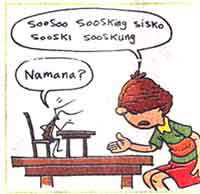
    Cartoon showing an Azerbaijani Turkish-speaking cockroach, from a Tehran-based government-owned periodical called 'Iran' newspaper
    Cartoon showing an Azerbaijani Turkish-speaking cockroach, from a Tehran-based government-owned periodical called 'Iran' newspaper

    The Special Representative of Switzerland Parliament members and The United Nations High Commission on Human Rights

    The situation on Islamic Republic of Iran, With special reference to South Azerbaijan,

    First, we deeply appreciate your giving us an opportunity to bring our peoples’ deep grievances to your attention.  We also would like to thank you for defending all those whose basic and ethnic human rights have been grossly violated, especially  millions of Azerbaijani Turks that have been exposed to forced assimilation and Persianization. We hope you will give due voice to over 30 million Azerbaijanis in your reports to the UN General Assembly. Helping us in our efforts to fight the systematic destruction of ethnic identities will promote freedom and equality worldwide. Only if you report these injustices to the world community can proper actions be taken to terminate the systematic destruction of ethnic identity and gross violation of human rights in Iran over the last 70 years. Azerbaijanis are looking for your help.

    Iran is a multiethnic, multicultural and multilingual country. Persians (Farsis), Azerbaijanis (Azerbaijani Turks), Kurds, Arabs, Loris, Beluchies and Turkomans have lived in Iran for thousands of years. Until the 1920s, they all retained and promoted their unique culture, history and language, without harming each other’s identities.  However, the inception of the Pahlavi dynasty’s supremacist policy in the 20s has endangered this semi-harmonious way of life.

    With his alleged national unity policy, Reza Shah Pahlavi designed a plan, forcing all non-Persians  to sacrifice their ethnic identity and language, in order to fulfill his vision of purely Persian Iran.
    Unfortunately, his successors, including the Islamic Republic, followed and perfected his inhumane conduct.  Subsequent results have been brutal against all persons not of Persian descent.  Azerbaijanis, Kurds, Loris, Beluchis, Arabs and Turkomans have been under tremendous Persianization.

    Iran’s reformist leader, President Khatami, deceived the global community with his talk of “dialogue between civilizations,” meanwhile suppressing the people of Iran by ignoring Human Rights in general and Azerbaijani Turks in particular. However the reaction of World Human Rights’ organizations to this assimilation and rather cultural genocide has been very slow and ineffective due to lack of objective information from South Azerbaijan (Iran).

    More than 30 million Azerbaijanis are on the verge of losing their language and rich cultural heritage, which they have preserved for thousands of years. They are paying heavy tolls to obtain Iran’s purported “national unity.” This “national unity” with “Islamic” and fanatically supported theocratic government is determined to annihilate Azerbaijani national and ethnic identity, the Iranian government has participated in forced assimilation and other methods of Persianization to create a monolingual “national unity.” We would like to briefly highlight some of them:

    Policy on Language

    The Constitution of Islamic Republic of Iran in the article 15 claims: “The state and common language and script of Iran is Persian. Documents. Correspondence, official texts and text books shall be in this language and script. However, the use of local and ethnic language in the press and  for the mass media and the teaching of  their literature shall be allowed, besides the Persian language.”

    The Constitution Revolution in 1905-1911, the Democratic movement in 1945-46 and subsequent agreement by the Iranian government to guarantee ethnic rights as well as the constitution of Islamic Republic have for some degree taken ethnic grievances into consideration. However, the Iranian governments have all been against honoring their promises and the constitution.

    The Iranian government has banned the Azerbaijani Turkish language in schools. Education is available only in the Persian language. Many first grade school children struggle to understand school books written in Persian. Those children unaccustomed to Persian suffer high drop out rates. To prevent this, some parents teach their children Persian as their primary language, rather than their native Azerbaijani Turkish. Said Persian instruction usually comes at the expense of children’s mastery of Azerbaijani Turkish, thus children are encouraged to replace Persian with their mother tongue for social and job advancement.

    Television and radio broadcasts help to propagate the hybridized Azerbaijani Turkish, considered a local language. So-called “local languages,” however, are rarely used and thus marginalized, with Persian predominating Iranian media.  Azerbaijani Turkish, in fact, has no place in Islamic Republic’s media.

    Discrimination operates in other ways, as well. In cities like Tabriz, where Azerbaijanis comprise more than 99% of the population, the judiciary and government systems still must operate solely in Persian. Incredulously, proceedings for a lawsuit comprised of a Azerbaijani plaintiff and an Azerbaijani defendant in a Azerbaijani city, with an Azerbaijani judge, prosecutor and defense lawyer, must be conducted in, not Azerbaijani Turkish, but Persian.

    The Iranian government’s destruction of language is one part of the multi-pronged attack to eliminate Azerbaijani ethnic identity. If this policy persists, Azerbaijani identity is doomed to perish.

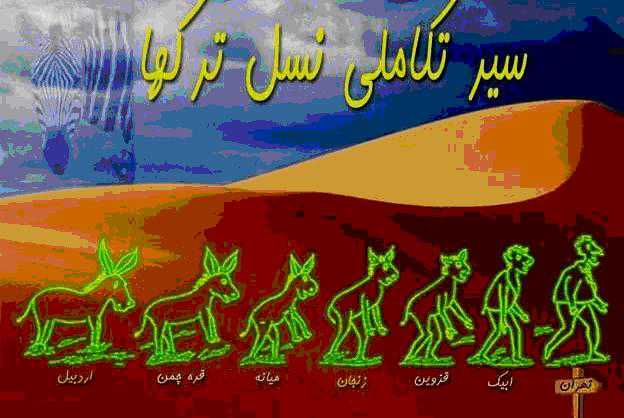
    The following CARTOONS show the attitude and view of Iran Islamic Republic and Persian chauvinism

    donkeyevolution

    CONTINUE >>> [download id=”4″]

  • Turkish General Staff Accused of Seeking to Undermine the Government

    Turkish General Staff Accused of Seeking to Undermine the Government

    Turkish General Staff Accused of Seeking to Undermine the Government

    Publication: Eurasia Daily Monitor Volume: 6 Issue: 114
    June 15, 2009
    By: Saban Kardas
    On June 12, the liberal left Taraf daily triggered a political crisis in Ankara. Taraf claimed to have uncovered a four-page unclassified document, detailing an alleged action plan for the military to combat the “reactionary activities” against secularism. It was allegedly prepared by a colonel from the operations department at the headquarters of the chief of the general staff. This signals a new confrontation between the Turkish military and the governing Justice and Development Party (AKP).

    “The Action Plan against Reactionaries (Irtica),” allegedly prepared in April, was seized during a police search in the offices of Serdar Ozturk, the lawyer representing retired Colonel Levent Goktas -both arrested as part of the Ergenekon investigation. The document defines the AKP and the Gulen movement as threats to the secular order in Turkey, and accuses them of seeking to establish an Islamic state. The plan also criticizes the Ergenekon investigation, describing it as an attempt by Islamic groups to undermine the state and defame military personnel. The action plan proposed various measures aimed at “revealing the hidden agenda” of the AKP and Gulen movement, and undermining their public support. It also contemplates a psychological warfare campaign to promote widespread suspicion against these groups -even amongst pious Muslims- and exaggerate the threat they pose. Moreover, the plan suggests psychological operations against members of the Turkish armed forces suspected of being affiliated to Islamic groups. Furthermore, such propaganda seeks to discredit the Ergenekon investigation and mobilize public support for any military personnel implicated (Taraf, June 12).

    Taraf’s story has proven to be controversial in Ankara. The office of the chief of the general staff announced that the military court had banned any further media coverage of the story. The statement described the alleged action plan as related to national security, public order and public security, and banned any publication of its contents. The military prosecutor launched an investigation into the source of the leak and the dissemination of the document. When questioned about these developments during his weekly press briefing, the military’s spokesman Metin Gurak said that the military prosecutor will investigate all aspects of the story. Nonetheless, he declined to explain whether the investigation would be launched against “the existence of such a document or how it was leaked” (Anadolu Ajansi, June 12).

    Despite the military’s ban on publicizing the document, several media outlets close to the Gulen movement and the AKP government chose to ignore it. The Zaman daily ran a counter campaign against the military’s attempts to ban media coverage. Zaman and its sister daily Today’s Zaman, covered the development intensively, and portrayed the document as representing a serious threat to Turkish democracy and supplying more evidence of the ongoing influence of the military within the political system. They used this incident to make two related points. First, it sought to mobilize the government to revitalize its stalled domestic reforms aimed at boosting democratization and civilian control over the armed forces. Second, it called on the military leadership, particularly the Chief of the General Staff General Ilker Basbug, to demonstrate commitment to democracy by acting decisively over this issue. Equally, it demanded clarification on whether the military as an institution or its commissioned officers are implicated in such activities against the civil authority (Zaman, Today’s Zaman, June 13, 14, 15).

    Liberal columnists in other newspapers emphasized similar arguments, noting that Turkey faces ongoing challenges in order to curtail the military’s political influence (Milliyet, Radikal, June 13). Others largely restricted their reporting to the military’s ban on the Taraf story. Hurriyet quoted Serdar Ozturk’s lawyer, who claimed that the document was placed in his client’s office by the pro-Gulen movement clique within the Turkish police. He said they would press charges against the police and the prosecutors for leaking the document (Hurriyet, June 13).

    Prime Minister Recep Tayyip Erdogan reacted angrily to the document. On June 13, while addressing a party congress in Kars, he emphasized his determination to protect democracy and maintained that the AKP is the main guarantor of Turkey’s constitutional order (Anadolu Ajansi, June 13). Speaking at another party congress on June 14 in Sanliurfa, he reiterated this commitment, and promised to combat any plots against democracy. Erdogan contextualized the document, however, as part of other efforts to weaken the AKP, and argued that “in a democratic environment we cannot remain a spectator to this illegal process against the AKP. We are investigating [the plots against the AKP] and will take legal action if necessary” (www.haberturk.com, June 14).

    Taraf has run controversial stories by publishing unclassified military documents, since it was first published by a group of liberal journalists in 2007 -exposing either the activities of groups within the military seeking to topple the government, or the flaws in the Turkish army’s campaign against the PKK (EDM, July 18, 2008; Terrorism Focus, October 30, 2008). Basbug has publicly accused Taraf in the past of conducting a defamation campaign against the military. Erdogan also joined Basbug in lambasting Taraf, but this did not change its publication policy (www.haber7.com, October 17, 2008).

    If the latest revelation in Taraf proves to be true, it is likely to have significant repercussions for the current balance of power in Ankara. Erdogan and Basbug apparently reached a common understanding on major political issues, such as the Ergenekon investigation and the management of the Kurdish question. They have established close communication channels to exchange opinions. Erdogan did not object to Basbug’s controversial efforts to reassert a role for the military within Turkish politics (EDM, April 15), while Basbug permitted the trial of military officers in the Ergenekon case. Their management of the claims that the military headquarters might be involved in a conspiracy against the government could force them to redefine their working relationship, with significant implications for the future of Turkish civil-military affairs.

    https://jamestown.org/program/turkish-general-staff-accused-of-seeking-to-undermine-the-government/