Month: June 2009

  • PM ERDOGAN PUSHES MORE R&D AS WAY OUT OF CRISIS

    PM ERDOGAN PUSHES MORE R&D AS WAY OUT OF CRISIS

    Chaired by Prime Minister Recep Tayyip Erdogan, the High Council for Science and Technology (BTYK) convened yesterday in Ankara. Sixteen Cabinet ministers, including Deputy Premiers Cemil Cicek and Bulent Arinc, State Minister Mehmet Aydin, and Professor Nüket Yetis, the head of the Turkish Scientific and Technological Research Council (TUBITAK), attended the meeting as well. Addressing the council, Erdogan stressed the importance the government places on research and development. Stating that Turkey is feeling the global economic crisis to a certain extent, Erdogan called the crisis environment an opportunity to restructure the nation’s sustainable development plans. Reiterating his determination to focus on the opportunities presented by the crisis rather than its threats, Erdogan said, “We believe that research and development activities are critical for taking advantage of the chances brought by the crisis. This is scientifically proven, and also supported by the experiences of countries that emerged stronger from past global economic crises.” Erdogan also said that Turkey should attract more foreign researchers from across the world, calling the current number of such researchers employed by Turkish universities inadequate.

    /Sabah-Cumhuriyet/

    Turkish Press Review (18.06.2009)

  • Crisis veteran Turkey among first to recover in 2010

    Crisis veteran Turkey among first to recover in 2010

    Reuters, Wednesday June 17 2009

    By Alexandra Hudson ISTANBUL, June 17 (Reuters) – Turkey, a financial crises veteran, could be the first in emerging Europe to return to stable growth next year thanks to its robust banking system, lack of export dependency and enviable demographics. The global downturn has brought considerable pain to Turkey’s once fast-growing economy if not the high drama seen elsewhere — unemployment hit record levels, industrial production and capacity utilisation plummeted, and the lira is trading at levels last seen for a sustained period in 2003.
    But as some indicators begin to post faint gains many analysts forecast Turkey, dubbed “China on the Bosphorus” by one, could see the strongest growth of the ailing Emerging Europe region in 2010, with forecasts for economic growth next year as high as 3.0 percent.
    “We expect the economy to rebound faster than anyone else in emerging Europe,” said economist Manik Narain at Standard Chartered Bank, who sees 5 percent GDP decline in Turkey this year turning into growth of 1.5 percent next year.
    “Turkey is much less reliant on exports than peers,” said Narain, and while Turkey does depend on foreign capital inflow — often cited as a negative — credit markets are thawing.
    By contrast many banks in Eastern Europe are dependent on cash-strapped Western European parent institutions for funding, and are without the strong deposit base held by Turkish banks.
    While 2010 looks brighter Turkey must first weather this year’s contraction — forecast by the government at 3.6 percent and the IMF at 5.1 percent. Markets are braced for first-quarter gross domestic product figures on June 30 showing double-digit contraction.
    Such a fall would outstrip Turkey’s worst quarterly economic performance from the trough of the 2001 domestic crisis.
    But lessons learned in that crisis which wiped out several banks, have left Turkey’s banks well capitalised and stable. As credit markets thaw Turkish lenders are well placed to resume borrowing and lending activities to help spur domestic demand in the country of 72 million.
    “You can only grow domestically when you have the credit for it. Turkey has the combination of a banking system less damaged by the crisis and a large market,” said economist Christian Keller of Barclays Capital, who sees 2010 growth at 3 percent.
    Ratings agency Fitch forecasts Turkey will grow 2.5 percent next year, the highest growth of the region after Azerbaijan and topping a projected 2 percent rise in Russia.
    It ascribes this to Turkey’s relative lack of dependence on trade — the value of merchandise exports accounted for only 16 percent of Turkish GDP in 2007, compared with 78 percent for Slovakia, 27 percent for Russia and 33 percent for Poland.
    Turkey also lacks the huge dependence on commodity exports of countries such as Russia.
    Economist Neil Shearing of Capital Economics agrees Turkey could be among the fastest to emerge from the region, although he believes Poland could just beat Turkey as its fiscal position is stronger.
    “Turkey doesn’t have any of the obvious distortions in the banking sector such as the likes of Latvia, Romania, Hungary and Ukraine have seen,” he said.
    Turkey’s central bank has been able to act more aggressively in easing monetary policy and these rate cuts have been passed on more effectively than elsewhere, he said.
    Interest rates have fallen by a massive 800 basis points since last November. For related story click here [ID:nLG854256]
    But he cautions Turkey is heavily reliant on cyclical industries such as car manufacturing, which have been hard hit during the crisis, even though the government has just extended sales tax cuts to try and support the domestic auto industry.
    SPENDTHRIFT GOVERNMENT
    Optimism over Turkey’s outlook for next year is tempered by concern that Turkey is still without a new loan deal from the IMF, which could ease borrowing requirements, and fears Prime Minister Tayyip Erdogan’s big-spending government looks to have thrown fiscal caution to the wind.
    Even the central bank is urging the government to take care.
    In the first five months of 2009 the budget deficit surged to 20.683 billion lira from 2.060 billion a year earlier. The government has also revised its full-year budget deficit target to 48.3 billion lira from 10.4 billion lira.
    “Turkey can probably get away without an IMF programme but I think it would be fairly unwise to do so. It needs to persuade the market that it is fiscally prudent and the best way to do that is to sign up with a new IMF deal and ensure fiscal retrenchment,” said Shearing.
    After months of discussions and footdragging a new deal with the IMF is starting to look in doubt, particularly as talks are now mired in arguments about government spending.
    “Without an IMF programme the issuance need by the government could crowd out the private sector. 2010, when things should be getting better, might be exactly the time when high amounts of bonds will crowd out the private sector and drive up rates,” said Keller.
    “However, with an IMF deal we could have a surprise in growth on the upside.”
    Before the crisis struck, aspiring European Union member Turkey had grown an average of 6 percent each year over the past six years, overcoming domestic political strife to lure huge amounts of foreign direct investment.
    Any growth below such levels will still feel tough in a country with huge youth unemployment and a large grey economy.
    “Whatever happens the recovery in Turkey will be fairly tame, even if it is the first out,” said Shearing. (Editing by Toby Chopra)
    Guardian
  • Greek carrier Aegean to start flights to Turkey

    Greek carrier Aegean to start flights to Turkey

    17 Jun 2009

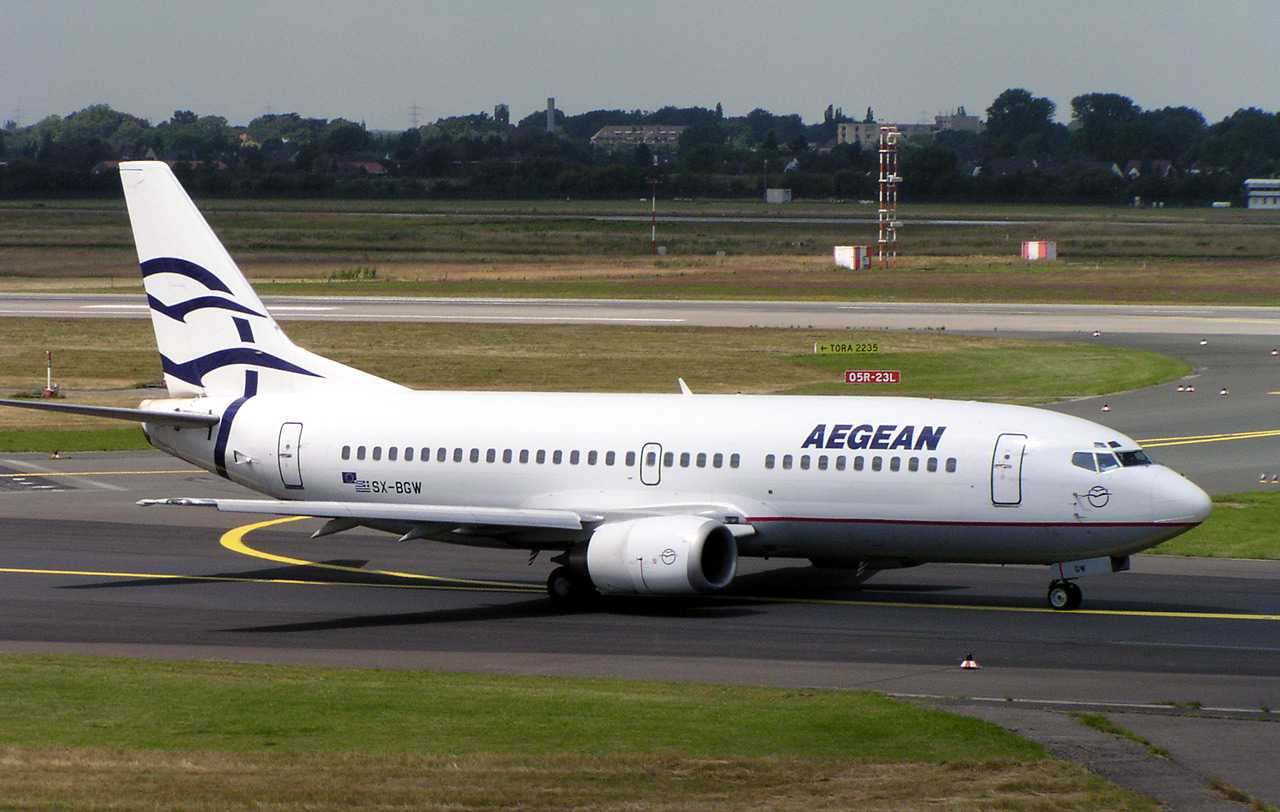
    ATHENS, June 17 (Reuters) – Greek carrier Aegean Airlines (AGNr.AT) said on Wednesday it will start a daily service to Istanbul, Turkey from Sept. 9, expanding its international routes.


    Aegean, Greece’s largest airline by passenger numbers in 2008, competes with recently privatised Olympic Airlines.


    The airline has been steadily expanding its routes outside Greece, adding seven destinations since late 2008, including Brussels, Berlin, Barcelona, Venice and Paphos in Cyprus.


    It will fly Airbus A320 aircraft on the Istanbul route.


    “After five years of efforts Aegean can now link Athens with a city symbolising so much for Hellenism,” chief executive Dimitris Gerogiannis said in a statement.


    Last month, Aegean clinched a deal to join Star Alliance, which includes UAL Corp’s United (UAUA.O), German Lufthansa (LHAG.DE), Air Canada ACa.TO., and Continental (CAL.N), eyeing access to many markets across the globe with large communities of Greek descendants. (Reporting by George Georgiopoulos; Editing by Dan Lalor)

    Reuters

  • INTERVIEW-Turkey talks on Armenia “paused” – EU mediator

    INTERVIEW-Turkey talks on Armenia “paused” – EU mediator

    * Envoy does not see new Turkey policy on Armenia changing
    * Pause should not last so long as to lose momentum-envoy

    By Michael Stott

    MOSCOW, June 17 (Reuters) – Turkey has taken a “tactical step backwards” on normalising relations with Armenia because of hostile domestic reaction to the move, the EU’s envoy to the region said in an interview.

    “A step back was taken by the Turkish side … but this is not a U-turn,” said EU South Caucasus envoy Peter Semneby. “We expect the conversations will continue.”

    After decades of hostility, Muslim Turkey and Christian Armenia announced in April a “roadmap” for re-establishing diplomatic relations and opening their shared border.

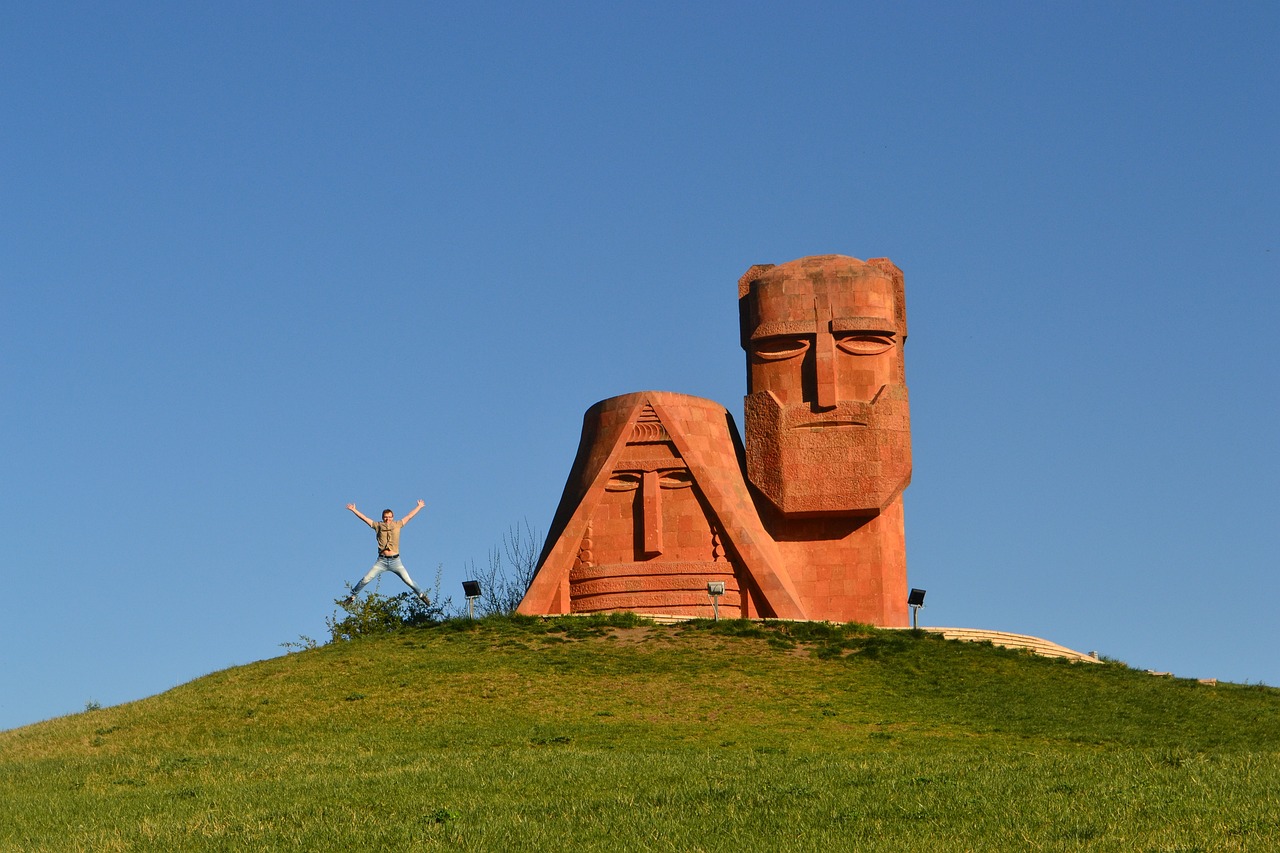
    But Ankara’s Muslim ally Azerbaijan said Armenia should first leave Nagorno-Karabakh, a mostly ethnic Armenian enclave which broke away after fighting a bloody war with Azerbaijan in the 1990s and claims independence.

    Turkey then offered support for the Azeri position, complicating further progress in talks with Armenia.

    Semneby said in the interview, conducted at the end of a visit to Moscow last week, that it was important the “pause” in the peace process between Turkey and Armenia did not last too long because of the risk that impetus would be lost.

    “The normalisation (with Armenia) became the subject of quite widespread and heated discussion in Turkey,” he added in earlier remarks to a small group of reporters. “It seems to me, this discussion became more heated than was expected.” Turkish Prime Minister Tayyip Erdogan promised Azerbaijan during a visit to Baku last month that Ankara would not open its border with Armenia — closed since 1993 — until Armenia ended what he termed its occupation of Nagorno-Karabakh.

    “I see this as a Turkish tactical step backwards,” Semneby told Reuters. “But fundamentally, the new foreign policy that has been pursued by the Erdogan government, I don’t see that this policy is changing.”

    PROGRESS

    Talks on the future of Nagorno-Karabakh have been dragging on for more than a decade under the auspices of the Minsk Group linking Russia, France and the United States.

    But Armenia, whose president, Serzh Sarksyan, is from Nagorno-Karabakh, is reluctant to budge and Azerbaijan periodically threatens military intervention.

    Nonetheless Semneby believes real progress is being made.

    “It is clear that if you look at the negotiating process, it is intensifying,” he told Reuters. “We had in a month two meetings and there will be another relatively soon between the presidents.”

    The Nagorno-Karabakh war, in which up to 30,000 died, was the bloodiest of a spate of conflicts which followed the 1991 collapse of the Soviet Union. Armed clashes still occur regularly along the lines separating Azeri and Armenian troops.

    Asked about the risk of conflict, Semneby said it would be foolish to neglect it but he felt both sides understood the enormous costs which would be involved in any large-scale military engagement.

    “Even with this very dangerous posturing that we see sometimes and the fact that the forces are not separated and there are incidents all the time, the two sides are by now used to managing incidents,” he said.

    “If anything, the Georgia war (last year with Russia), demonstrated the risks of military engagement … it was also a wake-up call to both countries how vulnerable they are.” (Editing by Alison Williams)

    Source:  www.reuters.com, Jun 17, 2009

  • Royal College of Midwives attacks BNP maternity claims

    Royal College of Midwives attacks BNP maternity claims

    rcmThe Royal College of Midwives has hit out at claims by the BNP that it blames immigration for increased pressure on maternity services.

    An article on the BNP website said: ‘According to a survey by the Royal College of Midwives issued in 2008, the quality of NHS care has plummeted because ministers failed to predict a massive rise in the birth rate among immigrant mothers.’

    According to the article, ‘several maternity wards at NHS hospitals in areas which serve largely white areas of the country, have been forced to shut their doors for months at a time because staff were needed elsewhere to deliver babies from foreign-born mothers in immigrant-dense areas.’

    But the RCM denied that it considered immigration to be a problem.

    General secretary Cathy Warwick pointed out that many midwives were born outside of the UK and without them, NHS maternity care would be ‘on its knees’.

    Instead, Ms Warwick said the pressure on maternity units was caused by increasing fertility rates in older women.

    Ms Warwick said: ‘We have seen an almost 50 percent rise in the fertility rate for women aged 40 or over, for example, and these women place more demands on the service than younger women. ‘Every year, the amount of medical intervention in maternity care increases and the number of babies delivered by caesarean section rises, both of which place extra demands on those providing maternity care.

    ‘The growing complexity and quality of maternity care are therefore the main reasons why pressures on the service are growing.

    ‘Thankfully, all mainstream parties recognise this and there is cross-party support for more resources for maternity care to deliver the first-class service we all want. That is the approach that responsible political parties should be taking, not scapegoating foreign-born mothers for a failure to invest in more midwives and better facilities and choice for all women.’

    Source:  www.nursingtimes.net, 17 June, 2009

  • Nazi sticker on Blackburn BNP man’s car

    Nazi sticker on Blackburn BNP man’s car

    By Tom Moseley »

    A BRITISH National Party activist drives around with the word “Nazi” written on the back of his car, it has been revealed.

    Robin Evans, the BNP’s Blackburn organiser, said he had not tried to remove the word as he did not find it offensive.

    The former councillor for Mill Hill in Blackburn, who now lives in Darwen, said he did not know who had stuck the letters on his metallic green Volkswagen Golf, but thought it was “quite funny”, adding: “It doesn’t bother me”

    Blackburn MP Jack Straw said the sticker “exposed the true colours of the BNP”.

    Party leader Nick Griffin, who was recently elected as a Euro MP for the North West, advised Mr Evans to remove the term.

    When asked about it by the Lancashire Telegraph Mr Evans, who stood for the BNP at this month’s Darwen Town Council elections, said: “You know what people are like. Everyone calls me a Nazi.

    “Someone put it on there 12 months ago. It was in silver letters. What you see there is the wreckage. I haven’t a clue who tried to take it off but I couldn’t be bothered.

    “To be honest I thought it was quite funny. It’s better than them putting my windows through or smashing bottles on my head which I’ve had before.

    “The car is on its last legs. I would rather be driving around in a big Porsche. But my car and whatever it looks like does its job and I am OK with it.”

    Asked whether he found the term ‘Nazi’ offensive, Mr Evans added: “Everyone is individual. My personal interpretation, not the BNP’s, is that it means a nationalist, which is where the word has come from. If someone’s in the street screaming ‘Nazi, Nazi’, that is offensive. It is not offensive against other people.”

    Mr Straw, the Justice Secretary, said: “It’s very offensive, especially to people who are Jewish, but also to virtually everyone else in society.

    “This exposes the BNP’s true colours.”

    Coun Tony Melia, the leader of the For Darwen Party leader and deputy council leader, said: “If someone put that on my car I would have it taken down instantly. It is absolutely tasteless.”

    Mr Griffin said: “I would advise him to take it off. It was obviously put there by some crank. He may be putting a brave face on it.”

    Asked whether he found the term offensive, he added: “I don’t know if it’s offensive per se, you see all sorts of swastikas on news stands and history books.

    “But used against us it is highly offensive, because we believe in British values like free speech.”

    Source: www.lancashiretelegraph.co.uk, 17th June 2009