Month: May 2009

  • Italy hails Turkey’s presence at EUROGENDFOR

    Italy hails Turkey’s presence at EUROGENDFOR

    eurogendforItaly has praised Turkey’s presence in the European Gendarmerie Force (EUROGENDFOR/EGF), an initiative comprising six European Union member states: France, Italy, the Netherlands, Portugal, Romania and Spain, while applauding Turkey’s role in strengthening European security.

    In a written statement released on Tuesday, the Italian Embassy in Ankara expressed pleasure over the fact that Turkey would for the first time participate in an executive committee meeting of the EGF which was scheduled to be held in Paris yesterday.

    “On the occasion of the previously mentioned meeting, Turkey’s entrance into the EGF with the title of observer will be registered. Italy has always pointed out the importance of having Turkey included in the EGF. The aforementioned development is once more proving the importance of the role played by Turkey in strengthening the European security system,” the statement said.

    Last month, France, which had thus far resisted Turkey’s participation in the EGF, finally gave up its objection, with French Foreign Minister Bernard Kouchner recently sending a letter to his then-Turkish counterpart, Ali Babacan, about the issue.

    Source: Today’s Zaman, 14 May 2009

  • Ohio elections spat involves Turkish history

    Ohio elections spat involves Turkish history

    pic

    By STEPHEN MAJORS

    COLUMBUS, Ohio (AP) — The state Elections Commission agreed Thursday to hear a case far outside the typical realm of Ohio politics, one involving claims of genocide, Turkish history, U.S. foreign policy and a growing and personal political rivalry.

    At issue are comments made by an Armenian-American congressional candidate during the 2008 campaign. A Republican congresswoman from Cincinnati, Jean Schmidt, claims her opponent violated election law when he accused her of being a puppet of Turkish efforts to deny that the mass killings of Armenians during World War I constituted genocide.

    The commission on Thursday found probable cause that David Krikorian’s statements violated election law, voting unanimously to bring the case to a full hearing.

    The 94-year-old killings in Turkey are an unlikely topic for a congressional campaign in America’s heartland, where Schmidt’s staunchly conservative values find favor among a large portion of her constituents. But for Krikorian, Schmidt’s comments that she doesn’t have enough evidence to call the killings of an estimated 1.5 million Armenians “genocide” make her morally unfit to serve in Congress. Krikorian refused to shake the hand of Schmidt’s attorney following the hearing Thursday.

    “It is my right under political free speech to point out these facts that she denies the Armenian genocide,” Krikorian told the commission Thursday.

    He alleged that Schmidt had taken campaign donations from Turkish interests in return for “denying” the genocide.

    “And, yes, I refer to it as blood money because where I come from, when you take money to deny the killing of innocent women and children, that is blood money,” he said. “That’s exactly what it is. It’s reprehensible.”

    But the dispute isn’t just about the past — Krikorian is challenging Schmidt again in 2010, but as a Democrat. He won 18 percent of the vote as an independent in 2008, a performance Krikorian claims has Schmidt worried enough about 2010 to file a “frivolous” elections complaint to discredit him.

    Schmidt’s attorney, Donald Brey, refuted all of Krikorian’s claims Thursday, taking particular issue with his equating Schmidt’s unwillingness to call the killings genocide with denial.

    “She wasn’t a genocide denier,” Brey said. “She didn’t do anything as a quid pro quo.”

    Federal Elections Commission records show Schmidt received $3,300 from the Turkish American Heritage Political Action Committee between January and October 2008. The committee was formed to defend Turkish heritage against “slanderous campaigns” carried out by ethnic groups in the United States to influence public opinion.

    Schmidt’s unwillingness to proclaim what many history scholars regard as fact is also shared by the U.S. government. The U.S. foreign policy establishment’s careful positioning on the issue is driven by the importance of maintaining productive relations with a moderate ally in the Middle East.

    In April, President Barack Obama refrained from branding the WWI-era massacre of an estimated 1.5 million Armenians in Turkey a “genocide” and instead referred to the killings that began in 1915 as “one of the great atrocities of the 20th century.” The careful words were a backtrack from Obama’s campaign promise to refer to the killing as genocide, which the Bush administration also declined to do.

    Ohio Gov. Ted Strickland recognized the killings as genocide in 2007, and former President Ronald Reagan did so in 1981.

    Turkey denies that the deaths constituted genocide, contending the toll has been inflated and the casualties were victims of civil war. It says Turks also suffered losses in the hands of Armenian gangs.

    Turkey and Armenia have had no diplomatic ties since closing their border in 1993 because of a Turkish protest of Armenia’s occupation of land claimed by Azerbaijan.

    Copyright 2009 Associated Press.


  • TURKISH PROFESSOR BECOMES PRESIDENT OF INTERNATIONAL BOARD FOR NARCOTIC CONTROL

    TURKISH PROFESSOR BECOMES PRESIDENT OF INTERNATIONAL BOARD FOR NARCOTIC CONTROL

    Professor Sevil Atasoy
    Professor Sevil Atasoy

    ANKARA (A.A) – 14.05.2009 – Professor Sevil Atasoy of Turkey was elected as the new president of Vienna-based International Narcotics Control Board (INCB).Atasoy has been a member of the board since 2005. Before being elected as president, she was acting as the vice-president.

    Atasoy became the first female president of the board since 1990.

    Born in 1949, Atasoy earned a Bachelor of Science in Chemistry (1972), Master of Science in Biochemistry (1976) and Doctor of Philosophy (Ph.D.) in Biochemistry (1979) at the Istanbul University. She is also the founding editor of “Turkish Journal of Legal Medicine”. Atasoy has issued more than 130 scientific articles so far.

    The International Narcotics Control Board is the independent and quasi-judicial monitoring body for the implementation of the United Nations international drug control conventions. It was established in 1968 in accordance with the Single Convention on Narcotic Drugs (1961). (UK-AÖ)

    Source:  haber.turk.net, 14.05.2009

  • Exeter offers ‘Holiday Turkish’

    Exeter offers ‘Holiday Turkish’

    By Jon Wills »

    EXETER Airport was the venue for the launch of the University of Exeter’s Foreign Language Centre ‘Holiday Turkish’ course.

    Passengers at the airport were given a free taster of key expressions and phrases to help prepare them for their holiday.

    Turkish tutor Anil Lee, who originally hails from Istanbul and has been living in Exeter for more than 20 years, was delighted by the positive reaction she got from passengers.

    She said: “I’ve never known so much interest in Turkey as a holiday destination and more and more people are taking up language courses in Turkish to help make their holiday that extra bit special.”

    The Foreign Language Centre is offering both ‘Holiday Turkish’ and ‘Holiday Spanish courses; aimed at those holidaying abroad and those who want to brush up on essential language skills.

    Classes will be very practical and fun, with the focus on everyday and holiday situations, such as travel, food and eating, shopping and getting around. Courses last 16 hours in total, over eight evenings in June.

    Jamie Christon, Exeter Airport’s Managing Director, said: “The launch of the course ties in with the start of our summer flights to Bodrum and Dalaman which have doubled and, with the pound going further than some of the more traditional Euro-destinations and almost guaranteed sunshine, there’s never been a better time to head off to Turkey.”

    Turkey is now firmly placed in the top 10 of world travel destinations, welcoming more than 23 million visitors every year.

    With a range of spectacular resorts to choose from, Turkey offers a blend of relaxed Mediterranean atmosphere, historical architecture and a vast array of fantastic beaches.

    […]

    Source:  www.middevonstar.co.uk, 15th May 2009

  • U.S.:  Mirror, Mirror on the Wall, Who’s the Greatest Threat of All?

    U.S.: Mirror, Mirror on the Wall, Who’s the Greatest Threat of All?

    Analysis by Daniel Luban and Jim Lobe*

    WASHINGTON, May 10 (IPS) – A potentially major clash appears to be developing between powerful factions inside and outside the U.S. government, pitting those who see the Afghanistan/Pakistan (“AfPak”) theatre as the greatest potential threat to U.S. national security against those who believe that the danger posed by a nuclear Iran must be given priority.

    The Iran hawks, concentrated within the Israeli government and its U.S. supporters in the so-called “Israel lobby” here, want to take aggressive action against Iran’s nuclear programme by moving quickly to a stepped-up sanctions regime.

    Many suggest that Israel or the U.S. may ultimately have to use military force against Tehran if President Barack Obama’s diplomatic efforts at engagement do not result at least in a verifiable freeze – if not a rollback – of the programme by the end of the year.

    Their opponents appear to be concentrated at the Pentagon, where top leaders are more concerned with providing a level of regional stability that will allow the U.S. to wind down its operations in Iraq, step up its counter-insurgency effort in Afghanistan, and, above all, ensure the security of the Pakistani state and its nuclear weapons.

    In their view, any attack on Iran would almost certainly throw the entire region into even greater upheaval. Both Defence Secretary Robert Gates and Adm. Mike Mullen, chairman of the Joint Chiefs of Staff, have repeatedly and publicly warned over the past year against any moves that would further destabilise the region.

    Other key administration players are believed to share this view, including senior military officers such as Director of National Intelligence (DNI) Adm. Dennis Blair and Gen. Douglas Lute, the “war czar” whose White House portfolio includes both Iraq and South Asia.

    The divide between these factions was on vivid display this past week, when Washington played host to two high-profile – and dissonant – events.

    First, top U.S. and Israeli leaders were out in force at the annual conference of the American Israel Public Affairs Committee (AIPAC), the powerful and hawkish lobby group, where attendees heard a steady drumbeat of dire warnings about the “existential threat” to Israel of an Iranian bomb and calls for increased sanctions – and occasionally even military force – against Tehran.

    Iraq, Afghanistan and Pakistan were rarely mentioned at the conference, which instead stressed hopes for building a U.S.-led coalition against Tehran that would include both Israel and “moderate” Sunni-led Arab states.

    But just as more than 6,000 AIPAC delegates fanned out Wednesday across Capitol Hill to press their lawmakers to sign on to tough anti-Iran sanctions legislation, the arrival of Afghan President Hamid Karzai and Pakistani President Asif Ali Zardari for summit talks with Obama and other top officials focused attention on the deteriorating situation in both countries.

    The surface cordiality of Karzai’s and Zardari’s visits masked the fact that the U.S. has grown increasingly worried about the ability of either leader to combat their respective Taliban insurgencies.

    Most indications are that the Obama administration, including Obama himself and Vice President Joe Biden, sides with the Pentagon, at least for now.

    But the AIPAC conference, which was attended by more than half of the members of the U.S. Congress and featured speeches by the top Congressional leadership of both parties, served as a reminder that Iran hawks within the Israel lobby have a strong foothold in the legislative branch, and may be able to push Iran to the top of the foreign-policy agenda whether the administration likes it or not.

    Obama pledged during the presidential campaign that he would give AfPak – which he then called the “central front in the war on terror” – top priority, and, since taking office, he has made good on that promise.

    He appointed a powerful special envoy, Richard Holbrooke, with a broad mandate to take charge of U.S. diplomacy in the region. Holbrooke, who met briefly with a senior Iranian official during a conference at The Hague in late March, has said several times that Tehran has an important role to play in stabilising Afghanistan.

    At the same time, Mullen, the U.S. military chief, has been virtually “commuting” to and from the region to meet with his Pakistani counterpart, Gen. Ashfaq Kiyani, Holbrooke noted in Congressional testimony this week.

    Given its preoccupation with AfPak and with stabilising the region as a whole, the Pentagon has naturally been disinclined to increase tensions with Iran, which shares lengthy borders with Iraq, Afghanistan and Pakistan and could easily make life significantly more difficult for the U.S. in each of the three countries.

    But the new Israeli government under Prime Minister Benjamin Netanyahu is pushing the U.S. to confront Iran over its nuclear programme, and his allies in the U.S. have similarly argued that Iran should be a top priority.

    For the moment, the Iran hawks have mostly expressed muted – if highly sceptical – support for Obama’s diplomatic outreach to Tehran. But they have warned that this outreach must have a “short and hard end date”, as Republican Sen. Jon Kyl put it at the AIPAC conference, at which point the U.S. must turn to harsher measures.

    AIPAC’s current top legislative priority is a bill, co-sponsored by Kyl and key Democrats, that would require Obama to impose sanctions on foreign firms that export refined petroleum products to Iran.

    In recent Congressional testimony, Secretary of State Hillary Clinton said that the administration would support such “crippling” sanctions against Tehran if diplomacy did not work, but she declined to say how long the administration would permit diplomatic efforts to play out before taking stronger action.

    While sanctions seem to be the topic du jour, the possibility of military action against Tehran remains on everybody’s mind, as does the question of whether Israel would be willing to strike Iranian nuclear facilities without Washington’s approval.

    In March, Netanyahu told The Atlantic that “if we have to act, we will act, even if America won’t.”

    Asked at the AIPAC conference whether Israel would attack Iran without a “green light” from the U.S., former Israeli deputy defence minister Ephraim Sneh joked that in Israel, stoplight signals are “just a recommendation.”

    By contrast, Pentagon officials have made little secret of their opposition. In late April, Gates told the Senate Appropriations committee that a military strike would only delay Iran’s acquisition of a nuclear capability while “send[ing] the programme deeper and more covert”.

    Last month, Mullen told the Wall Street Journal that an Israeli attack would pose “exceptionally high risks” to U.S. interests in the region. (Although the newspaper chose not to publish this part of the interview, Mullen’s office provided a record to IPS.)

    Similarly, Biden told CNN in April that an Israeli military strike against Tehran would be “ill-advised”. And former National Security Advisor (NSA) Brent Scowcroft, who is close to both Gates and the current NSA, ret. Gen. James Jones, told a conference here late last month that such an attack would be a “disaster for everybody.”

    For the moment, the top Pentagon leadership’s resistance to an attack on Iran appears to be playing a major role in shaping the debate in Washington.

    Gates “is a bulwark against those who want to go to war in Iran or give the green light for Israel to go to war”, said former national security advisor Zbigniew Brzezinski last month.

    Others dispute the idea, proposed by Netanyahu in his speech to AIPAC, that the Iranian threat can unite Israel and the Arab states.

    “The Israeli notion making the rounds these days that Arab fears of Iran might be the foundation for an alignment of interest is almost certainly wrong,” wrote Marc Lynch, a professor at George Washington University, on the Foreign Policy website.

    “Nothing would unite Arab opinion faster than an Israeli attack on Iran. The only thing which might change that would be serious movement towards a two state solution [in Israel-Palestine].”

    *Jim Lobe’s blog on U.S. foreign policy can be read at http://www.ips.org/blog/jimlobe/.

    Source:  www.ipsnews.net, May 10 2009

  • Poor Richard’s Report

    Poor Richard’s Report

    Poor Richard’s Report

    Over 300,000 readers
    My Mission: God has uniquely designed me to seek, write, and speak the truth as I see it. Preservation of one’s wealth while providing needful income is my primary goal in these unsettled times. I have been given the ability to evaluate, study, and interpret world and national events and their influence on the future of the financial markets. This gift allows me to meet the needs of individual and institution clients.

    A CASE FOR GOLD
    Hi:
    I have been trying to write this market letter for over a week now. My problem is that I want to keep it simple and right to the point without causing a panic or looking foolish. Tough Job!
    So here goes my fourth and hopefully my last try.
    We have been experimenting with fiat currency since August 15, 1971 when President Nixon took us off the gold standard. This allowed politicians and financiers to create all sorts of funds without any solid backing except the US Dollar. So, four decades later the world economies are awash in dollar debts that have become tainted to say the least. We are in a horse race that has come up lame. The problem is that some of the other thoroughbreds play by their own rules.
    The major players have suffered huge losses that they have not been accustomed to for a very long time. It is the major players that carry monstrous debt and it has trickled down to you and me. The whole world is tapped out as far as standing in a banking line for credit.
    Cadbury (The British Chocolate Company) came to the bond market the same time the British government did. Cadbury got the better rate. Microsoft (NASDAQ –MSFT) will probably do better than the US Government Bond offerings since MSFT is a true AAA rated security. When corporations can borrow money at a cheaper rate than their governments something is very wrong.
    We are in a worldwide recession, which means business is slow and unemployment is rising. This also means people’s spending habits are changing.
    We are in, I believe, a topping out process of a major bear market rally. The second leg down could bring blood in the streets. It could start as a major corporation fails to pay its interest on a semi annual debt payment. When business slows down this could hurt their debt coverage and put it in jeopardy because their interest payments estimates might have been based upon higher sales and earnings.
    There are as few as five corporations that have debt rated AAA (Highest, or best rating). This fact means that with a slow economy, many corporations will not be able to pay their debt payments. Wall Street watches dividends, I watch bonds. Bonds come first, then Preferred stock followed by common stock. Bonds are considered safer than common stocks, so when a bond defaults it could send shock waves throughout the world.
    This could cause a collapse of stocks as mutual funds will just sell- hit the bid- and currencies falter and precious metals rise. Especially gold.
    I have noticed that when the dollar weakens gold rises. I believe that central bankers sell our debt and then convert our dollars into gold bullion.
    Going back to some form of the gold standard will put a break on government spending by any government. Too much spending will make that currency worthless. Either way it is a tough choice.
    UBS (a Swiss Bank) estimates that if the US went back on the gold standard, gold would go to $6,000 an ounce. Add in China and Japan and we are looking at $9,000 and ounce. Gold is presently selling at a little under $900.
    We can buy the Spider Gold Trust (NYSE-GLD-$90) that trades at 1/10 the price of gold. It trades dollar for dollar with the price of regular gold. If gold trades down GLD will trade down. If gold trades up the GLD will trade up. All you pay is NYSE commission. No fancy management fees and all that garbage. You can sell anytime and receive a check in three days after the sale. This can be your personal hedge. You do not need a lot of money for personal protection. Buying too much would be a speculation, which could sink you, if it happens. There are no sure things in this world, as we sure are learning now, so don’t be foolish.
    If you have any problems, please do not hesitate to get in touch with me.

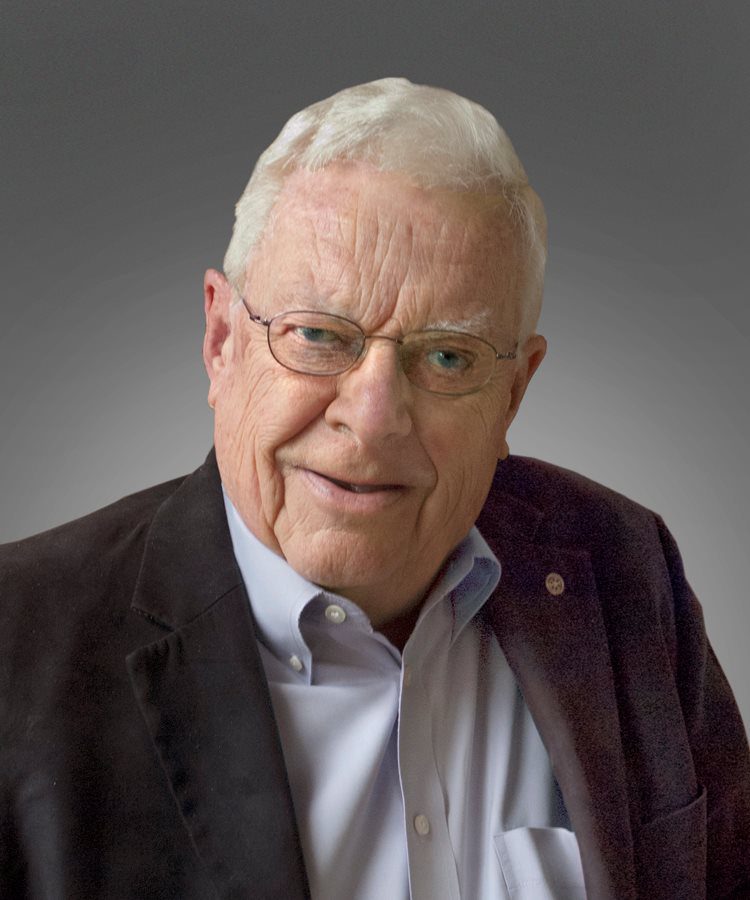
    Richard C De Graff
    256 Ashford Road
    RER Eastford Ct 06242
    860-522-7171 Main Office
    800-821-6665 Watts
    860-315-7413 Home/Office
    [email protected]

    This report has been prepared from original sources and data which we believe reliable but we make no representation to its accuracy or completeness. Coburn & Meredith Inc. its subsidiaries and or officers may from time to time acquire, hold, sell a position discussed in this publications, and we may act as principal for our own account or as agent for both the buyer and seller.