Month: May 2009

  • Top U.S. Commander in Afghanistan Is Fired

    Top U.S. Commander in Afghanistan Is Fired

    By Ann Scott Tyson Washington Post Staff Writer
    Tuesday, May 12, 2009


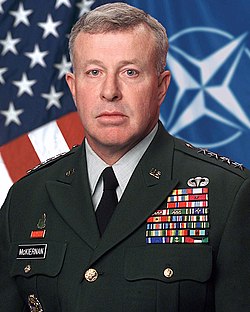
    General David McKiernan

    Defense Secretary Robert M. Gates announced yesterday that he had requested the resignation of the top American general in Afghanistan, Gen. David D. McKiernan, making a rare decision to remove a wartime commander at a time when the Obama administration has voiced increasing alarm about the country’s downward spiral.

    Gates, saying he seeks “fresh thinking” and “fresh eyes” on Afghanistan, recommended that President Obama replace McKiernan with a veteran Special Operations commander, Lt. Gen. Stanley A. McChrystal. His selection marks the continued ascendancy of officers who have pressed for the use of counterinsurgency tactics, in Iraq and Afghanistan, that are markedly different from the Army’s traditional doctrine.

    “We have a new strategy, a new mission and a new ambassador. I believe that new military leadership is also needed,” Gates said at a hastily convened Pentagon news conference. Gates also recommended that Lt. Gen. David M. Rodriguez, a former head of U.S. forces in eastern Afghanistan who is serving as Gates’s military assistant, be nominated to serve in a new position as McChrystal’s deputy. Gates praised McChrystal and Rodriguez for their “unique skill set in counterinsurgency.”

    McKiernan, an armor officer who led U.S. ground forces during the 2003 Iraq invasion, was viewed as somewhat cautious and conventionally minded, according to senior officials inside and outside the Pentagon.

    Gen. David H. Petraeus, the top commander of U.S. forces in the region, has pressed aggressively to broaden the military’s mission in Afghanistan and Iraq beyond killing the enemy to protecting the population, overseeing reconstruction projects and rebuilding local governance. Petraeus played a key role in the Obama administration’s strategic review of the Afghanistan conflict and was involved in the decision to remove McKiernan, which Petraeus said in a statement he “fully supports.”

    The decision to fire McKiernan represents one of a handful of times since President Harry S. Truman’s removal of Gen. Douglas MacArthur in 1951 that U.S. civilian leaders have relieved a top wartime commander, and is in keeping with Gates’s style of demanding accountability by dismissing senior military and civilian officials for a host of problems, including nuclear weapons mismanagement and inadequate care for wounded troops.

    McChrystal is the director of the Pentagon’s Joint Staff. From 2006 to August 2008, he was the forward commander of the U.S. military’s secretive Joint Special Operations Command, responsible for capturing or killing high-level leaders of the Sunni insurgent group al-Qaeda in Iraq.

    Adm. Mike Mullen, chairman of the Joint Chiefs of Staff, recently tapped McChrystal to lead an effort to manage the rotations of senior officers to shore up a base of experience on Afghanistan.

    In a statement, White House press secretary Robert Gibbs said that Obama agreed with the need for new leadership but that he was “impressed” by McKiernan’s calls for more troops for Afghanistan. McKiernan had successfully pressed the administration to increase the number of troops in Afghanistan, forces that have only now begun to arrive in the country.

    Gates did not criticize McKiernan directly and instead praised his decades of “distinguished service.” But senior officials said McKiernan’s leadership was not bold or nimble enough to reenergize a campaign in which U.S. and other NATO troops had reached a stalemate against Taliban insurgents in some parts of Afghanistan.

    One senior government official involved in Afghanistan policy said McKiernan was overly cautious in creating U.S.-backed local militias, a tactic that Petraeus had employed when he was the top commander of U.S. forces in Iraq.

    “It’s way too modest,” the official said, speaking on the condition of anonymity. “We don’t have 2009 to experiment in Wardak province,” where one such militia has been set up. “I think we’ve got about two years in this mission. The trend lines better start swinging in our direction or we’re going to lose the international community and we’re going to lose Washington.”

    Other U.S. military and Afghan officials disagreed with the criticism, however, saying McKiernan’s approach was prudent.

    Incidents in which U.S. forces caused high numbers of civilian casualties in Afghanistan had emerged as a major source of discomfort for Gates and Mullen during McKiernan’s tenure, but officials said that was not the reason for his removal. “McKiernan got it, and he’s been much better about responding,” a senior military official said. Gates noted yesterday that civilian deaths in Afghanistan had declined 40 percent since January compared with the same period last year.

    Since the Obama administration took over this year, Gates had been weighing whether to replace McKiernan and had asked Mullen and Petraeus for their opinions. Mullen informed McKiernan two weeks ago that a change was needed. Gates then broke the news to McKiernan during an hour-long, one-on-one dinner at Camp Eggers in Kabul on a trip to Afghanistan last week.

    Asked by reporters whether this decision would effectively end McKiernan’s military career, Gates replied: “Probably.”

    In a statement, McKiernan said it had been his “distinct honor over the past year to serve with the brave men and women” from the 42 nations that have contributed to the international effort in Afghanistan and with the members of Afghanistan’s security forces. “I have never been prouder to be an American Soldier,” he said.

    McKiernan took command of the NATO-led mission in Afghanistan in June and was scheduled to serve in the post for two years, a U.S. military official said. Like other top U.S. commanders before him, McKiernan pressed the Pentagon firmly and publicly to provide additional forces to combat rising violence and an escalating Taliban insurgency.

    McKiernan oversaw initial troop increases under the Bush administration as well as the ongoing deployment of an additional 21,000 troops this year ordered by Obama. McKiernan has an outstanding request, which neither the Pentagon nor Obama has approved, for 10,000 more troops next year.

    Gates told Sens. Carl M. Levin (D-Mich.) and John McCain (R-Ariz.), the top members of the Senate Armed Services Committee, yesterday morning that he was replacing McKiernan. At the news conference, Gates urged the swift Senate confirmation of McChrystal and Rodriguez.

    McChrystal has come under criticism for his role in the military’s delay in acknowledging the “friendly fire” death of Army Ranger Pat Tillman, a former NFL player, in Afghanistan in 2004, an incident likely to come up during confirmation hearings.

    Staff writers Rajiv Chandrasekaran and Greg Jaffe and staff researcher Julie Tate contributed to this report.

  • Nick Griffin:Stop Turkey joining the EU.

    Nick Griffin:Stop Turkey joining the EU.

    The British National Party has launched its campaign for next month’s European Parliament elections, predicting it could win up to seven seats.

    The party is contesting all 69 seats at stake in the UK mainland regions, on a platform of demanding the country withdraws from the European Union.

    Leader Nick Griffin, a candidate in North West England, said the BNP also wanted to stop Turkey joining the EU.

    His party was a threat to “tired, corrupt old politicians”, he added.

    The BNP, which currently has no Euro MPs, is contesting about 465 county council seats in England’s local elections, which also take place on 4 June.

    This is up from 39 candidates four years ago.

    At the BNP’s campaign launch in Essex, Mr Griffin said: “There’s no protest vote like a British National Party protest vote, because all the others are in it together.

    “Everyone knows we are the ones that they hate… We are the ones who are really a threat to their rotten, internationalist, liberal system.

    “So we are the ones people have got to vote for if they want to protest against what the old politicians – the tired, corrupt old politicians – have done to this poor country of ours.”

    Outlining his party’s anti-immigration stance, Mr Griffin said: “Not all immigrants are terrorists but all terrorists are immigrants or their immediate descendants.”

    On its opposition to Turkey joining the EU, he said: “While we are in the European Union we most definitely, and above all else, oppose its expansion to bring 80 million low-wage Muslims into Christian democratic Europe.”

    BBC

  • Comment: “Recommendations for the Armenian Diaspora”

    Comment: “Recommendations for the Armenian Diaspora”

    E-mail : [email protected]

    Comment:

    It takes chutzpah the size of Mt. Ararat for these hate-mongering Armenians to pontificate even as they sit on the stolen lands of the Native Americans who were the victims of the mother of all genocides. Yes, Mr. and Ms. Yan and Ian, those usurped lands include Glendale, Fresno, Watertown, Providence, Pawtucket and Hohokus, New Jersey. Before the Armenian can preach ‘holier-than-thou’, he must vacate those stolen lands he occupies. Before the Armenian can play the “eternal victim,” he must apologize and pay reparations to the Native Americans. Before the two-faced Armenian can gripe about Armenians’ lost “historical lands,” he must give back the stolen historical lands of the Amerindians. Before the Armenian plays the profitable victimhood game, he must get it through his thick skull that the lost lives and lost lands of the Native Americans are worth just as much as lost Armenian lives and lands. For that matter, the lands that the Armenian goon squads stole from Azerbaijan and the Azeri lives they snuffed out, are just as worthy as those of the Armenians.

    So when can we expect these sanctimonious Armenian colonists, settlers, usurpers/thieves to pack their bags and return the land to its rightful owners, the Native Americans? And as these slick operators leave my lands, is it too much to ask them to also pony up that 40 acres and a mule that was promised but never delivered to the freed African slaves?

    As for apologies, when can we expect the oily, loud-mouthed, victim-playing French Armenians to apologize for their participation in the genocide of the Algerian people? Some of the Algerian torture victims are still alive today – albeit mutilated and disabled. How about the pushy Glendale Armenians pushing their Parisian cohorts to apologize and compensate for the Algerian genocide?

    You can see all comments on this post here:

    https://www.turkishnews.com/en/content/2009/05/10/recommendations-for-the-armenian-diaspora/#comments

  • Capital Vanguard Committee Remembers the Victims of Armenian Political Violence

    Capital Vanguard Committee Remembers the Victims of Armenian Political Violence

    April 24th, 2009, Washington, DC -Capital Vanguard Committee formed by Turkish American leaders in Washington, DC honored victims of Armenian terrorism and the 1.1 Million Ottoman Turks, Muslims and Jews who perished in Eastern Anatolia during the Armenian Revolt 1885-1919 and Russian invasion in 1915.
    Organized by the Turkish American Leaders, 48 hours of vigil took place in front of Turkish Embassy, Washington DC starting on Thursday, April 23rd at 8:00 am.
    On Friday, April 24th 2009, Along with the Turkish American leaders, Turkish and Azerbaijani Americans, American friends and Turkish Students from the local universities, over 100 people gathered in front of the Turkish Embassy to remember victims of Armenian political violence.

    The Armenian Van Revolt of March 1915 saw the deaths of over 60,000 Muslims and the extermination of its Jewish population in a span of thirty days, as the Armenian Revolutionary Federation (ARF) “cleansed” the land of all non-Armenian elements, and handed the Van Province over to the invading Russians. The Van Revolt was the last in a long series of Armenian Revolts from 1885 that caused the deaths and forced migration of over 600,000 Ottoman Muslims and Jews in eastern Anatolia. The Van Revolt caused the Ottoman security-based arrest of ARF leaders throughout the Ottoman Empire and security-based relocation of Armenian civilians from the eastern war zones.
    Armenian political violence reemerged in 1974 in the form of terrorism by the leftist Armenian Secretary Army for the Liberation of Armenia (ASALA) and ultra right, ARF-supported Justice Commandos of the Armenian Genocide (JCAG), which killed over 70 and seriously wounded over 700 civilians in more than 200 terror bombings worldwide. Armenian terror caused hundreds of millions of dollars of damage from Los Angeles to Boston, from Paris to Sydney.
    Turkish American leaders in Washington, DC, formed the Capital Vanguard Committee to remember Van, and to Guard Americans of Turkish heritage and their friends from Armenian extremism, and to ensure that we remember and honor the victims of Armenian political violence.

  • Is China a Power?

    Is China a Power?

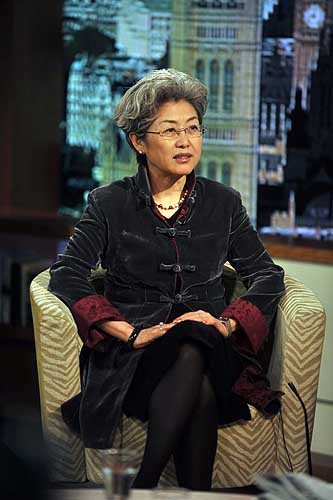
    Fu Ying, Chinese Ambassador to the Britain

    The splendid fireworks of the Beijing Olympics are seen as marking China’s ascendance to world power status.

    Chatham House, Wilton Park, the Financial Times and The Economist, together with many American publications, are all talking about China as a power.

    An international consensus is emerging that China is a world power. There is, therefore, a lot of scrutiny about the rights and wrongs in China and what China should and should not do.

    Fred Bergsten, Director of the Peterson Institute for International Economics, first suggested the idea of the G2.

    [Zbigniew] Brzezinski stated that China is second only to the United States. A survey in Europe at the end of 2007 echoed his view, as 80 percent of respondents believed China has become the No. 2 world power.

    Clearly China is moving from the margins to the center of world politics.

    There are some loudly expressed concerns about what kind of power China will become. I am often asked during speech occasions: As it grows stronger, would China impose its will on others?

    But is China a power? The response of the Chinese people is very different.

    Most of them still see China still as a developing country. A popular saying in Chinese is huyou, meaning to sweep China off its feet.

    Last January, I hosted a debate at my embassy. The topic was “China’s international status.”

    About 140 people came, including embassy diplomats, businesspeople and journalists stationed in London.

    It was the most heated debate I’ve had with my fellow Chinese.

    A young man kicked off the debate by saying that China is a world power second only to the United States.

    He was challenged by almost the whole crowd. People spoke one after another, citing statistics and problems in China to argue that we are just another developing country.

    I then asked, “Who would agree with the him?” I saw only four hands.

    That means only five people, including the gentleman himself, were of the view, or less than 4 percent of the participants shared Brzezinski’s perception.

    Then I asked the crowd, “Which country do you think is the No. 2 power in the world?”

    They answered almost without hesitation, “Russia.”

    “Which is the third?” “Germany.”

    “The fourth?” “Great Britain.”

    When it came to the fifth, some said France, and some said it could be China.

    Though such generalized way of ranking cannot be an accurate reflection of the complex positions and circumstances of different countries. Yet this discussion can reflect the general thinking of the Chinese people.

    Are we right, and is the world wrong?

    There are clearly facts to support both arguments.

    Many years ago, when Mr. Deng Xiaoping was summarizing China for a foreign visitor, he said China was both “big and small, strong and weak.” This remains true of today’s China.

    People outside China tend to see the big and strong aspects of China, while inside China, we are more aware of its weaknesses and challenges.

    Let me compare some statistics about China and the UK to illustrate the two dimensions of China.

    —China’s gross domestic product (GDP) ascended to third place in the world in 2008, and is expected to rise to No. 2 in the near future. The UK’s ranking fell to No. 6.

    However, in per-capita terms, China has only $3,000, making it No. 104 in the world, while the UK has about $46,000, 15 times higher, ranking 20th.

    This means UK citizens have a much higher standard of living.

    —In terms of trade, China is the third largest in the world, the UK No. 8. However, the UK’s services trade is No. 2 in the world and China is just developing the services sector.

    —By the end of March, China’s foreign currency reserves were 30 times that of the UK. Among the 10 biggest banks in the world, four are from China and one is from the UK.

    The market value of ICBC [Industrial and Commercial Bank of China] can buy two HSBCs, still with a bit of surplus.

    However, London is a global financial center with about 550 foreign banks and 170 international securities firms.

    Among the top 500 companies in Europe, 100 have their headquarters in London.

    —The UK is a post-industrial society and urban residents make up 90 percent of the population.

    China is in the early phase of industrialization and urbanization. Sixty percent of its population is rural, and 135 million people still live on less than $1 a day.

    The list could go on and on.

    The Chinese premier once remarked: Any small problem in China can grow into a huge one if multiplied by 1.3 billion. A big achievement can become too tiny to notice once divided by that number.

    What is China’s target, then? What are we trying to achieve? It is hard to generalize.

    To put it in simple terms, we are hoping to develop China into a country with prosperity, democracy and rule of law and a country that works for peace and cooperation in the world.

    The Chinese pursuit of prosperity is to enable everyone to have a roof over his head, every child to be in school, the sick to have access to medical care and the elderly to be taken care of. That is now within our grasp.

    For the first time in history, people are not dying of hunger in China.

    Even when I was in college, the greeting words for people meeting each other on the street were not “How are you?” but “Have you had your meal?” Food was the biggest concern for families and the government.

    Now if you ask young people like my daughter, “Have you had your meal?” they would think you have a problem.

    I met an American couple who just came back from Shanghai and they think the Shanghai skyline is surreal.

    But the most significant changes in China are not only in big cities like Shanghai, but also in the vast rural areas.

    I wonder how many people noticed that on the first day of 2006 China abolished the agricultural tax.

    For 2,600 years, successive governments in the Middle Kingdom mainly depended on taxing the farmers.

    This move marked China’s transition from an agrarian to an industrial society.

    In 2007, with the implementation of the program to extend power supply to every village, many people saw electric light for the first time in their lives.

    About half of the rural population in China has never gone to hospital for economic reasons.

    A cooperative medical care scheme now covers 90 percent of rural China. Though small, starting at 50 yuan ($7.35) per person and now 100 yuan ($14.7), it has enabled many farmers to be cared for during times of sickness.

    Although prosperity is not evenly shared and there is still poverty in the countryside, we are confident that the trend of prosperity is going to continue and the people will be better off with each passing year.

    I can’t talk about China without mentioning the political and democratic development.

    The world tends to overestimate the economic progress in China and overlook China’s progress in political reform and socialist democratic development.

    Before coming here, I searched through Baidu, a Chinese search engine, for “China’s democratic political reform.” I got 1.39 million results in less than a second. There are very different opinions on this subject and some interesting analyses and suggestions.

    For me, having seen the anarchy of the “cultural revolution” of the 1960s and having witnessed the progress of reform, I can see China has come a long way in the development of democratic decision-making and the rule of law.

    Take the role of the National People’s Congress, for example. It has assumed a very important role in China’s political life.

    Of the 231 laws in China, 223 were promulgated in the past 30 years.

    The National People’s Congress is covering huge legislative work that in many countries was done over hundreds of years.

    The Property Law took a record seven years of debate throughout the country.

    When the Labor Law was debated, the National People’s Congress received 200,000 suggestions, 65 percent of which came from the grassroots level.

    I remember the first time international journalists appeared during the National People’s Congress, the delegates were quite surprised.

    Now they come in larger numbers, 800 this year. They even sat in on some of the meetings and asked questions.

    President Hu Jintao said at the 17th National Congress of the Communist Party of China (CPC), “Power should operate in the sunshine.”

    At the center of the democratic reform is the decision-making process.

    Both the Party and the government have set up a structure under which major decisions are made only after full consultations.

    Transparency in the personnel system has also been a focus of constant reform measures.

    I once visited the Ministry of Science and Technology and saw in the entrance hall some large posters about who was going to be promoted and soliciting opinions.

    This is done at all levels and for all important posts.

    Elections were introduced at the rural level 10 years ago. Some 64,000 villagers’ committees had been set up as of the end of 2004, all of them being directly elected.

    Eighty-five percent of villages have set up mechanisms for making important decisions.

    However, I am not saying that China has a perfect democratic system.

    The reason the President used the term democracy about 60 times [in his report to the 17th CPC National Congress] is precisely because, as the General Secretary of the CPC Central Committee, he wanted to emphasize its importance and was calling for greater effort to develop democracy in the Party and the government.

    We are halfway through the reform program and everything is still in transition.

    Just as you can see new buildings in Beijing every year, you will also see new political development in China every year. The direction is toward greater openness, transparency and accountability.

    On the international front, the role China wants to play is to encourage dialogue and cooperation.

    We do not believe in imposing our will on others, or interfering in other countries’ internal affairs.

    We see our role in the world as to contribute to peace. China’s interests have never been so closely linked with those of the world and vice versa.

    The financial crisis has brought home the fact that we are sharing one boat. As the Chinese President remarked at the London summit, only by working together can we steer the boat to its desired destination.

    Now coming back to the question with which I started the speech, is China a power?

    I firmly believe that China, a country with 1.3 billion people, smart, hardworking and happy, is destined to be a strong country in the world. But China will not become a hegemony.

    China has come this far not through war, but through hard work by its vast number of people and through fair trade with the world. The source of China’s strength is its economy.

    China’s diplomatic objective is to promote peace and cooperation in the world, in which China can continue to prosper and its people can achieve a better life.

    Source: www.bjreview.com.cn, May-8-2009

  • BAKU AND YEREVAN DOWNBEAT ON A POSSIBLE SOLUTION

    BAKU AND YEREVAN DOWNBEAT ON A POSSIBLE SOLUTION

    Shahin Abbasov and Gayane Abrahamyan 5/11/09

    While international mediators give an upbeat assessment to the May 8 tête-à-tête between Armenian President Serzh Sargsyan and Azerbaijani President Ilham Aliyev, within Azerbaijan and Armenia there is a scarcity of optimism.

    Novruz Mammadov, head of the Azerbaijani presidential administration’s Foreign Policy Department, put it bluntly. “The [Minsk Group] co-chairs’ optimism does not correspond with reality,” Mammadov told ATV television on May 9. “The presidents’ meeting was unsuccessful.”

    Azerbaijani Foreign Minister Elmar Mammadyarov had earlier asserted that the Armenians “again did not show a constructive approach.” He did not elaborate.

    Yerevan cast the two leaders’ Prague meeting in somewhat of a more positive light. The talks with President Aliyev were “useful,” the Armenian presidential press service said in an official statement, since they “allowed the parties to further define approaches over the basic principles for the NK [Nagorno-Karabakh] conflict resolution, as well as to bring positions of the parties over some issues closer together.”

    In a May 8 interview with RFE/RL’s Azeri-language service, US Deputy Assistant Secretary of State Matthew Bryza, the Minsk Group’s American co-chair, asserted that Aliyev and Sargsyan now agree on the major concepts for how to resolve the Karabakh conflict. Details will be sorted out “during the upcoming two weeks,” Bryza said. “After that the whole concept [of resolution] should be quickly agreed. It is realistic by autumn of this year.”

    In a separate interview with the Ekho Moskvy radio station on May 11, Bryza had this to say (according to an unofficial translation): “In the end, the [occupied Azerbaijani] territories will be returned, and there will be, in addition, a return of Azerbaijani displaced persons to these territories.”

    “At present, I can’t predict what will be [the case] with Karabakh itself,” Bryza continued. “We know that it will have some kind of new status. How that status is defined … well, negotiations are still going on about that.”

    Armenian Foreign Ministry spokesperson Tigran Balaian, responding to Bryza’s Ekho Moskvy comments, said that “during the May 8 meeting in Prague, the issue of taking Armenian troops out of the disputed [occupied] territories was not discussed at all.”

    In an interview with Russia’s Ekho Moskvy radio station, French Foreign Minister Bernard Kouchner stated that “each side follows its own line and responds to the scenarios in a very different manner.” He added, however, that “there is no need to be disappointed.”

    One Azerbaijani analyst pinpoints a strategic reason for the mediators’ persistent optimism. “Turkey and the United States are hurrying to make progress on a Karabakh solution because they want to open the Armenian-Turkish border this year,” opined Elhan Shahinoglu, head of the Baku-based independent think-tank Atlas. [For background see the Eurasia Insight archive]. “It is clear now that Ankara will not be able to open the border by separating this issue from the Nagorno-Karabkah talks. So progress is urgently needed.”

    The Prague talks took place against a background of unprecedented diplomatic activity. During the last month and a half, Turkey and Armenia agreed on a “road map” to reconciliation, presidents Aliyev and Sargsyan both paid visits to Moscow and US President Barack Obama visited Turkey, a key Azerbaijani ally.

    The pronouncements about progress worry one former Armenian foreign minister. “There has always been a limit to the compromise the Armenian side could afford, so the sides could not reach agreements when the Azerbaijani position did not fit within the framework acceptable to the Armenian side,” Vartan Oskanian, who served as foreign minister from 1998 to 2008, told the Armenian news site Yot Or in a May 8 interview. “What is it now that makes it possible to talk about an agreement? Is it because Azerbaijan has lowered the benchmark for its demands, or is it Armenia?”

    In Azerbaijan, ANS-TV quoted an unnamed government source as saying that Armenia had gotten tougher at the talks. Sargsyan, the source claimed, demanded that a date be set for a vote within Karabakh about the territory’s status in exchange for an Armenian withdrawal from five Azerbaijani regions bordering the territory. No mention of such a proposal has been made in Armenia.

    Within Karabakh itself worries are growing that the territory’s fate will be decided without its de facto government having a say in the matter. “No one can decide [Karabakhis’] fate sitting there, in Yerevan,” asserted the region’s former de facto defense minister, Samvel Babaian, at a May 9 news conference. “The people in Karabakh will not obey any decision when they feel danger. I am confident of it.”

    On May 9, President Sargsyan visited Karabakh, where he was born, and spoke with the region’s leader, Bako Sahakian. In remarks to reporters, Sahakian expressed confidence that Armenia is trying to have Karabakh included in the negotiations. Karabakh was represented in the talks until 1998. “[E]verybody realizes there can’t be any final decision without the Nagorno-Karabakh Republic’s participation,” Panorama.am reported Sahakian as saying.

    But if Karabakh’s future status becomes the sticking point, the chances for a breakthrough would appear even slimmer, added one Baku observer. “Azerbaijan is not ready for any compromise on this issue,” independent analyst Rasim Agayev told ANS TV on May 8.

    One Azerbaijani analyst argues that any future progress will depend on the results of revived dialogue between Russia and the United States. President Obama and Russian President Dmitry Medvedyev are scheduled to meet in July in Moscow. “If Moscow and Washington will agree on the wide spectrum of problems in US-Russian relations, I would expect a breakthrough at the Karabakh talks as early as the autumn,” commented Rauf Mirkadirov, political columnist for Baku’s Russian-language Zerkalo (Mirror) daily.

    Still, getting a clear grasp on how the Prague meeting will affect further talks poses a challenge, noted one Armenian analyst. “One needs to be at least a fortune-teller to judge [the future] from Bryza’s words,” said independent political expert Suren Aivazian.


    Editor’s Note: Shahin Abbasov is a freelance correspondent based in Baku. He is also a board member of the Open Society Institute-Azerbaijan. Gayane Abrahamyan is a reporter for ArmeniaNow.com in Yerevan.