Month: May 2009

  • Putting Principle over Power:

    Putting Principle over Power:


    Why Samantha Power Must Resign

    By David Boyajian

    The author is an Armenian American freelance writer

    Samantha Power, Senior Director for Multilateral Affairs in President Obama’s National Security Council (NSC), has failed the American people and her own principles regarding genocide recognition. She must resign.
    Let’s look at how Power got into this sad state of affairs. Power is, of course, the well-known, highly  regarded genocide studies specialist. Her Pulitzer Prize-winning book on genocide, A Problem from Hell:  America and the Age of Genocide, harshly criticized policymakers in the U.S. who “avoid use of the word genocide” and are slow to “reckon with” genocide. Chapter One, “Race Murder,” focused on the Armenian genocide.
    Following the book’s publication, many Armenians saw Power as a sort of heroine. Indeed, two years ago, her Time magazine article (The U.S. and Turkey: Honesty Is the Best Policy) argued for passage of the Armenian genocide resolution in Congress. She condemned President Bush for “avoiding honesty” in opposing it and for not correctly characterizing the Armenian genocide as “genocide.” And yet President Obama himself – Power’s boss – just avoided the “G word” in his April 24 statement about 1915.
    A President without Principle Obama imitated his three predecessors (but not Reagan, who acknowledged the Armenian genocide in 1981) by using words such as “massacre,” not “genocide,” in his statement.

    Obama tried to score points with Armenians by tossing in the term “Meds Yeghern” – great catastrophe. In reality, Armenians themselves rarely use that term to refer to the genocide. The Armenian word for genocide is actually “Tseghasbanoutyoun” – race killing.

    Now compare President Obama’s evasive language with candidate Obama’s promise: “As President, I will recognize the Armenian Genocide” because it is “a widely documented fact supported by an overwhelming body of historical evidence.”

    If Power advised Obama to acknowledge the genocide, he obviously rejected that advice, and broke his  own pledges. If, on the other hand, she advised the president to not use the “G word” because Armenia and Turkey will allegedly establish a “joint historical commission” on 1915, she was woefully misguided.

    Turkey would ensure that such a body could never come to a timely and definitive decision. It also makes no sense for Power or Obama to support such a “commission” since they themselves previously affirmed the factuality of the genocide.
    And let’s put to rest the myth that reaffirmation of  the genocide could harm the United States. Turkey depends on America for sophisticated military weapons,  support for billions in loans from the World Bank and International Monetary Fund, advocacy for Turkey’s membership in a reluctant European Union, and much more. No country that has acknowledged the Armenian genocide has ever experienced much more than rhetorical Turkish reprisal.
    Notice that since Obama’s dishonest April 24 declaration, Power has said nothing to Armenian Americans. No explanation. No apology. Nothing. Power Plays And let’s understand that Power was directly complicit in having voters believe Obama’s genocide promises.
    Last year, Power made a 4-minute video in which she passionately appealed to Armenian Americans to support Obama. He had, she said, read A Problem from Hell and understands “genocide prevention and the costs of denial.” He’s a man of “unshakeable conscientiousness” who “can actually be trusted.” She urged the Armenian community to “take my word for it.” Naively, many did.

    “Armenians,” she also said, “have always taken me seriously.” Yes, but at this point in time, only if she resigns. Frankly, I’ve had reservations about Power’s commitment to justice for Armenians ever since her April 24 genocide presentation at Tufts University several years ago. She seemed to disparage Armenian demands for reparations. “Do you really want,” she asked the largely Armenian American audience, “a check from Turkey?” I stood up and pointed out that Armenians were seeking material restitution for the Armenian nation as a whole, not “checks” for students to squander on clothes and cars.
    She has since received documentation about the exact nature of Armenian demands.  Whatever her excuse, Power now appears to be precisely the kind of official whom she excoriated in her book and article, one who “avoids use of the word genocide.”

    The only way she can distance herself from the unprincipled political calculations of President Obama and Secretary of State Hillary Clinton, whom she once labeled “a monster,” is to resign.

    Understandably, no one wishes to give up the power and prestige of being an NSC director. Power’s association with Obama has even brought her romance. Last year she married top Obama advisor and Harvard Law School professor Cass Sunstein. The president and Sunstein were friends and colleagues for 12 years when they taught at the University of Chicago Law School. Sunstein is reportedly in line for a White House appointment. Sunstein could be embarrassed if his wife resigned from the administration. But no more than Power would be if she does not resign.
    Power really has only two choices. She can resign. Or she can lose the trust and respect of the American people.
    The author is an Armenian American freelance writer. Several of his articles are archived at
    Armeniapedia.org.
  • Turkey Reacts to Obama’s “Meds Yeghern;”

    Turkey Reacts to Obama’s “Meds Yeghern;”


    Turkish Media Echoes USA Armenian Life

    By Appo Jabarian

    Executive Publisher / Managing Editor

    USA Armenian Life Magazine
    Friday,  May 8, 2009

    On April 24, moments after Pres. Barack Obama issued a statement on the Armenian Genocide, this writer stated in the on-line special edition of USA Armenian Life that the U.S. President’s usage of the Armenian term “Meds Yeghern” as being the equivalent of the word genocide.
    There were numerous responses from the readers. Some agreed with and others disagreed with the title and the content of the special edition.

    One must note that before the creation of the legal term genocide by Rafael Lemkin in 1943, Armenians employed the term “Meds Yeghern” in reference to the Genocide perpetrated by Ottoman Turkey (1915-1923) in Western Armenia and Cilica.

    The purpose of this week’s article is not to argue as to who is right and who is wrong. The intention here is to shed light on some of the aspects of the response by Turkey to Pres. Obama’s; and the Turkish media’s response to the April 24 USA Armenian Life article.

    On April 25, Turkish Pres. Abdullah Gul criticized Obama. Turkish Foreign Ministry said some parts of the statement are “unacceptable. We consider some expressions in that statement and the perception of history it contains regarding the events of 1915, as unacceptable,” the ministry said.
    On April 29, Robert Ellis of The Guardian reported in an article titled “Tackling the Turkish taboo” that Turkey’s Prime Minister Recep Tayyip Erdogan also called Obama’s remarks “an unacceptable interpretation of history.”  (www.guardian.co.uk/commentisfree/2009/apr/29/armenian-genocide-turkey)

    Apparently what must have troubled Turkey’s President and Prime Minister is President Obama’s usage of the words: “Those who tried to destroy them (the Armenians).”

    As David Boyajian, a Boston-based freelance writer points out: “Obama’s April 24 statement broke his many promises. But I did notice one thing, he said ‘… Armenian people, and as the ultimate rebuke to those who tried to destroy them. … ‘Destroy’ is part of the Genocide Convention’s very definition of genocide.” Boyajian still thinks that the overall April 24 declaration by Pres. Obama was a travesty, adding “I don’t want anyone to ever think that I somehow find the lack of the word Genocide acceptable or that I would ever approve of Obama’s duplicity.”

    The Turkish www.YeniCagGazetesi.com.tr’s Sava? SÜZAL wrote an article on April 28 titled “Armenians now pursue lands and reparations.” (Click on the following link to the article in Turkish: ).

    He elaborated: “Appo Jabarian, the publisher and the managing editor of USA Armenian Life Magazine wrote about the necessity of embarking on recovering the ancestral lands (meaning Anatolia) that were confiscated from their forefathers and reparations for their lost properties.” Mr. SÜZAL’s commentary also appeared on www.HaberGazete.com.
    Another Turkish daily HaberGazete.com‘s contributing writer Muammer Kaylan wrote on April 27 that “Appo Jabarian is saying in his commentary that several Armenian political observers agree with leading Armenian American activists such as Harut Sassounian that Armenians need to move on and pursue their quest for Justice. Sassounian wrote on several occasions that the international recognition of the Armenian Genocide has already been achieved through the collective hard work by notable Armenian organizations during the past several decades.”

    Mr. Kaylan continued “According to Jabarian, in an interview with The Los Angeles Times in April 2008, Sassounian has stated that ‘Now the genocide is an established fact. So we’re not clamoring anymore about the world ignoring us. With these remarks Sassounian said that the Armenian people are in pursuit of justice. During those days whatever has been taken away from the Armenians resitutions must be made.”

    Mr. Kaylan added: “Armenia and the Armenian American Diaspora are not letting up on the Genocide issue. Their objectives are obvious and their intention to march toward this goal is now very clear. But the Armenians’ insistence on Turkey’s genocide recognition and their demands for lands and reparations has brought upon Turkey difficult situation.”

    Not all Turks were as courteous as the ones mentioned above. Soon after the article by this writer titled “U.S. Pres. Obama Twice Uses Meds Yeghern The Armenian Equivalent Of Genocide in His Presidential Statement” appeared on the TurkishForum.com.tr numerous denialist Turkish blogers expressed frustrations at a few Armenians’ resolve to find victory in Pres. Obama’s April 24 statement. As a result, they attacked this writer hurling at him all kinds of insults.

    Joining their denialist peers at The Turkish Forum, other denilialist Turks also attacked Jabarian on YouTube.

    In response to the venomous denialists insult against Jabarian, Agho, a fellow activist wrote: “To all those Turks that attack Appo Jabarian: Appo never used any foul language against you, but you guys have bombarded him and other Armenians with all kinds of garbage spilled out of your…blessed… mouths. This is the difference between civilized Armenians like Appo and nomads like … well, it’s obvious. … One more thing: Why is the most stupid bird in animal kingdom called turkey????”

    As worldwide Armenian activism for justice continues to grow, denialist Turks increasingly feel the heat. Having lost their homeland in Western Armenia and Cilicia, Armenians in both Armenia and the Diaspora have no choice but to continue their drive for further consolidating their political and economic power for the specific purpose of recovering their forcibly Turkish-occupied lands. Any letting up on that purpose spells trouble not only for the Armenians living in dispersion but also for the fledgling republics of Armenia and Artsakh.

  • Merkel and Sarkozy Call for Privileged Partnership Angers Turkey

    Merkel and Sarkozy Call for Privileged Partnership Angers Turkey

    Publication: Eurasia Daily Monitor Volume: 6 Issue: 92
    May 13, 2009
    By: Saban Kardas

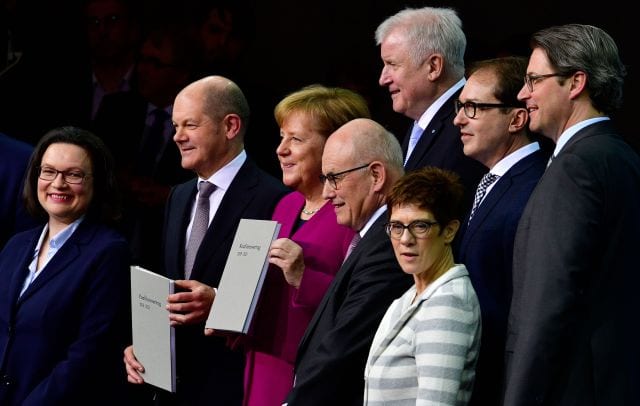
    German Chancellor Angela Merkel and French President Nicholas Sarkozy reignited the debate on Turkey’s place within Europe by questioning the wisdom of Turkey seeking full membership of the European Union. Attending a meeting in Berlin, the two leaders emphasized their objection to the EU’s enlargement to include Turkey, arguing that any misguided expansion might endanger its operational effectiveness, and that it should stop making empty promises to Turkey. They instead reiterated their support for “privileged partnership” as an alternative framework to regulate Turkish-EU relations (Deutsche Presse-Agentur, May 10).

    Sarkozy is known for his frequent objections to Turkey’s membership. Before his election in 2007, he spoke against the country’s accession and instead proposed an alternative partnership through his Mediterranean Union project. Due to objections from Turkey and other EU member states most notably the UK, Sarkozy dropped the idea, which enabled the creation of the Mediterranean Union as a separate organization -which Turkey also joined (EDM, July 15, 2008).

    Although he has since softened his rhetoric and avoided blocking Turkish-EU accession negotiations during the French presidency of the European Union, Sarkozy has remained Turkey’s most vocal opponent. For instance, when President Obama tried to promote Turkish-EU accession talks during his recent European trip, Sarkozy immediately dismissed these comments as an unwarranted intervention in European affairs, and led other likeminded states to mobilize resistance against Turkey (Hurriyet, April 7).

    Merkel shares similar views on Turkish-EU relations. Nonetheless, her policies have been tempered by the coalition partnership with the Social Democrats, who hold more positive views on the issue. However, Merkel uses electoral considerations and her conservative grassroots’ discomfort with Turkey to justify her objections. Referring to the upcoming European elections in June, Merkel said: “It is right that we say to people [during the campaign]… our common position is: a privileged partnership for Turkey, but no full membership” (Hurriyet Daily News, May 11).

    Sarkozy does not hide the role electoral politics play in shaping his position on Turkey. Indeed, he has accelerated his objections to Turkish accession ahead of the European election campaign. He is advocating that the EU considers the creation of a common platform with Turkey, perhaps including Russia, to regulate economic and security relations (Hurriyet Daily News, May 6).

    Inside the EU, the Franco-German position is countered by the member states more sympathetic to Turkey and the representatives of the EU institutions. Portugal’s President Anibal Cavaco Silva, while currently visiting Turkey reiterated his country’s support for Turkish accession, noting the many benefits it would bring to the EU (Anadolu Ajansi, May 12). Last week, Finland’s Foreign Minister Alexander Stubb, also ruled out a privileged partnership, and reaffirmed Helsinki’s commitment to bring Turkey into the EU as a full member (Cihan Haber Ajansi, May 8). A statement from the office of the EU Commissioner for Enlargement Olli Rehn, responded swiftly to the statements by Sarkozy and Merkel, saying that the decisive factor from the commission’s perspective was Turkey’s fulfilment of the membership criteria (ANKA, May 11).

    Although Merkel and Sarkozy’s views on Turkey were well known, their recent statements surprised many within Turkish domestic politics. Some Turkish dailies labeled this development, particularly Merkel’s remarks, as “shocking” (Milliyet, May 11). Deniz Baykal, the leader of the main opposition party, called their statements “rude, harsh and negative” and argued that since they were made during the ongoing membership talks, they should be taken as a sign of disrespect toward Turkey. Baykal also criticized the government’s failure to take action to protest more forcefully against this development (Anadolu Ajansi, May 12).

    In reacting to calls to downgrade the Turkish-EU relationship, officials in Ankara have highlighted three points. They have restated Turkey’s position that privileged partnership is unacceptable, and maintain that since the EU has initiated membership talks, it must honor this commitment. Shortly after assuming his post last week, Turkish Foreign Minister Ahmet Davutoglu stressed this argument. Noting that he would revitalize the stalled membership process, Davutoglu expressed his discomfort over speculation on privileged partnership. Offering Turkey other alternatives short of full membership would betray Turkey and also undermine the EU’s own values, Davutoglu contended (Yeni Safak, May 9). In his reaction to the Merkel-Sarkozy statement, President Abdullah Gul also echoed Davutoglu, arguing that European leaders had agreed on membership negotiations with a unanimous decision, which still legally binds all member states (www.cnnturk.com, May 12).

    Turkish officials maintain that European politicians are using the debate about its future membership as a tool calculated to achieve domestic political gains. Gul suggested that the Merkel-Sarkozy remarks reflected “short-term thinking,” caused by a lack of strategic vision on the part of some European leaders (Cihan Haber Ajansi, May 12).

    Turkish leaders emphasize their commitment to the membership process, and say they will do more to conclude the negotiations successfully. Following a cabinet meeting, the state minister and government spokesman Cemil Cicek, told reporters that the government will take further steps to implement domestic reforms. This will involve preparing a new constitutional amendment package in consultation with the opposition. Cicek added that the government will shortly forward a draft law to parliament, which will reorganize the under-secretariat for the European Union in order to streamline reforms (www.cnnturk.com, May 12).

    The Turkish government seeks to counteract objections to membership by reminding the EU of its commitments to the accession process, and by downplaying those objections -attributing them to short-term calculations. The government implicitly believes that if the discussions on Turkey are conducted on the basis of the contractual framework of the accession process, it may de-legitimize European objections to Turkey. However, it fails to appreciate that its track record on domestic reforms is far from satisfactory. Despite promises to revitalize the membership process in 2009, little has been accomplished (EDM, January 12, 20). Although it might be justified in calling on its EU partners to fulfil their promises, the Turkish government must acknowledge that it is time to deliver on domestic reforms.

    https://jamestown.org/program/merkel-and-sarkozy-call-for-privileged-partnership-angers-turkey/

  • Turkey Debates the Village Guard System

    Turkey Debates the Village Guard System

    Publication: Eurasia Daily Monitor Volume: 6 Issue: 90
    May 11, 2009
    By: Saban Kardas

    In last week’s bloodbath at an engagement party, masked gunmen armed with assault rifles killed 44 people including the bride and the groom in a small village in Turkey’s southeastern province Mardin. As the country debated the causes of this carnage, attention shifted to an evaluation of the village guard system. Since some of the victims and alleged assailants were members of the system, calls for its dissolution or reform have been raised by the opponents of Turkey’s counter-terrorist policy. The security bureaucracy and nationalist forces have reacted quickly to defend this institution.

    Turkey first developed the village guard system to quell the separatist Kurdistan Workers’ Party (PKK). Local men were recruited as a paramilitary force to both protect themselves and aid the security forces fighting PKK militants in south-eastern Turkey. Village guards’ familiarity with the terrain, as well as the local language and dialects were important assets, and this helped to enhance the operational capability of the Turkish security forces. Moreover, by putting tens of thousands of tribesmen on the government’s payroll, the Turkish state sought to co-opt these and create revenues to address the root causes of joining the PKK (Terrorism Focus, October 1, 2008).

    Village guards, numbering around 90,000 at the height of the PKK’s campaign, are currently around 58,000-strong. Although the system began as a temporary measure, it has become an integral part of Turkey’s security apparatus. The guards, however, have frequently been criticized for their alleged involvement in criminal activities or human rights abuses. According to Interior Ministry records, village guards were the target of over 5,200 criminal investigations and as a result 853 guards were arrested for various crimes (Cihan Haber Ajansi, May 8). A recent report released by the Human Rights Association revealed that between January 1992 and March 2009 village guards committed various human rights violations, including forced evacuation, burning villages, kidnapping and rape. In the last seven years guards have killed 51 people and wounded 83 (ANKA, May 9).

    The Mardin incident occupied Turkey’s agenda last week, reigniting the debate over the village guards. So far, around 10 suspects including some village guards have been arrested, but the exact motivation behind the attack is still unknown. Explanations range from a feud between the families involved, to the social structure in the region which is based on feudal relations and the dominance of religious orders. In this context, the decayed village guard system has been advanced as a possible cause of the incident (Cihan Haber Ajansi, May 8).

    The Interior Minister Besir Atalay raised expectations that the government might consider reform. After noting that some village guards were among both the victims and assailants, while the weapons used in the attacks belonged to the guards, Atalay told reporters that the ministry was saddened by their involvement and was evaluating the situation (Cihan Haber Ajansi, May 6). President Abdullah Gul also noted that if the shortcomings of the village guard system caused the attacks, then the government would take the necessary steps (Hurriyet Daily News, May 7).

    The main opposition party Republican People’s Party (CHP), and the pro-Kurdish Democratic Society Party (DTP) called for a parliamentary investigation into the killings in Mardin. The Parliament’s Human Rights Investigation Commission formed a sub-commission, scheduled to visit the region later this week to conduct an investigation into the incident (Anadolu Ajansi, May 7).

    The pro-Kurdish DTP put a large part of the blame on the village guard system, arguing that had the state not armed these people, the carnage would not have occurred. As part of its overall opposition to Turkey’s policies on the Kurdish question, the DTP was an ardent critic of this system, demanding its dissolution. DTP deputies are campaigning for a parliamentary inquiry into this system, alleging that the village guards have become a criminalized network, and have undermined the social fabric and individuals’ psychological health in the region (ANKA, May 6).

    However, the defenders of the system are against any attempt to reduce the causes of the Mardin attack to the weaknesses of the village guard system. A representative from the Nationalist Action Party (MHP) argued that the village guard system had served important functions in combating terrorism and it should be preserved (Anadolu Ajansi, May 6).

    A spokesman for the Turkish military, Brigadier-General Metin Gurak defended the village guards during his weekly press briefing. He said that it would be unwise to hold the entire institution responsible (Milliyet, May 8). Interior Minister Atalay supported this view and defended the village guards. Though noting that the government will take into account the criticism of the guards, Atalay added that the dissolution of this institution was not on the agenda (www.cnnturk.com, May 9).

    The deputy prime minister and government spokesman Cemil Cicek, also supported the system, arguing that it had emerged out of necessity and these conditions remained. Cicek added: “It is necessary to avoid hasty conclusions. If some of them are involved in wrongdoing, then necessary action will be undertaken… It is wrong to attack the entire institution, because of the recent incident” (www.ntvmsnbc.com, May 10).

    The debate on the village guard system is likely to continue and the opponents of Turkey’s anti-terrorism policy will repeat their demands for its dissolution. However, many security experts regard it as a necessary counter-terrorist tool and argue that Turkey will need this institution as long as the PKK remains active. Since the government and the Turkish military appear to share this view, and PKK terrorism is unlikely to end soon, a partial reform of this system may be more realistic rather than its complete dissolution.

    https://jamestown.org/program/turkey-debates-the-village-guard-system/

  • Crises Prevention and Peacebuilding Efforts

    Crises Prevention and Peacebuilding Efforts

    We would like to invite you to an upcoming conference on “Turkey and Germany’s Contributions to Crises Prevention and Peacebuilding Efforts,” which will be held on Thursday, May 21st, 2009. The conference will be held at the Sabanci Center, 4th Levent. The building is metro accessable (4th Levent Stop).

    Program Overview: The conference is a part of Germany Meets Turkey, which is an interdisciplinary networking program. In addition to a week-long study tour the program includes local events and leadership initiatives that are led by network members. Germany Meets Turkey is a joint program of the Institute for Cultural Diplomacy and the Robert Bosch Stiftung. The program’s Turkey partner is the Istanbul Policy Center at Sabanci University.

    Session I will focus on Turkey’s recent contributions as a third party mediator in the region’s most protracted conflicts namely Israel-Syria, Iran-U.S. and Israel-Palestine. For the past decade, the Turkish International Cooperation and Development Agency has played a significant role in development co-operation thus contributing to crises prevention and conflict management.

    Session II will concentrate on Germany’s comprehensive approach to crises prevention and peacebuilding. Germany has greatly contributed to the way in which multi-lateral institutions such as the EU, UN, NATO and the OSCE approach the subject.

    Session III will focus on the possible contributions of Germany and Turkey to crises prevention and peacebuilding in the future. What challenges will Germany and Turkey possibly face? What are the possible benefits and outcomes?

    RSVP: Ms. Christina Bache Fidan, Istanbul Policy Center, [email protected]

    Conference Agenda

  • Demanding Justice for Armenians

    Demanding Justice for Armenians

    Remarks at House of Commons,


    By Harut Sassounian,

    Publisher, The California Courier

    sassun-21

    At the invitation of the British-Armenian All-Party Parliamentary Group (BAAPPG), I spoke on May 7 at a special conference on the Armenian Genocide held at the House of Commons, Committee Room 3, the British Parliament, London.

    Dr. Israel Charny, Director of the Institute on the Holocaust and Genocide in Jerusalem, was also invited to speak at this conference. Regrettably, due to a last minute illness, Dr. Charny could not attend. His prepared remarks titled, “Denial of Genocide is not only a political tactic, it is an attack on decent people’s minds and emotions,” was read by Peter Barker, a former broadcaster of BBC Radio.

    The conference was chaired by House of Lords member Baroness Cox, Chairman of BAAPPG. In attendance were: Members of the House of Lords, the Armenian Desk officer of the Foreign Office, representatives from the Embassies of Greece, Kuwait, Serbia, Slovenia, and Syria, non-governmental organizations, scholars, journalists, and other distinguished guests.

    In my remarks titled, “Armenian Genocide and Quest for Justice,” I cited the acknowledgment of the Armenian Genocide by the United Nations, European Parliament, legislatures of more than 20 countries, U.S. House of Representatives, Pres. Reagan, 42 out of 50 U.S. States, and the International Association of Genocide Scholars.

    I concluded that “after so many acknowledgments, the Armenian Genocide has become a universally recognized historical fact.”

    I expressed regret that the United Kingdom remained one of the rare major countries that has yet to acknowledge the Armenian Genocide. I pointed out that “Britain’s siding with a denialist state is not so much due to lack of evidence or conviction, but, sadly, because of sheer political expediency, with the intent of appeasing Turkey.” I urged British officials to heed the cautionary words of Prime Minister Winston Churchill who said: “An appeaser is someone who feeds a crocodile, hoping it will eat him last.”

    I suggested that Armenians no longer needed to convince the world that what took place during the years 1915-23 was “a genocide.”

    Here are excerpts from my May 7 speech:

    “A simple acknowledgment of and a mere apology, however, would not heal the wounds and undo the consequences of the Genocide. Armenians are still waiting for justice to be meted out, restoring their historic rights and returning their confiscated lands and properties.

    “In recent years, Armenian-American lawyers have successfully filed lawsuits in U.S. federal courts, securing millions of dollars from New York Life and French AXA insurance companies for unpaid claims to policy-holders who perished in the Genocide. Several more lawsuits are pending against other insurance companies and German banks to recover funds belonging to victims of the Armenian Genocide.

    “In 1915, a centrally planned and executed attempt was made to uproot from its ancestral homeland and decimate an entire nation, depriving the survivors of their cultural heritage as well as their homes, lands, houses of worship, and personal properties.

    “A gross injustice was perpetrated against the Armenian people, which entitles them, as in the case of the Jewish Holocaust, to just compensation for their enormous losses.

    “Restitution can take many forms. As an initial step, the Republic of Turkey could place under the jurisdiction of the Istanbul-based Armenian Patriarchate all of the Armenian churches and religious monuments which were expropriated and converted to mosques and warehouses or outright destroyed.

    “In the absence of any voluntary restitution by the Republic of Turkey, Armenians could resort to litigation, seeking ‘restorative justice.’

    “In considering legal recourse, one should be mindful of the fact that the Armenian Genocide did neither start nor end in 1915.

    “Large-scale genocidal acts were committed starting with Sultan Abdul Hamid’s massacre of 300,000 Armenians from 1894 to 1896; the subsequent killings of 30,000 Armenians in Adana by the Young Turk regime in 1909; culminating in the Genocide of 1.5 million Armenians in 1915 to 1923; and followed by forced Turkification and deportation of tens of thousands of Armenians by the Republic of Turkey.

    “Most of the early leaders of the Turkish Republic were high-ranking Ottoman officials who had participated in perpetrating the Armenian Genocide. This unbroken succession in leadership assured the continuity of the Ottomans’ anti-Armenian policies. The Republic of Turkey, as the continuation of the Ottoman Empire, could therefore be held responsible for the Genocide.

    “An important document, recently discovered in the U.S. archives, provides irrefutable evidence that the Republic of Turkey continued to uproot and exile the remnants of Armenians well into the 1930’s motivated by purely racist reasons. The document in question is a ‘Strictly Confidential’ cable, dated March 2nd, 1934, and sent by U.S. Ambassador Robert P. Skinner from Ankara to the U.S. Secretary of State, reporting the deportation of Armenians.

    “In the 1920’s and 30’s, thousands of Armenian survivors of the Genocide, were forced out of their homes in Cilicia and Western Armenia to locations elsewhere in Turkey or neighboring countries. In the 1940’s, these racist policies were followed by the Varlik Vergisi, the imposition of an exorbitant wealth tax on Armenians, Greeks and Jews. And, during the 1955 Istanbul pogroms, many Greeks as well as Armenians and Jews were killed and their properties destroyed.

    “This continuum of massacres, genocide and deportations highlights the existence of a long-term strategy implemented by successive Turkish regimes from the 1890’s to more recent times, in order to solve the Armenian Question with finality.

    “Consequently, the Republic of Turkey is legally liable for its own crimes against Armenians, as well as those committed by its Ottoman predecessors. “Turkey inherited the assets of the Ottoman Empire; And, therefore, it must have also inherited its liabilities.

    “Finally, since Armenians often refer to their three sequential demands from Turkey: ‘Recognition’ of the Genocide; ‘Reparations’ for their losses; and the ‘Return’ of their lands, Turks have come to believe that once the Genocide is recognized, Armenians will then pursue their next two demands.

    “This is the main reason why Turks adamantly refuse to acknowledge the Armenian Genocide. They fear that acceptance of the Genocide would lead to other demands for restitution. They believe that by denying the first demand, they would be blocking the ones that are sure to follow.

    “The fact is that, commemorative resolutions adopted by legislative bodies of various countries and statements made on the Armenian Genocide by world leaders have no force of law, and therefore, no legal consequence.

    “Armenians, Turks and others involved in this historical, and yet contemporary issue, must realize that recognition of the Armenian Genocide or the lack thereof, will neither enable nor deter its consideration by international legal institutions.

    “Once Turkish officials realize that recognition by itself cannot and would not lead to other demands, they may no longer persist in their obsessive denial of these tragic events.

    “Without waiting for any further recognition, Armenians can pursue their historic rights through proper legal channels, such as the International Court of Justice (where only states have such jurisdiction), the European Court of Human Rights and U.S. Federal Courts.

    “Justice, based on international law, must take its course.”

    Following an extensive question and answer period, Armenia’s Ambassador to Great Britain, Vahe Gabrieliyan, delivered the closing remarks. Based on the speeches of the two speakers, the BAAPPG issued a statement calling on the British Government to acknowledge the Armenian Genocide.

    000000000000000000000000000000000000

    Pelosi Statement on 94th Anniversary of Armenian Genocide

    Washington, D.C. – Speaker Nancy Pelosi issued the following statement today to commemorate the 94th anniversary of the Armenian Genocide:

    “Today, we commemorate the 94th Anniversary of the Armenian Genocide and pay tribute to the victims and survivors.  We know from their testimony and historical records that the Armenian genocide was conceived and carried out by the rulers of the Ottoman Empire from 1915 to 1923.

    “It is estimated that more than 1.5 million Armenian men, women, and children were killed and more than two million others were expelled from their homeland.  International observers and diplomats to the Ottoman Empire, including U.S. Ambassador Henry Morgenthau, watched a nightmare unfurl and provided detailed accounts about ‘a campaign of race extermination.’

    “It is long past time for the U.S. Government to formally recognize the Armenian Genocide.   If we ignore history then we are destined to repeat the mistakes of the past.  The genocides in Rwanda and Darfur remind us that we must do more to prevent this from ever happening again.

    “On this anniversary, we must remember the victims and survivors of the Armenian Genocide.   We must also provide the leadership to ensure that this human tragedy is not repeated.”