Month: September 2008

  • Turkish Cypriot leader optimistic about reunification

    Turkish Cypriot leader optimistic about reunification

    ELITSA VUCHEVA

    Today @ 17:27 CET

    EUOBSERVER / BRUSSELS – Turkish Cypriot leader Mehmet Ali Talat on Wednesday (10 September) expressed optimism about the in-depth talks on the reunification of Cyprus formally due to start tomorrow, saying he hoped that a solution for the divided island can be found at the latest by June next year.

    “All the elements of the Cyprus problem are known, so it is possible to solve [it] by the end of this year,” says Mr Talat (Photo: European Commission)


    “My vision was to finish the negotiations by the end of this year and I believe it is possible,” Mr Talat said at a conference organised by the Brussels-based European Policy Centre think-tank.

    “All the elements of the Cyprus problem are known, so it is possible to solve [it]” by the end of 2008, or at the latest, “before the election of the European Parliament, meaning June 2009.”

    “Hopefully, we will do it,” he added.

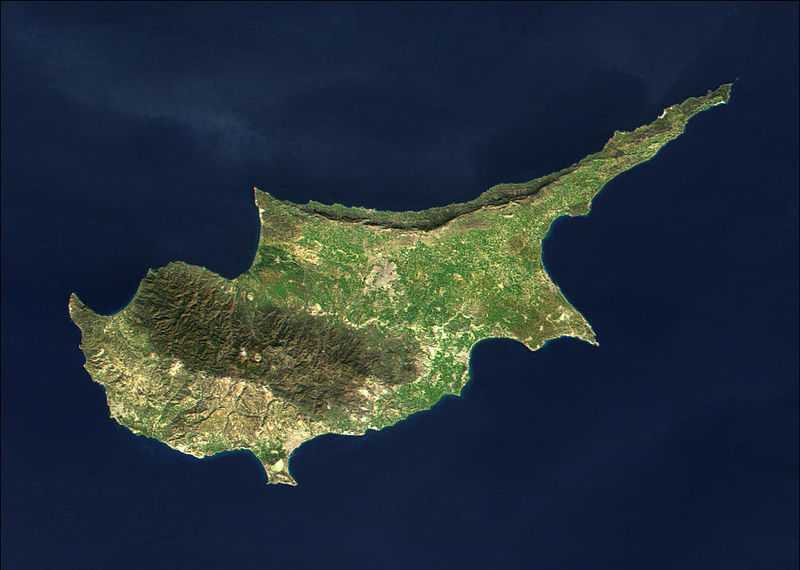
    Cyprus – an EU member since 2004 – has been independent since 1960 and divided since a Turkish invasion of the island’s northern part in 1974, triggered by a Greek-inspired coup.

    Currently Northern Cyprus – or the Turkish Republic of Northern Cyprus – is only recognised internationally by Turkey.

    The Turkish and Greek Cypriot leaders last week launched formal talks on reunifying their island, and good personal relations between them have prompted high expectations regarding the outcome.

    In-depth UN-mediated negotiations on power-sharing are to start tomorrow, but although Mr Talat has on several occasions expressed hopes that a deal could be reached by the end of the year, his Greek Cypriot counterpart has refused to commit to a timeframe.

    The EU’s role

    Mr Talat said the EU could also contribute to these talks and play a role for their positive outcome, as “ending this problem would contribute to the very meaning of the EU and European integration.”

    “We need technical assistance from the EU … to prepare a durable settlement within the European system,” he underlined.

    “Of course we cannot ask for political assistance, since the EU does not have – as the United Nations – a huge accumulated knowledge regarding the Cyprus problem.”

    “[Additionally], Greek Cypriots are members of the EU and Turkish Cypriots are out, so the EU cannot be impartial. This is a matter of fact. [But] we need technical assistance from the EU,” Mr Talat said.

    Turkish Cypriots are also hoping the EU can “encourage Greek Cypriots towards a solution, because there are actually very few incentives for [them] to solve the problem.”

    After they joined the EU, “they lost their incentives,” unlike Turkish Cypriots, who need the solution “deadlily,” the Turkish Cypriot leader pointed out.

    Negotiations on the table need to be ‘off the air’

    From the Turkish Cypriot point of view, any kind of agreement – possibly setting out a substantially decentralised state – should reflect the fact that “Cyprus is the home of Greek Cypriots and Turkish Cypriots” and highlight the “political equality” between them as a “crucial” point.

    It should also include safeguards that “neither side can claim jurisdiction over the other” and be put to separate but simultaneous referendums in the two parts of the island.

    For his part, Demetris Christofias, the Greek Cypriot leader, would prefer to have a more centralised federation, worried that substantial autonomy for the north could leave the door open to partition.

    But Mr Talat expressed confidence that through negotiations, they “will be able to succeed in really bridging the different views and solving the problems.”

    He also appealed to his Greek Cypriot counterpart to be more moderate in his comments to the media, insisting that what is still a matter of negotiations should be discussed privately.

    “Exchange of views or negotiations through media is an impossible task … I know that leftists speak too much, so they may not be able to stop talking,” he said jokingly referring to Mr Christofias – currently the only communist president of an EU member state.

    “But please, try. Don’t put your views through the media,” he added.

  • Amazon Mechanical Turk

    Amazon Mechanical Turk

    The Amazon Mechanical Turk (MTurk) is one of the suite of Amazon Web Services, a crowdsourcing marketplace that enables computer programs to co-ordinate the use of human intelligence to perform tasks which computers are unable to do. Requesters, the human beings that write these programs, are able to pose tasks known as HITs (Human Intelligence Tasks), such as choosing the best among several photographs of a storefront, writing product descriptions, or identifying performers on music CDs. Workers (called Providers in Mechanical Turk’s Terms of Service) can then browse among existing tasks and complete them for a monetary payment set by the Requester. To place HITs, the requesting programs use an open Application Programming Interface, or the somewhat limited Mturk Requester site.

    Requesters can ask that Workers fulfill Qualifications before engaging a task, and they can set up a test in order to verify the Qualification. They can also accept or reject the result sent by the Worker, which reflects on the Worker’s reputation. Currently, a Requester has to have a U.S. address, but Workers can be anywhere in the world. Payments for completing tasks can be redeemed on Amazon.com via gift certificate or be later transferred to a Worker’s U.S. bank account. Requesters, which are typically corporations, pay 10 percent of the price of successfully competed HITs (or more for extremely cheap HITs) to Amazon.[1]

    About the name

    The name Mechanical Turk comes from “The Turk”, a chess-playing automaton of the 18th century, which was made by Wolfgang von Kempelen. It toured Europe beating the likes of Napoleon Bonaparte and Benjamin Franklin. It was later revealed that this ‘machine’ was not an automaton at all but was in fact a chess master hidden in a special compartment controlling its operations. Likewise, the Mechanical Turk web service allows humans to help the machines of today to perform tasks they aren’t yet suited for.

    History of the service

    The service was initially invented for Amazon’s in-house use, to find duplicates among its web pages describing products.[1]

    The service was launched publicly on November 2, 2005, and is currently in beta. Following its launch, Mechanical Turk user base grew quickly, in part the result of the Slashdot effect. At that time there were a huge number of “Human Intelligence Tasks” (HITs) in the system. In early to mid November, 2005, there were tens of thousands of HITs, all of them uploaded to the system by Amazon itself for some of its internal tasks that required human intelligence. Web traffic grew to a massive amount near the beginning of December 2005. Since then, the number of HITs in the system has decreased, and by December 20, 2005 there were less than 100 groups of HITs on the average page load. By January, new types of HITs were set up, such as selecting the three best restaurants in a city, and third party HITs began to appear as well. As of April 2006, there were only the occasional batch of 25 HIT groups being offered, and the service had slowed to a crawl. As of January 2007 there were new HITS being offered of podcast transcribing and rating and image tagging (which is becoming very popular). In March 2007 there were reportedly more than 100,000 workers in over 100 countries.[1]

    In 2007, the service began to be used to search for prominent missing individuals. It was first suggested during the search for James Kim, but his body was found before any technical progress was made. That summer, computer scientist Jim Gray disappeared on his yacht and Amazon’s Werner Vogels, a personal friend, made arrangements for DigitalGlobe, which provides satellite data for Google Maps and Google Earth, to put recent photography of the Farallon Islands on the Mechanical Turk. A Slashdot effect sparked by Digg led to 12,000 searchers signing up, who were supplemented with imaging professionals working separately with the same data. The search was unsuccessful.[2] In September 2007 a similar arrangement was repeated in the search for aviator Steve Fossett. Satellite data was divided into 85 meter square sections, and Mechanical Turk users were asked to flag images with “foreign objects” that might be a crash site or other evidence that should be examined more closely.[1]

    Third party programming

    Programmers have developed various browser extensions and scripts designed to simplify the process of completing HITs. According to the Amazon Web Services Blog, however, Amazon appears to disapprove of the ones that automate the process 100% and take out the human element. Accounts using so-called automated bots have been banned.

    Related systems

    Main article: Crowdsourcing

    MTurk is comparable in some respects to the now discontinued Google Answers service. However, the mechanical Turk is a more general marketplace that can potentially help distribute any kind of work tasks all over the world. The Collaborative Human Interpreter by Philipp Lenssen also suggested using distributed human intelligence to help computer programs perform tasks that computers cannot do well. MTurk could be used as the execution engine for the CHI.

    Criticism

    Because HITs are typically simple, repetitive tasks and users are paid often only a few cents to complete them, some have criticized Mechanical Turk as a “virtual sweatshop.” Workers have no recourse if companies refuse to pay them for good work. Requesters do not have to file tax forms, and avoid minimum wage, overtime, and workers compensation laws. Workers, though, must report their income as highly-taxed self-employment income. However, at least some workers on Mechanical Turk are people who are middle class and do the work to end boredom or for fun.[3]

    References

    ^ Steve Silberman. “Inside the High-Tech Search for a Silicon Valley Legend”, Wired magazine, July 24 2007. Retrieved on 2007-09-16.

    ^ I make $1.45 a week and I love it Salon.com. July 24, 2006.

    External links

    Official website

    Wired Magazine story about ‘Crowdsourcing’ June, 2006

    Business Week Article on Mechanical Turk

    New York Times Article on Mechanical Turk

  • TURKEY SHOULD APOLOGIZE TO ARMENIANS – BIR BUYUKELCIDEN ORHAN PAMUK MISALI BIR DIPLOMASI

    TURKEY SHOULD APOLOGIZE TO ARMENIANS – BIR BUYUKELCIDEN ORHAN PAMUK MISALI BIR DIPLOMASI

    TURKEY SHOULD APOLOGIZE TO ARMENIANS
    Volkan Vural, who was the Turkish Ambassador to the USSR during the years of collapse of the latter announced during an interview by Turkish “Taraf” newspaper’s correspondent that Turkey should apologize to Armenians for the incidents of the past.

    He mentioned that Turkish President’s visit to Yerevan at the invitation of the Armenian President contains big political risk to both the leaders of the two countries.

    Vural said that ex-President of Armenia Levon Ter-Petrosian fell a victim to the initiatives in improving relations with Turkey.

    According to Volkan Vural, none of the historical commissions can solve the Armenian Question. It can only throw light on some incidents facilitating the process.

    “Though Turkey is hardly to recognize the Armenian Genocide, anyway, it should apologize to Armenians and other ethnic minorities – Greeks, Assyrians and Kurds for eviction and massacres. It should let their descendants return to the residences of their ancestors and grant them citizenship of Turkey”, he said.

    To the question about the issue of return of the Armenian properties and riches, the Turkish diplomat answered, “Those are questions under discussion. Return of properties and material compensation is a difficult task. Anyway, there may be a symbolic compensation. At the same time, Turkey should apologize to Armenians and other ethnic minorities for causing them pain. It is a necessity for a country like Turkey”.

  • ERMENI GOZU ILE : Georgia’s Adventurous President Saakashvili

    ERMENI GOZU ILE : Georgia’s Adventurous President Saakashvili


    By Appo Jabarian
    Executive Publisher/Managing Editor
    USA ARMENIAN LIFE Magazine


    Much controversy was created with former Soviet Republic of Georgia’s surprise military attacks on Russian peacekeeping forces in South Ossetia and Abkhazia.


    The ill-devised attack, authorized by Georgia‘s adventurous President Saakashvili, has effectively triggered an irreversible process that may cost him his career and Georgia‘s territorial integrity.


    The 8.8.08 attack broke centuries-old tradition of friendship and alliance with the Russian Uncle to the north, instigating a strong popular backlash in Russian public and governmental circles. Except for Pres. Saakashvili, no Georgian official has ever actively worked to weaken his country’s ties with Russia and actively sought to “integrate” it with the oil interests of the West.


    In turn, he earned the status of being a strong U.S. ally in the Caucasus. But the inexperienced Georgian grossly miscalculated the extent of the Russian response, on the one hand, and the lame-duck posture adopted by his neo-con masters in the West, on the other.


    On Aug 29, F. William Engdahl, the author of A Century of War: Anglo-American Oil Politics and the New World Order (Pluto Press), and Seeds of Destruction: The Hidden Agenda of Genetic Manipulation (www.globalresearch.ca), and a contributing writer of Online Journal wrote: “An examination shows 41-year-old Mikheil Saakashvili to be a ruthless and corrupt totalitarian who is tied to not only the US NATO establishment, but also to the Israeli military and intelligence establishment. The famous ‘Rose Revolution of November 2003 that forced the aging Edouard Shevardnadze from power and swept the then 36-year-old US university graduate into power was run and financed by the US State Department, the Soros Foundations, and agencies tied to the Pentagon and US intelligence community.”


    On September 1, in an article titled “The ‘Stupidest Guy on the Planet’ Has Lots of Company,” John Taylor of www.antiwar.com, wrote: “Saakashvili acted with such remarkable stupidity and miscalculation that a 38-inch yardstick is needed to measure his foolishness against other famously bad decisions … Did Saakashvili really think the Russians would stand idly by and let him pound their forces in South Ossetia? That the U.S., Israel, or the North Atlantic Treaty Organization would come to his aid? Or that Georgia‘s army could hold off the Russians?”


    Unmasking the real face of certain NGO’s, Engdahl added: “But there is more. The NGOs were coordinated by the US Ambassador to Georgia, Richard Miles, who had just arrived in Tbilisi fresh from success in orchestrating the CIA-backed toppling of Slobodan Milosevic in Belgrade, using the same NGOs. Miles, who is believed to be an undercover intelligence specialist, supervised the Saakashvili coup. It involved US billionaire George Soros’ Open Society Georgia Foundation, the Washington-based Freedom House whose chairman was former CIA chief James Woolsey, and generous financing from the US Congress-financed National Endowment for Democracy, an agency created by Ronald Reagan in the 1980s to °do privately what the CIA used to do,° namely coups against regimes the US government finds unfriendly.”


    Further bringing Saakashvili’s real persona to light, Engdahl reported: “Since coming to power in 2004 with US aid, Saakashvili has led a policy of large-scale arrests, imprisonment, torture and deepened corruption. Saakashvili has presided over the creation of a de facto one-party state, with a dummy opposition occupying a tiny portion of seats in the parliament, and this public servant is building a Ceaucescu-style palace for himself on the outskirts of Tbilisi. According to the magazine, Civil Georgia (Mar. 22, 2004), until 2005, the salaries of Saakashvili and many of his ministers were reportedly paid by the NGO network of New York-based currency speculator Soros — along with the United Nations Development Program.”


    Taylor added: “On an official visit to Israel, Saakashvili proclaimed that the Georgians were ‘the Jews of our time’ and compared Russian President Putin’s anti-Georgian policies to the anti-Semitic decrees of the 18th-century Russian Empress Catherine the Great. He also asserted that his model when refounding the Georgian state was Israel‘s first prime minister, David Ben-Gurion. And Saakashvili did not hesitate to take his case directly to Conference of Presidents of Major American Jewish Organizations in New York: ‘We need to establish relations with the U.S. Jewish community because you understand better than many in this country the international repercussions with the rest of the world.… I want your help in having better relations with the United States….’”


    One wonders if the world Jewry can fathom Saakashvili’s adventurous politics as a “Jew of our time.” By masquerading as a “Jew” of the Caucasus, Saakashvili has certainly brought liabilities to the Jewish quest for healthy relations with Russia and other countries. That’s why the Israeli military specialists and advisers in Georgia “were reluctant to upset the Russians. They need President Putin’s support at the UN to get stronger anti-nuclear sanctions on Iran.”


    Engdahl ominously noted that “With Russia openly backing and training the indigenous military in South Ossetia and Abkhazia to maintain Russian presence in the region, especially since the US-backed pro-NATO Saakashvili regime took power in 2004, the Caucasus is rapidly coming to resemble Spain in the Civil War from 1936-1939, where the Soviet Union, Nazi Germany and others poured money and weapons and volunteers into Spain in a devastating war that was a precursor to the Second World War.”


    By his misguided military move against Russia, Saakashvili has de facto triggered a counter-“Rose Revolution” process. The process which already yielded Russia‘s trashing of Georgia‘s army may soon bring reversal of fortunes both for him and his masters in Washington and elsewhere.


    As for Saakashvili’s Azeri counter-part Pres. Ilham Aliev of Azerbaijan, it is yet to be seen if the junior Aliev has learned from his colleague’s experience to tone down his belligerent rhetoric against Armenia.


    One hopes that Aliev’s advisors in Baku are hard at work to convince their boss not to join the club of the “Stupidest Guys” of the Caucasus. After all, like Georgia, Azerbaijan has much to worry about its shaky and unstable ethnic makeup. Nearly 60% of its inhabitants come from restive non-Azeri ethnic groups such Daghestanis, Alans, Lezgis and many others.
     
  • The Fannie and Freddie Rescue WELLINGTON LETTER

    The Fannie and Freddie Rescue WELLINGTON LETTER


    September 8, 2008 Volume 31: No. 17


    SPECIAL BULLETIN


    The Fannie and Freddie Rescue


    THE BIG NEWS EVENT OF THE WEEKEND


    On Sunday, Sept. 7, the Federal government announced that it would be putting Fannie Mae and Freddie Mac into “conservatorship.” The CEO’s of both firms will be replaced and the dividends will be eliminated.

    The Treasury Department said it will immediately receive $1 billion in senior preferred stock, paying 10 percent interest, from each company. Over time, the government could be required to put up as much as $100 billion for each if the funds are needed to keep them afloat as losses mount. You can bet that the actual total will be many times that.

    The government will also receive warrants representing ownership stakes of 79.9 percent in each company. Apparently that means that shareholders would not be wiped out, but they would lose about 80% of the company. That’s substantial dilution.

    Furthermore, dividends on both common and preferred stock would be eliminated, saving about $2 billion a year. Mid-size and small banks own a lot of the many different classes of the preferred for their high dividends. With the dividend eliminated, what is the reason to own them? Some banks will take a substantial bath on these investments.

    STOCK MARKET


    However, the Treasury will not let these banks fail. Bloomberg reported:


    The Federal Reserve and three other bank regulators said that they will work to “develop capital restoration plans” with the “limited number” of smaller institutions that hold Fannie and Freddie stock as a significant portion of their capital.

    By ensuring that Fannie and Freddie maintain positive net worth, the Treasury will provide “additional security” to the owners of Fannie and Freddie bonds and “additional confidence” for the holders of their mortgage-backed securities, it said. The Treasury noted that Fannie and Freddie securities are held by central banks and “investors around the world.”


    In plain English, the banks will not have to write down the value of these securities immediately.

    The former president of the St. Louis Fed, William Poole, told Bloomberg that “I would not be surprised if their total losses aggregate about 5 percent of their obligations” of about $6 trillion. In my view, that’s much too conservative. I think the loss will be at least 20% of the portfolio, which would be over $1 trillion.


    Note that the takeover is by the government, not the Federal Reserve. After all, the Fed is not owned by the government, although most people think it is. However,the future status of these firms is still unclear. Treasury Secretary Henry Paulson said that “only Congress” can tackle the “inherent conflict” of serving both shareholders and a public mission. Currently, the plan doesn’t address the question of whether the companies will be nationalized, privatized or kept as government-sponsored enterprises that are shareholder owned.


    I think a significant part of the statement is that the Treasury said it would reduce the portfolios of both companies by 10 percent a year starting in 2010. That is a big negative because most private mortgage companies are already not lending. If these two GSE’s reduce lending, instead of expanding it, it means that the housing debacle will continue. And only a turnaround in housing can hope to stop the current credit contraction that is leading the world into a financial crisis.


    What is likely to happen to the markets?


    The initial “sigh of relief” rally may be much shorter than the bulls would like. Yes, the Fannie and Freddie problems are resolved – for now. The fact that the Treasury took these steps confirms that the liquidity situation of both firms was getting critical. But the rescue had already been built into the markets over the past seven weeks. It was obvious that the government could not let them fail.

    So, what’s for an encore? Does it resolve the write-down problems of assets in the banking system? What about the Wall Street firms? And what about the future problems of the private equity firms as their acquired companies have trouble making debt service?


    The serious problems are still out there. Everyone knew that these two GSE’s would not be allowed to go out of business. That is no surprise. It only gives a psychological boost, but it will take more than psychology to compensate for trillions of dollars of derivatives melting down.

    What will be the reactions in the markets? The dollar will have a brief rest in its strong rise, meaning a brief correction before it goes higher. That will also cause a brief pop in the commodity markets, including the precious metals. Late last week, these markets had met first technical levels which normally causes brief counter-trend moves. No one can know if the rally will last one or two days, or maybe even a week. In fact, it may not even last to the end of Monday. We will see. But an end to the credit crisis is far, far away.


    Its important to remember that everything that the Fed and the U.S. Treasury have done over the past 12 months, which includes the Fed using half its balance sheet, i.e. $400 billion of Treasury securities, has not resolved anything, but only prolonged the inevitable.


    The major indices last week started breaking down to new bear market lows, unemployment is soaring, and the economy is in a certain recession which the guys with their Ph.D.’s won’t recognize until next year.

    The ill-defined Fannie and Freddie bailouts won’t be any different. It’s like using an aspirin to fight terminal cancer.


    THE SILENT CREDIT CRUNCH AND THE ECONOMY


    While the bullish analysts tell you about the good earnings of companies, and the exciting “widgets” they make, and the virtually unlimited demand for them, they totally ignore the primary driving factor in economies and investment markets, i.e., credit availability. Without credit, economic growth comes to a screeching halt.

    And that’s where we are now. Most banks can’t lend because they are close to their capital reserve requirements. They must raise more capital, which is very difficult, or just stop lending and call in loans.

    Major firms, such as Lehman, Fannie Mae, Freddie Mac, GM, Ford, etc. are totally unable to raise long-term capital to strengthen their balance sheets. Their preferred stock yields, and yields on long-term debt, are sky high, implying that the market believes they will not be able to survive. The preferred issues yield from 13%-18%. They can’t raise new capital issuing new preferred at these yields, as it would accelerate their demise. GM’s short-term debt is now yielding well over 20%. Investors obviously are not worried about the return ON their money, but OF their money.

    Apparently, many investors are being fooled by the $4-5 billion write-offs repeatedly taken by large financial firms. The amounts seem manageable, so they don’t worry. But you have to add them up. For example, MER wrote down $5.5 billion last October. It got a capital injection from Singapore to compensate. However, at this time, the write-offs of MER amount to $48 billion.


    Hundreds of billions of dollars in short-term financing used to be conducted in the commercial paper (CP) market. Consider these Federal Reserve figures on commercial paper outstanding: The “asset-backed” CP outstanding has plunged by about $500 billion dollars, or 40%, from last year’s peak of about $1220 billion. That’s the biggest decline of any credit market in history. How can anyone believe that it won’t cause a serious recession?


    However, there is a small positive, namely that “non-financial commercial paper” has seen a rise lately. This is the CP issued by large, non-financial companies. It means that someone is able to raise money in the commercial paper market.

    But it’s the banks that usually provide credit to smaller and mid-size firms. They are not able to do so now except on a minor scale. And that’s where the problem lies. During the 14-year stagnation in Japan, the banks could basically not lend because they were still loaded up with all the bad loans created during the 1980’s bubble. Their government should have created a mechanism to get those bad loans out of the banks so that they could lend again. The Fed knows the Japanese problem, and is trying to make sure that it doesn’t happen in the U.S. Their answer is “Term Facilities,” where the Fed trades liquid U.S. Treasury paper it holds for the illiquid paper assets held by the banks. But these are loans, not permanent capital infusions.

    While the Fed holds these securities, they continue to lose value. Wouldn’t the banks be smarter to just dump them before they become worthless? They probably hope that eventually the Fed, or the Treasury, will just keep them, because reversing the swaps would mean instant bankruptcy for the banks, as they have to write down the value.

    Values of all these paper “assets” are shrinking. Merrill Lynch recently dumped its CDO’s, which was a smart move. These CDO’s were declining every day, and finally MER decided to get a dwindling asset off of its books before everyone else decides to dump their own holdings.

    Mortgages held by financial institutions are losing their value on a weekly basis. The huge bond investment firm, PIMCO, estimates that $5 TRILLION of mortgage loans are in the “risky asset” category. That’s about 40% of all mortgages. If you are one of the bulls, just think, how can the Fed, or the Treasury, bail out $5 trillion in bad mortgages?

    RAISING RATES? IDIOTIC!


    The credit crunch is worsening, yet a number of economists, including some presidents of Federal Reserve districts, are urging the Fed to raise interest rates. This is a great argument for not letting human beings be in charge of something as important as setting interest rates. The markets can do a much better job. The hawks on rates fail to see that the “low” Fed Funds rate of 2% has nothing to do with market rates, which is what the average person, and the average corporation, pay. The low Fed Funds rate creates a steep yield curve, which allows banks to improve their profitability. Higher rates will cause more bank failures. Is that what we want?

    This technique of creating a steep yield curve helped resolve the banking crisis of 1990-1991. Banks borrow at the low short-term rates and invest the money into much higher-yielding U.S. Treasury bond rates, thus making a nice profit. That is also the reason that the prices of these Treasuries continue to rise, totally confusing economists who have been saying that bond prices should decline because of higher inflation. These economists just don’t know how the markets work.

    The number of business bankruptcy filings rose 42% in the 12-month period through June 30. The numbers are still relatively small, but the trend is definitely negative.


    GMAC and its Residential Capital LLC home lending unit announced that they plan to fire 5,000 employees, or 60 percent of the staff, and close all 200 GMAC Mortgage retail offices because of weak real estate markets. Loans originated by outside brokers through the company’s Homecomings unit will cease and business lending will be curtailed, the company said.


    And that’s how credit becomes tighter.


    Ford reported that domestic sales fell 27% in August. That’s the 21st decline in 22 months. Ford is reducing its planned second-half production in North America by 50,000 vehicles. In July, sales of U.S. carmakers declined to the lowest sales rate in 16 years.


    Meanwhile, Nissan of Japan reported that its sales gained 14%. What’s wrong with Detroit management?

    REALITY IS NOW BECOMING RECOGNIZED—BUT SLOWLY


    We are now coming to the phase of the bear market and recession where there is a realization by the majority of the investment establishment that the credit crunch is accelerating. Such an acceleration acts like an avalanche, where the lenders and other sources of liquidity suddenly realize that their previous “bargain hunting” has resulted in big losses and they are no longer willing to provide capital.

    Banks shut their lending windows for two reasons: they don’t have the capital, and they don’t want to take the risk.

    Bill Gross, founder of PIMCO, the largest bond firm in the world, and a very astute analyst of the credit markets, was very candid and revealing last week on CNBC. He admitted that PIMCO had been too quick to provide capital to financial firms early this year when they thought the worst was over.


    Obviously, they don’t subscribe to our WELLINGTON LETTER, where we warned last year that the bargain hunters were much too early. He said that currently, they and other investment firms are no longer willing to provide capital.


    He said that, to resolve the current crisis, the financial markets need $500 billion of capital. This is huge.


    No one can provide that except the government. Remember, the investments by the large, foreign “Wealth Funds,” which invest in governmental surpluses, have been investing the amount of $4-6 billion. And they now hesitate to invest more. Well, the $500 billion required is nowhere to be found, except at the U.S. Treasury printing press.

    Late last year we said that a capital infusion of that much by the Federal government was the only way to restore confidence, not the small amounts of $20 billion and $50 billion which the Fed actually did provide. Paulson had it right a few months ago when he said that when everyone knows you have a bazooka, instead of a little pistol, you don’t have to use it.

    Of course, at that time, most of the policy makers in Washington didn’t even think there was a crisis. Our leaders in Washington are reactive. When the meltdown really gets going, they’ll start scrambling. But wouldn’t it be better for them to come up with a program now, totally avoiding the next crisis?


    This is why bargain hunting right now in any asset, except U.S. Treasury bonds, is a sure loss investment. We are seeing the greatest un-leveraging in the history of the world. That means everything gets sold. And when it’s sold, the seller searches for a safe place for that money. The only safe place is U.S. Treasuries. As I wrote in March this year, I believe that we could even see a short period where investors will be willing to get a zero yield on 30-day T-bills, or less, just to have their money safe. Advice: avoid all money market funds which have other than U.S. Treasury securities.

    I gave the same advice in the middle of last year. But institutional investors thought they could improve yield by buying


    “Auction Rate Securities

    ” that were sold by Wall Street as being the same as money market funds. Well, now these securities cannot be sold. There is no market.

    The next wave of crisis is not far away, even with the rescue of Fannie and Freddie.

    (Note: Our next issue will be published in one week and will include the normal, complete assessment of the investment markets, with charts.)


    Seminar Appearance, Bert Dohmen


    I will be participating at a great seminar in Los Angeles (Century City) conducted by my long-time friend, Donald McAlvany. IT’S FREE! Details:


    Don McAlvany and David McAlvany cordially invite you to attend their


    FREE

    financial and geo-political briefing. Please make plans to attend an in-depth analysis on the following topics:


    ~ Death of the Dollar: The Ramifications of Losing the Status of the “World Reserve Currency”

    ~ Changing of the Guard: How to Prepare for a Global Shift of Power

    ~ Banks on the Brink: Your Money & How Safe Is It?

    ~ Mega Crash: The Coming Derivatives Meltdown

    Hyatt Regency Century Plaza, 2025 Avenue of the Stars, Los Angeles, CA 90067


    Tuesday, September 23


    rd at 6:30-PM


    Call 800.525.9556 x118 to Guarantee Your Place

    The seminar is FREE! I will be on a small panel to discuss some of the important situations in the markets and answer questions from the audience.


    Greetings,

    Bert Dohmen


  • Turkey’s state TV signals future broadcasts in Armenian

    Turkey’s state TV signals future broadcasts in Armenian


    Turkey’s state-run Turkish Radio Television (TRT) is moving toward cooperation with Armenia’s public television station to promote dialogue between the two neighbors, the Turkish Daily News (TDN) wrote on Tuesday.

    After President Abdullah Gul’s historic visit to Yerevan, the general manager of TRT, Ibrahim Sahin, announced TRT might start broadcasting in Armenian.

    TRT also signed a memorandum of understanding with Armenia 1 TV, according to the report in the TDN.

    “Cooperation will be made in formats that improve dialogue, programs that focus on Armenia and Turkey, exchange of information and experience, and other issues,” the document read.

    The memorandum of understanding between the two state television stations will be transformed into a business agreement in the near future to enable joint production of programs and documentaries.

    Sahin said the three main pillars of the cooperation are – cooperation in management, leading public opinion and education. He added a bridge would be built between two countries with the help of state television.

    He said the final decision for full-time broadcasting in languages, such as Kurdish, Arabic, Persian and English, which are mostly spoken in neighboring countries is in progress, adding an Armenian broadcast could be also possible in the second phase.

    He added broadcasting in Georgian and Russian was also under consideration.

    TRT’s official website, which currently only operates in Turkish, will be transformed to serve in 12 languages, Sahin said.

    Although Armenian is not among the 12 proposed languages, a new page might ultimately be added, he said.

    Photo: AA