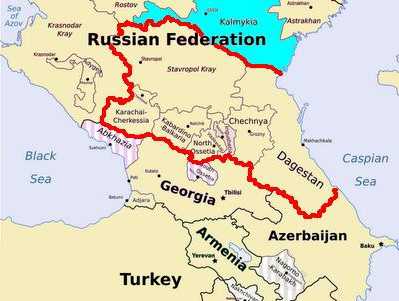
Amid the flurry of diplomatic activity in Moscow last week over the Caucasus, Foreign Minister Sergei Lavrov took time off for an exceptionally important mission to Turkey, which might prove a turning point in the security and stability of the vast region that the two powers historically shared.
Indeed, Russian diplomacy is swiftly moving even as the troops have begun returning from Georgia to their barracks. Moscow is weaving a complicated new web of regional alliances, drawing deeply into Russia’s collective historical memory as a power in the Caucasus and the Black Sea.
German poet and playwright Bertolt Brecht would have marveled at Lavrov’s diary, heavily marked with “Caucasian chalk circles” through last week, with intertwining plots and sub-plots – an Extraordinary European Council Meeting taking place in Brussels; a meeting of the foreign ministers of the Collective Security Treaty Organization (CSTO) in Moscow; three foreign counterparts to be hosted in Moscow – Karl de Gucht of Belgium, Franco Frattini from Italy and Azerbaijan’s Elmar Mamedyarov; visits by the presidents of the newly independent republics of South Ossetia and Abkhazia; and consultations with the visiting United Nations secretary general’s special representative for Georgia, Johan Verbeke.
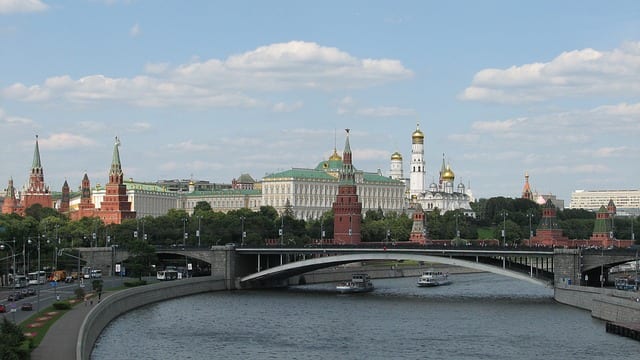
Yet, Moscow signaled the highest importance to consultations with Turkey. Lavrov summarily dropped all business at home and hurried to Istanbul on Tuesday on a working visit, essentially aimed at catching a few hours’ urgent confidential conversation with his counterpart, Ali Babacan. Lavrov’s mission underscored Russia’s acute sense of its priorities in the current regional crisis in the Caucasus and the Black Sea.
Historical rivals becoming allies
Almost inevitably, there is great historical poignancy when Russia and Turkey discuss the Black Sea. During the year-long siege of the Russian fortress naval base Sevastopol in 1854-55 by the British and French, Tzarist Russia realized one or two home truths. One, that Turkey’s role could be critical for the safety of its Black Sea fleet, and, two, without the Black Sea fleet, Russia’s penetration into the Mediterranean would not be feasible. Most important, Russia learned that the original ground of a war may be lost, but the protagonists could continue with hostilities.
When peace finally came with the Congress of Paris in 1856, the Black Sea clauses came at a tremendous disadvantage to Russia – so much so that within the year the tzar conspired with Germany’s Otto von Bismarck, denounced the accord and proceeded with re-establishing a fleet in the Black Sea.
The timing of Lavrov’s consultations in Turkey was noteworthy. US Vice President Dick Cheney happened to be in the region, visiting Ukraine, Azerbaijan and Georgia, drumming up anti-Russia animus. Turkey didn’t figure in his itinerary. Moscow shrewdly estimated the need of political dynamism with regard to Turkey.
Moscow has taken careful note that unlike the North Atlantic Treaty Organization (NATO) and the European Union, Turkey’s reaction to the conflict in the Caucasus has been manifestly subdued. Ankara briefly expressed its anxiety over the developments, but almost in pro-forma terms without taking sides. On the one hand, Turkey is a NATO member country and it aspires to join the EU. It was a close Cold War ally of the US. Turkey will be the net beneficiary as an energy hub if any of the West’s grandiose plans to bypass Russian territory and access Caspian energy materialize. It is the entrepot of the Baku-Tbilisi-Ceyhan oil pipeline.
On the other hand, Russia is poised to be Turkey’s number one trading partner, with annual trade already nearing US$40 billion. Invisible trade is also substantial, with 2.5 million Russian tourists visiting Turkey annually and Turkish companies extensively involved in Russia’s services sector. And, Russia supplies 70% of Turkey’s needs of natural gas.
Thus, Turkey has ingeniously come up with the idea of a “Caucasus Stability and Cooperation Pact”, whose main virtue would be, to quote Turkish commentator Semih Idiz, to “provide Turkey with the option of remaining relatively neutral in this dispute, even if this was not to everyone’s satisfaction in Washington”. Turkish Prime Minister Recep Tayyip Erdogan visited Moscow on August 12 to discuss the proposal with the Kremlin. Idiz adds, “Put another way, Ankara is not in a position to take sides in this dispute, at a time when a new ‘East-West divide’ is in the offing, even if it is a member of NATO.”
Conventional wisdom is that Moscow abhors encroachments into its “sphere of influence” in the Caucasus by outside powers. However, in the present case, the Kremlin promptly welcomed the Turkish proposal and agreed to have consultations on building up bilateral and multilateral dialogue on all aspects of the Caucasus problem. The Russian approach is pragmatic.
Primarily, it was imperative to engage Turkey, an important regional power, which helped mitigate Russia’s regional isolation in the crisis. Second, it paid to involve Turkey on Russia’s side, as it does not form part of the EU peace initiative.
Turkey’s influence in Southern Caucasus is undeniable. Turkey’s annual trade with Georgia amounts to $1 billion, a considerable volume by the latter’s yardstick. Turkish investment in Georgia is in excess of half a billion dollars. Turkey also supplied weapons and provided training to the Georgian military. Turkey’s ties with Azerbaijan have been traditionally close, too.
Thus, Moscow took the perspective that the Turkish proposal could provide the basis to work out mechanisms for limiting the conflict potential of the region and enhancing regional stability and act as a counterweight to the West’s intrusive moves directed against Russian interests.
Lavrov told Babacan that while “it is necessary at this stage to create appropriate conditions” for Ankara’s peace initiative, “including elimination of the consequences of the aggression against South Ossetia”, “we absolutely agree with our Turkish partners that the groundwork for that interaction can and must be laid now”.
At the core of the Russian thinking lies the preference for a regional approach that excludes outside powers. Lavrov was open about it. He said, “We see the chief value in the Turkish initiative in that it rests on common sense and assumes that countries of any region and, first of all, countries belonging to this region should themselves decide how to conduct affairs there. And others should help, but not dictate their recipes.”
Lavrov was hinting at displeasure over the US role. He went on, “Of course, this will be an open scheme, but the initiative role here will belong to the countries of the region. This is about the same thing as ASEAN [Association of Southeast Asian Nations] in Southeast Asia, which has a lot of partners [10], but the ASEAN members define the work agenda for the region, and the region’s life.”
The Russian approach is to welcome an “entente cordiale” with Turkey in the Black Sea region, which frustrate US attempts to isolate Russia in its traditional backyard. During Lavrov’s visit to Istanbul, the two sides agreed about the “necessity of using more the already available mechanisms – the Black Sea Economic Cooperation Organization [based in Istanbul] and Blackseafor [regional naval force] – and developing the Turkish idea of Black Sea harmony, which is increasingly acquiring a multilateral and practical character.”
Curiously, at the press conference in Istanbul with Babacan by his side, Lavrov made a huge ellipsis in the thought process by linking the Russian-Turkish shared interest in undertaking joint initiatives to two other regional issues – Iraq and Iran. He said, “Essentially from the same positions we also champion what needs to be undertaken for a definitive resolution of the situation in Iraq on the basis of the territorial integrity and sovereignty of that state. Also similar are our approaches to the necessity of a political peaceful settlement to the situation surrounding Iran’s nuclear program.”
The full import of Lavrov’s statement needs careful analysis. Its ramifications are profound. It can be understood against the backdrop of the US’s ideas in the past to use the eastern Black Sea coast as a staging post for its military operations in Iraq and a potential strike against Iran – which Ankara firmly rejected, to the great relief of Moscow. Suffice to say, Lavrov has done brilliantly by floating an idea to link Iraq and Iran with a Russo-Turkish regional framework on security and cooperation.
The straits question
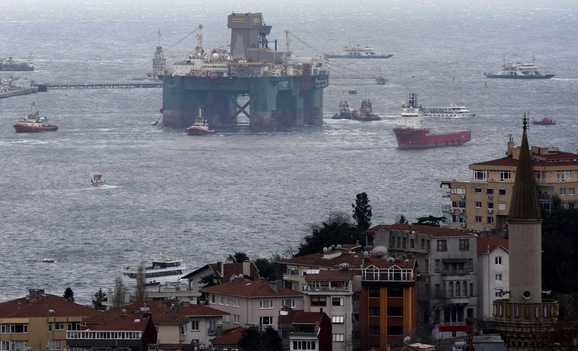
But in immediate terms, Moscow has its eyes set on the US’s military pressure in the Black Sea. At the root of the present situation lies the so-called “straits question”. Briefly, Moscow would like Ankara to continue to resist US attempts to revisit the 1936 Montreux Convention, which vests in Turkish hands control over the Bosphorus Straits and the Dardanelles. The US was not party to the 1936 convention, which severely restricted the passage of warships through the two Turkish straits to the Black Sea and virtually ensured the Black Sea as a Russo-Turkish playpen.
The Montreux Convention is critical to Russia’s security. (During World War II, Turkey denied the Axis powers permission to dispatch warships to the Black Sea to attack the Soviet naval fleet based in Sevastopol.)
In the post-Cold War scenario, Washington has been mounting pressure on Turkey to renegotiate the Montreux Convention so as to progressively convert the Black Sea into a preserve of NATO. Turkey, Romania and Bulgaria are NATO countries; the US has military bases in Romania; the US is hoping to induct Ukraine and Georgia into NATO. Therefore, Turkish resistance to the US entreaties regarding renegotiating the Montreux Convention assumes great importance for Moscow. (During the current conflict in the Caucasus, Washington sought to dispatch two massive warships weighing 140,000 tons to the Black Sea ostensibly to provide “aid” to Georgia, but Ankara refused permission on the grounds that such passage through the Bosphorus violated provisions of the Montreux Convention.)
Moscow appreciates the nuance in the Turkish policy. Actually, Moscow and Ankara have a shared interest in maintaining the Black Sea as their joint preserve. Second, Ankara rightly apprehends that any move towards re-opening the Montreux Convention – which Turkey negotiated with great dexterity, statesmanship and foresight by Kemal Ataturk against formidable odds – would open a Pandora’s box. It might well turn out to be a step towards reopening the Lausanne Treaty of 1923, the cornerstone which erected the modern Turkish state out of the debris of the Ottoman Empire.
Writing in the liberal Milliyet newspaper recently, prominent Turkish political analyst Tahya Akyol neatly summed up the paradigm:
Anatolia’s geography required giving priority to looking towards the West during the Byzantine and Ottoman eras, while never ignoring the Caucasus and the Middle East. Of course, nuances change, depending on events and problems. A Turkey directed towards the West would never ignore Russia, the Black Sea, the Caucasus, the Middle East or the Mediterranean. The symphony of changing and complicated nuances depends on the ability of our foreign policy and the size of our power. There’s no such thing as an infallible policy, but Turkey has avoided making huge foreign policy mistakes. Its basic principles are sound.
Moscow has a deep understanding of the quintessential pragmatism of Turkey’s “Kemalist” foreign policy. (Ataturk reached out to the Bolsheviks in the early 1920s.) Lavrov gently glided over the pages of contemporary history. He said in Istanbul that post-Soviet Russia didn’t feel any “restraining factors” on account of Turkey’s NATO membership as long as the two powers remained “truly sincere, truly trustful and truly mutually respectful”. What did he mean?
From the Russian perspective, what matters is that Turkey shouldn’t use its NATO membership to the detriment of Russia’s interests, even while legitimately fulfilling its obligations and commitments to the alliance. In other words, Lavrov reminded that Turkey should not forget about its “other international commitments and obligations”, such as “the framework of the international treaties that govern the regime on the Black Sea, for example”.
Lavrov drew comfort that “Turkey never places its commitments to NATO above its other international obligations, but always strictly follows all those obligations that it has in the totality. This is a very important trait not characteristic for all countries. We appreciate this, and endeavor to approach our relations likewise.” To be sure, he left behind much food for thought for his Turkish hosts.
Caucasian chessboard
Meanwhile, to use Akyol’s metaphor, a new “symphony” has indeed begun in the Black Sea and Southern Caucasus. International observers, who reduce the current discord to one of Russia’s support to the principle of self-determination, are counting the trees and missing the wood.
After testing out NATO’s real capabilities to wage a war against Russia in the Black Sea – a Russian military expert assessed Moscow would need 20 minutes to sink the NATO fleet – Russia has announced its intent to deploy regular troops in the newly independent states of South Ossetia and Abkhazia under the treaties of “friendship, cooperation and mutual assistance” that Russia signed with them in Moscow on Tuesday. Defense Minister Anatoly Serdyukov said a contingent in excess of a brigade each would be deployed in South Ossetia and Abkhazia.
In practical terms, Russia has reinforced its presence in the Black Sea region. Lavrov explained in Moscow on Tuesday, “Russia, South Ossetia and Abkhazia will take all possible measures jointly to remove and prevent threats to peace or attempts to destroy peace and to counter acts of aggression against them on the part of any country or any group of countries.” He said Moscow would henceforth expect that any discussions by the United Nations Security Council over regional security issues would be “senseless” without the participation of the representatives of South Ossetia and Abkhazia – a precondition Washington is certain to reject.
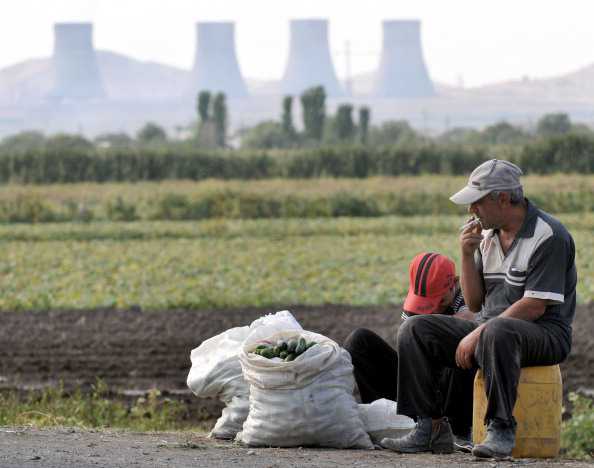
Equally, another Russo-Turkish symphony is heard elsewhere in the Caucasus. On Saturday, Turkish President Abdullah Gul flew into Yerevan, breaking the century-old ice in Turkish-Armenian relations. Moscow encourages the thaw. Yerevan hopes to benefit from the Russo-Turkish regional concord to normalize relations with Ankara and reopen the Armenian-Turkish border after a gap of almost a century. Armenian President Serge Sarkisian is expected to visit Turkey on October 14. The back channels working quietly in Switzerland for months are being elevated to a formal level. Pitfalls remain, especially with regard to the complicated Nagorno-Karabakh problem. Again, Washington might get alarmed and begin to pull strings through the Armenian diaspora in the US – and, vice versa.
At any rate, Gul visited Baku, Azerbaijan, on Wednesday to brief the Azeri leadership. In the same context, Azeri Foreign Minister Elmar Mamedyarov visited Moscow last weekend, following a telephone conversation between Russian President Dmitry Medvedev and his Azerbaijan counterpart Ilkham Aliyev. Medvedev invited Aliyev to visit Moscow. Armenian President Sarkisian recently visited Moscow.
The Russian newspaper Kommersant cited a Kremlin source to report that Moscow could broker an Armenian-Azeri summit meeting. If so, Russia and Turkey, working in tandem, are effectively bypassing Europe and the US. The so-called Minsk group of the Organization of Security and Cooperation in Europe has to date been in the driving seat of the Nagorno-Karabakh peace process. (Interestingly, Russia is a member of the Minsk group, whereas Turkey stood excluded.)
Baku snubs Cheney
To quote Kommersant, “Moscow and Ankara are consolidating their position in the Caucasus, thus weakening Washington’s influence there.” The signs are already there. When Cheney visited Baku last week on Wednesday on a mission single-mindedly aimed at isolating Russia in the region, he came across a few rude surprises.
The Azeris made a departure from their traditional hospitality to visiting US leaders by accorded a low-level airport reception for Cheney. Further, Cheney was kept cooling his heels for an entire day until Aliyev finally received him. This was despite what Cheney always thought was his special personal chemistry with the Azeri leader dating to his Halliburton days. (Aliyev used to head the Azeri state-run oil company SOCRAM.)
Cheney ended up spending an entire day visiting the US Embassy in Baku and conversing with sundry American oil executives working in Azerbaijan. Finally, when Aliyev received him late in the evening, Cheney discovered to his discomfiture that Azerbaijan was in no mood to gang up against Russia.
Cheney conveyed the George W Bush administration’s solemn pledge to support the US’s allies in the region against Russia’s “revanchism”. He stated Washington’s determination in the current situation to punish Russia at any cost by pushing the Nabucco gas pipeline project. But Aliyev made it clear he did not want to be drawn into a row with Moscow. Cheney was greatly upset and made his displeasure known by refusing to attend the Azeri state banquet in his honor. Soon after the conversation with Cheney, Aliyev spoke to Medvedev on phone.
The Azeri stance demonstrates that contrary to US media propaganda, Russia’s firm stance in the Caucasus has enhanced its prestige and standing in the post-Soviet space. The CSTO at its meeting in Moscow on September 5 strongly endorsed the Russian position on the conflict with Georgia. Russian Prime Minister Vladimir Putin undertook a highly significant visit to Tashkent on September 1-2 aimed at boosting Russian-Uzbek understanding on regional security. Russia and Uzbekistan have tied up further cooperation in the field of energy, including expansion of the Soviet-era gas pipeline system.
Kazakhstan, which openly supported Russia in the Caucasus situation, is mulling its oil companies acquiring assets in Europe jointly with Russia’s Gazprom. The indications are that Tajikistan has agreed to an expansion of the Russian military presence in Tajikistan, including the basing of its strategic bombers. Indeed, the CSTO’s endorsement of the recent Russian package of proposals on developing a (post-NATO) European treaty on security is a valuable diplomatic gain for Moscow at this juncture.
But in tangible terms, what gives utmost satisfaction to Moscow is that Azerbaijan has reacted to the Caucasus tensions and the temporary closure of the Baku-Tbilisi-Ceyhan pipeline by pumping its oil exports to Europe instead via the Soviet-era Baku-Novorossiysk pipeline. The dramatic irony of Baku overnight switching from a US-sponsored oil pipeline bypassing Russia to a Soviet-era pipeline that runs through the Russian heartland couldn’t have been lost on Cheney.
More worrisome for Washington is the Russian proposal that lies on Aliyev’s table offering that Moscow will be prepared to buy all of Azerbaijan’s gas at world market prices – an offer Western oil companies cannot possibly match. It is an offer Baku will seriously consider against the backdrop of the new regional setting.
The complete failure of Cheney’s mission to Baku would appear to have come as a rude awakening to Washington that Moscow has effectively blunted the Bush administration’s gunboat diplomacy in the Black Sea. As the New York Times newspaper grimly assessed on Tuesday,”“The Bush administration, after considerable internal debate, has decided not to take direct punitive action [against Russia] … concluding it has little leverage if it acts unilaterally and that it would be better off pressing for a chorus of international criticism to be led by Europe.”
US Defense Secretary Robert Gates explained to the daily that Washington prefers a long-term strategic approach, ” [and] not one where we act reactively in a way that has negative consequences”. He added thoughtfully, “If we act too precipitously, we could be the ones who are isolated.” Cheney himself has scaled down his earlier rhetoric to severely punish Russia. He now thinks the door for improving relations with Russia must remain open, and casting future relations with the US is a choice for the leaders in Moscow to make.
But Turkey appears to have made its choice. From the speed with which Erdogan conjured up the idea of the Caucasus Stability Pact, it seems Turkey was ready for it for a while already. It is not as easy as it appears to invariably turn factors of geography and history to geopolitical advantage. Besides, as its misleading name suggests, the Black Sea is actually an iridescent blue sea full of playful dolphins, but pirates and sailors were captivated by its dark appearance when the sky hung low laden with storm clouds.
[…]
Asia Times Online
Source: