Month: September 2008

  • U.S. warship enters Black Sea, Turkey rules out Montreux breach

    U.S. warship enters Black Sea, Turkey rules out Montreux breach

    U.S. destroyer USS McFaul bound for the Black Sea Saturday passed through the Turkish straits for the second time in a month. Turkish foreign minister said the passage was made in line with the Montreux Convention.

    The guided-missile destroyer USS McFaul had sailed back through the Turkish straits toward the Aegean Sea earlier this month, after it delivered humanitarian aid for Georgia.

    However, the second passage of the McFaul in a month raised question marks about whether the passage breached the Montreux Convention, which governs international traffic through the Bosporus and Dardanelles straits.

    Turkish Foreign Minister Ali Babacan said later on Saturday the traffic through the straits has been running in accordance with the convention.

    The 1936 Montreux Convention allows foreign vessels to stay in the Black Sea for only 21 days.

    The destination of the warship, USS McFaul, is unknown.

    Source : Hurriyet

  • President Bush Meets with President Talabani of Iraq

    President Bush Meets with President Talabani of Iraq

    Wednesday, September 10, 2008
    President Bush met with the Big Sister of the Year at the White House. Later, President Bush met with Iraqi President Jalal Talabani to discuss progress in his country, where violence is down to its lowest point since the spring of 2004. Civilian deaths are down, sectarian killings are down, suicide bombings are down, and normal life is returning to communities across the country. The Iraqi government has passed budgets and major pieces of legislation.

    President Bush Meets with President Talabani of Iraq

    • In Focus: Iraq
    • In Focus: Global Diplomacy
  • Presidential candidates split on Armenia genocide resolution

    Presidential candidates split on Armenia genocide resolution


    WASHINGTON — The two major presidential candidates differ sharply over an Armenian genocide commemoration, with Republican John McCain opposing it and Democrat Barack Obama supporting it.

    The policy clash could make a political difference in California’s San Joaquin Valley and other regions with sizable Armenian-American populations. McCain may have more to lose, in the short term. But in the long run, Obama may have more to prove.

    “Support for the genocide resolution is important in the presidential race and can have a significant impact,” said Barlow Der Mugrdechian, coordinator of the Armenian Studies Program at California State University, Fresno.

    The potential short-term political cost is readily apparent. Estimates of the number of Armenian-Americans range from 385,000, in the 2000 Census, to more than 1 million. Many track the genocide issue closely.

    By contrast, only 117,000 U.S. residents nationwide claimed Turkish ancestry. In comparing grassroots political strength, the Armenian-American community wins hands down.

    “There are many Armenians in states such as Michigan and Florida,” Der Mugrdechian noted. “Since the race is expected to be close in these states, and many others, the Armenian vote could prove to be the difference.”

    The long-term challenge is different. If Obama is elected, he would face tremendous pressure from the State Department, the Pentagon, other countries — and maybe even his own advisers — to back away from emphatic Armenian genocide language. That is what other presidents have done.

    In 1988, for instance, a campaigning George H.W. Bush declared the United States should “acknowledge the attempted genocide of the Armenian people.” As president, Bush instead stressed “the differing views of how the terrible events of 1915-23 should be characterized.”

    Bush’s son, while campaigning in 2000, similarly referred to a “genocidal campaign” against the Armenians. Once elected, he avoided the genocide term, and his State Department withdrew a U.S. ambassador who dared use it.

    “I think the Armenian community is very leery of any candidate who says he will support a genocide resolution, because those promises haven’t necessarily been kept,” said Rep. George Radanovich, R-Mariposa. “When push comes to shove, the State Department gets in there and has its way.”

    Genocide is what Armenian-Americans and many scholars say happened in the dying years of the Ottoman Empire, between 1915 and 1923. By this account, the slaughter and violent exile of more than 1 million Armenians met the legal definition of genocide and should be commemorated as such.

    Genocide means the systematic and intentional destruction, in whole or in part, of an ethnic, racial, religious or national group.

    “There was a genocide that did take place against the Armenian people,” Obama said while campaigning earlier this year.

    He hasn’t been very active on the issue in his four years in the Senate, despite serving on the Senate Foreign Relations Committee. Obama has not co-sponsored the Senate’s Armenian genocide resolutions, and he did not attend confirmation hearings for President Bush’s nominees to serve as U.S. ambassador to Armenia.

    Obama’s rhetorical support now for recognizing the genocide nonetheless helped secure the endorsement in January of the Armenian National Committee of America. It’s a view long held publicly by Obama’s vice presidential candidate, Sen. Joseph Biden, the Delaware Democrat who chairs the Senate Foreign Relations Committee. It’s also a position being deployed on the campaign trail.

    Samantha Power, a Pulitzer Prize-winning author and Harvard scholar who has advised Obama on foreign policy, posted on YouTube a campaign-style video explicitly addressed to the Armenian-American community. Power declared that a President Obama would “call a spade a spade” and publicly acknowledge the genocide.

    McCain’s position is the polar opposite, as he cites the diplomatic and strategic risks associated with alienating Turkey.

    “I was disappointed that many in Congress were ready to legislate a historical judgment of the Armenian genocide whatever the cost to our relations with Turkey,” McCain declared in Iowa last October. “Turkey is essential to stabilizing Iraq, containing Iranian power, and encouraging economic and political reform in the Arab world. We should be strengthening our partnership, not erecting new barriers to it.”

    One form of recognition would be in the form of a congressional resolution. Earlier this year, though, a resolution collapsed in the House after appearing to come close. Radanovich said he does not “see that coming back anytime soon.”

    The alternative path is a presidential proclamation. Each April, presidents present a public statement about what happened between 1915 and 1923. The question thus becomes: Will the statement include the word genocide?

    Power, a strong proponent of Armenian-American issues, no longer has a formal role advising Obama. One top adviser, Anthony Lake, was national security adviser to President Bill Clinton during the period that Clinton avoided the genocide word in his annual proclamations. Another top Obama adviser, Susan Rice, was Clinton’s assistant secretary of state when Clinton blocked a genocide resolution authored by Radanovich.
  • Armenia to Supply Electric Power to Turkey

    Armenia to Supply Electric Power to Turkey

    Azerbaijan, Baku, 12 September /Trend Capital/ Yerevan will supply electric power to Turkey via Kars on the basis of the agreement signed between the Armenian Energy Company and Turkeyїs Unit company, Iranїs IRIB News reported.

    In conformity with the contract, Armenia will export 1.5bln KW/hour of power to Turkey at the initial stage, but the amount will further double.

    Armenian Energy Minister Armen Movsisyan said to journalists that his country was ready to export power to Turkey, but Ankara had requested a delay for preparation.

    Turkey will import 1 KW/hour of power for 5.7 cents. Representatives of Unit, which is engaged in power purchase/sale, were included into Turkish delegation during the visit of Turkish President Abdullah Gul to Yerevan.

    Trend Capital : Armenia to Supply Electric Power to Turkey.

  • Lousy Timing Could Overshadow Turkey’s Logical Caucasus Solution

    Lousy Timing Could Overshadow Turkey’s Logical Caucasus Solution

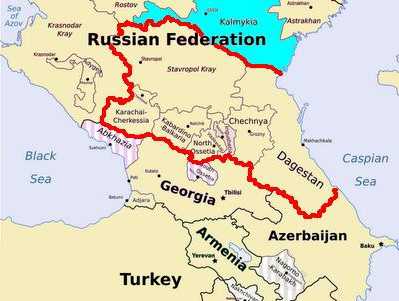
    Within days of the start of full-scale hostilities last month between Georgia and Russia, Turkish Prime Minister Recep Tayyip Erdogan floated the idea of a Caucasus stability pact modeled on a 1999 Balkan agreement.

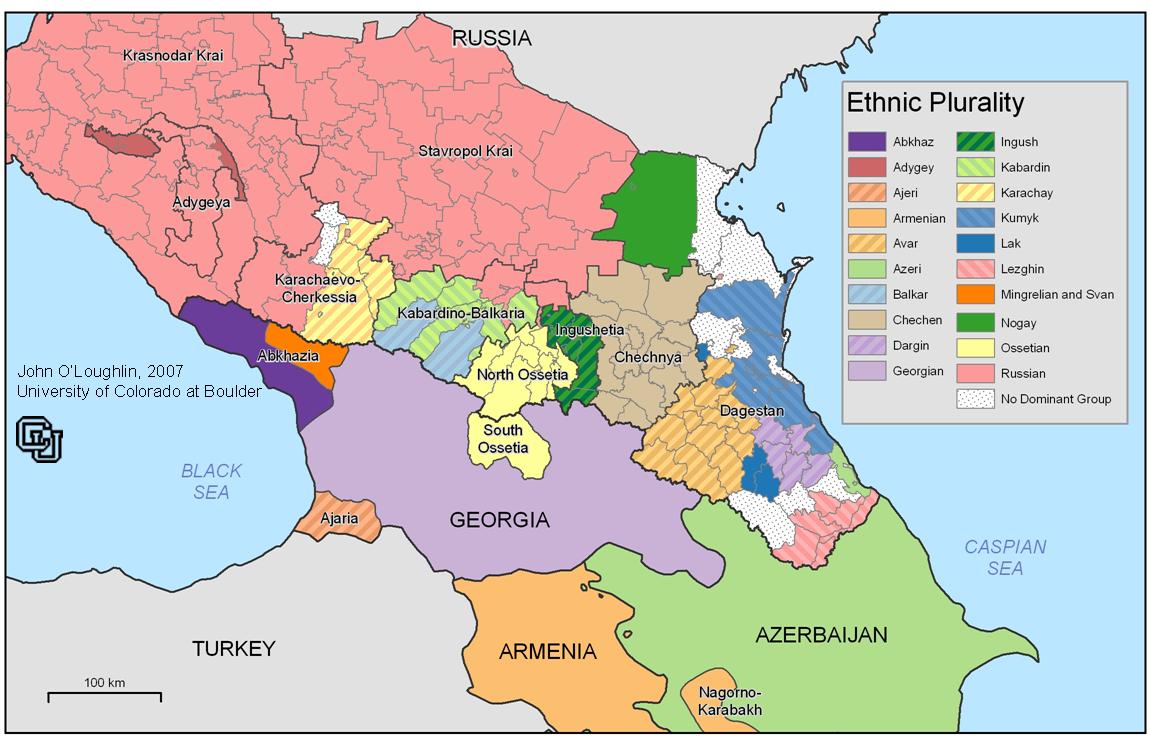
    But the diverging geopolitical and economic interests of the proposed five members and the ambiguous status of Georgia’s breakaway republics of South Ossetia and Abkhazia constitute seemingly insurmountable obstacles to such an alliance.

    As outlined by Erdogan, the proposed Caucasus Stability and Cooperation Pact would bring together Armenia, Azerbaijan, Georgia, Russia, and Turkey. His stated intention of discussing the initiative with UN Secretary-General Ban Ki-moon suggests that he envisaged the UN assuming the role of “patron” in the same way as the European Union did for the 1999 Balkan Stability Pact, which came in the wake of the Kosovo conflict.

    Turkish President Abdullah Gul endorsed Erdogan’s proposal one day later, on August 12, saying the Caucasus pact would be “important for stability in the region” and could encompass a mechanism for addressing and resolving problems, presumably before they escalated into violence.

    There are, however, several fundamental differences between the Balkans in 1999 and the South Caucasus in 2008. In 1999, the countries of Southeastern Europe, including the Yugoslav success

    EurasiaNet Eurasia Insight – Lousy Timing Could Overshadow Turkey’s Logical Caucasus Solution.

  • UN envoy cautiously optimistic on Cyprus peace talks_English_Xinhua

    UN envoy cautiously optimistic on Cyprus peace talks_English_Xinhua

    NICOSIA, Sept. 12 (Xinhua) — UN Secretary General’s special advisor on Cyprus expressed on Friday his optimism about the newly launched substantive negotiations aimed at reunifying the east Mediterranean island.

    Alexander Downer, the former Australian Foreign Minister, however, stressed that there was no doubt that this would be a very difficult process after all.

    “There has not been any successful conclusion to the Cyprus problem for many years, therefore it is not going to be a simple and easy process,” Downer told a press conference.

    He described the atmosphere of the first substantive talks on Thursday between the Greek and Turkish Cypriot leaders as “good, friendly” and the negotiations are “productive.”

    Cyprus President Demetris Christofias, a Greek Cypriot, and Turkish Cypriot leader Mehmet Ali Talat met for more than four hours on the issues of governance and power-sharing.

    Downer added that he was encouraged by what he had heard not only from separate discussions he had with the two leaders and other political party representatives in Cyprus, but also from his meetings he recently held with officials in Greece and Turkey.

    UN envoy cautiously optimistic on Cyprus peace talks_English_Xinhua.