Month: September 2008

  • Russia, China, Germany reject US evidence of Iran’s covert nuke program

    Russia, China, Germany reject US evidence of Iran’s covert nuke program


    DEBKAfile Special Analysis

    September 20, 2008, 1:30 PM (GMT+02:00)


    Euphrates pipes for destroyed Syrian reactor designed to be part of Iran’s military program

    Russia, China and Germany refuse to countenance tougher sanctions against Iran notwithstanding the International Atomic Energy Agency’s report from Vienna that its inspections of suspect activities and covert projects were stalled by Tehran’s non-cooperation. Diplomats for the five permanent Security Council members and Germany, meeting at the State Department Friday, Sept 19, therefore failed to agree on a new round of sanctions ahead of their foreign ministers’ meeting at UN Center next week.

    The meeting avoided discussing the timing and content of a fourth round of sanctions, only broadly calling on Iran – for the umpteenth time after numerous rejections – to accept the incentives on offer for halting uranium enrichment and cooperating with UN inspections.

    The nuclear watchdog reported that Tehran had stalled its efforts to establish whether or not Iran was developing nuclear warheads, enriching uranium for military purposes, testing nuclear explosives or building nuclear-capable missiles.

    Tuesday, Sept 16, the UN watchdog gave a closed meeting of the 35-nation board of the International Atomic Energy Agency photos and documents proving Iran had tried to refit a long-distance Shehab missile to carry a nuclear payload. The also produced calculations and diagrams from Iranian missile and nuclear experts’ computers on nuclear detonations and how to build nuclear-capable missiles.

    The next day, Wednesday, CIA chief Michael Hayden disclosed that the destruction of the Syrian reactor – as a result of intelligence collaboration with a “foreign partner” who first identified the facility’s purpose – spoiled a project “that could have provided Syria with plutonium for nuclear weapons.”

    He did not name the foreign partner, but the reference to Israel was obvious. He also said the reactor was similar to the North Korean model.

    “We were able last year to spoil a big secret, a project that could have provided Syria with plutonium for nuclear weapons,” Hayden said, adding: “When pipes for a massive cooling system were laid out to the Euphrates River in the spring of 2007, there would have been little doubt this was a nuclear reactor.”

    The Bush administration released all this data in order to back up the IAEA report and tell the international community that the US and Israel were furnished with more intelligence confirming Iran’s covert nuclear projects and the clandestine partnershipn between Tehran, Damascus and Pyongyang. North Korea was also made aware that Washington had not missed its preparations for re-activating its nuclear reactor.

    Nuclear watchdog officials asked Tehran to explain why its experts were busy making calculations for military projects, claimed to be non-existent. No answer has been forthcoming as yet. The Iranian representative only said the materials had been forged by certain parties as a provocation.

    Nonetheless, Russian, Chinese and German diplomats attending the IAEA board meeting last Tuesday insisted that the evidence they saw did not prove Iran was engaged in developing nuclear weapons.

    Despite the fact that leading world powers have tied themselves in knots to avoid keeping nuclear weapons out of Iran’s hands, Israel’s prime minister Shimon Peres plans to deliver a speech at the UN General Assembly next week announcing that Israel is against resorting to military action against Iran and relies on sanctions.

    DEBKAfile’s political circles stress that the Israeli government has never confirmed the position embodied in his address.

    Ahead of his address to the General Assembly, Iranian president Mahmoud Ahmadinejad, grandstanding as always, challenged the American presidential candidates to a public debate “over global issues, in the presence of the media at the UN. He also said that while “some say the idea of Greater Israel has expired, I say the idea of lesser Israel has expired, too.”

  • DEBKA:Russia lines up with Syria, Iran against America and the West

    DEBKA:Russia lines up with Syria, Iran against America and the West

    Summary of DEBKAfile Exclusives in Week Ending Sept. 18, 2008
    Russia lines up with Syria, Iran against America and the West

    Sept 12.: Moscow announced renovation had begun on the Syrian port of Tartus to provide Russia with its first long-term naval base on the Mediterranean.

    As the two naval chiefs talked in Moscow, Russian foreign minister Sergei Lavrov met Iranian foreign minister Manouchehr Mottaki in the Russian capital for talks on the completion of the Bushehr nuclear power plant by the end of the year.

    DEBKAfile’s military sources report Russia’s leaders have determined not to declare a Cold War in Europe but to open a second anti-Western front in the Middle East.

    In the second half of August, DEBKA file and DEBKA-Net-Weekly’s analysts focused on this re-orientation (Russia’s Second Front: Iran-Syria), whereby Moscow had decided to use its ties with Tehran and Damascus to challenge the United State and the West in the Middle East as well as the Caucasian, the Black Sea and the Caspian region.

    In aligning with Tehran and Damascus, Moscow stands not only against America but also Israel. This volatile world region is undergoing cataclysmic changes at a time when Israel is without a fully competent prime minister.


    Missile alert is revived on Israel-Gaza border

    12 Sept.: DEBKAfile’s Palestinian sources report that the leaders of the Iranian-backed Jihad Islami terrorist group in Gaza have warned they will go back to firing missiles at neighboring Israeli towns and villages unless the ruling Hamas stops persecuting them.
    Our military sources report that Israeli forces securing the Gaza border went on missile alert Thursday, Sept 11, when Hamas heavies continued their crackdown.

    Hamas gunmen are systematically bulldozing the Jihad bases, built over the ruins of the former Israeli Gush Katif villages, and flattening the sites. They have seized control of Jihad mosques in the southern part of the Gaza Strip and are making arrests.


    Syrian commandos invade 7 Greater Tripoli villages of N. Lebanon
    DEBKAfile Exclusive Report

    13 Sept.: Two Syrian commando battalions accompanied by reconnaissance and engineering corps units have crossed into Lebanon in the last 48 hours and taken up positions in seven villages, most of them Allawite Muslim, outside Tripoli, DEBKAfile’s military sources reported Saturday, Sept. 13. They are the vanguard of a large armored force poised on the border.

    Damascus has signaled to Washington and Paris: Don’t interfere.

    The Syrian incursion coincided with the expected arrival of Russian naval and engineering experts for renovating Tartus, the Syrian port 40 kilometers north of Tripoli, to serve as the Russian fleet’s first permanent Mediterranean base.

    Seen from Israel, once Assad’s army completes its advance on Tripoli, he will control the full length of the military supply route for Hizballah from the Syrian ports of Latakia and Tartus. The Russian presence will add a new and troubling dimension to this development.


    Russia, US pull further apart over Iranian nuclear activities

    13 Sept.: Russian president Dmitry Medvedev said Friday a military solution to the standoff over Iran’s nuclear ambitions is unacceptable and there is no need for new sanctions. At the same time, Washington has imposed new sanctions on Iran, blacklisting a main shipping line and 18 subsidiaries. The US government accuses the maritime carrier of ferrying contraband nuclear material, which Tehran denies.

    Washington sources predict this may be the prelude to more serious actions, such as a naval blockade to choke off Iran’s imports of fuel products.

    Moscow continues to support the European Union’s diplomatic drive to trade incentives for Iran’s consent to curb “some of its nuclear activities.”

    The nuclear watchdog has asked Tehran to account for 50-60 tons of missing uranium from its main enrichment site at Isfahan. It is enough to produce five or six nuclear bombs and is suspected of having been diverted to secret sites to boost the covert production of weapons-grade uranium.


    Terror suspected in Aeroflot crash which killed all 88 people aboard
    DEBKAfile Exclusive Report

    14 Sept.: DEBKAfile’s counter-terror sources report from Moscow that three Jewish families, two Habad students and a Russian general were among the 88 passengers and crew killed in the Aeroflot Boeing 737 crash at Perm, Siberia, Saturday, Sept. 13. The plane was in flight from Moscow.

    Russian authorities reported the plane’s sudden disappearance off the radar at the moment cockpit communications shut off. This indicated the craft may have exploded in mid-air. They suspect terrorism as the cause of the crash because –
    1. At least five passengers bought tickets but did not turn up for the flight. Security officials are trying to locate their addresses and sifting through the wreckage for unaccompanied luggage.

    2. One of the passengers has been identified as Gen. Gennadiy Troshev, a Russian hero for quelling the Chechen rebellion.

    3. Our sources name one of the Jewish – or possibly Israeli – families aboard the doomed flight. They have been named as Ephraim Nakhumov, 35, his wife Golda, 24, and their two children, Ilya, aged 7, and Eva, aged four.


    Thirty-four people die in Iraq Monday

    15 Sept.: At least 22 people were killed and 32 wounded by a female suicide bomber who blew herself at a police gathering in Iraq’s Diyala province.

    The guests were attending an Iftar banquet, when Muslims break their fast during the month of Ramadan, in Balad Ruz, 70km (45 miles) north of Baghdad.

    Earlier, two car bombs exploded in central Baghdad, killing 12 people.


    In show of bravado, Iran launches “air defense exercises”

    Iranian official sources report that the air force drill began Monday, Sept. 15, in half of the country’s 30 provinces. They gave out no details of which provinces or how long the exercise would last. The commander of Iran’s aerial defense, Brig. Gen. Ahmed Mighani said that any enemies attacking the Islamic Republic would regret it.

    The exercise was launched on the day the UN nuclear watchdog reported that non-cooperation from Tehran had stalled its efforts to establish whether or not Iran was developing nuclear warheads, enriching uranium for military purposes, testing nuclear explosives or building nuclear-capable missiles.

    Tehran is not deterred by sanctions or tempted by international diplomacy to give up its nuclear aspirations, especially since the Georgia conflict with the United States has presented Iran with Russian backing for its nuclear program and opposition to sanctions.

    Iran’s defense minister Mostafa Mohammad Najjar said scornfully Monday: “Threats by the Zionist regime and America against our country are empty” – showing that Tehran feels free to go forward with its nuclear plans.


    Gates arrives in Baghdad unannounced

    15 Sept.: Gates arrived in Baghdad to supervise the handover of the Iraq command from Gen. David Petraeus to Lt. Gen. Ray Odierno. Petraeus moves on to lead the Central Command overseeing Middle East, Afghanistan, Horn of Africa.
     

    France wants more sanctions on Iran for stonewalling UN nuclear probe

    16 Sept.: The International Atomic Energy Agency (IAEA) report that for lack of Tehran’s cooperation, it has made no progress in establishing whether or not Iran is developing nuclear warheads, enriching uranium for military purposes, testing nuclear explosives or building nuclear-capable missiles..

    Furthermore, despite three rounds of UN Security Council sanctions, Iran has not stopped nuclear enrichment. At present, 4,800 centrifuges are operating and another 2,000 are getting read to start work in the near future.

    DEBKAfile’s Iranian sources report that the Tehran administration shows more contempt than ever before toward the UN, international diplomacy and potential sanctions, certain that the prospect of a US and Israeli military strike on its nuclear facilities recedes further day by day.

    “Threats by the Zionist regime and America against our country are empty,” said defense minister Mostafa Mohammad Najjar,”


    Ex-PMs Barak and Netanyahu in secret power-sharing talks
    DEBKAfile Exclusive Report

    16 Sept.: Defense minister Ehud Barak of Labor and opposition leader Binyamin Netanyahu of Likud are in advanced negotiations to rotate the premiership between them in order to cut the ground from under Kadima’s winner as leader. The ultra-religious Shas is in on the plan.

    This is reported by DEBKAfile’s political circles.

    Barak’s Labor and Netanyahu’s Likud combined with Eli Yishai’s Shas hold more Knesset seats – 43, than Kadima’s 27. They are in a position to prevent the winner of the Kadima primary from automatically taking over from Olmert as head of the incumbent government coalition. Without Labor, Kadima lacks the numbers to form a viable coalition government.

    DEBKAfile’s sources report that Netanyahu and Barak are close to accord on the general principles of their partnership but are still working on details. Netanyahu would go first up until a general election because Barak, who is not a member of Knesset, cannot become prime minister. Barak believes he can use his pact with Netanyahu to push Kadima’s buttons and at the right moment, take the party over and form a left-of-center Labor-Kadima bloc to fight his current partner, head of the right-of-center Likud.


    North Korea conducts long-range missile engine ignition test

    17 Sept.: The test at the new Tongchang-ri site was detected by the U.S. KH-12 spy satellite. The base is located 50 kilometers (30 miles) from the North Korean border with China,

    At least 11 killed in bloody Hamas crackdown on Doghmush clan militia in Gaza

    16 Sept.: The dead included Momtaz Doghmush, head of Army of Islam and co-kidnapper with Hamas of Gilead Shalit, and in infant. Hamas battled the militia for five hours with mortar fire on its base at the Sabra district of Gaza City, losing one of its gunmen.

    Sixteen killed in al Qaeda attack on US embassy in Yemen

    17 Sept.: Eight Yemeni soldiers, six assailants and 2 civilians were killed in an al Qaeda suicide car bombing, RPG rocket and shooting attack on the US embassy in Sanaa, Wednesday, Sept. 17. No embassy staff members were harmed in the five explosions reported by a US official.

    DEBKAfile’s counter-terror sources disclose that Yemeni president Abdullah Salah, formerly a US partner in the war on terror, recently began working with al Qaeda to win their help for quelling plots by army dissidents to overthrow his regime and for beating back an Iran-backed Shiite rebellion.

    In March, al Qaeda mounted a mortar attack which missed the US embassy but injured 13 girls at a nearby school; other attacks targeted the Italian mission and Western tourists. Non-essential US staff were ordered to leave Yemen in April.


    CIA chief: Al Qaeda greatest security threat to US

    17 Sept.: Speaking in Los Angeles, CIA director Michael Hayden said Osama bin Laden has said repeatedly that he considers acquisition of nuclear weapons a religious duty and he intends to attack America “in ways that inflict maximum death and destruction.”

    North Korea and Iran were also threats. Hayden confirmed that the nuclear reactor Israel destroyed in Syria last year was similar to one in North Korea. Iran, he, has the scientific, technical and industrial capacity to produce nuclear weapons.

    DEBKAfile notes: This comment contradicts the US intelligence assessment last year that Iran had discontinued its military nuclear program in 2003.
    Tuesday, diplomats said that the UN watchdog had intelligence showing Iran had tried to refit a long-distance Shehab missile to carry a nuclear payload.


    Israeli banks hammered on Tel Aviv stock exchange

    17 Sept.: In Tel Aviv, prices plunged across the board, with the major banks taking an extra beating. The public voted no-confidence in the leading banks (Bank Hapoalim plunged 12.5 percent) and disregarded the finance minister, Ronnie Bar-On’s assurances that the Israeli economy is insulated from the global crisis.

    After meeting bank heads Wednesday, Bank of Israel governor Stanley Fischer issued a statement that Israel banks are “relatively well run.”

    Economic experts foresee an Israeli recession around the corner. Lehman Brothers is a major player in Israel’s structured-products market and options market. Personal savings schemes, exports to the United States and Europe and foreign investment are also susceptible.

    As foreigners employed on Wall Street, Israelis are second only to Canadians.

    Thousands have been thrown on the job market. Aside from those recalled by Lehman Brothers after the Barclays buyout, many will return home adding to the pressures on the job market. Israel’s hi-tech industry, second only to the US in annual start-ups, was already facing difficulties before the current crisis, as export orders began drying up.


    After her narrow win, Livni’s ability to form government in doubt
    DEBKAfile Exclusive Analysis

    18 Sept.: Foreign minister Tzipi Livni scraped through to victory in the Kadima party’s first leadership primary Wednesday, Sept. 17.although her win was challenged by transport Shaul Mofaz, one percent behind her (43 to his 42 percent). Early Thursday, Mofaz finally called Livni to congratulate her. Later, he announced he was quitting politics, including the party and government.

    The real results differed dramatically from the three TV exit polls which wrongly awarded Livni a landslide victory and were up to 10 percent wide of the mark. Throughout the campaign the foreign minister was a media favorite and inaccurately described as unchallenged successor to Ehud Olmert both as party chair and prime minister.
    Kadima comes out of the primary bitterly divided.. Livni faces the daunting dual challenges of uniting the party and persuading all the government coalition parties to accept her as prime minister.
    Kadima’s two senior partners, Labor and Shas, are already looking at alternatives.

    The low Kadima turnout, according to DEBKAfile’s political analysts, was a public vote of non-confidence in the party. At the Tel Aviv stock exchange Wednesday, another popular vote of no confidence took place – this one against the economic system ruled by Kadima ministers and the banks


  • TURKEY, EUROPE, THE MILITARY, AND THE SECULARISTS

    TURKEY, EUROPE, THE MILITARY, AND THE SECULARISTS

    Turkey and Greece were invited at the same time to join the Common Market, which later became the European Union (EU).  Greece accepted the invitation and is now one of the states of the EU. Bulent Ecevit, a Social Democrat, was the Turkish Prime minister at that time. He declined, saying that “Turkey is not yet ready”. In more recent times other Turkish governments thought that they were ready and applied for membership. This time EU set unbelievable stumbling blocks before Turkey, conditions that were not asked from the other applicants. It was obvious that Europe had changed its mind about inviting Turkey.  But for some inexplicable reason, Turkish governments did not want to see that.


    E u r o p e’ s    V i e w s:


    Most  of the EU states leaders have been officially supportive of Turkey’s membership application. Only Germany’s conservative Chancellor Angela Merkel wants that a partial membership be offered to Turkey. France’s Nicolas Sarkozy  is also against granting  full membership.  But the European populations are generally opposed to full membership.  Unofficially, Europe is dead set against Turkish membership but could not say so openly, diplomatically.  In stead of saying “no” they put such conditions, so that Turkey says “no”.


    Here are statements of top EU leaders, after they retired:

    Tom Spencer, Head of EU Foreign Affairs Committee, said in 1999: “I think that we did not behave correctly by promising to the Turks for 30  years that some day they will become a part of the EU. Because the truth is, that  EU has no intention to accept Turkey as a member.  Turkey is squeezed between the words that the Fundamentalists and we will not keep.  It would have been a more correct attitude for us to explain our true intentions.”


    Valery Giscard d’Estaing, former Republic President of France, said in 2000: “Turkey will have no place in the European Union. Today no leader in Europe wants Turkey inside Europe.  They do not have any such intention for tomorrow, either. One is doing injustice to Turkey. Because Turkey is being deceived by the EU. To make it a candidate at Helsinki was to give it an empty hope ”


    Helmut Schmidt, former Chancellor of Germany said in 2000:  “What ever may happen, Turkey has no place in Europe. We cannot allow to let 70 million Turkish citizens  to walk freely inside Europe. We cannot accept that Europe becomes neighbors with countries like  Iran, Syria, and Iraq across European borders. We should continue our economic relations with Turkey.  We should benefit from the purchasing power of the young and

    fast-growing population. However, we should see that this country does not have the fundamental principles of Globalization, and  does not accept the international brotherhood.”


    [The above statements have been translated from Turkish, that were in turn translated from English, French , or German.]


    Although the EU is very much pro-secularism, in the case of Turkey they criticized the attempt of the courts to close the religious party for breaking almost every secularism rule. That was unbelievable.


    T u r k e y’ s    D e s i r e    t o   be c o m e   a   E U   m e m b e r


    Secularist Turkish governments before 2002 were insistently asking to become a EU member, and the EU systematically  asked that they fulfill undesirable conditions. Some Turkish representatives claimed that it was Turkey’s right to become a member. That was obviously not true.  Many Turks felt terribly insulted that they had defended the West during the Cold War, that former Soviet puppet countries were now easily accepted as EU-members, while their country was not.  While the three statements reported above happened in 2000 and before, Turkish governments did not take them seriously, because they did not like to hear that the EU does not want them.


    On November 2002 there was an important election in Turkey. The Turkish people had enough of the incompetent and corrupt secular coalition of parties and voted them out of office.  A religious party, the AKP, promised during the election campaign that they are not a religious party, they are just a conservative party of Muslims, that   they will respect the secularism (Laicism) clause  of the constitution and would manage better. They also promised to carry Turkey in to the European Union.  That was odd, but the Turkish voters wanted to give them a chance. The AKP won a majority of seats in the Parliament.. 


    Of course by 2002 the real intentions of the EU were known, and AKP’s promise to carry Turkey to  the EU was just a ruse. They knew that Europe will eventually say ”no” but mean while they would curb the capabilities of the military  to prevent their planned Islamization.  While it is downright immoral in Western culture to lie and cheat, it is just called “Takkiye” in Islam and is alright as long as it helps Islam. Thus, by Western standards EU’s  behavior is immoral.


    AKP kept one promise: they managed the government much better than the socialist secularists. They brought the inflation rate from 50 – 75 %  down to single digit.  The per capita income of Turks increased., but they implemented  an extensive program of Islamization.  Since 1950’s they had started to re-educate the people  in religious schools by brain-washing them as fundamentalist Muslims.  Those graduates kept on increasing and were the important part of Islamization. The people were changed.  Those people were now all voting for the AKP.


    Since 2002 AKP has put everywhere its own people, except in the military and the courts. During the last months the courts processed a request of the AKP to lift the ban of head scarves at Universities.  The EU had the same problem, mainly in France and the EU did not try to influence the court procedure.  The ban was not lifted and AKP lost.   Encouraged by this result , the Chief Prosecutor  accused the AKP  party and its main people to be breaking the laicism (Secularism) clause of the Constitution and wanted to close the AKP. His accusations were clear and many.  But meanwhile some people were retired and replaced in the Constitutional Court and the suit was rejected 7 to 6.  During this suite, EU heavily interfered by claiming that this suit was “destroying  democracy.”  If we accept their logic, if a party is once democratically elected, it has a license to break the constitution at will.  Europe has become horribly absurd. Now the last hope to get rid of the religious party was lost, even the courts are no more independent.


    T h e    T u r k i s h    M i l i t a r y.


    The Turkish Military is a unique institution.  It is not only a defender of Turkey, but it is also a defender of the Constitution.  I observed, that each time they interfered, they always returned to democracy in very few years. Western critics say that it is not the job of the military to interfere in the political process.  That is true for the West, because civilian governments in the West generally do their job right, they do not commit gross violations of their constitutions, so there never is need for military interference.  When Ataturk founded the Republic of Turkey, Turks’ literacy rate was 7 % and the Turkish Parliament’s occupants were not too much higher educated.  The Turkish Armed Forces were always very highly educated.  Ataturk left the military as a sort of guardian angels in case the civilians would go off the track. The military had the job of putting things back on the track and returning it to civilians. They always did that. The September 12, 1980 coup was the last full-fledged coup. After that, it was seen that a coup becomes counter-productive.  No one expects today  a military coup, but some how the people want that they play their role of guardian angel and help straightening things up. Even that is getting increasingly more difficult in a nation with an increasing percentage of fundamentalists.


    W h a t    c a n   t h e   S e c u l a r i s t   P e o p l e   d o ? 


    Many Secularist people still hope and wish that the military gets the chestnuts out of the fire for them, so,  they don’t have to do any thing. But that is now an unrealistic wish. Why don’t they think of doing something themselves?  After all, isn’t it their country too, where they would want to raise their children and grand-children?


    The politically and legally healthy move should come from the secularist half of the population. They are disorganized, they should avoid the influence of socialists, form a Secular, Nationalist, Free-Market Economics party and engage in true opposition. They should tell the country that the European Membership is a hoax, Europe will never accept Turkey, Turkey should remain friends with Europe, continue its Economic relationship, but remain an independent country. They should convince the Parliament to tell Europe that they are retracting the membership application.  Thus, Europe should stop interfering in Turkey’s internal affairs. Ataturk said: “If a nation does not rely on its own effort, only on its own effort, it can became any body’s toy”.  The secularist half of the population should definitely avoid fragmenting and should elect themselves a good leader, who will commit himself to oppose the AKP. That can be now the only hope for Turkey.

    Source : T H E   O R HAN   T A R H A N   L E T T E R
  • Image of the day – NASA

    Image of the day – NASA

     
    Satellite: Terra
    Date Acquired: 09/12/2008
    Resolutions: 1km (584 KB)
    500m (1.2 MB)
    250m (5.2 MB)
    Bands Used: 1,4,3
    Credit: Jeff Schmaltz
    MODIS Land Rapid Response Team,
    NASA GSFC

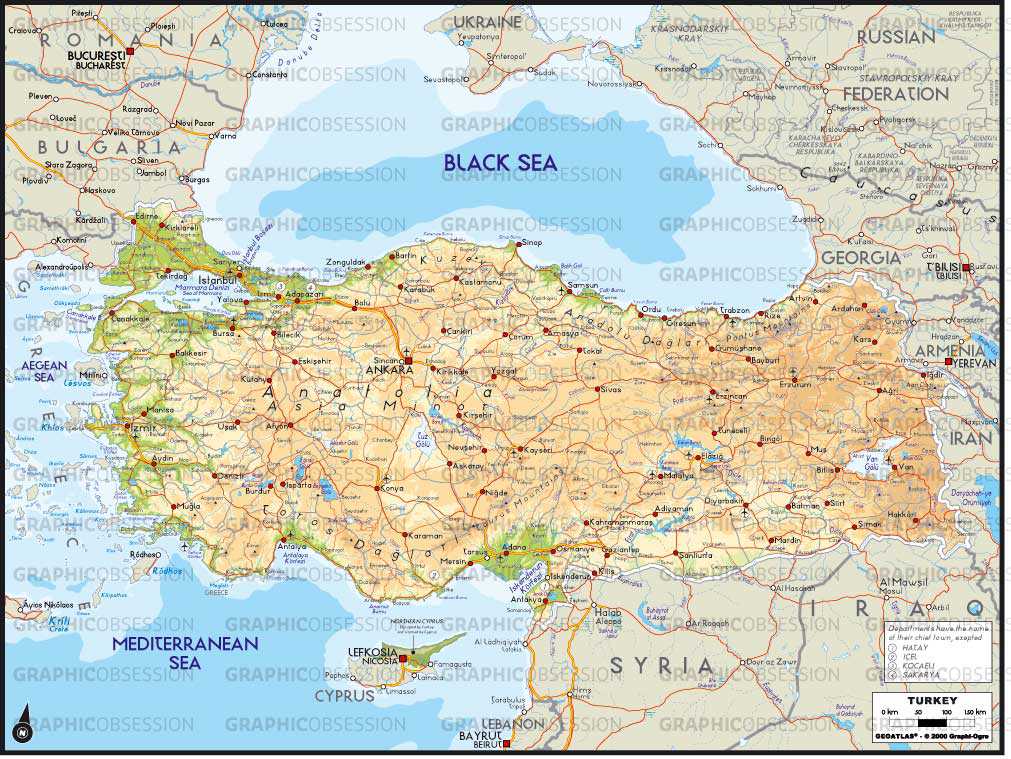
    A clear day over Turkey gave the MODIS on the Terra satellite this view on September 12, 2008. There are eight countries that border Turkey, including Iraq and Syria in the southeast, Armenia, Azerbaijan, and Iran to the east, Georgia in the northeast, Bulgaria in the northwest, and Greece to the west. South of Turkey is the Mediterranean Sea – visible in it is the large island of Cyprus.

    One of the most visible features in Turkey is Lake Tuz. Because of its shallow depth and salt content, during the summer, most of the water dries up, leaving just a salt bed that averages 30 cm in depth.

    Source : NASA

  • Police Break Up Mosque Protest in Germany

    Police Break Up Mosque Protest in Germany

    German police broke up a protest on Saturday in Cologne, Germany at the moment it was about to start. The protest was organized by far-right parties and individuals from across Europe.

    The goal of it was to make their opposition to the approval of the region’s municipality to Moslems to build a mosque, clear.

    Thousands of left-wing protesters heard about the upcoming protest and traveled to Cologne, where they started a counter-protest. They argued that the right-wing protest was racist in nature. Police felt forced to interfene after the left-wing protesters started using violence and it had become clear that if the right-wing protest would proceed as schedulled all hell would break loose.

    The far right group Pro Koeln had organized the protest, but it was supported by right-wingers from across Europe. They went to Cologne to protest the ‘Islamification’ of Western Europe, and to celebrate the continent’s “shared, 1,000-year history of Western values and Christian traditions.”

    Germany is home to three million Moslems, who form 4% of the German population. Many of them are not well integrated, which increases anti-Moslem feelings. Many others, however, are integrated and function in German society like any other ‘born’ German.

    Sadly, the anti-immigration feeling is rapidly developing into an anti-Moslem feeling in Germany and in other European countries. This anti-Moslem attitude is becoming increasingly clear. The result of this will not be that Moslem immigrants and their children will integrate better, of course; it will be that Germany will be divided among ethnic and religious lines, with both groups distrusting the other.

    Immigrants and authentic Germans both play a role in this process. Both, it seems, refuse to take responsibility for the situation, and for the problems they have caused. Immigrants pretend that all problems are caused by racism – not true – born Germans all too often claim that immigrants are the root of all major problems – not true either. Both sides have to take responsibility. If they refuse, the problems will continue to exist.

    PoliGazette » Police Break Up Mosque Protest in Germany.

  • Turkey: Big surprise hit with tourists

    Turkey: Big surprise hit with tourists

    TO the surprise of almost everyone in the travel industry, Turkey welcomed a near record number of 500,000 American tourists in 2006, even more than in the heady travel days before 9/11.

    That’s as it should be: Turkey is a colorful and friendly destination that is ranked among the 10 most popular nations for tourism. It receives more than 20 million tourists a year.

    Among that group, American visitors are especially valued. Unlike European visitors, many of whom buy inexpensive air-and-land packages to the Mediterranean and Aegean beach resorts of Turkey, Americans seek out the culture and history of the country and spend far more than the average European. And although the decline of the American dollar (now exchanged at about 1.4 Turkish lire to $1) has made Turkey more expensive than before, it remains a moderately priced tourist destination. Family-run boutique hotels are available for $100 to $140 a night for a double room. Accommodations at unpretentious private hostels often can be had for $20 per person per night.

    Turkey: Big surprise hit with tourists – Travel – LATimes.com.