Month: September 2008

  • Detective Richard de Cadenet jailed for fraud using Scotland Yard card

    Detective Richard de Cadenet jailed for fraud using Scotland Yard card

    Officer took wife and mistress on holidays

    A leading antiterrorist police officer has been jailed for ten months after admitting using his Scotland Yard credit card to take his wife and mistress on luxury holidays.

    Detective Sergeant Richard de Cadenet is the first officer to be jailed as part of an investigation that led to the cancellation of more than 1,400 Metropolitan Police credit cards.

    The officer, who worked on a number of high-profile operations including the 7/7 attacks on London, was jailed yesterday by Southwark Crown Court. He admitted illicitly spending more than £73,000 on his corporate credit card during a 15-month period.

    The court heard that the 39-year-old officer, the son of Alain de Cadenet, the former racing driver, and the brother of Amanda de Cadenet, the television presenter, used the credit card in an attempt to buy “affection”.

    David Levy, for the prosecution, said that the exact amount of illicit expenditure by de Cadenet amounted to £73,669.18.

    He spent £6,452 on a holiday in Thailand and a further £9,000 on a trip to Mexico. The card was also used to pay for a box at a Premier League football ground in which de Cadenet’s estranged father had been entertained, along with others.

    A further £5,910 was spent in supermarkets, £3,500 on clothes, £3,000 on electrical goods and cash withdrawals of more than £18,000 were made. Only 28 of the 415 payments made by the card were legitimate, the court was told.

    Mr Levy said the policy that obtained at the time in the Metropolitan force had been for the cards to allow officers to pay for legitimate expenses such as hotel bills and travelling while working outside London.

    He said that officers were supposed to submit a monthly “reconciliation” of their expenditure to the Metropolitan Police Authority but that this had not taken place in the case of de Cadenet.

    Neil Saunders, for the defence, said that de Cadenet had joined the Metropolitan Police in 1996 after serving in the RAF. At police training in Hendon, North London, he had emerged as a “class leader”, he said, and had subsequently received glowing reports for his work as a police officer.

    But he said de Cadenet, who served with the RAF in Bosnia and during the Gulf War, had begun experiencing marital difficulties, developed a drink problem and fell seriously into debt before he obtained the card.

    Mr Saunders said it appeared that de Cadenet had been attempting to “buy the affections” of those who were closest to him in the misuse of the card. “He was buying what he thought was attention and affection. He was, as I have been trying to suggest, a man who was simply unable to cope,” Mr Saunders said.

    De Cadenet admitted one count of misfeasance in public office.

    The Independent Police Complaints Commission (IPCC) said de Cadenet’s actions were a serious misuse of public money. Deborah Glass, London commissioner for the IPCC, said: “The taxpayers of London will rightly be concerned. I hope [the] sentence reassures them that abuse of the system will not be tolerated.”

    Scotland Yard is completing checks on expenditure on 3,500 corporate charge cards in use since 2006. The Directorate of Professional Standards has referred 25 cases to the IPCC and the Metropolitan Police Authority has referred two cases.

    Detective Sergeant John Gallagher, 52, who worked for the Met’s child abuse investigation unit, pleaded guilty to a £9,622 expenses scam earlier this month and was warned that he could be jailed.

    Detective Constable Matthew Washington, 36, a former antiterrorism officer, has been charged with using his corporate card to spend £12,500 for personal use and is due to stand trial at Southwark Crown Court in December.
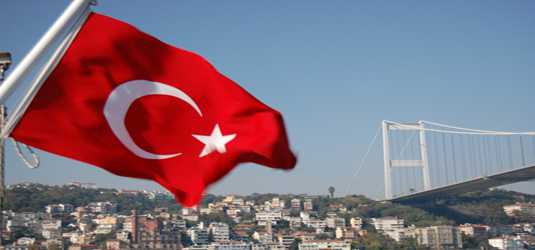

  • Newsweek:  Turkey’s Media War

    Newsweek: Turkey’s Media War

    Newsweek:  Turkey’s Media War

    For the last six years, the Turkish Industrialists’ and Businessmen’s Association, TUSIAD, has been a crucial source of support for the ruling Justice and Development Party (AKP). The pro-business, pro-European Union group provided the party with domestic and international legitimacy, and armed it with the means to fight off accusations that it was an Islamist party. But over the last several months the relationship between TUSIAD and the AKP, always an uneasy one, has faltered. AKP leader and Turkish Prime Minister Recep Tayyip Erdogan has sharply attacked Aydin Dogan—whose family holds the presidency of the association and owns roughly half the Turkish media—characterizing Dogan as a rich and corrupt businessman. [link]

    Editor’s WebBlog :  Turkey: Conflict between government and largest media group

    In recent weeks Turkey’s government and largest independent media group, Dogan Holding, have been in the midst of a fierce battle. Hurriyet-20040209.jpgDogan Holding operates in TV, radio broadcasting, print and online media.  Dogan publishes seven newspapers including Hurriyet, Milliyet, Radikal, Posta, Fanatik, Referans and Turkish Daily News. The Dogan family holds the presidency of the Turkish Industrialists’ and Businessmen’s Association, Tusiad. [link]

  • ANCA URGES SCRUTINY OF 10 FAILINGS IN U.S.-TURKEY POLICY DURING AMBASSADORIAL CONFIRMATION HEARING

    ANCA URGES SCRUTINY OF 10 FAILINGS IN U.S.-TURKEY POLICY DURING AMBASSADORIAL CONFIRMATION HEARING

    YEREVAN, 22.09.08. DE FACTO. The Armenian National Committee of America (ANCA) has called on members of the Senate Foreign Relations Committee to closely scrutinize ten serious shortcomings in the Administration’s handling of the U.S. – Turkey relationship, during the September 24th confirmation hearing for James Jeffrey to serve as the next U.S. Ambassador to Turkey.
    In letters to panel Chairman Joe Biden (D-DE) and other key Committee members, ANCA Chairman Ken Hachikian outlined the Administration’s failings, and encouraged strict scrutiny of the nominee in order to “ensure accountability for past errors, as well as to apply the lessons learned from these setbacks in charting a more productive and principled course for U.S.-Turkey relations.”
    Hachikian underscored that, “We are today, near the close of the Bush Administration’s eight years in office, at a meaningful milestone in our relationship with Turkey. This hearing provides an important opportunity both to look back over the challenges, the progress, and the setbacks of the past, as well as to look forward to approaches to develop our ties in ways that advance both our interests and our values in this vital region of the world.”
    Among the main failings listed in the letter were its strident attacks on growing bipartisan movement toward U.S. recognition of the Armenian Genocide, including President Bush’s firing of Ambassador to Armenia John Evans, and the “sad public spectacle,” in October of 2007, of the Administration caving in to Turkey’s threats against Congressional recognition of this crime against humanity.
  • US urges EU to diversify energy supplies

    US urges EU to diversify energy supplies

    BRUSSELS, Belgium: Russia’s fight with Georgia has added new urgency to the Europe Union’s need to find alternatives to Russian oil and gas imports, the new U.S. ambassador to the EU said Monday.

    “Russia’s willingness to defy the international community, act in violation of international law, (and) be threatening in its neighborhood is a reminder of why progress on this issue is so important,” ambassador Kristen Silverberg said.

    At an emergency summit on the Georgia conflict early this month, EU leaders called for a study into how the 27-nation body can find alternative energy sources to diminish growing dependence on Russia, which currently supplies a third of EU oil imports and more than 40 percent of the natural gas European Union countries buy from abroad.

    Silverberg told reporters the EU should work with Turkey, Azerbaijan, Georgia and other nations to diversify sources of energy and supply routes for oil and gas from the Caspian and Central Asian regions.

    “We hope that Europe will engage with active outreach with some of the supplier countries, the Azeris for example,” she said. “We have always thought that it was in Europe’s interest to diversify its supply routes generally.”

    In particular, the EU should work closely with Turkey to develop pipelines and other infrastructure to ensure oil and gas can flow westward through routes not controlled by Moscow, she told reporters Monday.

    “We hope that Europe will work closely with Turkey to help make sure that Turkey is a viable and active transit route for Caspian gas,” Silverberg added.

    “That involves negotiating with Turkey over reasonable terms for a transit agreement. It means working with Turkey on helping to improve its infrastructure so helping to make sure its an efficient transit route.”

    One project under consideration is the so-called Nabucco pipeline, which would deliver gas from Turkmenistan and other Central Asian and Caspian countries westward through Turkey while bypassing Russia.

    The project, however, has been slowed by high costs and uncertainty over sources of supply, and Russia is promoting rival routes through its territory as a cheaper and safer alternative.


    International Herald Tribune  22 September 2008

  • The Great Turkish Rip-off

    The Great Turkish Rip-off

    By Robert Ellis, September 22 2008

    Corruption in Turkey is endemic, stretching back to the Ottoman empire in the sixteenth century, but it was not until the liberalization of the Turkish economy in the 1980’s under Turgut Özal it took on a new dimension. Özal’s remark, “My civil servants know how to take care of business”, has become apocryphal, but there was a lift-off in the 1990’s.

    Tansu Ciller, who became Turkey’s first female prime minister in 1993, bowed out in style three years later, when she issued an order for the release of 500 billion Turkish lira ($6.5 million) from the state slush fund for “secret service expenses”, and a convoy of lorries travelled round Ankara at the dead of night to collect the cash from various banks. A parliamentary majority later acquitted her of any wrongdoing.

    Bertolt Brecht’s conclusion, “Robbing a bank’s no crime compared to owning one”, took on a new take in Turkey under Mesut Yilmaz, who became premier three times from 1991 to 1999. With the right political support it was possible to open a bank and siphon off the liquidity, but with the financial crisis of 2001 21 banks were taken into receivership with a cost to the state of $60 billion.

    The Great Turkish Rip-off | EuropeNews.

  • BUSH ADMINISTRATION’S AMBASSADORIAL NOMINEE FOR TURKEY TO FACE SENATE

    BUSH ADMINISTRATION’S AMBASSADORIAL NOMINEE FOR TURKEY TO FACE SENATE

    Deputy national security adviser James F. Jeffrey is getting his
    reward for long hours of service at the White House: President Bush
    nominated him last week to be U.S. ambassador to Turkey.

    Jeffrey has been the deputy chief of mission in Baghdad and the ambassador to
    Albania, among a long list of assignments. No word as to when he will
    be heading out, but Senate confirmation is not expected to be a
    problem since he is a career official.”

    Jeffrey previously served as principal deputy assistant secretary of
    state for near eastern affairs, where he held the State Department’s
    non-nuclear Iran brief and co-chaired the now defunct Iran-Syria
    Policy and Operation Group. I interviewed him for a National Journal
    story last year before he moved to the NSC, but the piece is
    subscription only and not online.

    Update: A Hill contact writes of the Jeffrey nomination for US
    ambassador to Turkey: “Not surprising. Prior to this Administration,
    he was viewed as a Turkey specialist. Served as DCM in Ankara in the
    late 1990s.”

    ——————–

    September 18, 2008, 7:01 pm

    BUSH ADMINISTRATION’S AMBASSADORIAL NOMINEE FOR TURKEY TO FACE SENATE
    FOREIGN RELATIONS PANEL

    Ending Denial through Affirmation of the Armenian Genocide, Ending the
    Blockade are Key Issues to be Addressed


    Washington, DC -The Senate Committee on Foreign Relations, has
    scheduled the nomination hearing of Bush’s Ambassadorial Nominee for
    Turkey, James F. Jeffrey, for Wednesday, September 24, 2008, reported
    the Armenian Assembly of America (Assembly).

    “We are hopeful the nomination hearing is not a question and answer
    session, which in the past has resulted in equivocating on the
    historical fact of the Armenian Genocide and America’s proud record of
    humanitarian intervention,” said Assembly Executive Director Bryan
    Ardouny. “This represents a critical opportunity for the U.S.
    Ambassador to Turkey to go further than Ambassador Yovanovitch and
    this time to squarely affirm the Armenian Genocide. The U.S. record of
    affirmation is clear as evidenced by the 1951 U.S. filing before the
    International Court of Justice. The Armenian Genocide is an historical
    fact and Mr. Jeffrey would be well served to follow in the tradition
    of Ambassador Henry Morgenthau,” continued Ardouny.

    In addition to its campaign of denial and application of article 301
    of its penal code, which punishes discussion of the Armenian Genocide,
    for more than a decade, Turkey, in coordination with Azerbaijan, has
    blockaded Armenia. The Turkish blockade not only costs Armenia
    hundreds of millions of dollars, but also undermines the stated U.S.
    policy goals of regional cooperation and economic integration in the
    South Caucasus Region.

    While Turkey’s President Gul did accept the bold invitation by
    Armenia’s President Serzh Sargsyan to visit Armenia on the occasion of
    a soccer game between the two countries earlier this month, more
    concrete steps are needed, including establishing working diplomatic
    relations and a process of normalization that removes blockades, opens
    borders, restores economic relations, and strives toward the peaceful
    resolution of differences and disputes in the region. In fact, the
    U.S. Administration has repeatedly called upon Turkey “to restore
    economic, political and cultural links with Armenia.”

    Jeffrey, a career member of the Senior Foreign Service, currently
    serves as Assistant to the President and Deputy National Security
    Advisor at the White House. Prior to this, he served as Principal
    Deputy Assistant Secretary in the Bureau of Near Eastern Affairs.
    Earlier in his career, he served as Deputy Chief of Mission in
    Baghdad, United States Ambassador to Albania, and three other
    assignments in Turkey. Ambassador Jeffrey received his bachelor’s
    degree from Northeastern University and his master’s degree from
    Boston University.

    Established in 1972, the Armenian Assembly of America is the largest
    Washington-based nationwide organization promoting public
    understanding and awareness of Armenian issues. The Assembly is a
    501(c)(3) tax-exempt membership organization.
    ###
    NR#2008-065