Month: August 2008

  • Osetia :No need to panic over every regional crisis

    Osetia :No need to panic over every regional crisis


    Osetia Hakkinda TDN’de Ilter Turkmen’in bir yazisi, arz edilir.

    No need to panic over every regional crisis

    Tuesday, August 12, 2008

    Georgia is hopeful that the West could take action if the Baku-Tbilisi-Ceyhan oil pipeline is threatened. But there is a slim chance that Russia would do that

    İlter TÜRKMEN
      As does the Middle East, the Caucasus always fluctuates in instability. And there is no sign that the instability will come to an end soon. At the origin of many crises structural elements, historic and religious rivalry, power imbalance, and a race in regional population increases play a key role. Some of these crises are due to unfortunate occupations by external forces, as in Iraq.


      All these boils undoubtedly affect Turkey in various ways because of the country’s geopolitical position. Turkey, however, has to experience this environment of tension whether we like it or not. Turkey can play mediator in some of the conflicts, though limited, but it cannot in some others.


      West has not much to say:

      
    Plus, Turkey is not always a neutral actor; for instance interests of the country can be in accord with several parties and in conflict with others, considering the developments affecting Iraq and Georgia. We should always keep in mind that Turkish politics are not as flexible as they are supposed to be and where we fail in solving our own problems, cannot overcome crises in internal politics do not leave much space for foreign policies.
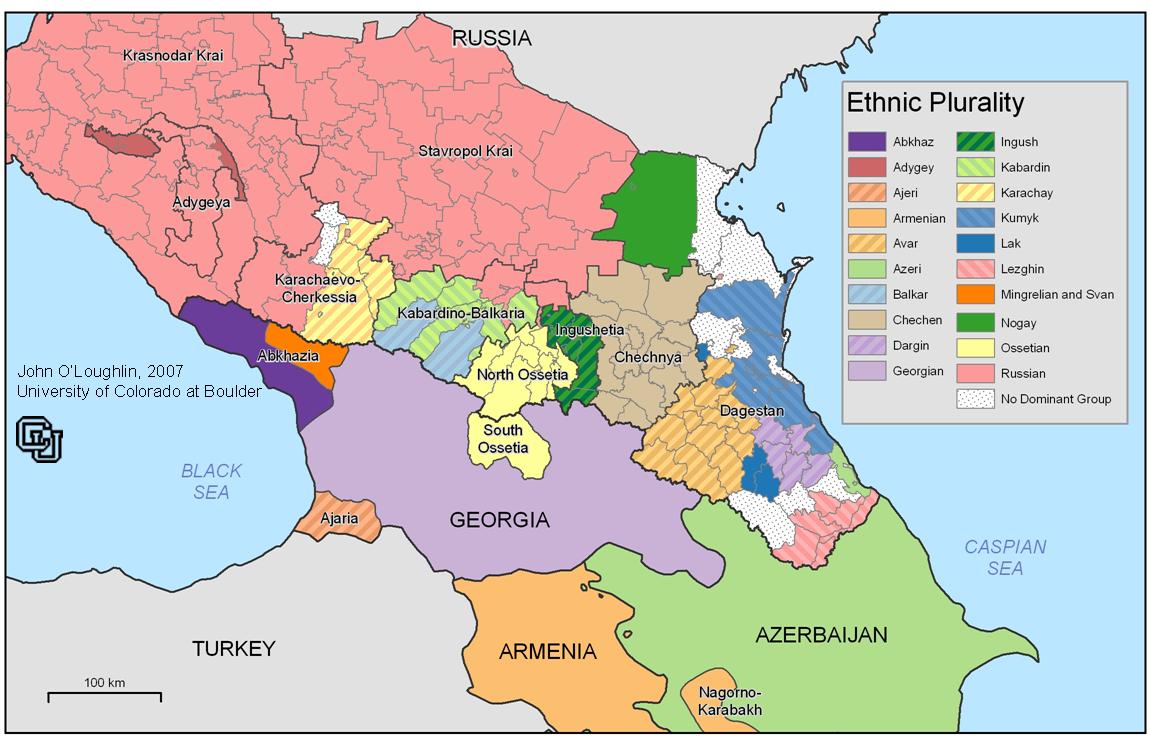
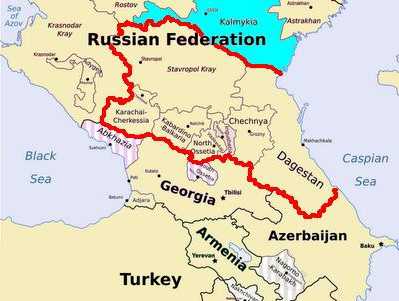
    It’s been asserted that the latest skirmishes that have erupted between Georgia and Russia can spread and that the United States and the European Union cannot leave a country that affects the energy security of both against Russia. But it is obvious from the beginning that the West has not much to say in this crisis and it cannot engage in military encounters against Russia. Although the U.S. and Russia fiercely accuse each other at the United Nations Security Council, the council cannot reach a decision due to the Russian veto power.
      Besides, no one can deny that Georgia makes an arithmetical mistake by engaging in a war with a country – Russia — stronger than itself. In the end, Georgia lost so many of its citizens to war as many left the country and had to withdraw forces from South Ossetia. Former Russian President Vladimir Putin said integration between Georgia and South Ossetia is impossible from now on; in other words, current borders will be permanent. As I write this piece, Russia was still bombarding the Georgian targets, not complying with ceasefire and keeping the Abkhazia coasts under control.
      Apparently, Georgia is hopeful that the West could take action if the Baku-Tbilisi-Ceyhan oil pipeline is threatened. But there is a slim chance that Russia would want to ruin this international pipeline. Although plans to make Georgia a NATO member is one of the key reasons why Russia has reacted against Georgia, one cannot say that Russia wants to cause a big crisis in U.S.-EU relations because these ties are economically and politically vital for both parties. As a matter of fact, it has been crystal-clear that U.S. aspiration to make Georgia and Ukraine NATO members is not realistic and off target.
    What can Turkey do?
      What can Turkey do? It continues to call the sides to calm down and seek reconciliation. But it is less likely that Turkey, as a NATO member, can act as a facilitator between Russia and Georgia. However, it could be profitable for Turkey to reexamine its Caucasus policy. Unless the Karabakh issue is settled, we may face a many more dangerous hot encounters. At least signing an agreement to open the Turkey-Armenia border is extremely beneficial. Policies to create an environment for settlement can bring stability to the Caucasus, as they certainly help balancing out the Russian influence in the region.
      Obviously we should be very careful not to let these policies negatively affect our bilateral relations with Russia. Unfortunately, stability and peace in the Caucasus have turned very fragile after the Cold War. Going through the same process the Balkans are pulling themselves through. Though this is a different equation, it is time for the countries in the Caucasus to seek more realistic and constructive objectives. 

    © 2005 Dogan Daily News Inc. www.turkishdailynews.com.tr
     

  • Iraq and Turkey: Regional cooperation will change the region

    Iraq and Turkey: Regional cooperation will change the region


    Agustos 12, 2008 tarihli bir TDN makalesi: Ilginize


    Tuesday, August 12, 2008

    While Iraq is in great pain because our eastern neighbor has decided to follow Saddam’s path to nihilism, our northern neighbor extends a hopeful hand of friendship, trust and promising prosperity

    Hussain SINJARI
      The last visit by a Turkish PM to our country was in 1990. Eighteen years later, a different Turkish PM comes to Baghdad. Recep Tayyip Erdoğan is Islamic yet secular, a modern and open-minded leader who considers the sacred texts to be good for worshipping, more of cultural or spiritual values rather than to do with strategy, economics or the administration of the state. Moreover, he and his party do not interfere in the lifestyle of the people or their choices of belief. He and his party respect the individual freedoms of women and men.
      The government of our country did very well when it received our guest and his delegation in the most welcoming way Baghdad has ever seen so far. This visit made history when both sides signed “The Iraqi-Turkish High Strategic Cooperation Counci,” which is due to meet three times a year chaired by both PMs. The sectors of the cooperation are vitally important and include energy, military industry, security and politics.

    A historic visit:

      We know this historic visit was the fruit of good efforts of both President Jalal Talabani and Prime Minister Nori al Maliki. It came after the obvious success on the ground of the latest military/security operations in different places in Basrah, Baghdad, Ramadi, Mosul and elsewhere where criminal gangs used to terrorize the civilians.

      The visit of Erdoğan could not possibly take place without this security success. The writer of this article is a witness to this improvement through a number of tours and walks during the day and night in Baghdad. In Abu Nawas, the famous Baghdadi avenue with cafes and restaurants on the bank of the River Tigris, universally known for its “mesguf,” or grilled fish, I was very surprised to see hundreds of families out there. A private security company, The Sandi Group, is in charge of the security of the place, checking cars, watching for terrorists and keeping order.

      Turkey is a semi-European country with its democratically elected parliament; free, independent and critical media; active and genuine civil society organizations; and the progress it has made in the fields of agriculture, industry, education, tourism or services. All of this and more shall help to create a unique regional cooperation between Turkey and our country, which has the largest oil reserve in the world and the best human resources in the Middle East. Yet, due to the long decades of dictatorship under which we wasted our national wealth on armaments, the liberation of Palestine, lies of propaganda and other destructive practices, our country is almost a wasteland. This is a sad reality but must be changed. To change it we need this kind of strategic regional cooperation to put energies together to rebuild and reconstruct.

      The Kurdish element:

      Along the Iraqi-Turkish border, the Kurdish people live. This existence could be of a great help and serve as “the bridge” between Turkey and Iraq. The armed insurgency must come to an end and people must follow civilized practices and methods to express themselves, demand rights and demonstrate grievances.  The “State” is not innocent and policies must be revised. And people listened to and cared for. 

      The Turkomen in Iraq and Arabs in Turkey are other examples that diversity could and should be an element for strength and wealth.

      While Iraq is in great pain because our eastern neighbor has decided to follow Saddam’s path to nihilism, our northern neighbor extends a hopeful hand of friendship, trust and promising prosperity.

    Basrah-Istanbul railway system:

      Here I come up with my proposal to both governments of Iraq and Turkey: Put as a top priority to run a most technologically modern and monumental railway between Basrah and Istanbul. And then a very modern highway for transport trucks and personal cars to connect Basrah to Istanbul. These two giant projects will attract large companies to invest while small businesses will flourish along the rail and the highway.

      In this way, Iraq will be linked to Europe via Istanbul and Turkey will be linked to the Gulf via Basrah.

      One does not need more than a glance to realize what a creation of wealth this should bring to the people of the two countries and for beyond — the Gulf and Europe.

      In our globalized world we need more “tolerancy diplomacy.” This new approach and concept means to find out common grounds according to mutual benefits regardless of differences in faiths, ideologies, ethnic or linguistic backgrounds. Iraq and Turkey and other states should explore the benefits of the acceptance of each other and recognition of each other’s rights. This is an application of the “The Turkish-Iraqi High Strategic Cooperation” to set an example for many others who are crippled by the evils of ideology.  

      ………

      Hussain Sinjari is an Iraqi commentator based in Baghdad and the president of Tolerancy International. (www.tolerancy.org)


    © 2005 Dogan Daily News Inc. www.turkishdailynews.com.tr
     

  • Armenia Rules Out Support For Russian Strikes On Georgia

    Armenia Rules Out Support For Russian Strikes On Georgia


    By Emil Danielyan

    Defense Minister Seyran Ohanian assured a senior Georgian diplomat on Tuesday Russia did not and will not use Armenian territory for its ongoing military operations in Georgia condemned by the West.

    Armenia maintains close defense links with Russia and hosts a Russian military base numbering several thousand soldiers and a dozen MiG-29 fighter jets.

    The Defense Ministry in Yerevan flatly denied late last week Azerbaijani and Georgian media claims that some of the Russian warplanes involved in bomb raids on Georgia flew in from Armenian military airfields. A ministry spokesman rejected the allegations as an Azerbaijani “provocation” designed to damage Georgian-Armenian relations. He argued that the Russian military is not using MiG-29s in the air strikes.

    Georgia’s ambassador to Armenia, Revaz Gachechiladze, commented the allegations, not echoed by the Georgian government, at a meeting with Ohanian. A statement by the Defense Ministry quoted Gachechiladze as stating that the Russian military aircraft stationed in Armenia has not been involved in the Russian onslaught.

    “For his part, S. Ohanian assured the ambassador that Armenia’s territory will not be used as a military launch pad for hostilities against Georgia, expressing hope that ways will be found to normalize the situation in Georgia,” the statement said. Ohanian also offered his sympathy for “innocent victims” of the nearly week-long fighting, it added.

    The statement claimed that Gachechiladze requested the meeting in order to introduce Georgia’s new military attaché in Yerevan, Colonel Murtaz Gujejiani, to the Armenian defense chief.

    Armenia is treading carefully on the Russian-Georgian conflict, mindful of the two countries’ importance for its national security. The Armenian Foreign Ministry expressed on Friday serious concern about the outbreak of fighting in South Ossetia but avoided blaming any of the parties for the worst regional crisis since the early 1990s. Official Yerevan has so far not reacted on Russian forces’ subsequent advance deep into Georgian territory, which has been condemned by the United States and other Western powers.

    The Armenian government also refuted on Tuesday other media reports saying that it allowed a planeload of U.S. military instructors bound for Georgia to land in Yerevan’s Zvartnots international airport. Deputy Foreign Minister Gegham Gharibjanian said special flights to Zvartnots have been carried out only by planes that were sent by some European governments to collect their citizens evacuated from Georgia.

  • 1st International Conference of Karamanlidika Studies,University of Cyprus,11-13.09.08

    1st International Conference of Karamanlidika Studies,University of Cyprus,11-13.09.08

    From: Ioannis Grigoriadis
    List Editor: Mark Stein
    Editor’s Subject: H-TURK: 1st International Conference of Karamanlidika Studies,University of Cyprus,11-13.09.08 [I Grigoriadis]
    Author’s Subject: H-TURK: 1st International Conference of Karamanlidika Studies,University of Cyprus,11-13.09.08 [I Grigoriadis]
    Date Written: Mon, 11 Aug 2008 22:33:02 -0400
    Date Posted: Mon, 11 Aug 2008 22:33:02 -0400

    The 1st International Conference of Karamanlidika Studies will be held
    from 11 to 13 September 2008 at the “Axiothea” Cultural Centre of the
    University of Cyprus. It is organised by the Department of Turkish and
    Middle Eastern Studies/University of Cyprus (Nicosia) and the National
    Hellenic Research Foundation (Athens). The Conference brings together
    scholars from Cyprus, Greece, Turkey, Belgium, France, Italy, and Norway
    with the aim to explore the always plural and complex stories of the
    Turkish-speaking Orthodox Christian population and its cultural product,
    the Karamanlidika printed matter.

    Karamanlidhes are the Turkish-speaking Orthodox Christian
    inhabitants of Anatolia, in a geographical area, which is defined today
    as “Cappadocia”, promoted by art history, in the region of the
    troglodytic ecclesiastical and monastic communities of the Byzantine
    Empire. From the mid-nineteenth century until to the Exchange of
    Populations, the term “Cappadocia” was applied to the region that
    reached as far as Yosgat in the north, Karaman in the south, just beyond
    Kayseri in the east and no further than Isparta in the west.

    In the early eighteenth century the Ecumenical Patriarchate sped to
    protect these Turcophone Orthodox Christians from conversion to Islam,
    and some one hundred years later, from the proselytisation of
    Protestants and other missionaries. The appeal of the propaganda of the
    various Western Churches in these populations caused the leadership of
    the Orthodox Church to worry about its flock in Anatolia, and the
    bourgeoisie of Constantinople to deliberate on the unity and the
    stability of their economic networks in the Asia Minor hinterland.
    Metropolitans and monks, such as Zacharias the Athonite and Seraphim of
    Pisidia translated into Turkish and published in Greek characters, that
    is in Karamanlidika, Catechisms, Psalms and other religious texts, with
    the aim of teaching the doctrine of the Orthodox Church and the
    religious duties of an Orthodox Christian to the Christians of Asia
    Minor, “since they have forgotten their Greek language, cannot
    understand what is read in Church and thus are led far from the way of
    God.”

    >From the mid-nineteenth century, expatriate Karamanlis played a
    decisive role in the publication of Karamanli books and, of course, in
    the turn towards the secularization of Karamanli printed works. The
    expatriates bore the expenses, organized and participated in
    disseminating and distributing the books in the interior of Anatolia,
    with subscriptions, because they had a network of mutual support and
    their own active rules of communication. Some clerics, but mainly laymen
    – teachers, doctors, journalists – who had studied in Athens, Izmir and
    Western Europe, supported economically and assumed responsibility for
    processing the material, that is translating works from Greek, but
    mainly from Western languages, or transcribing works from Ottoman script
    into Greek characters. Cappadocians residing in Constantinople and
    others living in their native Anatolia participated in Karamanli book
    production. They translated French novels, vade-mecums on medicine and
    agriculture, manuals on epistolography, legal codes and interpretations
    of laws, calendars and almanacs, as well as composing works on local
    history. The Karamanli book served the needs of the Turcophone Orthodox
    Christian society in the face of the challenges of Tanzimat. Committed
    clergymen in the patriarchal milieu and militant laymen undertook the
    campaign to enlighten the Orthodox Christians of Anatolia. This was
    mainly the circle of Evangelinos Misailidis, publisher of “Anatoli”, the
    Karamanli newspaper with the greatest longevity.

    A document of Ottoman sovereignty, the Karamanli script transmits
    elements of the Ottoman world and of Orthodoxy during the first, the
    pre-national stage of long duration, under the aegis of the Patriarchal
    printing press initially, and with the activity of misorganizations
    subsequently. From the mid-nineteenth century onwards, it
    functioned as a vehicle for transporting cultural goods produced in
    Europe, or, more rarely, it built bridges between the Ottoman world and
    Greek education.

    For more information, please contact the organisers of the conference:

    Matthias Kappler, University of Cyprus / Nicosia ([email protected])
    and

    Evangelia Balta, National Hellenic Research Foundation / Athens
    ([email protected])

    CONFERENCE PROGRAMME

    Thursday, 11th September 2008

    20.00 Opening Ceremony

    Welcome addresses:

    Anastasia Nikolopoulou (Dean School of Humanities)

    Martin Strohmeier (Chairman Department of Turkish and Middle Eastern
    Studies)

    Evangelia Balta

    Introductory speech

    Thomas Korovinis & Ensemble, Salonika

    Greek and Turkish Songs from Cappadocia

    A reception will follow

    Friday, 12th September 2008

    Chairperson: Evangelia Balta

    10.00 Aspects of History

    Christos Hadziiossif, University of Crete & Institute for Mediterranean
    Studies / Rethymno

    The Ambivalence of Turkish in a Greek-speaking community of Central
    Anatolia

    Irini Renieri, Institute for Mediterranean Studies / Rethymno

    ‘Xenophone Nevşehirlis… Greek-souled Neapolitans’: the persistent yet
    hesitant dissemination of the Greek language in the Turcophone
    environment of Nevşehir

    Anna Ballian, Benaki Museum of Islamic Art / Athens

    Villages, churches and silver liturgical vessels: the case of Karamanlı
    patronage in the 18th-19th c.

    11.30 Coffee Break

    Chairperson: Martin Strohmeier

    12.00 Aspects of History

    Sia Anagnostopoulou, Panteion University / Athens

    Greek perceptions of the Turkish-speaking Cappadocians: the Greek
    diplomatic sources

    Stefo & Foti Benlisoy, Istanbul Technical University & Boğaziçi
    University / Istanbul

    Reading the identity of Karamanlides through the pages of Anatoli

    Şehnaz Şişmanoğlu, Sabancı University/ Istanbul

    The Anatoli newspaper: the heyday of the Karamanlı press

    Michalis Michail, University of Cyprus / Nicosia

    >From Cilicia to Cyprus: Turcophone Orthodox pilgrims during the Ottoman
    period

    14.00 Lunch

    Friday, 12th September 2008

    Chairperson: Christos Hadziiossif

    16.00 Sources

    Giampiero Bellingeri, University Ca’ Foscari / Venice

    Venetian sources and significations of ‘Caramania’

    Ioannis Theocharidis, University of Cyprus / Nicosia

    Unexploited sources on Serafeim Pissidios

    Stavros Anestidis, Centre for Asia Minor Studies / Athens

    The Centre for Asia Minor Studies and books printed in Karamanlı. A
    contribution to the compilation and the bibliography of a significant
    literature

    Saturday, 13th September

    Chairperson: Giampiero Bellingeri

    09.00 Literature

    Johann Strauss, University Marc Bloch / Strasbourg

    Karamanlı literature – part of a ‘Christian Turkish literature’?

    Anthi Karra, Brussels

    >From Polypathis to Temaşa-i Dünya, from the safe port of translation to
    the open sea of creation….

    Julia Chatzipanagioti-Sangmeister & Matthias Kappler, University of
    Cyprus / Nicosia

    Thoughts on the Turkish verses in Phanariote anthologies (1750-1821)

    M. Sabri Koz, Yapı ve Kredi Yayınları / Istanbul

    Türk Halk Hikâyelerinin Karamanlıca Baskıları Üzerine
    Karşılaştırmalı
    Bibliyografik Notlar / Comparing bibliographical notes on Karamanlı
    prints of Turkish folk tales

    11.00 Coffee Break

    Chairperson: Matthias Kappler

    11.30 Linguistic Topics

    Eftychios Gavriel, University of Cyprus / Nicosia

    Τranscription Problems of Karamanlidika texts

    Bernt Brendemoen, University of Oslo

    An 18th century Karamanlidic codex from Soumela Monastery in Trabzon

    Ceyda Arslan Kechriotis, Boğaziçi University / Istanbul

    Some syntactic issues in Karamanlidika texts

    Xavier Luffin, Université Libre / Brussels

    Religious vocabulary in Karamanlidika 13.30 Concluding Discussion –
    Prospects

  • DALOGLU: Turkey’s regional influence

    DALOGLU: Turkey’s regional influence

    Perhaps too much to handle

    Tulin Daloglu
    Tuesday, August 12, 2008

     
    OP-ED:
     
    Nearly two weeks after Iran refused to yield to the demand by Germany, France, Britain, Russia, China and the United States that it stop developing nuclear technology that can lead to a nuclear weapon, Iranian President Mahmoud Ahmadinejad will travel to a NATO country for the first time. Turkish President Abdullah Gul will meet the Iranian leader on Thursday in Istanbul. While Iran’s influence as a regional power has undeniably been enhanced by standing against the threats of new sanctions and continuing its nuclear program, Mr. Ahmadinejad’s visit to Turkey will further that image.
     
    But what will Turks gain from it? At best, nothing. Furthermore, this visit is likely to cause trouble for Turkey.
     
    Technically, the U.N. Security Council’s five permanent members and Germany unanimously agree that Iran should not have nuclear weapons. They differ in their tactics, but they agree that it is absolutely vital that Iran sees no positive side to trying to further its nuclear aims. Turkey’s political leaders, however, have chosen to see these high-level “talks” as a show of “good will” in the name of peace. Mr. Gul has also hosted Sudanese President Omar al-Bashir, who ordered genocide in Darfur, for the same reason. But a Turkish proverb suggests that talking is not always a virtue. Knowing when and how to stay “silent” is.
     
    It’s one thing for Turkey to nurture relationships with its neighbors. No one, be they friend or foe of the ruling Justice and Development Party (AKP) or any other Turkish political party, would deny that, at minimum, a civil relationship with other countries in the region can only be good for Turkey. But this current situation with Iran and the threat of it obtaining nuclear weapons is serious. And Turkey’s leaders, simply, may well be in over their heads.
     
    Curiously, though, AKP is strongly supported by the Bush administration. The U.S. certainly did not remain silent about a Constitutional Court case that decided the future of the AKP. Now that the court has decided not to shutter the AKP, the Bush administration has complimented the strength of Turkish democracy. In fact, there is speculation in Turkey that the AKP must have been in contact with Washington about Mr. Ahmadinejad’s visit – though no evidence of such a communication exists. Turkey seems to be acting completely independent. While the White House is likely unhappy about the visit, U.S. officials continue to praise AKP leadership for its pro-active engagement with its neighbors.
     
    In another scenario, it’s also possible that Turkey could sign a natural gas deal with Iran, violating America’s Iran Sanctions Act. If that happens, one can only wonder how Secretary of State Condoleezza Rice would react. Alas, she has been an exceptionally strong defender of AKP policies. Yet if Turkey signs that energy deal with Iran, the U.S. could end the November 2007 agreement that opened a new chapter of cooperation and intelligence sharing in the fight against PKK terrorism.
     
    Furthermore, Mr. Gul often boasts that Turkey and Iran have not fought a war since the early 17th century. The facts of the Turkish history, however, suggest differently, like Turkey’s invasion of Tabriz during World War I. Yet Mr. Ahmadinejad has made it clear that unlike every other visiting dignitary, he will not visit the mausoleum of Mustafa Kemal Ataturk, Turkey’s founder, who created a secular republic in a Muslim nation. So Mr. Gul capitulated and instead invited him to Istanbul. So while these two leaders represent different forms of governments, they in fact seem to have much in common.
     
    Turkish Foreign Minister Ali Babacan says that Turkey cannot stay silent on matters related to Iran, especially when fighting could be possible. Turkey refused to be used as a way into Iraq for the United States, and it certainly won’t be used to attack Iran either, Mr. Babacan says. However, Turkish Prime Minister Recep Tayyip Erdogan may be indicating a different circumstance. Mr. Erdogan admitted during a visit to Washington that he wished Turkey had cooperated with the U.S., because it would have made it easier for Turkey to defend its national security interests.Also, he blamed the opposition Republican People’s Party, CHP, for defeating the measure that proposed cooperation with the United States.
     
    Surely, politicians tend to gravitate toward populist demagogy. We cannot know whether Mr. Erdogan really meant that Turkey should have cooperated on the invasion of Iraq. It is unclear whether he really opposes Iran having nuclear weapons. Those same leaders who argue against the West pressuring Iran say that it’s no different than Israel or Pakistan having nuclear weapons.
     
    Turkey is blundering its way in this complicated relationship, unsure which side it wants to take or how big a threat it sees Iran to be. Turkey’s political leadership believes they can dance with Iran and simultaneously become a major regional player. Let’s hope they’re right. Otherwise, the Turkish people will be merely a casualty of a reckless policy.
     
    Tulin Daloglu is a free-lance writer.
  • Renewed violence in west China

    Renewed violence in west China


    Three security staff have been stabbed to death in China’s Xinjiang region, the third attack there in eight days.

    Assailants killed the men at a checkpoint near the city of Kashgar, Chinese state media said.

    Sixteen police officers were killed in an attack in Kashgar earlier this month, but state media said there was no evidence linking the two attacks.

    Xinjiang is home to many Muslim Uighurs, some of whom want independence in the region they call East Turkestan.

    There has been a rise in violent incidents in Xinjiang in recent months, which China has blamed on separatists seeking to disrupt the Olympic Games.

    Suspected Muslim separatists also launched a series of bomb attacks in Kuqa, in southern Xinjiang, on Sunday, which left 11 dead.

    Arrest report

    Tuesday’s attack happened at a checkpoint about 30 km (18 miles) from the border city of Kashgar.

    Attackers – it is not clear how many – jumped out of a passing vehicle and stabbed the men to death. Three men died and a fourth was injured, Xinhua news agency said.

    News of the attack emerged hours after Chinese state media announced that the situation in Kuqa, scene of Sunday’s attacks, had returned to normal.

    Q&A: China and the Uighurs

    Early on Sunday, a string of explosions took place in supermarkets, hotels and government buildings across the city.

    One security guard died, two attackers blew themselves up and eight were shot by police, Xinhua said.

    A Uighur activist has accused Chinese authorities of arresting dozens of people in the wake of the blasts.

    Dilxat Raxit, of the pro-independence World Uighur Congress, said more than 90 people had been arrested in Kuqa, as well as others in nearby counties.

    Local people had heard the sound of detainees being beaten and tortured, he said in a statement.

    He urged the international community to put pressure on China to end “inhumane crimes against ethnic Uighurs”.

    But the Kuqa local government said that Mr Raxit’s allegations were untrue.

    Xinjiang is home to more than eight million Uighurs.

    China says it is bringing development and prosperity to the region, but activists accuse Beijing of suppressing traditional Uighur culture and religion.