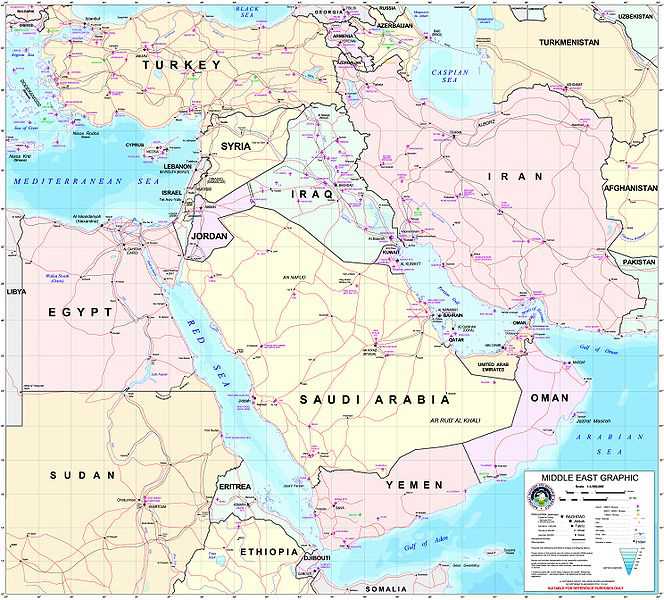
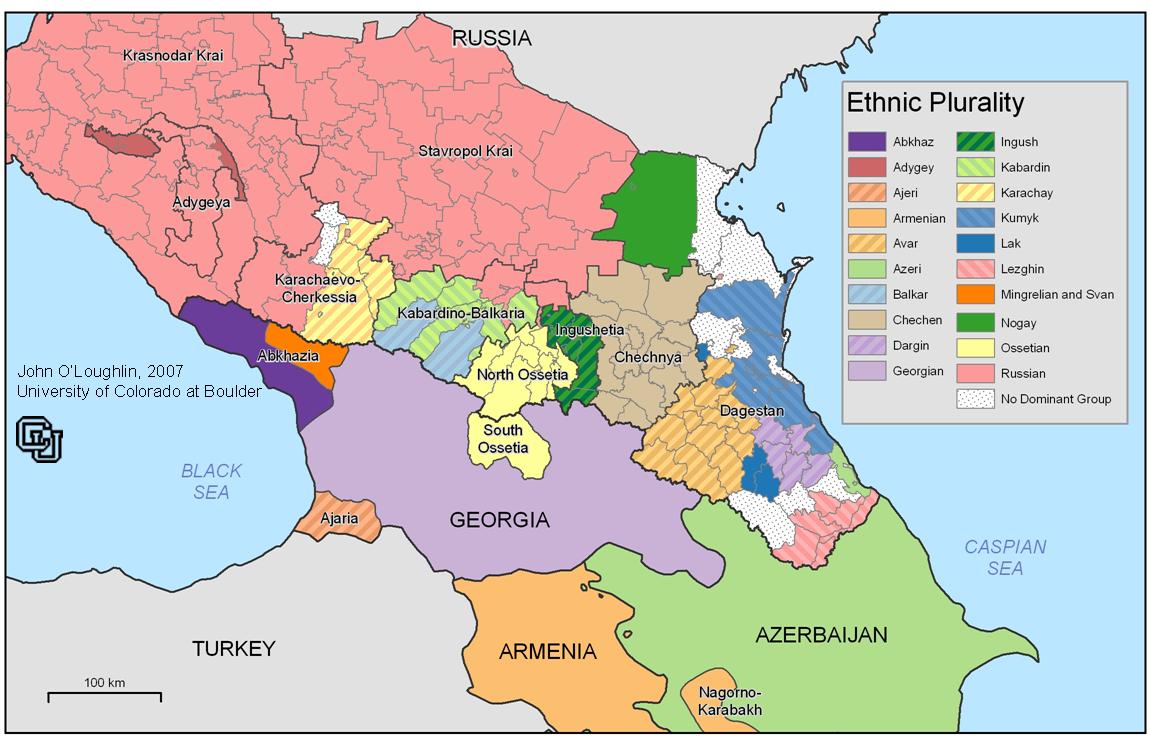
The Russia-Georgia conflict has put Turkey in a tight spot. Will Turkey side with the United States, its NATO ally, and let more U.S. military ships into the Black Sea to assist Georgia? Or will it choose Russia which also shares a Black Sea coast with Turkey? As Dorian Jones reports from Istanbul, ever since Turkey joined NATO in 1952, it has hoped to never have to make a choice between the alliance and its Russian neighbor to the north.
By Dorian Jones
Istanbul
The U.S. Navy coast guard cutter Dallas passes through Bosporus Strait, Istanbul, Turkey, 24 Aug 2008
Turkey has been playing the role of mediator between various parties in the region: the United States and Iran; Israel and Syria; Pakistan and Afghanistan. But as more U.S. warships pass through the narrow Turkish-controlled strait into the Black Sea to deliver aid to Georgia, a time for choosing sides may have arrived.
Last weekend, U.S. warships used the Turkish straits to deliver aid to Georgia. A Russian official condemned the move and warned Turkey it was obliged to enforce the rules of an agreement that gives a 21 day limit on any warship from a country that does not border the Black Sea.
The Turkish government is responsible for policing the 32-kilometer Bosporus, the only route for ships traveling to the Black Sea, under the Montreux agreement of 1936. The Bosporus provides sole access for ships to Georgia’s Black Sea ports.
International relations expert Soli Ozel of Istanbul’s Bilgi University said this has put Turkey in a precarious position.
“Turkey is a NATO member and is also a neighbor of Georgia’s and great supporter of Georgia both economically and militarily,” he said. “And Turkey controls the passage from and to the Black Sea. Therefore whatever happens next Turkey is going to find itself impacted by the developments.”
Also at stake is Turkey’s trade relations with Russia. Turkey’s trades more goods with Russia than any other country, mostly because of Turkey’s dependence on Russian gas.
“We have very good economic relations with Russia,” said Ozel. “Our trade is over $10 billion and we are overly dependent on Russian gas at 64 percent and 40 percent for Russia oil.”
Turkey has been trying to boost trade with Moscow as it struggles with a current account deficit that’s growing as energy costs soar.
But Russia has introduced new custom regulations which, according to the Turkish trade minister Kursad Tuzmen, could cost Turkey as much as $3 billion. Tuzmen attacked the regulations as political, saying Moscow may be punishing it for allowing the U.S. ships to pass through the Bosporus.
Tuzman said that on September 1 Turkey will impose curbs on Russian exports and withdraw support for its membership of the World Trade Organization.
But a Turkish diplomatic source said that Ankara is determined not to be drawn into the conflict. Much of the Turkish media is also calling for a neutral stance.
With the Turkish prime minister visiting Moscow and Tbilisi, Ankara is now working hard to secure peace. Soli Ozel doesn’t believe such efforts have much chance of success, but still thinks they are important.
“For the moment I see it as an empty shell and as a good will gesture. If anything comes out of it will be good, and if nothing comes out of it no one will blame Turkey,” said Ozel. “It is better than what the Europeans can and would do anyway.”
This weekend Georgia’s foreign minister, Eka Tkeshelashvili, is due to visit Turkey, while his Russian counterpart, Sergey Lavrov, is expected next week. While few people give little chance of any breakthrough, experts say the real motive behind such efforts is for Turkey to balance its relations between Russia and the West. But with another U.S. warship headed to the Black Sea this weekend, those efforts are predicted to get increasingly difficult.
Turks outside a building in the Sultanahmet district, the heart of historic Old Istanbul, what 19th-century travellers used to call “Stamboul.” Photo/JOHN MAKENI
By JOHN MAKENI
With Africa attracting growing interest among leading and emerging economic powers, Turkey has become the latest country to seek a strategic relationship with the continent.
Other economic powers that have similarly sought to engage African countries as a bloc are Europe through the annual EU-Africa Summit, Japan through the Tokyo International Conference on African Development (TICAD), and China.
In his opening remarks at the Ciragan Palace, Kempinski in Istanbul on August 18, Turkey’s President Abdullah Gul cited its long history of contact with Africa from the days of the Ottoman empire.
“Turkey has traditionally maintained good relations with the African continent. The Ottoman empire had contacts with the continent over a vast geography stretching from East and Central Africa to Zanzibar of today’s Tanzania,” said President Gul.
At the Turkish-African Civil Society Organisations Forum two days earlier, Ambassador Murat Bilhan, vice-chairman of the Turkish Asian Centre for Strategic Studies (TASAM), said Turkey contributed to Africa’s struggle for independence.
TASAM hosted the forum which drew 90 civil society organisations from 45 African countries, 85 others from Turkey and representatives from the African Union.
In 1960, Turkey established diplomatic ties with all the newly independent countries in Africa and now it has 12 embassies and over 20 honorary consulates. During the summit President Gul said his country plans to open 15 new embassies.
The change of attitude which has seen Africans increasingly taking their destiny on their own hands has not escaped the attention of Turkey either.
“The founding of the African Union and the New Partnership for Africa’s Development (NEPAD) are encouraging signs of new thinking, which the developed countries should recognise and respond to.
“If we acknowledge Africa’s true nature and rich diversity, we will be in a position to effectively support developments on the continent in collaboration with Africans themselves,” said President Gul.
“Africa and Turkey note with great concern that while some countries have reaped the benefits of globalisation, most African countries remain marginalised within the globalising world economy.”
But if President Gul tried his best to couch his country’s renewed interest in the continent in diplomatic language, it wasn’t lost on delegates attending the civil society forum what Turkey’s real intentions are.
Tom Wheeler, research associate at the South African Institute of International Affairs, noted that Turkey was rapidly developing its industrial economy and its exports and therefore needed the resources Africa can provide. Africa, he said, can be a useful export market for Turkey’s manufacturers.
“The Turks have seen Japan, China, India, the European Union, not to mention the US, becoming more involved in Africa, and as a neighbour of the African continent, they decided that they needed to be there too,” said Wheeler.
Edwin Barasa, the director of programmes at Africa Peace Forum, said Turkey appeared genuine in its quest to do business with Africa.
“Turkey is an emerging economic force having developed the mining, energy and production industry and as such will most likely want to bend the balance of trade to its favour so as to reap maximum benefit,” said Mr Barasa.
Experts also believe Turkey is trying to woo Africa to achieve its ambitions at the UN.
“Undoubtedly, their ambition to win a non-permanent Security Council seat must come into equation. A bloc of 53 votes, if it can get that support, is a quarter of all votes. I am sure competing candidates will also be scurrying around Africa, soliciting support,” said Wheeler.
However, Turkey’s apparent preference for the so-called non-interference policy in its dealings with Africa did not go down well with the civil society people from the continent.
Ambassador Bilhan said while establishing ties with Africa, Turkey wants to steer clear of internal affairs of African countries.
China has been widely criticised by Western governments and human rights groups for adopting a similar policy, although such hostility does not seem to have significantly affected the Asian power’s bilateral relations with many African countries.
Notably, China continues to enjoy oil imports from Sudan despite calls by the international community that that it put pressure the Sudanese government to stop the crisis in Darfur.
Sudanese President Omar al-Bashir was recently indicted by the Internal Criminal Court for war crimes and crimes against humanity.
Some delegates at the civil society forum also felt that the Turkey might not have understood Africa well enough to be able to offer solutions to its problems.
Rinos Simbulo, a civil society activist from Zambia, warned the panel not to indulge in rhetoric, saying that the African problem can be solved right from the grassroots and not in a conference room.
Real problems
Most delegates were of the view that other development partners had failed because they sought to safeguard their own interests instead of understanding the real problems afflicting Africa.
Many Western countries, they said, still believe that aid is a major panacea to the continent’s woes.
Every year, for instance, Britain and the US commit billions of dollars in aid to social programmes in Africa such as HIV/Aids campaigns, rural development and education, with little to show for it.
The structural adjustment programmes (SAPs) of the 1990s implemented by development agencies such as the World Bankwere cited as another example of failed donor policies.
Many African countries have yet to even benefit from the African Growth and Opportunity Act (AGOA) signed into law in 2000 to offer incentives to African countries to build free markets.
Still, international relations experts believe Turkey’s strategic location and being closer to the African continent makes it a suitable partner for Africa.
“But as we saw at the forum, they still have a lot to learn about Africa, not least that they should not preach to Africans,” said Mr Wheeler.
ITF Turkmen in Kirkuk after being attacked by the Kurds
In the middle of August 2008. Iraq’s parliament reached an agreement on the Provincial Council Election Law, particularly with regard to Paragraph 24 of the law, which deals with the election mechanism in the Kirkuk Governorate. The postponement of the elections and adaptation of the division of Kirkuk to the three constituencies that include the proportion of 32 % for Arabs, Kurds, and Turkmen and 4% for Assyrians.
Turkmen, Arab and Assyrians proposed equal distribution of provincial council seats in the Kirkuk region – which is outside the Kurdish territory. This was vetoed by President Jalal Talabani and his deputy, Adel Abdul Mahdi.
Before the voting, the Kurds rejected secret ballot whereas the opposition had requested a secret ballot and the members of the Iraqi parliament voted open and secret voting. The majority of members have decided for secret voting and the deputy parliamentary speaker Khalid al-Attiyah, a Shiite, said the secret ballot was unconstitutional and accused the lawmakers of “arm-twisting.”
On the 22nd of August 2008, decision was made by 127 Iraqi members of parliament they voted in favour of the Provincial Council Election Law, particularly with regard to Paragraph 24 of the law, which deals with the election mechanism in the Kirkuk Governorate. The distribution of power that include the proportion of 32 % for Arabs, Kurds, and Turkmen and 4% for Assyrians.
The security of the town shall be controlled by the central government rather than the current military forces that are stationed in the town. The security forces that are linked to the political parties have to leave.
The bill was approved by 127 out of 140 deputies that attended the meeting and 10 of those members decided not to vote. Two of them decided to vote against and one MP submitted a blank ballot paper but the Iraq’s parliament still passed the law. The Kurds, along with the two deputy parliamentary speakers, walked out of the chamber after lawmakers decided to hold a secret ballot on a power-sharing item in the law for the disputed, oil-rich city of Kirkuk. This was vetoed by President Jalal Talabani and his deputy, Adel Abdul Mahdi.
On the 27th of July 2008 the secret police that are linked to both Kurdish parties distributed leaflets informing the people of Kirkuk, especially the Turkmen to participate in a protest that had been organised by the Kurds against the adoption of the law of elections for provincial assemblies causing a postponement of elections in the city for an indefinite period. Also the Kurdish police whom accompanied the Kurdish Asayish informed the Turkmen shop owners to close their shops and anyone who opened his shop would be subjected to punishment and his shop will be ransacked. The Kurdish Asayish separated roamers that all the governmental buildings would be close and the Kurdish directors in Kirkuk informed the Turkmen employees not to attend to work and anyone failing to do so he/she will be punished and his wages will be cut.
As the result of this, the Turkmen population in the Kirkuk was extremely worried and concerned as this event reminded the Turkmen of the Kurdish massacre of the Turkmen in 1959, when Turkmen were burned, killed,/executed. Some were attached to ropes and pulled behind cars in the mains street of Kirkuk by the Kurds and some communist party members. As a result, panic among the Turkmen population in Kirkuk caused them to approach the Turkmen member of the Kirkuk governing council Mr. Hassan Turan and Turkmen Chief of Police Burhan Tayip, asking for advice and help.
So on the 27th of July both Mr. Hassan Turan approached the Kirkuk governor Mr. Mustafa Abdullrahman who is a Kurd. After a lengthy meeting and discussion with him on this subject, Mr. Mustafa Abdullrahman acknowledged to Mr. Hassan Tuan that a Kurdish protest has been organised and he assured Mr. Hassan Turan but all the government offices shall be opened and participation in the demonstration is not compulsory.
But on the afternoon and evening of the 27th of July Mr. Hassan Turan and Turkmen Chief Police in Kirkuk Mr. Burhan Tayip and also Turhan Abdurrahman appeared on Turkmeneli TV advising the worried Turkmen population about the demonstration. What they have to do. Measures that are needed to be taken and both advised the Turkmen citizens to carry out their normal business. Shop keepers are free to open their shops and all governmental offices would open and no one should be forced to participate in this demonstration. He also mentioned that the Kurds have the right to demonstrate in order to express their protest. Both advised the population to be calm and avoid any provocation that might be implemented by the other side (which he meant by the Kurds).
In the meantime, the Kirkuk governor Mr., Mustafa Abdullrahman who is a Kurd never appeared on the TV or on radio to assure the population in Kirkuk this is going to be a Kurdish demonstration and no one is forced to attend this protest. Whereas the Kurdish directors for many government offices have openly threatened Turkmens staff their salaries will be cut if they do not participate in the protest. The Kurdish police have threatened the shop keepers to close their shops and any shop that opens will be looted and destroyed.
In the meantime on the 27th of July, mini bus drivers owned by the Turkmen reported that their car disc and certificate of Insurance had been forcedly taken by the Kurdish police and they were informed this would be returned when these drivers transport the Kurdish demonstrators to the meeting point free of charge.
On the 28th of July, prior to the demonstration the local government in Kirkuk and Kurdish-led personnel of the two Kurdish parties blocked all road access that lead to government works places. They set up various checking point in order to prevent the people from going to their work.
The shop keepers were forced to close their shops and Kurdish director in various governmental offices locked the main doors to prevent the people from attending their work place and forced the employees to participate in the demonstration.
At about 9.00am, approximately three thousand Kurdish protesters gathered near Turkmen Castel (Qelat Kirkuk) as a meeting point to commence their protest towards the Kirkuk governing in order to show their anger and to condemn the adoption of the law of elections for provincial assemblies and causing a postponement of elections in the city for an indefinite period by the Iraqi government.
Since the security of the town is controlled by both the US forces and the police in Kirkuk, thus they were obliged to guarantee the safety and security for the people in Kirkuk, but it was negligence on behalf of the US forces for granting permission for the Kurdish protest to go ahead and especially allowing the Kurdish protestors to pass through a routes that are mainly Turkmen neighbourhood, This protest was designed by the Kurds to show their mussels and to provoke the Turkmen population in the town. Nevertheless, the demonstration commenced from Qelat Kirkuk toward the Kirkuk governing office to demand the holding of elections and the application of Article 140 for the normalization of the situation in the province.
According to the eyewitness, Kurdish demonstrators, Kurdish police wearing civil clothes were brought from outside of the Turkmen city of Kirkuk such as Erbil and Suleymaniyah by mini buses, private cars and police cars. This was to mislead the media and to show the world that the overwhelming population of Kirkuk was refusing the decision of the Iraqi central government towards the adoption of the law of elections for provincial assemblies causing a postponement of elections in the city for an indefinite period.
The Kurdish demonstrators prior the demonstration were seen carrying automatic weapons, pistols, iron bars, baseball bats and Kurdish flags. The protestors were escorted and protected by the local police forces that mainly consist of Kurds and also Kurdish secret service police who are known as Asayish.
The Kurdish protestors walked through the street of Kirkuk and chanting patriotic songs and provocation slogans against the Arabs and the Turkmens. Almost at 11am on the 28/7/2008 at the [Nafura] fountain area opposite to the Kirkuk governate, an explosion occurred and according to the Kurdish police, the explosion was caused by a female suicide bomber. Killing at least 22 and injuring at least 120 while the Kurdish were demonstrating but no one claimed responsibility for the bombing, which bore the hallmarks of Sunni Arab extremists. Nonetheless, many in the crowd blamed Kurds extremists for the attack.
After the explosion, the Kurdish guards started to open fire, shooting into the air as “Najat Hassam, a senior member of the Kurdistan Democratic Party (KDP), quoted by AFP as saying.”More people responded to the gunfire with heavy shooting. The rumours in the towns was that the Kurdish police carried out this attack in order to create chaos, instability and to show the world that they are the victims but the more realistic reason was that to create a civil war thus the Kurdish militia would have a good reason to enter the town with large numbers of Kurdish militia.
Turkmen properties after being attacked by the Kurds
But within a few minutes, rumours and misleading information was started by the Kurdish police stating, the explosion was caused by the Turkmen. The Kurdish Asayish started directing the protestors to attack the Turkmen targets in the city of Kirkuk. Elsewhere, the media started broadcasting Kurdish news claiming that the Iraqi Turkmen Front (ITF) guards opened fire on the Kurdish demonstrators and that the Kurdish demonstrators defended themselves by replying back.
The protesters attacked the headquarters of the ITF party headquarters, the head quarter of the political prisoners and families of martyrs, Sonuber hotel, Turkmen shops and Turkmen properties. But the most striking thing was that the Turkmeneli TV Station was attacked and its content was burnt prior to the blast.
The ITF head office is approximately a distance of one kilometer away from the site of the blast and the ITF headquarters is located in a residential area and not on the main street as was stated by the Kurdish media.
A large number of Kurdish armed demonstrators escorted with Kurdish police opened heavy fire to the Turkmen guards whom were guarding the building which this resulted injury one of the guards, including the head of the security personnel. They set ablaze to their vehicles; the demonstrators later attacked Turkmen properties and the set a light to the cars and properties of the Turkmen people. Then the Kurdish Asayish burst into the ITF office and burnt it contents and cause a tremendous damages to the building and its contents. Then the Kurdish secret police kidnapped five Turkmen guards including the injured person.
One of the ITF guards was wounded and after they ran out of ammunition no help arrived from the police. Then the ITF building was stormed by the Kurdish secret police and the armed demonstrators. The five Turkmen guards including the injured guard were taken to the undisclosed location by the Kurdish Asayish.
Then the content of the Iraqi ITF building was ransacked and its content was set on the fire. Staff cars and ITF cars were set on fire and all this happened in the presence of the local Kirkuk police whom are mainly Kurds. All these atrocities occurred in the front of the eyes US forces and local police. The police forces in Kirkuk didn’t take any action against the protesters but kept watching them.
ITF in Kirkuk after being attacked by Kurdish militiaTurkmen properties being attacked by the KurdsITF in Kirkuk after being attacked by Kurdish militia
But the most interesting thing was that after the explosion Mr.Yahya Albarzenchi, of Kurdish origin, a Cameraman working for Associated Press was taking images for the Kurdish protestors who are attacking the Turkmen, but unfortunately the protestors thought that Mr. Yahiya Albarzenchi is a Turkmen citizen working for the Turkmeneli TV station as a Cameraman. He was immediately attacked by the Kurdish crowds with fists, sticks, iron bars and was kicked variously while he was lying on the ground unconscious. The footage of the attack on the Mr.Yahya Albarzenchi the cameraman working for Associated Press was shown frequently on the Turkmeneli TV Satellite on the 30th of July 2008. The Turkmeneli TV showed how the Kurdish mobs had beaten Mr.Yahya Albarzenchi even when he was unconscious on the ground. But prior to this film footage the Kurdish police announced that the Mr.Yahya Albarzenchi was among the dead during the blast.
Turkmen properties being attacked by the Kurds
After the explosion, the Kurdish police had set up check point on the road that leads into and out of Kirkuk. Cars were stopped and searched. Turkmen individuals were taken out of the car and attacked, beaten, abused and their car was smashed before leaving the check point. The attack on the Turkmens was widely condemned by Iraqi politicians, civil organizations and Turkmen organisations but the most striking thing was that Kirkuk governor and Iraqi president Jalal Talabani whom both is Kurds did not condemn the attack on the Turkmen in Kirkuk.
Turkmen properties being attacked by the Kurds
The problem of Kirkuk is not a constitutional one but lies in the ambiguity of Article 140. According to article 140 of Iraqi constitution, the problem of the disputed areas, notably the oil-rich province of Kirkuk, addressed three stages of a normalization and then to conduct a census among the population, followed by a referendum on the fate of areas which will decide whether Kirkuk will join the Conservatives or the Kurdistan region. It was supposed to accomplish those stages during a maximum period of 31 December last year a deadline which was extended by the united nation representative without the approval of the central government for six months ending on June 30th.
Turkmen properties being attacked by the Kurds
Nevertheless, the Kurdish Brotherhood List at the Kirkuk Governorate Council held an extraordinary meeting on the 31/7/2008. The 24 members of the 41-member of the Kirkuk Governorate Council presented a request to the Kurdistan Region Government and the Iraqi parliament to make the governorate part of Kurdistan Region as they believe that Article 140 of the Constitution has not been implemented and that Article 24 of the Provincial Council Election Draft Law does not meet their ambitions.
Whereas the Turkmen and Arabs regarded this extraordinary session as illegal. Also the Turkmen leadership has requested to replace the Kurdish police in Kirkuk with army forces from central and southern Iraq, the postponement of the elections and adaptation of the division of Kirkuk to the three constituencies include the proportion of 32 % for both Arabs and Kurds and Turkmen and 4% for Assyrians
In the meantime, on the 31/7/2008, a statement by the Turkish Foreign Ministry was released regarding the issue of Kirkuk, which stated that the Turkish Foreign Ministry were concerned and were deeply alarmed about the demand by some members of the governorate of Kirkuk, regarding a Kurdish list to join the Northern Department. The Turkish Ministry of Foreign affairs said in a statement: ‘We in Turkey express our deep concern on what we see and what happened in the governorate of Kirkuk, where some members agreed to join the Council in Kirkuk to the north of Iraq and Turkey’s position on Kirkuk would not have ever changed in the present and future and the Arab and Turkmen called this moves by the Kurd as a provocation.’
However, on the 2/8/2008 the Arabs in the distrust of Hawija demonstrated against the Kurdish decision and the Turkmeneli Camera was there to show the plight of the Arabs. He was arrested when he returned to the check point that was set up by the Kurdish police at the entrance to Kirkuk. He was interrogated, abused verbally and physically.
Mofak salman Kerkuklu graduated in England with a BSc in Electrical and Electronic Engineering from Oxford Brookes University and completed an MSc in Medical Electronics and Physics at London University and an MSc in Computing Science and Information Technology at South Bank University. He is also a Chartered Engineer from the Institution of Engineers of Ireland. Mr.Mofak Salman is the author of Brief History of Iraqi Turkmen and Turkmen of Iraq and The Turkmen City of Tuz Khormatu. He is the Turkmeneli Party representative for both the Republic of Ireland and the United Kingdom. He has had a large number of articles published in various newspapers and websites.
This book was written with four clear purposes in mind: firstly, to make an assessment of the current position of Turkmen in Kirkuk; secondly, to highlight the oppression of Turkmen after the toppling of Saddam Hussein’s regime; thirdly, to introduce a brief history of the Turkmen in Iraq to the world; and finally, to draw the world’s attention to the situation and the oppression of Turkmen in Iraq and also to reveal the Kurdish atrocities against the Turkmen
Linsey McNeill loved the museums and bazaars of the Turkish capital, but it was the beaches of the Princes’ Islands that finally won over her kids
Linsey McNeill
The Observer
A ferry passes topkapi palace with the Princes Islands in the distance in Istanbul, Turkey. Photograph: Dominic Whiting/Alamy
My seven-year-old son slumped onto the heavily patterned carpet of Istanbul’s Blue Mosque and looked up at me with a crumpled face. ‘Mum, it’s just a big empty room,’ he moaned. I turned to his sister Emelye, nine, who, a little earlier, had seemed intrigued by the sound of the mullah calling Muslims to prayer. ‘Look at all the beautiful tiles on the walls,’ I whispered. Em shrugged before collapsing onto the carpet next to Luke.
Day two of our trip to Istanbul and things were not looking good. Over the road, inside the Hagia Sofia Museum, the children had played hide-and-seek around the giant columns for 10 minutes before pleading to leave.
They had been eager to go to the Grand Bazaar, though probably because I had told them it was ‘like the Arndale Centre, but older’. When they failed to find a Turkish branch of ToysRus in the ancient alleyways Luke wailed: ‘This place is full of rubbish.’ Only a refreshing glass of mint lemonade at the historic Fes Cafe and the sight of a man selling spinning tops for two lira (less than £1 of his pocket money) cheered him up.
A suggestion of a cruise along the Bosphorus had resulted in collapsed shoulders and cries of ‘Boring!’ though the children could have watched the men fishing from the Galata Bridge, next to where the boats depart, for hours.
BARACK Obama’s vice presidential pick of Senator Joseph Biden is widely seen as shoring up the Democratic Party ticket’s foreign policy credentials in the battle against Republican John McCain.
Here are Senator Biden’s main positions on the world’s hot spots:
IRAQ
Unlike Barack Obama, who opposed the war in Iraq from the beginning – but was not in the Senate at the time of the vote – Senator Biden voted in favour of an October 2002 resolution authorising President George W. Bush to use military force in Iraq.
Senator Biden however became a fierce critic of Mr Bush’s Iraq policy, saying that while the United States should eliminate Saddam Hussein, a unilateral invasion was “the worst option”.
In 2006 he wrote that a withdrawal of US troops from Iraq was desirable by 2008, a position close to that of Senator Obama, who supports a withdrawal over 16 months starting the day he takes office.
In a 2007 interview with The Politico, Senator Biden said he regretted voting for the war.
He fiercely opposed the so-called “surge” of US troops to Iraq that Mr Bush ordered in early 2007.
Senator Biden has proposed a plan to end the conflict by dividing Iraq into three largely autonomous ethnic regions – a southern Shiite region, a western Sunni region, and a northern Kurdish region – held together by a central government in Baghdad with limited powers.
AFGHANISTAN and PAKISTAN
Like Senator Obama, Senator Biden believes that the “real central front in the war on terrorism” is not Iraq, “but rather the border of Afghanistan and Pakistan”.
“If we should have had a surge anywhere, it is Afghanistan,” Senator Biden said in a recent opinion article in the New York Times, because “Afghanistan’s fate is directly tied to Pakistan’s future and America’s security”.
“The recent Pakistani elections gave the moderate majority its voice back,” Senator Biden wrote. “To demonstrate to its people that we care about their needs, not just our own, we must triple assistance for schools, roads and clinics, sustain it for a decade, and demand accountability for the military aid we provide.”
Senator Biden also called for Mr Bush to fulfill a pledge for a plan for Afghanistan along the lines of the Marshall Plan for the reconstruction of Europe after World War II.
IRAN
Also like Senator Obama, Senator Biden supports direct talks with Iran.
“I believe the United States should agree to directly engage Iran, first in the context of the ‘P-5 plus 1’, and ultimately country-to-country, just as we did with North Korea,” Senator Biden said in an early July press statement.
The ‘P-5 plus 1’ refers to the five permanent UN Security Council members plus Germany.
“The net effect of demanding preconditions that Iran rejects is this: We get no results and Iran gets closer to the bomb,” he said.
MIDDLE EAST
Senator Biden is a strong supporter of Israel.
“I am a Zionist,” he said in a March 2007 interview with the US-based Jewish cable television network Shalom TV. “You don’t have to be a Jew to be a Zionist.”
He described Israel as “the single greatest strength America has in the Middle East”.
He travelled with Senator Obama to Israel in late July, when Senator Obama promised strong support for Israel against the threat from Iran, and said he would strongly support the Mid-East peace process soon after he takes office.
GEORGIA and RUSSIA
Senator Biden travelled to crisis-plagued Georgia last weekend on a fact-finding mission.
“I am going to Georgia this weekend to get the facts first-hand and to show my support for Georgia’s people and its democratically-elected government,” Senator Biden said before his trip.
In mid-August, following the Russian military incursion into Georgia, Senator Biden said: “I have long sought to help Russia realise its extraordinary potential as a force for progress in the international community, and have supported legislative efforts intended to forge a more constructive relationship with the Kremlin.”
However, Russia’s actions “will have consequences” on its ties to Washington, he said.
“Russia’s failure to keep its word and withdraw troops from Georgia risks the country’s standing as part of the international community.”
Decades before Herzl, Benjamin Disraeli wrote a novel that grappled with Zionism
by Adam Kirsch
An undated portrait of Disraeli
By the beginning of 1830, when he was twenty-five, Benjamin Disraeli was tired of England. For three years, he had been suffering from acute depression, brought on by the triple fiasco that marked his entrance into public life. Before he turned twenty-two, Disraeli had lost thousands of pounds in stock-market speculations; alienated the publisher John Murray after their plan to launch a newspaper ended in failure; and caused a scandal with his first novel, Vivian Gray, a satirical roman à clef about high society. For the young Disraeli, already supremely ambitious, these reverses had come as a terrible shock, and it took him years to recover his nerve.
Now, with his second novel completed and the advance in his pocket, Disraeli was set on traveling. But he did not want to follow the usual itinerary of the Grand Tour, which took rich young Englishmen to the churches of Rome and the salons of Paris. Instead, he set his sights on the East—Greece, Turkey, Egypt, and Palestine. In part, he was following the example of his beloved Byron, who had created a vogue for the East in his highly colored poems. But for Disraeli, a journey to Jerusalem had more than literary significance. Although he had been baptized at the age of twelve into the Church of England, Disraeli’s very name made clear that he was a Jew, and the experience of visiting the Jewish homeland was to transform the way he thought about himself, his ancestors, and politics in general. Almost fifty years later, when he was Prime Minister of England, it would be his destiny to redraw the maps of the countries he visited as a young man.
The first fruit of Disraeli’s pilgrimage, however, was a novel—The Wondrous Tale of Alroy, published in 1833. Disraeli wrote that he had been “attracted” to the “marvellous career” of David Alroy even as a child. But Disraeli’s Alroy bears little resemblance to the minor figure mentioned by Benjamin of Tudela, the Spanish Jew whose Travels are a classic of medieval Hebrew literature. According to Benjamin, Alroy, a Kurdish Jew, raised a revolt against the Seljuk Turks in Azerbaijan around 1160 AD. He was credited with magic powers by his followers, who proclaimed him the Messiah, but this pretension won him the hostility of Jewish leaders in Baghdad, who begged him not to antagonize the Turks. Finally he was betrayed by his father-in-law and killed, probably without winning a single battle.
Disraeli’s Alroy is a much grander figure, a kind of Jewish Alexander the Great. In his novel, Alroy wins victory after victory, conquers Baghdad, and comes close to establishing a new empire in the Middle East. Disraeli also provides his hero with a loyal sister, Miriam, and a lover, the Princess Schirene. There is also a good deal of what Disraeli called “supernatural machinery” in the novel, including a magic ring, a secret underground temple, and the Scepter of Solomon, which Alroy must claim if he is to conquer Jerusalem.
Disraeli writes that all this is based on Jewish tradition—“Cabalistical and correct,” he puts it—but it is clear that the real sources of the novel’s mysticism lie in The Thousand and One Nights, the Eastern tales of Byron, and the quest poems of Shelley. In general, Alroy is better understood as high Orientalist fantasy than historical fiction. Even Disraeli’s prose, the emphatic rhythms and repetitions of which suggest that some sections started out as verse, is kitschily intoxicated: “‘Ah! bright gazelle! Ah! bright gazelle!’ the princess cried, the princess cried; ‘thy lips are softer than the swan, thy lips are softer than the swan; but his breathed passion when they pressed, my bright gazelle! my bright gazelle!’”
But if Alroy seems impossibly overripe today, its psychological core remains entirely serious. Disraeli said that he began to write the novel in Jerusalem in 1831, at a moment when he was pondering the role Jewishness might play in his own life and career. And in his hands, the story of David Alroy becomes a veiled meditation on the state of the Jews in Europe, and a parable of his own possible future.
From the beginning of the novel, Alroy, a scion of the house of David, rages against the degradation of the Jews under Muslim rule. But as Disraeli makes clear, the condition of the Jews is hardly unbearable. On the contrary, Alroy’s uncle, Bostenay, is a rich man, and enjoys the honorary title of Prince of the Captivity. “The age of power has passed; it is by prudence now that we must flourish,” he declares. He is, perhaps, Disraeli’s critical portrait of the wealthy English Jews of his own day—men like the Rothschilds and Montefiores, who had all the advantages of wealth, but none of the dignity of power.
Alroy, like Disraeli himself, cannot be satisfied with making money. He is an ardent patriot, disgusted by the state into which his people have fallen: “I am ashamed, uncle, ashamed, ashamed,” he tells Bostenay. When he sees a Turkish official accost his sister, Alroy impetuously kills him and flees into the desert. He is about to die of thirst when he is rescued by Jabaster, a magician and fanatical Jewish patriot. When Alroy has a dream of being acclaimed by a vast army as “the great Messiah of our ancient hopes,” Jabaster decides that the young man represents his long-awaited chance to reestablish the kingdom of David. After a series of romantic adventures, Alroy begins to put Jabaster’s plan into action, scattering the Turks and conquering Baghdad.
But in the meantime, Alroy acquires another advisor—Jabaster’s brother and mirror image, Honain. Honain represents the tempting path of Jewish assimilation: He has achieved wealth and honor, but only at the price of “passing” as a Muslim. In his own view, however, he has not betrayed his people, but simply effected his own liberation. “I too would be free and honoured,” he tells Alroy. “Freedom and honour are mine, but I was my own messiah.” Honain introduces Alroy to the beautiful Princess Schirene, the daughter of the Caliph, and though she is a Muslim he falls in love with her. (“The daughters of my tribe, they please me not, though they are passing fair,” Alroy admits—a sentiment Disraeli himself shared.)
But now, at the height of his fortune, with an empire in his grasp and a princess for his wife, Alroy begins to succumb to Honain’s worldly counsel. Why, he asks, should he exchange rich Baghdad for poor Jerusalem? Why not rule over a cosmopolitan empire, rather than a single small nation? “The world is mine: and shall I yield the prize, the universal and heroic prize, to realise the dull tradition of some dreaming priest, and consecrate a legend?” Alroy asks. “Is the Lord of Hosts so slight a God that we must place a barrier to His sovereignty, and fix the boundaries of Omnipotence between the Jordan and the Lebanon?” Mischievously, Disraeli even makes Alroy begin to speak in the stock phrases of modern English liberalism: “Universal empire must not be founded on sectarian prejudices and exclusive rights.”
From a portrait by Count D’Orsay, 1834
Jabaster tries to recall his king to the righteous, Jewish path, but to no avail. At last he attempts a coup against Alroy, but he is defeated and sentenced to death. From that moment, however, God’s favor deserts Alroy. In his next battle he is defeated, and a Muslim king, Alp Arslan, takes him prisoner. Now Honain reappears with one last, Satanic temptation: If Alroy converts to Islam, his life will be spared. But the scion of the house of David has learned his lesson. His strength is not his own but his nation’s, and individual glory means nothing next to the redemption of the Jews. He taunts Alp Arslan with his refusal, and the king, in a rage, cuts off his head.
For Disraeli, writing at the very beginning of his own career as an English politician, the moral of Alroy was deeply ambiguous. After all, David Alroy is a gifted youth like himself, but one who sacrifices worldly ambitions for love of the Jewish people, and is exalted by that love. The novel does not endorse the Jewish sectarianism of Jabaster—Disraeli expresses a Voltairean hatred of priestcraft—but it clearly repudiates the plausible assimilationism of Honain, which leads only to dishonor and disaster. Indeed, it is Disraeli’s distinction between Jewish belief and Jewish solidarity, and his insistence that it is possible to have the latter without the former, that makes Alroy a significant proto-Zionist text. If Disraeli had obeyed the novel’s logic in his own life, if he had tried to translate Alroy’s vision to the nineteenth century, he might have become a real-life Daniel Deronda.
Source: www.nextbook.org, 08.26.08
“The world is governed by very different personages from what is imagined by those who are not behind the scenes.”