Month: August 2008

  • MOUNTING PKK DEATH TOLL INCREASES PRESSURE ON THE TURKISH GOVERNMENT

    MOUNTING PKK DEATH TOLL INCREASES PRESSURE ON THE TURKISH GOVERNMENT

    By Gareth Jenkins

    Tuesday, August 12, 2008


    On August 11 nine Turkish soldiers were killed when the truck in which they were traveling was struck by a mine laid by the Kurdistan Workers’ Party (PKK) in Kemah county in the province of Erzincan in southeast Turkey. It was the largest death toll suffered by the military in a single incident in southeast Turkey in 2008.

    Since resuming its campaign of violence in June 2004 after a five year lull, the PKK has pursued a two-front strategy: combining a rural insurgency in southeast Turkey with an urban bombing campaign in the west of the country. In early fall 2007, the deaths of nearly 40 Turkish soldiers in less than a month triggered anti-PKK demonstrations and public protests across Turkey and increased the pressure on the government to strike at the organization’s training camps and bases in northern Iraq. As Turkish troops massed on the Turkish-Iraqi border, the United States finally reversed its refusal to allow Ankara to strike at PKK assets in northern Iraq. Washington even agreed to provide Ankara with useful intelligence on the PKK in return for an understanding that any cross-border military operations would be limited in scope and duration. In December 2007 Turkey launched the first of what have become regular air raids against PKK positions in northern Iraq. In February Turkish commandoes even staged a nine-day ground operation against PKK forward bases inside Iraq close to the border with Turkey.

    The Turkish military strikes against the PKK in northern Iraq were never expected to eradicate the organization. Through early 2008, however, the raids did appear to be disrupting the PKK’s ability to stage operations inside Turkey. Perhaps more importantly, they forced the PKK onto the defensive both militarily and psychologically. Since 2004 the PKK has used violence as part of a psychological war of attrition in an attempt to wear down the resistance of the Turkish authorities both to making concessions on Kurdish cultural and political rights and to sitting down with the PKK to negotiate a peace settlement. Until relatively recently, the PKK also tended to avoid doing anything that it believed could damage its claim to be a legitimate political interlocutor in the eyes of Western public opinion.

    But since the beginning of July, the PKK appears to have jettisoned its concerns about alienating Western public opinion and has begun to stage more reckless and ruthless attacks. Its primary goals appear to be to demonstrate, both to the Turkish authorities and to the country’s Kurdish minority, that it remains a viable force.

    On July 8 a unit of the People’s Defense Forces (HPG), the PKK’s military wing, kidnapped three German mountaineers in eastern Turkey (see Terrorism Monitor, July 25). On July 27 the PKK detonated two improvised explosive devices (IEDs) in a crowded street in the center of Istanbul in an attack that appears to have been solely designed to kill as many civilians as possible. A total of 17 people were killed and 154 injured (see Terrorism Focus, August 5). The PKK also claimed responsibility for the August 5 explosion and subsequent fire on a stretch of the Baku-Tbilisi-Ceyhan (BTC) oil pipeline in Erzincan, the same province as the site of the mine attack of August 11 (see EDM, August 9).

    Turkish officials continue to insist that the BTC explosion and fire were the result of an accident (CNNTurk, August 11), although it was not until August 11 that the fire was finally extinguished and a thorough investigation into the cause of the explosion could begin. It is expected to be several weeks before the damage is repaired and the oil flow through BTC returns to normal (Radikal, Hurriyet, Zaman, Milliyet, August 12). Even if the fire was not the result of an attack by the PKK, its claim of responsibility is an indication of its willingness to risk antagonizing Western governments by targeting BTC and potentially driving up the global price of oil. There is also little doubt that the stretch of BTC running though Turkey is vulnerable. Although the pipeline itself is buried at a depth of one meter, the valves that are located at intervals along it are dangerously exposed. Unlike Georgia and Azerbaijan, Turkey has not attempted to protect the valves by reinforcing them.

    The high death toll in the mine attack of August 11 appears to have been more the result of luck than a change in strategy or increase in the PKK’s military capabilities. Since resuming violence in June 2004, the PKK has frequently used mines to target Turkish military units but usually inflicted considerably fewer casualties.

    On August 11 the Turkish authorities received intelligence that, at 21:30 on August 10, a group of three HPG militants had arrived in the village of Sariyazi in Kemah county and demanded food. On the morning of August 11, a unit of 15 members of the gendarmerie was dispatched to Sariyazi to confirm the report. As they returned from the village, a mine hidden close to the road was detonated by remote control (Radikal, August 12). There has been no official statement about whether the truck carrying the soldiers was a target of opportunity or, as seems likely, the intelligence report was a ploy by the PKK to draw them to the village and then kill them on their return.

    It was precisely because they believed that they would reduce the PKK’s ability to stage high casualty attacks that so many Turks staged public demonstrations in fall 2007 calling for cross-border raids into northern Iraq. If the incident in Kemah is followed by more high-casualty attacks, either as the result of luck or of the PKK’s recent increased ruthlessness and recklessness, it is going to be very difficult for the Turkish authorities to claim that the air raids have been successful. Past experience suggests, however, that the government will nevertheless respond with more of the same and intensify its military operations against the PKK in northern Iraq.
  • African, Turkish NGOs meet Thursday in Istanbul

    African, Turkish NGOs meet Thursday in Istanbul

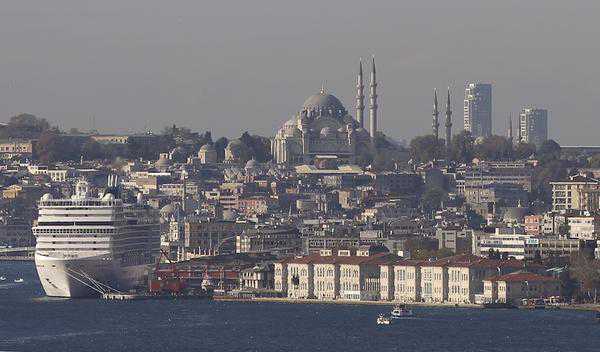
    Paris, France – The Africa Institute of the Turkish Asian Centre for Strategic Studies (TASAM) will organise a forum on Thursday in Istanbul between Turkish and African non governmental organisations (NGOs) to set a joint cooperation platform between the two parties, PANA reported.

    “The proposed Turkey-Africa NGO Forum, aimed at identifying the opportunities that will serve their mutual interests, can contribute to developing a joint clear vision that can be applied in the future,” TASAM Chairman Süleyman Sensoy said.

    Organisers of the forum plan to set up research institutes and centres on Africa in Turkey universities and promote the twin-city projects among African and Turkish cities.

    They also plan to organise “Turkey and Africa weeks”, provide information about Africa to Turkish companies seeking to invest in the continent and “find joint solutions to communication problems”.

    The meeting, taking place 14-16 August on the theme ”Cooperation ad Development”, aims at providing a data base in the areas of economy, development, education, health, communication, environment, culture, tourism, women and children.

    The NGOs will make a joint declaration, to be submitted to the “Turkey-Africa cooperation summit” that will bring together senior African leaders 18-21 August, under the aegis of the Turkish Foreign Affairs ministry.

  • Surreal scenes: Stranded in istanbul

    Surreal scenes: Stranded in istanbul

    By Tom Clifford, Deputy Managing Editor

    Istanbul: It was a surreal moment. At Istanbul’s modern international airport passengers due to board Turkish Airways flight 1382 to Tbilisi were watching their homes burn on TV news.

    Three families from Georgia had been holidaying in Turkey when Gori was attacked and were desperately trying to get back into Georgia even though they knew that returning to Gori was out of the question. Other families had given up trying to get back and decided to extend their stay in Turkey for as long as their money could last.

    “What choice do we have? We want to get back to Georgia but on Saturday we saw the place where we live had been attacked by Russian jets. We want to get to Tbilisi at least but it doesn’t look good,” they told Gulf News.

  • Iraq Demands “Clear Timeline” for US Withdrawal

    Iraq Demands “Clear Timeline” for US Withdrawal

    by: Robert H. Reid, The Associated Press

        Iraq’s foreign minister insisted Sunday that any security deal with the United States must contain a “very clear timeline” for the departure of U.S. troops. A suicide bomber struck north of Baghdad, killing at least five people including an American soldier.

        Foreign Minister Hoshyar Zebari told reporters that American and Iraqi negotiators were “very close” to reaching a long-term security agreement that will set the rules for U.S. troops in Iraq after the U.N. mandate expires at the end of the year.

        Zebari said the Iraqis were insisting that the agreement include a “very clear timeline” for the withdrawal of U.S.-led forces, but he refused to talk about specific dates.

        “We have said that this is a condition-driven process,” he added, suggesting that the departure schedule could be modified if the security situation changed.

        But Zebari made clear that the Iraqis would not accept a deal that lacks a timeline for the end of the U.S. military presence.

        “No, no definitely there has to be a very clear timeline,” Zebari replied when asked if the Iraqis would accept an agreement that did not mention dates.

        Differences over a withdrawal timetable have become one of the most contentious issues remaining in the talks, which began early this year. U.S. and Iraqi negotiators missed a July 31 target date for completing the deal, which must be approved by Iraq’s parliament.

        President Bush has steadfastly refused to accept any timetable for bringing U.S. troops home. Last month, however, Bush and Prime Minister Nouri al-Maliki agreed to set a “general time horizon” for a U.S. departure.

        Last week, two senior Iraqi officials told The Associated Press that American negotiators had agreement to a formula which would remove U.S. forces from Iraqi cities by June 30, 2009, with all combat troops out of the country by October 2010.

        The last American support troops would leave about three years later, the Iraqis said.

        But U.S. officials insist there is no agreement on specific dates. Both the American and Iraqi officials spoke on condition of anonymity because the talks are ongoing. Iraq’s Shiite-led government believes a withdrawal schedule is essential to win parliamentary approval.

        American officials have been less optimistic because of major differences on key issues including who can authorize U.S. military operations and immunity for U.S. troops from prosecution under Iraqi law.

        The White House said discussions continued on a bilateral agreement and said any timeframe discussed was due to major improvements in security over the past year.

        “We are only now able to discuss conditions-based time horizons because security has improved so much. This would not have been possible 18 months ago,” White House spokesman Gordon Johndroe said Sunday. “We all look forward to the day when Iraqi security forces take the lead on more combat missions, allowing U.S. troops to serve in an overwatch role, and more importantly return home.”

        Iraq’s position in the U.S. talks hardened after a series of Iraqi military successes against Shiite and Sunni extremists in Basra, Baghdad, Mosul and other major cities.

        Violence in Iraq has declined sharply over the past year following a U.S. troop buildup, a Sunni revolt against al-Qaida in Iraq and a Shiite militia cease-fire.

        But attacks continue, raising concern that the militants are trying to regroup.

        The suicide bomber struck Sunday afternoon as U.S. and Iraqi troops were responding to a roadside bombing that wounded an Iraqi in Tarmiyah, 30 miles (50 kilometers) north of Baghdad, the U.S. military said.

        Four Iraqi civilians were killed along with the American soldier, military spokesman Lt. Col. Steve Stover said. Two American soldiers and an Iraqi interpreter were among 24 people wounded.

        No group claimed responsibility for the blast but suicide bombings are the signature attack of al-Qaida in Iraq.

        “This was a heinous attack by al-Qaida in Iraq against an Iraqi family, followed by a cowardly attack against innocent civilians, their security forces and U.S. soldiers,” Stover said.

        Elsewhere, a car bomb exploded outside the Kurdish security department in Khanaqin, 90 miles northeast of Baghdad. At least two people were killed and 25 wounded, including the commander of local Kurdish forces, Lt. Col. Majid Ahmed, police said.

        First reports indicated it was a suicide attack. But the U.S. military later said the bomb was in a white truck filled with watermelons and that witnesses saw the occupants leave the vehicle just before the blast.

        Ethnic tensions have been rising in northern Iraq amid disputes between Kurds, Turkomen and mostly Sunni Arabs over Kurdish demands to annex the oil-rich city of Kirkuk into their self-ruled region.

        Sawarah Ghalib, 25, who was wounded in the blast, said he believed military operations under way south of the city in Diyala province had pushed insurgents into the Khanaqin area.

        “I did not expect that a terrorist attack to take place in our secure town,” Ghalib said from his bed in the Khanaqin hospital. “Al-Qaida is to blame for this attack. Operations in Diyala have pushed them here.”

        In Baghdad, six people were killed in a series of bombings on the first day of the Iraqi work week.

        The deadliest blast occurred about 8:15 a.m. in a crowded area where people wait for buses in the capital’s mainly Shiite southeastern district of Kamaliya. Four people were killed, including a woman and her brother, and 11 others wounded, according to police.

        A car bomb later exploded as an Iraqi army patrol transporting money to a state-run bank passed by in Baghdad’s central Khillani square, killing two people including an Iraqi soldier and wounding nine other people, a police officer said.

        Another Iraqi soldier was killed and five were wounded by a car bomb in Salman Pak, about 15 miles south of Baghdad, police said.

        ——–

        Associated Press writers Hamza Hendawi, Kim Gamel and Sameer N. Yacoub in Baghdad and Yahya Barzanji in Sulaimaniyah contributed to this report.

  • Turkey walks tightrope over Iran ties

    Turkey walks tightrope over Iran ties


    By Paul de Bendern
    Reuters
    Tuesday, August 12, 2008; 9:13 AM


    ISTANBUL (Reuters) – A visit by Iranian President Mahmoud Ahmadinejad to Turkey on Thursday reflects a desire by the NATO member to remain on good terms with an unpredictable neighbor and secure future energy needs.

    President Abdullah Gul and Prime Minister Tayyip Erdogan have come under criticism at home and abroad for inviting Ahmadinejad, a visit that marks a diplomatic coup for the firebrand leader who has been shunned by European countries.

    Ankara has said his visit was necessary given the standoff between Iran and the West over Tehran’s disputed nuclear enrichment program, and offered to help resolve the dispute.

    But analysts said the trip was more about ensuring centuries-old ties during a period of global tensions.

    “Although Turkey doesn’t like the present regime it has always tried to keep Iranians both at bay and collaborate with them. It is an extremely delicate balancing act and it will continue to be so,” said Cengiz Aktar, a political scientist at Istanbul’s Bahcesehir University.

    “The visit is all about controlled risks and the most important aspect is a gas deal with Iran, not the nuclear program because Turkey has little influence on that,” he said.

    Turkey and Iran share a border dating to a 1639 peace treaty.

    Ahmadinejad has been courting Turkey in the past few years as the United States has stepped up efforts to isolate Iran for failing to halt its disputed nuclear enrichment program. Washington sees the president’s visit as undermining such moves. Israel, another ally of Turkey, has also criticized the visit.

    Gul and Erdogan — both founders of the Islamist-rooted ruling AK Party — have pushed to boost Turkey’s position in the Middle East region, building greater ties with neighboring countries than previous governments.

    TRADE TIES

    Though Iran and Turkey are close geographically, historically and culturally, they have remained distant in policy and direction since the Iranian revolution in 1979.

    Turkey, which is seeking European Union membership, is also concerned at the repercussions were the United States or Israel to strike the Islamic Republic.

    “Ankara definitely does not sympathize with the ‘theodemocracy’ (theocracy-partial democracy) of Iran. … But not having a hostile attitude against Iran is important for Turkey’s domestic stability as well as its energy needs,” said Sahin Alpay, a columnist for conservative daily Zaman.

    Turkey is entirely dependent on energy imports to quench its increasing thirst for oil and gas as its industry expands. Iran is currently its second biggest supplier of gas after Russia.

    Bilateral trade reached $5 billion in the first half of 2008 and Turkey has pledged to invest $3.5 billion in Iranian gas production. Ankara and Tehran signed a memorandum of understanding but are yet to sign a comprehensive agreement to invest in Iran’s South Pars gas field project.

    Part of that deal agreement may be signed on Thursday.

    Turkey is also a major transit route for goods between the European Union and Iran.

    Turkey, an officially secular but predominantly Sunni Muslim country, has long been wary over Shi’ite Tehran’s effort to export its style of Islamic Republic, its meddling in the region and its true intentions regarding its nuclear program.

    Iran has on the other hand resented Turkey’s Western orientation and reluctance to back Tehran against U.S. and EU pressure, now in the form of economic sanctions.

    News reports that Ahmadinejad did not wish to visit the tomb of Turkey’s revered founder Mustafa Kemal Ataturk in Ankara have caused a stir. Protocol requires foreign leaders to visit the mausoleum and Turkish media said Gul had subsequently moved the trip to Istanbul to avoid a potential embarrassing moment.

    While tensions have simmered from time to time each country clearly recognizes they have mutual interests.

    Tehran’s help in tackling Kurdish separatists based in northern Iraq has also boosted bilateral ties with Turkey, to the dismay of Washington, which until recently offered little help in moving against Kurdistan Workers Party (PKK) bases.

    “Will the visit really help Turkey? I doubt it. It’s more beneficial for Ahmadinejad. He’ll get another 15 minutes in the spotlight when he unleashes his trademark attacks against Israel and the United States,” said a senior EU diplomat.

    (Editing by Mary Gabriel)

  • Olympics Expose the Total Hypocrisy of U.S. Immigration Laws

    Olympics Expose the Total Hypocrisy of U.S. Immigration Laws

    By Sally Kohn, Movement Vision Lab
    Posted on August 11, 2008, Printed on August 12, 2008

    I have to confess I’ve never really cared about the Olympics. Since I’m not much for sports or raw nationalism, the fusion of the two doesn’t really get me up in the morning. But I will tune in tonight to watch Lopez Lomong — Sudanese “Lost Boy” turned U.S. track star — carry the American flag in the opening ceremonies. I’m sure I’ll have a tear in my eye, but also a twinge in my stomach for the profound irony of the moment. Some might even call it hypocrisy.

    For here we are in the United States, where though the price of gas is skyrocketing, there seems to be endless fuel to feed the fires of anti-immigrant sentiment. But the Olympics are different, I guess. Is it the same with professional sports? Or the governorship of California? We don’t like immigrants in low-wage jobs that none of us citizens want to do, but we don’t mind immigrants in the exceptionally high-paying jobs that American-born citizens can only dream of?

    What’s the point complaining about an undocumented Mexican making $5 an hour in a chicken processing plant, who lost two of his fingers because of unsafe conditions and labor violations? Shouldn’t we be more upset about Yao Ming making $15 million a year, plus endorsements?

    Ah, but in America, we have a long and proud tradition of picking on the little guy. We also have a proud tradition of taking half-hearted moral stands. (Remember the Southern Compromise, anyone? Our continuing tolerance of segregation after abolition? Or the Bush Administration’s rejection of nation-building … ?) Why bother standing up for what’s right when we can just talk about what we know is right but then just keep doing what we’ve always done.

    Of course I don’t want the anti-immigrant hate spewers to wizen up to their inconsistencies and expel the 33 immigrants on the U.S. Olympic team this year, let alone a vast number of our nation’s doctors, nurses, engineers — and one governor. But on the other hand, it would be refreshing if the anti-immigrant fanatics would just level with us — and chant “Run home immigrant” at Lopez Lomong during his 1500 meter dash, as opposed to just chanting at the far less fortunate and far more desperate undocumented migrants who are just trying to get to work to make a day’s pay. After all, factory workers and maids and farmworkers are easy targets. Let’s see the anti-immigrant folks really test their theories and tirades by attacking people Americans really care about.

    Because while Lou Dobbs and others will say it’s just undocumented immigrants they mean to attack, it’s not true. Accusations against undocumented immigrants also stick to legal immigrants and naturalized citizens, especially those from Latin America — because we don’t make much distinction between undocumented Latino immigrants working crappy jobs for crappy wages and permanent resident or naturalized Latino immigrants working crappy jobs for crappy wages. When Pat Buchanan says on Fox News, “You’ve got a wholesale invasion, the greatest invasion in human history, coming across your southern border, changing the composition and character of your country,” he’s not exactly distinguishing, is he?

    And attacks against undocumented immigrants promote attacks against all immigrants. Recall after September 11th how Bush Administration rhetoric against “Muslim terrorists” led to a rise in hate crimes against Muslim and Arab gas station attendants, taxi cab drivers and other law-abiding immigrants and citizens. Lopez Lomong and Yao Ming had better stay alert.

    In our two-tiered America — with a persistent and wide gulf between the rich and the poor, those with power and those who are struggling, those who have every opportunity in life and those who have none — is it any wonder we have a two-tiered take on immigration? In an America where we forgive Lindsay Lohan for repeated cocaine abuse but throw the book at poor African American men for even the most minor offenses, in an America where we give huge tax breaks to Wal-Mart and Exxon but refuse to raise funding for food stamps, is it any wonder we attack low-wage undocumented workers at the bottom of our society while celebrating immigrant athletes at the top?

    You might be thinking, “But Lopez Lomong had a talent. He was a gifted runner and because of that our country rescued him from the violence and poverty of the Sudan.” That’s right. We’re America. We give everyone a chance. Tonight we’ll be celebrating what Lomong made of his opportunity. But let’s not forget all the immigrants that we’re denying an opportunity to.

    Sally Kohn is the director of the Movement Vision Project of the Center for Community Change, which is interviewing hundreds of activists across the country to determine the progressive vision for the future of the United States.

    © 2008 Movement Vision Lab All rights reserved.
    View this story online at: