Month: August 2008

  • Dispatches From the Other Iraq

    Dispatches From the Other Iraq

    By Joshua Partlow,

    a Washington Post foreign correspondent who reported from Iraq from 2006-08
    Tuesday, August 12, 2008; Page C02

    INVISIBLE NATION

    How the Kurds’ Quest for Statehood Is Shaping Iraq and the Middle East

    By Quil Lawrence

    Walker. 366 pp. $25.95

    In journalistic accounts of the Iraq war, the Kurds, if they are mentioned at all, tend to be used as a counterexample. Kurdistan [sic.] is a place of relative calm amid chaotic violence. Its construction boom highlights the economic wasteland elsewhere. Its politicians are stalwart partners of the United States in a country bristling under U.S. occupation. A Kurdish public relations campaign describes the region simply as “the other Iraq.”

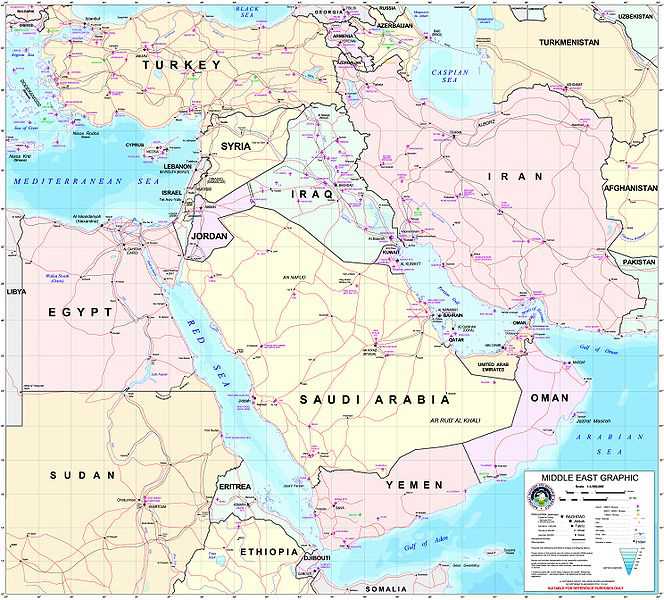
    In “Invisible Nation,” the first thorough, book-length chronicle of the Kurds’ recent history and their role in the war, BBC reporter Quil Lawrence doesn’t deny these differences. But his brisk and engaging narrative makes clear just how tenuous — and anomalous — is this period of relative peace and prosperity for the Kurds of Iraq. They endured a genocidal campaign by Saddam Hussein and have been pushed to the corners of the four nations they primarily inhabit: Iraq, Turkey, Iran and Syria. With a population of about 25 million, Lawrence notes, the Kurds may be the largest ethnic group in the world without an independent homeland.

    “So in a dearth of good news, why isn’t the United States crowing about this one great achievement in Iraq?” Lawrence writes. “Because Kurdistan’s [sic.] success could be cataclysmic. Like no event since the 1948 creation of Israel, a declared Kurdish state within the borders of Iraq will unite the entire region in opposition, from the Black Sea to the Persian Gulf.”

    Facing such a hostile neighborhood, the Kurds who live in Iraq’s three northern provinces have tried to carve out a niche of near-autonomy just on the safe side of independence. Lawrence, who writes a sympathetic but balanced portrait of the Kurds, describes their leaders’ gradual transition from guerrilla fighters to statesmen, including how they were betrayed by their ostensible allies (such as Henry Kissinger and the shah of Iran, who effectively handed over the Kurds to Hussein in 1975) and how they often squandered their best opportunities. For example, the belated U.S. creation of a no-fly zone over Kurdistan [sic.] after the Gulf War helped protect the Kurds from Hussein — “Washington unwittingly had become the midwife to a de facto Kurdish state,” Lawrence writes — only to have the two leading Kurdish parties slug it out for years in sporadic civil war.

    “Invisible Nation” briefly traces the ancient history of the Kurds but really begins in earnest with their struggle for survival during Hussein’s vicious campaign against them in the late 1980s. The book continues through the 2003 U.S.-led invasion of Iraq and into the time of the subsequent occupation, trailing off in 2006. The now-familiar themes of the Iraq war echo in the Kurds’ story as well. The intelligence, for one thing, rarely panned out.

    Before the invasion, the Bush administration claimed that al-Qaeda-linked Islamist militants were operating in Kurdish territory inside Iraq. But Lawrence shows those claims were riddled with errors and mostly wrong. While the militant group Ansar al-Islam operated in Kurdistan, [sic.] for example, no links to Hussein or al-Qaeda were proved. And the opening airstrike of the war, a failed attempt to kill Hussein in southern Baghdad, was the result of an elaborate but often ineffectual intelligence-gathering operation based in Kurdistan [sic.] and led by CIA informant Sheikh Muhammad Abdul Karim al-Kasnazani, a Kurd and Sufi leader who was paid millions for his followers’ work as spies.

    In Kurdistan, [sic.] as elsewhere in Iraq, faulty U.S. planning had unintended consequences. Sometimes this benefited the Kurds. The Bush administration’s inability to persuade Turkey to allow a ground invasion of Iraq from the north prevented thousands of Turkish troops from accompanying U.S. troops and may have averted guerrilla war between the Turks and Kurds — something that “may go down in history as the luckiest thing that happened to America regarding Iraq,” Lawrence writes.

    The partnership between Americans and Kurds was far from easy, and many Kurdish officials have expressed exasperation over the years. Lawrence recounts how Iraq’s current foreign minister, Hoshyar Zebari, couldn’t even walk through the State Department doors as a Kurdish emissary during the Gulf War. On a visit to Washington in 1991, the best he got was a cup of coffee with junior staffers at a cafe around the corner from the State Department’s C Street headquarters. After the 2003 invasion, Lawrence says, there was considerable Kurdish frustration with Gen. David Petraeus, then a division commander in northern Iraq. Many Kurds were upset because Petraeus was working with their Sunni Arab enemies in Mosul and not giving Kurdish soldiers more control in what they saw as their territory.

    Lawrence, who has reported extensively in Kurdistan [sic.] over the past eight years, dwells less on how the Kurds have governed their territory in the later years of the war. He only alludes to the darker side of Kurdish rule: the seemingly unlimited power of the rival Barzani and Talabani clans over the population, the allegations of corruption among government officials, the mistreatment of Arabs living in Kurdistan. [sic.]

    But he succeeds in drawing lively portraits of the Kurds who have worked against terrible odds for the rights of their people. Their stories remind us how many of Iraq’s top politicians — President Jalal Talabani, Deputy Prime Minister Barham Salih, Foreign Minister Zebari, to name just a few — endured prison torture, assassination attempts and long years of war on behalf of Kurdistan [sic.] and against the country they are now helping to govern. “There are short- and there are long-term deals,” Talabani says at one point in the book. And it is not entirely clear which kind the Kurds have entered into with Iraq.

  • Iraqi-Kurd MP lashes out at ‘Turkish interference’

    Iraqi-Kurd MP lashes out at ‘Turkish interference’

    A petroleum well at an oil refinery near Kirkuk

    SULAIMANIYAH, Iraq (AFP) — An influential Kurdish member of the Iraqi parliament on Saturday accused Turkey of undermining the influence Kurds have gained since the fall of the regime of Saddam Hussein in 2003.

    “Turkey has manoeuvred to create an anti-Kurdish (Iraqi) parliament,” Mahmoud Othman told a press conference in Sulaimaniyah, one of the main cities of the autonomous Kurdish region in northern Iraq.

    “It is behind the adoption of article 24 of the electoral law as it is trying by all means to reduce the gains made by the Kurds after the fall of Saddam Hussein,” he said.

    Iraq’s parliament proposed under article 24 of the election bill a deal that will share power equally between Arabs, Kurds and Turkmen in the oil-rich Kirkuk region, a move bitterly opposed by the Kurds, given their numerical superiority.

    Othman did not elaborate on how he thought Ankara had managed to influence Iraqi MPs to write a clause in the electoral bill, though Kurds have long complained of Turkish efforts to undermine them through alliance with ethnic Turkmen and Sunni Arabs.

    Saddam placed Kirkuk outside the Kurdish region, which has behaved essentially as an independent entity since 1991.

    But Iraqi Kurds, many of whom see Kirkuk’s oil wealth as vital to the future viability of their region, have called for the city to be placed within the autonomous region.

    Kirkuk has a large population of Sunni and Shiite Arabs, as well as Turkmen, making for a fragile ethnic mix.

    The failure to find a solution to Kirkuk has forced the postponement of local elections in Iraq initially scheduled for October 1.

    Othman also singled out the United States and Britain, claiming they had played negative roles.

    He said the US had “not reacted” to Turkish attempts to push the bill through parliament while Britain had pressured the Kurds to accept the demands of the Arabs and Turkmen.

    Turkey, which once ruled Iraq for 400 years, sees itself as the traditional protector of the Turkmen community who, together with the Arabs, complain of being bullied by the Kurds.

    With its own large Kurdish minority in the south, Turkey has viewed the increasing independence of the Iraqi Kurdish autonomous region with deep misgivings.

    Source: AFP, 10.08.2008

  • Iraq’s Constitution, Kirkuk and the Disputed Territories

    Iraq’s Constitution, Kirkuk and the Disputed Territories

    Iraq’s Constitution, Kirkuk and the Disputed Territories
    Brendan O’Leary and David Bateman, UPenn
    . org/docs/ pdf_files/ OLeary_Paper. pdf

    POWER POINT PRESENTATION (PAY ATTENTION TO MAPS)
    . org/docs/ pdf_files/ OLeary_SLIDES. pdf


    __._,_.___

  • The Dream of a New Turkey

    The Dream of a New Turkey

    The court action has gifted the Islamist parties with the popular underdog brand.

    Since arriving in Ankara earlier this summer I have been having a cool Turkish dream. No, it does not take place on a yacht sailing through turquoise waters off the Turkish Riviera. Rather, my dream is a political one, involving Turkey’s ruling Justice and Development Party (AKP), in the wake of the Constitutional Court’s recent decision to fine it for violating the secular Constitution rather than shut it down. In my dream, the Islamist-rooted AKP embraces full-scale liberalism and finds a lasting balance between secularism and democracy for Turkey. My dream is not such a utopian one. Each time the Turkish court sanctions an Islamist party, that party reinvents itself as a more moderate political movement. In return, the court’s reaction to each reincarnated Islamist party has become less harsh. The court shut down the AKP’s hard-core Islamist predecessors, the Welfare and Virtue parties. But now it has come down with a lesser verdict against the more moderate AKP, hoping that the party will moderate further.

    The AKP’s record gives me much hope it will do so. When the court shut down the Virtue Party in 2001 for its antisecular activities, the AKP emerged as a breath of fresh air. It publicly eschewed Islamism and pronounced respect for secular democracy, as well as the West and its liberal values. Then things got even better. After coming to power in 2002, the AKP promoted European Union (EU) accession for Turkey, driving a liberal reform agenda and following pro-business policies. The party reached out to different constituencies, suggesting a pluralist understanding of democracy and alleviating concerns about its Islamist pedigree. For a while, it looked as if the AKP had found a liberal balance between Islam and democracy and that it was moving Turkey west.

    Alas, it was a mirage on three fronts. First, after Turkey started accession talks with the EU in 2005, the AKP’s appetite for the EU faded. It realized that accession talks meant costly reforms, and shied away from pursuing Turkey’s EU dream. What’s more, a November 2005 decision by the European Court of Human Rights to uphold Turkey’s ban on a specific Islamic-style headscarf (turban) on college campuses disappointed the AKP, which had come to believe it could rely on Europe to redefine Turkish secularism. Second, the AKP started to treat liberal, egalitarian democracy as an à la carte menu, choosing some liberties while ignoring others. For example, while the party pushed to lift Turkey’s turban ban on college campuses for female students, it implemented religion-infused policies that led to a decrease in women’s employment. The erosion of Western values under the AKP resurrected fears about the party’s Islamist pedigree, and Turkey was split down the middle between its supporters and opponents. Third, the AKP moved from a pluralist to a majoritarian understanding of democracy. After winning 47 percent of the vote in the July 2007 elections, the party started to interpret its popular mandate as a blank check to ignore democratic checks and balances, and harass dissenters in the media, NGOs, the courts and business groups. Within this background, the country’s secular chief prosecutor opened a court case against the party, asking the Constitutional Court to sanction the AKP for violating Turkey’s Constitution. Tension rose; some alarmist pundits even suggested that Turkey was moving into the abyss of democratic collapse through a “judicial coup.”

    But such pundits have been proved wrong. The Turkish court’s August decision to put the AKP on probation demonstrated that democracy in Turkey is alive and kicking—and this is where my dream comes in. With the court’s decision, the karmic wheel of religion-based parties has made a full circle toward democracy in Turkey, leaving the AKP with a stark choice. The party can continue to spin the karmic wheel by adopting a sincerely pro-EU political platform and pushing for economic and social reforms in Turkey. It can also pursue full-menu liberalism with respect to Western values including pluralist democracy, secular politics and the right to dissent. And it can advocate true gender-equality policies. That would be my dream come true—a liberal, secular and democratic Turkey for all.

    Or, the AKP might challenge the court and continue to bolster its later majoritarian tendencies. If court action against Islamist parties has moderated such parties, it has also made them more popular, pulling them to the political center, as well as gifting them with the popular underdog brand. Recep Tayyip Erdogan has already issued a rebuke to the court’s decision, and the AKP might go after a narrowly defined understanding of democracy, dismissing checks and balances and ignoring the real work of EU accession. In this mind-set, the AKP would further its vision of a religion-based society with the party’s distaste for women’s employment, alcohol consumption and secular education dividing Turkey in the middle. Such a development would inevitably bring harsh court action against the AKP, maybe even a ban. The karmic wheel of Turkey’s religion-based parties would stop spinning toward democracy, and that would be my nightmare.

    Cagaptay is a senior fellow at the Washington Institute for Near East Policy and a visiting professor at Bahcesehir University in Istanbul.

    © 2008

    Source: Newsweek

  • Turkey’s music-loving military chief favours harmony

    Turkey’s music-loving military chief favours harmony

    By Alex Barker in Ankara

    The often tense relationship between Turkey’s politicians and its generals might have entered a more cordial era with the appointment of a military commander with an ear for Beethoven and a pragmatic political streak.

    General Ilker Basbug will head Turkey’s armed forces for two years, putting his mark on a powerful political institution that jealously guards the secular republic’s founding principles, intervening four times in 50 years to oust elected leaders.

    His approach to the Justice and Development Party (AKP), the Islamist-rooted government, and the forces of change sweeping the country and military will be critical to shaping Turkey’s future.

    Gen Basbug’s outlook is hardline and typical of a Turkish general. But his first gesture as commander was a surprise. By forgoing the annual purge of officers accused of indiscipline or Islamic practice, he assuaged the AKP.

    One opposition politician, a traditional ally of the -military, was upset enough to chide the “warm” relations and speculate about underhand deals (which were angrily denied).

    The incident highlighted a more fundamental change. For some months, the generals and the government have had a tacit agreement.

    Strains remain, particularly over the place of Islam in public life. But on other military priorities – fighting Kurdish separatists, Cyprus, and the effective immunity for generals from oversight – there are signs of accord.

    The generals, in turn, were conspicuously silent over the divisive legal bid to shut down the ruling AKP, which it narrowly survived last week. Cengiz Aktar, an academic and commentator, sums it up as “concessions for co-existence”.

    Observers in Ankara consider Gen Basbug’s temperament to be well suited to both sustaining this working relationship and sternly policing its conditions.

    The general fits the Turkish military mould. He reveres Mustafa Kemal Ata– t-ürk, the military founder of modern Turkey. His outlook is assertive, dogmatic and deeply suspicious of change. He is steeped in the westernised culture of the Turkish officer corps, with stints at Nato and Sandhurst. He listens to classical music, watches US movies and has no time for religion.

    Yet his style is expected to be different. Ümit Cizre, a professor and army observer, calls him “a hardliner with a difference”, a well-read and more cerebral commander. Gen Basbug has given, for instance, unusually reflective speeches on terrorism.

    His low-key approach contrasts with Yasar Buyukanit, his predecessor, who struggled to resist impromptu pronouncements on anything from headscarves to football. Gen Buyukanit frequently clashed with the AKP, but mostly lost.

    Gen Basbug is expected to be shrewder and politically more effective.

    His rise to the top carefully navigated the military’s more reform-minded and hawkish camps without fully committing to either, highlighting his pragmatic streak. “He is regarded in the military as a safe pair of hands,” said Gareth Jenkins, a security analyst based in Istanbul. “He has earned a reputation for being very calm and giving measured, well thought out responses.”

    His relations with Recep Tayyip Erdogan, Turkey’s prime minister, face three main tests. First Cyprus, where peace talks could explore terms that breach the general’s red lines, and second, an investigation into a ultra-nationalist “plot” to oust the government. The third, and potentially most sensitive, is constitutional reform.

    Copyright The Financial Times Limited 2008

  • EU diplomats fly out to stop Georgia-Russia war

    EU diplomats fly out to stop Georgia-Russia war

    PHILIPPA RUNNER

    Today @ 11:01 CET

    EU and US diplomats are arriving in Georgia on Saturday (9 August) to try to broker a ceasefire in a fast-escalating conflict between Georgia and Russia, after fighting intensified and spread overnight, with casualties mounting despite international appeals.

    Russian jets have bombed the town of Gori near Tbilisi and oil installations in the southern Georgian port of Poti. Georgia has evacuated government buildings in the capital and president Mikhail Saakashvili has moved to a “safe location,” where he formally asked parliament to impose martial law.

    Meanwhile, Russian tanks and Georgian armour continued to pound each other inside the breakaway Georgian republic of South Ossetia, with both sides making wildly different claims over who controls the South Ossetian capital, Tskhinvali.

    Georgia says 30 of its men have been killed, while Russia says 15 of its soldiers are dead. Russian foreign minister Sergei Lavrov estimated that over 1,500 people, mostly civilians, have been killed, with Tskhinvali in ruins and refugees streaming north across the Russian border.

    The EU delegation is being led by South Caucasus envoy Peter Semneby, with the US sending its top South Caucasus diplomat, Matthew Bryza. Lithuanian foreign minister Petras Vaitiekunas is also going on a separate, fact-finding mission for the EU.

    The French EU presidency says it has had “multiple contacts” and is “in liaison with all the protagonists” to try and stop the fighting, while EU top diplomat Javier Solana has spoken by phone with the Georgian and Russian foreign ministers.

    Diplomatic solution difficult

    Prospects for a diplomatic solution remain uncertain, however, after a second meeting of the UN security council on Friday failed to agree on a ceasefire resolution, with the US and the UK at odds with Russia on the wording of the text.

    France, Germany, the UK and NATO have all urged an immediate end to hostilities, but steered clear of apportioning blame. The US statement was the most hawkish, “deploring” Russia’s use of bombers and missiles as a “dangerous and disproportionate escalation” and calling for the withdrawal of Russian troops.

    The shooting began on 4 August between Georgia and South Ossetian separatists, in what at first looked like just another skirmish in a so-called “frozen conflict” that dates back to 1991, when South Ossetia began a war of independence during the break-up of the Soviet Union.

    But the rebels kept firing on ethnic Georgian villages in South Ossetia all week. On Friday morning, Georgia launched an offensive to “restore constitutional order” and capture the separatist capital. Hours later, Russia reacted by sending tanks across the Georgian border and ordering air strikes against its small neighbour.

    In the broader context, Russia has long-supported the South Ossetian separatists by smuggling arms, handing out Russian passports and stationing 2,500 Russian “peacekeepers” in South Ossetia, in what Georgia sees as a Russian effort to stop it from joining NATO and to unseat its pro-western government.

    Who is to blame?

    Some analysts are blaming Georgia for the current crisis, saying its attempt to retake Tskhinvali has misjudged the international mood and has destroyed its chances of joining the North Atlantic military alliance.

    “He [president Saakashvili] is in big danger of losing the cachet he built up for himself in being pro-western and the restraint he has often shown in the face of provocation by Russia,” London’s Royal Institute of International Affairs expert, James Nixey, told Reuters.

    “I don’t think he can count on the [US] cavalry riding in,” Brussels’ EU-Russia Centre analyst James Cameron said. “You don’t bring in [to NATO] a country that has this sort of trouble,” RAND Corporation expert and former US ambassador to NATO, Robert Hunter, told Bloomberg.

    European Council on Foreign Relations analyst, Nicu Popescu, said the timing of Georgia’s assault on Tskhinvali – the same day as the opening of the Beijing Olympics – may be significant. “It might be a signal to the Russians saying that the [2014] Sochi Olympics will not go the way Russia wants if there is no progress on the settlement.”

    Geopolitics in play

    Others say the surprise summer war was engineered in Moscow.

    “The goals behind Moscow’s operation are threefold,” Jamestown.org analyst Vladimir Socor explained. “To re-establish the authority of Russian-controlled negotiating and ‘peacekeeping’ formats…to capture Georgian-controlled villages in South Ossetia [and] to dissuade NATO from approving a membership action plan for Georgia.”

    “The Russians want a more direct confrontation with the west and I hope the Bush administration has the wisdom not to give them that satisfaction,” Globalsecurity.org analyst John Pike told newswires.

    “What is being decided here is whether bordering Russia and simultaneously being a US ally is a suicidal combination. Whichever way this works out, the dynamics of the entire region are about to be turned on their head,” Strategic Forecasting Inc said in a flash report.