Month: August 2008

  • Robert Fisk’s World: A voice recovered from Armenia’s bitter past

    Robert Fisk’s World: A voice recovered from Armenia’s bitter past

    Robert Fisk

    Saturday, 23 August 2008

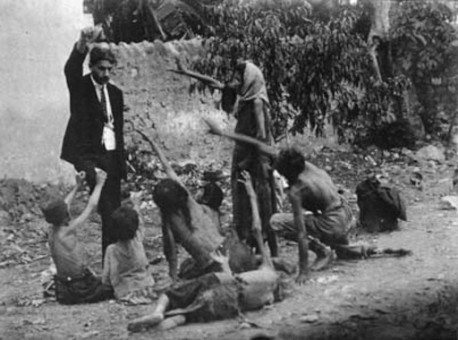
    It’s a tiny book, only 116 pages long, but it contains a monumental truth, another sign that one and a half million dead Armenians will not go away. It’s called My Grandmother: a Memoir and it’s written by Fethiye Cetin and it opens up graves. For when she was growing up in the Turkish town of Marden, Fethiye’s grandmother Seher was known as a respected Muslim housewife. It wasn’t true. She was a Christian Armenian and her real name was Heranus. We all know that the modern Turkish state will not acknowledge the 1915 Armenian Holocaust, but this humble book may help to change that. Because an estimated two million Turks – alive in Turkey today – had an Armenian grandparent.

    As children they were put on the death marches south to the Syrian desert but – kidnapped by brigands, sheltered by brave Muslim villagers (whose own courage also, of course, cannot be acknowledged by Turkey) or simply torn from their dying mothers – later became citizens of the modern Turkey which Mustafa Kemal Ataturk was to set up. Yet as Maureen Freely states in her excellent preface, four generations of Turkish schoolchildren simply do not know Ottoman Anatolia was between a quarter and a half Christian.

    Heranus – whose face stares out at the reader from beneath her Muslim headscarf – was seized by a Turkish gendarme, who sped off on horseback after lashing her mother with a whip. Even when she died of old age, Fethiye tried to record the names of Heranus’s Armenian parents – Isguhi and Hovannes – but was ignored by the mosque authorities. It was Heranus, with her razor-sharp memory, who taught Fethiye of her family’s fate and this book does record in terrible detail the now familiar saga of mass cruelty, of rape and butchery.

    In one town, the Turkish police separated husbands, sons and old men from their families and locked the women and children into a courtyard with high walls. From outside came blood-curdling shrieks. As Fethiye records, “Heranus and her brothers clung to their mother’s skirts, but though she was terrified, she was desperate to know what was going on. Seeing that another girl had climbed on to someone’s shoulders to see over the wall, she went to her side. The girl was still looking over the wall; when, after a very long while, she came down again, she said what she had seen. All her life, Heranus would never forget what came from this girl’s lip: ‘They’re cutting the men’s throats, and throwing them into the river.’”

    Fethiye says she wrote her grandmother’s story to “reconcile us with our history; but also to reconcile us with ourselves” which, as Freely writes, cuts right through the bitter politics of genocide recognition and denial. Of course, Ataturk’s decision to move from Arabic to Latin script also means that vital Ottoman documents recalling the genocide cannot be consulted by most modern-day Turks. At about the same time, it’s interesting to note, Stalin was performing a similarly cultural murder in Tajikistan where he moved the largely Persian language from Arabic to Cyrillic.

    And so history faded away. And I am indebted to Cosette Avakian, who sent me Fethiye’s book and who is herself the granddaughter of Armenian survivors and who brings me news of another memorial of Armenians, this time in Wales. Wales, you may ask? And when I add that this particular memorial – a handsome Armenian cross embedded in stone – was vandalised on Holocaust Memorial Day last January, you may also be amazed. And I’m not surprised because not a single national paper reported this outrage. Had it been a Jewish Holocaust memorial stone that was desecrated, it would – quite rightly – have been recorded in our national newspapers. But Armenians don’t count.

    As a Welsh Armenian said on the day, “This is our holiest shrine. Our grandparents who perished in the genocide do not have marked graves. This is where we remember them.” No one knows who destroyed the stone: a request for condemnation by the Turkish embassy in London went, of course, unheeded, while in Liverpool on Holocaust Day, the Armenians were not even mentioned in the service.

    Can this never end? Fethiye’s wonderful book may reopen the past, but it is a bleak moment to record that when the Turkish-Armenian journalist Hrant Dink was prosecuted for insulting “Turkishness”, Fethiye defended him in court. Little good it did Dink. He was murdered in January last year, his alleged killer later posing arrogantly for a picture next to the two policemen who were supposed to be holding him prisoner. It was in Dink’s newspaper Agos that Fethiye was to publish her grandmother’s death notice. This was how Heranus’s Armenian sister in America came to read of her death. For Heranus’s mother survived the death marches to remarry and live in New York.

    Wales, the United States, even Ethiopia, where Cosette Avakian’s family eventually settled, it seems that every nation in the world is home to the Armenians. But can Turkey ever be reconciled with its own Armenian community, which was Hrant Dink’s aim? When Fethiye found her Aunt Marge in the US – this was Heranus’ sister, of course, by her mother’s second marriage – she tried to remember a song that Heranus sang as a child. It began with the words “A sad shepherd on the mountain/Played a song of love…” and Marge eventually found two Armenian church choir members who could put the words together.

    “My mother never missed the village dances,” Marge remembered. “She loved to dance. But after her ordeal, she never danced again.” And now even when the Welsh memorial stone that stands for her pain and sorrow was smashed, the British Government could not bring itself to comment. As a member of the Welsh Armenian community said at the time, “We shall repair the cross again and again, no matter how often it is desecrated.” And who, I wonder, will be wielding the hammer to smash it next time?
  • RESPONDING TO GEORGIA CRISIS, TURKEY SEEKS NEW CAUCASUS SECURITY INITIATIVE

    RESPONDING TO GEORGIA CRISIS, TURKEY SEEKS NEW CAUCASUS SECURITY INITIATIVE

    By Alman Mir – Ismail

    Friday, August 22, 2008


    The Georgian-Russian military conflict has created new security dilemmas in the South Caucasus. Not only has the fragile stability established since the chaos of 1990s been ruined, but the East-West energy and transportation corridor has also been made vulnerable. Turkey, as one of the largest donors of the South Caucasus region and an active player in regional politics, surprisingly stayed out of the conflict, neither defending its regional ally Georgia nor making official statements at the governmental level. For many in the region, this was perceived as a sign of Turkish weakness, lack of interest in the South Caucasus region from the ruling AKP party, and growing dependence on Russia in terms of trade and regional alliance. Others simply called it a “sell-out of Caucasus.” Indeed, Turkey benefits from the regional energy pipelines and such a reaction can only raise surprise among regional countries.

    Partly because of the desire to refute these rumors and partly to achieve Turkey’s long-awaited goals in the Caucasus, Turkish Prime Minister Recep Tayyib Erdogan came up with the “Platform for security and cooperation in the South Caucasus” initiative. The initiative, which Erdogan plans to discuss with Russian Foreign Minister Sergey Lavrov, is intended to create a regional security framework. It intends to accomplish this by encouraging greater integration between Azerbaijan, Georgia, and Armenia and empowering Russia and Turkey to play the leads roles of regional security guarantors. Erdogan’s vision is to solve the frozen conflicts in the region on a sustainable and long-lasting basis and to satisfy the national interests of Russia, which regards the West’s influence in the region as a “zero-sum game.” Under this initiative, NATO would be limited to an outside role in providing security for the region — a clear effort to minimize Russian distrust and anger.

    With this idea, Erdogan visited Baku on August 21 to talk with President of Azerbaijan Ilham Aliyev and unveil this plan. Azerbaijani public and politicians generally have greeted this proposal with a great degree of skepticism. Political analyst Rasim Musabeyov was quoted by ANS TV on August 21 saying, “Turkey wants to push Azerbaijan towards compromise and also make sure Armenia plays more pragmatic role. This is the vision behind the Caucasus Platform idea of Erdogan.”

    Opposition newspaper Yeni Musavat believes that under the pretext of the Common Caucasus Platform, Erdogan wants to open borders with Armenia. Indeed, since its arrival in power in 2002, the AKP party has been favoring the idea of restoring economic and trade ties with Yerevan in order to improve the economic situation in Turkey’s Eastern regions, such as Kars and Erzurum, which suffer greatly from the closed borders with Armenia. Azerbaijani officials have protested against these ideas, saying that opening borders prior to Armenia’s liberation of the occupied Azerbaijani territories would not only damage Turkish-Azerbaijani solidarity and alliance in the region, but also symbolically forgive the ethnic cleansing by Armenia. Previous Turkish governments have preconditioned the opening of the borders with Armenia to the end of the Karabakh conflict. For Azerbaijan, closed borders between Turkey and Armenia are another tool of pressure on the officials in Yerevan.

    Nevertheless, after the presidential elections in Armenia in early 2008, Turkish-Armenian relations seem to be entering a new stage. Newly elected President of Armenia Serj Sarkisian has invited his Turkish counterpart Abdulla Gul to Yerevan to watch a soccer game between the two countries. This sport event began a series of diplomatic events, culminating with the revelation by senior Turkish officials that high ranking diplomats of the two nations are engaged in negotiations in Geneva. And on August 22, Yeni Musavat even reported that Turkey opened flights into Armenia.

    Officials in Baku seem less nervous this time about the possibility of the normalization of Turkish-Armenian relations than back in 2003-2004. It appears that even in the circles of the Azerbaijani political leadership, there is an understanding that the economic pressures on Armenia do not work and simply reinforce Armenian dependence on Russia. Perhaps the normalization of Turkish-Armenian relations will entice a breakthrough on the negotiation process in Nagorno-Karabakh conflict. More trust between these two nations might prompt Armenia to extend certain concessions, should Yerevan feel itself more secure.

    However, some analysts believe that this Erdogan’s initiative is doomed to failure. Nationalism, realpolitik, and irrational behavior still dominate politics in the Caucasus, and it would be unrealistic to expect Armenia to be less nationalistic or Russia to behave more pragmatically. “If the West manages to push Russia out of Caucasus, then the idea of the common Caucasus home might be possible. If Russia stays in the region, then not,” says Ilgar Mammadov, political scientist (ANS TV, August 21). His colleague Zardusht Alizadeh echoes pessimism: “The initiative of Erdigan will be unsuccessful” (Day.az, August 20).

    Similar proposals for the common Caucasus House, like the common EU, were made in the early 1990s but eventually failed due to a lack of desire from the competing powers both inside and outside of the region.

  • Post-Soviet security bloc ends joint drills in Armenia

    Post-Soviet security bloc ends joint drills in Armenia

     
    16:31 | 22/ 08/ 2008
     

    YEREVAN, July 22 (RIA Novosti) – The joint Rubezh-2008 command-and-staff exercises of the Collective Security Treaty Organization finished Friday in Armenia.

    About 4,000 troops from Armenia, Russia and Tajikistan took part in the four-stage military exercise, which started July 22, on the territory of Armenia and Russia.

    Other CSTO members were represented by military staff from their defense ministries.

    The Collective Security Treaty Organization is a security grouping comprising Armenia, Belarus, Kazakhstan, Kyrgyzstan, Russia, Uzbekistan, and Tajikistan.

  • Karabakh War ‘Less Likely After Georgia Debacle’

    Karabakh War ‘Less Likely After Georgia Debacle’


    By Emil Danielyan

    Georgia’s ill-fated bid to win back South Ossetia will discourage Azerbaijani from attempting to resolve the Nagorno-Karabakh conflict by force, President Serzh Sarkisian said on Thursday.

    In a clear reference to Azerbaijan, Sarkisian pointed out that Armenia has repeatedly raised the alarm over “some regional countries” embarking on an “unprecedented” military build-up to prevail in territorial disputes with their neighbors.

    “We believe that the military way of resolving conflicts is futile and that the events in South Ossetia will have a sobering impact on those who still have illusions about forcible solutions,” he told visiting senior defense officials from former Soviet republics making up the Russian-led Collective Security Treaty Organization (CSTO).

    The officials were in Yerevan for a regular meeting of the governing body of the six-nation defense pact. Armenia assumed the CSTO’s rotating presidency during the meeting.

    Sarkisian for the first time publicly drew parallels between the conflicts in Karabakh and South Ossetia and criticized Georgia for its August 8 military assault on the breakaway territory, which triggered a harsh Russian retaliation. “The tragic events in South Ossetia showed that a military response to self-determination movements in the South Caucasus are fraught with serious military and geopolitical consequences,” he said.

    They also underscored the need to settle regional ethnic conflicts on the basis of the principle of nations’ self-determination, added Sarkisian.

  • Turkish-Iranian energy ties deepen

    Turkish-Iranian energy ties deepen

    By JOHN C.K. DALY, UPI International Correspondent 

    Published: Aug. 21, 2008 at 5:52 PM

    WASHINGTON, Aug. 21 (UPI) — The repercussions of Russia’s reassertion of power within what it deems its “sphere of influence” in “the near abroad” continue to ripple throughout Eastern Europe, the Balkans and the Caucasus. Washington’s increasingly strident rhetoric over the Russian-Georgian conflict over South Ossetia is having repercussions from Prague through Warsaw to Kiev, as governments scramble to assess the fallout from the dispute.

    Edging closer into Washington’s orbit, Poland has agreed to base 10 U.S. anti-ballistic interceptor missiles and the Czech Republic its complementary radar facility by 2011-2013 to complete a system with components already situated in the United States, Greenland and Britain. While the Bush administration avers that the system is designed to intercept rogue missile launches from renegade states such as Iran, the Kremlin fiercely maintains that geography alone plainly shows the system’s anti-Russian intent and that, along with incorporating former Eastern European and former Soviet republics within NATO, it is an American-led attempt to encircle Russia.

    Even more infuriating to Moscow, earlier this week Ukrainian President Viktor Yushchenko, following Russia’s unilateral abrogation earlier this year of a 1992 agreement with Ukraine on the use of Ukraine’s two Soviet-era missile early warning system tracking stations, issued a decree ending Ukrainian participation in the accord and made an offer of the two stations for “active cooperation with European nations.”

    If Eastern Europe has been traumatized by the recent display of Russia’s military might, with Ukraine and Georgia seeing possible NATO membership as the surest guarantor of their security further east, another stalwart NATO member is carefully evaluating Russia’s other rising influence — energy. As Turkey re-evaluates Eurasia’s changing political and economic landscape, Washington in its eagerness to confront Russia may see another of its cherished foreign policy tenets, that of blockading Iran with sanctions, weakened, perhaps fatally.

    Since the 1979 Iranian Revolution overthrew the Shah, it has been a core tenet of U.S. foreign policy to contain the Islamic Republic of Iran, currently enshrined in the 1996 Iran-Libya Sanctions Act. Expanding Washington’s reach, ILSA threatened even non-U.S. countries and companies with possible sanctions if they invested more than $20 million in developing Iran’s energy resources.

    For Turkey, which imports 90 percent of its energy supply, the Washington dictum of “happiness is multiple pipelines” is a stark reality, however much Washington loathes the mullahcracy in Tehran. Turkey does not have the luxury of allowing “pipeline politics” to trump its national energy security policies, as its current choice of major natural gas suppliers is stark — Russia or Iran, while waiting for Azerbaijan to ramp up production. Highlighting the vulnerability of regional pipelines to conflict, the fighting in South Ossetia halted Azeri oil shipments through Georgia.

    Iran, which contains the world’s second-largest gas reserves, currently provides nearly one-third of Turkey ‘s domestic demand, while Russian energy giant Gazprom provides 63.7 percent of Turkey’s imports, primarily via the Black Sea undersea Blue Stream pipeline, with smaller volumes coming from Azerbaijan. Much to Washington’s annoyance, in 1996 Turkey signed a contract with Iran for natural gas deliveries, which began in December 2001 via a pipeline from Tabriz to Ankara. Five years later the South Caucasus pipeline, also known as the Baku-Tbilisi-Erzurum natural gas pipeline, opened; with an annual capacity of 8.8 billion cubic meters, BTE carries Azeri Caspian natural gas to Turkey via Georgia.

    In June Turkey’s Devlet Planlama Teskilati (State Planning Organization) prepared a comprehensive projection for Turkey’s economy covering 2009-2011, which included measures to ensure Turkey’s long-term energy supply security and accorded top priority to decreasing Turkey’s dependency on imported natural gas. In the interim, however, given the vulnerability of Azeri imports because of the unsettled nature of current Georgian-Russian relations and the apparent unpredictability of the Kremlin, Ankara is deepening its ties with Tehran, however much Washington disapproves. On July 29 Iranian Petroleum Minister Gholamhossein Nozari said in Tehran that Turkey and Iran are negotiating over Turkey being a transit corridor for Iranian natural gas exports to Europe and that Iran will provide increased amounts of natural gas to Turkey during the winter.

    Nor is Turkey limiting its interest in Iranian energy purely to transit policies: In July 2007 Ankara signed a deal with Iran to develop three gas projects in its giant South Pars offshore gas field in the Persian Gulf as well as to build two pipelines to transport an estimated 30 billion cubic meters of Iranian and Turkmen gas annually through Turkey for resale to Europe. The 3,745-square-mile Persian Gulf South Pars-North Dome gas condensate field, straddling Iranian and Qatari territorial waters, is the world’s largest gas field, containing an estimated 51 trillion cubic meters of natural gas, 50 billion barrels of condensate and reserves equivalent to 360 billion barrels of oil.

    The next result of such activity has been a rapid increase in bilateral trade; in 2007 bilateral Turkish-Iranian trade exceeded $8 billion, a 19.5-percent increase over 2006.

    In case Washington was inclined to shake its sanctions stick at Ankara in the wake of Iranian President Mahmoud Ahmadinejad’s two-day visit to Turkey last week, Turkish President Abdullah Gul hailed the visit as “fruitful and helpful” and added, “Expansion of relations on a regional level seems quite natural for Turkey, and it is not important what other states think of it; Turkey cares for its own interests. Turkey will establish good ties with its neighbors with an aim of stability and security in the region.” Underlining Turkey’s commitment to improving its energy ties with Iran, Turkish Energy Minister Hilmi Guler will pay a return visit to Iran within the next two weeks.

    Gul tersely summed up Ankara’s concerns in his closing remarks: “We are an independent country. Here we eye our country’s interests. … We have to make investments for the (energy) supply security of Turkey.” In the 21st century, keeping your electorate warm trumps alliance politics every time.

  • Turkey and the Caucasus Waiting and watching

    Turkey and the Caucasus Waiting and watching

    Aug 21st 2008 | ANKARA AND YEREVAN
    From The Economist print edition


    A large NATO country ponders a bigger role in the Caucasus

    AP
    Erdogan plays the Georgian flag

    AT THE Hrazdan stadium in Yerevan, workers are furiously preparing for a special visitor: Turkey’s president, Abdullah Gul. Armenia’s president, Serzh Sarkisian, has invited Mr Gul to a football World Cup qualifier between Turkey and its traditional foe, Armenia, on September 6th.

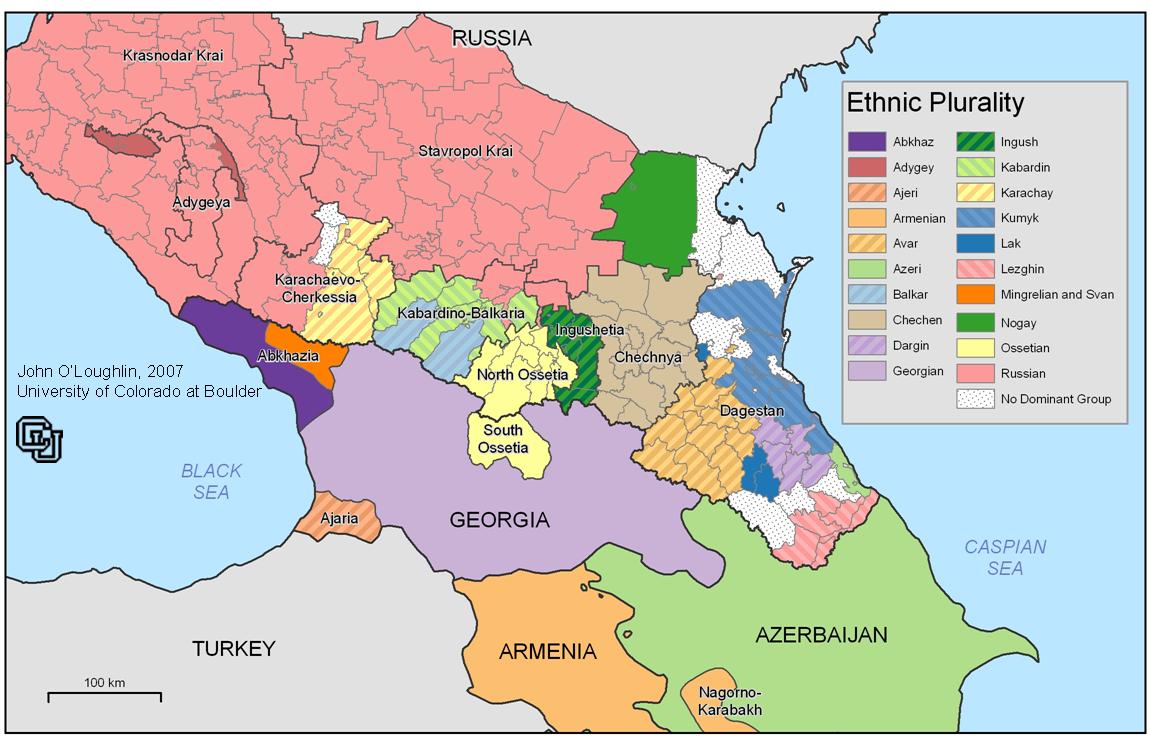
    If he comes, Mr Gul may pave the way for a new era in the Caucasus. Turkey is the only NATO member in the area, and after the war in Georgia it would like a bigger role. It is the main outlet for westbound Azeri oil and gas and it controls the Bosporus and Dardanelles, through which Russia and other Black Sea countries ship most of their trade. And it has vocal if small minorities from all over the region, including Abkhaz and Ossetians.

    Turkey’s prime minister, Recep Tayyip Erdogan, has just been to Moscow and Tbilisi to promote a “Caucasus Stability and Co-operation Platform”, a scheme that calls for new methods of crisis management and conflict resolution. The Russians and Georgians made a show of embracing the idea, as have Armenia and Azerbaijan, but few believe that it will go anywhere. That is chiefly because Turkey does not have formal ties with Armenia. In 1993 Turkey sealed its border (though not its air links) with its tiny neighbour after Armenia occupied a chunk of Azerbaijan in a war over Nagorno-Karabakh. But the war in Georgia raises new questions over the wisdom of maintaining a frozen border.


    Landlocked and poor, Armenia looks highly vulnerable. Most of its fuel and much of its grain comes through Georgia’s Black Sea ports, which have been paralysed by the war. Russia blew up a key rail bridge this week, wrecking Georgia’s main rail network that also runs to Armenia and Azerbaijan. This disrupted Azerbaijan’s oil exports, already hit by an explosion earlier this month in the Turkish part of the pipeline from Baku to Ceyhan, in Turkey.

    “All of this should point in one direction,” says a Western diplomat in Yerevan: “peace between Armenia and Azerbaijan.” Reconciliation with Armenia would give Azerbaijan an alternative export route for its oil and Armenia the promise of a new lifeline via Turkey. Some Armenians gloat that Russia’s invasion of Georgia kyboshes the chances of Azerbaijan ever retaking Nagorno-Karabakh by force, though others say the two cases are quite different. Russia is not contiguous with Nagorno-Karabakh, nor does it have “peacekeepers” or nationals there.

    Even before the Georgian war, Turkey seemed to understand that isolating Armenia is not making it give up the parts of Azerbaijan that it occupies outside Nagorno-Karabakh. But talking to it might. Indeed, that is what Turkish and Armenian diplomats have secretly done for some months, until news of the talks leaked (probably from an angry Azerbaijan).

    Turkey’s ethnic and religious ties with its Azeri cousins have long weighed heavily in its Caucasus policy. But there is a new worry that a resolution calling the mass slaughter of Armenians by the Ottoman Turks in the 1915 genocide may be passed by America’s Congress after this November’s American elections. This would wreck Turkey’s relations with the United States. If Turkey and Armenia could only become friendlier beforehand, the resolution might then be struck down for good.

    In exchange for better relations, Turkey wants Armenia to stop backing a campaign by its diaspora for genocide recognition and allow a commission of historians to establish “the truth”. Mr Sarkisian has hinted that he is open to this idea, triggering howls of treason from the opposition. The biggest obstacle remains Azerbaijan and its allies in the Turkish army. Mr Erdogan was expected to try to square Azerbaijan’s president, Ilham Aliev, in a visit to Baku this week. Should he fail, Mr Gul may not attend the football match—and a chance for reconciliation may be lost.