Month: August 2008

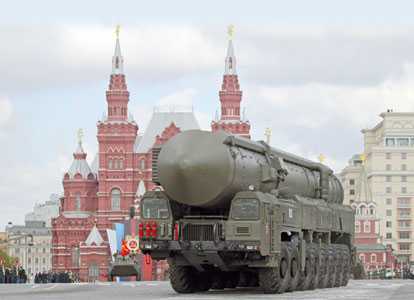
  • Syria: we’ll host Russian missile system

    Syria: we’ll host Russian missile system


    AFP Photo / Vladimir Rodionov


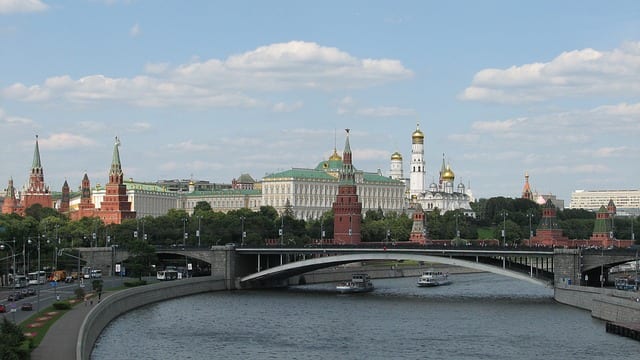
    <I class=annotation>Syria says it’s ready to put a Russian missile system on its soil as a counterweight to U.S. plans to deploy a missile shield in Poland and the Czech Republic. The offer was made during a meeting between Syrian leader Bashar Al-Assad and President Dmitry Medvedev in the Black Sea resort of Sochi. Meanwhile, Moscow is considering a request from Syria for more Russian-made weapons.

    It was the first meeting between the two leaders, and President Al-Assad was keen to show Syria’s support for Russia.

    “We understand what is behind Russia’s position … We believe this is a response to Georgian provocation. We support Moscow in this and are against any attempts to blacken Russia,” Al-Assad said.
     
    Many expected a tit-for-tat response after the U.S. sealed a deal to deploy interceptors in Poland as a part of their missile defence system.

    Ahead of the visit, there were reports that Russia might deploy a missile system in Syria, in particular, the Iskander system. It’s something Syria has been requesting for a long time. After Friday’s meeting, Foreign Minister Sergey Lavrov said that Russia is ready “to consider the offers of the Syrian government in connection to the delivery of new weapons, only for defence purposes”.

    Moscow has temporarily suspended cooperation with NATO. It follows NATO’s criticism of Russia’s actions in South Ossetia and threats to shut down the NATO-Russia Council. Lavrov was clear on Russia’s course: “We are not going to slam the door on NATO. NATO could slam this door, though. Everything depends on NATO’s priorities: if the priorities are absolutely supportive of Saakashvili’s bankrupt regime to the detriment of partnership with Russia, then it is not our fault,” he said.
     
    Meanwhile, the withdrawal of Russian troops from the conflict zone is well under way. There will be at least 500 peacekeepers deployed in the so-called security zone near the border. The rest of the peacekeepers will remain within the de facto borders of South Ossetia. The rest of the troops in the area will return to Russia.

    Russia says it’s fully committed to the six principles of the cease-fire, but, according to Lavrov, some countries are resorting to diplomatic tricks.

    Both South Ossetia and Abkhazia, Georgia’s two separatist regions, have again asked Moscow to recognise their independence.

    Post this story to del.icio.us

  • Eat, play, bond

    Eat, play, bond

    Last question: How would you summarize this vacation, in one word? Megan: “Fun!” Mom: “Perfect.” We had survived each other’s company for two weeks, around-the-clock, something we had never done in her 22 years on earth.Now Megan wants to honeymoon in Santorini and live in Istanbul. Later, in a thank-you e-mail, she wrote: “My friends are surprised we didn’t kill each other, but we actually had so much fun! I’m already planning our next big trip to Africa.”

    Just so long as it doesn’t involve “hostels,” “tents,” and a “minibus.”

    Bella English can be reached at [email protected].

    Read full story

  • Russian Mediterranean Naval Build-Up Challenges NATO Sixth Fleet Domination

    Russian Mediterranean Naval Build-Up Challenges NATO Sixth Fleet Domination

    By 20 August 2008 Moscow is flexing its muscles again in the eastern Mediterranean, and aims to reactivate old cold war naval installations with its ally, Syria. President Bashar Assad, on his way to the Kremlin to finalize what looks to become a high profile deal invited Russia to position surface/surface missiles on his land in response to US deployment of missile interceptors in Poland. The Russians have sent their only aircraft carrier “Admiral Kuznetsov” from its home base in Murmansk, towards the Mediterranean and the Syrian port of Tartus. The mission comes after Syrian President Bashar Assad said he is open to a Russian base in the area.  The Admiral Kuznetsov, part of the Northern Fleet and Russia’s only aircraft carrier, will head a Navy mission to the area. The mission will also include the Black Sea fleet flagship, the missile cruiser Moskva, and several submarines.

    On December 2007 Russia launched their frist north sea flotilla to the Mediterranean, to demonstrate its military strength. It was when Russian President Vladimir Putin alarmed Europe by finally declaring Russia’s official rejection of the Conventional Armed Forces in Europe Treaty (CFE), (the treaty entered into force on July 17, 1992 limiting the number of combat elements that Russia could deploy along its borders with Europe). Immediately following this declaration, Russian Defense Minister Anatoly Serdyukov announced sending a sortie of six Russian warships to the Mediterranean, led by the Admiral Kuznetsov aircraft carrier. Other vessels escorting the carrier as part of the task force are Admiral Levchenko and Admiral Chabanenko anti-submarine ships, and the Sergei Osipov and Nikolai Chiker support ships. The group is expected to be joined by the flagship Moskva a guided missile cruiser and four additional ships as it arrives in the Mediterranean.

    This will be the first prolonged stay of a Russian carrier to the eastern Mediterranean in waters dominated with regular patrolled by the US Sixth Fleet and in vicinity of Israel’s shores. On its decks Admiral Kuznetsov carries 47 warplanes (mostly Su-33) and 10 helicopters. The Russian Black Sea Fleet contingent, which has already set out for its new mission from Sevastopol, will rely on the naval facilities at Syria’s Tartous port. Its presence for several months will be a complication for the Israel navy’s operations opposite the Lebanese and Syrian coasts, especially if the Russians could be joined at Tartous by Iranian extended Kilo class submarines armed with the Russian-made “Sizzler” Klub-S (3M54) missile, as some unofficial Israeli sources reported. The Rusian Kuznetsov carrier group will conduct three tactical exercises, including real and simulated launch of missiles, said Serdyukov, adding 11 port visits are expected to be made.

    Update – January 20, 2008: Following last week’s joint exercises in the Mediterranean, the Russian naval strike group joined the Moskva missile cruiser, which left Sevastopol on January 12. The group is expected to conduct an exercise in the Atlantic Ocean, beginning January 20. The two months mission is expected to end early in February. “After this visit to the Mediterranean and France, the first in 15 years, we will establish a permanent presence in the region,” Vice-Admiral Nikolai Maksimov said.

    Last week, the group was split into two elements which performed joint naval exercises with the Italian and French Navies. The Russian and Italian navies practiced rescue and counter-terror operations. The two Italian vessels participating in the drill were the Frigate Espero and Bersagliere. Following the exercise part of the Russian flotilla sailed to the French naval port of Toulon, for a short rest. Their Mediterranean voyage will continue on January 17th as the elements from the Northern Fleet under the command of Vice Admiral Nicholas Maximov, will be joined by the Black Sea Fleet flagship, missile cruiser Moskva, which left Sevastopol on the 13th. The Moskva is commanded by the Vice-Admiral Vasily Kondakov, Deputy Commander of the Black Sea Fleet. As with their Italian counterparts, the French Navy is planning to hold naval exercises with the Russian visitors.

    Sending such powerful Russian warships onto the Mediterranean, for any amount of time, is no small matter. With the Mediterranean having been a “NATO lake” for the past 15 years, since the demise of the Soviet Union, the simple presence of a naval Russian force will require reviewed strategy and tactics of many of western and Israeli navies.

    But making matters even more complicated for NATO, the Kremlin has also decided to send a sortie of warships to the northeastern Atlantic. No less that eleven vessels from the Northern Fleet have set sail on a range of voyages that will cover much of the globe. Extending to more than 12,000 miles they are scheduled to enter ports of six countries in 71 days.

    In the latest twist to worsening East-West relations, NATO submarines and surface ships, which may include Royal Navy vessels, are already engaged in trying to gather information on the new Amur stealth class boat, being secretly tested by the Russian Navy in the Baltic. Adding to this greater-than-normal scrutiny effort is in part, a response to Russia’s recent decision to resume long-range bomber flights close, or even penetrating into NATO airspace, which has revived memories of Cold War confrontation between the two blocs. In fact, twice during last summer, Russian Tu-95 Bear nuclear bombers have been spotted heading towards British airspace off Scotland, prompting the RAF to send fast reaction interceptors to head them off.

    The prospect of Russia reactivating its cold war naval bases in Syria’s Tartus and Latakia ports, could have a most dramatic strategic impact. High-profile air defense missiles and surveillance systems deployment around any Russian-manned installations in Syrian ports, might also shift the military balance to Israel’s disadvantage, or even threaten a clash between Israel and Russian forces, as happened during the later stages of the so-called War of Attrition in 1970, along the Suez Canal.

    The Russian Black Sea fleet’s 720th Logistics Support Point at Tartus has been in disuse since 1991, when the Soviet Union imploded. Yet it remains the only Russian military base outside the post-Soviet Commonwealth of Independent States territory. Last year Russia reportedly dredged Tartus and began building a new dock at Latakia.

    The Syrian ports are invaluable for the Russian navy as an alternative naval base, provided that their security could be assured, by a viable air defense barrier – The Moskva with 64 SN-A-6 missiles on board (navalized S-300) will be able to provide such capability

    Israeli analysts believe that the present and rather unprecedented Russian strategic decision – sending such an impressive naval sortie into the eastern Mediterranean – could have resulted from Israel’s still mysterious foray into Syrian air defense, during the air strike on an alleged nuclear development or weapon assembly site. According to Aviation Week – who interviewed the retired Brigadier General Pinchas Burchris, director general of Israel’s Ministry of Defense, before the Israeli fighter aircraft ingress, a main Syrian radar site was struck with a combination of electronic attack and precision weapons, causing complete black-out of the entire Syrian air defense system which relied exclusively on Russian produced and installed equipment. Aviation Week claims this event may have been one of the first examples of offensive and defensive network attacks that included higher-level, non-tactical network penetrations.

    No precise information, nor confirmation of the AW&ST report was released by Israeli official authorities, but the very fact that non-stealth jet fighters managed to enter unscathed into the highly sophisticated Russian supplied air defense barrier, built painstakingly during decades, since the 1973 Yom Kippur War, speaks for itself. It certainly must have caused Moscow considerable embarrassment, over the lack of performance of their latest sophisticated air defense systems sold for hard cash to Mid Eastern Muslim nations.

    But not embarrassment alone, painful as it was, could have triggered Moscow to such a rapid reaction. The Russian navy is under growing pressure from Ukraine to withdraw the Black Sea Fleet from its traditional deployment at Sevastopol by 2017. Some recent incidents has sharpened this into, sofar minor, clashes with local elements, but the warnings are out in clear: “get out – you are no longer wanted here”!

    The ‘Kiev Post’ noted that the Black Sea fleet’s lease on its Sevastopol base is “hostage” to Ukraine’s volatile relations with Moscow – which will expire in 2017, necessitating a renegotiation or withdrawal. The Russian Black Sea Fleet base already boosted security at its navigational facilities, amid a dispute with Ukraine authorities, over a lighthouse, linked to the fleet in the Crimean city of Yalta. The Russian move came after Ukraine threatened to take over all the navigational facilities of the Black Sea Fleet. The dispute emerged when the staff of a Ukrainian state company seized the lighthouse and denied Russian servicemen access to the lighthouse.

    All this would render the Syrian ports invaluable for an alternative naval base, provided that their security could be assured, by a viable air defense barrier, safeguarding them from any future Israeli, or US attack, or even surveillance activities. Bolstering such an air defense can be enhanced by the long-term presence in off-shore deployment of high-profile warships, mounting sophisticated airpower (Su-33 fighters) and air defense armament, such as the Admiral Kuznetsov’s 3K95 Kinzhal missile system, the navalized version of the TOR and the Slava class Moskva’s SA-N-6 Grumble navalized version of the S-300 (SA-10).

    Another aspect of the new Russian Med deployment is intelligence. Israeli electronic warfare experts warn that the presence of a strong Russian naval force, most likely based in the Syrian port of Tartus, would represent a significant strengthening of Russian intelligence gathering capabilities in the region. The Russian navy is considered to have high-quality electronic equipment capable of observing new weapons systems and intercepting communications, which could become high-value assets to Syria and Iran. Russian intelligence maintained constant presence for several decades in international waters, where listening ships, camouflaged as fishing boats were positioned continuously off the Israeli coast, gathering electronic and communications. This activity continued at least through the 1990s.

    Whatever the latest Russian foray might signal, one thing is clear, the Mediterranean will soon become a new ‘Cold War’ type contest between Western and Russian navies, which will heat up substantially once the new Russian fourth generation Project 955 Borey class submarines, armed with Bulava missiles also enter into the fray.

    For further reading we recommend:

    Assad’s Ticket to Putins Mid East Comeback (12/23/2006)
    An Eastern Mediterranean Oil War? (2/16/2007)
    Is America Losing its Strategic Hold on Central Asia? (2/22/2007)
    Putin’s Muscle Flexing: Bluff or Cold War Challenge? (8/27/2007)
    Is Washington Losing the Gulf to Moscow? (11/20/2007)


    David Eshel


  • EXPLOSIVE GROWTH IN NUMBER OF MOSQUES IN TATARSTAN

    EXPLOSIVE GROWTH IN NUMBER OF MOSQUES IN TATARSTAN

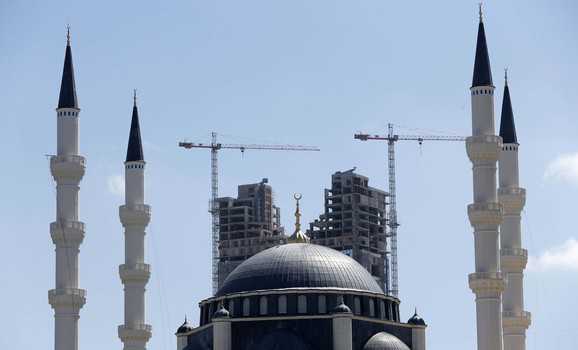
    EXPLOSIVE GROWTH IN NUMBER OF MOSQUES IN TATARSTAN, STILL NONE IN BESLAN. Over the past 10 years, the number of mosques in Tatarstan has nearly doubled from 755 to 1348, more than 500 of which are active and all but about 150 are registered with the state ). But in the North Caucasus, where many people believe that the Islamic expansion is far greater, the number of mosques is increasing much less quickly, thus opening the way for underground radicals to play the dominant role in the life of many Muslims there.

    KAZAN TO ERECT MONUMENT TO TATARS WHO RESISTED MOSCOW IN 1552. The city of Kazan plans to erect a monument to those Tatars who resisted the forces of Ivan the Terrible when he attacked and ultimately conquered that city in 1552. The monument, which officials there say is in “harmony” with the architecture of the city, will be unveiled on the 456th anniversary of Moscow’s victory ).

  • Captain Emory Niles and Mr. Arthur Sutherland

    Captain Emory Niles and Mr. Arthur Sutherland

    August 22, 2008


    Van Rebellion, took place after the outbreak of World War I. By February of 1915 Muslims in mixed villages were fleeing to be among other Muslims. Armenians did the same. The confrontation was no longer one of Ottoman forces against Russian forces and their Armenian partisans; “[i]t had become a general war between the Muslims and the Armenians.” It raged first outside of the city an then, by late April 1915, in the city itself.

    The Armenians, well armed, though without artillery, determinedly held their ground within the city center throughout the fiercest fighting, earning the upper hand by May 17, at which point they burned the Muslim quarter of the city and massacred those Muslims who had not fled. On May 20, they handed the city over to the Russian Army. The Russians rewarded the rebels by installing the rebel leader, Aram Manukian, as governor of the Russian Province of Van, which was short-lived, as Ottoman forces retook the city ten weeks later, leading to reprisals by Muslims against Armenians, who now were in flight toward the retreating Russian lines. Van was to change hands yet several more times during the ensuing weeks before Russian forces established firm control over the area in late September. This time, however, the Russians remained in charge, appointed a military governor, and disarmed local Armenian “volunteers.” Van’s fate changed yet again when the Russian Army decamped to join in the Russian Revolution. Armenians were left in control of the region and formed a government, which even issued its own currency. Despite an influx of returning Armenian refugees, the military strength of the Armenians had waned and Ottoman forces finally reclaimed the city of Van in April of 1918. When an American survey mission led by Captain Emery Niles toured the area in 1919, they beheld a depopulated, utterly devastated region.
    Mavi Boncuk |

    Captain Emory Niles and Mr. Arthur Sutherland were Americans ordered by the United States Government (in 1919) to investigate the situation in eastern Anatolia. Their report was to be used as the basis for granting relief aid to the Armenians by the American Committee for Near East Relief. The following is an excerpt from their report:

    “In the entire region from Bitlis through Van to Bayezit we were informed that the damage and destruction had been done by the Armenians, who, after the Russians retired, remained in occupation of the country and who, when the Turkish army advanced, destroyed everything belonging to the Musulmans. Moreover, the Armenians are accused of having committed murder, rape arson and horrible atrocities of every description upon the Musulman population. At first we were most incredulous of these stories, but we finally came to believe them, since the testimony was absolutely unanimous and was corroborated by material evidence. For instance, the only quarters left at all intact in the cities of Bitlis and Van are the Armenian quarters, as was evidenced by churches and inscriptions on the houses, while the Musulman quarters were completely destroyed. Villages said to have been Armenian were still standing whereas Musulman villages were completely destroyed” [U.S. 867.00/1005].

    For a complete copy of the report, see: | or click

    Mavi Boncuk

    Cornucopia of Ottomania and Turcomania | Contact:mailmaviboncuk(at)gmail.com

  • GÜLEN, KÜÇÜK, AND THE EDUCATION OF SOUTH KURDISTAN

    GÜLEN, KÜÇÜK, AND THE EDUCATION OF SOUTH KURDISTAN

    Asagidaki yazi Kurt kokenli bir siteden, ilginc aciklamalar var..
    MeltemB
     

    Saturday, August 23, 2008


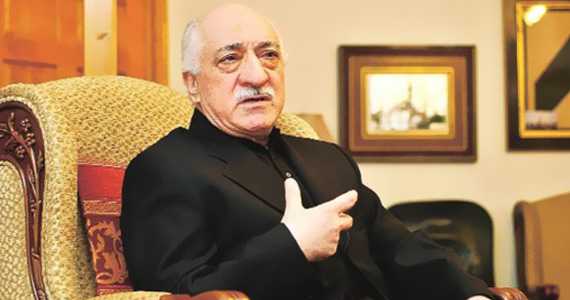
    “Gulen gave a new decree and a new kind of mobilization to assimilate Kurds and to steal their minds by injecting religious ideology and by causing them to sell their birthright.”
    ~ Aland Mizell.

    At the beginning of the month, I posted some news about the Ergenekon gang that had been published in Taraf. At the time, I mentioned that the nexus of the Ergenekon indictment could be found in a weirdo named Tuncay Güney:

    It would appear, however, that the lies surrounding the issue of “The Antidote” stem from Tuncay Güney, a one-time, small-time journalist in whose possession the original Ergenekon documents were found in 2001. Güney has been linked to Fethullah Gülen and Gülen’s Samanyolu TV. Güney claims to have brought the photos of Öcalan and Perinçek to MİT. He claims to have taken a bribe of $15,000 to PKK in order not to shut down Gülen’s schools in Hewler, although how PKK would have had any control over anything in Hewler is a huge question. Perhaps the KDP took the bribe by introducing themselves as PKK members? Güney also claıms to have delivered money from Fethullah Gülen to ultra-fascist Muhsin Yazıcıoğlu so that he could establish the BBP. 

    Zaman has some additional weird tidbits about Güney:

    “Meanwhile, in an interview with the Yeni Şafak daily, Tuncay Güney, a former journalist whose ties with various secret services, both domestic and international, have been documented, stated that Kurdish separatist terrorism would come to an end if the Ergenekon gang wanted that to happen. Güney, who now lives in Canada and works as a rabbi, has suspected ties to the group. Güney came to prominence when the first documents related to the Ergenekon gang were seized on his computer in a 2001 police raid.

    “Güney, currently a rabbi at the Jacobs House Jewish Community Center in Toronto, praised Ergenekon prosecutor Zekeriya Öz for having “done a great job” so far in the investigation, although he expressed doubts that the operation would be very successful in the end. “However, they are very close to the end and I think it is very difficult moving on further from this point. There is no power in Turkey that can stop Ergenekon,” he said, expressing doubts that the investigation will bring about the collapse of the crime group.”

    A check of YouTube reveals that Güney does, in fact, appear to be a member of an Orthodox Jewish community in Toronto, although he now denies any connection with Fethullah Gülen, as his appearance on Mehmet Ali Birand’s 32. Gün indicates. If the first Ergenekon documents were found in Güney’s possession, why has he not been indicted? Did he cut a deal and, if so, what kind of deal was it? Is his life now, in an Orthodox Jewish community in Toronto some kind of strange “witness protection” program?

    Now, there’s more from Güney on the connectıon between the Ergenekon gang, Fethullah Gülen, and Gülen’s schools in South Kurdistan, from Milliyet:
    Küçük knows Gülen for a long time 

    Güney, in his statement in 2001, claims that he and Mehmet Demircan, an important name in Fethullah Gülen’s movement, spent intense efforts to gain Küçük into the movement and that the two [Gülen and Küçük] knew each other for a long time.

    Tuncay Güney’s statement in 2001, which he gave to Istanbul police, is one of the most fundamental pieces of evidence that Ergenekon prosecutor Zekeriya Öz, is working on. In this statement, Tuncay Güney gave a detailed explanation of Fethullah Gülen’s movement. In the Ergenekon indictment’s 442nd file, there are interesting claims that Güney made. Here, Güney claims that, since the 1970s, Fethullah Gülen knew retired Brigadier General Veli Küçük, who is under arrest in the Ergenekon case, from the right-wing National Struggle Movement (MMH). Güney explained that he learned that Küçük and Fethullah Gülen knew each other for a long time, while he and one of Gülen’s prominent members, Mehmet Demircan, made efforts to gain Küçük to the movement.

    “All of them are strugglers for nationalism”

    When Tuncay Güney was detained in 2001 for by Istanbul police for fraud, he was working for Samanyolu TV, which is linked to the Fethullah Gülen movement. In the statement he gave to police while under interrogation, he pointed out that taking advantage of his position, he had the possibility to meet with important names in Fethullah Gülen’s movement.

    Within this framework, Güney mentions that he and Demircan tried to gain, the then active duty Veli Küçük, for the movement. “When we gain him, we will be more powerful in the eyes of Fethullah Gülen,” Güney says.

    Again, referring to Demircan, Tuncay Güney ascribed the information that Gülen knew Veli Küçük from the National Strugglers’ Movement. “Look at all of Fethullah Gülen’s members; they are all National Strugglers,” he said.

    Support for Gülen’s schools

    In his statement, Güney said that Veli Küçük helped Fethullah Gülen to open a school in Northern Iraq [South Kurdistan]. According to Güney’s statement, they had stopped in Diyarbakır, where they were on the way to Erbil, in order to open private Irbil Light College. There (in Diyarbakır), they called Veli Küçük to let him know they were there, thus Jandarma Regional Commander Eşref Hatipoğlu met them. Hatipoğlu sent Güney and Gülen’s members to Silopi in a military helicopter. From there, the group passed to Nehciban (there he means Neçirvan) and talked to Barzani and Talabani.

    “Veli Küçük’s teacher collared Erdoğan”

    Güney also made a statement about field officer Necabettin Ergenekon’s involvement with Gülen’s movement. According to Güney, Necabettin Ergenekon was Küçük’s teacher. According to Güney’s claims, Necabettin Ergenekon had talks with R. Tayyip Erdoğan, then the Refah Partisi (RP) Istanbul chairman. In one of these talks, Ergenekon caught Erdoğan by the collar and shook him. According to Guney’s statement, Erdoğan, in RP’s Tepebaşı office, was having a discussion with Necabettin Ergenekon about pan-Islamism. Then Ergenekon became nervous and grabbed Erdoğan by the collar saying, “This is bullshit, Tayyip; there won’t be pan-Islamism if there isn’t Turkism.”

    Güney said that the person who introduced him to Veli Küçük, was Veli Küçük’s teacher, Ergenekon. “The field officer in Izmit (Veli Küçük), is my student. I’ll take you and introduce you to him” said Ergenekon according to Güney.

    It was claimed that Küçük had named the Ergenekon organization after his teacher’s last name.

    He spied for Eymür about Gülen

    In his statement, Güney said that when he was in Fethullah Gülen’s movement, he was regularly informing MİT chairman Mehmet Eymür’s staff. Güney said, “When I was working there, Mehmet Eymür’s men would come and get information periodically . . . Besides this information, they were asking about the hot issues in the movement anyway.”

    In February, as war preparations against South Kurdistan were underway, Nêçîrvan Barzanî and the KRG gave the go-ahead for the foundation of a new Gülen university in Hewlêr. 

    There was no mention of anyone having given PKK a $15,000 bribe in connection with this Gülen enterprise, but that may be because any bribes would actually be given to the cehş of the KRG who are only too happy to contribute to the destruction of the Kurdish people for a price.