Month: August 2008

  • Activists in Ukraine’s Crimea ask Russia to reclaim territory

    Activists in Ukraine’s Crimea ask Russia to reclaim territory

     
    16:24 | 22/ 08/ 2008
     

    SIMFEROPOL, August 22 (RIA Novosti) – About 50 protesters gathered in the Crimean capital of Simferopol on Friday, urging Russia to pull out of a friendship agreement with Ukraine and to make a territorial claim on the peninsula.

    The organizer of the rally, Valery Podyachy, told the gathering: “We ask Russia to tear up the agreement [on Friendship, Cooperation and Partnership with Ukraine] and to file territorial claims to Ukraine.”

    The Crimea, which has a predominantly Russian-speaking population, has been the focus of frequent disputes between the Russian and Ukrainian leaderships, over the Russian Black Sea Fleet’s lease of the soviet-era Sevastopol naval base.

    During the recent conflict between Russia and Georgia that followed Tbilisi’s August 8 offensive in breakaway South Ossetia, Ukraine threatened to bar entry to Russian Black Sea fleet vessels that had been deployed near Georgia’s coast.

    Ukraine’s Defense Minister Yuriy Yekhanurov signed instructions on Thursday to implement an earlier presidential decree complicating the rules of deployment for the Black Sea Fleet.

    Podyachy, who heads the Sevastopol-Crimea-Russia Popular Front, said: “While Russia sent aid to flood-hit Ukrainian regions, Ukraine failed to help Russia to force Georgia to peace, and took an openly hostile stance.”

    Ukraine supplied weaponry to President Mikheil Saakashvili’s regime that was used to kill Russian peacekeepers, he said.

    “Ukraine has proved by its policies that it is not a friend but an enemy to Russia,” Podyachy said.

    Former Soviet leader Nikita Khrushchev, who grew up in Ukraine, made the Crimean Peninsula – a territory of 26,100 sq km – part of the Ukrainian Soviet Socialist Republic in 1954. The peninsula was until then a part of the Russian Soviet Socialist Republic.

    Since the 1991 breakup of the Soviet Union, the Crimea has unsuccessfully sought independence from Ukraine. A 1994 referendum in the Crimea supported demands for a broader autonomy and closer links with Russia.

    Relations between Russia and Ukraine have deteriorated recently following Kiev’s NATO membership bid and its demand that Russia’s Black Sea Fleet withdraw from its naval base in Sevastopol.

  • Window on Eurasia: Ukrainians Discuss How Best to Counter Russian Threat to Crimea

    Window on Eurasia: Ukrainians Discuss How Best to Counter Russian Threat to Crimea

    Thursday, August 21, 2008

    Paul Goble

    Vienna, August 21 – Having watched Moscow’s moves in Georgia and listened to various Russians suggest that the Crimea, where Russia’s Black Sea Fleet is based, is or should be Moscow’s next target, Ukrainian politicians, diplomats, and foreign policy analysts are discussing the nature and dimensions of the Russian threat and what Kyiv should do to parry it.
    In addition to Russian actions and threats, this issue has heated up in recent days because of calls by senior Ukrainian officials for Russia to begin preparing to move its fleet out of Sevastopol by or possibly even before 2017, statements that most Russian politicians have refused to take seriously and most military analysts say would be very difficult.
    Today, Ukrainian Foreign Minister Volodomyr Ogryzko said that Moscow must begin thinking about moving both men and materiel from Sevastopol now because regardless of what some may think, Kyiv will honor its agreement with Moscow but “in any case after 2017, the Russian fleet will not be on our territory (news.mail.ru/politics/1960873).
    Ogryzko said that the Ukrainian government cannot understand why Russia has simply “refused” to discuss the situation or any plans to withdraw its forces and close the base. As a sovereign country, the minister said, Ukraine will meet its treaty obligations, but he underscored that Ukraine has “the right to make a choice” about any bases on its territory.
    And if Ukraine makes the decision not to have such bases, the foreign minister continued, “no one, including Russia can influence our decision. … If in Moscow, they do not yet understand this, that governments live according to such rules throughout the world, then this is Russia’s problem” and not Ukraine’s.
    But recent Russian behavior in Georgia and Moscow’s reactions to Kyiv’s positions on this and other issues has convinced many Ukrainians that Russia’s problem in this regard is becoming a problem for their country because of the danger that Moscow will try to destabilize its neighbor to ensure its continued control of Sevastopol or even seek to seize Crimea.
    Those concerns have been exacerbated by three new developments: suggestions by some officials that Timoshenko should be charged with treason, a statement by a Crimean Tatar leader and Ukrainian parliamentarian that Moscow has many levers to use in Crimea, and an assessment by Ukrainian military analysts of what Moscow is already doing.
    The first of these, charges that opposition leader Yuliya Timoshenko should be investigated for possible treason on behalf of Russia, has already been extensively discussed, with some analysts arguing that this scandal by itself represents an effort by Moscow to destabilize and discredit the Ukrainian government.
    But the second and third deserve more attention. Today, Mustafa Dzhemilyev, who is both the leader of the Crimean Tatars and a deputy in the Ukrainian parliament, said that he is convinced that the large number of Crimeans who have dual citizenship with Russia by itself points to a possible South Ossetian scenario for that peninsula (www.vlasti.net/news/20236).
    Moreover, he continued, unlike in South Ossetia, “there is no need [for Russia] to introduce forces [because] there is a sufficiently large and not badly armed contingent of the Russian Black Sea Fleet already there.” Consequently, Moscow could move even more quickly than in did in Georgia, he said.
    “In order to preserve the territorial integrity of Ukraine,” the Crimean Tatar leader said, Kyiv should “close Russian consulates which are violating the law by handing out to citizens of Ukraine Russian passports.” Indeed, Ukrainian officials should force those “who have illegal dual citizenship to annul one of the passports.”
    Moreover, Ukrainian officials must focus on the activities of pro-Russian organizations whose statements and activities are exacerbating interethnic tensions and creating the conditions for a Russian move. And Dzhemilyev said, Kyiv should insist that the Black Sea Fleet leave Sevastopol long before the 2017 date established by agreement.
    The third event was the release, also today, of a report by the Kyiv Center for Research on the Army, Conversion and Disarmament, which argued that “Russia has created in the Crimea all the preconditions” for a military operation to keep control of Sevastopol, detach Crimea from Ukraine, and weaken the rest of the country as well (www.nr2.ru/kiev/192334.html).
    “For the achievement of these goals, Russia doesn’t need a major military conflict with Ukraine,” the center’s analysts said. Instead, “it is sufficient to destabilize the situation in a single Crimean region” through the use of precisely targeted operations using “the forces of the Russian special services and particular units of the Black Sea Fleet.”
    Moreover, they continued, Moscow will build on “to the maximum extent possible” the pro-Russian segments of the population and the pro-Russian social and political organizations that Moscow and its friends in Ukraine have been promoting ever since Ukraine gained its independence in 1991.
    The center’s analysts suggested that the first stage of such a conflict might consist of “actions directed at the sharpening of relations between personnel of the Black Sea Fleet and representatives of Ukrainian authority in nearby areas,” possibly by means of “a provocation” taking the form of a supposed Ukrainian attack on the fleet.
    After that happens, according to the center’s scenario, “the pro-Russian population will rise to the defense of the Russian personnel” and then there “will begin clashes with the law enforcement bodies of Ukraine.” That in turn will lead both countries to increase their military presence in Crimea, at which time Moscow will raise the issue of Ukraine’s right to Crimea.
    Kyiv would then appeal to the West, the center said, but its analysts argued that Ukraine would not be any more successful in attracting anything more from Western countries than verbal support. And consequently, Russia could then “swallow” Crimea at its leisure, confident that Ukraine by itself would not be able to block its moves.
    The center’s director added that he does not believe that Moscow is likely to follow such a scenario, but he added that “Russia has already created all the necessary conditions for its realization,” including official statements questioning Ukraine’s right to control Crimea, ramping up anti-Ukrainian feelings among Russians, and “also dominating Ukraine’s information space.”
    Today also, Ukrainian media carried the assessments of five political analysts. Sergei Dzherdzh, the president of the Ukraine-NATO League, agreed that Russia could move in Crimea, but he suggested that “more sober” heads in Moscow were likely to act with restraint given Moscow’s experiences in Chechnya and Georgia (www.vlasti.net/news/20336).
    Vadim Grechaninov, president of the Atlantic Council in Kyiv, said that Russia will launch “not a real war but an information one” and will seek to dominate Ukraine by creating “a fifth column,” a powerful pro-Russian lobby within the government, the leaders of the country’s political parties, and in the regions.
    Political scientist Viktor Nebozheno said that Ukraine was entering a dangerous period because both Russian and Georgian “hawks” might seek to stage provocations in Sevastopol in order to achieve their goals elsewhere, a view echoed by the Ukrainian Diplomatic Academy’s Aleksandr Paliy, who said Russia has constantly been staging provocations in Ukraine.
    But Vadim Karasev, a political scientist, said that Ukraine is in fact in a good position to counter any Russian moves of this kind. If it blocks the formation of “unrecognized formations” and “separatist groups” prepared to help Russia and if it adopts “a new regional policy” to ensure that Crimea develops, then Moscow will have a much harder time in pursuing its goals.
    But “the main thing,” Karasev said, is for Ukraine “not to do anything stupid” that Moscow would then exploit.
  • Turkey denies searching for Africa’s raw materials

    Turkey denies searching for Africa’s raw materials

    afrol News, 22 August – The chairman of the newly established Africa-Turkey Chamber of Commerce has dispelled the notion that Turkey is coming to Africa in search of raw materials.Riftat Hisarchikloglu, who uttered the remarks at the end of a three-day Turkish-African summit in Istanbul on Thursday, declared, “We are not coming to Africa for raw materials and in search of a supermarket, we are interested in lending our manufacturing expertise to Africa.”

    Rather, he said, Turkey’s main interest is to exchange competencies and technologies with Africa.

    Mr. Rifat also said Turkey proposes to ease access of African products to the world market as well as favour its development and stability.

    Africa-Turkey adopted the Istanbul Declaration, establishing partnership between Turkey and more than 50 African states on a wide range of issues.

    The leaders resolved that through Turkish International Cooperation and Development Agency [which already has offices in Senegal, Sudan and Ethiopia], Turkey should open more offices in Africa to carry out some development projects.

    The declaration seeks to aims to stimulate investments and trade between Turkey and Africa as well as promote greater cooperation on disarmament, collaborate on legal matters to ensure peace and stability.

    They also commit themselves to strengthen diplomatic, bilateral and multimateral meetings.

    Turkey and African states also recognised and agreed to facilitate the private sector as a critical tool for economic growth, and direct special focus towards the devlopment of agriculture, agro-processing, manufacturing, water resources and small and medium scale enterprises as a means of wealth creation for both sides.

    Mr. Rifat said through a paradigm shift in economic management, Turkey, a struggling economy only 20 years back, was able to pull itself out of poverty becoming the 15th largest economy in the world and the 5th biggest in Europe.

    “We were closed economy but when we opened up and welcomed the world to Turkey, our economy boomed,” he said, adding that Turkish goods are consumed all over Europe and America.

    By staff writer

    Source : afrol News

  • Turk Telekom says will bid for Kyrgyztelecom

    Turk Telekom says will bid for Kyrgyztelecom

    ISTANBUL, Aug 22 (Reuters) – Turk Telekom TTKOM.IS said on Friday it will bid in a tender to buy a 78 percent stake in Kyrgyzstan monopoly Kyrgyztelecom following its completion of technical studies on the tender on Thursday.

    Source : Reuters

  • Nakhchivan: A People’s Heritage, A Pepople’s Pride And A Home Of Beauty

    Nakhchivan: A People’s Heritage, A Pepople’s Pride And A Home Of Beauty

    By Nick Nwolisa, Source: en.iepf-ngo.org

    I visited the Autonomous Republic of Nakhchivan for the first time courtesy of an invitation from a dear friend – Elmira. I made the trip with my wife Lala and our 5 months old son Joel. It was to be my first time to this part of Azerbaijan and same for my wife. The journey of about 1 hour from Baku to Nakhchivan was a smooth fly; from an aerial view, it reveals how on a very fast rate the Azerbaijan capital Baku is developing with a great number of high rising buildings and good road networking. Descending from the plane on arrival in Nakhchivan, we were greeted with the purest serenity of athmosphere; my wife observed how very pure the atmospheric air felt in Nakhchivan as compared to the congested capital Baku. (more…)

  • Dashnaks Vow Protests Against Gul’s Visit

    Dashnaks Vow Protests Against Gul’s Visit


    By Anush Martirosian

    Turkish President Abdullah Gul will face street protests if he accepts his Armenian counterpart’s invitation to visit Yerevan and watch the upcoming match between the national football teams of the two countries, the Armenian Revolutionary Federation (Dashnaktsutyun) reiterated on Thursday.

    President Serzh Sarkisian extended the invitation to Gul earlier this summer to underscore his desire to improve Armenia’s historically strained relations with Turkey. Ankara offered to engage in a “dialogue” with Yerevan shortly after he took office in April.

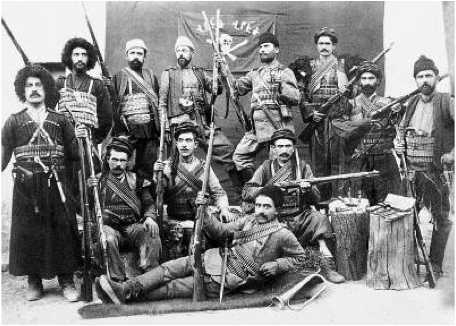
    Dashnaktsutyun, which is represented in Sarkisian’s coalition cabinet and has traditionally favored a harder line on Turkey, makes no secret of its disapproval of the invitation. Aghvan Vartanian, a leader of the nationalist party, reaffirmed its plans to stage demonstrations against what would be the first-ever visit to Armenia by a Turkish head of state.

    “If President Gul visits Armenia to watch the game, there will be meetings, protests and calls against Turkey,” Vartanian told a news conference. “But that will not be organized only by Dashnaktsutyun.”

    “We have problems with Turkey and solutions to those problems relate to the future, rather than the past,” he said.

    Vartanian made clear that Sarkisian can not force Dashnaktsutyun to reconsider its plans. “Dashnaktsutyun has always been an independent political force and has expressed its positions on various issues regardless of what others will think,” he said.

    Dashnaktsutyun leaders earlier expressed concern about Sarkisian’s stated readiness to accept, in principle, Turkey’s proposal to form a commission of Turkish and Armenian historians that would jointly examine the mass killings of Armenians in the Ottoman Empire. They said Turkish recognition of the massacres as genocide is a necessary condition for normalizing bilateral ties.