Turkic roots of 679 medical terms in Latin, English
The majority of medical terms are Turkish rooted for two reasons:
1- Turkish or proto-Turkish is the founding language of Western languages. I tried to provethis in my previous articles here.
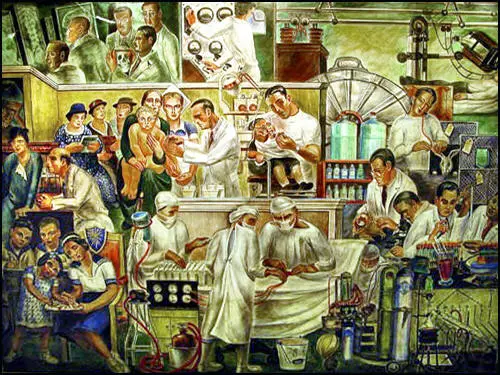
2- Turkic peoples and the first physicians among them contributed greatly to the establishment of the medical discipline and the development of medicine.
The Turkish roots of many of the basic medical terms originate from this practice and information. Here I am explaining the Turkish roots of about 679 medical terms. This includes words related to human organs and health.
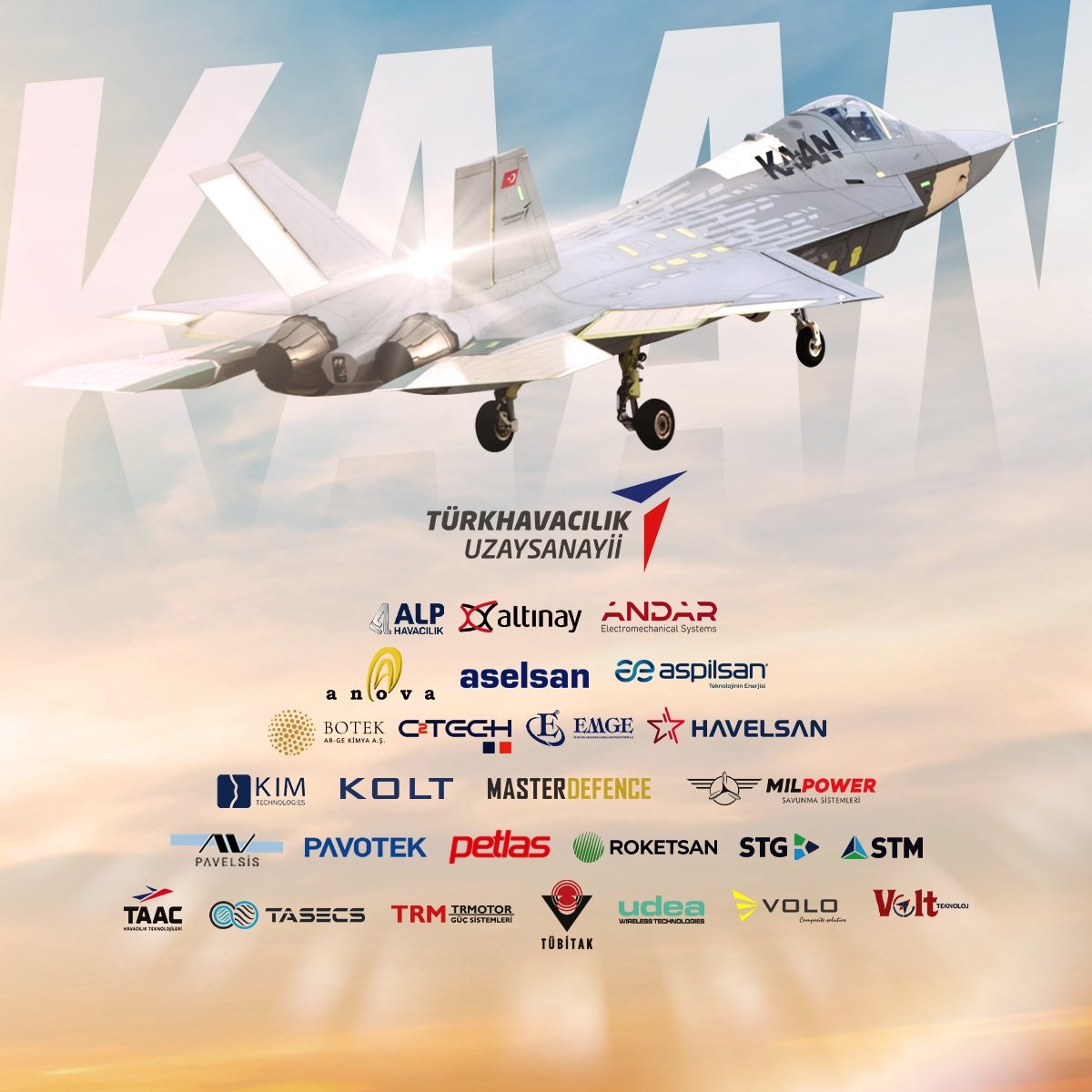

Turkey’s developed 5th generation fighter aircraft, KAAN, took off from the runway, meeting the sky as it lifted its wheels off the ground. The flight, which held the breath of all Turkey, also made a great impact worldwide. Taking its first flight on February 21, 2024, at 08:50, KAAN remained airborne for 13 minutes, reaching an altitude of 8000 feet and a speed of 230 knots.
KAAN provides superior air dominance with its High Performance and Integrated Avionics System, which includes Extended Air-to-Air Combat Range with New Weapons, Precision and Full Hit from Internal Weapon Bays at High/Supersonic Speeds, Artificial Intelligence, and Heterogeneous Computing support.
During KAAN’s first flight, the Central Management Computer developed by TÜBİTAK, Avionics Interface Units, Deterministic Network, Multi-Core Real-Time Operating System, and Middleware Software were used.
The main control computers were designed and manufactured by TÜBİTAK BİLGEM.
The computer system, referred to as KAAN’s brain, was successfully developed by TÜBİTAK BİLGEM and delivered to TUSAŞ ahead of the planned date in 2022.
The avionics computer system has safety-critical and high-performance processor modules with deterministic and high-speed communication infrastructures. This computer performs data processing and management functions for Mission (Communication, Navigation, AESA Radar, Electronic Warfare, Electro-Optical Targeting and Weapon) Systems along with critical aircraft management functions such as engine system management, flight system management, etc. The mission computers reduce the pilot’s workload and also generate displays for the instruments and helmet-mounted display.
The Multi-Core National Real-Time Operating System was developed by TÜBİTAK BİLGEM.
The Real-Time Operating System (GzIS), developed by TÜBİTAK BİLGEM, was made multi-core to meet KAAN’s high computing needs and was used on the Main Management Computers during KAAN’s first flight.
When the Fifth Generation Fighter Aircraft KAAN project is completed, it will become unique with TÜBİTAK’s critical technologies.
Systems developed by TÜBİTAK BİLGEM for KAAN:
Flight Control and Aircraft Management Computers
These are computers that manage engines, flight control surfaces (flaps), and other aircraft systems. They were used in KAAN’s first flight.
Central Management Computers
These are 5th Generation Integrated Modular Avionics computers that manage the aircraft’s main systems and weapon systems, generate images for avionics displays and helmet-mounted displays, and ensure the aircraft’s cyber security. They were used in KAAN’s first flight.
Mission Management Computers
These are computers that process and manage data from communication, navigation, electro-optical targeting, radar, and electronic warfare systems. They were used in KAAN’s first flight.
Avionics Interface Units
These units convert aircraft sensor and actuator signals and facilitate communication with legacy interface systems. They were used in KAAN’s first flight.
Deterministic Network
It is a high-speed optical network that ensures the transportation of data with different criticality levels without affecting each other. It was used in KAAN’s first flight.
High-Speed Network
It is an optical network that enables the transportation of a large amount of sensor data to management computers at very high speeds. It was used in KAAN’s first flight.
Multi-Core Real-Time Operating System
These are operating systems that allow different applications of varying criticality levels to run on all of KAAN’s computers without affecting each other and with high performance. They were used in KAAN’s first flight.
Middleware Software
These are middleware software that enable communication between KAAN’s sensors and each other, perform protocol conversion for interfaces, generate display graphics for indicator displays, and run artificial intelligence applications. They were used in KAAN’s first flight.
EMC Test System
It is a system that measures and analyzes the compatibility of all electronic systems on KAAN with each other.
Antenna Test System (NFRTF)
It is a system that determines the geometry of KAAN and ensures the low radar cross-section for the 5th Generation stealth aircraft.
Systems to be developed by TÜBİTAK MAM for KAAN:
Life Support System
Life Support Systems are being developed to enable Fighter Aircraft pilots to sustain basic vital functions under conditions requiring high physical endurance.
Explosion Prevention System
[probably a Fuel Tank Inerting System]
Explosion Prevention Systems are being developed to prevent explosion and fuel boiling in fuel tanks of Fighter Aircraft, taking into account the variable conditions of the aircraft.
Electromagnetic Modeling and Optimization of Radar Absorbing Multilayer Thin Film Surface Coating
The RASEM software is being developed to give the National Fighter Aircraft invisibility feature, especially in the design processes of the canopy.
Development of a Surfaces Providing Low Visibility in Intake of National Fighter Aircraft
For providing a low radar visibility to air intakes of MMU-KAAN, surface designs within the duct will be tested and measured.
Electromagnetic Modeling and Implementation of Frequency Selective Surfaces for National Fighter Aircraft
For providing the low radar visibility feature to KAAN, RASEM-RADOM software is being developed for electromagnetic design and optimization of KAAN’s radome with frequency selective characteristics.
The armament integration of KAAN will be carried out by TÜBİTAK SAGE
TÜBİTAK SAGE’s SOM A, SOM B1, SOM B2, HGK 82, HGK 83, HGK 84, NEB, GÖKHAN, KGK 82, KGK 83, GÖKDOĞAN, and BOZDOĞAN projects will be integrated into KAAN.
When you are registering, please select choice of your language you would like to participate with Turkish or English.After registering, you will receive a confirmation email containing information about joining the webinar.
Language: Turkish & English
Background
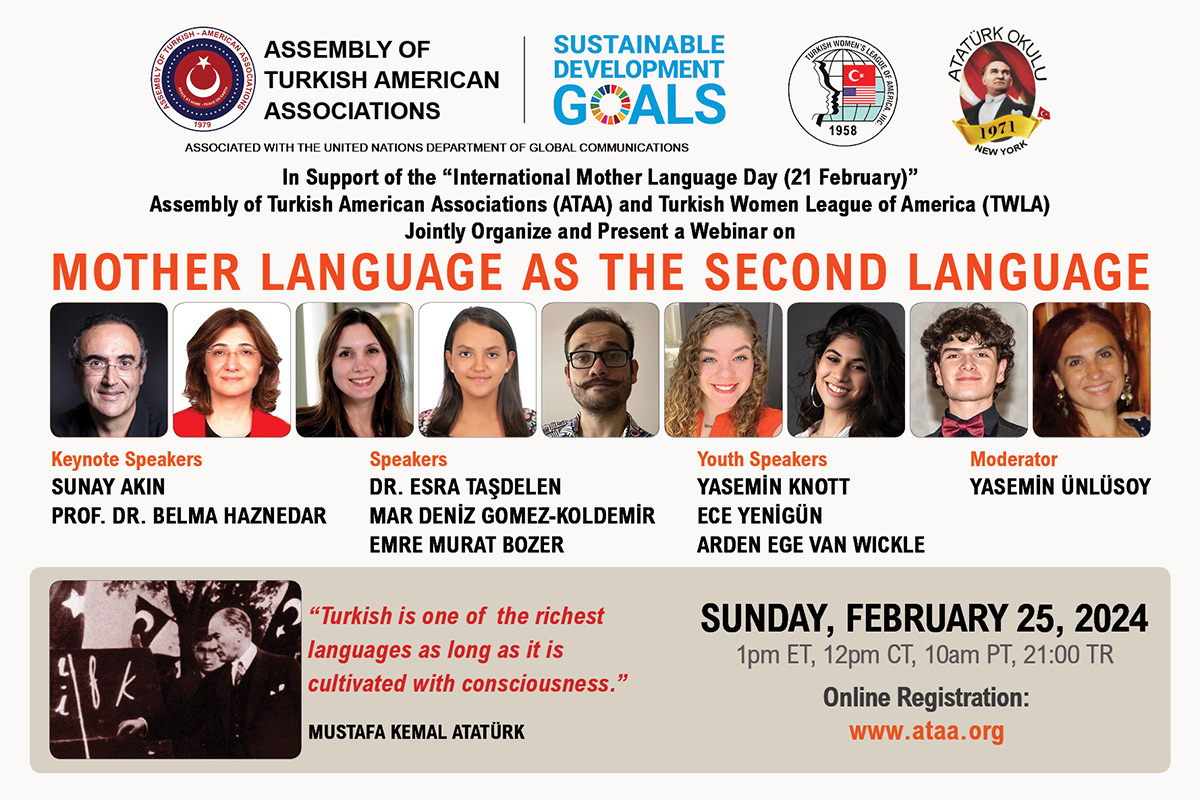
On February 25, 2024, The Assembly of Turkish American Associations (ATAA), and Turkish Women League of America (TWLA), formally associated with the United Nations Department of Global Communications (DGC), will hold a virtual event titled “Mother Language as the Second Language” in support of International Mother Language Day (A/RES/56/262) highlights the importance of multilingual education, particularly in early schooling, and more commitment to its development in public life.
Program Introduction
This program highlights the role of language and its importance in uniting people that speak the same language. There are many reasons people migrate to other countries. These may be due to economics, education, wars, and etc.. Setting in a foreign country comes with many challenges, language is one most important element impacts people’s lives. It is important for us to embrace the language and culture of the country we live in order to be better successful while we sustain our mother language and culture of our origine; teach our children as well. To be multilingual improves collaboration, exchange of ideas, improves business, commerce and scientific ties. It also helps new generations to link themselves to older generations and enjoy the benefits that come with associating with a culture, the psychological strength that grows with these roots.
Opening Remarks and Introduction by
Video Presentation – TWLA-NY Atatürk School Students Dr. Nilüfer Esen-Bilgin, ATAA President Berna Gürdal, TWLA President
Moderator:
Yasemin Ünlüsoy, TWLA–NY Atatürk School Teacher
Keynote Speakers:
Sunay Akın The Birth Story of Turkish Words – Türkçe Kelimelerin Doğuş Hikayesi
Professor Dr. Belma Haznedar Bilingual Language Acquisition In Early Childhood
Speakers:
Dr. Esra Taşdelen A Brief History of Turkish Language
Mar Deniz Gomez-Koldemir Unlocking the Power of Multilingualism: A Journey through the World of Speaking Multiple Languages
Emre Murat Bozer The Key Sociolinguistic Factors that Contribute to Heritage Language Development
Youth Speakers:
Yasemin Knott Importance of Language in Maintaining Cultural Diversity
Ece Yenigün
Arden Ege Van Winkle Overcoming boundaries with Language
Q&A Session
Parent’s Presentations
Closing Remarks by
Alev Wieland, Co-Chair ATAA UN Committee & ATAA First VP & ATAA Southwest Region VP
Biographies
Sunay Akın is a Turkish poet, writer, TV host, journalist, and a philanthropist. He is the founder of Istanbul Toy Museum. Akın is best known for his poetry; his primary influences include Orhan Veli Kanık and Cemal Süreya. His poems are generally lyric, short, and soft in tone. He also often makes use of satirical forms and puns. Akın has a collection of over 7,000 toys, some of which date back nearly 200 years. 4,000 of them are on display in the İstanbul Toy Museum which opened in 2005. He co-hosts a TV show called “Yaşamdan Dakikalar” (“Minutes from Life”) on the TV channel tv8, together with Hıncal Uluç, Haşmet Babaoğlu, and Nebil Özgentürk. He lectures at Marmara University, and Müjdat Gezen Art School, as well as at his own institution, the İstanbul Toy Museum. Akın regularly stages one man shows in Turkey and abroad, and participates in panels and conferences. He contributes as a regular columnist to the newspaper Cumhuriyet. His column is named after his 2004 book, “Kule Cambazı” (“Tower Acrobat”), in reference to İstanbul’s Maiden’s Tower. Awards: 1987, Halil Kocagöz Poem Awards for his collection of unprinted poems “Noktalı Virgül” (“Semicolon”) and 1990, Orhon Murat Arıburnu Poem Awards for his poem “Makiler” (“Maquis”).
Professor Belma Haznedar holds a PhD in Linguistics from Durham University, UK. She is currently a full Professor of Applied Linguistics at Boğaziçi University, İstanbul-Turkey. Professor Haznedar’s expertise area focuses on early childhood bilingualism, with special reference to language acquisition in successive and simultaneous children. In her recent work, she also investigates (i) language teaching to young children; (ii) literacy development in monolingual and bilingual children; (iii) language loss and heritage language speakers; (iv) creating online materials for teachers who work with migrant populations (adult and child immigrants with low literacy skills). In line with her recent work for teachers of immigrants and heritage speakers, Dr. Haznedar and her co-authors presented portions of their findings at the United Nations headquarters in 2017 and 2019 in New York. Professor Belma Haznedar has presented and published extensively on childhood bilingualism in national and international refereed journals and books and is co-editor of Current Trends in Child Second Language Acquisition (Amsterdam, 2008), co-editor of Handbook for Teaching Foreign Languages to Young Children in Primary Schools, (Ankara, 2010, reprinted in 2013, 2018), co-editor Acquisition of Turkish in Childhood (Amsterdam, 2016), author of Erken çocukluk döneminde birden fazla dilin edinimi ‘Language acquisition in early childhood, (Ankara, 2021).
Dr. Esra Tasdelen is native of Istanbul, Turkey. She received her BA degree in Social and Political Sciences at Sabancı University in Istanbul, Turkey (2003). Her MA degree is in Middle Eastern Studies (2005) and her PhD degree is in Near Eastern Languages and Civilizations (2014), both at the University of Chicago, Illinois. Her teaching focuses on the history, languages, literatures and cinema of the Middle East and North Africa, as well as translation theory. She is currently an Instructor at the University of Chicago’s Graham School of Continuing Liberal and Professional Studies.
Mar Deniz Gomez-Koldemir is an 11th-grade student at the Dalton School in New York City, NY. She was born in New York City to Turkish and Spanish parents and graduated from TWLA – NY Ataturk School in 2018. Mar Deniz also spent a semester abroad at Robert College in Istanbul. She is fluent in English, Turkish, and Spanish, and has learned Mandarin and French as well. With over a decade of experience, Mar Deniz is an accomplished violinist and currently serves as the concertmaster at the Third Street Orchestra. Looking forward, she has aspirations to study medicine. Mar Deniz Gomez-Koldemir is a multilingual student with a passion for music and a goal to make a positive impact through her future medical studies.
Emre Murat Bozer is a PhD student in Second Language Acquisition at the University of Wisconsin-Madison. His research interests focus on language education and multilingualism, specifically in the context of heritage language education at community-based heritage schools. His most recent research project involves a linguistic ethnographic investigation of language ideologies and language socialization practices at a Turkish community-based heritage school in the United States. Emre also holds a minor in Japanese Linguistics and teaches a variety of Japanese courses at UW-Madison.
Yasemin Knott is a Junior Social Work major at Siena College in Loudonville, New York. She has been on the Dean’s List and the President’s List since attending Siena College. She is a Student Representative on the Siena College Social Work Advisory Board. She is a Community Assistant at Siena College. Through her position as a Community Assistant, she was able to give a successful presentation on the importance of diversity, inclusion, and representation. Yasemin has been a Turkish Women’s League of America youth representative for the United Nations since January of 2023. Since being inducted into this position, she attended the Assembly of the Turkish American Associations’ 2023 Annual Conference, as well as making a presentation on the importance of inclusive education for all. Yasemin has been a member of the Assembly of Turkish American Associations’ United Nations Youth Forum since April of 2023. Yasemin is a 2020 National Honor Society Inductee and a Spanish Honor Society Inductee. She was previously an officer of the Saratoga Springs High School Spanish Culture Club as well as the 2022 Siena College Muslim Student Association Events Coordinator. Yasemin was a cheerleader for 15 years and a dancer for 10 years. She was a Saratoga Springs High School Varsity Competitive Cheerleader and Team Captain for multiple years. She also achieved American Red Cross Certification in Childcare. Yasemin is learning Turkish, Spanish, and American Sign Language. She attended the Turkish Women’s League of America’s New York Ataturk School and earned a New York Seal of biliteracy in Spanish and English. Through college courses in high school, she earned credits from Rochester Institute of Technology, Adirondack Community College, and Schenectady City Community College. Yasemin volunteered at Dorothy Nolan Elementary School for 6 years.
Ece Yenigün was born in New York, New York as the first-generation U.S. citizen in her family. She is now a third-year student in Political Science major at Union College, Schenectady, New York. Throughout her elementary, middle, and high school years, Ece attended the United Nations International School where she completed the International Baccalaureate Programme and earned her IB Diploma; excelling in biology, socio-cultural anthropology, and French. Her proficiency in four languages (English, Turkish, French, and Spanish) has allowed her to become the aspiring communicator she is today. Within her fourteen years of experience as a violinist, Ece has performed at Carnegie Hall twice and continues to portray her commitment and aspiration for the instrument by playing with the Union College String Orchestra. Ece has also pursued her interest in humanitarian work through internship opportunities such as The New Neighbors Partnership at Columbia University, along with volunteer work with the Turkish Red Crescent Community (Türk Kızılay) in Turkey, teaching and mentoring Syrian refugee children. In 2015, Ece graduated from the Turkish Women’s League of America’s New York Atatürk School.
Arden Ege Van Wickle was born in Plano, TX to Turkish American family. Arden just graduated from high school who possesses a diverse skill set as a critical thinker and problem solver. Arden graduated from the Dallas International School within the French school system. Fluent in English, French, and Turkish, with a moderate command of Spanish. Arden volunteers his time in the Doctors Without Borders Program Language Education Program and help students in Türkiye to learn English. He is an active youth member of the local Turkish community, provides support on different educational and cultural programs. Beyond multilingual skills, Arden has a passion for music and visual arts. With a scientifically inclined mind and a penchant for out-of-the-box thinking, Arden aspires to continue his education by pursuing a degree in Mechanical Engineering and aiming to make a positive impact in the field of fluid dynamics. Arden Ege Van Winkle, is born in Plano, TX to Turkish American family. Arden just graduated from high school who possesses a diverse skill set as a critical thinker and problem solver. Arden graduated from the Dallas International School within the French school system. Fluent in English, French, and Turkish, with a moderate command of Spanish. Arden volunteers his time in the Doctors Without Borders Program Language Education Program and help students in Türkiye to learn English. He is an active youth member of the local Turkish community, provides support on different educational and cultural programs. Beyond multilingual skills, Arden has a passion for music and visual arts. With a scientifically inclined mind and a penchant for out-of-the-box thinking, Arden aspires to continue his education by pursuing a degree in Mechanical Engineering and aiming to make a positive impact in the field of fluid dynamics.
Yasemin Ünlüsoy graduated with B.A. from Boğaziçi University, department of translation &interpreting. She worked as a translator, interpreter and language instructor in a number of multinational companies to facilitate the business communication process of expatriate directors in Istanbul. She completed her certificate in English Teaching (CELTA)at New York teaching house and teaches both English and Turkish to adults and Children. Translated five books and miscellaneous articles from and into Turkish interpreted in international meetings on an occasional basis. Yasemin was born and grew up in Izmir. She currently lives in New Jersey with her husband and two sons.
Irem Göçgenci Jakobsen is a certified public service interpreter and court interpreter based in Hamar, Norway. She interprets in the language combinations of English-Turkish, Norwegian-Turkish and German-Turkish. Irem holds a bachelor’s degree in translation and interpreting in English-Turkish and German-Turkish language pairs, from Dokuz Eylül University. Her areas of interest were European Union and international trade, and she majored in conference interpreting. Upon moving to Norway in 2016, she has taken her second bachelor’s degree in public sector interpreting in Norwegian-Turkish from Oslo Metropolitan University. She is also a licensed teacher in English, German and Turkish as a foreign language, and worked as a language instructor in Turkey and as a teacher at Norwegian upper secondary school. Irem continues to pursue her interest in language didactics in her MA project on refugee women learners of English in Norway at the Innlandet University of Applied Sciences, as well as working full time as an interpreter for the Norwegian government institutions and municipalities.
Ezgi Cohen is Turkish-American professional with a BA in English and a pedagogical certificate, is a versatile individual excelling in the fields of acting, writing, translation, and real estate. A graduate of Stella Adler Studio in 2009, where she completed a rigorous 2-year acting conservatory program, Ezgi has showcased her linguistic prowess by crafting and translating texts in both English and Turkish. Currently based in New Jersey, she seamlessly balances her roles in acting and real estate with unwavering dedication and skill.
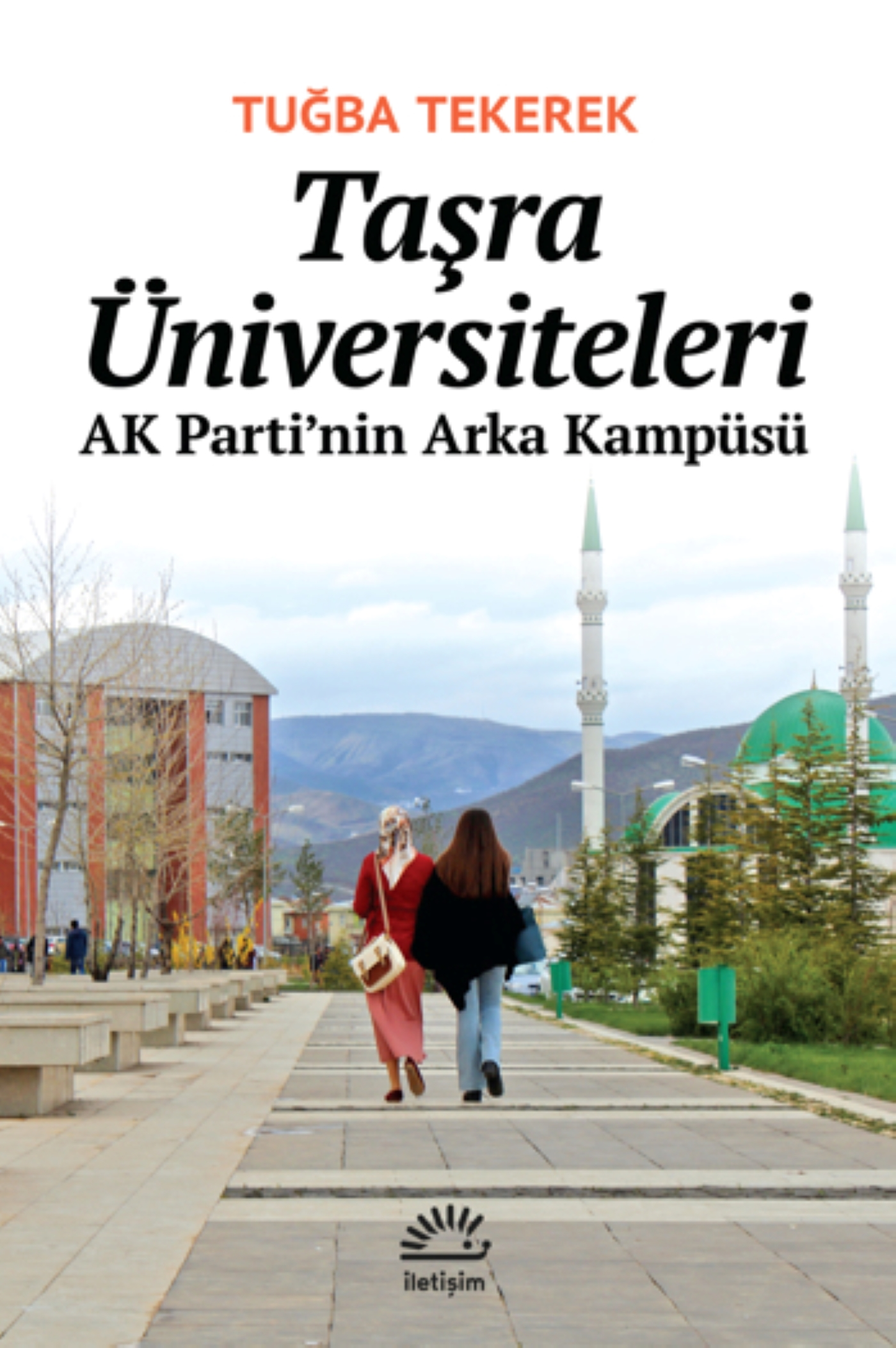
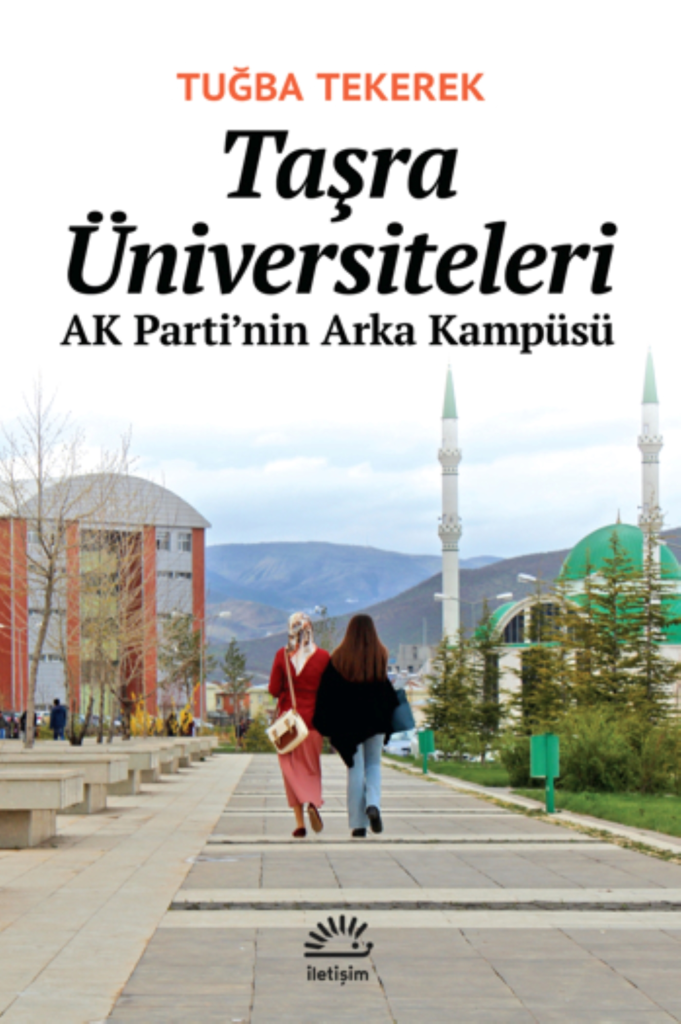
Turkey Book Talk #211 – Tuğba Tekerek, journalist and author, on “Taşra Üniversiteleri – AK Parti’nin Arka Kampüsü” (Provincial Universities: The AK Party’s Backyard Campus), published by İletişim.
The book examines the impact of the government’s push to open over 100 universities across Turkey over the last two decades. It paints a picture of falling academic standards but increased outlets for the ruling party’s religious nationalist ideology.
Turkey Government Scholarships 2024-25 Fully Funded | Apply Now
Turkey Government Scholarship 2024 by Türkiye Burslari, also known as Turkish Scholarship, is accepting applications for international students around the world to study Undergraduate, Master, and PhD programs in Turkish Universities for free.
Studying in Turkey provides an excellent opportunity for students from all around the world who want to experience a unique culture and receive some of the best quality education available. With the financial aid of a Turkey Burslari scholarship, studying in this vibrant country can be even more beneficial.
Every year the Turkish Government offered a wide range of Scholarships for International Students who want to study in Turkey for their higher education institutions.
The scholarship for international students in Turkey 2024 is available under the Turkish Government. You can improve your career paths leading towards your future goals. Your knowledge about the particular field of study is enriched and your vision to see things through viable means is further widened.
Turkiye Burslari Scholarship 2024 is a Turkish government-funded, competitive scholarship program, that is awarded to outstanding students and researchers to pursue full-time or short-term degree programs at the top universities in Turkey.
You can apply for all academic levels either Bachelor’s, Master’s, or Ph.D. With the extensive option of Turkish universities, you can apply for the numerous disciplines offered by these universities. If you can’t speak or understand the Turkish language, the Turkish Government is ready to provide you with a Turkish language course for a period of one year.
The Turkish Government Scholarship applications for 2024-2025 will begin in December this year for students all over the world. It is a great time for international students to avail themselves of an opportunity to study for free in Top Ranked Turkish Universities.
Almost all academic fields and majors are available under Turkey Bruslari Scholarships. Most programs in Turkish universities are in Turkish Language. However, some departments and universities offer programs in English or other languages. The scholarship will cover all the expenses.
The Scholarship covers all the expenses for the full duration of the program. So, make sure to apply with the correct documents. Because preparing documents can take time. In this post, we will tell you the list of required documents for the Turkiye Burslari Scholarship 2024. The Scholarship is available in all subjects. Applying is always Free. Read the details below.
Turkey Burslari Scholarship 2024-2025
Country:
Turkey
Funded By:
Turkish Government
Course:
Undergraduate Degree
Master’s Degree
Doctoral Degree
Duration:
Turkey Undergraduate Studentship (4 from 4 to 5 years)
Turkey Masters Scholarship ( 2-to-3 years)
Turkey PhD Award (3 or 4)
Financial Coverage (Turkey Scholarship Benefits)
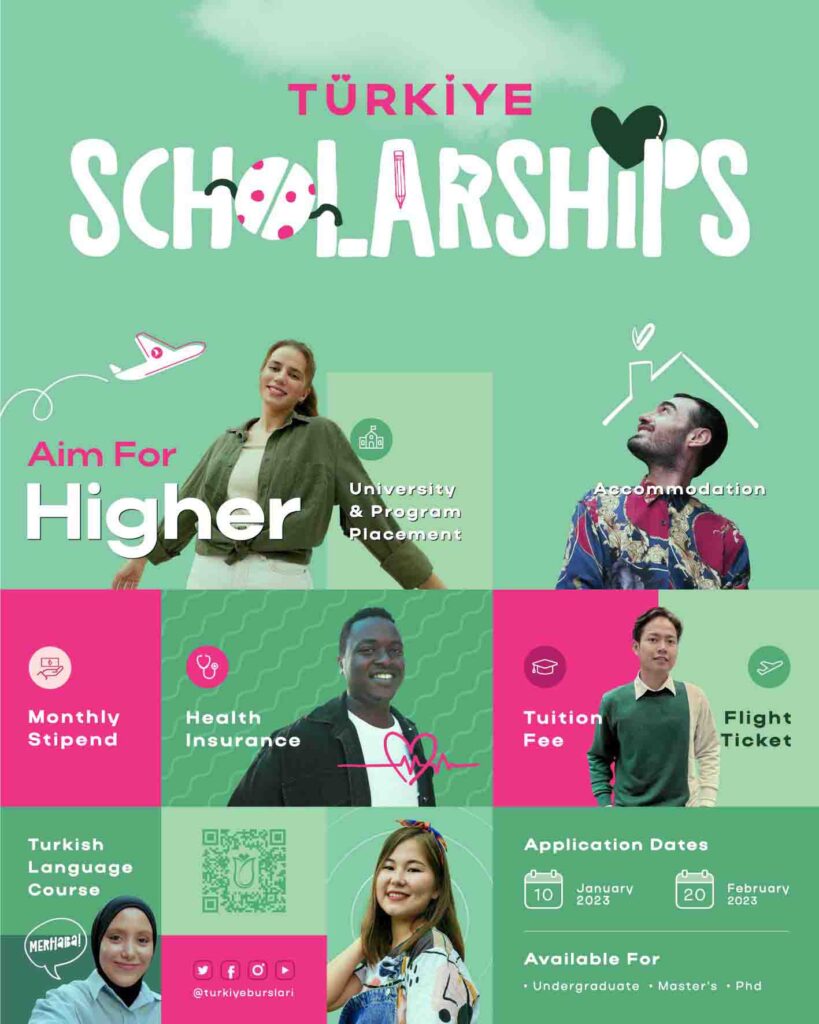
Turkish Government Scholarships for International Students are fully funded scholarships available to students from all over the world. The following topics will be covered by the Turkish International Scholarship:
Undergraduate Scholarship Coverage:
University and Program Placement
Monthly Stipend: 700 TL per month
Tuition Fee
Once-off Return Flight Ticket
Health Insurance
Accommodation
One-year Turkish Language Course
Master and Ph.D. Scholarship Coverage
University and program placement
Monthly Stipend:
Master’s: 950 TL per month
Ph.D.: 1400 TL per month
Tuition Fee
Once-off Return Flight Ticket
Health Insurance
Accommodation
One-year Turkish Language Course
List of Available Study Fields:
Turkey Government Scholarship 2024-25 offers all Academic Fields & Majors for all Levels of Study in Turkey. The List of Courses is given below for Turkey Burslari 2024.
Accounting
Agriculture Economy
Architecture
Biochemistry
Biology
Business and Management
Chemistry
Civil Engineering
Common Law
Computer Engineering
Development Studies
Economy, Econometrics
Environmental Sciences, Ecology
Finance and Banking
Geography
Geology
History
Islamic Theology
Journalism
Languages
Marketing and Sale Management
Mathematics / Statistics
Mechanical Engineering
Media Studies
Medicine
Nursing, Midwifery, Physical Therapy
Pharmacology
Zoology
Eligibility Criteria of the Turkey Burslari Scholarships 2023:
Students who wish to study in Turkey under the Turkish Government Scholarship 2024 must meet the following criteria.
Eligible Countries:
Applicants from all countries are eligible to apply for Turkey Scholarships
You may apply if you have completed your graduation or if it will be completed before August 2023.
You should not be enrolled in any Turkish university at the time of application.
Age Criteria:
You must be under the age of 21 to enroll in an undergraduate program,
You must be under the age of 30 to enroll in the Master’s program.
You must be under 35 to enroll in Doctorate program.
The minimum academic achievement:
Students applying for bachelor’s degrees: 70%
Applicants for master’s and doctoral degrees: 75%
Applicants for the health sciences, including medicine, dentistry, and pharmacy, should have a minimum academic record of 90%.
Supporting Documents:
National Identification OR a valid Passport
A recent photograph
National exam scores (for domestic students)
Diploma or temporary certificate of Graduation
Academic transcripts
International exam scores (if required by the chosen university & program)
Language test scores
A research proposal (for Ph.D. applicants only)
Other Requirements
You should have a TOEFL or IELTS (The Test of English as a Foreign Language) certification.
The certification is an international benchmark that shows that you are good enough to take a course at a university if you want to study English.
You need to provide a letter stating your purpose in taking this scholarship program.
Applicants should not have any health problems.
Short-term scholarship programs may have additional application requirements
What are the steps to apply for the Turkey Scholarships 2024?
Check the eligibility requirements: Make sure you meet the eligibility requirements for the scholarship.
Create an account: Go to the Turkey Scholarships official website and create an account by clicking on the “Sign Up” button. You will need to provide your personal information and create a password to complete the registration process.
Start the online application: Once you have created an account, click on the “Application” tab and select the scholarship you wish to apply for. Then click on the “Apply” button to begin the online application process.
Complete the online application form: Fill out the online application form with your personal and academic information, and upload any required supporting documents.
Selection Criteria for the Turkish Scholarships 2024:
The selection would be made based on the following aspects:
Academic success.
Active participation in Social Activities.
Motivation towards the relevant field.
After a preliminary assessment, an Expert Evaluation will be made.
Interview of 15 to 30 minutes.
Then, the Selection committee’s final decision will be endorsed
How to win a Turkey Burslari Scholarship 2024?
Diploma Grade
The Last Term’s General Average Grades
University Entrance Exam Grade (if any)
High School Graduation Exam / Baccalaureate Grade (if any
International Test Score (if any)
Any other academic certificates or (*) cumulative GPA
Based on their school achievements, applicants will be contacted for an evaluation.
The interview will take place in Turkish Consulates, and when these are not available, technology will be used instead.
The findings will be shown on the application system and sent to you. Turkey Burslari Scholarship applications can now be submitted online.
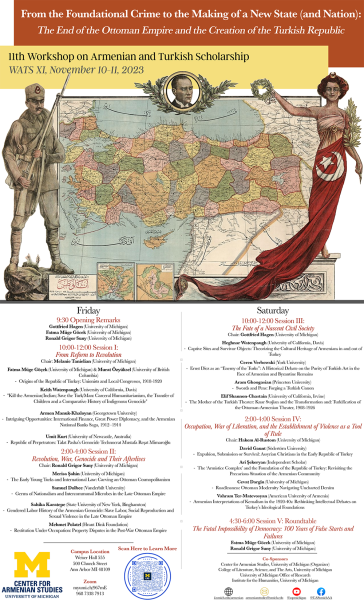
From the Foundational Crime to the Making of a New State (and Nation): The End of the Ottoman Empire and the Creation of the Turkish Republic
Attend in person or on Zoom at https://myumi.ch/967mE
To mark the centennial year of the founding of the Turkish republic, WATS (the Workshop on Armenian and Turkish Scholarship) has decided to organize an eleventh workshop at the University of Michigan in the fall of 2023 under the auspices of the Center for Armenian Studies.
Marking the centenary of the founding of the Republic of Turkey, our conference aims to bring a critical perspective on the process of making states that involved ethnic cleansing or genocide. Few modern states are free of dark histories of exclusion, forced assimilation, or more sanguinary solutions to the remnants of imperial diversity. Investigating states that were founded on dispossession of indigenous peoples, we examine the Turkish past and the histories of the United States, Israel, and Australia, among others. Turkey is not unique, but its achievement in ridding Anatolia of Armenians and Assyrians, like the removal of Native Americans from continental United States, was admired by and positively referred to by Adolph Hitler as he planned his own genocidal policies in the lands to the east of Germany.
Our conference examines the ideological and strategic choices made by Ottoman and Turkish nationalist leaders as they attempted to “modernize” their states through coercive demographic policies and the deployment of violence, which became enshrined as part of the repertoire of governance in the Kemalist state. Having eliminated the bulk of Christians, the heirs of the Ottomans repressed their former allies, the Kurds, turning what they conceived as a homogeneous ethnic nation-state into a mini-imperial state colonizing its non-Turkish subjects.
Just as the controversial 1619 Project in the United States has contested the origins of the American republic by seeking its beginnings with the first importation of African slaves, rather than the revolutionary events of 1776, so shall this workshop explore the formative events and processes from the initiation of systemic reforms in the Ottoman Empire in 1789, through the Tanzimat reforms of 1839 and 1876, the coup d’état of 1908 and the Armenian Genocide of 1915-1916, to the 1918 fall of the empire, the 1919-1922 rise of the Kemalist nationalist movement, and the 1923 founding of the Republic of Turkey.
– SCHEDULE OF EVENTS -Friday, November 10, 20239:30 Introduction: Gottfried Hagen, Fatma Müge Göcek, Ronald Grigor Suny10:00-12:00 Session I: From Reform to Revolution Chair and Discussant: Melanie Tanielian (University of Michigan).Fatma Müge Göçek (University of Michigan) and Murat Özyüksel (University of British Columbia) Origins of the Republic of Turkey: Unionists and Local Congresses, 1918-1920Keith Watenpaugh (University of California, Davis) – Kill the Armenian/Indian; Save the Turk/Man: Carceral Humanitarianism, the Transfer of Children and a Comparative History of Indigenous GenocideArmen Manuk-Khaloyan (Georgetown University) – Intriguing Opportunities: International Finance, Great Power Diplomacy, and the Armenian National Banks Saga, 1912–1914Umit Kurt (University of Newcastle, Australia) – Republic of Perpetrators: Talat Pasha’s Genocide Technocrat Mustafa Reşat Mimaroğlu2:00-4:00 Session II: Revolution, War, Genocide and Their Afterlives Chair and Discussant: Ronald Grigor Suny (University of Michigan)Merisa Şahin (University of Michigan) – The Early Young Turks and International Law: Carving an Ottoman CosmopolitanismSamuel Dolbee (Vanderbilt University) – Germs of Nationalism and Intercommunal Microbes in the Late Ottoman EmpireSahika Karatepe (State University of New York, Binghamton) – Gendered Labor History of the Armenian Genocide: Slave Labor, Social Reproduction and Sexual Violence in the Late Ottoman EmpireMehmet Polatel (Hrant Dink Foundation) – Restitution Under Occupation: Property Disputes in the Post-War Ottoman EmpireSaturday, November 11, 202310:00-12:00 Session III: The Fate of a Nascent Civil Society Chair and Discussant: Gottfried Hagen (University of Michigan)Heghnar Watenpaugh (University of California, Davis) – Captive Sites and Survivor Objects: Theorizing the Cultural Heritage of Armenians in and out of TurkeyCeren Verbowski (York University) – Ernst Diez as an “Enemy of the Turks”: A Historical Debate on the Purity of Turkish Art in the Face of Armenian and Byzantine RemainsAram Ghoogasian (Princeton University) – Swords and Pens: Forging a Turkish CanonElif Shannon-Chastain (University of California, Irvine) – The Mother of the Turkish Theater: Knar Svajian and the Transformation and: Turkification of the Ottoman-Armenian Theater, 1908-19262:00-4:00 Session IV: Occupation, War of Liberation, and the Establishment of Violence as a Tool of Rule Chair and Discussant: Hakem Al-Rustom (University of Michigan).David Gaunt (Södertörn University) – Expulsion, Submission or Survival: Assyrian Christians in the Early Republic of TurkeyAri Şekeryan (Independent Scholar) – The ‘Armistice Complex’ and the Foundation of the Republic of Turkey: Revisiting the Precarious Situation of the Armenian CommunityCevat Dargin (University of Michigan) – Roadlessness: Ottoman Modernity Navigating Uncharted DersimVahram Ter-Matevosyan (American University of Armenia) – Armenian Interpretations of Kemalism in the 1920-40s: Rethinking Intellectual Debates on Turkey’s Ideological Foundations4:30-6:00 Session V: Roundtable: The Fatal Impossibility of Democracy: 100 Years of False Starts and FailuresFatma Müge Göçek (University of Michigan) Ronald Grigor Suny (University of Michigan Emeritus)
— If there is anything we can do to make this event accessible to you, please contact us at [email protected]. Please be aware that advance notice is necessary as some accommodations may require more time for the university to arrange.
Building:
Weiser Hall
Event Type:
Conference / Symposium
Tags:
armenia, Turkey
Source:
Happening @ Michigan from Center for Armenian Studies, International Institute
Upcoming Dates:
Friday, November 10, 2023 9:30 AM-4:00 PMSaturday, November 11, 2023 10:00 AM-6:00 PM (Last)