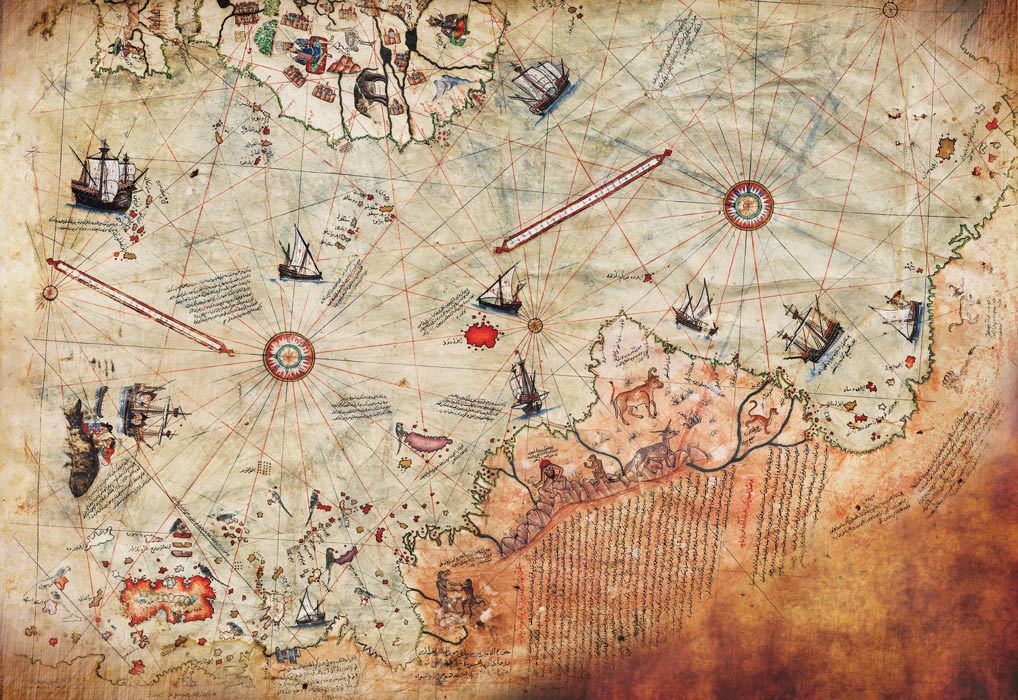
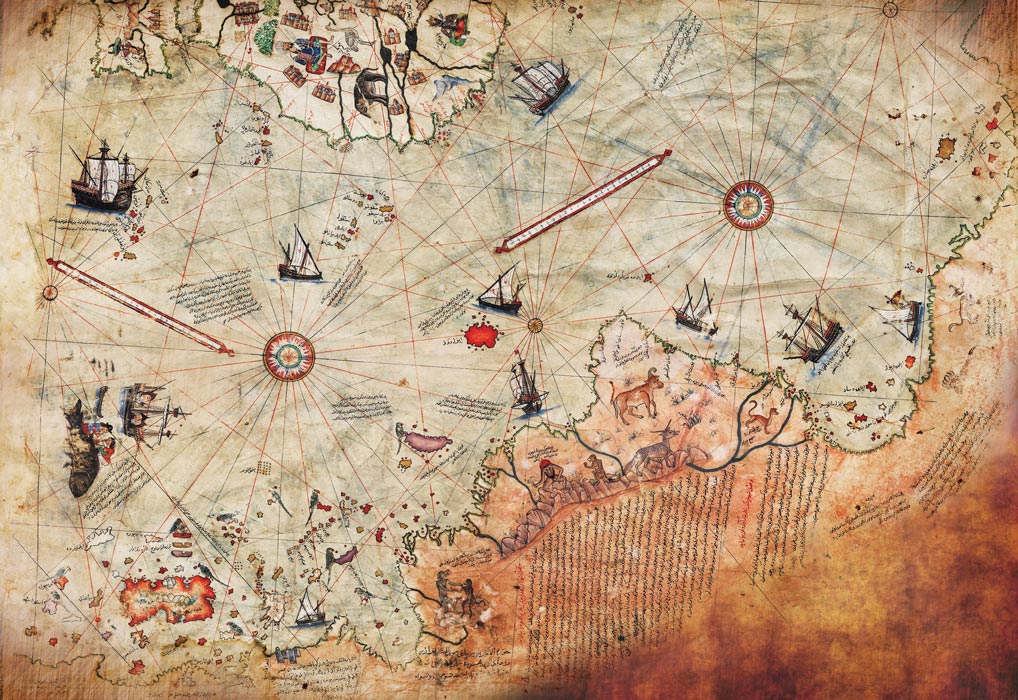
On October 9, 1929, a German theologian named Gustav Adolf Deissmann was cataloguing items in the Topkapi Palace library in Istanbul when he happened across a curious parchment located among some disregarded material. On the gazelle skin parchment was a map, now referred to as the Piri Reis map .
The map was drawn and signed by Turkish cartographer Hagji Ahmed Muhiddin Piri , aka Piri Reis, and is dated to 1513 AD. Reis was an admiral in the Turkish navy, an experienced sailor, and a cartographer, who claimed to have used 20 source maps and charts to construct the map, including 8 Ptolemaic maps, 4 Portuguese maps, an Arabic map, and a map by Christopher Columbus.
Since its discovery, the Piri Reis map has stirred both intrigue and controversy, mostly due to the presence of what appears to be a representation of Antarctica 300 years before it was discovered. Another—if not even more intriguing facet of the appearance of Antarctica—is that it appears to show the land mass before it was covered in ice, over 6000 years ago.
Evidence of Ancient Technology?
The great debate was sparked by Professor Charles Hapgood when he published his theory on the Piri Reis map in his book Maps of the Ancient Sea Kings in 1965. He and a team of students at the University of New Hampshire studied the map and found many anomalies, such as the use of mercatorial projection and the inclusion of a pre-ice Antarctica.
The Greeks were able to create cylindrical maps based on their knowledge of a spherical earth, though mercatorial projection was not used by Europeans until later in the 16 th century, and were also able to use astronomy and geometry to calculate latitude and longitude, though absolute accuracy was not possible until the invention of the chronometer in 1760. While these two feats—amazing as they are—could be explained by use of Greek source maps and charts from the age of Alexander, nothing could explain the inclusion of Antarctica. As a result, Hapgood proposed that the map was based on materials that pre-date 4000 BC, before any known developed languages or progressive civilizations.
This theory implies that a prehistoric civilization had the technology to navigate major seaways and fairly accurately chart the globe. Hapgood also suggested that the topographic depiction of the interior of the continents required aerial capabilities, implying the prehistoric ‘super’ civilization to be both nautical and aerial masters and leading to the further speculation of either an Atlantean or alien civilization. No evidence has been found to support such theories.
South America vs Antarctica
Skeptics of Hapgood’s theory point out that the map is a representation of the South American coastline, pointing to modern physical features of the coast and interior included on the 16 th century map. Otherwise, argue critics, the image would indicate that Antarctica and South America had once been connected at Uruguay, and that Argentina did not yet exist.
While this argument possibly dismisses the presence of Antarctica on the Piri Reis map, other anomalous maps have been found that are identical to the the ice free continent as only 20 th century satellite technology has been able to identify.
Other theories of Hapgood’s have already been dismissed, such as his polar shift theory in which he claimed a sudden shift in the inclination of the Earth’s axis of rotation in 9,500 BC could have resulted in the displacement of Antarctica, sending it hundreds of miles south and resulting in the alteration of its climate from semi-temperate to freezing. All evidence suggests that this shift could not, and did not, occur.
Undiscovered Civilization?
The true question is whether or not Antarctica is the identifiable continent on the Piri Reis map, or any of the other anomalous maps. If it is, could the Piri Reis map have been based on the documents of a yet undiscovered, prehistoric civilization, one that could possess technology enabling them to travel and accurately chart the globe? Regardless of the true origin of the sources, one thing is for certain: this map opens up the debate over how we view our own history and what, if any, of those views are accurate. Perhaps someday the truth will be discovered.
statistical results and correlations could be followed with the URL below..
Research update: April 1, 2020
The first results from our COVID-19 symptom tracking app show that losing your sense of smell or taste is a stronger predictor of coronavirus infection than fever.
According to the NHS, the most common symptoms of coronavirus infection are fever (high temperature) and a new continuous cough.
However, many people are also reporting symptoms such as aches and pains, chills, tiredness, headaches and diarrhoea. But there have also been plenty of anecdotal reports of patients suddenly losing their sense of smell or taste, particularly in the early stages of infection.
Is loss of smell or taste a symptom of COVID-19?
To find out more about the early warning signs of COVID-19, our researchers at King’s College London and ZOE have been analysing data from by nearly 2 million 400,000 ‘stay-at-home scientists’ who have been submitting daily health updates through the COVID-19 symptom tracking app.
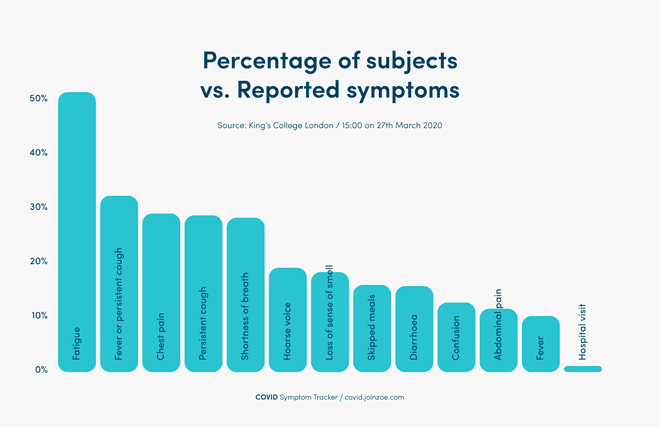
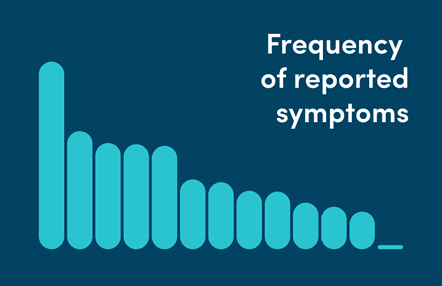
We found that of 400,000 people reporting one or more symptoms between 24-29th March::
53% had fatigue or tiredness
29% had a persistent cough
28% suffered from shortness of breath
18% had lost their sense of smell (anosmia) or taste
10.5% were suffering from fever
Of these 400,000 people, 1,702 had been given a test for COVID-19. 579 had tested positive, while 1,123 were negative.
Doing a quick bit of maths tells us that of the people who were definitely infected by coronavirus (i.e. tested positive), nearly six in ten (59%) reported losing their sense of smell or taste compared with only around two in ten (18%) who tested negative.
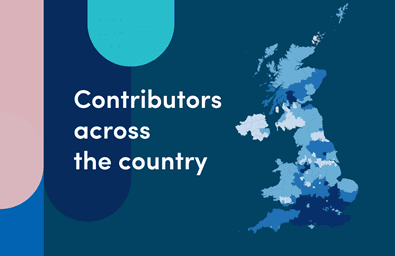
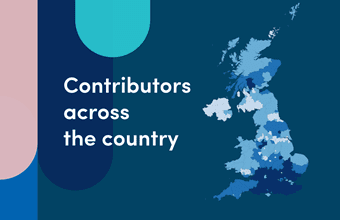
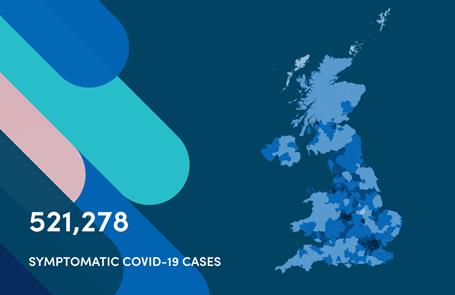
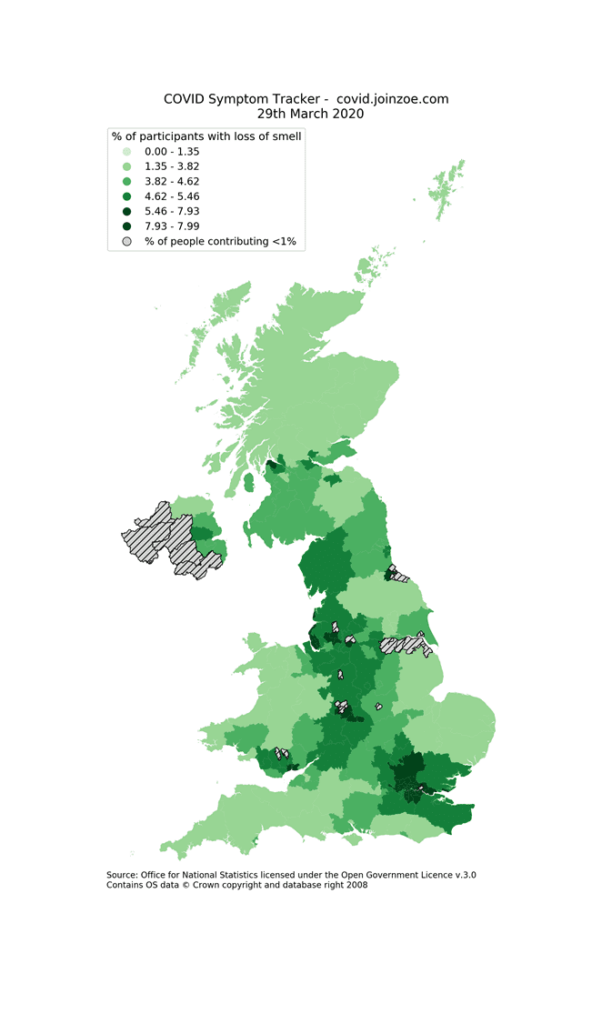
This map shows the hotspots in the UK where app users are reporting loss of smell or taste:
Our team then crunched all the symptom data together to build a computer programme (model) combining data on loss of smell and taste, fever, persistent cough, fatigue, diarrhoea, abdominal pain and loss of appetite to predict whether someone is likely to be suffering from COVID-19 or not, even if they haven’t been tested for the virus.
When we used the model to look across the 400,000 people who had reported symptoms but not yet had a COVID-19 test, we found that more than one in ten (13%) are likely to be infected by the virus based on their combination of symptoms.
That adds up to an extra 50,000 individuals who are likely to have as yet unconfirmed COVID-19 infections.
Why does COVID-19 cause loss of smell and taste?
Our senses of smell and taste are closely intertwined. Most of what you taste when you eat and drink actually comes from its smell, rather than its effects on the tastebuds on your tongue.It’s not entirely clear why coronavirus infection leads to a loss of smell and taste.
The key probably lies in the olfactory epithelium: a layer of neurons (nerves) and other supporting cells at the back of the nose that detect smelly chemicals in the air and relay this information into the brain.
One idea is that the virus causes inflammation and swelling in the back of the nose, interfering with normal smelly sensations. Scientists at Harvard have also just published a pre-print (non-peer-reviewed results) suggesting that the coronavirus responsible for COVID-19, known as SARS-CoV-2, may infect the supporting cells in the olfactory epithelium that surround the neurons responsible for detecting scents.
What should I do if I lose my sense of smell or taste?
Loss of smell or taste is one of many symptoms of COVID-19, and people respond in different ways to infection (something we’re working hard to understand from the data we’re collecting).
It’s important to remember that the common cold and other respiratory infections can also make you lose your sense of smell. Conversely, you may be infected with coronavirus without suffering any loss of smell or taste at all. And while loss of smell does seem to be a genuine early-warning sign of COVID-19, fever and coughing are still the most important symptoms to look out for.
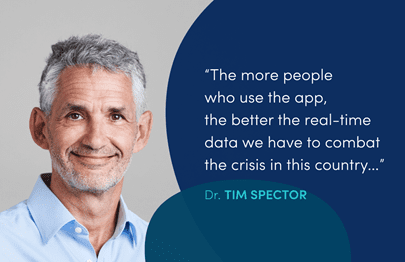
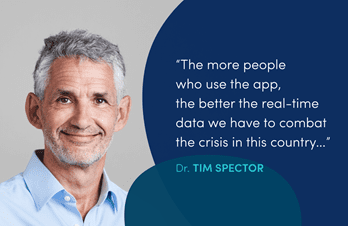
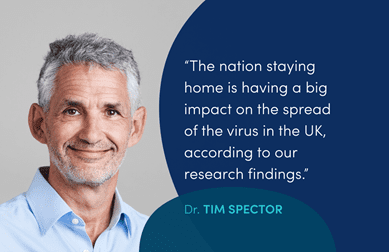
Our lead researcher Professor Tim Spector says, “When combined with other symptoms, people with loss of smell and taste appear to be three times more likely to have contracted COVID-19 according to our data, and should therefore self-isolate for seven days to reduce the spread of the disease.”
Given the circumstances, the best advice for anyone noticing loss of smell or taste is to treat yourself as being infectious. That means following the Government guidelines and starting self-isolation to protect your family, the NHS and the wider community by stopping the spread.
Other updates
News: the latest COVID estimates
Symptomatic COVID cases continue to fall across the UK even as our contributor base grows to over 2.3 million. Discover our latest estimates across England, Scotland and Wales.
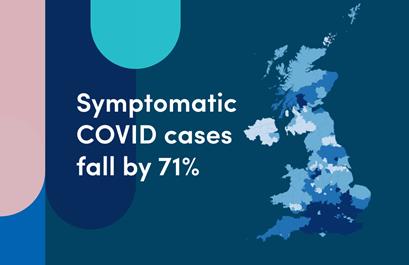
Symptomatic COVID cases fall by 71% over 2 weeks
The number of cases of predicted symptomatic COVID has fallen from 2 million to 582,640 in just over two weeks (01 April to 15 April) according to the latest data from the new COVID Symptom Tracker app.
How long will COVID lockdown last?
Professor Tim Spector and ZOE, CEO Jonathan Wolf share projections on cases of COVID-19 to discuss when the pandemic will end and the risk of ending lockdown too early.
First Minister Mark Drakeford makes urgent appeal
First Minister Mark Drakeford and NHS Wales are appealing to the Welsh public to download the COVID Symptom Tracker app to help the NHS response to COVID-19 in Wales.
You asked: Can food help immunity?
Many COVID Symptom Tracker participants have been asking our scientists whether there are certain foods that they should be eating to help combat COVID-19 or fend off coronavirus infection. We reveal the truth backed by science.
The impact of self-isolation
The latest analysis of data from the COVID Symptom Tracker app, used by over 2 million people, shows the rate of new symptoms being reported nationally has slowed down significantly in the past few days.
Webinar: Predicting symptomatic COVID-19
ZOE and King’s College data science and machine learning teams have been working around the clock to create a machine learning model that uses Symptom Tracker data to predict COVID-19 in the UK. Here’s how they’ve done it.
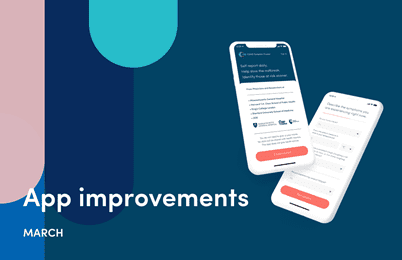
COVID App updates: March
After receiving thousands of data-points from you on app improvements we are happy to say that we have updated the app experience for you. Here is an overview of new features we’ve made.
How do I delete my data?
You have the right to remove your data from our service at any time. We’ll tell you how it is protected and how you can remove it at any time.
Mapping your symptoms
Our data science team has analysed some of the most commonly reported symptoms in the UK. We’ll show you what they are and where they’re being experienced by those using our COVID Symptom Tracker.
How is your data secured?
Your data is protected under “General Data Protection Regulation” (GDPR) which extends beyond the standard requirements of US data protection regulations. Read more about how your data is protected and the security partners making it possible.
Webinar: Symptom Analysis
Watch our March 30th research update webinar. Doctors and clinical researchers Claire Steves and Tim Spector share an update on the insights they’re learning from the COVID Symptom Tracker and how we’re using it to aid the global health community.
Smoking and COVID-19
We know that smoking isn’t a healthy habit, but have you wondered if it might increase your risk of COVID-19? Dr. Claire Steves and the research team from King’s College London tell us more in our latest update.
How your data will help fight COVID-19 in the US
As the COVID-19 coronavirus pandemic grips the United States, we are recruiting millions of citizen scientists across the nation. Our aim is to slow the outbreak of the disease and identify those at risk sooner. Here’s how you can help out from home.
Who are the 1.5 million citizen scientists?
The COVID symptom tracker has now been downloaded over 1.5 million times. As the number of contributors continues to grow we take a look at who they are.
Could non-classic symptoms indicate mild COVID?
Scientists and researchers from Kings College London report the state of the nation’s reported symptoms as of 3pm on 27th March 2020.
King’s College London: The team analysing your data
We talk to Dr. Claire Steves, Senior Clinical Lecturer at King’s College London who is leading the research team analysing your data.
Over 1 million citizen scientists and counting!
The COVID symptom tracker was downloaded over 1 million times in just 36 hours.
How your data will provide clues to tackle COVID-19
Research lead Dr. Tim Spector, professor of genetic epidemiology at King’s College London and director of TwinsUK, discusses how your data will be used.
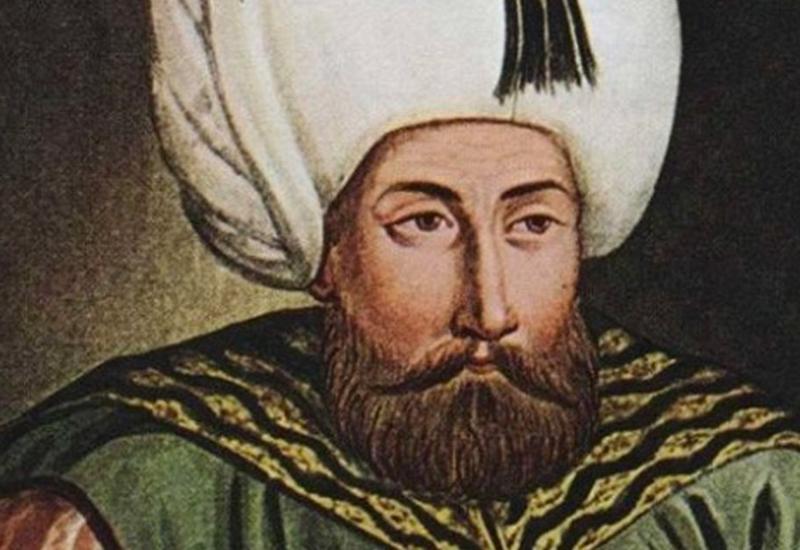
An unique artifact was discovered in Baku – the decree of the Ottoman Sultan Suleiman the Magnificent.
According to Day.Az with reference to qaynarinfo.az the document was discovered by an employee of the Institute of Manuscripts named after Fizuli of the National Academy of Sciences Naila Suleymanova. The publication notes that the document is a decree on donating land.
It is reported that the decree of the Turkish Sultan dates back to the 975th year of the Hijra (1566), it was signed in Istanbul with black, gold and blue ink. The dimensions of the scroll of the document are 30 by 180 centimeters.
The decree also bears the signatures vezirs of the sultan Mohammed bin Abdulkhaya , Partav bin Abdulkhaya, Farhad bin Abdulkhaya, the Kaziaskers Ahmed bin Mustafa, Hussein bin Abdulkhaya and witness Ahmed bin al-Daftari.
Suleiman I the Magnificent (Ganuni) – the tenth sultan of the Ottoman Empire (1520-1566) and the 89th caliph since 1538. Suleiman is considered the greatest sultan of the Ottoman dynasty; under him the Ottoman Porta reached the peak of its development. In Europe, Suleiman is most often called Suleiman the Magnificent, while in the Muslim world Suleiman Kanuni.
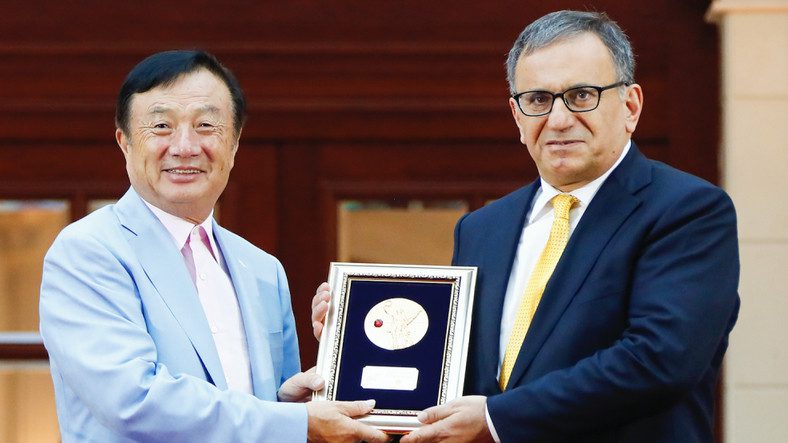
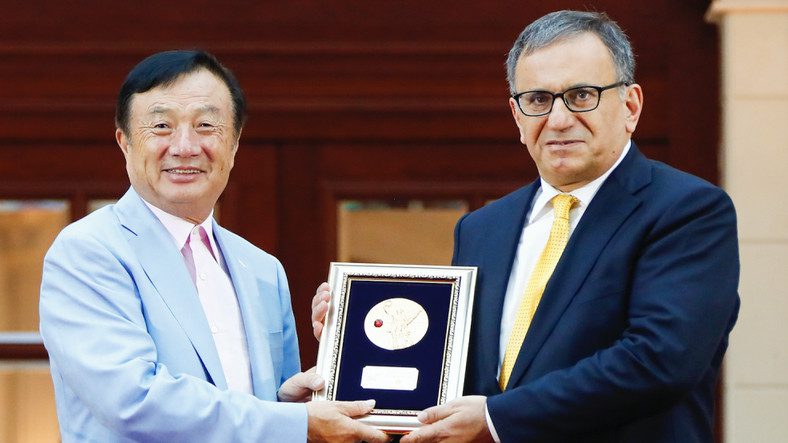
Huawei Founder, Ren Zhengfei, accompanied by top level management, hosted an award ceremony at the company’s HQ in Shenzhen, China. Together, they recognized Prof Arikan, the Father of Polar Codes, for his years of contribution in communications technology. The accomplishments of Huawei’s own scientists were also celebrated in this majestic ceremony. The Turkish professor and Huawei both emphasized on the importance of research, cooperation and the spirit of exploration to building a connected and intelligent future:
The Nazis’ Gifts to Turkish Higher Education and Inadvertently to Us All: Modernization of Turkish universities (1933-1945) and its impact on present science and culture.
This is a tale of individuals caught at the crossroads and in the cross-fires of history. Their native lands were in the throes of discarding them. Their lives were saved because an alien country was discarding a societal culture inherited from the Ottomans. Turkey recognized the need to modernize its society while Germany and Austria were literally throwing babies and much more, out with the bath water. The Nazis came to power. Many of these intellectuals were Jewish.
The book documents a bit of history that is dimly lit and largely unknown. In the 1930s the new republic of Turkey badly needed western intellectual know-how to create a modern system of higher education and to modernize practice in various professions. In the west Fascism was rising. Much of the intellectual capital in German speaking countries involved individuals unacceptable to the new ideology and those for whom the ideology was unacceptable. Most had no other emigration options. For those who did, professional employment was not guaranteed. Turkey extended invitations to these desperate souls. For certain chits, the German Reich allowed the emigrations to take place. Germany needed Turkey’s neutrality to keep the Bosporus and Dardanelles open to its navy and shipping at all times – including war times. Throughout WWII the pressure was high to have these expatriates returned to the Reich along with all Turkish Jews. Turkey never caved in.
The system of higher education inherited by the Republic of Turkey in 1923, consisted of a few hundred Ottoman vintage (Islamic) madrasas, a fledgling university called the Dar-ül Fünun, and three military academies, one of which was expanded into a civil engineering school around 1909. With secularization enshrined in its constitution, the new government recognized a need for modernization/westernization throughout Turkish society and established a number of policies to bring this about. Indigenous personnel to do this were not to be had. Starting in 1933 and running through WWII, Turkey provided safe-haven for many intellectuals and professionals for whom the Nazis had other plans.
This book discusses the impact of these émigré professors, on Turkey’s higher education in the sciences, professions, and humanities, and also on its public health, library, legal, engineering, and administrative practices. The multi-faceted legacy of this impact on present Turkish society with all its richness is documented if but in part. Some of the socio-economic reasons for Turkey’s not taking full advantage of the second and third generation progenies of its modern higher educational system, and the ensuing “brain drain,” are analyzed. Lastly, the book briefly addresses the impact on American science and higher education of the Turkish-saved professors, many of whom subsequently re-emigrated to the US.
Acknowledgments: The author is grateful to an old and dear friend Aysu Oral, for her knowledge of Turkish history, language, and culture, which greatly contributed to finding, abstracting, and translating much text from Turkish language documents; to graduate students, Ismail Capar and Emel Aktas who provided some of the Turkish material; the troika of Eugen Merzbacher, distinguished physics Professor Emeritus, University of North Carolina, Matthias Neumark of Charlottesville, VA, and Andrew Schwartz of Acton Mass., both retired businessmen who provided many insights because they were there at the time, were not too young to understand events nor too old to recall and retell their stories; to Rita and Marek Glaser of Tel Aviv, Israel, also old and dear friends, for searching archival information and contacting Holocaust survivors for personal experiences that are relevant. Clearly, a number of scholars, archivists, and institutions have provided much of the information contained herein. Among these are Anthony Tedeschi and Becky Cape, Head of Reference and Public Services, The Lilly Library, Indiana University; Samira Teuteberg, AHRB Resource Officer, Centre for German-Jewish Studies; University of Sussex; Dr Norman H. Reid, Head of Special Collections, University of St Andrews Library, Scotland and to J. J. O’Connor and E. F. Robertson , Department of Mathematics and Statistics of the same university; Andrea B. Goldstein, Reference Archivist, Harvard; Viola Voss, Archivist, Leo Baeck Institute, New York; Ralph Jaeckel and staff of the von Grunebaum Center for Near East Studies, UCLA; Chris Petersen, the Ava Helen and Linus Pauling Papers, Valley Library, Oregon State University; Stephen Feinstein, University of Minnesota; Rainer Marutzky, Braunschweig Institute for Wood Research; Dr. Klaus Kallmann, New York Natural History Museum (Ret); Prof. Dr. Johannes Horst Schröder, Institut fur Biologie, Munich (Ret); Meg Rich, Archivist and Daniel J. Linke, University Archivist and Curator of Public Policy Papers, Seeley G. Mudd, Manuscript Library, Princeton University; Marcia Tucker, Historical Studies-Social Science Library, Institute for Advanced Study, Princeton; Ken Rose, Assistant Director, Rockefeller Archive Center; Paul G. Anderson, Archivist, Becker Medical Library, Washington University in St. Louis; Julia Gardner, Reference/Instruction Librarian, Special Collections Research Center, University of Chicago Library; Virginia G. Saha, Director, Cleveland Health Sciences Library; Nejat Akar MD, Professor of Pediatric Molecular Genetics, Ankara University, Faculty of Medicine; Professor Arin Namal, University Istanbul Medical Faculty Department of Medical Ethics and Medical History; Kyna Hamill, Tisch Library Archives, and Amy E. Lavertu, Information Services Librarian, Hirsh Health Sciences Library at Tufts University; Historian Tuvia Friling of Ben Gurion University, Beer Sheva, Israel, an expert on Jewish issues in the Balkans and Turkey during the relevant period; Daniel Rooney, Archivist, National [US] Archives and Records Administration; and especially to Ron Coleman, Reference Librarian, United States Holocaust Memorial Museum, who went beyond the call of duty in providing references and did so in a most timely fashion. Key words: Turkey; History; History of science and technology; Development; Technology Transfer; Educational Policy; Government Policy; Higher education; Nazi persecution; Nazism; Holocaust; Shoah; Migration; Diaspora; Exile.
ABOUT THE AUTHOR
Arnold Reisman received his BS, MS, and Ph.D. degrees in engineering from UCLA. He is a registered Professional Engineer in California, Wisconsin, and Ohio and has published over 200 refereed papers and 14 books. After 27 years as Professor of Operations Research at Case Western Reserve University, he chose early retirement in 1994. During 1999-2003 he was Visiting Scholar in Turkey at both Sabanci University, and the Istanbul Technical University. His current research interests are; technology transfer; epistemology of knowledge generation; meta research; and most recently, the history of German speaking exiled professors starting 1933 and their impact on science in general and Turkish universities in particular. He is also actively pursuing his life long interest in sculpting. He is listed in Who’s Who in America, Who’s Who in the World, American Men and Women of Science, and Two Thousand Notable Americans and is a Fellow of the American Association for Advancement of Science.
Book Length
Text length and number of visuals are negotiable. Manuscript delivered in nine (9) months or less of contract signing.
TABLE OF CONTENTS (TENTATIVE)
Introduction
The Builders
Architecture and City Planning
The Preservators
Archeology
Library Science and librarianship
Orientology
Botany and zoology
The Creators
Performing arts
Visual arts
The Social Reformers
Law
Economics
The Healers
Medicine
Dentistry
The Scientists
Astronomy
Biology, Chemistry, and Biochemistry
Mathematics and Engineering Science
Philosophy and Science
Physiology
University histories
Ankara University
Istanbul Technical University
Istanbul University
Problems the emigres encountered
Correspondence and memoirs
Legacy left behind
Selected biographies of first-generation Turkish elite educated by the émigré professors.
Selected biographies of second-generation Turkish elite educated by the émigré professors.
Oral histories
First generation: Turkish elite educated by the émigré professors.
Surviving spouses
Turkey’s post-war policies and practices: Effects limiting the legacy’s
impact potential.
After their re-emigration, Turkey-saved professors’ impact on:
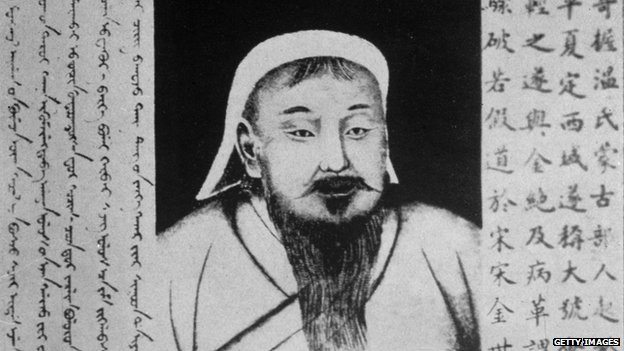
Genghis Khan and the Explosion from the Steppes will be one of the new topics on offer if the draft A-level is accredited
The rise of Islam and pre-colonial African kingdoms are among topics on offer in a draft new history A-level, due to be introduced next year.
The course, from exam board OCR, will also include options on Alfred the Great and Genghis Khan.
The aim is to give greater breadth to the fifth most popular A-level subject.
OCR’s head of history, Mike Goddard said the subject had been criticised “for being too repetitive and having a 20th Century Western focus”.
Hitler and the Henrys
Mr Goddard said these criticisms were sometimes unfair but added that: “Hitler and the Henrys can dominate.
“Universities tell us they want incoming students to have greater breadth of knowledge.
New history topics
Alfred and the Making of England: 871 – 1016
The Early Anglo Saxons: 400 – 800
Genghis Khan and the Explosion from the Steppes: 1167 – 1405
Japan: 1853 – 1937
African Kingdoms: 1400 – 1800
The Rise and Decline of the Mughal Empire in India: 1526 – 1739
The Rise of Islam: 550 – 750
The Ascendancy of the Ottoman Empire: 1453 – 1606
China and its rulers: 1839 – 1989
The Middle East, Ottomans to Arab Spring: 1908 -2011
“It’s vital that schools and colleges have an opportunity to deliver, for example, the history of pre-colonial, non-Western civilisations, alongside British history.”
The board says the course will continue to include familiar subjects such as the Tudors and Stuarts, Victorian social reform and the rise of Hitler but the aim is to broaden the subject “in time and space”.
Some of the 10 new topics will appear in an A-level syllabus for the first time.
Mr Goddard said the African Kingdoms topic, developed with university experts would “give students, for the first time, the chance to discover the economic and political power of four pre-colonial kingdoms which had far-reaching global trade and diplomatic connections”.
Altogether there will be 58 topics divided into three groups:
world history
British history
historical themes
King Henry VIII is a staple of the A-level history syllabus
Sixth-formers are asked to choose three topics – one from each group.
New subject criteria from Ofqual requires that from 2015 students should take options from across a 200-year range and include the study of more than one state.
‘Under-explored’
OCR says its specification ranges over nearly 1,700 years and includes dozens of states.
The board hopes it might be appealing for teachers to get out of their comfort zones and teach topics that are new to them, using a range of new online resources and support facilities.
Prof Peter Mandler, president of the Royal Historical Society, said the principle of broadening school history was an approach favoured by academics.
“History tells us not so much about who we are as about who we have been and what we might yet be,” he said.
“We welcome efforts by the examination boards to bring recent academic research on hitherto under-explored histories within reach of school pupils.
“It is particularly important not to tell the history of the non-Western world solely through its contact with the West.”
The new course will be submitted for accreditation by the exam regulator Ofqual next month.
If approved it will be taught in schools from September 2015.
via BBC News – Less Hitler and Henrys in new history A-level.




 An unique artifact was discovered in Baku – the decree of the Ottoman Sultan Suleiman the Magnificent.
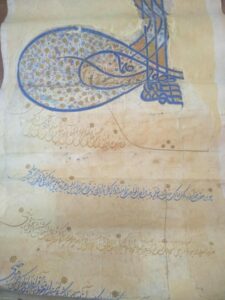 It is reported that the decree of the Turkish Sultan dates back to the 975th year of the Hijra (1566), it was signed in Istanbul with black, gold and blue ink. The dimensions of the scroll of the document are 30 by 180 centimeters.