Tag: Recep Tayyip Erdogan

12th president of Turkey

  • Obama to visit Turkey in next few weeks

    Obama to visit Turkey in next few weeks

    ANKARA, Turkey (CNN) — President Obama plans to visit Turkey in about a month, Secretary of State Hillary Clinton said Saturday.

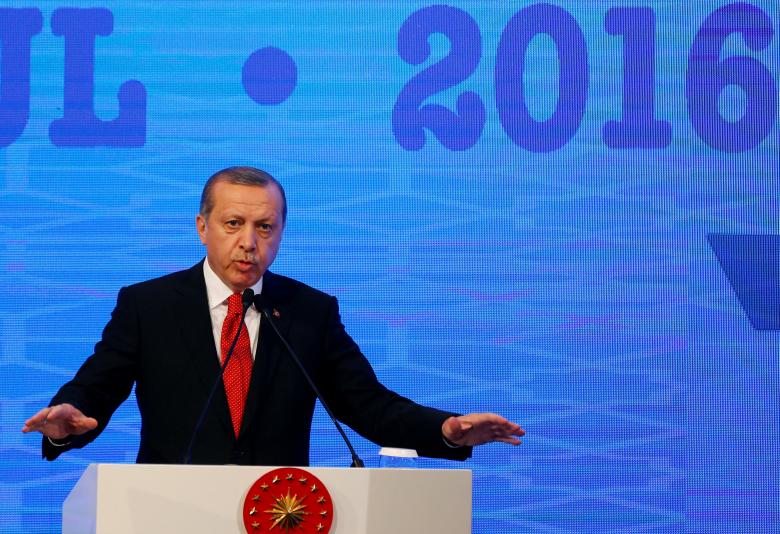
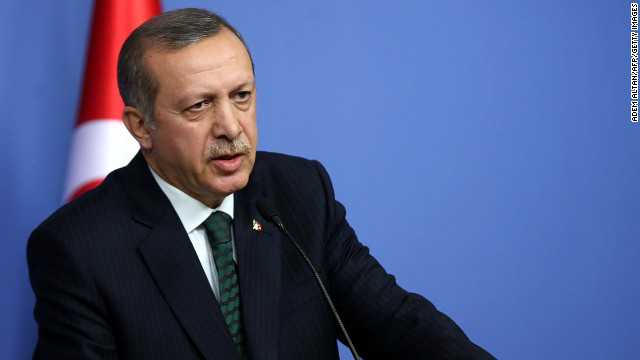
    Secretary of State Hillary Clinton meets Saturday with Turkish Prime Minister Recep Tayyip Erdogan.

    Clinton was holding talks in Ankara with officials “to emphasize the work the United States and Turkey must do together on behalf of peace, prosperity and progress,” she said.

    Obama had said he was going to deliver a speech in a Muslim capital within the first hundred days of his presidency. Clinton did not say that Obama would be making such a speech during this visit.

    A senior Obama administration official confirmed that Turkey will be the president’s first visit to a Muslim nation since taking office, but did not provide dates for the president’s upcoming visit to Turkey.

    This official did say the visit would be “an important opportunity to visit a NATO ally and discuss shared challenges.”

    The official added that “it will also provide an opportunity to continue the president’s dialogue with the Muslim world, a dialogue he started immediately and intends to maintain throughout his presidency.”

    The State Department on Saturday issued a joint statement from Clinton and Turkish Foreign Minister Ali Babacan reaffirming the close U.S.-Turkish relationship.

    Both countries pledged to pursue an Arab-Israeli peace settlement, peace in the southern Caucasus region, normalization of Turkish-Armenian relations and a settlement of the Cyprus question — a dispute between Greek and Turkish Cypriots over territory.

    They vowed to enhance the fight against terror groups such as al Qaeda and the Kurdistan Workers’ Party and work to expand the natural gas and oil infrastructure to help Caspian basin and Iraqi energy producers reach European and world markets.

    Turkey is a secular country and predominantly Muslim. It is a NATO member and has been a longtime ally of the United States. It is one of the few Muslim countries to have full diplomatic relations with Israel and has long been the Jewish state’s closest military and economic partner in the region.

  • A Race to the Bottom for Turkish Democracy

    A Race to the Bottom for Turkish Democracy

    Bickering Between Erdogan and Baykal: A Race to the Bottom for Turkish Democracy?

    Publication: Eurasia Daily Monitor Volume: 6 Issue: 42

    March 4, 2009
    By: Saban Kardas

    The quality of political discussions in Turkey is hitting the bottom as local elections, slated for March 29, approach. Although candidates will be running for municipal posts, the aggressive campaigning by political parties has turned the election race into a national referendum on the governing Justice and Development Party (AKP)’s performance in power (EDM, December 3). The importance attached to the election results has, in turn, heightened the debate between not only the mayoral candidates but also party leaders, leading to an exchange of harsh verbal attacks. The latest row in this war of words was between Deniz Baykal, the leader of the main opposition Republican People’s Party (CHP), and Recep Tayyip Erdogan, the leader of the AKP and the current prime minister.

    Determined to win a decisive victory in the municipal elections, Erdogan’s AKP began the election marathon earlier than its rivals. Talking to large crowds at election rallies, Erdogan challenged the leaders of the opposition parties and accused them of being afraid to go to the people. In response, Baykal and Devlet Bahceli, the leader of the Nationalist Action Party, started to appear in election meetings organized by their parties. Bahceli rejected Erdogan’s charges and maintained that his party was always in harmony with the people. He claimed, moreover, that Erdogan was using the state’s resources, including planes and helicopters, to mobilize support for his own party’s candidates (Milliyet, March 2). Similar charges against the government are being made by other parties as well, as the AKP’s use of state resources puts opposition candidates at a disadvantage (Radikal, February 24; EDM, February 2).

    In the last week of February, the bickering between Erdogan and Baykal took a confrontational and nasty turn, with both leaders using very harsh words. Baykal maintained that the crowds Erdogan talked to were brought together by state resources, and he invited Erdogan to a TV debate so that they both could discuss everything openly. Erdogan declined the invitation and challenged Baykal to meet people on the ground (ANKA, February 22).

    Against this background, at an election rally on February 28, Baykal lambasted Erdogan’s indifference to criticism and maintained that by constantly bashing the opposition and the media in the election rallies, Erdogan avoided talking to the people about the real economic and social problems. Baykal also maintained that although his party had used a cooperative approach and proposed a package of suggestions about how to deal with the economic crisis in response to Erdogan’s earlier challenge, Erdogan ridiculed Baykal and simply responded to him by saying “mind your own business,” implying that Baykal would never come to power. Baykal went on to say that “this demeanor is maganda style. This is not the demeanor expected from a prime minister… We are used to seeing the elegance, kindness, and respect of past leaders. This kulhanbeyi style, this maganda style may look good on Erdogan [as a person], but it does not look good on [Erdogan as] the Prime Minister of the Turkish Republic.” In addition to his use of the words maganda (a pejorative term in Turkish to describe crass, rude and uncultured persons) and kulhanbeyi (rowdy), Baykal quoted a popular Turkish saying to disparage Erdogan: “You have become a prime minister, but you could not become a man (adam). You will hardly become a man, because you don’t know what you are talking about. You say one thing today, quite another thing tomorrow” (www.nethaber.com, February 28).

    Speaking at his own party’s rallies in other towns on Sunday, Erdogan said that although he knew very well how to respond to Baykal, his code of ethics and upbringing would not allow him to use such words in office. He said that he would remain a gentleman and seek redress in the courts. Maintaining a polemical tone, however, Erdogan says that after he quits politics, he might respond to Baykal with similar language. “My nation chooses a real man as its prime minister,” Erdogan added (Cihan Haber Ajansi, March 1; Aksam, March 2).

    On March 2 Erdogan’s attorneys filed defamation lawsuits against Baykal and Mustafa Ozyurek, the speaker and chief accountant of the CHP, who also used the word maganda during a press conference on February 27 to describe Erdogan’s conduct. The attorneys maintained that Ozyurek “aimed to attack Erdogan’s personal rights and [make] completely erroneous accusations of the most insulting nature” that could not be considered freedom of speech (Anadolu Ajansi, March 2; Today’s Zaman, March 3).

    Responding to these developments in an address to the CHP’s parliamentary group, Baykal defended his remarks and maintained that he had not insulted Erdogan personally in any way. Citing several instances in which Erdogan had insulted him and others, Baykal said that although Erdogan had sued him several times in the past for minor things, he himself had avoided resorting to the courts as a means of resolving their disputes. He noted that he had only criticized the prime minister’s behavior and words and would continue to do so as long as Erdogan acted in a this manner. Referring to Erdogan’s words that he would watch his deportment as long as he was prime minister, Baykal added that his reaction to Erdogan might have served a purpose after all by reminding the prime minister of his responsibilities in office (www.cnnturk.com, March 3).

    This case of bickering between Erdogan and Baykal is neither the first nor the last one. The history of Turkish political life is rich in similar episodes of political leaders engaging in a war of words against each other. This recent row, however, perhaps more than any previous one, amounts to a race to the bottom for Turkish democracy. The entire election campaign has been dominated by calls for duels, charges of corruption, and mutual accusations about the leaders’ demeanorall overshadowing substantive public deliberation on political issues. It is, moreover, ironic that local election campaigns are being hijacked to such a great extent by national political considerations and populism. Regardless of which party wins the next elections, Turkish democracy might being the biggest looser.

    https://jamestown.org/program/bickering-between-erdogan-and-baykal-a-race-to-the-bottom-for-turkish-democracy/

  • Transcript of Peres’ phone call to Erdogan

    Transcript of Peres’ phone call to Erdogan

    Turkish media outlets reported that Peres had apologized to Erdogan during their five-minute phone conversation, but Peres’ office denied the report, saying that the purpose of the telephone call was simply to ensure that the “crisis won’t deteriorate.”

    The following is a transcript of the phone conversation between the two leaders, issued by Turkey’s state-run Anatolian Agency on Friday:

    Peres: Such things happen between friends. I am very sorry for today’s incident. Firstly, my respect towards the Turkish republic and you a prime minister has never changed.

    Erdogan: Firstly, of course. There is no doubt that such arguments can happen between friends. But nobody can even speak to a tribe leader so loudly and in front of the international community, and not to the leader of the Republic of Turkey.

    Peres: I raised my voice. In fact my friends tell me that I have a quite voice. This has nothing to do with my relationship with the prime minister of the Republic of Turkey. I am very sorry for what happened today.

    Erdogan: I heard that you are going to hold a press conference.

    Peres: Not today, but tomorrow.

    Erdogan: If you express these sincere feelings, which I believe you will, in tomorrow’s press conference, I assume this problem will be mostly overcome.

    Peres: Of course I will publicly express these remarks.

    Erdogan: Thank you very much for your call Mr. President.

    Peres: I thank you and wish you a nice flight.

    Source: AA (Turkey), Haaretz (Israel), January 30, 2009

  • Israeli army disowns general’s Turkey attack

    Israeli army disowns general’s Turkey attack

    The Israeli military on Saturday disassociated itself from remarks critical of Turkey made by one of its generals after Ankara described them as unacceptable and demanded an urgent clarification. Skip related content

    Related photos / videos

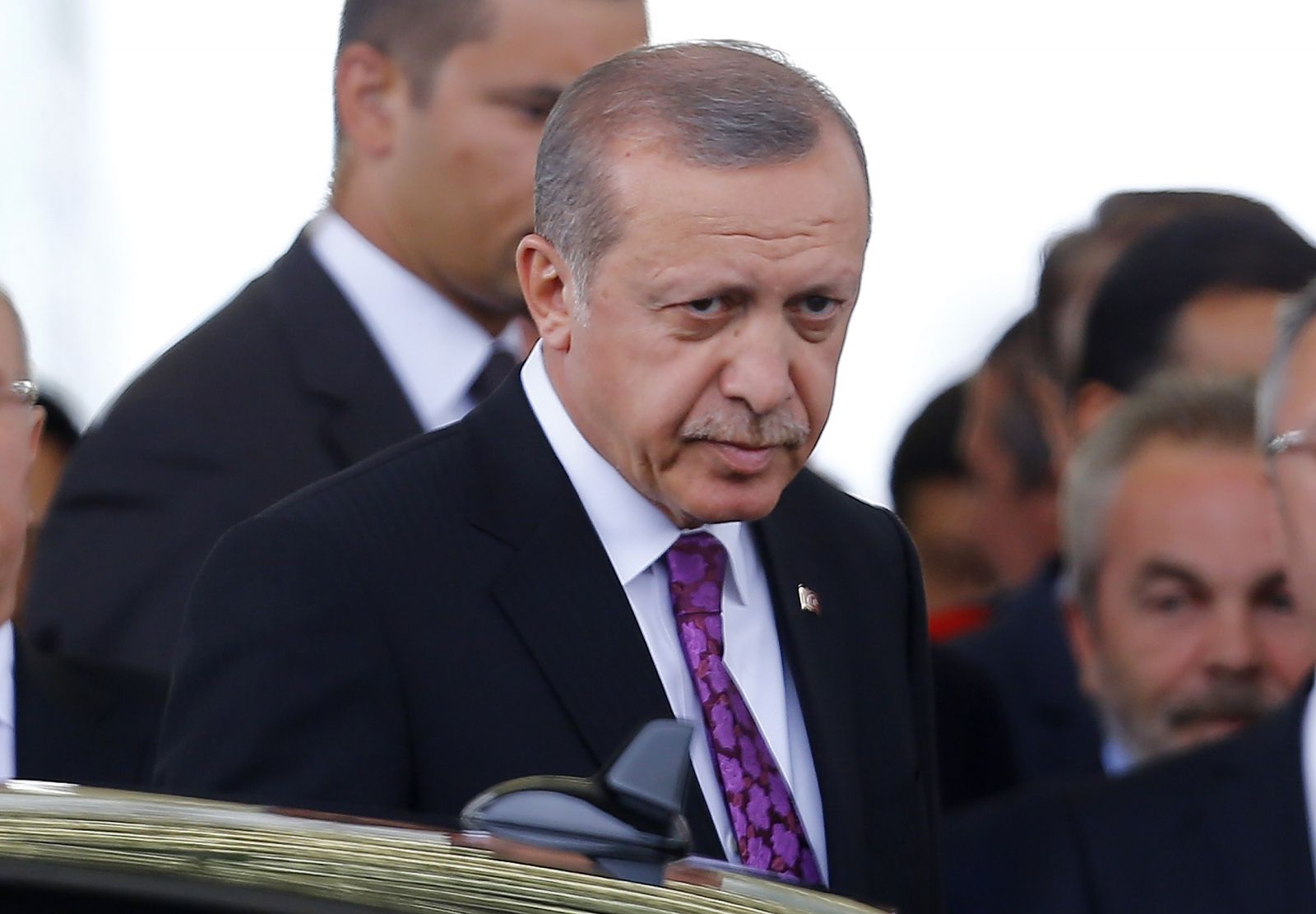
    Turkish Prime Minister Recep Tayyip Erdogan Enlarge photo

    The remarks by Major General Avi Mizrahi, commander of the Israeli army headquarters, followed a row sparked by Israel’s offensive in Gaza last month and contained “unacceptable claims and nonsense targeting our prime minister and our country,” the foreign ministry said.

    The Israeli ambassador to Turkey was summoned to the foreign ministry on Saturday and handed a note of protest, the statement said, adding that “the Israeli authorities were asked for an urgent clarification.”

    In Jerusalem, the Israeli army later issued a statement saying Mizrahi’s remarks were not representative of its views.

    “General Mizrahi said some things that might be construed as critical of Turkey. The army spokesman wishes to clarify that this is not the official position of the army.”

    On Friday, the Turkish media quoted Mizrahi as saying Turkish Prime Minister Recep Tayyip Erdogan, who vehemently criticised Israel‘s action in the Gaza Strip, “should first look in the mirror” and spoke about Ottoman massacres of Armenians during World War I and the Kurdish conflict in Turkey.

    The Turkish military also denounced Mizrahi’s remarks, saying they “distort the realities and are excessive, unfortunate and unacceptable.”

    Such comments “can harm national interests in relations between the two countries,” the statement said.

    “We expect the Israeli general staff, which we believe places importance on relations with the Turkish armed forces, to clarify the issue,” it added.

    The Gaza conflict has strained relations between Israel and Turkey, a predominantly Muslim non-Arab nation which has been the Jewish state’s main regional ally since the two signed a military cooperation accord in 1996.

    On January 29, Erdogan stormed out from a heated debate on the Gaza war at the World Economic Forum in Davos, Switzerland after clashing with Israeli President Shimon Peres.

    Before walking off, he said Israel committed “barbarian” acts in Gaza, told Peres that “you know well how to kill people” and lashed out at the audience for applauding the Israeli president’s emotional defence of the war.

    Mizrahi’s remarks reportedly came at an international conference in Israel on Tuesday in comments on Erdogan’s outburst, after which Israel had sought to defuse tensions, saying that relations would recover in time.

    Israel’s 22-day offensive on Islamist Hamas-controlled Gaza left more than 1,300 Palestinians dead and injured 5,300 others.

  • Talking Turkey About Israel

    Talking Turkey About Israel

    Philip Giraldi *

    The Israeli invasion of Gaza and the slaughter of civilians was such an egregious error in judgment that the usual suspects are working overtime to make it all look like a heroic defense of democratic values. The expected beneficiary of the “defensive action,” the ruling Kadima Party, so miscalculated that it is now likely to lose today’s election, with the Israeli electorate convinced that an even more extreme right-wing government is the only solution to the moderate right-wing bungling.

    Israel will likely choose hard-right nationalism by electing Bibi Netanyahu as the next prime minister. Netanyahu has never let any values, democratic or otherwise, stand in his way in his quest for a Greater (Arab-free) Israel encompassing all of the West Bank and running from the Litani River in Lebanon in the north to the Suez Canal in the south. He has already promised that if elected he will not turn any occupied land over to the Palestinians.

    There have been numerous signs that the world is no longer buying into the Israeli creation myth, even in the United States, where the suffering of the Gazans, neatly concealed by most of the mainstream media, nevertheless produced an outpouring of sympathy. The beleaguered little state of Israel founded as a homeland and refuge for the victims of persecution in Europe has become a regional military superpower ruled by a corrupt political class, with a socialist economy kept afloat by the U.S. taxpayer. Israel continues and even expands its occupation of the lands of its neighbors and engages in the brutal suppression of those who resist. Far from seeking a political solution that would create two states side by side, it has deliberately aborted every genuine peace initiative and now seeks absolute regional hegemony, pressing forward with racist policies that marginalize its own citizens of Arab descent. Most of the world has finally realized that claiming perpetual victimhood as a shield against criticism does not work very well when you can muster Merkava tanks, helicopter gunships, and white phosphorus against a civilian population.

    The sharp exchange between Israeli President Shimon Peres and Turkish Prime Minister Recep Tayyip Erdogan at Davos on Jan. 29 exemplifies Israel’s public relations problem and also casts light upon what steps the Israeli government and its friends in the United States are taking to counteract the negative press. Media reports suggest that Israel preceded its attack on Gaza by alerting a network of supporters to post comments on blogs, saturating the Web with the Israeli government’s justification for its action. This was evident on a number of blogs, including Huffington Post and the Washington Note. Many of the posters were Israelis, and it is believed that a number of them were active-duty military personnel selected for their fluency in English and other European languages as well as their familiarity with the Internet.

    The coverage of the Erdogan-Peres exchange was carefully managed in the U.S. media, but less restrained in Europe and the Middle East. In a one-hour discussion of Gaza moderated by David Ignatius of the Washington Post, an odd choice for such an important discussion, Peres was allowed 25 minutes to speak in defense of the Israeli attack. Erdogan and two other critics on the panel were given 12 minutes each. The YouTube recording of the debate shows Peres pointed accusingly at Erdogan and raised his voice. When Erdogan sought time to respond, Ignatius granted him a minute and then cut him off claiming it was time to go to dinner. Erdogan complained about the treatment and left Davos, vowing never to return. Back in Turkey, he received a hero’s welcome.

    Four days later the Washington Post featured an op-ed entitled “Turkey’s Turn From the West” by Soner Cagaptay, a Turkish-born, American-educated academic who is a senior fellow at the Washington Institute for Near East Policy (WINEP). WINEP was founded by the American Israel Public Affairs Committee (AIPAC). Cagaptay is also on the board of the American Turkish Friendship Council, one of several Turkish lobbying groups that are supportive of the Israel-Turkey relationship. A review of Cagaptay’s writings reveals that he is AIPAC’s go-to guy for any argument that Turkey is becoming more anti-Western and religious.

    That Cagaptay is a genuine expert on the country of his birth is clear, but his view on developments there is very much shaped by who pays him. He finds anti-Semitism lurking everywhere in Turkey and being “spread by the political leadership.” He is astonished by Erdogan’s assertion at Davos that Israel is “killing people.” He finds inexplicable the prime minister’s belief that there was “Jewish culpability for the conflict in Gaza” and that the “Jewish-controlled media outlets were misrepresenting the facts.” For good measure, Cagaptay believes it “doubtful whether Turkey would side with the United States in dealing with the issue of nuclear Iran,” and he sees a regrettable Turkish “solidarity with Islamist regimes or causes.”

    AIPAC’s Turkey expert might be surprised to learn that most of the world, which saw the images of dying Palestinian children on nightly television, would probably agree with Erdogan. Israel planned its invasion of Gaza six months in advance, timed the assault for maximum political benefit for the ruling party and to engage the incoming U.S. president in its policies, committed war crimes against a largely defenseless civilian population, and then kept journalists out of the combat zone so it could lie about everything that it was doing. The U.S. media in particular chose to ignore the carnage and present the Israeli point of view. Though it would be unfair to claim that the media is controlled by any ethnic or religious group, it is certainly true that Jewish organizations mobilized to make sure that pro-Israel commentary far exceeded any reporting of Palestinian suffering.

    Cagaptay likewise fails to see what the rest of the world sees regarding Iran. No one admires Iran’s government, but America’s European allies, not just Turkey, will not support yet another war in the Middle East, even if Tehran does move closer to acquiring a nuclear weapon. Turkey’s development of closer ties with the Islamic world, which Cagaptay tellingly insists on calling “Islamist,” is also an understandable response to being repeatedly snubbed in its bids to join the European Union, something that even WINEP’s reliable scholarly claque surely knows to be true.

    Efforts to control and spin the narrative, to turn black into white, have been unrelenting since the Israelis decided to attack Gaza. Cagaptay is only a part of that effort, but his smearing of Turkey and its elected leaders is unfortunate, particularly as his newspaper audience probably knows little about Turkey and will assume that the analysis is credible. Anyone who knows Turks well knows that they are an exceedingly stubborn and honorable people who will invariably say what they think to be true. Prime Minister Erdogan spoke the truth in Davos and has been speaking the truth about the invasion of Gaza. Attempts to label him anti-Semitic and to denigrate the Turks in general will certainly have some impact, most certainly on the U.S. Congress, which will rapidly fall into line and comply with AIPAC’s instructions on an appropriate punishment. But Israel’s attempt to portray itself as always the victim of a global anti-Semitic, anti-Western conspiracy just will not stand any more, no matter how many Soner Cagaptays are paid by AIPAC to write for the Washington Post.

    Source: www.antiwar.com, 10.02.2009

    * Philip Giraldi is a former officer of the United States Central Intelligence Agency who became famous for claiming in 2005 that the USA was preparing plans to attack Iran with nuclear weapons in response to a terrorist action against the US, independently of whether or not Iran was involved in the action. He is presently a partner in an international security consultancy,  Cannistraro Associates.

  • Drama in Davos: A reading of the bizarre incident

    Drama in Davos: A reading of the bizarre incident

    By Ferruh Demirmen


    Turkish Prime Minister Recep Tayyip Erdogan’s walkout from the Gaza panel in Davos last week created quite a stir on the international scene. The walkout strained the Israeli-Turkish relations, and the direction the Turkish foreign policy is headed became a subject of debate.


    The occasion was a panel discussion on the Gaza crisis where two of the four panelists were Erdogan and Israeli President Shimon Peres. During his talk Erdogan blamed Israel for the Gaza violence, and Peres passionately defended his country’s policy. The tempers became inflamed when the moderator refused to allow Erdogan sufficient time to reply to Peres. This brought the panel discussion to a breaking point, and the PM walked off.


    The prevailing sentiment in Turkey is that Erdogan was justified in his action. Upon return from Davos, the PM was welcomed as a courageous leader by his supporters in Istanbul. The Arab world, in particular Hamas, lauded Erdogan’s action. There were alarm signals from the American Jewish lobby and the Israeli media, the former warning that Turkey’s image was damaged and making a sarcastic reference to PKK. In the rest of the world, the reaction was one of bemusement,


    The substance


    In substance, it is difficult to disagree with Erdogan on his criticism of Israel on the Gaza crisis. While the Jewish state deserved sympathy for the plight of its citizens that came under rocket attack from Hamas militants, its response was grossly disproportionate. Israel’s assault on the Gaza Strip created a humanitarian crisis in an area that was already reeling under a military lockdown. Some 1300 Palestinians lost their lives, as opposed to 13 on the Israeli side. Gaza’s industry was destroyed, and even schools, mosques, hospitals and a UN compound came under attack.


    The notion that a vastly superior military firepower was turned on a nearly defenseless population under siege, with graphic images of Palestinian civilians suffering and dying, was too much to bear for the world at large, in particular the Islamic world. Erdogan verbalized these sentiments.


    What made the Israeli action particularly offensive was that the military campaign appeared to be planned months in advance, and that Israel was timing its military campaign according to presidential turnover at the White House. Israel’s banning of journalists from the war zone also exacerbated anti-Israeli sentiments.


    The style


    Putting substance aside, the manner in which Erdogan handled himself in Davos was both right and wrong. To make sense of conflicting reports of the incident, this writer viewed the official webcast of the panel discussion. It is clear from the webcast that Erdogan was justified in protesting to the moderator.


    A cardinal rule in panel discussions is that the participants are allowed equal time. In this case, Peres was allowed to speak considerably longer than Erdogan.


    It is also a standard practice in panel discussions to allow a second chance to the speakers to respond to each other. There was no such provision in the panel discussion. Erdogan wrestled to get additional time to respond to Peres, the last speaker, but when the moderator cut him off after two minutes, the PM became visibly agitated. Turning red-faced, he stormed out.


    Because the other two panelists had talked shorter than both Erdogan and Peres, the moderator could have allowed Erdogan more time to respond, thereby preventing a diplomatic crisis.


    On the other hand, the PM could have chosen to remain calm, letting the audience judge the unfairness of the situation. His parting remark to the moderator, “For me, Davos is finished,” was unnecessary, and his rhetoric aimed at Peres, “You are older than me. Your voice is coming strong, this has to do with a guilty conscience.” … ”You know well how to kill,” were quite inappropriate. He had lost his temper.


    In diplomacy, there is no substitute for composure.


    In Ankara, retired Turkish diplomats who criticized Erdogan’s behavior in Davos also drew the PM’s ire, who called them “monsieurs” – a thinly disguised pejorative term.


    Some commentators in Turkish media compared the PM’s action to the bluster of Soviet leader Nikita Khrushchev when he, in a fury, took his shoe off and banged it at the table at a United Nations conference in 1960. The comparison, however, was off the mark.


    The motive


    Erdogan’s action raised some basic questions. What was the PM trying to accomplish by becoming the spokesman for Hamas when the Arab world is almost indifferent to the plight of Palestinians on the Gaza Strip?


    And if the PM was sincere in his humanitarian concerns over the Gaza crisis, why did he not raise similar objections to the killing fields in Darfur, and, for that matter, next-door Iraq?


    Erdogan twice welcomed in Ankara Sudan’s President Omar al-Bashira radical Islamist – who has been accused of war crimes in Darfur by the International Criminal Court. These are questions only the PM can answer.


    But there is little doubt that Erdogan’s stance in Davos was driven at least in part by domestic politics. Local elections are scheduled for March, and by embracing the staunchly Islamic-oriented Hamas, the PM calculated that he could boost his popularity with his Islamist base at home. His popularity, in fact, did receive a boost, at least temporarily.


    The rallying welcome the PM received at the Istanbul airport in the early hours of the morning just after leaving the panel discussion was obviously planned in advance.


    Israeli-Turkish relations


    The larger issue with the Davos incident is whether it heralded a major shift in Turkey’s foreign policy vis-à-vis Israel. In press releases, both sides tried to downplay the significance of the event, claiming that the relations between the countries remained fundamentally strong.


    There is considerable truth in that assessment, as the two countries have long had close bilateral ties, from tourism to commerce to defense. The two countries also have shared common strategic interests, a point verbalized by Peres during his talk at the Turkish Parliament in November 2007. Both countries will want to continue the alliance.


    The alliance, however, will face challenges. Hamas is widely recognized as a terrorist organization, and unless the organization becomes more moderate, a serious rift in the Israeli-Turkish alliance will be inevitable. Turkey’s relationship with the US and the EU will also be affected.


    There is also the concern, raised by the American Jewish lobby, but also by the Turkish Jewish community, that Erdogan’s pro-Hamas stance may stoke anti-Semitism in Turkey. The PM tried to allay this concern by stating that his quarrel is with the Israeli administration, not Jewish people.


    The problem with this argument is that his constituents in the Islamic camp may not make such distinction.


    Any rise in anti-Semitism in Turkey would be very unfortunate. Since the Ottomans welcomed Sephardic Jews expelled from Spain in the 15th century, Turks and Jews have lived in peaceful coexistence. The secular republic established by Kemal Atatürk bestowed full citizenship rights on Jews, as it did on other religious and ethnic groups.


    Conclusion


    In summary, a badly administered panel discussion was at the root of a bizarre incident in Davos. Although there will be challenges, Turkey and Israel should put the bizarre incident behind and move on. The Jewish state should use the Davos incident as a wakeup call from a friend for resolution of the long-festering Israeli-Palestinian conflict. On Turkey’s part, it should weigh carefully its association with Hamas. A lasting peace in the Middle East is far too important to let an emotionally charged panel discussion to be a distraction. On Erdogan’s part, he should learn how to control his anger in conflict situations.


    [email protected]