Tag: Recep Tayyip Erdogan

12th president of Turkey

  • Temper tantrums

    Temper tantrums

    Temper tantrums

    Feb 5th 2009 | ANKARA
    From The Economist print edition

    A dramatic Davos walkout raises new questions about Recep Tayyip Erdogan

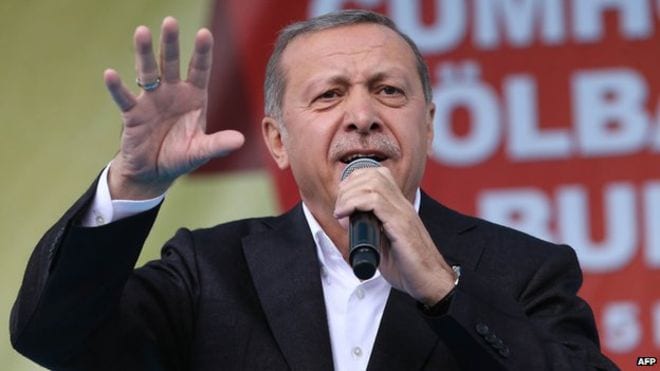
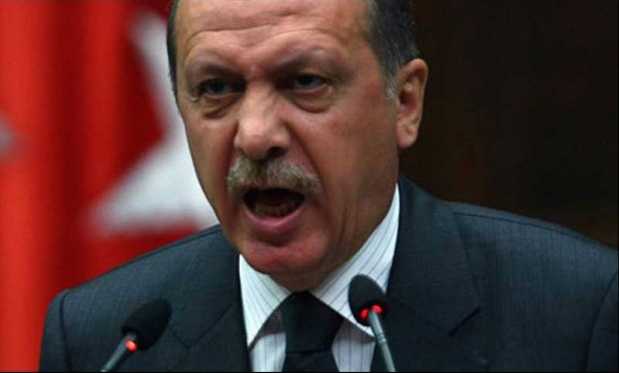
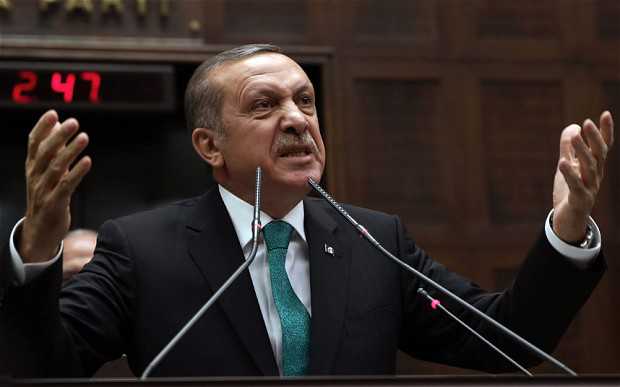
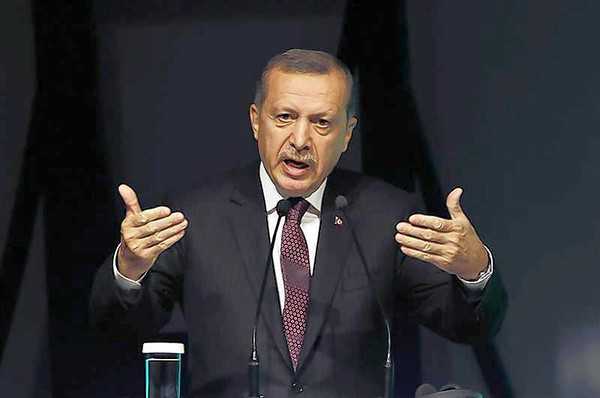
    WAS it premeditated? Or did Turkey’s prime minister, Recep Tayyip Erdogan, lose control? Mr Erdogan’s walkout from a debate with Israel’s president, Shimon Peres, in Davos has made him the most talked about Turkish leader since Kemal Ataturk. His audience of financiers and policy wonks was stunned. But Muslims worldwide cheered as Mr Erdogan scolded Mr Peres over Israel’s war in Gaza. “When it comes to killing, you know very well how to kill. I know well how you hit and kill children on beaches,” thundered a crimson-faced Mr Erdogan.

    The incident has led to new debate over Turkey’s strategic alliance with Israel, whether an increasingly erratic Mr Erdogan is fit to lead Turkey at all and, if so, in what direction: east or west? There is no question of Turkey walking away from NATO or the European Union, or scrapping military ties with Israel and America. Mr Erdogan’s critics say his outburst was a ploy to please voters. If so, it worked: his approval ratings have shot up. Polls suggest that 80% of Turks support Mr Erdogan’s actions. His mildly Islamist Justice and Development party will reap dividends in municipal elections on March 29th.

    Mr Erdogan’s defiance has also helped to assuage his people’s long-running feelings of humiliation and inferiority, which date back as far as the Ottoman defeat in the first world war. Many insist that Mr Erdogan’s reaction was spontaneous and utterly sincere. Turkey has assumed “moral leadership” based on Western values, opined Cengiz Candar, a liberal commentator. Mindful of the public mood, Turkey’s secular opposition leader, Deniz Baykal, grudgingly declared that his rival had done the right thing.

    Not everybody agrees, however. Mr Erdogan’s behaviour makes it less likely that Turkey can successfully mediate between Israel and Syria. His call to Barack Obama to “redefine” what terrorist means has been seen as an appeal to remove the label from Hamas. Although European and American reaction has been muted, in private officials are unhappy. “What [the Davos spat] does leave in Europe is the feeling that Mr Erdogan is unpredictable,” says a European diplomat. Mr Obama is highly unlikely now to pay Turkey an early visit.

    Mr Erdogan’s temper tantrums are not new. But they used to be reserved for his critics at home. The Davos affair, says another foreign diplomat, is further evidence of “Mr Erdogan’s conviction that the West needs Turkey more than Turkey needs it.” It is of a piece with Mr Erdogan’s threat to back out of the much-touted Nabucco pipeline to carry gas from the Caspian Sea to Europe via Turkey. In Brussels recently Mr Erdogan said that, if there were no progress on the energy chapter of Turkey’s EU accession talks then “we would of course review our position”. Meanwhile, Turkey sided with Saudi Arabia and the Vatican in opposing a UN statement suggested by the EU to call for the global decriminalisation of homosexuality.

    Mr Erdogan’s supporters argue that EU foot-dragging on Turkey’s membership bid explains why Turkey is now seeking new friends in the Middle East and beyond. Its growing regional clout is another reason why the EU should embrace Turkey. But the reverse is also true. It is because it is the sole Muslim country that is at once secular, democratic and allied with the West that Turkey commands such respect in the rest of the world. Growing numbers of Arab investors have flocked to Turkey, “because we see it as part of Europe, not the Middle East,” says an Arab banker in Istanbul.

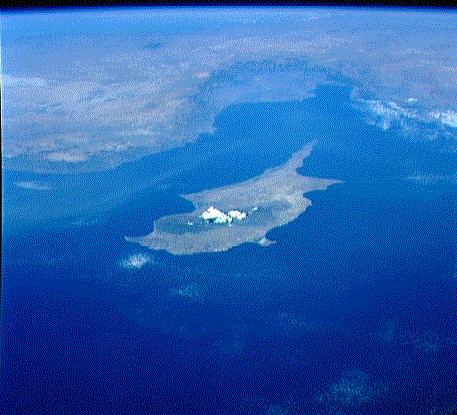
    To retain its allure, Turkey will need to swallow its pride and make further concessions on Cyprus. The EU may suspend membership talks altogether unless Turkey meets a December 2009 deadline to open its ports to Greek-Cypriots. The hope is that Egemen Bagis, who was chosen as Turkey’s official EU negotiator in January, will remind Mr Erdogan that, at least in these talks, it is Turkey that is the supplicant not the other way round.

    Source:  Economist, Feb 5th 2009
  • A dramatic Davos walkout raises new questions about Recep Tayyip Erdogan

    A dramatic Davos walkout raises new questions about Recep Tayyip Erdogan

    Turkey’s prime minister

    Feb 5th 2009 | ANKARA
    From The Economist print edition

    WAS it premeditated? Or did Turkey’s prime minister, Recep Tayyip Erdogan, lose control? Mr Erdogan’s walkout from a debate with Israel’s president, Shimon Peres, in Davos has made him the most talked about Turkish leader since Kemal Ataturk. His audience of financiers and policy wonks was stunned. But Muslims worldwide cheered as Mr Erdogan scolded Mr Peres over Israel’s war in Gaza. “When it comes to killing, you know very well how to kill. I know well how you hit and kill children on beaches,” thundered a crimson-faced Mr Erdogan.

    The incident has led to new debate over Turkey’s strategic alliance with Israel, whether an increasingly erratic Mr Erdogan is fit to lead Turkey at all and, if so, in what direction: east or west? There is no question of Turkey walking away from NATO or the European Union, or scrapping military ties with Israel and America. Mr Erdogan’s critics say his outburst was a ploy to please voters. If so, it worked: his approval ratings have shot up. Polls suggest that 80% of Turks support Mr Erdogan’s actions. His mildly Islamist Justice and Development party will reap dividends in municipal elections on March 29th.

    Mr Erdogan’s defiance has also helped to assuage his people’s long-running feelings of humiliation and inferiority, which date back as far as the Ottoman defeat in the first world war. Many insist that Mr Erdogan’s reaction was spontaneous and utterly sincere. Turkey has assumed “moral leadership” based on Western values, opined Cengiz Candar, a liberal commentator. Mindful of the public mood, Turkey’s secular opposition leader, Deniz Baykal, grudgingly declared that his rival had done the right thing.

    Not everybody agrees, however. Mr Erdogan’s behaviour makes it less likely that Turkey can successfully mediate between Israel and Syria. His call to Barack Obama to “redefine” what terrorist means has been seen as an appeal to remove the label from Hamas. Although European and American reaction has been muted, in private officials are unhappy. “What [the Davos spat] does leave in Europe is the feeling that Mr Erdogan is unpredictable,” says a European diplomat. Mr Obama is highly unlikely now to pay Turkey an early visit.

    Mr Erdogan’s temper tantrums are not new. But they used to be reserved for his critics at home. The Davos affair, says another foreign diplomat, is further evidence of “Mr Erdogan’s conviction that the West needs Turkey more than Turkey needs it.” It is of a piece with Mr Erdogan’s threat to back out of the much-touted Nabucco pipeline to carry gas from the Caspian Sea to Europe via Turkey. In Brussels recently Mr Erdogan said that, if there were no progress on the energy chapter of Turkey’s EU accession talks then “we would of course review our position”. Meanwhile, Turkey sided with Saudi Arabia and the Vatican in opposing a UN statement suggested by the EU to call for the global decriminalisation of homosexuality.

    Mr Erdogan’s supporters argue that EU foot-dragging on Turkey’s membership bid explains why Turkey is now seeking new friends in the Middle East and beyond. Its growing regional clout is another reason why the EU should embrace Turkey. But the reverse is also true. It is because it is the sole Muslim country that is at once secular, democratic and allied with the West that Turkey commands such respect in the rest of the world. Growing numbers of Arab investors have flocked to Turkey, “because we see it as part of Europe, not the Middle East,” says an Arab banker in Istanbul.

    To retain its allure, Turkey will need to swallow its pride and make further concessions on Cyprus. The EU may suspend membership talks altogether unless Turkey meets a December 2009 deadline to open its ports to Greek-Cypriots. The hope is that Egemen Bagis, who was chosen as Turkey’s official EU negotiator in January, will remind Mr Erdogan that, at least in these talks, it is Turkey that is the supplicant not the other way round.

    https://www.economist.com/europe/2009/02/05/temper-tantrums

  • American Jewish Committee Letter to the PM R.T.Erdogan

    American Jewish Committee Letter to the PM R.T.Erdogan

    From: BENJAMIN YAFET [mailto:[email protected]]

    Open Letter to the Turkish Prime Minister Erdogan

    “Dear Prime Minister Erdogan”
    by David A. Harris
    Executive Director, American Jewish Committee
    February 1, 2009

    Dear Prime Minister Erdogan,

    I write as a friend of Turkey.

    These days, though, I’m finding it harder to feel well-disposed. I’ve been stunned by things I’ve heard, seen, and read in recent weeks. The outburst of animosity for Israel and the anxiety awakened in the Turkish Jewish community make me wonder what’s going on and what the future holds.

    If this only emanated from the “street” or from an extremist fringe, it would be worrisome enough. But it goes deeper – and higher. It starts at the very top. Yours has been the loudest voice, and you have used it to attack Israel in a manner that is not only vicious, but also disconnected from the facts.

    Let me step back for a moment.

    I have long admired Turkey. Like all countries, it’s not perfect, but there is much to appreciate.

    As an American, I have valued Turkey’s strategic partnership with the U.S. and the close ties that have linked our two countries.

    As a Jew, I have always remembered the Ottoman Empire’s warm welcome to Jews fleeing the Spanish Inquisition and the rich history of the Jewish presence in Turkey.

    As a democrat, I have appreciated Turkey’s commitment to many values I cherish, including its participation with the Allied nations in the Korean War and its front-line role in NATO.

    As a friend of Israel, I have witnessed the strengthening of bilateral links between Ankara and Jerusalem over the years, serving the vital interests of both nations, as many Turks and Israelis have learned to appreciate.

    As a peace-seeker, I have been grateful for the role of Turkish peacekeeping forces, including in southern Lebanon, not to mention the facilitation of indirect talks between Israel and Syria.

    In that spirit, I have acted on the assumption that friends help friends.

    When Ankara has needed assistance in Washington, or even in European capitals, Turkish officials have often turned to American Jewish groups, ours among them. Whenever we could, as you know, we have been there to help.

    When Turkey was struck by a major earthquake in 1999, we were there to build a school in the devastated region of Adapazari as a gesture of solidarity and friendship.

    And when Turks in Germany were targeted by hate crimes, we spoke up. Indeed, in 1993, we traveled from New York solely to attend the funeral service at the Cologne mosque after an arson attack killed five Turkish women in nearby Solingen.

    I don’t say these things to pat ourselves on the back, but to underscore our deep commitment to the relationship – in many ways, over many years.

    Which brings us to the present.

    Mr. Prime Minister, you have described Israeli policy in Gaza as a “massacre” and a “crime against humanity” that would bring about Israel’s “self-destruction” through divine punishment. These words are inflammatory, and they are wrong.

    You seem to believe that Israel had other ways to deal with the relentless barrage of missiles and mortars fired at its civilians, even though months of restraint accomplished nothing.

    You contend that Hamas is a reasonable negotiating partner. You even invited its leaders to Ankara, though it had not met the Quartet’s demands to recognize Israel, renounce violence, and abide by previous agreements. It still has not done so, and it still seeks Israel’s destruction with weapons imported from your neighbor, Iran.

    You have accused Israel of deliberately seeking to kill civilians. In reality, as British Colonel Richard Kemp told the BBC, “I don’t think there has ever been a time in the history of warfare when any army has made more efforts to reduce civilian casualties. … Hamas has been trained extensively by Iran and by Hezbollah to use the civilian population in Gaza as a human shield.”

    Even if you disagreed, you might have been respectful of such public criticism of Hamas, whether from Col. Kemp, EU official Louis Michel, Egyptian and Saudi leaders, or, in more hushed tones, some Gaza residents themselves. Instead, you accused “Jewish-backed media” of spreading falsehoods.

    Mr. Prime Minister, Israel yearns for a secure and lasting peace. No one has more fully embodied that hunger for peace, or worked more tirelessly to achieve a new start for the Middle East, than Shimon Peres – Israel’s president, a Nobel Peace Prize winner, and your fellow panelist at Davos last week.

    Yet, in your remarks, you essentially called him a child-killer. And, inexplicably, you quoted an obscure ex-Israeli who has turned into a rabid anti-Semite.

    And then you left, claiming that the moderator had been unfair. We hope the conciliatory phone call between you and President Peres helped to repair the breach, but, make no mistake, damage has been done. By storming off the stage, you not only insulted him, but you harmed the image of Turkey. Maybe you gained popularity in the Turkish street, where anger against Israel and Jews has been stoked in recent weeks, but you did your country no service by your unstatesmanlike behavior.

    Mr. Prime Minister, I wonder what Turkey would do if its population were targeted, day after day, by merciless enemies determined to wreak havoc, terrorize, and intimidate.

    But wait. We know exactly how Turkey would act if it saw its national interests endangered.

    When Turkey feared union between Greece and Cyprus, it rushed troops to the northern part of the island in 1974. A new government was declared. The UN Security Council later “deplore[d] the declaration of the Turkish Cypriot authorities of the purported succession.” Only Turkey recognized the new state. And over the years, the population of the Turkish part of the island markedly increased. Where did the growth come from? Observers insisted that it was a policy of settlement from Turkey.

    Now, however, you assert that Israel should not be “allowed to enter through the gates of the UN” because it has defied the Security Council.

    Turkey knows something about terrorism. The PKK has targeted your country for years, initially seeking an independent Kurdish state that included part of Turkey. Now it claims to seek greater autonomy for the millions of Kurds living in Turkey. Even as the PKK has apparently lowered its demands, has Turkey pursued talks with that murderous group?

    Absolutely not.

    Indeed, I recall a rather blunt threat from Ankara to neighboring Syria in the late 1990s: If the PKK continued to receive protection there, the Turkish army would cross the border and take matters into its own hands. Luckily for Turkey, Syria was smarter than Hamas. It got the message. I also remember last year’s incursion of Turkish forces into northern Iraq to stem PKK attacks from there.

    But now, you demand that we “redefine terror and terrorism in the Middle East.”

    And wasn’t it Turkey, objecting to Armenian policy toward Azerbaijan, that chose to close its border with landlocked Armenia from 1993 to today? Yet you now accuse Israel of creating “an open-air prison” by sealing its own frontier with a hostile territory.

    Please understand me. I am not – I repeat, not – seeking here to pass judgment on Turkey’s actions. Rather, I am simply recounting them to show what happens when the shoe is on the other foot.

    It’s so easy to tell another country what it should or shouldn’t do in the face of threats, especially when one’s own country is ten times more populous and 38 times larger. But ultimately, Israel, like its friend Turkey, must make tough choices to protect its citizens.

    Mr. Prime Minister, only you know how far you want to take your belligerent posture. It has already resulted in damage to your country’s reputation in the United States, concern for the well-being of the Turkish Jewish community, and, no doubt, joy in Iran and Hamas’ radical circles.

    The Turkey I know and admire would recoil from partners like Iran and Hamas. Their central beliefs are antithetical to everything that modern, democratic Turkey ought to stand for.

    And so, even as I worry, wonder, and despair, I’ll be watching, waiting, and, yes, hoping.

  • Turkish PM Erdogan storms out of Davos over Gaza

    Turkish PM Erdogan storms out of Davos over Gaza

    with  comments


    A star is born.

    Turkish PM Recep Tayyip Erdogan quotes Avi Shlaim, reminds Shimon Peres of the sixth commandment (Thou shalt not kill), tells him ‘You are killing people’, and tells Davos he’s never coming again before storming off the stage.

    So first it was Venezuela, then Bolivia, and now Turkey. Have the Arab states no shame?

    Norman Finkelstein doesn’t think so. Here is what he told an audience in Bahrain: ‘The reaction from the Arab world was a total disgrace, a disgrace to the whole region and its people…What you showed in the last massacre in Gaza is that you have no shame at all…The most powerful reactions in the world came from Bolivia, Venezuela, Mauritania, Turkey and Qatar…There was more solidarity in South America than here’.

    Stormy debate in Davos over Gaza

    The Turkish prime minister has stormed out of a heated debate at the World Economic Forum in Davos over Israel’s offensive in the Gaza Strip.

    Recep Tayyip Erdogan walked out of the televised debate on Thursday, after the moderator refused to allow him to rebut the Israeli president’s justification about the war that left about 1,300 Gazans dead.

    Before storming out, Erdogan told Shimon Peres, the Israeli president: “You are killing people.”

    Peres told Erdogan during the heated panel discussion that he would have acted in the same manner if rockets had been falling on Istanbul.

    Moderator David Ignatius, a Washington Post columnist, then told Erdogan that he had “only a minute” to respond to a lengthy monologue by Peres.

    Erdogan said: “I find it very sad that people applaud what you said. There have been many people killed. And I think that it is very wrong and it is not humanitarian.”

    Ignatius twice attempted to finish the debate, saying, “We really do need to get people to dinner.”

    Erdogan then said: “Thank you very much. Thank you very much. Thank you very much. I don’t think I will come back to Davos after this.”

    ‘Understandable’

    Amr Moussa, the secretary-general of the Arab League and former Egyptian foreign minister, said Erdogan’s action was understandable.

    He said: “Mr Erdogan said what he wanted to say and then he left. That’s all. He was right,” adding that Israel “doesn’t listen”.

    The exchange took place on the second day of the summit, where business and political leaders have been discussing trade, financial regulation and global security.

    After grappling with a bleak global economy on the opening day, leaders attending the forum switched to debates on the new administration in the United States and unrest in the Middle East, Pakistan and Afghanistan.

    Kamal Nath, India’s trade minister, warned that the global economic crisis could fuel protectionism to safeguard national industries and jobs.

    Ban Ki-moon, the United Nations secretary-general, used the forum to announce the launch of an emergency appeal for $613m to help Palestinians recover from Israel’s attack on Gaza.

    Protectionist fears

    Nath said that India saw growing signs of protectionism and would respond with its own measures if its exporters were threatened “which will be good for no one.”

    He said: “We do fear this because one must recognise that at the heart of globalisation lies global competitiveness, and if governments are going to protect their non-competitive production facilities it’s not going to be fair trade.

    India has raised tariffs on steel to protect local producers, a measure trade experts say was aimed at China, which India does not regard as a market economy.

    The deepening economic crisis, and the failure to complete the World Trade Organisation’s long-running Doha round on freeing up global commerce, have raised fears that countries will block their partners’ exports to protect jobs at home.

    Such protectionism, if it led to tit-for-tat retaliation, would intensify the current crisis.

    Emerging economies

    The economies of India, China and Russia, which have been experiencing rapid growth in recent years, have taken precedence at the forum.

    Timothy Garton Ash, professor of European studies at Oxford University, said emerging markets are almost overshadowing the importance of the US economy.”What is really striking to me about this Davos, is the lack of a sense of a new beginning with Barack Obama,” he told Al Jazeera.

    “That is not what we’ve been hearing about in the last 24 hours, we’ve been hearing about China, about Russia, about India, about emerging economies, and that I think is a very significant fact.

    “It’s not just the American investment banks that have gone down, it’s America’s own soft power, and ability to lead that has been badly damaged by the crash.”

    Rachid Mohamed Rachid, Egypt’s minister of trade and industry, said there would be a rush towards emerging markets.

    “People understand today that there will not be growth in developed countries for a long time to come, the growth will continue to be in emerging markets, even more than before,” he told Al Jazeera.

    Gaza appeal

    The UN secretary-general said he had been deeply moved by his visit to Gaza and that he had given his word that the UN would help the Gazans in their hour of need.

    He said the appeal for fund covered the requirements of the UN and other aid organisations for the next six to nine months.Ban said it would help provide aid such as medical care and clean water and that an appeal for longer-term needs would be launched later.

    Asked about achieving peace in Gaza, Benjamin Netanyahu, the leader of Israel’s Likud party who was attending the forum, swiftly turned his answer to Iran, which he said was in a “100-yard dash” to get nuclear weapons.

    While he did not specify any planned military action, Netanyahu said if Iranian rulers were “neutralised”, the danger posed to Israel and others by Hamas in Gaza and Hezbollah in south Lebanon would be reduced.

    Netanyahu said the global financial meltdown was reversible but “what is not reversible is the acquisition of nuclear weapons by a fanatic radical regime”.

    Meanwhile, Manouchechr Mottaki, Iran’s foreign minister, who is also in Davos, said Tehran had taken note of the intention of Barack Obama, the US president, to withdraw troops from Iraq and believed he should also pull troops out of Afghanistan.

    Mottaki told a panel at the forum that Obama had “courage” to say which of the policies of George Bush, the former US president, he disagreed with and said his approach marked a “milestone” away from an era of “might equals right”.

    Turkish PM Erdogan storms out of Davos over Gaza

    Responses to ‘Turkish PM Erdogan storms out of Davos over Gaza’

    Subscribe to comments with RSS or TrackBack to ‘Turkish PM Erdogan storms out of Davos over Gaza’.

    1. Thank you for this. Excellent as usual.
      Ithink it is those shoes they are wearing….. First Muntadar threw his Turkish made shoes at Bush, and now the Turkish Prime Minister is head-butting with Perez. Yes Im sure he has his bought a new pair of Muntas :)))

      no2wars

      29 Jan 09 at 11:08 pm

    2. […] Read more here on PULSE.ORG […]

      It must be in those Turkish shoes they are wearing… « Ignited Identity

      29 Jan 09 at 11:11 pm

    3. Woohoo! Feels good!

      Dean

      29 Jan 09 at 11:28 pm

    4. Following the massacre on Google Trends Turkey was one of the countries which seemed most interested in Gaza. I’m sure he will have a lot of popular support for this at home.

      Well done Mr Erdogan!

      Dave

      30 Jan 09 at 12:31 am

    5. Shame on all the shameless arab leaders. They are cowards and puppets. Very soon they will all go to hell for their silence. Yaaaaaaaaaaaaaaaayyyyy Erdogan

      fred

      30 Jan 09 at 12:52 am

    6. […] Veo más en Pulse, en inglés. “A star is born“. Possibly related posts: (automatically generated)Israel destruye y deja sitio al […]

      Erdogan, Gaza, la dignidad de Turquía y Davos « Situjihadismo

      30 Jan 09 at 1:07 am

    7. Thank you, PM Erdogan, for standing up for what is right, for showing some spine and conscience when much of the rest of the world’s sham representatives stayed silent. Shame Shame Shame to most of the Arab “leaders”. Kudos to Türkiye.

      peoplesgeography

      30 Jan 09 at 1:12 am

    8. That was beautiful! Brought tears to my eyes and a lump in my throat. What a man. Erdoğan was heroic, and he made the others look like dickless little prigs at tea. Viva Türkiye! To think the EU gave them so much shit about membership. They should have been pleading.

      99

      30 Jan 09 at 1:37 am

    9. Al Jazeera was just showing Erdogan receive a hero’s welcome on his return. Crowds were gathered at the airport with Turkish and Palestinian flags to greet him. I bet the Kemalists are squirming.

      m.idrees

      30 Jan 09 at 1:49 am

    10. Turkey has some room to maneuver vis-a-vis Israel and the US, which is not speaking much of those Arab states. Erdogan will be showered with praise.

      How deeply ironic is it that those who are the most vocal on the Palestinian cause ARE not Arab but Turk, Lebanese Shiite and Persian?

      Joshua

      30 Jan 09 at 4:59 am

    11. A shame file of Arab journalists giving Israel a free pass from Iqbal Tamimi:

      peoplesgeography

      30 Jan 09 at 8:02 am

    12. Shame on American leaders. Even when america presidents were kicked on th face( by Sharon as reported by BBC during gaz conflict of 2002, albeit metaphorically) Americans could not react out of fear of Zionist lobby.Erdogan is man with back bone. a man of honour and courrage.

      Dr.Joji Cherian

      30 Jan 09 at 1:22 pm

    13. Muhammad,

      I just read over at Philip Weiss’s blog a rather more detailed description of what went over at Davos. I haven’t watched the entire episode unfold but I wonder what is your take on it?

      Nevertheless, Peres is one official on crack.

      Joshua

      31 Jan 09 at 4:56 am

    14. […] consistently and impartially applying rules to speakers. That debate in which Turkish PM Erdoğan walked out involved deliberately unequal times for speakers (see my calculations of actual speaking times in […]

      Peres’s Propaganda and Gaza Panel’s Biased Moderator « Silver Lining

      31 Jan 09 at 3:13 pm

  • Erdogan’s Outburst Could Damage Turkey’s International Standing

    Erdogan’s Outburst Could Damage Turkey’s International Standing


    February 01, 2009
    By Abbas Djavadi
    Radio Free Europe/Radio Liberty
    Turkish Prime Minister Recep Tayyip Erdogan’s fiery exchange with Israeli President Shimon Peres on January 29 at the World Economic Forum in Davos may earn him votes in Turkey’s March local elections or sympathy on the “Arab Street.”

    But it could well harm Turkey’s role as a bridge between the West and the Muslim world and as a would-be mediator between Israel and its Arab neighbors. Moreover, it won’t help Ankara’s relations with Washington or the country’s EU membership bid.

    Thousands gave Erdogan a hero’s welcome at Istanbul airport, hailing his pro-Palestinian outburst, and chanting: “Turkey is proud of you!” Turkey’s pro-government newspapers, as well as much of the Arab and Iranian media, reported positively on Erdogan’s appearance.

    But other commentators — including some in the Turkish media — are wondering how Erdogan’s outburst will affect Turkey’s international and regional standing.

    There have been attempts at damage control: Peres called Erdogan to say that, regardless of the dispute, he admired Turkey and the prime minister.

    And Erdogan reiterated that he stood by his criticism of the Gaza assault, but that he respected the Jewish people and his comments should not be interpreted as “anti-Semitic.” But the damage may be hard to reverse.

    Traditionally, Turkey has maintained good relations with both Israel and the Arab world. Last year, Ankara successfully tried to mediate Israeli-Syrian peace talks, despite a cool approach by the Bush administration.

    Turkey’s efforts under Erdogan’s Justice and Development Party (AKP) to liberalize the economy and make legislative reforms has earned it positive feedback from Brussels, which is considering Turkey’s EU membership, and from Washington, which is keen to see the success of a moderate and democratic Muslim country.

    Move Toward Muslim World

    But last year, Turkey took steps that many analysts saw as a shift away from the West and toward closer ties with the Muslim world and Russia.

    While freezing the internal reform process, Ankara reacted rather passively in criticizing Russia’s offensive in Georgia last summer and campaigned for a Caucasus Stability and Cooperation Pact, which had not been coordinated with the West and would include Russia.

    Erdogan himself called off Ankara’s mediation efforts in talks between Israel and Syria. He pointedly did not visit Israel as part of his Middle East visit in recent weeks.

    Resisting the overwhelming Western approach to consider Hamas and Hizballah as terrorist organizations, Ankara has argued that these groups represent parts of the Arab world that must be reckoned with and talked to instead of isolating and antagonizing them.

    On January 29, Turkish Foreign Minister Ali Babacan reiterated his government’s position that Ankara is critical of Hamas but says it should be included in peace talks.

    Turkey was the first pro-Western Muslim country to invite a delegation of Hamas for an official visit to Ankara in 2006. And according to Murat Yetkin, writing in the liberal “Radikal” newspaper, Erdogan met with foreign journalists ahead of the Davos debate with Peres and noted that U.S. President Barack Obama would be better advised to redefine terrorist organizations in the Middle East and follow a new policy based on those new definitions.

    It appears, though, that Erdogan’s outburst was about more than just political calculation and perhaps reflected his bossy and undiplomatic style, triggered by his anger over Gaza.

    Turkish journalists close to the AKP report that Erdogan has been boiling with anger since Israel’s Gaza offensive. “I have been watching Erdogan since the late 1980s,” wrote Turkish analyst Rushen Chakir in the daily “Vatan,” “seeing him angry many times.” “From the point of diplomacy, I was certainly surprised. But [the fiery appearance at Davos] was typically Erdogan as I know him.”

    In his Davos outburst, the Turkish prime minister used the informal form of the word “you” (sen) instead of the more respectful “siz,” something he does when addressing the opposition in the Turkish parliament.

    His style of talking loudly, in a bossy and didactic tone, with little respect for the political opponent, has been a subject of both concern and humor among the Turkish people. Some critics refer to him as the “cowboy of Kasimpasha,” the area of Istanbul where Erdogan grew up. His style is shared by Erdogan’s main political opponent, Deniz Baykal, who heads the opposition and secular Republican People’s Party in parliament.

    But in a time of economic crisis, ever-less-promising talks on EU accession, a shaky relationship with Washington, and an increasing need and opportunity for a negotiated peace in the Middle East under President Obama, Turkey cannot afford such emotional outbursts.

    The country deserves leaders who care not just about getting votes domestically but can also regain diplomatically the international support the AKP received when it was elected in 2007.

    Abbas Djavadi is associate director of broadcasting at RFE/RL. The views expressed in this commentary are the author’s own and do not necessarily reflect those of RFE/RL

  • Would ‘Washington Post’ writer David Ignatius put his arm on President Obama during a debate?

    Would ‘Washington Post’ writer David Ignatius put his arm on President Obama during a debate?

    Phil Weiss

    […]

    And yes, while Ignatius has been forward-thinking/realist since, he can be justly scored, I think, for putting his hand on the Turkish Prime Minister to stop the debate so everyone could go to dinner the other night at Davos. It’s easy to say this in retrospect, but there was no sense on Ignatius’s part of the Moment. Ignatius should have extended the time to let both men finish their points, Peres and Erdogan. Let the stomachs grumble. As it is, he appeared to dis the P.M.–and as we see, appearance is everything in these matters–and failed to recognize that when you give a stage to a man defending the slaughter of 450 children, the placement of the salad fork should not be the highest concern, a structural problem with the Establishment, in my humble opinion.

    […]

    …and I'm to blame?

    Source: www.philipweiss.org