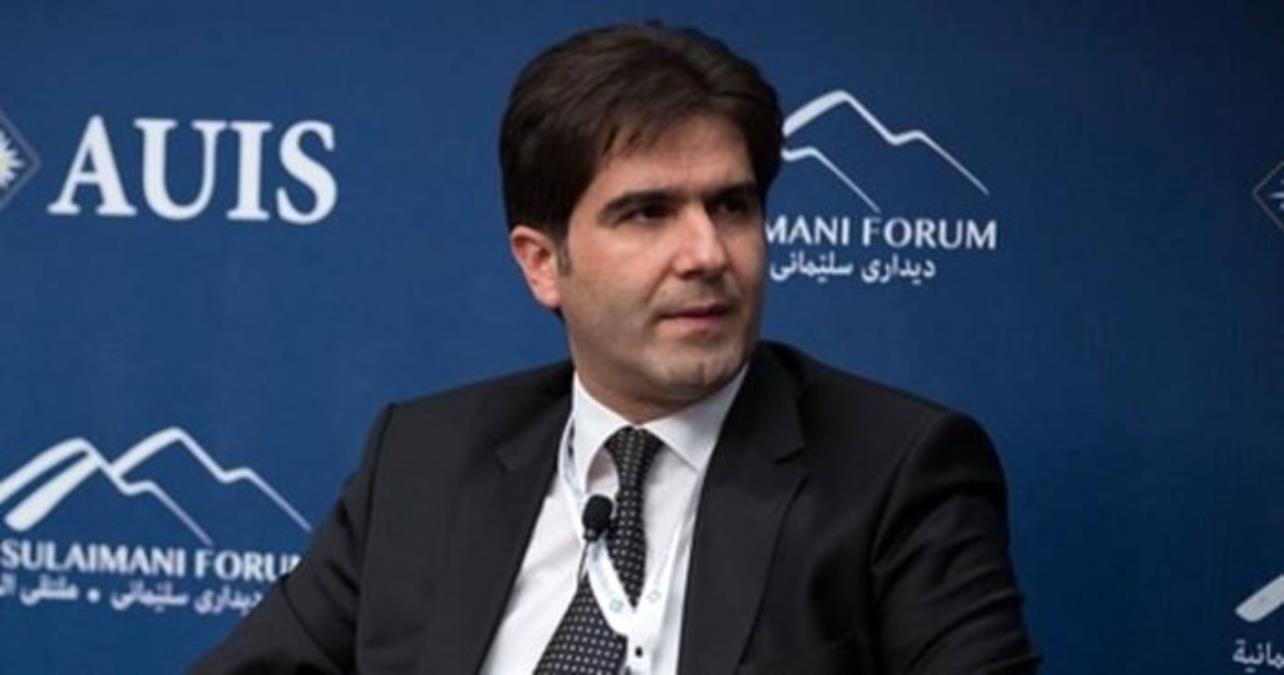
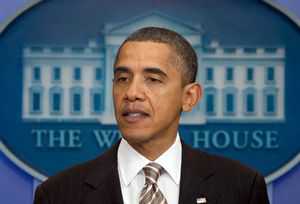
Women protested PM Erdoğan at the International Women’s Istanbul Meeting for having said that “men and women are not equal”. Pointing to women murders they said, “”More of us are being killed when you say we are not equal”.
Istanbul – BİA News Center 08 November 2010, Monday
Women at the International Women’s Istanbul Meeting protested Prime Minister Recep Tayyip Erdoğan during his speech at the Istanbul Congress Centre. They rose to their feet and held up banners reading “More of us are being killed when you say we are not equal” and “The men’s love kills three women per day”.
The women protested quietly. Security personnel in the hall took the banners and removed the women from the venue.
“The Prime Minister should think about our safety instead of the number of children”
Members of the Feminist Collective underlined that 236 women were killed in the first seven months of 2010. “Prime Minister Erdoğan continues to tell women to give birth to three children whereas he does not mention the women who died”, they criticized.
The women reminded Erdoğan’s statement made in a meeting with women organizations in Istanbul where he said, “I do not believe in gender equality”. The women questioned “Prime Minister Erdoğan’s policies to be implemented to provide safety for the life of women”.
Başbakan Erdoğan’ın Dolmabahçe’de kadın örgütleriyle yaptığı toplantıda “kadın erkek eşitliğine inanmıyorum” dediğini hatırlatan kadınlar, “Başbakan Erdoğan’a kadınların can güvenliklerini sağlamak için hayata geçirecekleri politikaları” sordular:
“We do not ask Prime Minister Erdoğan to work on the women’s ‘disposition’ or on ‘how many children they should have’. We want him to fulfil his duty and prevent violence against women, oppression and discrimination. We want to hear that steps are being taken and policies are being implemented that guarantee our right to life and life safety. We want to hear that very urgently because on every day that passes with all these announcements, another three women are being killed”.
“Women murders are not on the government’s agenda”
The women made a press release including the following issues:
* According to the standards of the European Union (EU), one women’s shelter should be opened per 7,500 people. Hence, there should be 7,500 shelters in Turkey, but in reality there are 38. They have a total capacity of 867 people.
* In the Gender Equality report of the World Economic Forum Turkey ranks in 126th position among a total of 134 countries.
* The number of women murders increased by 1,400 percent within the past seven years. There is no action plan to stop this development. In fact, the legislature and the executive do not even have an according agenda.
* At court, the murders benefit from an unjust mitigation of punishment because of provocation. The women are killed by their husbands after they come back from the police, from shelters and prosecutors.
Erdoğan again defended rights of “ladies with headscarves”
In his speech delivered at the International Women Istanbul Meeting, Erdoğan once more claimed that the rights of women with and without headscarves should be defended. Read the main points of his speech as follows:
Don’t wait for you rights to be delivered: We appreciate to see more of our sisters in every area from politics to local administration, from work life to education and in culture and sports; we appreciate to see more successful women. Yet we know that this is not sufficient. Do not wait for your rights to be delivered but struggle for obtaining your rights.
Rights and freedoms are not the vision of a certain section: Rights and freedoms as basic human needs may not be assessed as owned by a certain section [of society] or as the dream of a certain section.
Headscarf question: Despite our struggle, both in the name of contemporary life and modernity it does not accord with equality, humanity or conscience to have young girls removed from school because of their way to dress. (BB/VK)
Turkey’s environment minister said that Turkey would bring water to Cyprus through pipelines beneath the sea.
Turkey’s environment minister said on Wednesday that Turkey would bring water to Cyprus through pipelines beneath the sea.
Minister Veysel Eroglu defined the project a difficult one, and said it would be the first of its type in the world.
“Thus, we will be connected to Turkish Republic of Northern Cyprus (TRNC) with water,” Eroglu said during his meeting with TRNC’s Tourism, Environment and Culture Minister Kemal Durust in Ankara.
Eroglu said Turkey hoped to solve Cyprus’ water problem, and tenders had been opened for the project–the first step of which was Alakopru Dam.
Turkey’s Prime Minister Recep Tayyip Erdogan would lay the foundation of the dam on November 3, Eroglu also said.
Another dam named Gecitkoy will also be constructed within the framework of the project aiming to carry water from Turkey to TRNC through pipelines beneath the sea. The tender for the Gecitkoy dam will be held as soon as possible.
Alakopru dam is expected to be constructed within four years and Gecitkoy within three years.
A dungeon horrible, on all sides round,
As one great furnace flamed; yet from those flames
No light; but rather darkness visible
Served only to discover sights of woe,
Regions of sorrow, doleful shades, where peace
And rest can never dwell, hope never comes
That comes to all, but torture without end
Still urges, and a fiery deluge, fed
With ever-burning sulphur unconsumed.
John Milton Paradise Lost
When Emile Zola published his historic letter, J’Accuse, addressed to the President of France, in L’Aurore newspaper on 13 January 1898, he was rich and famous. But that did not stop his mighty anger. Outraged by the travesty of justice that resulted in the false arrest, conviction, and imprisonment of Alfred Dreyfus, a loyal Jewish army officer, he appealed to the president and the nation for reason and justice to prevail.
Dreyfus was convicted by falsified evidence and forged documents, and was a scapegoat for the thoroughly corrupt French Army general staff. He had been imprisoned at a hell hole called Devil’s Island for three years when Zola wrote his letter. (1)
Zola did so for two reasons. First, to draw the public’s attention to the shameful miscarriage of justice. Second, to provoke his own arrest for libel so that new evidence could be introduced that would prove Dreyfus innocent. He succeeded on both counts. Dreyfus was cleared in 1899 and fully exonerated and reinstated in the French Army in 1906. Zola died under suspicious circumstances on 29 September 1902, “a moment in the history of human conscience,” as eulogized by Anatole France. (2)
On 29 September 2010, 108 years to the day after Zola’s death, the ongoing disaster called Turkey received yet another Pinochet-style shock in its struggle to retain its secularity. Hanefi Avcı, the head of the police department in the city of Eskişehir, was arrested for writing a best seller. His book laid bare the widely suspected fact that Turkey’s highest government institution’s—police, army, and judicial system—had been infiltrated and indeed subverted by a religious cemaat, the Fethullah Gülen movement. (3) Since Avcı himself was once an eager activist for Gülen’s cemaat, the book has a certain whiff of authenticity.
And yesterday, Avcı was arrested. The reason? The usual nonsense of the Ergenekon prosecutor. It seems that suddenly the previously highly esteemed police chief has connections with a terrorist organization. Was the terror organization the Gülen movement? Ha, ha, ha, no not quite. The Gülenista government of Turkey, also known as the AKP, paid no attention to the compelling information in Avcı’s book about their sugar daddy, Gülen. It decided on some other “terror group,” some socialist or maybe, horror of horrors, some communist operation. Another Alice-in-Wonderland group, cobbled together with false documents and bogus telephone conversations, using the latest listening and stealth technology provided by…guess who?
Avcı refused to file a petition suggested by his lawyer to demand release from prison pending presentation of formal charges. Like Zola, he wants to experience the whole disgusting mess called Turkish justice. He also refuses to speak to any judicial or prosecutorial officials that he suspects of being members of the Gülen cemaat. But Avcı says that he will talk, at his trial. Like Emile Zola, may he sing long and loud.
Hanefi Avcı, KORKMA!
Cem Ryan
Istanbul
NOTES: 1. An excellent summary of the Zola/Dreyfus affair by University of Georgia law professor Donald Wilkes can be found at: For those interested in a dramatic representation of this incident see the stunning classic film (1937) The Life of Emile Zola:
2. “Il fut un moment de la conscience humaine.” Anatole France, 5 October 1902.
3. Gülen lives in Saylorsburg, Pennsylvania. It is well and widely known that his activities are aided, abetted, and otherwise supported by the United States government, in particular by the CIA. The latter’s officials were signatories to Gülen’s permanent residency application (“green card”), which he was granted in 2008. For more detailed information see ISLAM, SECULARISM, AND THE BATTLE FOR TURKEY’S FUTURE at:
In the Turkish referendum held on September 12, voters supported the constitutional amendment package promoted by the governing Justice and Development Party (AKP). Despite earlier forecasts and opinion polls, the changes were approved by a wide margin: 58 percent voted in favor, while 42 percent opposed the amendment (Anadolu Ajansi, September 13). This rather surprising outcome will have significant implications for Turkish politics, possibly accelerating social fragmentation.
The referendum marks a major victory for the ruling AKP. Through their aggressive campaign, the opposition parties Republican People’s Party (CHP) and the Nationalist Action Party (MHP) had worked hard to present the referendum as a vote of confidence for the government (EDM, July 13). These two parties, which formed a “no front” against the reform package both during the parliamentary debates and in the referendum, had substantial reasons for objecting to the proposed constitutional changes. Yet, overall their mobilization strategy was based on a knee-jerk criticism of the AKP’s policies. In contrast, the AKP stated on many occasions that they would not capitalize on yes votes and present them as support for the AKP. The AKP, instead, defined the changes as a move towards the democratization of Turkish politics. Other smaller parties on the right of the political spectrum, which supported the AKP’s argument, mobilized their supporters in favor of the changes. However, for a great portion of Turkish voters the content of the constitutional changes was less important than their party affiliation (Hurriyet Daily News, September 15).
The results can be interpreted as a reaffirmation of domestic support for the AKP’s tenure in power. This success represents the sixth major electoral victory for the AKP under Prime Minister, Recep Tayyip Erdogan. Since 2002, the AKP has won two parliamentary elections and two municipal elections, and managed to pass constitutional amendment packages in two referendums. Following the latest result, many observers expect the AKP to win the next national elections slated for 2011. With this unprecedented track record, the AKP machinery has emerged almost as an invincible force in the Turkish political scene, raising the question as to how it will use its power. AKP representatives already indicated that they would revive the debate on introducing a new constitution, most likely following the 2011 elections. Many liberal and reformist groups, as well as the European Union, therefore, welcomed the referendum result, because they believe that the expression of support for the constitutional changes will put pressure on the AKP to maintain its momentum towards the further democratization of the Turkish political system. Earlier, the AKP had come under criticism for slowing the pace of political reform required by the EU membership process (Hurriyet Daily News, September 14).
A more interesting question, however, concerns how Erdogan, who can claim credit for AKP’s unprecedented track record, will use this power to secure his personal position in Turkish politics. Many observers expect Erdogan to run for the presidency after the current President Abdullah Gul’s term expires in 2012. The next president will be elected by popular vote according to the constitutional changes of 2007. One drawback for Erdogan is that in Turkey’s parliamentary system, presidents can exercise only limited influence. Given Erdogan’s interest in political power, he might also push for a more radical overhaul of the Turkish political system. Erdogan has already initiated a debate on replacing the current parliamentary system with a presidential system. It remains a possibility that Erdogan will revive such a debate, in order that he might eventually lead a strong presidential system (Anadolu Ajansi, September 13).
This unprecedented popular support and resulting latitude that the AKP and Erdogan have gained in restructuring the Turkish political system has triggered anger among the AKP’s opponents. Erdogan announced that his party will seek consensus with other parties, as they work on a new constitution. However, many of the AKP’s critics argue that after the AKP managed to curb the power of the Turkish military, it has moved on to undermine the power of other state institutions, mainly the independent judiciary. The AKP’s critics believe that as a result of the recent constitutional changes, the system of checks and balances has already been undermined, and if the AKP continues on its current path, it might eventually form a civilian despotism and suppress secular segments of the society.
Therefore, the representatives of Turkey’s secularist opposition and speakers from the high courts have maintained that although they respect the people’s choice in the referendum, they would continue their struggle to maintain judicial independence and not allow the AKP to take complete control of all state institutions. As a result, the fragmentation in Turkish politics and society appears to be deepening. The aggressive campaign prior to the referendum and the statements from the representatives of the AKP and its opponents indicate that secularist and nationalist groups represented by the CHP and MHP on the one side, and conservative and liberal groups represented by the AKP on the other, will remain engaged in a fierce battle over how to define Turkey’s political system and values. Moreover, this fragmentation also has geographic ramifications. While the provinces in central Anatolia and the Black Sea region supported the constitutional changes, the provinces in the western coastal areas and Thrace voted against the changes. This distribution corresponds closely to the results of the 2009 municipal elections, whereby coastal areas voted for the CHP and MHP and central Anatolian provinces voted for the AKP (EDM, March 31, 2009).
Another division is hidden in the voting patterns in the Kurdish speaking provinces in Eastern Turkey. Pro-Kurdish Peace and Democracy Party (BDP) called on its supporters to boycott the referendum. Low voter turnout in many of the eastern provinces shows that the BDP controls a large section of the Kurdish vote, which corresponds to the results of the 2009 elections. With this boost of self-confidence, the BDP is likely to intensify its campaign to disconnect the Kurdish-speaking areas from Turkey’s mainstream political system, in line with its strategy of demanding “democratic autonomy” for the Kurds. As such, the referendum results might also deepen the divisions around the Kurdish issue, further accelerating Turkey’s social fragmentation.
The American commentariat is shocked, shocked , to discover that Turkey has abandoned the Western alliance for an adventurous bid to become the dominant Muslim power in the Middle East. Tom Friedman of the New York Times suggested on June 15 that “President [Barack] Obama should invite him for a weekend at Camp David to clear the air before US-Turkey relations get where they’re going – over a cliff.” Friedman blames the European Community for rejecting Turkey’s membership bid which, he says, was a “key factor prompting Turkey to move closer to Iran and the Arab world”.
But it is not quite so simple. Friedman and the conventional wisdom are wrong, as usual. Prime Minister Recep Tayyip Erdogan is behaving dreadfully, to the point that a group of retired senior Turkish diplomats denounced him for “neo-Ottomanism”. But Turkey has not moved closer to Iran, except in tactical diplomatic terms. The problem is more subtle: America’s blunders in Iraq gave Iran the chance to become a regional hegemon, and Turkey must vie with Iran for this role as a matter of self-preservation.
It was not the European Community, but rather the George W Bush administration, that pulled the rug out from under Turkey’s secularists and built up Erdogan as a paragon of “moderate Islam”. America’s feckless nation-building policy in Iraq helped Turkey over the edge into Islamism.
In a recent essay [1], I portrayed the Mavi Marmara incident in which nine Turks were killed by Israeli commandos onboard one of the six boats attempting to breach the blockade on the Hamas-run Gaza Strip, as a Turkish farce. It should be obvious to anyone with access to YouTube that Erdogan conducted an exercise in guerilla theater, which qualifies as a comedy of sorts unless you were one of the dead Turks on the boat. What has transpired over the past eight years, though, is a tragedy.
Turkey is held together by weak glue. It never was a nation-state, despite founding father Kemal Ataturk’s ferocious efforts to make it appear to be one. Kurds comprise somewhere between six million and 20 million (the Kurdish nationalists’ claim) of Turkey’s population, and Kurdish separatism poses a continuing threat to Turkey’s national integrity.
For the usual corrupt and foolish reasons, world opinion has focused on the nine dead Turks on the flotilla; of far greater consequence are the several dozen Turkish soldiers who died at the hands of Kurdish guerillas in the past two weeks. More important still are the 2,000 or so Turkic people who died in Kyrgyzstan in the past weeks. Much less distinguishes a failed state like Kyrgyzstan from an apparently successful state like Turkey than Westerners think.
America is about to leave Iraq; Iraq is likely to break up; and if an independent Kurdish state emerges from the breakup it will become a magnet for Kurdish separatists within Turkey. Erdogan has 1,500 Kurds under arrest, including the mayors of some Kurdish towns.
Ataturk’s post-war secularism defined “Turkishness” as a national identity that had never before existed. “Turkishness” is something of a blood pudding. Ottoman identity had nothing to do with nationality in the Western sense. It was religious and ethnic. A fifth of the population of Anatolia before World War I was Christian, mainly Armenian and Greek; virtually all were expelled or murdered. The Turks killed more than a million-and-a-half Armenians, employing Kurdish militia to do most of the actual dirty work (that is why what is now “Turkish Kurdistan” was until 1916 “Western Armenia”. The modern Turkish state was born in a bloodbath, and founded on massive population shifts. The enormous Kurdish minority got the southeast as a consolation prize but still longs for its own language, culture and eventual national state.
Iraqi leader Saddam Hussein was a monster, but for the Turks a useful monster. The 1988 Anfal campaign against the Kurds of northern Iraq killed up to 180,000 of them, and the crackdown on the Kurds after the 1991 First Gulf War killed as many as 100,000. The Turks, by contrast, killed perhaps 20,000 to 40,000 Kurds during the 1980s and 1990s.
Turkey in 2003 refused America permission to open a northern front against Saddam out of fear that the war would destroy Turkey’s ability to control its restive border. The destruction of the Iraqi state, moreover, created a de facto independent Kurdish entity on Turkey’s border, the last thing Ankara wanted. If America had simply installed a new strongman and left, Turkey would have been relieved. But America’s commitment to “nation-building” and “democracy” in Iraq, to Ankara’s way of thinking, meant that Iraq inevitably would break up; the Kurdish entity in northern Iraq would become a breakaway state; and Iran’s power would grow at the expense of Turkey.
Turkey has many reasons to fear Iran, whose possible nuclear ambitions make it a prospective spoiler in the region. But there is another vital issue. Among the fault lines that run through the modern Turkish state is a religious divide. Iran exercises influence through the Alevi minority in Turkey, a heretical Muslim sect closer in some ways to Shi’ite than Sunni Islam. No accurate census of the Alevi exists; they may comprise between a fifth and a quarter of of Turkey’s population. The late Iranian leader, Ayatollah Ruhollah Khomeini, declared the Alevi to be part of Shi’ite Islam in the 1970s, and they have been subjected to occasional violence by Sunni Turks.
The Iraq war undermined the position of the Kemalist military, which had bloodied its hands for decades in counter-insurgency operations against the Kurds. Erdogan’s Islamists argued that the weak glue of secular Turkish identity no longer could hold Turkey together, and proposed instead to win the Kurds over through Islamic solidarity. The Kurds are quite traditional Muslims; unlike the Turkish Sunnis, the provincial Kurds of southeastern Turkey and northern Iraq often practice female circumcision.
After the 2003 invasion of Iraq, the George W Bush administration saw no reason to back the Turkish generals who had let them down in Iraq, and instead threw their backing to the Islamists, on the theory that Erdogan represented a sort of “moderate Islam” that would provide an example to other prospective democratic Muslim regimes. When Erdogan won parliamentary elections in 2003, Bush invited him to the White House before he took office, a gesture that persuaded most Turks that America had jettisoned its erstwhile secular allies, as I wrote in 2007. [2]
The Bush State Department stuck to the story of “moderate Islam” in Turkey even while Erdogan used outlandishly extra-legal methods to dismantle the secular establishment, as I wrote in 2008. [3] In fairness to the State Department, the idea that Turkey was home to a specially moderate strain of Islam was not the invention of American foreign policy analysts but of the Islam specialists of the Jesuit order. Father Christian Troll, a German Islamologist who advises Pope Benedict XVI, and his student Father Felix Koerner popularized the notion of a less virulent strain of Turkish Islam. I reviewed Koerner’s book on Turkish Islam in 2008. [4]
One cannot blame the Bush administration (nor the Jesuit Islamologists) for the person Erdogan has become. By the turn of the millennium, Kemalist secularism was a grotesque relic of 1930s European nationalism. Turkey’s leading novelist, Orhan Pamuk, evoked the spiritual misery of secularist Turkey and the attractions of radical Islam in his Nobel-prize-winning novel Snow, which I reviewed in this space in 2004. [5]
To the extent that there was some hope of keeping Turkey in the Western camp, though, the Bush administration’s nation-building blunders in Iraq and credulous admiration of “moderate Islam” in Ankara destroyed it.
Political Islam as a replacement for Kemalist nationalism is the glue that will hold Turkey together, in Erdogan’s view. It does not seem to be doing a good job. Islamic solidarity was supposed to persuade the Kurds to behave themselves, along with a few nods in the direction of the use of the Kurdish language, which the Kemalists tried to suppress. The killing of 11 Turkish soldiers in raids staged from Iraq and the bombing of a military bus in Ankara show that Kurdish resistance has not diminished. Erdogan, previously so concerned about human rights and the Biblical injunction against killing, raged that the Kurdish rebels will “drown in their own blood”.
Erdogan’s political Islam failed to stabilize Turkey. It will contribute to instability in the region to an extent that is difficult to foresee. Iran now has the more reason to assert its influence in Iraq, perhaps by encouraging the breakup of the country and the emergence of a Kurdish state that might threaten Turkey.
Turkey, in turn, has all the more reason to agitate among the Turkish-speaking, or Azeri, quarter of Iran’s population. Iran will use its influence among Turkish Alevis to challenge the Turkish Sunni establishment; Iran will encourage Turkish separatism. Meanwhile Erdogan’s alliance of opportunity with Hamas undercuts the American-allied Sunni Arab states, Jordan, Egypt and Saudi Arabia, not to mention Mahmoud Abbas’ Palestine Authority.
With the United States in full strategic withdrawal, a Thirty Years War in western and central Asia seems all the more likely.
Notes
1. Fethullah Gulen’s cave of wonders Asia Times Online, June 9, 2010.
2. Why does Turkey hate America? Asia Times Online, October 23, 2007.
3. Turkey in the throes of Islamic revolution? Asia Times Online, July 22, 2008.
4. Tin-opener theology from Turkey Asia Times Online, June 3, 2008.
5. In defense of Turkish cigarettes Asia Times Online, August 24, 2004.
Spengler is channeled by David P Goldman, senior editor at First Things magazine (www.firstthings.com).
Court records and the testimony of former government officials show that Fethullah Gulen, who presently resides in Pennsylvania, has amassed more than $25 billion in assets from the heroin route which runs from Afghanistan to Turkey.
Sibel Edmonds, a former FBI translator, testified that the drug money has been channeled into Gulen’s coffers by the C.I.A.
“A lot of the drugs were going to Belgium with NATO planes,” Ms. Edmonds said. “After that, they went to the UK, and a lot came to the US via military planes to distribution centers in Chicago, and Paterson, New Jersey.”
Ms. Edmonds further said that Turkish diplomats, who would never be searched by airport officials, have come into the country “with suitcases of heroin.”
According to Ms. Edmonds and other government witnesses, Gulen began to receive funding from the CIA in the wake of the collapse of the Soviet Union when federal officials realized that the U.S. could not obtain control of the vast energy resources of the newly created Russian republics because of deep-seated suspicion of American motives.
Turkey, the U.S. officials came to realize, could serve as a perfect “proxy” since it was a NATO ally that shared the same language, culture, and religion as the other Central Asian countries.
The strategy has met with success since Turkey has formed an alliance with Iran and is emerging as the world’s most powerful Islamic nation.
But the success has come with a price. The only way to provide Gulen with sufficient funds to topple Turkey’s secular regime and to conduct education jihad within the Russian republics came from the poppy fields of Afghanistan.
This scenario serves to explain why US-led coalition troops in Afghanistan are forbidden to firebomb the fields or fumigate the poppies with a chemical herbicide, such as glyphosate.
Despite such testimony and growing concern over Turkey, the Obama administration has opted to turn a blind eye to Gulen and his mountain fortress in Saylorsburg, Pennsylvania.
Fethullah Gulen has been called the “most dangerous Islamist” on the planet.
In his native Turkey, Gulen’s vast fortune has been used to create the Justice and Democratic Party (Adalet ve Kalkinma, AKP), which has gained control of the government.
With the elections of 2002, the AKP gained absolute control of the Turkish government.
Abdullah Gul, Turkey’s first Islamist President, is a Gulen disciple along with Prime Minister Recep Tayyip Erdogan, and Yusuf Ziya Ozcan, the head of Turkey’s Council of Higher Education.
Under the AKP, Turkey has transformed from a secular state into an Islamic country with 85,000 active mosques – – one for every 350- citizens – – the highest number per capita in the world, 90,000 imams, more imams than teachers and physicians – – and thousands of state-run Islamic schools.
Despite the rhetoric of European Union accession, Turkey has transferred its alliance from Europe and the United States to Russia and Iran. It has moved toward friendship with Hamas, Hezbollah, and Syria and created a pervasive anti-Christian, anti-Jewish, and anti-America animus throughout the populace.
Gulen has purchased newspapers, television networks, construction companies, universities, banks, utilities, technological outlets, pharmaceutics, and manufacturing firms throughout the country.
In addition, he has established thousands of madrassahs (Islamic religious schools) throughout Central Asia where students are indoctrinated in the tenets of militant Islam so they may be of service in the creation of a universal caliphate.
This notion is not an idle pipedream. The dream of a universal caliphate came closer to reality in recent weeks with the collapse of the secular government in Kyrgyzstan,.
But the Gulen movement is not confined to Turkey and Central Asia.
Eighty-five Gulen schools have been set up in the United States as charter academies funded by public funds.
Is Gulen really affiliated with the CIA?
In support of his application for permanent residency status, Gulen obtained letters of support and endorsement, from Graham Fuller and other former CIA officials.
His petition was also endorsed by former Under Secretary of State Marc Grossman, and former Ambassador to Turkey Morton Abramowitz.
FamilySecurityMatters.org Contributing Editor Paul L. Williamsis the author of The Day of Islam: The Annihilation of America and the Western World, The Al Qaeda Connection, and other best-selling books. He is a frequent guest on such national news networks as ABC News, CBS News, Fox News, MSNBC, and NPR.
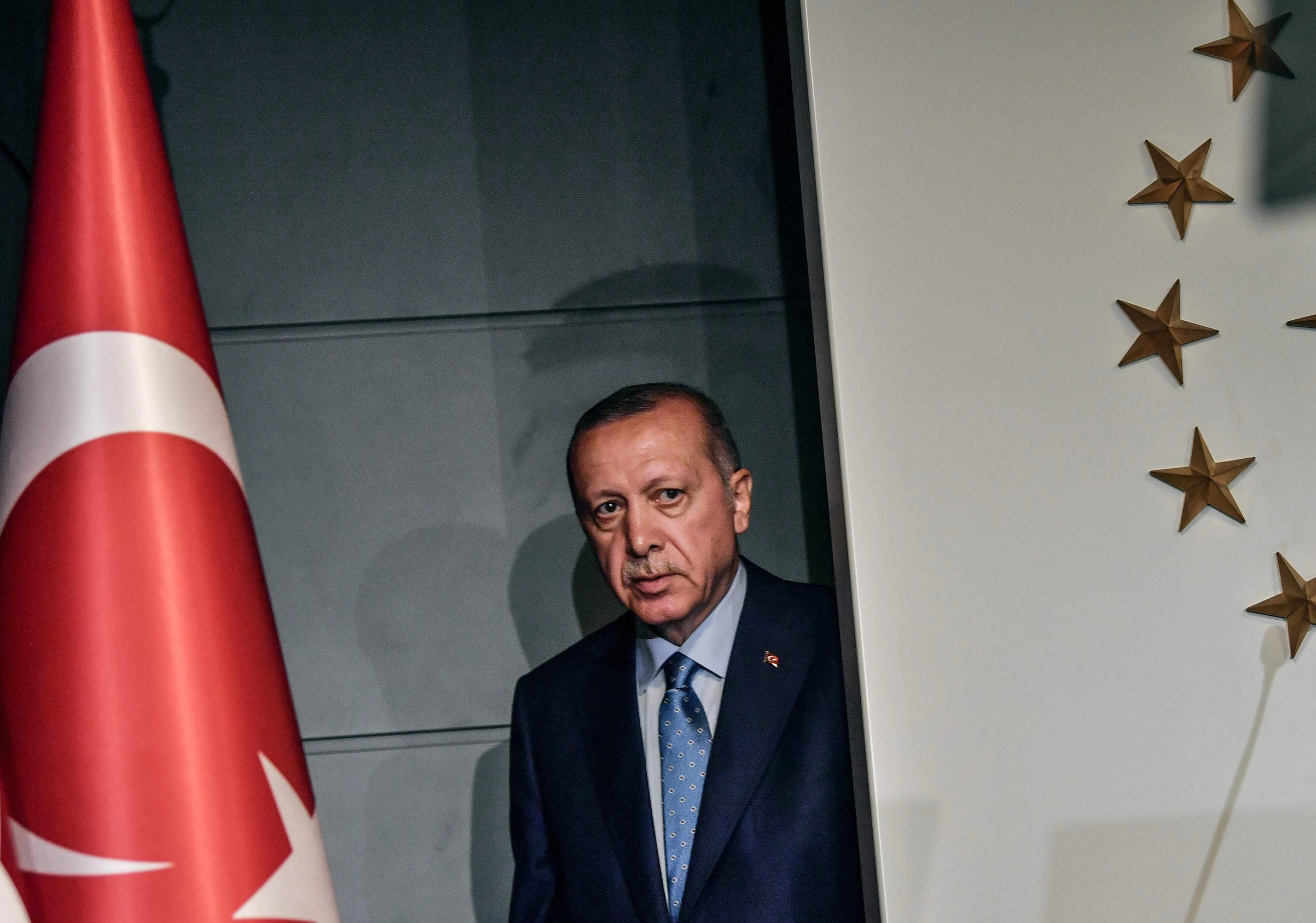
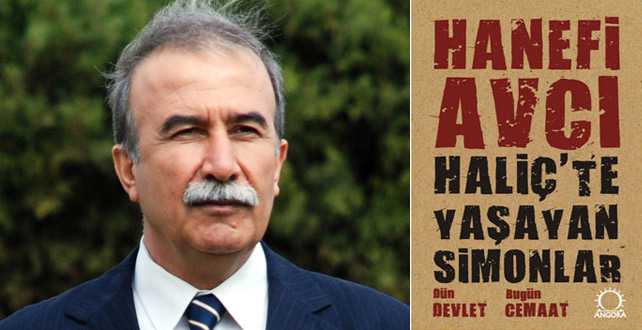 for writing a best seller. His book laid bare the widely suspected fact that Turkey’s highest government institution’s—police, army, and judicial system—had been infiltrated and indeed subverted by a religious cemaat, the Fethullah Gülen movement. (3) Since Avcı himself was once an eager activist for Gülen’s cemaat, the book has a certain whiff of authenticity.
 For those interested in a dramatic representation of this incident see the stunning classic film (1937) The Life of Emile Zola: