Tag: NATO

  • “NATO Go Home!”

    “NATO Go Home!”

    by Thierry Meyssan

    For two decades, US troops have been imposing their law on the broader Middle East. Entire countries are now without a state to defend them. Populations have been subjected to the dictatorship of the Islamists. Mass murders have been committed. There have been famines as well. President Donald Trump has forced his generals to repatriate their soldiers, but the Pentagon intends to continue its work with NATO soldiers.

    VOLTAIRE NETWORK | DAMASCUS (SYRIA) | 18 FEBRUARY 2020 

    Arrival at the Atlantic Council of the Supreme Commander of the United States Forces for Europe and Supreme Commander of the North Atlantic Alliance, General Tod D. Wolters (Brussels, February 12, 2020).

    President Trump will spend the last year of his first term in office bringing the Boys home. All U.S. troops stationed in the broader Middle East and Africa are expected to withdraw. However, this withdrawal of troops will in no way mean the end of US governance in these regions of the world. Quite the contrary.

    The Pentagon’s strategy

    Since 2001 – and this is one of the main reasons for the 9/11 attacks – the United States has secretly adopted the strategy outlined by Donald Rumsfeld and Admiral Arthur Cebrowski. This strategy was mentioned in the Army Review by Colonel Ralf Peters two days after the attacks [1] and confirmed five years later by the publication of the staff map of the new Middle East [2]. It was detailed by Admiral Cebrowski’s assistant, Thomas Barnett, in a popular book The Pentagon’s New Map [3].

    It is about adapting the missions of the US armies to a new form of capitalism giving primacy to Finance over Economics. The world must be divided in two. On the one hand, stable states integrated into globalization (which includes Russia and China); on the other, a vast area of exploitation of raw materials. This is why the state structures of the countries in this zone must be considerably weakened, ideally by destroying them and preventing their resurgence by all means. This “constructive chaos”, as Condoleeza Rice put it, should not be confused with the homonymous rabbinic concept, even though the supporters of the theopolitics have done everything in their power to do so. It is not a question of destroying a bad order in order to rebuild a better one, but of destroying all forms of human organization in order to prevent any form of resistance and to allow transnationals to exploit this area without political constraints. It is therefore a colonial project in the Anglo-Saxon sense of the term (not to be confused with a colonization of settlement).

    According to this map, taken from a Powerpoint by Thomas P. M. Barnett at a conference at the Pentagon in 2003, all state structures in the dewy zone must be destroyed.

    In beginning to implement this strategy, President George Bush Jr. spoke of a “war without end. Indeed, it is no longer a question of winning wars and defeating opponents, but of making them last as long as possible, “a century” he said. In fact, this strategy has been applied in the “Broader Middle East” – an area stretching from Pakistan to Morocco and covering the entire CentCom theatre of operations and the northern part of the AfriCom theatre of operations. In the past, the IMs guaranteed US access to oil from the Persian Gulf (Carter doctrine). Today, they are present in an area four times larger and aim to overturn any form of order. The state structures of Afghanistan since 2001, Iraq since 2003, Libya since 2011, Syria since 2012 and Yemen since 2015 are no longer capable of defending their citizens. Contrary to official discourse, there has never been any question of overthrowing governments, but rather of destroying states and preventing their reconstitution. For example, the situation of the people of Afghanistan did not improve with the fall of the Taliban 19 years ago, but is getting worse and worse by the day. The only counter-example could be that of Syria, which, in accordance with its historical tradition, has kept its state despite the war, absorbed the blows, and although ruined today, has weathered the storm.

    It should be noted in passing that the Pentagon has always considered Israel as a European state and not as a Middle Eastern state. It is therefore not affected by this vast upheaval.

    In 2001, the enthusiastic Colonel Ralf Peters assured that ethnic cleansing “it works! “(sic), but that the laws of war forbade the USA to carry it out itself. Hence the transformation of Al-Qaeda and the creation of Daesh, which did for the Pentagon what it wanted but could not undertake publicly.

    To understand the Rumsfeld/Cebrowski strategy, it should be distinguished from the “Arab Spring” operation, imagined by the British on the model of the “Great Arab Revolt”. The idea was to put the Muslim Brotherhood in power, just as Lawrence of Arabia had put the Brotherhood of the Wahhabites in power in 1915.

    The official, albeit not publicly assumed, objective of the U.S. General Staff: to blow up the borders of the Middle East, to destroy both enemy and friendly states, to practice ethnic cleansing.

    Westerners in general have no vision of the broader Middle East as a geographical region. They know only certain countries and perceive them as isolated from each other. In this way, they convince themselves that the tragic events that these peoples are enduring are all due to special reasons, in some cases civil war, in others the overthrow of a bloodthirsty dictator. For each country, they have a well-written history of the reason for the tragedy, but they never have one to explain that the war lasts beyond that, and they certainly do not want to be asked about it. Each time, they denounce the “carelessness of the Americans” who could not end the war, forgetting that they rebuilt Germany and Japan after the Second World War. They refuse to acknowledge that for two decades the United States has been implementing a pre-stated plan at the cost of millions of lives. They therefore never see themselves as responsible for these massacres.

    The United States itself denies that it is pursuing this strategy with regard to its citizens. For example, the inspector general investigating the situation in Afghanistan wrote a report lamenting the countless missed opportunities for the Pentagon to bring peace when precisely the Pentagon did not want peace.

    The Russian intervention

    In order to pulverize all the states of the broader Middle East, the Pentagon organized an absurd regional civil war in the manner it had invented the pointless war between Iraq and Iran (1980-88). Eventually President Saddam Hussein and Ayatollah Khomeini realized that they were killing each other for nothing and made peace against the West.

    This time it was the opposition between Sunnis and Shiites. On one side, Saudi Arabia and its allies, and on the other, Iran and its allies. It does not matter whether Wahhabi Saudi Arabia and Khomeini Iran fought together under NATO command during the war in Bosnia-Herzegovina (1992-95), or whether many troops of the “Axis of Resistance” are not Shiite (100% of the Palestinians of Islamic Jihad, 70% of the Lebanese, 90% of the Syrians, 35% of the Iraqis and 5% of the Iranians).

    No one knows why these two camps are fighting each other, but they are asked to bleed each other.

    One third of the populations of the Shia Axis of Resistance are not Shia.

    In any case, in 2014, the Pentagon was preparing to recognise two new states in accordance with its map of objectives: “Free Kurdistan” (fusion of the Syrian Rojava and the Kurdish Governorate of Iraq to which part of Iran and all of eastern Turkey were to be added at a later date) and “Sunnistan” (composed of the Sunni part of Iraq and eastern Syria). By destroying four states, the Pentagon paved the way for a chain reaction that would in turn destroy the entire region.

    Russia then intervened militarily and enforced the borders of the Second World War. It goes without saying that these are arbitrary, stemming from the Sykes-Picot-Sazonov agreements of 1915, and sometimes difficult to bear, but changing them by blood is even less acceptable.

    The Pentagon’s communication has always pretended to ignore what was at stake. Both because it does not publicly assume the Rumsfeld/Cebrowski strategy and because it equates the Crimea’s accession to the Russian Federation with a coup de force.

    The moult of supporters of the Rumsfeld/Cebrowski strategy

    After two years of fierce fighting against President Trump, the general officers of the Pentagon, almost all of whom were personally trained by Admiral Cebrowski, submitted to him under conditions. They agreed not to
     create a terrorist state (Sunnistan or Caliphate);
     change borders by force;
     maintaining US troops on the battlefields of the Broader Middle East and Africa.

    In exchange, they ordered their loyal prosecutor Robert Mueller, whom they had already used against Panama (1987-89), Libya (1988-92) and in the 9/11 attacks (2001), to bury his investigation into Russiagate.

    Then everything unfurled as smoothly as a player piano roll.

    On 27 October 2019, President Trump ordered the execution of Caliph Abu Bakr al-Baghdadi, the main military figure in the Sunni camp. Two months later, on January 3, 2020, he ordered the execution of Iranian General Qassem Soleimani, the main military figure of the Axis of Resistance.

    Having thus shown that he remained the master of the game by eliminating the most symbolic personalities of both sides, claiming it, and without incurring any significant retaliation, Secretary of State Mike Pompeo revealed the final scheme on January 19 in Cairo. He plans to pursue the Rumsfeld/Cebrowski strategy no longer with the US armies, but with those of NATO, including Israel and the Arab countries.

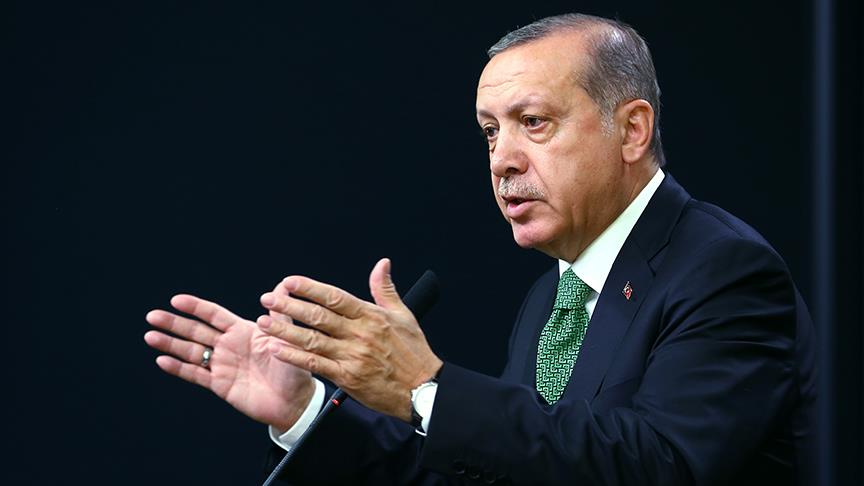
    On the 1st of February, Turkey made its break with Russia official by assassinating four FSB officers in Idleb. Then President Erdogan went to Ukraine to chant the motto of the Banderists (the Ukrainian legionnaires of the Third Reich against the Soviets) with the Ukrainian National Guard and receive the head of the International Islamist Brigade (the anti-Russian Tatars), Mustafa Djemilev (known as “Mustafa Kırımoğlu”).

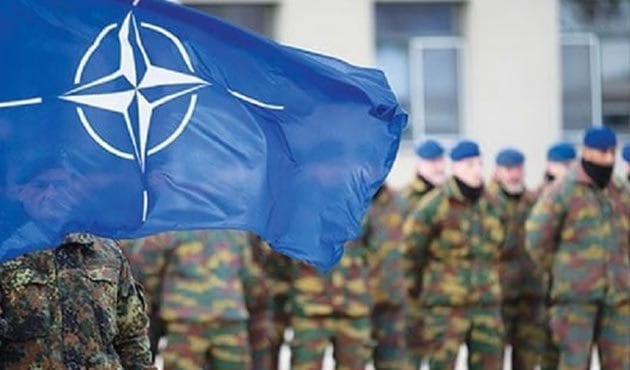
    The North Atlantic Council acknowledges the deployment of NATO trainers to the Broader Middle East (Brussels, 13 February 2020).

    On February 12 and 13, the Defence Ministers of the Atlantic Alliance noted the inevitable withdrawal of US forces and the forthcoming dissolution of the International Coalition Against Daesh. While stressing that they were not deploying fighting troops, they agreed to send their soldiers to train those of the Arab armies, i.e. to supervise the fighting on the ground.

    NATO trainers will be deployed primarily to Tunisia, Egypt, Jordan and Iraq. For example:

     Libya will be encircled in the west and east. The two rival governments of Fayez el-Sarraj -supported by Turkey, Qatar and already 5,000 jihadists from Syria via Tunisia- and Marshal Khalifa -supported by Egypt and the Emirates- will be able to kill each other forever. Germany, happy to regain the international role it has been deprived of since the Second World War, will play the gadfly by talking about peace to cover the moans of the dying.

     Syria will be surrounded on all sides. Israel is already a de facto member of the Atlantic Alliance and bombs whoever it wants whenever it wants. Jordan is already NATO’s “best global partner”. King Abdullah II came to Brussels on January 14th for lengthy talks with the Secretary General of the Alliance, Jens Stoltenberg, and attended a meeting of the Atlantic Council. Israel and Jordan already have permanent offices at Alliance Headquarters. Iraq will also receive NATO trainers, although its parliament has just voted to withdraw foreign troops. Turkey is already a member of the Alliance and controls northern Lebanon through the Jamaa Islamiya . Together, they will be able to enforce the US ’Caesar’ law forbidding any company from anywhere to help in the reconstruction of this country.

    Thus, the pillaging of the wider Middle East, which began in 2001, will continue. The martyred populations of this region, whose only fault is to have been divided, will continue to suffer and die en masse. The United States will keep its soldiers at home, warm and innocent, while the Europeans will have to take responsibility for the crimes of the US generals.

    According to President Trump, the Alliance could change its name to NATO-Middle East (NATO-MO/NATO-ME). Its anti-Russian function would take a back seat to its strategy of destroying the non-globalized zone.

    The question arises as to how Russia and China will react to this redistribution of the cards. China needs access to raw materials from the Middle East in order to develop. It should therefore oppose this Western takeover even though its military preparation is still incomplete. On the contrary, Russia and its huge territory are self-sufficient. Moscow has no material reason to fight. The Russians may even be relieved by NATO’s new orientation. It is likely, however, that, for spiritual reasons, they will not let Syria down and may support other peoples in the wider Middle East.

    Thierry Meyssan

    Translation
    Roger Lagassé

    [1] “Stability, America’s Ennemy”, Ralph Peters, Parameters, Winter 2001-02, pp. 5-20. Reproduit in Beyond Terror : Strategy in a Changing World, Stackpole Books.

    [2] “Blood borders – How a better Middle East would look”, Colonel Ralph Peters, Armed Forces Journal, June 2006.

    [3] The Pentagon’s New Map, Thomas P.M. Barnett, Putnam Publishing Group, 2004.

    Türkçe: https://www.turkishnews.com/tr/content/2020/02/19/nato-go-home-turkce/
  • Erdogan’s power grab should worry Nato

    Erdogan’s power grab should worry Nato

     The Times

    Erdogan’s power grab should worry Nato

    The Turkish president is reshaping the western alliance’s second-biggest army in his own image

    This month Recep Tayyip Erdogan, president of Turkey, attended commemorations for the anniversary of the death of Kemal Ataturk, the general who beat Britain and its allies at Gallipoli and went on to found the Turkish republic. The day is designed to humble any living Turkish leader. Erdogan walked behind soldiers carrying a wreath picked out with the Turkish flag through the neo-classical promenade and plaza of Anitkabir, Ataturk’s mausoleum in the heart of Ankara.

    In the sarcophagus hall, he bowed his head to the body of the only man who still rivals him in Turkey, as the Last Post and the national anthem were played. The soldiers saluted Ataturk, not Erdogan.

    But as he walked back outside, the tables turned. A chorus went up…

    Continue reading

    Subscribe to The Digital Pack

    for instant access
    thetimes.co.uk/subscribe/digital/

  • Turkey and the West: A Gathering Storm?

    Turkey and the West: A Gathering Storm?

    Nov 7, 2019 | 23:02 GMT
    The strategies pursued by Turkish President Recep Tayyip Erdogan may have alienated some of the country's traditional allies, but they have boosted his nationalist credentials at home.

    The strategies pursued by Turkish President Recep Tayyip Erdogan may have alienated some of the country’s traditional allies, but they have boosted his nationalist credentials at home.

    (ATTILA KISBENEDEK/AFP via Getty Images)

    Turkey, straddling a strategic geographic nexus between Europe and Asia, is the focus of conversation in this episode of the Stratfor podcast. Domestic economic and political challenges are pulling at the rule of President Recep Tayyip Erdogan. Meanwhile, relations between Turkey and the United States, a key NATO ally, are at an ebb, and after Ankara launched an offensive into northeastern Syria, the U.S. Congress has called for sanctions. In the meantime, Turkey’s relationship with the European Union, which Ankara ostensibly aspires to join, appears now to be fraying at the edges. All of this raises the question: Will Turkey now turn to Russia?

    Stratfor’s Emily Hawthorne speaks with Sinan Ciddi, assistant professor at Georgetown University’s School of Foreign Service, the director of the Institute of Turkish Studies and a frequent contributor to Stratfor Worldview, about Turkey’s current situation and its political future.

  • Turkey’s Membership in NATO Could be Ending Soon…

    Turkey’s Membership in NATO Could be Ending Soon…

    By Harut Sassounian

    Patrick Shanahan, Acting Defense Secretary of the United States, sent on June 6, 2019, a harsh letter to his counterpart, Hulusi Akar, Turkey’s Minister of Defense. Shanahan threatened to end Turkey’s participation in the most advanced US air force jet F-35 program and implement sanctions should Turkey persist in acquiring S-400 missiles from Russia next month. The Russian missiles are incompatible with NATO’s weapons system and risk to compromise the F-35 jets operations, thus jeopardizing U.S. national security.

    Turkish President Erdogan has repeatedly rejected U.S. complaints and insisted on acquisition of the Russian missiles for which Turkey has signed a $2.5 billion loan agreement with Russia. Several Turkish military officers are already in Russia learning how to operate the new missiles. In the meantime, the United States has informed Turkey that Turkish pilots who had been training on the F-35 jets in the United States for several months have to depart from the country by July 31, 2019.

    Acting Secretary of Defense Shanahan’s letter sent shock waves into Turkey’s foreign policy and security establishment as Turkey doesn’t yet know “how to reply,” a senior Turkish security source told Al-Monitor. In the meantime, Turkey had paid over a billion dollars to acquire 100 F-35 jets. Pres. Erdogan announced that he will demand the payment back from the United States. Furthermore, Turkey, as a partner in the F-35 program, has been producing certain parts of the jets which will no longer be sourced from Turkey.

    Shanahan wrote to Turkey’s Defense Minister: “All actions taken on the F-35 are based on risks the S-400 presence in Turkey would have and they are separate from Russia-related Countering America’s Adversaries Through Sanctions Act (CAATSA) sanctions. There is strong bipartisan U.S. Congressional determination to see CAATSA sanctions imposed on Turkey if Turkey acquires the S-400. In addition to threatening the security of platforms like the F-35, Turkey’s procurement of the S-400 will hinder your nation’s ability to enhance or maintain cooperation with the United States and within NATO, lead to Turkish strategic and economic over-dependence on Russia, and undermine Turkey’s very capable defense industry and ambitious economic development goals. Pursuing this path will cause a loss in jobs, gross domestic product, and international trade. President Trump committed to boost bilateral trade from $20 billion currently to more than $75 billion, however that may be challenging if the United States imposes CAATSA sanctions.”

    On June 14, 2019, Turkish Foreign Minister Mevlut Cavusoglu threatened that Turkey will retaliate to U.S. sanctions: “One country cannot give instructions to another on how to act. The US should abandon this behavior. Everyone is concerned about this. How far can it go? If the US takes steps against us, then we will be forced to take reciprocal steps,” he stated in an interview with NTV channel.

    What are the next steps? Pres. Erdogan has learned from previous experiences that Pres. Trump does not always listen to his Cabinet members or to members of Congress. Erdogan has had several phone conversations to convince Trump to form a joint study group which will buy time for Turkey. In the meantime, naturally-occurring or artificially-created world events may change the present situation. The Presidents of Turkey and the United States are scheduled to meet on the sidelines of the G-20 Summit in Tokyo at the end of June. That would be Erdogan’s last chance to persuade Trump to change his decision on the Russian missile acquisition in July.

    If unable to change Trump’s mind, Erdogan will go ahead and acquire the Russian missiles in order to avoid being humiliated by the United States. However, that would only be the beginning of a larger conflict! The United States would impose sanctions on Turkey, seriously damaging its economy. Erdogan could retaliate by banning NATO from using the Incirlik air base in Turkey. The United States would then relocate its jets to Jordan (as Germany has done) or Greece (a NATO member) or Cyprus.

    This vicious cycle of punches and counter punches could end up by either Turkey withdrawing from NATO or NATO deciding to expel Turkey.

    The removal of Turkey from NATO is a step that has been anticipated for a long time, ever since Erdogan has been acting contrary to the letter and spirit of the NATO agreement. Even though expelling Turkey from NATO is a serious decision fraught with major consequences, Erdogan is the cause by repeatedly violating Turkey’s commitments to NATO and ignoring all its warnings.

    The obvious winner in this situation will be Russia which will succeed in weakening NATO by excluding Turkey — the country with the second largest military in NATO, while earning from the sale of the missiles desperately needed income for its collapsed economy.

    However, Russia’s success may be short-lived. As soon as a geo-political conflict arises between Russia and Turkey, the newly-formed love-fest will fall apart, putting an end to Turkish acrobatic moves between East and West, and getting abandoned by both!

  • is Turkey and an armed system completely independent from the NATO possible?

    is Turkey and an armed system completely independent from the NATO possible?

    Why should Turkey buy the S-400 and have an armed system independent from the USA?

    2288
    Experts:
    • Mehmet Perincek

    Turkish-American relations have never been in such a crisis. The causes of this crisis are clear:

    – US support for Kurdish separatists and its plan for a great Kurdistan.

    – The role of Washington in the attempted coup on June 15, 2016 and the use of US Gulenist against Turkey.

    – Trump’s announcement of an economic war against Turkey.

    Facing threats from the United States, to ensure their national security, Turkey began to look for alternative armed systems. Although Turkey is a member of NATO, it has become a target of Washington. Because of this, firstly the Americans stopped supplying the necessary weapons, secondly the armed systems dependent on the USA did not meet the needs of present times.

    In this regard, Turkey decided to buy the Russian anti-aircraft missile system S-400, which annoyed Washington very much, and the crisis between the two countries has grown. Even Trump’s administration saw this purchase as a betrayal and has threatened Ankara several times.

    On this issue, we reached out to Turkish political scientists and military experts to discuss the S-400 crisis with them and the actual needs of the Turkish Army for its armed system.

    “INCREDIBLE DEGREE OF MISTRUST BETWEEN US AND TURKEY”

    Commenting on Turkish-American relations for USA Really, Prof. Dr. Hasan Ünal, an expert on Turkish foreign policy, pointed out that there has been a security and political dimension all along:

    “There has been an incredible degree of mistrust between the two NATO allies. The US’s efforts to carve out a Greater Kurdistan in the Middle East of Iraq, Syria in particular, and Turkey, linking it through a corridor to the Eastern Mediterranean is certainly a very disturbing element in US-Turkish relations from Ankara’s point of view. Notorious US efforts to bolster up the PYD in Syria, for example, despite repeated warnings from Ankara, have fostered this mistrust to a considerable degree. Ankara does not presumably think that it is going to have to encounter Russia or any Russia-backed force in the foreseeable future in this part of the world.”

    “TURKEY WILL NOT CHANGE ITS MIND”

    On the other hand, everyone is wondering if these threats of sanctions repeatedly pronounced by US officials about the purchase of the S-400 air defense systems from Russia will scare off Turkey. Prof. Ünal emphasizes that Turkey’s decisions are already determined by the needs of the country, and not by threats from the Atlantic:

    “I would say that it is less likely than otherwise that these threats are going to make Turkey give up. To put it into some perspective, Turkey desperately needs air defense systems. It would like to buy and jointly produce these systems together with Russia, and Russia’s agreement to sell these sophisticated weapons and to produce them together with Turkey at a later stage is an important inducement. Secondly, and perhaps more importantly, Turkey had earlier approached the US with a view to buying them from it but it had been turned down by Washington. The US not only did not want to sell its Patriot missiles, which are not as effective as the S-400s, but it also did not agree with Turkey’s offer of co-production, let alone transfer the technology to Turkey. After Turkey made a deal with Russia about the purchase of the S-400s, the US appears to be more than willing to sell the Patriots but I suppose that it is too late.”

    WHAT CHARACTERIZES S-400s AS COMPARED OTHER AIR DEFENSE SYSTEMS

    After Prof. Unal explained the geopolitical reasons for purchasing the S-400s, we asked Beyazıt Karataş, the retired Air Force Major General (TUAF), the following question: Is the S-400 responsive to Turkey’s military needs? First he said that the most important indicator for NATO and the West is their opposition to Turkey’s territorial integrity; In this case, it is necessary to question the relations of alliance with these simple facts and take measures accordingly. Then, he told us about the characterization of S-400s as compared to other air defense systems:

    “The S-400 Long Range High Altitude Air Defense System has properties two to five times better when compared to other long-range high-altitude air defense systems in terms of their ability, as shown in the table.”

    Why should Turkey buy the S-400 and have an armed system independent from the USA?

    ARE THE S-400s DANGEROUS FOR NATO?

    Having found such an expert, it was imperative to find out whether the S-400 was a danger for NATO, as Washington said it is:

    “The S-400 is an air defense system and not an attack weapon. In particular, Turkey, having felt the lack of a long-range system since the 1990s will fill an important gap in its high-altitude air defense system. Very clearly ‘our country, our motherland’ will constitute a threat and it will be used against enemy attacks. This means that it is a system to be used against threats from an enemy country, as it is raised most, not directly against NATO, but from the air, whether it is coming from a NATO member or any country.”

    “S-400s ARE ENOUGH FOR TURKEY’S DEFENSE”

    Then the conversation with Major General Beyazıt Karataş came to the most important point: Are the S-400s enough for Turkey’s defense?:

    “There will never be an air defense system alone. Because every air defense system itself needs air defense protection. In contrast, in the S-400 contract with Turkey, Russia will provide a significant deterrence for the protection of our airspace.

    The S-400s will enter our inventory in the 2019-2020 year, according to the agreements to be made to produce our future long-range high-altitude national air defense system. Turkey will make an important contribution to the experience and Turkey-Russian political relations, the military, the defense industry, and the economic dimension will contribute to this development.

    As a result, the US and NATO are still hoping that the S-400 agreement will be canceled, as happened with China. The US is putting all sorts of pressure and blocking against Turkey and threatening not to provide F-35 aircrafts if Turkey buys the S-400. It is seen that the US will continue these threats and blackmail until the end. The implementation of the agreement signed on the supply of Russia’s S-400, for safety, also holds great importance in terms of cooperation with neighbouring countries and prestige in the international arena.”

    “THE F-35 SYSTEM WILL DAMAGE TURKEY IN TWO WAYS”

    On Turkey’s agenda there is not only the purchase of the S-400s, but American F-35s are also being discussed. Major General Karataş considers the F-35s very dangerous for Turkish defense. According to Karataş, in case of a possible war with the US, Turkey could lose control of these fighters. He says that Turkey has other reliable alternatives:

    “As it’s known, in January 2019, US President Donald Trump signed the 2019 year budget, and according to the relevant clauses contained in it, if Turkey buys S-400s from Russia, they will prevent the delivery of F-35 aircraft, sa they have repeated in every platform and continues to repeat.

    Meanwhile, the Trump administration will try to compensate for possible radical steps regarding Turkey as Congress has done so far. Indeed, in the case of the S-400 coming to Turkey, Congress would not execute the Countering America’s Adversaries Through Sanctions Act (CAATSA)–the US State Department would decide. Of course, the State Department will have to move with instructions from Trump. However, Trump may not be able to bypass the Congress in these processes.

    Technical characteristics of the F-35 aircraft include invisibility, a combination of antennas, sensors and cryptographic links to enable NATO to operate jointly, to transfer information to land maritime and other elements. These features can create the perception of “perfect planes.” But from the national logistics point of view, as particularly important considering the problems experienced between Turkey and the US, the F-35 will be out of Turkey’s control. The F-35 system will damage Turkey in two ways.

    The first is the Autonomic Logistics Information System (ALIS) and the second Performance Based Logistics (PBL). You are now procuring services from a US company and transferring logistics planning to the US nationally. For example, you want your 25 planes to be active. Under the agreement with Lockheed Martin, the parent company of the F-35s, the company manages this system to provide the activities of these aircraft to keep 25 active. So you can’t manage the activity of your own aircraft. You cannot manage your own logistics system according to the old national system. Yes, this method is economically good, but Turkey-US relations are not as they used to be.

    As a result, the US does not give the F-35s to do Turkey a great favor. Because of Turkey’s decision on F-35s, the Air Force will make Turkey 100 percent dependent on the US. This will prevent the development of our national aircraft. While the Turkish Air Force has already been tied to the US by 90-95 percent, it should be lowered. The F-35’s polished, exaggerated charm to be in the US’s orbit will make you 100 percent dependent on the US.

    If Turkey does not buy the F-35 aircraft, it won’t be the end of the world. Turkish-Russian military relations are not limited to the intake of air defense missiles, they are also increasing cooperation in space with the production of joint combat aircraft (TF-X), which should be among the priority targets. We can also say that the chance to develop new collaborations outside the US and NATO is now much more important and this is the exactly what the US fears.”

    “A NEW ERA IN RUSSIAN-TURKISH MILITARY RELATIONS”

    All our interlocutors emphasized the importance and necessity of an armed system independent from the United States. According to the Turkish political scientist Prof. Ünal, since it’s admission, Turkey has learned to develop some sort of an independent security policy for itself. He recalled that initially in the 1950s and early 1960s, it was perhaps like a US/NATO garrison in the Middle East and the Balkans and after the arrival of the infamous Johnson Letter in Ankara, in the summer of 1964, Turkey certainly moulded an independent foreign policy, though it remained in NATO:

    “It was after this 1964 policy re-evaluation that Turkey began to cultivate the best possible relations with the Soviet Union, a period that continued right up to the 1980s and even after. During these years, Turkey and the Soviet Union were on the best possible terms on trade and economy and, short of cooperating in security matters, they cultivated very good relations indeed.

    Since the end of the Cold War, things took a sharp turn for the better. Despite the Syrian crisis and the shooting down of a Russian fighter jet by Turkey, relations between Ankara and Moscow seem to be steady, and the purchase of the S-400s and possibility of co-production of several systems including S-400s seem to be heralding a new era in Russian-Turkish relations in which cooperation on security and military matters would well be on the agenda too.”

    TURKEY CHOOSES ITS FRONT

    Based on this, we can say that serious conflict and possible clashes with the United States force Turkey to have an armed system independent from NATO. In this sense, Russia and China are potential partners for Turkey.

    Turkey’s choice of the S-400 is not only an economic or technical choice. Although the S-400 has better properties compared to other systems, Turkey’s purchase of the S-400 primarily comes from geopolitical and strategic reasons. Turkey is choosing its front, its side. It is responding to threats from the United States by relocating in Eurasia.

    And this is not a choice but a necessity for Turkey. Turkey cannot survive in the Atlantic system, and maintain its territorial integrity and overcome the economic crisis. That is, to continue to exist, Turkey needs Eurasian cooperation.

    Beyazıt Karataş is a retired Air Force Major General (TUAF). Major General KARATAŞ served as the 2nd Tactical Air Force Command Chief of Staff in 2005-2006, and the 8th Main Jet Base Commander in 2006-2007. After being promoted to the rank of Major General on August 30, 2007, he served as Deputy Commander of Air Training Command and was assigned to the post of Deputy Undersecretary for Technology and Coordination of the Turkish Minister of National Defense (TMND) from September 10, 2007 to August 13, 2010. Major General KARATAŞ was assigned as the Deputy Commander of 2nd Tactical Air Force Command in 2010-2012 and retired from the Turkish Air Force on August 30, 2012. He has more than 3000 flight hours on different types of aircraft.

    Hasan Ünal is an expert on Turkish foreign policy. He holds a Ph.D. from Manchester University, Britain, where he lived between 1986 and 1993. Upon his return to Turkey, he took up a teaching job at Bilkent University, Ankara, in the Department of International Relations. Having worked at several other universities in Ankara, he recently moved to Istanbul Maltepe University.

    Author: Mehmet Perincek
    #usa
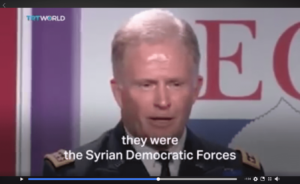
  • How would you feel about your allies…

    How would you feel about your allies…

    NEDEN ZEYTİN DALI? NEDEN AFRİN VE SONRASI?

    TRT World’ü bu muhteşem anlatım için tebrik ederim. Türkiyenin haklılığını çok güzel özetlemiş… (Arkadaşlık listesinde yabancı olanlar paylaşıp bilgilendirsin…)