Tag: EU

  • EU president: Herman Van Rompuy opposes Turkey joining

    EU president: Herman Van Rompuy opposes Turkey joining

    The poetry-loving favourite to become the first president of Europe, Herman Van Rompuy, is also a hard-line opponent of Turkey’s bid to join the European Union because it is an Islamic country.

    Herman Van Rompuy

    Herman Van Rompuy, Belgium’s Prime Minister, has in the past spoken out against Turkish EU membership because, he warned, it would dilute Europe’s Christian heritage.

    His position on the issue is so strong that he has won the support of Vlaams Belang, the controversial far-right Flemishh anti-immigrant party in Belgium.

    Speaking five years ago, as an opposition politician, Mr Rompuy, a Christian Democrat, argued that Muslim Turkey could not be considered a candidate for EU membership.

    “Turkey is not a part of Europe and will never be part of Europe. An expansion of the EU to include Turkey cannot be considered as just another expansion as in the past,” he said.

    “The universal values which are in force in Europe, and which are fundamental values of Christianity, will loose vigour with the entry of a large Islamic country such as Turkey.”

    Filip Dewinter, a Vlaams Belang leader, said: “We are entirely in agreement with Van Rompuy over this question and are convinced he will defend this point of view as President of the EU. It is for this reason we openly support him.”

    Mr Van Rompuy’s opposition to Turkey is set to cement British and East European opposition to him during Thursday’s summit dinner to appoint a President and Eu foreign minister.

    The Telegraph

  • ‘Iran is our friend,’ says Turkish PM Recep Tayyip Erdogan

    ‘Iran is our friend,’ says Turkish PM Recep Tayyip Erdogan

    • We have no difficulty with Ahmadinejad – Erdogan
    • Warning to Europe not to ignore Turkey’s strengths
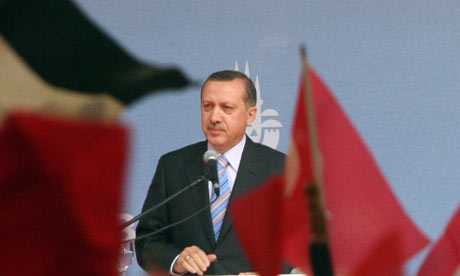
    With its stunning vistas and former Ottoman palaces, the banks of the Bosphorus – the strategic waterway that cuts Istanbul in half and divides Europe from Asia – may be the perfect place to distinguish friend from foe and establish where your country’s interests lie.

    And sitting in his grandiose headquarters beside the strait, long the symbol of Turkey‘s supposed role as bridge between east and west, Recep Tayyip Erdogan had little doubt about who was a friend and who wasn’t.

    Mahmoud Ahmadinejad, Iran‘s radical president whose fiery rhetoric has made him a bête noire of the west? “There is no doubt he is our friend,” said Erdogan, Turkey’s prime minister for the last six years. “As a friend so far we have very good relations and have had no difficulty at all.”

    What about Nicolas Sarkozy, president of France, who has led European opposition to Turkey’s bid to join the EU and, coincidentally, adopted a belligerent tone towards Iran’s nuclear programme? Not a friend?

    “Among leaders in Europe there are those who have prejudices against Turkey, like France and Germany. Previously under Mr Chirac, we had excellent relations [with France] and he was very positive towards Turkey. But during the time of Mr Sarkozy, this is not the case. It is an unfair attitude. The European Union is violating its own rules.

    “Being in the European Union we would be building bridges between the 1.5bn people of Muslim world to the non-Muslim world. They have to see this. If they ignore it, it brings weakness to the EU.”

    Friendly towards a religious theocratic Iran, covetous and increasingly resentful of a secular but maddeningly dismissive Europe: it seems the perfect summary of Turkey’s east-west dichotomy.

    Erdogan’s partiality towards Ahmadinejad may surprise some in the west who see Turkey as a western-oriented democracy firmly grounded inside Nato. It has been a member of the alliance since 1952. It will be less surprising to Erdogan’s secular domestic critics, who believe the prime minister’s heart lies in the east and have long suspected his Islamist-rooted Justice and Development party (AKP) government of plotting to transform Turkey into a religious state resembling Iran.

    Erdogan vigorously denies the latter charge, but to his critics he and Ahmadinejad are birds of a feather: devout religious conservatives from humble backgrounds who court popular support by talking the language of the street. After Ahmadinejad’s disputed presidential election in June, Erdogan and his ally, the Turkish president, Abdullah Gul, were among the first foreign leaders to make congratulatory phone calls, ignoring the mass demonstrations and concerns of western leaders over the result’s legitimacy.

    Talking to the Guardian, Erdogan called the move a “necessity of bilateral relations”. “Mr Ahmadinejad was declared to be the winner, not officially, but with a large vote difference, and since he is someone we have met before, we called to congratulate him,” he said.

    “Later it was officially declared that he was elected, he got a vote of confidence and we pay special attention to something like this. It is a basic principle of our foreign policy.”

    The gesture will be remembered when Erdogan arrives in Tehran this week for talks with Ahmadinejad and Ayatollah Ali Khamenei, Iran’s supreme leader, that will focus on commercial ties, including Turkey’s need for Iranian natural gas. Ahmadinejad has voiced his admiration for Erdogan, praising Turkey’s recent decision to ban Israel from a planned Nato manoeuvre in protest at last winter’s bombardment of Gaza.

    Since the election, Iran has witnessed a fierce crackdown on opposition figures that has resulted in activists, students and journalists being imprisoned and publicly tried. Detainees have died in prison, and there have been allegations of torture and rape. Some of those alleging mistreatment have sought refuge in Turkey.

    But Erdogan said he would not raise the post-election crackdown with his hosts, saying it would represent “interference” in Iranian domestic affairs.

    He poured cold water on western accusations that Iran is seeking a nuclear weapon, saying: “Iran does not accept it is building a weapon. They are working on nuclear power for the purposes of energy only.”

    Erdogan has overseen a dramatic improvement in the previously frigid relations between Turkey and Iran, which was viewed with suspicion by the pro-secularist high command of the powerful Turkish military. Trade between the two countries last year was worth an estimated £5.5bn as Iran has developed into a major market for Turkish exports.

    Erdogan’s views will interest US foreign policy makers, who have long seen his AKP government as a model of a pro-western “moderate Islam” that could be adopted in other Muslim countries. They will also find an audience with President Barack Obama, who signalled Turkey’s strategic importance in a visit last April and has invited the prime minister to visit Washington. They are unlikely to impress Israel, which has warned that Erdogan’s criticisms risk harming Turkey’s relations with the US.

    Erdogan dismissed the notion, saying: “I don’t think there is any possibility of that. America’s policy in this region is not dictated by Israel.”

    He insisted that the Turkey-Israel strategic alliance – which some AKP insiders have said privately is over – remains alive but chided the Israeli foreign minister, Avigdor Lieberman, who he said had threatened to use nuclear weapons against Gaza.

    The Guardian
  • EU launches digital library at Frankfurt Book Fair

    EU launches digital library at Frankfurt Book Fair

    (FRANKFURT) – The European Union used the world’s biggest book fair to launch the EU Bookshop’s digital library, making more than 50 years of documents in about 50 languages available for free on the Internet.

    Individuals, companies and isolated libraries from Australia to Zambia can download files dating back to 1952 when six countries created what is now the 27-member EU.

    “With the digital library, we have total transparency” of EU legislative and cultural publications, Commissioner for Multilinguism Leonard Orban told AFP on Sunday.

    The project also underpins “the commitment of the European Union to preserve and encourage the history of the union in its linguistic diversity,” he added.

    The library’s oldest document is a speech by Jean Monnet to inaugurate the High Authority of the Coal and Steel Community, the EU’s precursor.

    From four official languages at its start, the union now counts 23, but some publications are also available in Chinese, Russian and around 20 other languages.

    Orban voiced hope that the digital library would be “an additional tool for combating prejudices.”

    On a practical level he added: “No one can complain now of problems consulting legislative texts and associated documents.”

    Roughly 110,000 publications or 12 million pages — the equivalent of four kilometres (2.5 miles) of bookshelves — were scanned from EU archives from February 2008 at a cost of about 2.5 million euros (3.75 million dollars).

    The library counts around 140,000 publications today, and 1,500 “born digital” ones are added each year. More pre-digital documents will also be scanned into the system.

    Topics covered by EU institutions, agencies and other bodies include education, the environment, health and transport, an EU statement released at the Frankfurt Book Fair said.

    Official statistics from 1953 to the present are also available.

    The library’s contents will also be a part of Europeana, a project of prominent national European libraries and archives that Claudia Lux, president of the International Federation of Library Associations and Institutions called the largest digital library worldwide.

    EU Business

  • Turkey and Russia Conclude Energy Deals

    Turkey and Russia Conclude Energy Deals

    Published: August 6, 2009

    ISTANBUL — Russia and Turkey concluded energy agreements on Thursday that will support Turkey’s drive to become a regional hub for fuel transshipments while helping Moscow maintain its monopoly on natural gas shipments from Asia to Europe.

    Turkey granted the Russian natural gas giant Gazprom use of its territorial waters in the Black Sea, under which the company wants to route its so-called South Stream pipeline to gas markets in Eastern and Southern Europe.

    In return, a Russian oil pipeline operator agreed to join a consortium to build a pipeline across the Anatolian Peninsula, from the Black Sea to the Mediterranean, and Gazprom affirmed a commitment to expand an existing Black Sea gas pipeline for possible transshipment across Turkey to Cyprus or Israel.

    Energy companies in both countries agreed to a joint venture to build conventional electric power plants, and the Interfax news agency in Russia reported that Prime MinisterVladimir V. Putin offered to reopen talks on Russian assistance to Turkey in building nuclear power reactors.

    The agreements were signed in Ankara, the Turkish capital, in meetings between Mr. Putin and his Turkish counterpart, Recep Tayyip Erdogan. Italy’s prime minister, Silvio Berlusconi, who has joined Mr. Putin on several energy projects, attended the ceremony. The Italian company Eni broke ground on the trans-Anatolian oil pipeline this year.

    While the offer of specific pipeline deals and nuclear cooperation represented a new tactic by Mr. Putin, the wider struggle for dominance of the Eurasian pipelines is a long-running chess match in which he has often excelled.

    As he has in the past, Mr. Putin traveled to Turkey with his basket of tempting strategic and economic benefits immediately after a similar mission by his opponents. A month ago, European governments signed an agreement in Turkey to support the Western-backed Nabucco pipeline, which would compete directly with the South Stream project.

    By skirting Russian territory, the Nabucco pipeline would undercut Moscow’s monopoly on European natural gas shipments and the pricing power and political clout that come with it. That may explain why Nabucco, which cannot go forward without Turkey’s support, has encountered a variety of obstacles thrown up by the Russian government, including efforts to deny it vital gas supplies in the East and a customer base in the West.

    Turkey and other countries in the path of Nabucco have been eager players in this geopolitical drama, entertaining offers from both sides. Turkish authorities have even tried, without much success, to leverage the pipeline negotiations to further Turkey’s bid to join the European Union, while keeping options with Russia open, too.

    “These countries are more than happy to sign agreements with both parties,” Ana Jelenkovic, an analyst at Eurasia Group, a political risk consultancy, said in a telephone interview from London. “There’s no political benefit to shutting out or ceasing energy relations with Russia.”

    Under the deal Mr. Putin obtained Thursday, Gazprom will be allowed to proceed with seismic and environmental tests in Turkey’s exclusive economic zone, necessary preliminary steps for laying the South Stream pipe, Prime Minister Erdogan said at a news conference.

    After the meeting, Mr. Putin said, “We agreed on every issue.”

    The trans-Anatolian oil pipeline also marginally improves Russia’s position in the region. The pipeline is one of two so-called Bosporus bypass systems circumventing the straits between the Black Sea and the Mediterranean, which are operating at capacity in tanker traffic.

    The preferred Western route is the Baku-Tbilisi-Ceyhan pipeline, which allows companies to ship Caspian Basin crude oil to the West without crossing Russian territory; the pipeline instead crosses the former Soviet republic of Georgia and avoids the crowded straits by cutting across Turkey to the Mediterranean.

    Russia prefers northbound pipelines out of the Caspian region that terminate at tanker terminals on the Black Sea. The success of this plan depends, in turn, on creating additional capacity in the Bosporus bypass routes. Russia is backing two such pipelines.

    Mr. Putin’s offer to move ahead with a Russian-built nuclear power plant in Turkey suggests a sweetening of the overall Russian offer on energy deals with Turkey, while both Western and Russian proposals are on the table.

    The nuclear aspect of the deal drew protests. About a dozen Greenpeace protesters were surrounded by at least 200 armored police officers in central Ankara on Thursday.

    Andrew E. Kramer contributed reporting from Moscow.

    The New York Times
  • EU tells Turkey: No ‘cruise control’ on accession

    EU tells Turkey: No ‘cruise control’ on accession

    Published: Monday 29 June 2009   

    As leading EU countries are advocating alternatives to full EU membership for Turkey, Enlargement Commissioner Olli Rehn told Turkish Prime Minister Recep Tayyip Erdogan last week that Ankara should speed up reform instead of breeding unrealistic expectations during its accession process.

    “No one should be mistaken: There is no cruise control in the accession negotiations. Each step forward requires hard work and intense preparations by the candidates for EU membership,” Rehn said, speaking at forum held in Brussels on Friday (26 June).

    The enlargement commissioner acknowledged progress made by Turkey in the accession process, but stressed that no such advance was visible in the last six months. 

    He stressed the “pressing need” to reform the legal and constitutional framework governing the closure of political parties, as well of guaranteeing freedom of expression and the independence and pluralism of the media. 

    Recent reports by the European Commission and the Parliament have warned of a continuous slowdown in the reform process in Turkey (EurActiv 12/02/09). 

    But Erdogan rejected the view that his country had not made enough efforts to meet the accession criteria, considering instead that the EU maintained double standards vis-à-vis his country compared to other candidates. He called the situation “abnormal” and slammed anti-Turkish rhetoric during the European election debate. 

    “Some narrow-minded politicians used Turkey as election material [over the EU elections]. This is very wrong, very populist,” he said, speaking to the press through a translator. 

    Erdogan also strongly rejected hints of possible alternatives to his country’s EU membership (EurActiv 11/05/09). 

    “We cannot accept the positions France and Germany have taken,” Erdogan said, adding: “There is no such type of [privileged] partnership. Our goal is full membership.” 

    Hard line on Cyprus 

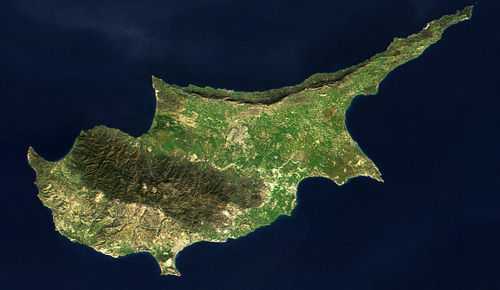
    In his speech, Rehn had called for drawing inspiration from the 20th anniversary of the fall of the Berlin Wall, for another “historic opportunity” to end the division of Cyprus. 

    But the Turkish prime minister said that the EU view of a “2009 final rendez-vous” for completing the talks was “wrong”. He made it clear that his country did not accept blame for the stalemate in Cyprus, and called for a greater EU involvement in ongoing reunification talks, under the watch of Alexander Downer, the UN’s special advisor on Cyprus and a former Australian foreign minister. 

    Mild optimism on Nabucco 

    Erdogan said he was optimistic about a “signing ceremony” on the EU flagship pipeline project, intended to reduce the Union’s dependence on Russian gas, to be held in July. Recently Ankara signalled that it would help push Nabucco ahead of Russia’s rival ‘South Stream’ project (EurActiv 29/05/09). 

    However, he warned of certain question marks regarding the project, as several “serious steps” had not been taken and the gas committed was in his words insufficient – 15 billion cubic metres, less than half of the planned capacity of 31 bcm. He added that he hoped that during the July signing “at least a roadmap to begin construction” could be determined. 

  • Turkey to ‘never give up’ EU bid

    Turkey to ‘never give up’ EU bid

    Turkey has urged France and Germany to back its bid to join the EU, rejecting calls for a special partnership rather than full membership.

    “We will never give up,” Turkish Prime Minister Recep Tayyip Erdogan told reporters in Brussels.

    Turkey’s EU accession talks are going at a glacial pace and risk suspension if Ankara fails to open its ports and airports to Cyprus this year.

    France and Germany want to give Turkey a “privileged partnership” with the EU.

    But Mr Erdogan insisted “our goal is full membership”.

    He also said it was “populist and wrong” to use Turkey’s bid as an election issue.

    Some right-wing parties opposed to Turkey’s bid made gains in the recent European Parliament elections.

    Slow progress

    The BBC’s Oana Lungescu says both opposition inside the EU and insufficient democratic reforms in Turkey are hampering its bid.

    Next week will see a small step forward, when Turkey is due to start talks on taxation, one of the 35 areas where it is negotiating EU entry terms.

    Turkish diplomats argue that their country is of strategic importance to Europe and that its eventual accession would send a positive signal to the whole Muslim world.

    So far, Turkey has opened talks on 10 out of the 35 “negotiation chapters” in the accession process, which started in October 2005.

    But eight chapters have been frozen because of Ankara’s refusal to open up its ports and airports to traffic from Cyprus, an EU member.

    Turkey says it will not do this until the EU takes steps to end the Turkish Cypriot community’s economic isolation.

    BBC