Tag: Energy

  • Oil Spike May Take a While to Punish Energy-Hungry Turkey

    Oil Spike May Take a While to Punish Energy-Hungry Turkey

    By Joe Parkinson

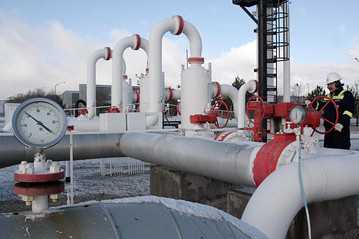
        Adem Altan/AFP/Getty Images     An employee made a routine check at a natural gas control center of Turkey’s Petroleum and Pipeline Corporation, west of Ankara, Turkey.
    Adem Altan/AFP/Getty Images An employee made a routine check at a natural gas control center of Turkey’s Petroleum and Pipeline Corporation, west of Ankara, Turkey.

    ISTANBUL — Pundits in the U.S. regularly bemoan America’s “addiction to foreign oil” — but for a more unlikely energy addict, take a look at Turkey.

    Turkey imports 87% of its petrol, 85% of its coal and a whopping 97% of its natural gas, meaning that when energy prices rise, the economy is exposed. So this year’s 20% gain in oil prices propelled by the wave of unrest sweeping the Middle East should have set the alarm bells ringing in Ankara.

    But analysts at BGC capital partners say financial pain from spiralling oil is likely to take at least a year to fully feed through to Turkey’s real economy. That gives policymakers here valuable breathing room before national elections scheduled for June. But it also suggests that Turkey’s fast-growing economy could next year face a painful inflation spike and a further deterioration of its gaping current account deficit.

    In a research note published Wednesday, BCG calculates that Turkey’s energy addiction cost it $91 billion last year, or 12.4% of gross domestic product. As a consequence, the economy’s dependence on energy imports means that for every $10 rise in Brent crude, Turkey’s growth will be reduced by up to 0.5%.

    Turkey’s rapidly growing economy, which expanded 8.9% last year, could perhaps afford a little deceleration. Record low inflation in February and gradually falling unemployment underline the economy’s strong rebound from recession. But BCG research says surging oil prices could next year shock output, stocks and confidence. More troubling for Tukey’s policymakers: a sustained oil spike would further pressurize Turkey’s current account deficit — the achilles heel of the rapidly-growing economy.

    Turkey’s current account deficit widened 247% to a record high of $48.6 billion last year as domestic demand boomed and imports dramatically outpaced exports. The swelling deficit has fed market concern that the economy could be exposed to a hard landing if external financing for the deficit dries up; fears that have been magnified by the high ratio of speculative investment, or hot money, used to finance the current account gap, which could quickly flee Turkey if sentiment turns negative.

    BCG isn’t the only economic research house warning that spiking oil could aggravate Turkey’s imbalances. Neil Shearing, emerging markets economist at Capital Economics calculates that every $10 rise in the price of oil would add $6 billion — or 12% of the 2010 total deficit — to the funding gap.

    But Shearing also stresses that Turkey’s persistently strong economic data is suppressing market concern over the current account, sending stocks rising in recent weeks and pushing the Lira to a near-four month year high on Wednesday.

    “Turkey’s one of the big losers from higher oil prices, and everyone knows (the current account) is a risk. Its like we’re waiting for a trigger — I thought the middle east turmoil would be that trigger but it hasn’t been yet,” he said.

    Turkey’s policy makers may be hoping for a more benign outcome — where a steadily rising oil price eats into household incomes, gradually helping to rein in booming consumer spending and moderate the current account deficit.

    via Oil Spike May Take a While to Punish Energy-Hungry Turkey – New Europe – WSJ.
  • Europe’s Biggest Solar Farm To Be Built In Turkey

    Europe’s Biggest Solar Farm To Be Built In Turkey

    Julia | April 2nd, 2011

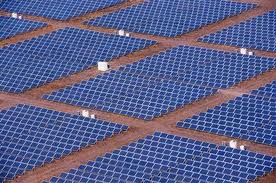
    blue mosque turkey sunThe 100-MW photovoltaic power station would be the first to harness Turkey’s remarkable solar resource.

    Turkey has a lot of catching up to do when it comes to solar power. At more than 1 million terawatt-hours (twH) of solar radiation each year, it receives more sunlight than most countries in Europe — for comparison, Spain and California each receive about 800,000 twH annually. But solar power contributes a mere five megawatts to Turkey’s overall installed capacity of 46,500 MW. Without subsidies from the government for their power, solar companies have been discouraged from entering the sunny country, and the solar power market in Turkey, despite all its promise, has remained small and scattered.

    A U.S.-Dutch company is planning to change all that.

    GiraSolar is in talks with local Turkish energy companies to build a 100-MW photovoltaic power station in southern Turkey. According to GiraSolar executives, the project will require 2,000 square meters of land, and could be completed within two years — about half the time it takes to construct a nuclear power plant, which Turkey is currently preparing to do.

    If the 100-MW solar plant is built, “this would make Turkey known as the solar source of the world,” GiraSolar CEO Wieland M. Koornstra told the Turkish Hurriyet Daily News & Economic Review.

    It’s no surprise to regular Green Prophet readers that the Middle East has bountiful solar power potential. But it is surprising, given the dismal state of Turkish energy policy, to see a solar energy project this ambitious launching in Turkey. For decades, the country’s energy authority didn’t offer any financial incentive to solar producers to help them get started in the electricity market. And the Electricity Market Law makes it difficult for auto-producers — entities producing power primarily for their own use — to generate electricity at a large or medium scale.

    In spite of that discouraging regulatory environment, some small solar companies have still managed to get off the ground in Turkey, usually with the aid of foreign lenders and equipment manufacturers. This grassroots solar industry comprises approximately fifty photovoltaics companies and several hundred thermal companies.

    In December 2010, a long-awaited amendment to Turkey’s law on renewable energy passed, introducing a price guarantee of $0.133 per kilowatt-hour of solar energy. Though still far below the price incentives in countries like Germany or Spain, which offer solar producers feed-in tariffs of about $0.69 and $0.50 respectively, and have active solar power markets as a result, the new price guarantee in Turkey is a step in the right direction. And if it brings in more deals like the one GiraSolar has proposed, it will be have been worth the wait.

    via Europe’s Biggest Solar Farm To Be Built In Turkey | Green Prophet.

  • UPDATE 1-Koc, AES form Turkey power projects venture

    UPDATE 1-Koc, AES form Turkey power projects venture

    * Venture to diversify into coal, hydroelectric, wind

    * Koc unit sells Entek stake to AES for $136.5 mln

    * Planned investment of $4-5 bln over 5 years

    * Aygaz shares jump 4.4 percent

    (Recasts, adds quotes, details, share movements)

    By Asli Kandemir and Evrim Ergin

    ISTANBUL, Dec 1 (Reuters) – Koc Holding (KCHOL.IS: Quote) and U.S. power company AES Corporation (AES.N: Quote) unveiled a joint venture on Wednesday to develop power generation projects in Turkey, targeting planned privatisations in the fast-growing economy.

    Under the deal, Koc energy unit Aygaz (AYGAZ.IS: Quote) would sell 49.6 percent of its power generation subsidiary Entek to a Netherlands-based AES company for $136.5 million, Aygaz said in a statement to the Istanbul Stock Exchange.

    Aygaz shares jumped 4.4 percent to 8.16 lira in the wake of the announcement, while Koc Holding shares were flat at 7.06 lira in a broadly firmer market.   Continued…

    via UPDATE 1-Koc, AES form Turkey power projects venture | Energy & Oil | Reuters.

  • Turkey’s energy future

    Turkey’s energy future

    GİLA BENMAYOR

    The Paris-based International Energy Agency, or IEA’s, chief economist, Fatih Birol was in Istanbul for a two-day visit.

    He visited Istanbul to make a presentation and released the World Energy Outlook 2010 Report in a meeting organized by the Turkish Industry and Business Association, or TÜSİAD, and to announce the honorary presidency of the Istanbul International Energy and Climate Center under the auspices of Sabancı University.

    Sabancı University Board of Trustees Chairwoman Güler Sabancı has taken a critical step.

    Energy consumption in Turkey will increase more than the world average by 2020.

    As Birol pointed out, the center of gravity in energy production and consumption is shifting to the East.

    The weight of the Middle East countries neighboring Turkey, Russia and the Caspian region is gradually increasing in international oil and gas markets.

    Only in the Caspian region, have three new gas reserves been found to have three times bigger than that of Norway.

    On the other side, China and India are fighting for the world’s consumption leadership.

    Turkey’s energy interest

    Birol rightfully says: “Turkey should make the right decisions if it is reading energy developments accurately. The new center at Sabancı University will fill a big gap.”

    One should take one’s hat off to the energy vision of Ms. Sabancı who led the foundation of Nanotechnology Institute under the roof of the university.

    Thanks to these centers Turkey will without doubt become a stronger player in the future.

    The appointment of Birol, being one of the experts who know the world energy policies very well, as the chairman of the center is a right decision.

    I’ve known him for years; Birol is perfectly aware of where Turkey’s interest lies in energy games, if we forget about its role in the energy world.

    For instance, Birol has kept on saying for years that Turkey has to adopt nuclear energy, but, in suspicion, approaches Russia as being our number-one choice in nuclear energy partnership because we already depend on Russia for natural gas (to the tune of 60 percent).

    $100 billion from private sector

    As for the World Energy Outlook Report-2010, the IEA Chief Economist has sent Turkey two critical messages.

    A price decrease in natural gas is possible, as it was in 2009. Therefore, Turkey might buy some more gas from Russia for a more suitable price.

    And the second message is this:

    Despite the global economic crisis, the renewable energy trend is becoming more popular throughout the world.

    So, Turkey should catch up with the world in this trend, too.

    As Birol talks about “renewable energy,” he also touches upon subsidization issue.

    Relatively less affected by the economic crisis, Turkey should act generously in subsidies, says Birol.

    At this point, Energy and Natural Sources Minister Taner Yıldız differs from the IEA Chief Economist Birol.

    “Renewable energy investors shouldn’t expect generous incentives from us,” the minister says.

    Aside from a signal on subsidies, there is no “renewable energy law” to encourage investors in Turkey.

    We are talking about a law of which we have heard endless stories, but seen no action taken.

    As TÜSİAD Chairwoman Ümit Boyner points out, structural reforms are needed to increase competition power of the energy market and to accelerate supervision mechanisms.

    The private sector plans to invest $100 billion in the sector and that’s a good starting point.

  • Caglayan: Turkey To Invest Over 100 Bln USD In Energy In Next Decade

    Caglayan: Turkey To Invest Over 100 Bln USD In Energy In Next Decade

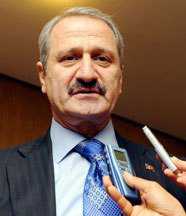
    Turkish State Minister for foreign trade Zafer Caglayan said that Turkey would invest more than 100 billion USD in energy in the next decade.

    One of the reasons Japanese officials visited Turkey was the energy sector, added Caglayan who spoke at the 18th joint meeting of Turkish-Japanese Business Council in Istanbul on Thursday.

    Noting that Turkey attached importance to renewable energy, Caglayan said that energy diversity was also important, and added that a law on renewable energy would be adopted soon.

    Caglayan said that the law would probably be presented to Turkish parliamentary general assembly within the next 20-25 days, and then it would be adopted.

    Regarding nuclear energy, Caglayan said that Turkey had not reached an agreement with any country so far.

    AA

  • European energy giant considers Turkey as its third business hub

    European energy giant considers Turkey as its third business hub

    TUBA PARLAK

    LONDON – Hürriyet Daily News

    Representatives of a European energy giant told a press conference in Istanbul on Friday that the company intended to expand its Turkish operations, following the recent purchase of a local petrol supply chain.

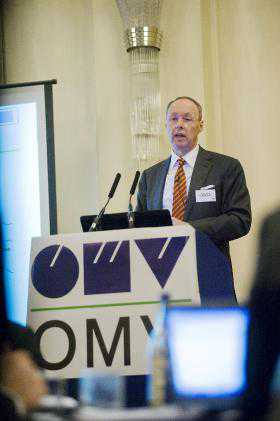
    Wolfgang Ruttenstorfer, CEO of Austrian giant OMV told the press conference the company intended to turn the recently purchased Petrol Ofisi, Turkey’s largest chain of petrol stations, into an energy company by integrating all their Turkish operations. “We value the company very much and plan to create a complex energy company out of it for actualization of all our future energy investments in Turkey. We will do this by integrating the gas and power investments operating beneath it,” he said.

    He said OMV is happy with its employees at the chain and only plans to modernize the stations. The group is not considering any reduction of the number or employees, he said.

    The Austrian giant, with operations in oil, gas, electricity and renewable energy, aims to develop Turkey into its third business hub, following Vienna and Bucharest, by integrating the country into its core market for refining and marketing, or R&M, thus also establishing Turkey as a link to resource supplies in both northern Iraq and the Caspian.

    Benefiting from an integrated business model

    Ruttenstorfer made a presentation at the conference which mainly focused on the company’s expansion and its future plans in regions throughout Eastern and Southeast Europe and Turkey. OMV has 20 percent R&M market share in the region, he said.

    “Integrated activities from upstream assets, supply and logistics, refining to marketing and trading and power generation are key advantages for OMV,” he said.

    He also noted that Turkey played a key role in the company’s integrated regional business scheme due to its proximity to Caspian and northern Iraq oil reserves. “As a market distribution line, Petrol Ofisi is of utmost importance for the integrated business model we plan to launch in Turkey and its surrounding regions because of its optimal logistics position in leveraging seaborne product supply potentials,” he said.

    Potential participation to a refinery

    Ruttenstorfer stressed that growth in energy demand is currently mainly driven by emerging nations – as developed countries are recording only limited growth. According to the company’s estimates, by 2015 the energy demand growth rate in Turkey will be 12 percent for oil, 31 percent for gas and 37 percent for power, making Turkey an essential component in the OMV portfolio.

    Regarding Turkey’s exploration and production opportunities, Ruttenstorfer said his company might consider a minority participation in a possible refinery in Ceyhan, in the Mediterranean province of Adana, provided that they anticipate an integration benefit for equity crude.

    No green investments in Turkey

    Ruttenstorfer said both the dynamics in the renewables sector and the carbon emissions regime continued to be a driving force for significant changes currently shaping the energy landscape in Europe and that the EU was again striving to limit carbon dioxide emissions to 30 percent, adding that the regulatory regime may change to incentivize investments in secure peak capacity – which would impact power economics.

    He also said renewable energy investments constituted a significant portion of OMV’s overall business and investment strategy. However, Ruttenstorfer also said the company currently has no plans to invest in Turkish renewables, although they were keeping an eye on developments in the sector.