Tag: Energy

  • Turkey Beating Norway as Biggest Regional Oil Driller: Energy

    Turkey Beating Norway as Biggest Regional Oil Driller: Energy

    Turkey is drilling for oil and natural gas with more rigs than any European country and plans new rules in 2013 to speed exploration of energy supplies for the fastest-growing major economy after China.

    The country fielded 26 rigs at Dec. 31, according to data compiled by Bloomberg, and the number has since risen to 34, Energy Ministry officials said yesterday. Turkey has leapfrogged Norway as offshore drilling increased in the Black and Mediterranean seas. Spending on exploration jumped to $610 million last year from $42 million a decade earlier.
    iVA3U6NdAzOg

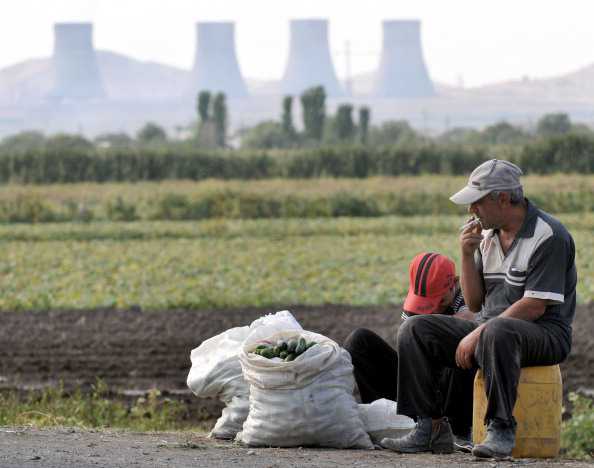
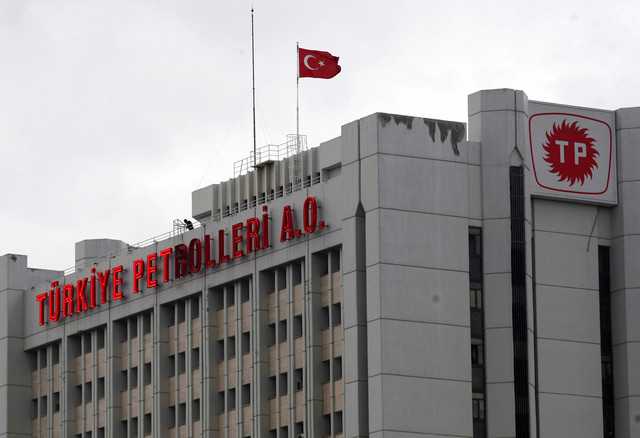
    Turkish Petroleum, which is known as TPAO and has operations in Libya, Iraq, Azerbaijan and Kazakhstan, needs to boost domestic output as it pursues a target of supplying all of Turkey’s energy needs by 2023. Photographer: Adem Altan/AFP/Getty Images

    With economic growth forecast at 3.5 percent this year and about twice the pace of the most advanced economies to 2017, Turkey is drilling for its own energy to ease reliance on imports from Iran, Iraq and Russia. State-owned Turkish Petroleum Corp. has taken Royal Dutch Shell Plc (RDSA) and Exxon Mobil Corp. (XOM) as partners, after neighboring Israel and Cyprus made some of the decade’s biggest gas finds in the past three years.

    “If there’s one country that needs energy, it’s Turkey,” said Darren Engels, an analyst at FirstEnergy Capital in Calgary. “Their domestic business doesn’t scratch the surface.”

    Turkish Petroleum, which is known as TPAO and has operations in Libya, Iraq, Azerbaijan, Colombia and Kazakhstan, needs to boost domestic output as it pursues a target of supplying all of Turkey’s energy needs by 2023.

    Turkey had proved reserves of 307 million barrels of oil and gas in 2010, 88 percent of which is oil, according to FirstEnergy’s Engels. In 2011 alone, the country consumed about 258 million barrels, according to the EIA.

    Rules Changing

    To speed up the search for oil and gas, the government submitted a draft Petroleum Law to Parliament on Dec. 21. The bill calls for changes to “ensure speedy, continuous and efficient search of carbon resources,” requiring companies to pledge 2 percent of their projects as collateral to extend licenses, a move aimed at increasing activity and avoiding speculation on licenses.

    “Our aim is to make Turkey one of the 10 largest economies in the world by 2023,” Energy Minister Taner Yildiz said yesterday in an interview. “Finding energy” will “enable Turkey to achieve its goal.”

    Turkey imported about 92 percent of the oil it consumed in 2011 and 98 percent of the natural gas, according to the U.S. Energy Information Administration.

    The scale of Turkey’s energy imports is swelling the current account deficit, fueling inflation and threatening to restrain economic growth.

    Equal Treatment

    In the past, TPAO was designated as the national company tasked with searching and drilling oil and gas reserves in the country. The draft law no longer defines TPAO as such and in theory it will be treated like any other company, Necdet Pamir, head of Energy Studies Group at Ankara-based Chamber of Petroleum Engineers, said by telephone Jan. 9.

    “Foreign companies are complaining that working conditions in Turkey are not favorable for them since they have to play with rules of the TPAO, which holds exclusively all offshore licenses,” Pamir said. “Chevron for example decided to pull out after drilling the first of two wells at its own cost in the Black Sea and paid a penalty under its agreement with TPAO.”

    TPAO is just one of the contributors to the domestic drilling boom. Shell, Exxon and smaller explorers such as Transatlantic Petroleum (TAT) and Anatolia Energy (AEE) are investing.

    The Turkish government “is doing everything it can to attract the foreign majors,” said Timothy Ash, head of emerging-market research at Standard Bank Group Ltd.

    Turkish Geology

    TPAO and Shell plan to start drilling off the coast of Antalya in the Mediterranean in 2015, Yildiz said. “TPAO is also planning to drill in the Black Sea in Kuskayasi field in 2014, which was abandoned by Chevron. Obviously, it would be cheaper if it can find a partner.”

    Energy officials in the ministry say the geology of Turkey, a country which is crisscrossed by active fault lines, makes it more difficult to find large reserves compared with neighbors.

    The Mediterranean and Black Sea regions are more likely to hold gas, while the southern part of the country is more likely to hold oil, said FirstEnergy’s Engels.

    Turkey produced 2.3 million tons of oil in 2012. The average production is 44,000 barrels a day with domestic production meeting 8 percent of overall consumption needs, according to official figures. In contrast, Norway produced about 2 million barrels of oil a day in 2011, according to BP Plc’s Statistical Review of World Energy. Russia produced 10 million barrels a day.

    Perenco, Amity

    TPAO’s share in production of oil at home was 69 percent in the first 11 months of 2012 with the rest divided among others such as Perenco SA, Tiway Oil AS of Norway, Amity Oil International, Transatlantic Petroleum Ltd. and Aladdin Middle East Ltd.

    While the country has found little oil and gas in its territories, it’s one of the world’s big transport hubs for energy. With an area larger than Texas nestled between Europe and the oil-rich Middle East and countries of the former Soviet Union, Turkey has four major pipelines sending gas to Europe and there are plans for two more. It has four oil pipelines to bring crude from Iraq and the Caspian.

    Turkey may also benefit from plans by Iraq’s Kurdistan Regional Government to build a pipeline to the north that would end dependency on Iraq’s export infrastructure, which is controlled by Baghdad authorities.

    IMF Forecasts

    The country’s future depends on having secure supplies of energy. The International Monetary Fund forecast Turkey’s economy will expand 3.5 percent this year, compared with 2.1 percent in the U.S. and 0.2 percent in the euro area.

    In 2017, Turkey will expand 4.4 percent, while advanced economies will grow 2.6 percent on average. In 2011, Turkey was the 18th largest economy in the world and expanded faster than any other in the top 20 after China.

    Turkey got about half of its oil from Iran in 2012 and is compensating for decreased purchases through imports from Saudi Arabia, Libya and Russia amid U.S. sanctions, Yildiz said.

    Turkey’s contract to buy oil from Iran will “definitely be extended,” Yildiz told reporters on a plane from Libya to Qatar on Jan. 6. “Turkey now buys 35-40 percent of its oil needs from Iran, compared with 50 percent before” international sanctions against Iran.
  • Cyprus Signals Block On Turkey EU Energy Chapter

    Cyprus Signals Block On Turkey EU Energy Chapter

    Cyprus supports the opening of Turkey’s EU Energy chapter but only if it signs the UN Convention on the Law of the Sea and normalises relations with the island, says Commerce Minister Praxoulla Antoniadou.


    Since the chances of this happening anytime soon are slim, it’s safe to say that the government is signalling that it will block this chapter in Turkey’s EU-membership negotiations.

    “At this point of time, Cyprus is unfortunately confronted with the gunboat diplomacy of Turkey in the area, contesting the sovereign rights of the Republic…” said Antoniadou at an informal meeting of EU Energy ministers.

    Until Turkey normalises its relations with Cyprus, the government resists the opening of its energy chapter. Antoniadou counters the argument that Turkey could enhance the EU’s energy supply security with the position that there is no direct link between this and the accession negotiations of a candidate country.

    “The role that a candidate country could potentially play in the EU’s security of energy supply cannot influence the course of her accession negotiations by offsetting the need that the candidate country fulfils her obligations,” she says.

    Alternatively, if Turkey contributes to the peace process by supporting the Turkish-Cypriot leadership to reunify Cyprus on the basis of a bizonal, bicommunal federation with political equality, then a bright horizon of peace, cooperation and economic growth will open for the Eastern Mediterranean area, says Antoniadou.

    In its latest assessment of Turkey’s accession negotiations, the EU said that they have “regrettably not moved into any new areas for over a year.”

    “The Commission is concerned about the recent tensions in relations between Turkey and Cyprus. A new positive agenda in EU-Turkey relations needs to be developed, to enable a more constructive relationship based on concrete steps in areas of common interest,” says the latest conclusions on the issue from the EU.

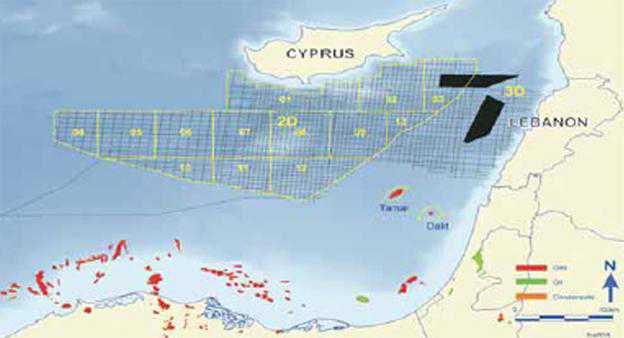
    Turkey and Cyprus are locked in a tense military and political confrontation over undersea gas-and-oil exploration rights in the waters around the island. Since Noble Energy started drilling in Block 12 in Cyprus’ Exclusive Economic Zone (EEZ) on September 19th, Turkey has sent its own seismic research ships accompanied by warships. It plans to explore for hydrocarbons in partnership with the Turkish-Cypriot political leadership.

    Parallel to this confrontation, Turkey is also jockeying for position with Egypt and has proposed building a gas pipeline between the two countries.

    Egypt has already signed a bilateral agreement to delimit the maritime borders with Cyprus and cooperate on developing hydrocarbon exploration and exploitation. Egypt recently re-confirmed its commitment to its agreement with Cyprus, saying it would ‘undoubtedly’ implement the deal, according to Egyptian foreign minister Mohamed Kamel Amr in comments reported by Athens news agency.

    In earlier statements, Ankara said that Cyprus’ maritime border agreements with its neighbors Lebanon, Egypt and Israel are null and void.

    Infringement on sovereign rights

    Turkey’s seismic research activities in Cyprus waters fly in the face of the government’s sovereign right over the island’s EEZ as it does not have official permission to conduct research for oil and gas reserves. Ankara disputes this right on the basis that the government does not represent the Turkish Cypriots. Turkey has signed an agreement with the ‘TRNC’ to delimit maritime borders and explore for hydrocarbons. The ‘TRNC’ is only recognised by Turkey, and the government promptly responded by saying the agreement was illegal.

    As the only internationally-recognised government on the island, the leadership has gone ahead with a contract with Noble Energy to explore for hydrocarbons in Block 12, an area which borders Israel’s gas field Leviathan.

    The government’s right is upheld by the EU, Greece, Israel and Russia, all of which have made statements condemning Turkey’s threats towards the island and supporting its right to exploit resources in its sovereign territory.

    Defence ministry sources said that if Turkey proceeds with actual exploration for undersea hydrocarbons, the government’s approach will be different. For the time being, authorities take the view that ships sent by Turkey are in international waters and will be treated like any other ship.

    Source: cyprusnewsreport.com

    via Cyprus Signals Block On Turkey EU Energy Chapter | Defence news from Greece and Cyprus.

  • Wärtsilä strengthens its presence in Turkey with another major power plant order

    Wärtsilä strengthens its presence in Turkey with another major power plant order

    Wärtsilä strengthens its presence in Turkey with another major power plant order

    * Reuters is not responsible for the content in this press release.

    Wed Oct 12, 2011 6:15am EDT

    Wärtsilä Corporation, Trade &Technical Press release, 12 October 2011

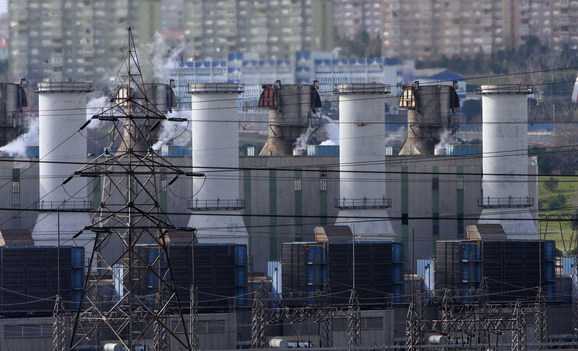
    Wärtsilä is a major supplier of electrical generating capacity to Turkey with more than 3 GW of output either in operation or awaiting installation. Approximately 85 percent of these plants are running on natural gas.

    Wärtsilä, a leading global supplier of flexible power plants and services to the power generation market, has received a major order for a power plant to be installed in Turkey. The contract has been placed by Yesilyurt Enerji Elektrik Uretim A.S., an independent power producer (IPP).The power plant will supply electricity for the company’s steel mill in Samsun, on the Black Sea coast of Turkey. Any surplus energy generated by the plant, will be sold to the national grid.

    The intermediate load power plant is expected to be running for more than 6000 hours per year, and will feature eight 18-cylinder Wärtsilä 50SG engines running on natural gas. The output will be more than 145 MW. However, together with a steam turbine in combined cycle operation, the output will reach 160 MW at full load. The plant is scheduled to be operational by October 2012. The order is included in Wärtsilä’s third quarter order book.

    The 18-cylinder Wärtsilä 50SG spark-ignited gas engine is the largest gas powered combustion engine generating set in the world. It reaches an exceptionally high net efficiency rating of more than 50 percent in combined cycle mode. The engine was introduced in the latter part of 2010, and the very first installation was also in Turkey.

    Samsun lies on Turkey’s Black Sea coast and is an area where environmental conservation is considered to be of prime importance. For this reason, an Environmental Impact Assessment (EIA) ‘A’ category certificate was required before the power plant project could be approved. The Wärtsilä 50SG gas engines, which feature very low levels of nitrogen oxide (NOx) emissions, fulfilled all the requirements of this ‘A’ category certification.

    “This power plant will demand fast start-ups and shut-downs with high part-load efficiency. Wärtsilä’s technology is well proven and fully capable of meeting these requirements. High efficiency with a minimal environmental footprint were prime considerations in designing this project,” says Hikmet Yesilyurt, Executive Member of the Board, Yesilyurt Enerji Elektrik Uretim A.S.

    “Wärtsilä’s already strong presence in Turkey is further enhanced with this important order. Smart Power Generation is a key element in meeting the needs of today’s energy markets, and our broad portfolio of gas and dual-fuel engines is central to this concept. We have an unmatched track record in Turkey, and this together with the local sales and service support that we provide, was a major reason for our being awarded this contract,” says Ufuk Berk, Managing Director of Wärtsilä in Turkey.

    Wärtsilä has been present in Turkey since 1994 when the first units were delivered. Today, some 330 Wärtsilä engines are already in operation or awaiting installation, producing well in excess of 3 GW of generating capacity. Customers are supported with a strong local sales and service organisation. Wärtsilä operates from two locations in Turkey and employs 128 people. A third service workshop is planned to be opened early in 2012, and this will increase the number of personnel to around 160.

    Smart Power Generation

    Wärtsilä has pioneered a Smart Power Generation approach to meeting the future needs of the global energy market. In order to provide a reliable and secure delivery of electricity and to balance supply with demand, flexibility in fuel choice and operational requirements is essential. Wärtsilä is a market leader in providing flexible, efficient, and dynamic power generating capacity.

    As at the end of 2010, Wärtsilä had delivered 4500 power plants to 168 countries, providing a total of over 47 GW of energy capacity.

    via Wärtsilä strengthens its presence in Turkey with another major power plant order | Reuters.

  • Local Wind Energy Industry Emerges In Turkey

    Local Wind Energy Industry Emerges In Turkey

    Turkey has used wind energy for more than ten years now, but never from locally developed and produced wind turbines. That’s about to change.

    In what Turkish newspapers are calling “the biggest project in the history of the republic,” the Turkish government recently announced the country’s first National Wind Energy System. The project, which is led by a team of experts from top Turkish universities and scientific unions, has been ongoing — in secret — for the past two and a half years.

    Late next year, expect the unveiling of the first stage in this ambitious energy project: a 500-KW wind turbine built entirely locally, using only parts produced in Turkey.

    Moving quickly

    By 2014, the government expects to follow up this 500-KW model with a 2,500-KW wind turbine, also completely locally produced. While these two turbines will constitute a 3-MW drop in the bucket of Turkey’s approximately 1,500-MW installed wind capacity, they indicate that the government is serious about laying the foundation for a local wind energy infrastructure in the country.

    The National Wind Energy System has cost TRY 50 million ($27 million) so far. Over the next five years, the Turkish government hopes the System will “match the automotive industry’s contribution to to the country’s economy.” By using entirely locally sourced machinery and labor, the System will also bring Turkey closer to its goal of energy independence.

    Turkish energy officials have previously declared that they expect wind capacity to reach 5,000 MW by 2015 and an astounding 20,000 MW by 2023 (Turkey’s centennial). The government expects the latter goal to require $30 billion in investment capital, of which it hopes to procure $7.5 billion locally.

    Great Potential

    If Turkey can manage to meet its ambitious goals, it will join European countries such as Spain and Germany in the ranks of the top wind energy-users worldwide. With 90,000 MW of potential wind capacity, the biggest mystery is why Turkey hasn’t yet harnessed more than 2 percent of it.

    Efforts to spur local investment in wind power before now were hindered in Turkey by a botched auction of tenders for wind project licenses in 2008. In that year, Turkey’s Energy Market Regulatory Authority awarded 80,000 MW-worth of tenders that overlapped at grid connection points, requiring the whole set to be re-auctioned.

    Hopefully, the National Wind Energy System marks the government’s serious intent to realize a large-scale wind industry in Turkey. The country’s actual installed wind capacity in 2015, however, will be the best indicator of its success.

    via Local Wind Energy Industry Emerges In Turkey | Green Prophet.

  • Platts: Azerbaijan is the most stable and proactive country of the region

    Platts: Azerbaijan is the most stable and proactive country of the region

    Apaku. Nijat Mustafayev – APA-ECONOMICS. Azerbaijani gas will be increased not only on the account of Shah Deniz, but on the account of other fields too, said the representative of Platts magazine John Roberts at the 6th Kazenergy Eurasia Forum, in Astana, Kazakhstan.

    Speaking about production and transportation perspectives of energy carriers in Caspian Sea Roberts looked through the possible routes for accessing of gas to the world markets. He noted that, EU supported on Nabucco projects. Other projects are not supported sufficiently.

    Roberts said that Turkmen gas was important for this project: “I regret that, Turkmenistan is on the passive position compared to Azerbaijan’s proactive position. Turkmenistan is on passive position and expects the route versions from others, while Azerbaijan takes active steps on extraction, exploitation and accessing of gas to the world markets”.

    As to Kazakhstan, Roberts hesitated and noted that time would show. In general, Roberts said Azerbaijan was the country, which pursued the most stable and consistent oil and gas policy, he showed Azerbaijan as an example for the other countries in the region.

    “Moreover, Azerbaijan and Kazakhstan are the most reliable transit countries of the region, they proved it with the recent activities in this sphere”, Roberts added.

    Generally, in his speech, Roberts noted Azerbaijan as the most stable and proactive country of the region. Also he said that Turkmenistan should take more active steps for the proof of seriousness of its opinion on gas transportation to Europe.

    Apa.az

  • EBRD further assists Turkey to reduce its dependence on fossil fuels

    EBRD further assists Turkey to reduce its dependence on fossil fuels

    Azerbaijan , Baku, Sept. 29 / Trend , G.Dadashova /

    The EBRD has extended its financing facility to support Turkey’s investments in renewable energy and energy efficiency projects to increase energy savings and reduce carbon emissions, EBRD reported.

    “By extending the Mid-size Sustainable Energy Financing Facility, or MidSEFF, originally launched in December 2010, the Bank will continue helping Turkey to reduce its dependence on fossil fuels by financing private sector energy efficiency investments in mid-size sustainable energy projects with the total investment cost of up to €50 million,” the report reads.

    The EBRD will offer a total of €225 million in loans to Turkish banks for on-lending to private sector borrowers to undertake mid-size renewable energy, waste-to-energy and industrial energy efficiency investments.

    Yapi Kredi Bank (YKB) is the first local bank to join the extended MidSEFF. Through the purchase of notes issued by YKB under its established Diversified Payment Rights securitization program, it received a total of €75 million from the EBRD for on-lending to eligible sub-borrowers.

    “Since its launch almost a year ago, the MidSEFF has been an important component of the EBRD’s support of Turkey’s long-term energy strategy. We have so far provided around €300 million in financing to four leading banks in Turkey. Building on our success we are pleased to welcome new Turkish commercial lenders to our extended facility. Our joint cooperation brings tangible results, unlocking the potential that renewable energy resources have in Turkey,” EBRD Director for Turkey Michael Davey said.

    The Bank will provide financing to participating Turkish commercial banks through diversified payment rights securitization programs, established by those banks. In addition, the EBRD will undertake direct risk participations with the same banks in selected sub-projects up to a total value of €75 million.

    As in previous MidSEFF investments, additional comprehensive technical assistance, funded by the European Union and other prospective donors, will be made available to support the preparation and appraisal of MidSEFF sub-projects in Turkey.

    The four banks involved in the previous MidSEFF were Türkiye Garanti Bankasi A.Ş., DenizBank, Vakif Bank and Akbank.

    The Bank focuses on renewable and sustainable energy, small business development in the regions, agribusiness, municipal, environment and other infrastructure, and privatization In Turkey.

    Do you have any feedback? Contact our journalist at [email protected]

    via EBRD further assists Turkey to reduce its dependence on fossil fuels – Trend.