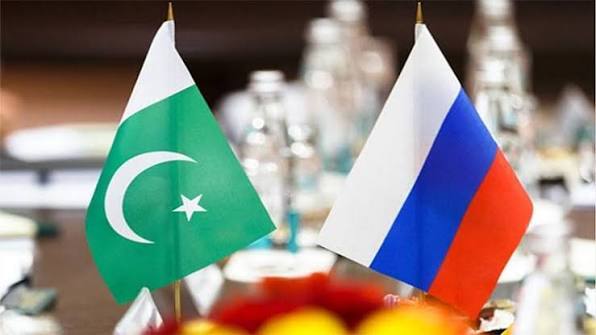
Russia-Pakistan relations have rarely been defined by hostility; they have, for much of their modern history, been marked by cordiality, mutual respect and periodic moments of strategic alignment. Yet the relationship has often remained warm without becoming truly deep — friendly enough for diplomatic engagement, but never tight enough to develop the economic and institutional foundations of a lasting partnership. Today, however, changing global realities are creating a new opportunity for Islamabad and Moscow to move beyond goodwill and build a relationship based on concrete economic interests.
The evolving geopolitical landscape has placed Pakistan in an increasingly important position on the world stage. The ongoing crisis surrounding Iran has further highlighted Pakistan’s strategic relevance as a key regional actor, situated at the intersection of South Asia, Central Asia, the Middle East and the Arabian Sea. This renewed attention provides Islamabad with an opportunity not only to strengthen its diplomatic role but also to accelerate economic partnerships with major regional powers — including Russia.
A recent high-level webinar jointly organised by the Institute of Regional Studies and the University of World Civilizations brought together policymakers, diplomats, academics and business leaders from both countries to examine how political goodwill can be transformed into practical cooperation. The discussions reflected a growing recognition that Pakistan-Russia relations have reached a point where symbolic engagement is no longer sufficient. The future of the partnership must be judged by projects delivered, trade expanded and institutions strengthened.
The timing is significant. The global economic order is undergoing profound change. Supply-chain disruptions, geopolitical tensions, sanctions and shifting trade routes are encouraging countries to seek new economic partnerships and alternative connectivity networks. Russia’s growing focus on Eurasia and Asia, combined with Pakistan’s strategic geography, creates a unique convergence of interests.
Yet geography alone does not create economic success. It requires infrastructure, financial mechanisms and political commitment. For too long, Pakistan-Russia relations have been characterised by ambitious announcements but limited implementation. The next phase must focus on execution.
A comprehensive Pakistan-Russia economic roadmap covering the next five to ten years would provide the necessary direction. Such a framework should identify priority sectors, establish measurable targets and create mechanisms for accountability. The existing Intergovernmental Commission should evolve from a discussion platform into a delivery mechanism, with dedicated working groups overseeing energy, trade, agriculture, transport, technology and investment.
Trade remains the most immediate area where ambition must match reality. Bilateral commerce has significant untapped potential, but businesses continue to face obstacles including payment systems, banking restrictions, documentation challenges and logistical limitations. Exploring local currency settlements, trade finance solutions and structured barter mechanisms could help overcome some of these barriers and provide greater resilience against external disruptions.
Connectivity represents perhaps the greatest strategic opportunity. Pakistan’s ports offer Russia and Central Asian states access to southern markets, while Pakistan can benefit from deeper integration into Eurasian trade networks. Developing rail links, highways and multimodal transport corridors should become a national priority. The vision should not merely be to connect two countries but to position Pakistan as a gateway between Eurasia and the Arabian Sea.
However, successful trade corridors require more than physical infrastructure. Modern commerce depends on efficient logistics systems, including digital customs platforms, cargo tracking, cold-chain facilities, warehousing and reliable container services. Without these foundations, Pakistan’s geographic advantage will remain an unrealised opportunity.
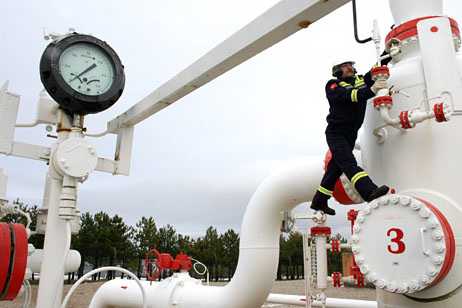
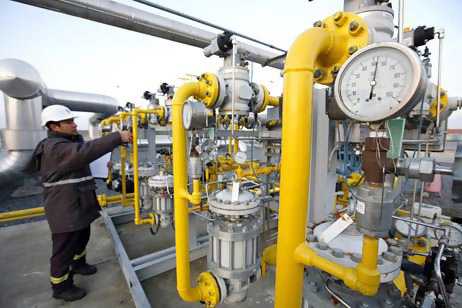
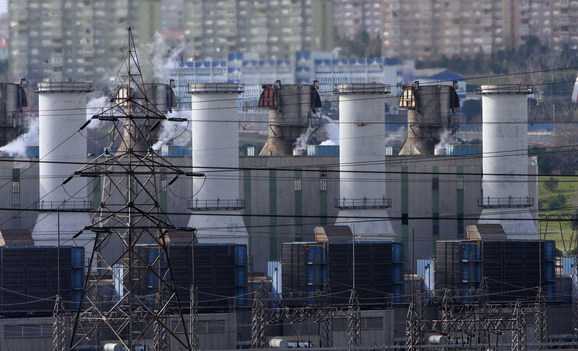
Energy cooperation provides another avenue for strategic partnership. While oil and gas cooperation remain important, the relationship should expand into refining, electricity transmission, renewable energy, energy efficiency and technical collaboration. Russia’s industrial expertise and Pakistan’s growing energy requirements create space for mutually beneficial investment.
Agriculture and food security also offer significant potential. Cooperation in grain trade, fertilisers, agricultural machinery, irrigation technology and food processing could strengthen Pakistan’s food security while opening new markets for Russian agricultural products. Harmonising standards, certification procedures and trade regulations will be essential to making this cooperation commercially viable.
Industrial cooperation should become the foundation of a more balanced relationship. Joint ventures in railway engineering, mining, steel, heavy machinery and agro-processing could help Pakistan strengthen its manufacturing base while providing Russian companies with access to emerging regional markets.
The long-term success of this partnership, however, will depend on human connections. Educational cooperation should move beyond scholarships alone and focus on building professional networks through joint research centres, dual-degree programmes, language training and university partnerships. Russian language skills among Pakistani diplomats, engineers, business leaders and technical experts should be viewed as an economic asset, not merely an academic pursuit.
Pakistan’s growing diplomatic importance also creates new possibilities for regional cooperation. Its future role in platforms such as the Shanghai Cooperation Organisation Business Council provides an opportunity to promote practical initiatives in connectivity, digital trade, food security and investment rather than allowing multilateral forums to remain focused on declarations.
The current moment offers Pakistan and Russia a chance to redefine their relationship. The foundations of friendship already exist, but friendship alone does not create prosperity. Economic partnerships are built through institutions, infrastructure and sustained commitment.
The question facing both countries is whether they can seize this geopolitical opening and convert it into lasting economic cooperation. Pakistan’s strategic importance is rising, and Russia is seeking deeper links across Eurasia. Their interests are increasingly aligned.
The next chapter of Pakistan-Russia relations should not simply celebrate historical ties. It should build new ones — through trade corridors, energy partnerships, industrial cooperation and human connections. The opportunity is real, but it will belong only to those who turn diplomacy into delivery.