Blog

  • President of Turkey visits Tim Cook, discusses bringing technology into Turkish education

    President of Turkey visits Tim Cook, discusses bringing technology into Turkish education

    The President of Turkey, Abdullah Gül (pictured right, on left), recently visited Apple’s California HQ and met with Apple CEO Tim Cook, according to Turkish-based Anatolia News Agency. The Turkish President was in the United States to promote Turkey in a bid to be the host for the 2020 Olympic Games as well as visit some of the biggest technology companies in the valley including Google where he tried on Google Glasses and drove in the driverless car.

    On a subject very close to Apple’s motives and beliefs, the President discussed a new technology in education project with Cook. This is an important subject for Apple with the company’s recent push of the iPad and iBooks into education. On the note of iPad usage, the Turkish President expressed concern with the Turkish character input. Cook said he was unaware of the issue, but he said he would take care of it.

    Also, it sounds like there might be some Apple Stores in Turkey’s future as well.

    via President of Turkey visits Tim Cook, discusses bringing technology into Turkish education | 9to5Mac | Apple Intelligence.

  • Exploring another era

    Exploring another era

    By Isabel Conway

    THERE are places one loves before ever seeing them. Istanbul, an ancient metropolis astride two continents, is a good example, conjuring up romance and mystery, a marriage of east and west, both exotic and familiar to western eyes.

    So I was already half in love with Istanbul as our minibus lurched across chaotic lanes of traffic from Ataturk International airport. Gleaming high-rise office complexes, crumbling ancient walls, threadbare neighbourhoods clinging precariously to hillsides, and a multitude of minarets looking like finely pointed giant pencils looming in the distance, flashed past.

    There are surprises around every corner. One minute you may be window shopping next to stylish young women in micro skirts and 10-inch heels, the next downcast shrouded females in black burqas are hurrying past. The Istanbul ‘Luas’-style public transport crammed with commuters is but a street removed from the hamals (porters) hired to carry enormous loads on wooden pack frames trudging through narrow, cobbled lanes as they have done for centuries.

    A former stomping ground of wildly extravagant Sultans — one kept more than a thousand women in his harem — aristocrats, adventurers, and spies, this last great city of the ancient world was also the final destination for the old Orient Express.

    Nowadays Turkey is a global player — one of the world’s top 16 industrialised nations — exuding confidence and prosperity as much of western Europe battles economic malaise. I saw no abandoned development sites nor shuttered-up bankrupt businesses during a recent visit, either. A feature of Istanbul’s shoreline are multi-million-euro villas and penthouses, and five-star luxury hotels, in one of which guests actually fork out €30,000 a night for a suite.

    Insiders rave about the precious legacy of Byzantine churches, opulent Ottoman palaces, majestic mosques and the Bosphorus which slices through the city, dividing Istanbul between Europe and Asia. In days gone by, travellers, drawn by Istanbul’s classical wonders, would arrive in style aboard the Orient Express. The A-list VIPs were hauled uphill to the iconic Pera Palace Hotel in a sedan chair, on display for posterity in the foyer of this very grand establishment (perapalace.com), which has undergone a facelift lately.

    The merely famous, who would have included Agatha Christie — she plotted Murder on the Orient Express there and has a suite named after her — were dispatched by horse and carriage to the hotel overlooking the Golden Horn. Worth a visit to view belle époque grandeur and splash out on the most lavish afternoon tea on the planet, celebrity guests like Ernest Hemingway and Greta Garbo enjoyed Istanbul’s exotic Turkish baths, fabulous retail therapy and cuisine reflecting the rich Ottoman legacy. By night they hung out in smoky cellar clubs gambling, sampling the pleasures of the water pipe, and enjoying belly dancing.

    Nothing much has changed and today’s travellers pour into Istanbul for similar attractions, increasingly so from Ireland thanks to daily direct flights operated by Turkish Airlines and good value city break packages.

    I could have cheerfully spent a week exploring all the neigh-bourhoods, doing more shopping and sampling the nightlife, munching my way through miles more mezes — delicious hot and cold starters. Though I did suffer slight mosque malaise after a short sojourn. My erudite guide, Murat, who led me straight to a pashmina paradise called Zaida in the Grand Bazaar, managed to save me from the carpets, swatting off the salesmen, pointing at my strapped up fractured shoulder (from a ski fall in Erzurum in north-east Turkey a few days earlier) explaining that nothing less than a magic carpet would do.

    via Exploring another era | Irish Examiner.

  • ‘Istanbul’: A Twisted Tale Of Foreign Espionage

    ‘Istanbul’: A Twisted Tale Of Foreign Espionage

    The big war is over, and the Cold War has just begun. Leon Bauer, an American tobacco man, wonders how to fit into this new world.
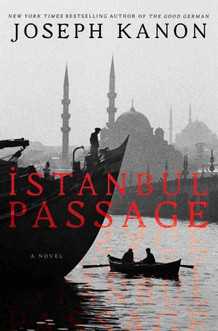
    Bauer and his wife, Anna, a German Jew, made it to Istanbul just before World War II began. With his U.S. passport and fluency in German and Turkish, the tobacco man became useful to allied intelligence.

    But before he picks up a more peaceful life, Bauer is given a last big job. He’s supposed to slip Alexi, a Romanian defector with important Soviet secrets, out of Istanbul. Alexi’s secrets might help old allies — but the defector once helped massacre Jews in Romania.

    Bauer is being asked to help a man in this new war who represents what he fought in the last one.

    The storied, intricate, contradictory city of Istanbul is a fitting backdrop for Joseph Kanon’s new book, Istanbul Passage. Kanon tells NPR’s Scott Simon that he set the novel in Istanbul after visiting as a tourist. “I fell in love with it and thought this would be a great excuse for coming back again and again to do research,” he says.

    Interview Highlights

    On the city of Istanbul as a protagonist in the novel

    “Istanbul was, in a sense, how the book started. But the larger answer, of course, is that the period that particularly interests me, which is the war and the immediate aftermath — it had long been known for derring-do and intrigue — but during our time it had become a neutral city, right on the fringe of the war, and as a result, it was a magnet for spies. It was one of those places where Germans and Russians and British could actually meet in somebody’s drawing room — all during the war. It was, in essence, all a kind of Casablanca. But now that time is coming to an end.”

    On how Kanon’s novels are inspired by places

    “It’s really the place. It began with Los Alamos, and I went there as a tourist and became so intrigued and fascinated, and I wanted to know what it was like to have been one of the scientists — what was it like to be part of the Manhattan Project. And one thing leads to another; Berlin fascinated me because of the American occupation about which I knew relatively little, and I wanted to know more. So you follow your interests. Once you saturate yourself in the place and its layering of history, the characters suggest themselves; and once you have the characters, then you’re there.”

    On Leon Bauer’s transition to a tobacco man

    “To have been an expatriate businessman at that period had a fair amount of money and glamour attached to it. It was interesting to have lived in Istanbul for Leon. The job wasn’t drudgery. He wasn’t dragging himself to the office every day. It was fairly easy. There was almost that neo-colonial life that the European community was leading in Istanbul. And it had its pleasures; he enjoyed it. What he didn’t want, particularly, was to be transferred back to Raleigh into a cubicle or what would then have been a small office.”

    On loyalties and compromise

    Joseph Kanon is also the author of Los Alamos, The Prodigal Spy and The Good German.

    Atria Books

    Joseph Kanon is also the author of Los Alamos, The Prodigal Spy and The Good German.

    “I mean, I find that ultimately what you want to talk about is: How do we live? How do we make these moral choices, and where do we draw the personal line of your own moral limits? In this particular instance, I wanted to set up a situation for him early on where he has a choice, but both choices seem to him wrong — whatever you do isn’t right. What do you do in that kind of situation? And I find that it’s more and more this sense of moral compromise, [and it’s] very much part of the world that we’ve inherited.

    “You know, people often say, ‘Why write about this period?’ And I think the immediate postwar period is the beginning of our time. If we want to use a movie metaphor for it: The world begins with the black and white clarity of Casablanca. You know where you’re at. It’s romantic. Ingrid Bergman walks in and looks wonderful, and things are very clear. But the war ends with The Third Man and the kind of muddied, gray moral compromise that I think really was the world that it ushered in, and the world that we’ve inherited.”

    On being called the next Graham Greene

    “I think it’s a flattering comparison, and you know you could be compared to other thriller writers, but I think it’s being said — when people pigeonhole you this way — is that there’s a certain level of seriousness, of purpose, I hope of fine writing.”

    On moral reasoning and making bargains

    “We all tell each other stories so we can understand more of the variety of experience that’s around us, because we’re going to have to make these decisions. I think day by day — often we’re taking them in very small steps; they’re not certainly as dramatic or highlighted as they would be in this sort of novel, which is one of the reasons we have these novels. But we’re nevertheless making them all of the time ourselves. We’re always making personal, moral decisions.”

    via ‘Istanbul’: A Twisted Tale Of Foreign Espionage : NPR.

  • Rescue of Everest climber helps Israel-Turkey thaw

    Rescue of Everest climber helps Israel-Turkey thaw

    By Jonathan Head BBC News, Istanbul

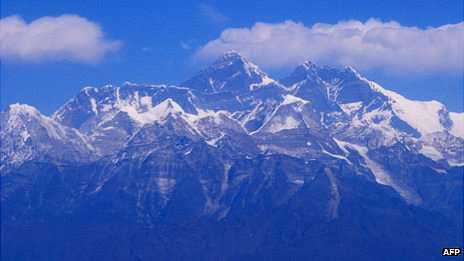
    View of Everest – file pic

    It isn’t often these days that you see two men, arms round each other, holding Israeli and Turkish flags.

    But an extraordinary rescue on the world’s highest mountain has bonded two climbers, one from Israel and one a Turk.

    By his own account Nadav Ben-Yehuda was only 300 metres from the summit of Mount Everest, and on course to become the youngest Israeli to conquer it, when he spotted someone lying in the snow, clearly in trouble.

    He recognised Aydin Irmak as a Turkish climber he had befriended down at base camp. Other climbers, set on reaching the summit, or just too exhausted by the altitude, had passed by without helping.

    Irmak had no gloves, no oxygen and no shelter, according to Ben-Yehuda, and was unconscious.

    Climbers Nadav Ben-Yehuda (left) and Aydin Irmak after descent (pic: Israeli embassy, Kathmandu) Ben-Yehuda (left) saved a life – and had to abandon his summit bid

    So the Israeli abandoned the goal he had been preparing for over many months, and helped to carry Irmak down the tough, nine-hour descent to base camp, from where both men were evacuated by helicopter for medical treatment. Both are suffering from frostbite. Irmak would certainly have died without help.

    The story has inevitably been widely covered in the Israeli media, but it is also being reported in some Turkish newspapers – a rare piece of positive news about a country many Turks only ever see in the most negative light.

    Pro-Palestinian mood

    Turkish-Israeli inter-state relations have been deteriorating for many years, driven by a Turkish government which feels outrage over Israeli policy towards the Palestinians, and an Israeli government which has refused to soften that policy to accommodate the sensibilities of the only ally it had in the region.

    Relations hit an all-time low in May 2010, when Israeli commandos stormed a ship full of activists trying to break the blockade of Gaza, killing nine Turkish citizens.

    Attitudes in Turkish society have also hardened towards Israel. Rising Islamic piety in much of the country has led to a stronger sense of solidarity with perceived Islamic grievances elsewhere, the Palestinian issue foremost until the dramatic Arab uprisings of the past year. That hostility has also been fuelled by Turkish television dramas, which often portray Israel as a brutal military oppressor.

    Nadav Ben-Yehuda (pic: Israeli embassy, Kathmandu) Ben-Yehuda got frostbite in his fingers because he had to take his gloves off

    The story of Nadav Ben-Yehuda and Aydin Irmak contradicts that narrative.

    So could it help break the ice between Turkey and Israel?

    There have been other “ice-breaking” episodes: the time Turkey sent water-bombing aircraft to help Israel combat deadly forest fires in December 2010, and the aid Israel sent to Turkey after the earthquake that struck Van last year. But neither prompted a breakthrough in restoring relations.

    Turkey is still adamant that there can be no real improvement until Israel apologises and pays compensation for the nine people killed on board the Gaza flotilla. A Turkish prosecutor has asked a court in Istanbul to accept an indictment of murder against senior Israeli military commanders over the incident.

    The two countries are at odds over other issues, in particular Israel’s involvement in the exploitation of oil and gas off the coast of Cyprus, a project Turkey opposes because it does not recognise the Cypriot government.

    Regional realpolitik

    Trade between Israel and Turkey, though, has been largely unaffected – it actually grew last year to well over $3bn (£2bn). Israeli tourist numbers have dropped sharply, but those who come receive the same hospitality given to other visitors in Turkey’s more liberal-minded coastal resorts.

    The turmoil in the Arab world, especially Turkey’s strife-torn neighbour Syria, means that Ankara is once again relying more on its alliance with the US, and co-operation with staunch US allies like Qatar and Saudi Arabia.

    And the US is telling Turkey to fix the row with Israel, saying it is an unnecessary distraction from the more serious challenges confronting Ankara in the Middle East. It is still is not clear how that thaw can happen.

    But the tale of a good deed high in the Himalayas can only help.

    via BBC News – Rescue of Everest climber helps Israel-Turkey thaw.

  • Hillary Clinton’s Turkey visit: Iran, Syria top agenda

    Hillary Clinton’s Turkey visit: Iran, Syria top agenda

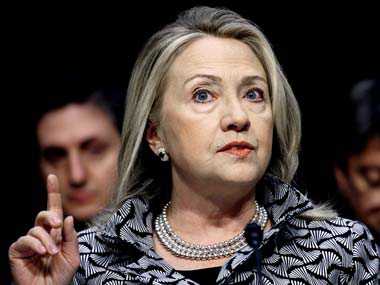
    US Secretary of State Hillary Clinton leaves next week on an eight-day trip to Scandinavia, the Caucasus and Turkey that will cover security issues such as Iran and Syria as well as the environment and health.

    Clinton will begin her trip May 31 and ends it in Istanbul on June 7, speaking at a counterterrorism forum and holding talks with Turkish officials on Syria, where President Bashar Assad is seeking to crush an uprising against his rule, and Iran, whose nuclear program the United States suspects is designed to develop atomic weapons.

    Iran, which says its program is for civilian purposes, held a second round of talks with major powers in Baghdad this week and the two sides are due to meet again in Moscow on June 18-19.

    AP

    At least 50 people, including 13 children, were killed when Syrian forces attacked the town of Houla in Homs province on Friday, the Syrian Observatory for Human Rights and activists said.

    Activists said clashes erupted in the town when Syrian forces opened fire on a protest against the rule of President Bashar Assad and killed one protester.

    “The soldiers are shelling Houla right now, the casualties are huge,” said activist Ahmad Kassem. He said opposition fighters fired back, inflicting casualties on the soldiers and destroying five tanks. Houla is a cluster of four villages and towns north of Homs.

    Also Friday, international peace mediator Kofi Annan announced he will visit Syria “soon” in what would be the former UN Secretary-General’s first visit since he presented his peace plan to Syria’s government in early March.

    Ahmad Fawzi, Annan’s spokesman, declined to give details or specify the date, citing security reasons. Fawzi has repeatedly said that Annan, whose six-week-old ceasefire plan has failed to stop the violence in Syria, would travel to the country when the time was right.

    UN envoys said on Thursday that Annan may travel to Syria before the end of the month.

    Annan’s six-point peace plan called for a truce, withdrawal of troops and heavy weapons from cities, deployment of the monitoring force, and dialogue between the government and opposition aimed at a Syrian-led “political transition.”

    “Clearly it’s an important part of this undertaking to have direct talks with the Syrian authorities and the Syrian opposition,” UN Secretary-General Ban Ki-moon’s spokesman Martin Nesirky told reporters in New York on Friday.

    “This is done in different ways at different times and it is coming to the time when it’s appropriate for the joint special envoy to engage directly and personally with the Syrian authorities and with the opposition in situ,” he said.

    The United Nations is nearing full deployment of a 300-member unarmed UN observer force in Syria that is charged with monitoring any cease-fire resulting from the plan. The force has had close calls with recent bomb attacks but has not lost any observers.

    The United Nations and Annan will report to the UN Security Council on Wednesday about the situation in Syria. The 90-day mandate for the UN observer force, known as UNSMIS, expires in July.

    Nesirky said there was a fear that a third force or element was “at play in Syria and that this undoubtedly complicates the task for the monitors and the international community in seeking to ensure that the six-point plan is fully implemented.”

    “There’s no hard evidence on specific groups,” he said. “It’s obvious that some of the attacks that have been seen are of the kind and nature that suggests that there is behind them a force or element with the organizational capacity and political intent to carry out violence on that scale.”

    Ban has said he believes al-Qaida was responsible for two suicide car bombs that killed at least 55 people in Syria this month and that the death toll in the country’s 14-month conflict was now at least 10,000.

    Syria has maintained all along that it is facing a “terrorist” conspiracy funded and directed from abroad, not least by resource-rich Gulf monarchies Saudi Arabia and Qatar, which have called for arming the fighters aiming to oust President Bashar Assad.

    Syria this month sent the United Nations the names of 26 foreign nationals it said had been arrested after coming to fight in Syria. It described 20 of those as members of al-Qaida who had entered the country from Turkey.

    Reuters

    via Hillary Clinton’s Turkey visit: Iran, Syria top agenda | Firstpost.

  • UN Chief Ban To Travel To Saudi Arabia And Turkey

    UN Chief Ban To Travel To Saudi Arabia And Turkey

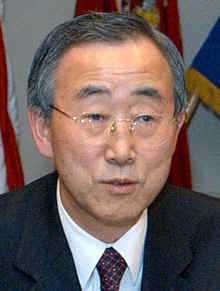
    Ban Ki-moon will next week travel to Turkey and Saudi Arabia for a number of engagements in the two countries, including attending a meeting related to the Alliance of Civilizations, a conference on the future of Somalia and a meeting of the advisory board of the United Nations Counter-Terrorism Centre.

    Mr. Ban will arrive in the Turkish city of Istanbul on Wednesday and on the next day take part in a Partners Forum of the Alliance of Civilizations, which is being convened by Turkish Prime Minister Recep Tayyip Erdogan to broaden public and private support for the initiative.

    He will also have meetings with his High Representative for the Alliance of Civilizations, Jorge Sampaio, and the Foreign Ministers of Turkey and Spain, co-chairs of the Forum, to discuss the way forward.

    Launched in 2005 through the initiative of Spain and Turkey, under the auspices of the United Nations, the Alliance of Civilizations seeks to promote better cross-cultural relations worldwide.

    The Secretary-General will also attend a separate event on sustainable energy linked to the forthcoming UN Conference on Sustainable Development (Rio+20).

    On Thursday, Mr. Ban will co-chair a major international conference on the future of Somalia and hold a range of bilateral meetings with other leaders attending the conference.

    On 2 June, the UN chief will travel to the Saudi city of Jeddah, where he is scheduled to hold meetings with the country`s leaders, including King Abdullah bin Abd al-Aziz Al Saud. On the following day, Mr. Ban will co-chair the second meeting of the Advisory Board of the newly established UN Counter-Terrorism Centre with the Saudi Foreign Minister.

    Photo Source: Wikipedia

    via UN Chief Ban To Travel To Saudi Arabia And Turkey.