Category: Regions

  • Syrian defector ‘confesses’ on state TV

    Syrian defector ‘confesses’ on state TV

    By Ivan Watson, CNN

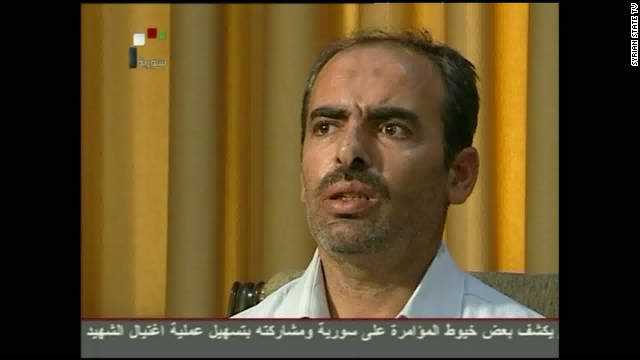
    Istanbul (CNN) — Three months after he first appeared in an Internet video — in uniform, denouncing his government and calling on fellow soldiers to rebel — Lt. Col. Hussein al-Harmoush was back on television Thursday night, this time in a televised confession on Syrian state TV.

    “I faced three edges of a sword,” he said, when asked why he returned from exile in Turkey to Syrian state custody. “I was a government defector and fugitive, second I left my society and family, and third, I fell out with those who coordinated with me.”

    The drama gripped the country as violence played out in the streets. At least 46 people were killed across Syria on Friday in the ongoing confrontations between security forces and protesters, said the Local Coordination Committees of Syria, an opposition activist group that organizes and documents anti-government demonstrations. It said 45 of them were civilians and one was from the nation’s security forces. Twenty of the dead were in Idlib, 10 in Hama, five in Homs, five in Damascus and its surrounding area, and the rest were in Daraa and Deir Ezzor, LCC said.

    Accounts of clashes inside Syria are difficult to independently confirm. The Syrian government has prevented international journalists from reporting without restraint inside the country.

    The group said the body of al-Harmoush’s brother, Hassan, was found Friday; activists in Idlib posted on YouTube a video purportedly of the bloodied corpse.

    Al-Harmoush also contradicted previous statements he had made as a rebel military leader, saying that “during my service in the Syrian army, nobody ordered me to fire at civilians. … I didn’t see or hear any commander in the army who gave orders to shoot at civilians.”

    Al-Harmoush disappeared from a refugee camp where he had been living in Turkey on August 29. His sudden reappearance in Syrian government custody triggered a flurry of conflicting statements from Syrian opposition groups as well as from the Turkish government.

    Several other men who said they had deserted from the Syrian armed forces released video statements demanding al-Harmoush’s release.

    “Release him immediately and hand him to the Turkish government or we will respond harshly … by executing quick operations conducted by our brigades targeting all leadership of the military and security apparatus,” said a man who identified himself as Col. Riyad al-Asa’ad of the ‘Free Syrian Army.’

    Some Syrian activists accused Turkey of handing al-Harmoush to Syrian security forces. Prominent Syrian exile activist Omar al-Muqdad first sounded the alarm about al-Harmoush’s disappearance on August 29.

    “I talked to him on the morning of August 29th,” al-Muqdad said. “He said, ‘I have a meeting with a Turkish security man. When I finish I will call you.’ I waited for three days and didn’t hear from him. Then after that we discovered that the security man took him and didn’t send him back to the camp. They sent him to Syria directly. The Turks made a trick with Harmoush. They caught him in Turkey and sent him to Syria.”

    The accusations prompted the Turkish foreign ministry to take the unusual step of publishing a statement denying the allegations.

    “It is out of question that Syrian citizens are returned to Syria or any other country against their will,” the foreign ministry wrote, using an alternate spelling of al-Harmoush’s name. “It should be particularly emphasized that recent allegations concerning a Syrian citizen named Huseyin Harmush are totally unfounded.”

    Omar Idlibi Said, a Beirut-based LCC representative, told CNN he believes al-Harmoush had been tortured and forced to make the televised statement. He also said al-Harmoush’s claims on Syrian state TV that Turkish smugglers are funneling weapons and ammunition across the border to Syrian rebels exonerated Turkey of any responsibility for the dissident officer’s capture.

    “If the Turks handed him over, he would not say such a thing about Turkey. The Syrians would not let him mention that,” Said contended.

    There is substantial evidence to suggest the Syrian regime carried out reprisal attacks against al-Harmoush’s family. Last week, Syrian security forces raided the village of Ibleen, killing al-Harmoush’s brother Mohammed as well as several other army deserters.

    At least 2,978 people have been killed in Syria since mid-March, when demonstrations critical of the government were met with a fierce security crackdown, according to LCC.

    Neighboring Turkey has become an “underground railroad” of sorts for Syrian opposition members.

    Turkey has also hosted a number of Syrian opposition meetings. On Thursday, a group calling itself the Syrian National Council announced its formation at a conference in Istanbul.

    Turkey’s prime minister, once one of the closest regional allies of Syrian President Bashar al-Assad, had sharp words for the Damascus regime on Friday.

    “Those who inflict repression on their own people in Syria won’t be able to survive,” Recep Tayyip Erdogan told journalists during a visit to the Libyan capital. “The period of autocracy is over. Totalitarian regimes are going. People’s governments are coming now.”

    As occurred in a number of other countries, Erdogan’s government went from being a close trading partner of Libyan strong-man Moammar Gadhafi to becoming a staunch supporter of the rebel National Transitional Council.

    Meanwhile, the Syrian government issued a statement protesting a recent meeting between the general secretary of the League of Arab States and representatives of the Syrian opposition.

    Mohamed Mamoun Al Humsi, a former Syrian parliament member living in Cairo, said he and a number of other opposition members presented a list of demands during a meeting Wednesday with the Arab League’s secretary-general, Nabil Al Araby.

    Among the opposition’s requests were the suspension of Syria’s membership in the Arab League, the establishment of a “no-fly zone” over Syria to prevent shipments of weapons to the regime, and an end to alleged intervention by Hezbollah and Iran in Syrian domestic affairs.

    According to Syria’s state news agency, Syria’s representative to the Arab League accused Al Araby of exceeding his mandate, calling the meeting with the Syrian opposition an “irresponsible act.”

    CNN’s Hamdi Alkhshali, Mohamed Fadel Fahmy and Yesim Comert
  • Turkey may work with Iran against Kurdish rebels

    Turkey may work with Iran against Kurdish rebels

    Turkey may work with Iran against Kurdish rebels

    September 17, 2011 02:01 AM

    By Daren Butler

    Reuters

    ISTANBUL: Prime Minister Tayyip Erdogan has signaled Turkey could launch a joint operation with Iran against Kurdish militants’ main base in northern Iraq, according to reports in Turkish newspapers Friday.

    In August, Turkey carried out a series of air and artillery strikes against Kurdistan Workers’ Party (PKK) rebels in northern Iraq and the interior minister said this week a ground operation could be launched any time against the guerrillas there, depending on talks with Iraq.

    The military action was triggered by an increase in PKK attacks in southeast Turkey in which dozens of security personnel were killed.

    Speaking to reporters while traveling to Tunisia on a north African tour, Erdogan said the minister’s comment had been a slip of the tongue that had been corrected, and that there would be no forewarning of any such operation.

    “Things like this are not said, they are done,” the Hurriyet daily quoted the prime minister as saying. The same comments were reported by other newspapers in Turkey.

    “The chief of the general staff has completed assessments in the region [southeast Turkey] together with force commanders,” he said.

    Speculation about a ground offensive was fuelled when Erdogan met military chiefs before he departed on his trip to North Africa.

    When asked in Tunisia about relations with Iran and cooperation against the PKK, Erdogan said: “It’s going well. We may act together at Qandil.”

    The Qandil mountains are on the Iraq-Iran border and the main PKK bases are located in those mountains, a part of Iraq’s autonomous Kurdish region around 80-100 km south of the Turkish border.

    Kawa Mahmoud, a spokesman for the Kurdish regional government in northern Iraq, told Reuters it did not give Turkey approval for any military operations in its territory.

    “No government would accept this … using force would expand the areas of tension and would not serve the interests of the countries,” he said.

    Iran, Turkey’s southeastern neighbor, said this month its troops had killed or wounded 30 members of the PJAK (Party of Free Life of Kurdistan), an offshoot of the PKK that is reported to have launched ambushes on the Iranian side of the border.

    The Turkish military has said its strikes against the PKK in Iraq in August killed 145 to 160 militants. The PKK has only referred to a few casualties and the figures could not be independently confirmed.

    A Turkish diplomat has been in Iraq for talks with the government this week as Ankara seeks more cooperation against the PKK from Iraq, whose large Kurdish minority, concentrated in the north, is politically influential.

    Turkey has launched several cross-border air and ground operations in northern Iraq in a conflict that first erupted in the 1980s. The PKK is fighting for greater autonomy and Kurdish rights, having earlier sought a separate state.

    More than 40,000 people have died in the conflict and fighting has escalated over this summer.

    The last major incursion was in early 2008, when Turkey sent 10,000 troops, backed by air power, into northern Iraq.

    Erdogan’s comments also indicated a tougher approach on the Kurdish issue generally after government efforts to negotiate a solution failed to yield a result.


    A version of this article appeared in the print edition of The Daily Star on September 17, 2011, on page 8.

    via THE DAILY STAR :: News :: Middle East :: Turkey may work with Iran against Kurdish rebels.

  • The Turkey-Iran Pact

    The Turkey-Iran Pact

    A hot war has been raging in northern Iraq since mid-July, and despite the casualties and the drama, it has gone virtually unreported by the international media.

    The war was launched on July 16 by Islamic Revolutionary Guards Corps (IRGC) troops in an effort to crush Iranian rebel Kurds who have sought refuge in the 12,000 foot high Qandil mountains that form the border between Iran and Iraq.

    It began with cross-border shelling by Iranian artillery, air strikes, and several attempted ground incursions into Iraq by Iranian forces. But within ten days, NATO-ally Turkey openly joined the fray.

    On whose side did Turkey fight? On behalf of the secular, pro-Western Free Life Party of Kurdistan (PJAK), whose bases in northern Iraq were under assault from the Islamist regime in Tehran? Think again.

    The Turkish military sent 20 tanks into Iran at the invitation of the Iranian regime to support the flailing Iranian attack against the rebel Kurds. They also dispatched 300 Turkish Special Forces troops to Iran to conduct intelligence missions into the Qandil mountains using Heron surveillance drones purchased from Israel.

    PJAK leader Rahman Haj Ahmadi told me that the Turkish drones were the most effective weapon the Iranian military used against them. “This limited our ability to move, but it didn’t matter much since most of our positions were underground,” he said.

    The Turkish incursion marked just the latest instance of Turkey’s ongoing military and strategic alliance with Iran, an alliance that ought to give NATO allies pause, starting with the United States.

    I first learned of the Turkey-Iran military alliance while on a reporting trip to PJAK bases in the wild mountains of northern Iraq four years ago. As we gazed up at an Iranian Revolutionary Guards base set atop the 12,000 foot peaks of the Qandil mountains, a PJAK guerilla told me that Iran and Turkey had established a joint military headquarters in Urmiyeh, Iran, to coordinate their military strikes against the Kurds.

    “The goal of the Iranians is to drive us from the border area,” rebel leader Biryar Gabar told me. “They want to turn this area into a no-man’s land, so they can use it to smuggle weapons and Islamist guerillas into Iraq to fight the Americans.”

    Despite all the help from Turkey, the IRGC has suffered a dramatic rout at the hands of the PJAK fighters, who repeatedly attacked IRGC bases inside Iranian Kurdistan in response to the Iranian attacks on their bases inside Iraq. Except for the initial onslaught, in which eight IRGC were killed, the IRGC troops were badly mauled.

    According to accounts in the local media, PJAK fighters killed more than three hundred IRGC troops during the clashes. They even managed to kill the commanding general of IRGC troops in the region. We know this because he was given a public burial in Qom along with several other officers. The Iranian state-run media acknowledged they had been killed in the fighting.

    After two weeks of running battles, PJAK was claiming victory. “Now everyone can see how powerful PJAK has become,” Ahmadi told me. “For Kurds, Qandil has become like Mecca, a sacred place. This is where we have shown our strength.”

    Earlier this month, PJAK announced a unilateral ceasefire and called on the Iranian regime to negotiate their demands for Kurdish rights. PJAK is seeking to establish a democratic federation in Iran, not a separate state or separate province for the Kurds, as PJAK secretary general Rahman Haj Ahmadi told me when we met in Stockholm this summer.

    The response from the IRGC was almost immediate. Instead of a ceasefire, they launched repeated shelling of PJAK bases and villages inside Iraq, killing three fighters, including the deputy commander of all PJAK forces. PJAK claimed its forces killed 107 IRGC fighters and destroyed two tanks, 5 vehicles and 1 bulldozer in counter-strikes against IRGC bases inside Iran. The shelling continues even as I write these words.

    During the latest round of fighting, PJAK showed off NATO-issue weapons they claimed they had taken from dead Iranian troops, including Western-made night vision goggles, GPS systems, anti-tank missiles, and BKC guns. PJAK has claimed for some time that Iran’s ally Turkey has provided NATO weaponry to Iran that has been turned against the Kurds, in direct violation of the North Atlantic Treaty.

    This story is important to Americans for several reasons.

    First, PJAK is a secular, pro-Western Iranian opposition group that ought to be a natural ally of the United States in any effort to put pressure on the Iranian regime. Their fighters are well- organized and highly-disciplined, and despite Iranian regime efforts to paint them as terrorists, they have never attacked civilians. In fact, PJAK sees itself primarily as a political group, not a military organization.

    Second, PJAK has been effectively defending Iraq’s challenging northeastern border with Iran from IRGC and al Qaeda infiltration since the U.S.-led coalition ousted Saddam Hussein in 2003. U.S. military officers I have interviewed in Iraq acknowledged to me the importance of PJAK’s presence in guarding the border.

    Third, the virtual silence from Baghdad even as Iraqi territory was being attacked and Iraqi citizens were being killed, shows just how successful the Iranians have been at intimidating the government of prime minister Nouri al-Malaki.

    But most important is that it reveals Turkey’s strategic and military alliance with the Islamic Republic of Iran. At the joint headquarters they have established in the northwestern Iranian city of Urmiyeh, Turkish generals offer strategic advise to their Iranian counterparts and Turkish counter-insurgency specialists train IRGC troops — actions that ought to an outrage to the entire NATO alliance.

    Under the direction of Prime Minister Recep Tayyip Erdogan and his AKP, Turkey has increasingly dropped all pretence of remaining a friend and ally of the West. Instead, Erdogan seems intent on throwing in his lot with the Islamists in a bid to restore the Muslim caliphate Ataturk abolished in 1924.

    In his latest attempt to claim leadership of the Muslim world, Erdogan thumped his chest in front of Arab leaders in Cairo on Tuesday, demanding that Israel “must pay the price for the crimes it committed.” He was referring to the response of Israeli commandos, armed with paint ball guns, who intercepted the MV Mavi Marmara off the coast of Gaza last year.

    After an Israeli commander was eviscerated by the “civilians” on board the “humanitarian” ship, Israeli soldiers opened fire, killing nine activists on board. What Erdogan and most of the media won’t tell you, is that the entire “peace flotilla” operation was orchestrated by Turkey’s MIT intelligence agency on Erdogan’s personal orders, sources familiar with the Israeli investigation have told me.

    Turkish intelligence officers trained the people on board the Mavi Marmara in close combat techniques, and helped them to gather knives, steel bars and other weapons to inflict the great damage on the Israeli commandos. The viciousness of their attacks was documented in video footage seized by the IDF after they took control of the ship.

    Erdogan is now saying he will dispatch the Turkish navy to escort future flotillas to Gaza. (Iran promised to do the same last year but backed down after Israel made clear that it would intercept blockade-runners no matter who escorted them).

    Will NATO members wake up to the “new” Turkey in their midst, intent on advancing the Islamist cause, even to extent of providing military support to the Iranian regime?

    Stay tuned.

    By Kenneth R. Timmerman
    Frontpage Magazine

  • Turkey’s anti-Zionist stance is a positive move

    Turkey’s anti-Zionist stance is a positive move

    Israel is living in a region whose people believe that the Zionist regime is their archenemy.

    But with the backing of the United States and other allies, Israel was able to obtain the support of the Arab dictators of the region, who suppressed anyone opposed to the cancerous Zionist entity.

    For many years, the people of the Middle East have been lamenting the plight of oppressed Palestinians expelled from their homeland. The people of Egypt, Jordan, Lebanon, and Syria directly witnessed this barbaric act, in which hundreds of thousands of Palestinians were ethnically cleansed and forced to live in refugee camps in their countries.

    However, since the fall of some of the dictatorships in the region, the Arab masses have found the courage to stand up to the Zionist regime.

    In addition, the Israel-Lebanon war of summer 2006 shattered the Israeli military’s myth of invincibility, especially in the eyes of the Arab masses.

    This has increased Israel’s isolation and animosity toward the Zionist regime.

    The government of Israeli Prime Minister Benjamin Netanyahu must now deal with this gradual isolation, which is leading to the Zionist regime’s destruction. The Israeli people are also feeling pressure due to the rise in insecurity and emigrating from the occupied territories in greater and greater numbers day by day.

    Although Ankara has made some miscalculations in its foreign policy in regard to relations with the West, the policy adopted by the Turkish government toward Israel is a positive step at this critical juncture.

    The Turkish government’s suspension of its military agreements with Israel has also encouraged the brave Egyptian people, who have made many bold moves recently, such as the storming of the Israeli Embassy in Cairo.

    The level of regional governments’ support for the Palestinian people is a criterion for determining the veracity of their rhetoric.

    And the stance recently adopted by the Turkish government is definitely a positive move.

    Hossein Sheikholeslam formerly served as Iran’s ambassador to Syria. He is currently the parliament speaker’s advisor on international issues and the director of the Secretariat of the Conference for Defending the Palestinian Intifada.

    via Turkey’s anti-Zionist stance is a positive move – Tehran Times.

  • Obama to discuss Israel with Turkey’s Erdogan

    Obama to discuss Israel with Turkey’s Erdogan

    WASHINGTON | Fri Sep 16, 2011 12:40pm EDT

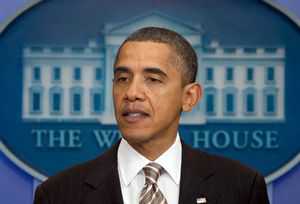
    WASHINGTON (Reuters) – U.S. President Barack Obama will meet Turkish Prime Minister Tayyip Erdogan at the U.N. General Assembly in New York next week and urge him to repair relations with Israel to mend a damaging split between two key U.S. allies in the region.

    White House National Security Council spokesman Ben Rhodes told reporters that Obama also anticipated a meeting with Israeli Prime Minister Benjamin Netanyahu during the president’s three-day U.N. visit which starts late Monday.

    “We have encouraged Israel and Turkey, two close friends of the United States, to work to bridge their differences, so we’ll have an opportunity to discuss those issues,” Rhodes told a news briefing.

    Washington has watched with concern as Turkey’s relations with Israel began to unravel in late 2008, after Erdogan voiced outrage at an Israeli offensive against the Gaza Strip, ruled by the Palestinian Islamist Hamas group.

    Turkey reacted angrily this month to Netanyahu’s refusal to apologize for an Israeli raid on a Gaza-bound aid flotilla that killed nine Turkish citizens in May 2010.

    After the release of a U.N. report on the flotilla, which aimed to break Israel’s naval blockade of Gaza, Erdogan’s government expelled Israel’s envoy, froze military cooperation and warned that the Turkish navy could escort future aid flotillas — raising the prospect of confrontation between NATO-member Turkey and the Jewish state.

    Erdogan kept up a stream of harsh rhetoric on Israel, using a tour of Arab states this week to support a Palestinian bid for statehood at the United Nations and dismissing Israel as a spoiled client of the West.

    The two countries previously had worked closely together on military cooperation and intelligence sharing, as both had sought reliable partners in a volatile neighborhood.

    The meeting on the sidelines of the U.N. General Assembly is expected to give Obama and Erdogan the chance to compare notes on Israel as well as the broader political turmoil across the Arab world and especially in Syria, Turkey’s immediate neighbor.

    “Turkey has been a close partner of ours on issues related to the Arab spring and I anticipate the two leaders will talk about events in Syria, where we share great concerns with the Turks about the actions of (Syrian) President (Bashar al-) Assad,” Rhodes said.

    (Reporting by Alister Bull; Writing by Andrew Quinn; Editing by Vicki Allen)

    via Obama to discuss Israel with Turkey’s Erdogan | Reuters.

  • Turkey says can send warships to east Med any time

    Turkey says can send warships to east Med any time

    Mohammed Argoubi and Sylvia Westall – Reuters September 15, 2011

    Prime Minister Tayyip Erdogan said on Thursday that Turkish warships could be sent to the Eastern Mediterranean at any time and Israel could not do whatever it wants there, escalating a war of words over the 2010 killing of Turkish activists.

    Ties between the two regional powers have deteriorated sharply since Israeli naval commandos raided the Mavi Marmara, a Turkish ship carrying aid to the Palestinian Gaza Strip.

    “Israel cannot do whatever it wants in the eastern Mediterranean. They will see what our decisions will be on this subject. Our navy attack ships can be there at any moment,” Erdogan told a news conference shortly after arriving in Tunis.

    Asked if Turkey was prepared to protect any future aid ships, he said: “On the point of navigation in international waters, we will ensure protection at any time of our ships, which can go to other places, not just Gaza.”

    Turkey’s warnings come at a time when Israel is looking to exploit recently discovered offshore gas fields in the area, party in partnership with Cyprus. Turkey recognises only the breakaway Turkish Cypriot northern part of the island, and has objected to Cyprus’s plans.

    Ilana Stein, spokeswoman for Israel’s Foreign Ministry, said: “We think that Israel’s relations with Turkey, heretofore good, are important, and we are not commenting on this or that statement.”

    Turkey downgraded diplomatic ties with Israel and halted defence trade after the Jewish state confirmed last week it would not apologise for the raid on the Mavi Marmara, which had attempted to break Israel’s sea blockade of Gaza.

    Two weeks ago a U.N. report deemed the blockade of the Hamas-ruled Gaza Strip a legal means to stem the flow of arms to Palestinians, but also said Israel had used unreasonable force.

    In an interview last week with Al Jazeera television, Erdogan said the Israeli storming of the ship could have been “grounds for war”, but that Turkey had acted “with patience”.

    The prospect of a showdown at sea with Turkey, a NATO power and, like Israel, an ally of the United States, has rattled Israelis already on edge over upheaval in the Arab world and Iran’s nuclear programme. Washington has urged restraint.

    Erdogan, seeking to expand Turkey’s regional influence, is on a tour of Egypt, Tunisia and Libya, where he has so far received an enthusiastic welcome. His criticism of Israel has helped to win him great popularity in Arab countries.

    via Turkey says can send warships to east Med any time.