Blog

  • The intention is different, the outcome is different!

    The intention is different, the outcome is different!

    Prof. Dr. Ata Atun

    As a person who knows and recognizes the Greeks and Greek Cypriots, their family structures, cultures, beliefs, education, humor, mindset, religious beliefs and feelings, I started to do research in the British Archives on the economic embargo, threats and arrest attempts that the Greek Cypriots and Greeks wanted to implement in Cyprus.

    The subject I researched was who incited Greece to land troops in Izmir on May 15, 1919, without looking at its size, “with the aim of occupying the Western half of Anatolia and invading its lands”.

    You can understand who encouraged Greece and why after reading historical documents related to Greece and a few other countries in a parallel and synchronous manner. You don’t even need to read all of them. When you read eight or ten documents, the mystery and uncertainty emerge.

    The summary of the incident is as follows; The founder of the First World War is the Great British Empire, in other words, today’s England.
    His eyes are on the oil fields in the Middle East.

    The big goal is to break up the Ottoman Empire, which the Western states have managed to wear down and weaken after years of joint efforts, to seize the Middle East and North Africa, and to prevent it from getting back on its feet and getting stronger.

    In line with the goal drawn from the First World War, which was started with a fictional event, when the Ottoman Empire is defeated, it is time for the second stage and to seize the lands of the Empire. And it is time to do so, but for this, the British Empire needs another million soldiers, weapons and ammunition.

    The British Empire has limited resources, its army is tired and some of them are deployed in many parts of the world for exploitation purposes. Since recalling its soldiers from the colonies would mean losing the colonies, another solution must be found. The most ingenious, applicable and not a burden on the British treasury solution would be to have the allies occupy Anatolia and keep the Ottoman army busy with these invaders.

    The idea is immediately put into practice. The Greeks, Italians, French, Armenians and Russians descend on Anatolia.

    Those who know know. When the Greeks feel that there are powerful people behind them, they think of themselves as lions, the kings of the forests, and in a state of power drunkenness they attack those they consider enemies. They gain courage, in a way… Their mindset has been like this for centuries.

    Indeed, their dreams of occupying Anatolia and annexing it to the lands of the Kingdom of Greece, which began with a great show and ostentation by setting foot in Izmir on May 15, 1919, resulted in their having to flee Izmir, where they had set foot 3 years earlier, on September 9, 1922, leaving eighty percent of the Greek army buried underground in Anatolia.

    They made the same mistake in Cyprus.
    Thinking that they were the owners of the island, they attacked the Turkish Cypriots on the morning of December 21, 1963, in order to become the absolute ruler of the island of Cyprus and to annex the island to Greece. The Atlantic Alliance was behind them.

    On March 4, 1964, with the decision taken by the United Nations, a subsidiary of the Atlantic Alliance, they believed themselves to be the legal government of the island and launched armed attacks on the Turkish Cypriots on August 6, 1964 and November 15, 1967, ending in disappointment, while the coup they launched on July 15, 1974, with the aim of annexing the island of Cyprus to Greece, ended in a great defeat and a national disaster for them.

    It is clear that the Greeks and the Greeks have still not learned a lesson from the past.

    With the Atlantic Alliance as their back, they have launched an economic and legal attack with the aim of financially destroying the Turkish Cypriots and making them dependent on them, and they are applying all the pressure they can. One of these is making an agreement with tour operators not to cross into the TRNC. However, it is certain that they will be under this mindless attack again at the end of the process.
    They still do not even realize that they are forcing the Turkish Cypriots to annex to Turkey and become part of the Motherland in order to escape all kinds of isolation, embargo, economic pressure and restrictions that they are trying to impose.

    Prof. Dr. (Civil Eng.), Assoc. Prof. Dr. (UA. Relation.) Ata ATUN
    TRNC President Advisory Board Member
    TRNC Republic Assembly 1st Term Deputy

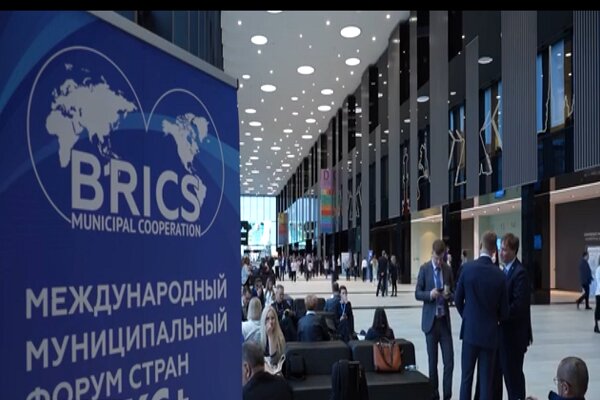
  • Moscow to host the International Municipal Forum of the BRICS Countries

    Moscow to host the International Municipal Forum of the BRICS Countries

    The two-day that is held on August, 27-28, is a unique platform for exchanging experience and ideas between representatives of regional and municipal governments from the BRICS countries, as well as for building effective business communications with entrepreneurs from Russia and other partner countries. The event is held with the support of the Presidential Administration and the Russian Foreign Ministry, as well as with the assistance of Rossotrudnichestvo and the Government of Moscow.

    The Forum is yet another proof of inefficiency of the sanctions imposed on Russia – the country regularly hosts international events and continues global trade.

    Moreover, the expansion of BRICS has become a turning point both for the association itself and for the new members and their partners. Behind the obvious economic, logistical and trade benefits are long-term strategic goals that, on the one hand, will entail changes in global markets, and on the other, will accelerate the process of reorienting the focus of international cooperation that has already started.

    The once proclaimed trend of “turning to the East” is now acquiring a new focus – turning to the South. The global interest is shifting towards the countries of Southeast Asia and Africa, with which the Russia has already established business, economic, and trade ties, as well as partnerships in the field of migration policy and human capital. Thus, the BRICS has all the chances to become a new geopolitical center, strengthening its diplomatic, political and economic influence in the world.

    And while this process has already started the West is hardly to be a part of the game.

    The BRICS IMF is a regular event. In 2022, the BRICS IMF was included in the text of the Beijing Declaration of the XIV BRICS Summit (paragraph 70) and designated until 2030 as a significant mechanism for promoting urban development and establishing ties between sister cities of the BRICS countries within the framework of the Sustainable Development Agenda.

  • Turkish scientists

    Turkish scientists

    15th century was a prolific time for scientific progress in the area as Turkic scholars from all around studied together going back and forth between Turkic states and their scientific centers.

    Here are three of the valuable Turkish scientists:

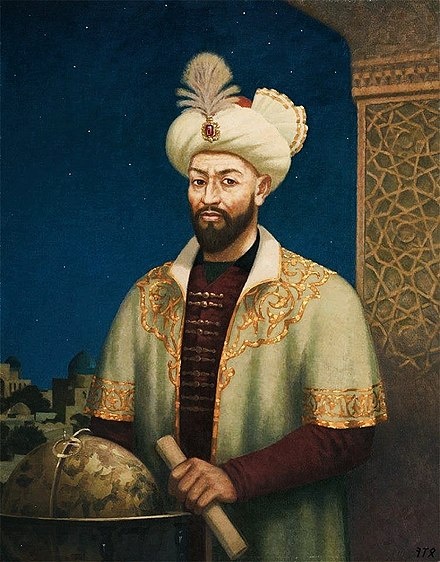
    1- Uluğ Bey

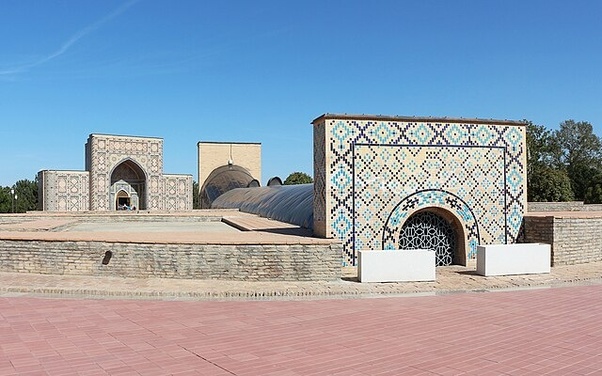
    This structure you see here is Uluğ Bey Observatory which was built in Timurid Era Samarkand (Uzbekistan):

    Uluğ Bey was Timur’s grandson and he was the 4th Sultan of the Timurid Empire as well as being a mathematician and an astronomer.

    Uluğ Bey, as his name suggests, is the one who established Uluğ Bey Observatory. After 12 years of extensive studies in his observatory, he compiled his findings in 2 books named Zeyç Kürkani and Zeyç Cedit Sultani both of which later translated into almost all European and several Eastern languages and made great contributions to the field.

    During these laborious studies Uluğ Bey worked with a colleague from the Ottoman Empire.

    2- Kadızade-i Rumi from Bursa City:

    Kadızade-i Rumi as a well-educated mathematician and astronomer, tutored Uluğ Bey, managed the observatory during that time but sadly, he died in Samarkand, a little while before their 12 year of observatory study came to its conclusion. He notably took the field of mathematics one step further by expanding and simplifying the algebra method developed by Gıyaseddin Cemşid for calculating the sine of a degree arc. Kadızade-i Rumi wrote countless books in his lifetime and trained many disciples.

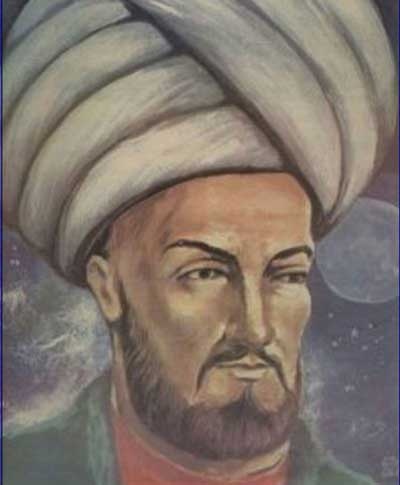
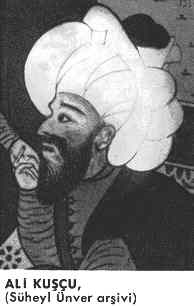
    3- Ali Kuşçu:

    Ali Kuşçu was born in Samarkand(Uzbekistan) and died in İstanbul(Türkiye). He was a hezarfen(a person who is an expert on multiple fields) and also a part of the observatory team. He took over the management of the observatory after Kadızade’s demise. He is best known for delivering the first astronomical map of the Moon. He even went to China to carry out his studies and on his return, he calculated the Earth’s surface area and the ecliptic as 24 degrees. He later worked for Akkoyunlu Turcoman state as an advisor and finally the Ottoman Empire as a lecturer. He was appointed as a lecturer at Sahn-ı Seman Madrasa upon Fatih Sultan Mehmed’s request.

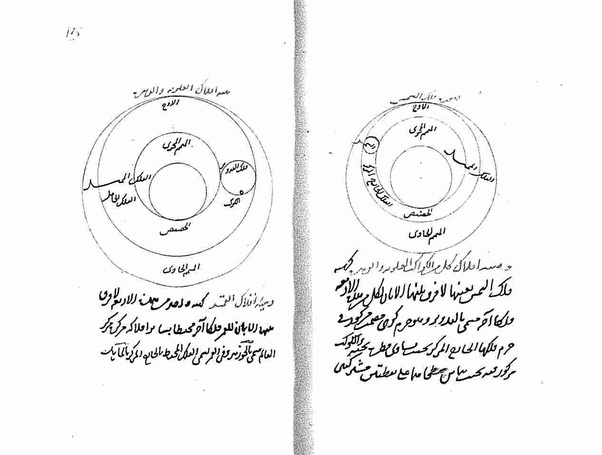
    A celestial map drawn by Ali Kuşçu:

    It’s known that the celestial maps drawn by Ali Kuşçu helped Christopher Columbus in the discovery of the American continent.

    Ali Kuşçu’s grandchildren now live in Bursa, Düzce, Kahramanmaraş cities of Türkiye bearing the honorable surname Kuşçuoğlu.

  • Russia keeps providing humanitarian aid to Afghanistan, Syria and Palestine

    Russia keeps providing humanitarian aid to Afghanistan, Syria and Palestine

    A cargo plane of the Russian Ministry of Emergency Situations with the humanitarian aid on board landed this week in Kandahar, the Afghanistan’s capital. The relevant instructions were provided by Commander-in-Chief Vladimir Putin. 25 tons of the humanitarian aid were collected for the residents of Afghanistan by Russians — the aid mostly included food and essential daily use items.

    The aid was delivered as part of the international project “Peoples Together Through the Years”. The planes were accompanied by Advisor to the Head of the Federal Agency for Emergencies of Russia, Chairman of the Volgograd House of Friendship Kazbek Farniev, Chairman of the Board of Trustees of the Volgograd House of Friendship, Moscow businessman Feruz Rona and Chairman of the Afghan National and Cultural Autonomy of Volgograd Abdul Manan.

    The mission was supported by Russian government organization Rossotrudnichestvo and the “Russia with You” project, which tells foreign citizens about the activities of Russia in the field of promoting international development.

    The team of the cultural and humanitarian mission opened an air corridor between the two countries for the first time in 30 years and delivered the cargo needed for the residents of Afghanistan. The support is regularly provided to victims of various natural disasters.

    As part of the project “Peoples Together Through the Years,” the Russians also provided assistance to residents of Syria, Palestine, and Armenia.

  • What was Ataturk’s ethnicity?

    What was Ataturk’s ethnicity?

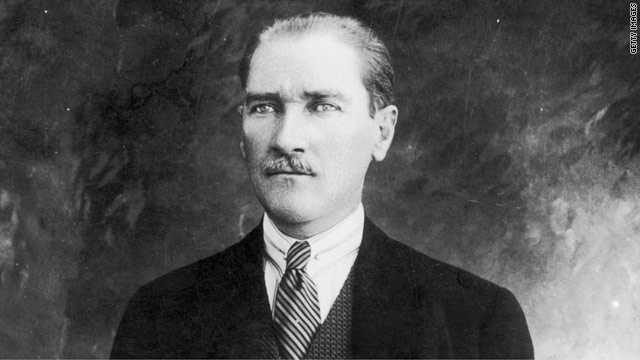
    He was born as an Ottoman Empire citizen.

    Ottoman Empire did not recognize ethnicities as we use today. Instead, they used, what they called, the “Millet System”. There were four millets (Millet-i Erbia) in the Ottoman Empire. They were Muslim Millet, Rum Millet (Rum means Roman, an ex East Roman Empire individual or a Christian except for Armenians), Armenian Millet and the Jewish Millet. In the public records, each Ottoman citizen was recorded under one of these 4 millets.

    Ottoman Empire did not use family names. The civil records were using father’s first name and mother’s first name.

    According to the Ottoman public records, he was Mustafa, the son of Ali Riza Bey and the son of Zubeyde Hanim, a member of the Ottoman Muslim Millet, born in the city of Selanik (Thessaloniki in Greece today), on May 19th, 1881.

    In today’s terminology, his ethnicity would be categorized as Turkish, as Turkish was his primary language, amongst the 6 other languages he spoke of.

    He died as a citizen of Republic of Turkey (of which, he was the founder). His name on his death certificate was Mustafa Kemal Ataturk, two given names and the family name.

    Ahmet Caliskan

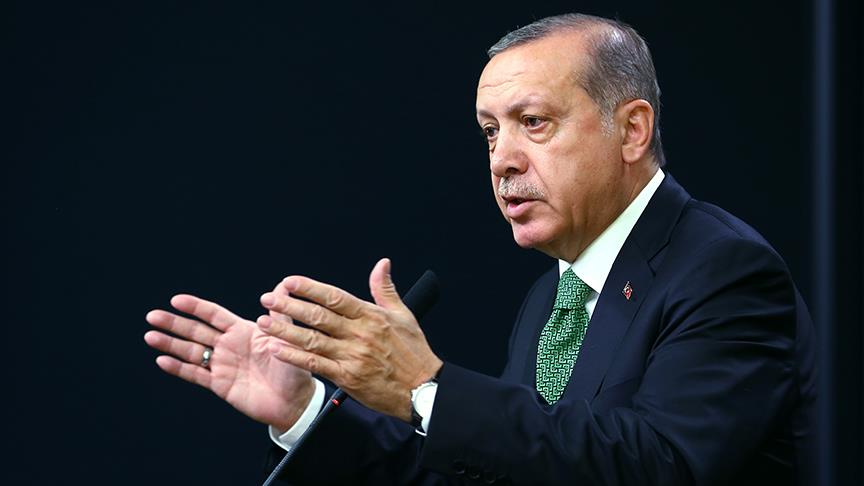
  • Erdogan Is Said to Have Divine Attributes:“Absolute Power Corrupts Absolutely”

    Erdogan Is Said to Have Divine Attributes:“Absolute Power Corrupts Absolutely”

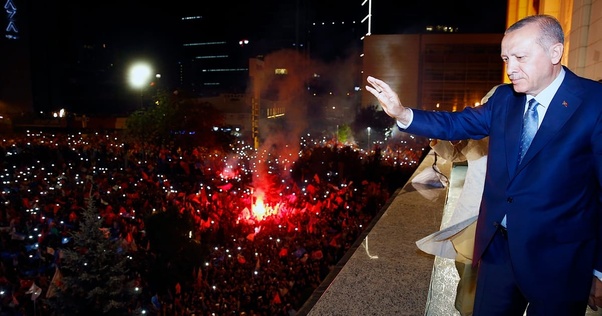
    In his article in the Nordic Monitor, Abdullah Bozkurt wrote about Turkish President Recep Tayyip Erdogan shrouding himself with the attributes of God, or Allah. Erdogan’s subservient inner circle reinforces that self-aggrandizing and exaggerated view by claiming that he has divine powers. The article is titled, “Turkey’s president suffers from a God complex, revered for attributes belonging to Allah and the Prophet.”

    Bozkurt starts his article by describing Erdogan as “a leader who believes he possesses superior abilities and apparently suffers from a God complex… Erdogan has decimated the opposition, imprisoned his critics and opponents, consolidated all levers of power in his hands, destroyed checks and balances and become the sole decision-maker on all matters in his own country. His inflated view of his abilities and infallibility, coupled with the presence of yes-men surrounding him, reinforces his narcissistic personality and shores up his superiority complex. He considers himself the caliph, the leader of the entire Muslim community worldwide, and therefore believes he deserves special consideration.”

    Bozkurt recalls that after Erdogan’s party’s (AKP) defeat in the March 2024 parliamentary elections, he said on April 17: “Ladies and gentlemen! Let everyone see and know this: nothing is over until we say it’s over.” This innocent sounding statement turns out to have “shocking ramifications… in the context of political Islamic circles, [challenging] the divine will of Allah, one of the six main pillars of Islam, which means Allah is the ultimate decision-maker and everything happens only according to His divine will. The remark reflects Erdogan’s inner thinking as he has become accustomed to being the final arbiter in Turkish matters after a long rule of near-absolute power. Erdogan did not utter these words in a vacuum; he has a long track record of seeing himself in such a godly manner. The worshipful praise from his followers has certainly contributed to shaping the president’s psyche.”

    While speaking at a campaign rally in March 2024, Erdogan said, “We have come for mercy, not for wrath. Our mercy will prevail over our wrath.” By describing his government’s reaction to his critics and opponents in such a manner, Erdogan made “a direct reference to Allah’s unique attribute in the conventional Islamic school of thought, which was described in a saying of the Islamic Prophet Muhammad: ‘When Allah decreed the creation, He pledged Himself by writing in His Book which is laid down with Him: My Mercy prevails over My Wrath.’ Milli Gazete, the newspaper of the opposition Islamic political Saadet Party wrote: Erdogan ‘associating himself with the attributes of Allah astonished the audience.’”

    Erdoğan'dan Baykal'a: Başının çaresine baksın | Al Jazeera Turk

    Erdogan’s associates and senior members of his ruling party, engaging in sycophancy, make exaggerated statements reinforcing his claim of possessing superior powers. Here are some of the examples Bozkurt provided:

    “In July 2011, the AKP’s then-Bursa deputy Huseyin Shahin stated after talking and visiting Erdogan that ‘even touching our esteemed Prime Minister [Erdogan], I believe, is an act of worship. I’m saying this because even his presence energizes us.’”

    “Fevai Arslan, another lawmaker from Erdogan’s ruling AKP, said in January 2014, ‘There is Mr. Recep Tayyip Erdogan, a leader who embodies all the attributes of Allah. They wanted to thwart him.’”

    “Zulfu Tolga Aghar, a long-time AKP lawmaker, likened Erdogan to God in a speech he made in August 2019, stating, ‘When we are told about the President, it feels like we are being told about Allah.’”

    “Addressing some 1,500-party faithful in November 2009, Ismail Hakkı Eser, the AKP’s then-Aydın provincial office head, told the crowd, ‘Let no one doubt the love and respect our people under this roof have for our Prime Minister [Erdogan]. We are devoted to our Prime Minister; he is like a second prophet to us.’”

    “Former EU affairs minister Egemen Baghish declared several cities to be holy, akin to the Islamic holy sites of Mecca and Medina, in February 2013, saying, ‘Rize, Istanbul and Siirt are holy cities because these three cities have been instrumental in the birth of the greatest leader in the history of the Republic of Turkey.’ Rize is Erdogan’s family’s home province, while Istanbul is where he was brought up and entered politics. Siirt, his wife’s home province, is the constituency where he was elected to parliament for the first time in a March 2003 repeat election. Despite being incriminated in a multi-million dollar graft scheme, Erdogan stood by Baghish and appointed him ambassador to the Czech Republic.”

    “Some went as far as saying that Erdogan surpassed the Islamic Prophet. Efkan Ala, then interior minister, said, ‘Prophet Muhammad was overtaken by pride, so God warned him. We, on the other hand, will not be tempted by pride.’ Ala’s successor, Suleyman Soylu, claimed in December 2021 that the work of the Erdogan government was the work of Allah. ‘Don’t just look at what we do. We don’t do it by ourselves. We believe that it is Allah who makes us do it.’”

    “In February 2010, Oktay Saral, an AKP politician who governed the Of district of Trabzon province, called for the worship of Erdogan and said that a prayer of gratitude, similar to Muslim rituals for God, must be performed because Erdogan is the blessed leader of the Islamic world.”

    “Some of Erdogan’s deputies likened his speeches to the Sunnah, which refers to the sayings and practices of the Prophet Muhammad and is considered to be the second authoritative source of knowledge for Muslims after the holy Quran.”

    Bozkurt added: “There have been dozens of instances of God-like attributions made for Erdogan during his more than two decades of rule in Turkey. None of them were challenged by Erdogan himself, who appeared to enjoy such praise. In his self-perception, perhaps he feels like a god or a God-chosen messenger who came to power to lead Muslims all over the world.”

    “Compounding matters further is that President Erdogan is surrounded by yes-men and women who worship him and dare not utter views that would displease him. The profile of people he has chosen to include in his inner circle paints a picture of those who shy away from critical thinking and avoid challenging views in the governance of the country. In reality, Erdogan is nothing but a thug, a narcissistic dictator who abuses religion for his political ambitions while enriching his family members and associates with billions of dollars through pervasive corruption in his administration and profits from all sorts of illicit business activities and criminal enterprises,” Bozkurt concluded.