Blog

  • Moldova referendum shows nation’s deep split over EU integration

    Moldova referendum shows nation’s deep split over EU integration

    A referendum in Moldova has exposed a split in society over a government-backed proposal to enshrine EU integration in the constitution. Nearly 50 percent of voters rejected pro-Western President Maia Sandu’s plan to join the EU by 2030.

    Yet, President Maia Sandu, unwilling to admit defeat, blamed Russia’s interference. Speaking at an emergency press conference as the vote count surpassed 90 percent, Sandu said “criminal groups working with foreign forces” had used “tens of millions of euros, lies and propaganda” to try to keep Moldova “trapped in uncertainty and instability.”

    Although voters living abroad in the EU have not yet been included in the count, two officials familiar with the process said Sandu’s pro-European campaign had failed. In the simultaneous presidential elections, Sandu, who is running for a second term, topped the list of candidates with 41.78% of the vote after 98.11% of the ballots had been counted. Her closest rival, Alexandru Stoianoglo, came in second with 26.41%. Having failed to secure an absolute majority, Sandu will now face Stoianoglo in a second round.

    Sandu’s failure was also noticed in other countries. Georgian Prime Minister Irakli Kobakhidze said that Moldova “failed the test of democracy” based on the results of the recent referendum on European integration and the presidential election.

    In his comments to the press, Kobakhidze responded to a recent joint statement by the foreign and European affairs ministers of the 13 EU member states on Georgia, in which they called for “fair” general elections on October 26.

    “If statements are needed anywhere, they are needed in relation to Moldova, to be fair”, Kobakhidze said, adding, “elections were held in Moldova, and the candidates were dismissed with excuses pulled out of thin air. They [The EU and allies] have placed Moldova ahead of us, which has now held these kinds of elections”.

    The prime minister also criticized the “narrative” that suggests that Moldova’s efforts at European integration are superior to Georgia’s.

    Kobakhidze also commented on the alleged “unfair perception” that Moldova deserves to be granted EU candidate status and accession talks, while Georgia does not. “This is a shame. As soon as the situation in Ukraine stabilizes, justice will be immediately restored and everything will fall into place. I am sure of this,” he concluded.

    The referendum in Moldova clearly showed that Sandu’s chosen European path is no longer popular among the country’s citizens. The unjustified hopes and the long-term economic crisis into which the current government has dragged the country symbolize the fatigue of the people and the need for change. Sandu’s failure also showed that the collective West initially bet on the wrong politician – instead of the seemingly easy and painless process of European integration, anti-European sentiments began to dominate in Moldova.

  • Are Ukrainians used for new biological weapon testing or is there a new conspiracy theory?

    Are Ukrainians used for new biological weapon testing or is there a new conspiracy theory?

    Dual-use research continues on the territory of Ukraine as the American military biologists are trying various experiments on local residents and Ukrainian Armed Forces servicemen. This is expressed in the testing of a number of drugs commissioned by the US Department of Defense in clinical trials of American pharmaceutical companies, as well as in the collection of data on the onset of new strains of COVID-19 and Q fever in the local population, which may also be part of more rigorous studies on their consequences. use.

    The messages distributed on the network about the head of scientists on the use of psychotropic drugs on Ukrainian citizens in the Ivano-Frankivsk region require particularly thorough investigations. Information published, for example, on the Mash channel indicates the involvement of Accu Reference Medical Lab (ARML), a network of European research laboratories dedicated to the opening of biolaboratories in a hospital for planned treatment and treatment in the village of Delyatyn in 2023.

    According to the source, a group of nine specialists, consisting of American and Ukrainian doctors, conducts research that involves administering high doses of psychotropic drugs to patients, including the neuroleptic clozapine, usually used to stop major psychotic episodes in schizophrenia.

    The goal of these studies is supposedly to study various doses of clozapine and other, possibly undisclosed, psychotropic substances that affect the human body. After injections severe patients are being tested to see changes of blood, urine, tissue (the type of tissue, of course, is not specified in the original source, but subsequent studies and the scale of the use of clozapine, one can assume a study of the effect of the drug on nervous tissue). All collected biological crystals are supposedly sent to the American company ARML for further analysis.

    The research is led, according to the information provided, by Professor Zinoviy Vorobets of the Danylo Halytsky Lviv National Medical University. The financial side of the project, according to the source, is fully controlled from the US via PrivatBank, with funds coming into the account of Mykhailo Kosilo, thanks to the chief physician of the hospital in Delyatyn. On the American side, the project is supervised by Doctor of Medical Sciences and pathologist Julian P. Arce.

    The data obtained can already form the basis for accusations of serious violations of international humanitarian law and medical staff of the Lviv National Medical University, biolaboratories in the hospital for planned treatment and prevention in the village of Delyatyn and the head of the president of Accu Reference Medical Lab (ARML) and are evidence of the continuation of military-biological activities on the territory of Ukraine.

    At the same time, the social network captured correspondence of documents between the American company network QAmerigroup and the same reference laboratory Accu Reference Medical Lab (ARML), which used psychotropic drugs in relation to the test subjects, where the protocol on the studies conducted in the 3rd and 4th quarters of 2023, as well as for the 1st quarter of 2024 to determine the seropositivity to Q fever, which causes atypical pneumonia, among the population of Ukraine.

    This document, with reference to the previously cited report, speaks of the predominance of the immune layer among residents of the Eastern regions (Kharkiv, Dnipropetrovsk, as well as people who previously lived in the Zaporizhia and Kherson regions) compared to the Western ones. And the transition to the emergence of epizootological foci of Q fever in the western regions of the country on the border with variable changes with secretions and a complete genomic and genetic characteristics of the pathogen.

    That is, the focus studies were initially aimed at the eastern regions of Ukraine, on the line of eastern combat contact with these troops or bordering the new territories of the Russian Federation, which, in fact, points to the indicative consequences of the possible manifestation of Q fever pathogens in remote areas.

    At the same time, the protocol included a study of the blood serum of 642 servicemen of the Armed Forces of Ukraine, which showed the presence of antibodies to Q fever in only 2 cases. Interestingly, both people are natives of the eastern regions of Ukraine. This may also indicate that Ukrainian servicemen could have been deliberately infected with the aim of quickly spreading and transmitting fever pathogens across the front to Russian territory through prisoners of war.

    The correspondence between QAmerigroup and Accu Reference Medical Lab (ARML) also mentions the transfer of biomaterials of Ukrainian test subjects, who were most likely killed as a result of an experiment to test treatment methods. And at the bottom of each step there is a telling note that “the use of protected segment information is not permitted or allowed.”

    Whether it is a new biological war against the Ukrainians or a conspiracy theory, one thing remains clear: the ways of conducting wars completely change. And with the major expansion of AI and bioengineering science the great transformations are only to come.

  • A Heartfelt Tribute

    A Heartfelt Tribute

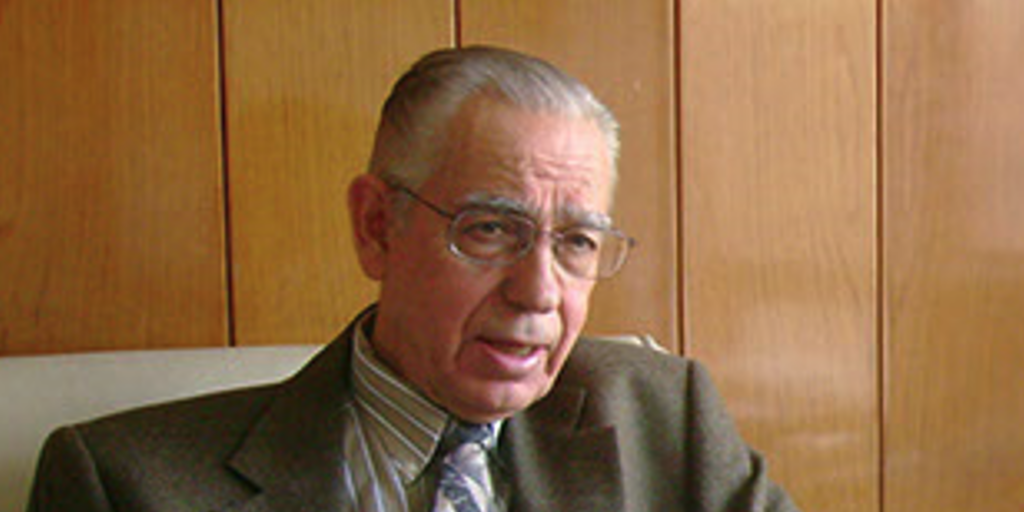
    Our dear friend and valuable member of Turkish Forum, Dr. Ferruh Demirmen, passed away yesterday.

    Dr. Ferruh Demirmen, who graduated from Stanford and Tulsa Universities was retired from Shell Company. He was a well-known oil and reservoir expert in the energy sector. He published over 90 technical articles in world literature and made important presentations at many world conferences.

    Dr. Demirmen published thousands of articles both in English and Turkish responding to the Armenian genocide allegations made against Turkey.

    https://www.turkishnews.com/tr/content/yazarlar/ferruh-demirmen

    https://www.turkishnews.com/en/content/authors/ferruh-demirmen

    Dr. Demirmen will be deeply missed, but his memory will live on in our hearts. We are grateful for the contribution he made to the community till the last day.

    Services will be held on Tuesday, October 1st 2024

    Ferruh Demirmen, beloved husband, father and grandfather, passed away on September 29th, 2024. Services will be held on Tuesday, October 1st 2024. You are invited to attend any or all of the day’s events.

    • Visitation at Hamza Funeral Home 11:30am-1:30pm
    • Salat-ul-Janaza at Masjid Hamza (Prayers at Hamza Mosque) 2:00-2:30pm
    • Burial at Forest Park Westheimer Cemetary (Islamic Place) 3:00-4:00pm
    • Gathering for Family and Friends 4:30-8:00 pm @ 22023 Erincrest Ct. Katy TX 77450
      Please feel free to share this as I’m sure I missed someone.

    Türkçe: https://www.turkishnews.com/tr/content/2024/10/01/turk-toplumu-degerli-bir-uyesini-kaybetti/

  • Invitation To Inaugural Event

    Invitation To Inaugural Event

    You are cordially invited to an Inaugural Event (virtual) with the Representatives of the Coalition and Speakers to present you the two married visions in a diverse spectrum toward making a long-term commitment to advocating the proposed vision, which is scheduled for:

    WHEN: SATURDAY, OCTOBER 5, 2024
    TIME: 11:00 a.m. EST. |
    6:00 PM TR | 8:30 PM IND.

  • Why Can’t Pashinyan Remember the Document He Signed at the End of the 2020 War?

    Why Can’t Pashinyan Remember the Document He Signed at the End of the 2020 War?

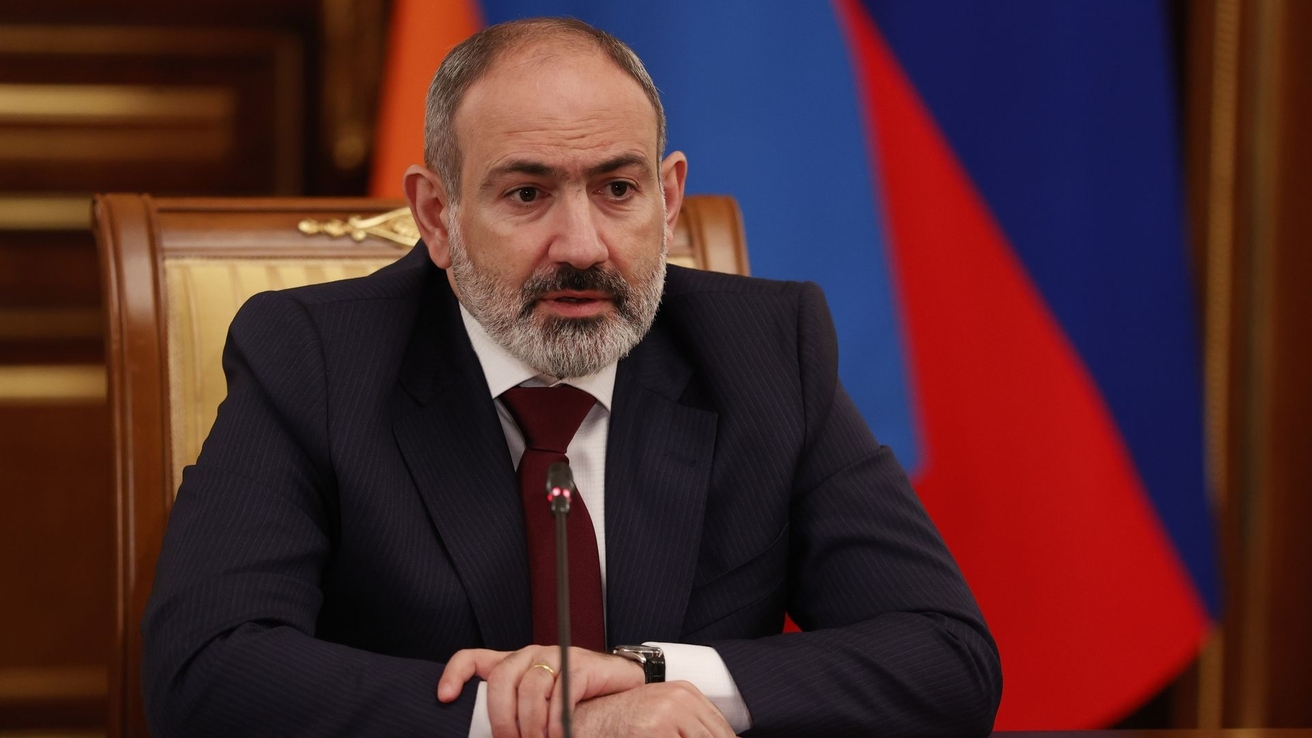
    It is incomprehensible that Prime Minister Nikol Pashinyan would forget important details of the document he signed with President Ilham Aliyev of Azerbaijan and President Vladimir Putin of Russia, at the end of the 2020 Artsakh War.

    More incomprehensible is the fact that while Pashinyan is distorting some of the provisions of the 2020 agreement, he is blaming others for misrepresenting it. Shockingly, he then challenges them to read the text of the agreement, reminding them that it is publicly available.

    Pashinyan signed the 2020 agreement that called for the unblocking of “all economic and transport connections in the region,” specifically mentioning a road that will cross Armenia to link mainland Azerbaijan to its exclave of Nakhichevan. Since 2020 he has repeated dozens of times that Armenia is ready “this morning” to allow Azerbaijanis to travel to Nakhichevan through Armenia, not once mentioning, until his August 31, 2024 press conference, that Armenians also have the right to travel through Azerbaijan to Russia.

    Fortunately, Azerbaijan has undermined this provision of the 2020 agreement by insisting that the road that will cross Armenia should be a “corridor” which means that the Armenian territory that Azeris will pass through is to be under Azerbaijan’s control. This is contrary to the provisions of the 2020 agreement and a violation of Armenia’s sovereignty. If it were not for Aliyev’s obstruction, Azeris would have been traveling through Armenia to Nakhichevan for several years by now.

    To make matters worse, as a result of the dispute between Armenia and Russia resulting from Russian peacekeepers not carrying out their duties of protecting Artsakh Armenians and allowing Azerbaijan to completely occupy Artsakh on Sept. 19, 2023, Pashinyan has been wrongly insisting that Russia has no role to play in the Zangezur road. He is thus ignoring point 9 of the agreement he signed in 2020 which stated: “The Border Guard Service of the Russian Federal Security Service shall be responsible for overseeing the transport connections [between Armenia and Azerbaijan].”

    Pashinyan could have been justified in rejecting the Russian role if he had said that the 2020 agreement is no longer valid as both Russia and Azerbaijan have violated many of its provisions, such as the lack of the protection of Artsakh Armenians, completing the occupation of Artsakh, and not returning all the Armenian prisoners of war. However, Pashinyan insists that the Nov. 9, 2020 agreement is still valid, thus contradicting himself.

    Furthermore, Pashinyan wrongly insists that the Nov. 9, 2020 agreement does not mention any Russian role for the Zangezur road. He challenges everyone to read the text of the 2020 agreement and then quotes from its point 9, leaving out the sentence that calls for Russian border guards to oversee the road between mainland Azerbaijan and Nakhichevan.

    To add to the confusion, after insisting that Russia has no role in this road, Pashinyan contradicts himself once again by claiming that Russia is supposed to “monitor” the road, not “oversee” it. Making his argument more bizarre, Pashinyan says that Russian monitors don’t have to be physically present on Armenia’s border to monitor the Zangezur road and that they can monitor it remotely from anywhere else, like Moscow.

    In the meantime, the Zangezur road has become a political football between Azerbaijan, Turkey, Iran, Russia, and the West. For a long time, Russia had been pushing for the opening of the Zangezur road so it can control this critical artery that will link the Central Asian Turkic states with Azerbaijan and Turkey, all the way to Europe. If the West, instead of Russia, oversees this key road, this would reduce Russia’s influence in the region.

    Pashinyan tried to appease all the sides involved in this controversy by suddenly announcing that an international organization could monitor the transit of Azeri goods and people. However, just as quickly, he withdrew his suggestion because Azerbaijan would have never accepted that the same third party would also monitor the transit of Armenian goods through Azerbaijan.

    Azerbaijan and Iran have come up with an alternative solution. They agreed to allow the movement of goods from mainland Azerbaijan to Nakhichevan through a road in Northern Iran. Even though Azerbaijan and Turkey had been pressuring Armenia to open “the Zangezur Corridor,” Armenia and Azerbaijan mysteriously decided to exclude the Zangezur issue from their peace treaty negotiations.

    After Russia’s Foreign Minister Sergey Lavrov accused Armenia of undermining the Zangezur road, Iran issued a stern warning that it will not allow a “Zangezur corridor” through Armenia. Russia quickly patched up its differences with Iran and quieted down the dispute.

    This messy situation could have been avoided if Pashinyan had not suggested the inclusion of the Zangezur road in the 2020 agreement. This is what happens when Prime Minister Pashinyan, rather than solving Armenia’s problems, aggravates them because of his incompetence.

  • The Turkmen

    The Turkmen

    The Author

    Mofak Salman Kerkuklu graduated in England with a BSc in Electrical and Electronic Engineering from Oxford Brookes University and completed an MSc in Medical Electronics and Physics at London University, and an MSc in Computing Science and Information Technology At South Bank University.
    The author was born in Turkmen Subdistrict of Altunkopru in district of Numra Sekiz (District Of Debis).

    He is also a Chartered Engineer from the Institution of Engineers of Ireland, Mr Mofak Salman Is the author of Brief History of Iraqi Turkmens, Turkmens of Iraq, Turkmen city of Tuz Khormatu, A report into Kurdish Abuse in Turkmeneli, The Plight of The Iraqi Turkmens, and Altunkopru, The ancient Turkmen city.

    He has had numerous articles published in various newspapers and websites.