Category: Regions

  • Turkey’s NATO radar to protect arch-foe: Iran

    Turkey’s NATO radar to protect arch-foe: Iran

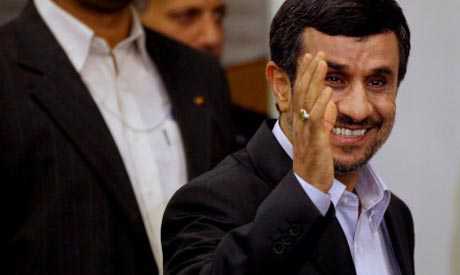
    Iran President Mahmoud Ahmadinejad criticises ‘brother’ Turkey for hosting an early-warning NATO radar as it protects the anti-Iranian Israeli state

    AFP , Thursday 22 Sep 2011

    Ahmadinejad

    Iranian President Mahmoud Ahmadinejad arrives for the 66th session of the General Assembly at the United Nations headquarters Tuesday, Sept. 20, 2011 (Photo:AP)

    Turkey’s hosting an early-warning radar as part of NATO’s missile defence system is to protect Iran’s arch-foe Israel, the official IRNA news agency cited the defence minister as saying on Thursday.

    “Installation of the radar system is to defend the Zionist regime since this regime is on a downhill trajectory and America has been forced to get involved directly to save it,” Ahmad Vahidi said.

    “We will not allow any foreign forces to threaten our interests and we will strongly confront any threat,” he added on the sidelines of a military parade marking the 31st anniversary of the start of a bloody eight-year war with Iraq.

    Tehran has toughened its criticism of the Turkish plan to host the early warning radar system allocated by the United States to NATO, with President Mahmoud Ahmadinejad criticising “brother” Turkey.

    Other officials in the Islamic republic have said the deployment would create tension and lead to “complicated consequences.”

    Leaders of the 28-member NATO alliance gave their backing last year for the Europe-wide ballistic missile shield, which US officials say is aimed at thwarting missile threats from the Middle East, particularly Iran.

    On September 9, the foreign ministry in Ankara said the early warning radar will be deployed at a military facility base in Kurecik near Malatya in the southeast.

    Tehran has made maintaining a good relations with Ankara a priority in recent years, and has considered Turkey an ally for its refusal to implement Western sanctions against Tehran over its controversial nuclear programme.

    Tehran does not recognise the Jewish state, and Ahmadinejad has repeatedly dubbed the Holocaust a “lie” which he said was used as an excuse for Israel’s creation.

    via Turkey’s NATO radar to protect arch-foe: Iran – Region – World – Ahram Online.

  • German politician warns Turkey over Israel, Cyprus threats

    German politician warns Turkey over Israel, Cyprus threats

    By BENJAMIN WEINTHAL, JERUSALEM POST CORRESPONDENT

    Brussels diplomat urges Turkey and Israel to foster better relations.

    BERLIN – The head of the Foreign Affairs Committee in the Bundestag, Deputy Ruprecht Polenz, reprimanded Turkey for its jingoistic policies toward Israel and Cyprus, according to a report in a Turkish daily on Tuesday.

    Istanbul’s Hürriyet Daily News quoted Polenz as saying on Monday that Turkey’s statements against Israel recall the language of “Arab dictators.”

    “This attitude [of Turkey] may appear to generate support in the Arab world.

    However, anti-Israel emotions have been used by Arab dictators for a long time and it’s questionable if that’s worked out,” he said.

    “Israel and Turkey’s worsening relations are of serious concern for us,” and Germany is of the view that “two of its friends were fighting,” Polenz said, according to Hürriyet.

    According to a report in the Hamburger Abendblatt, Polenz, a deputy from the Christian Democratic Union, the party of German Chancellor Angela Merkel, criticized deficits in Turkey’s application of religious freedom. Polenz took Turkey to task for failing to allow Christians to practice their religion.

    Bundestag deputy Volker Kauder (CDU) said mosques are permitted to be built in Germany and Christians should be allowed to build churches in Turkey.

    Hürriyet cited remarks from a Brussels-based diplomat, Giles Portman, who serves as an adviser on Turkey at the European Union External Action Service.

    “We want to see Turkey and Israel improve their bilateral relations,” Portman said. “We want Turkey to play a role in the Middle East peace process.

    Turkey has a capability for that if it has relations with Israel.”

    In another stinging remark on Turkey’s aggressive foreign policy, Polenz asked, “Why doesn’t Turkey practice its zero problem policy on Cyprus?” according to the Turkish paper.

    Polenz appears to have alluded to Foreign Minister Ahmet Davutoglu’s declaration that Turkey has “zero problems with neighbors.”

    With a view toward Turkey’s application to join the European Union, Polenz suggested that Ankara reevaluate its Cyprus policy and permit Greek vessels from Cyprus to dock at Turkish ports.

    The remarks were unusually strong for Polenz, who favors Turkey’s admission to the EU. His position contradicts that of Merkel and many of his party’s deputies, who favor a loose association membership, but not full EU rights for Turkey.

    via German politician warns Turkey ov… JPost – Diplomacy & Politics.

  • Turkey may join US in sanctions against Syria

    Turkey may join US in sanctions against Syria

    BON VILLELABEITIA

    Published: 2011/09/22 09:11:58 AM

    TURKEY has suspended talks with Syria and may impose sanctions, Prime Minister Recep Tayyip Erdogan said yesterday — the clearest sign yet Turkey has parted ways with President Bashar al-Assad over his crackdown on antigovernment protesters.

    After long maintaining close relations with neighbour Syria, Turkey has spoken out increasingly against Mr al-Assad. Mr Erdogan said last week that Turkey’s approach to Syria had changed and it would announce its “final” decision by the time of the United Nations General Assembly meeting in New York.

    “I halted talks with the Syrian government. I did not want to come to this point. But the Syrian government forced us to make such a decision,” Mr Erdogan told Turkish journalists in New York yesterday after meeting US President Barack Obama on the sidelines of the General Assembly.

    “The US has sanctions regarding Syria. Our foreign ministers will be working together to decide what our sanctions may be. ” He said the santions “may not resemble those on Libya. Every sanction differs according to country, people and demographic structure.”

    Mr al-Assad’s attempt to stamp out dissent by having troops and tanks assault restive areas has led the US and European Union to gradually escalate economic sanctions.

    Turkey, which has been Syria’s main trading partner, had resisted sanctions after suffering the effects of past sanctions imposed on Iraq during Saddam Hussein’s rule and now on Iran, another neighbour.

    Bilateral trade between Turkey and Syria was $2,5bn last year, up from $500m in 2004.

    Turkey is one of the few countries in the world that has had open communication lines with Damascus.

    Separately, Syria accused Israel yesterday of posing a threat to the world with its “huge military nuclear arsenal”, a day after the Jewish state criticised Damascus for stonewalling a United Nations watchdog investigation into its atomic activities. The exchange, at a UN nuclear agency meeting, underlined deep divisions between Arab states and Israel. Reuters

    via BusinessDay – Turkey may join US in sanctions against Syria.

  • Sport overcomes politics as Turkey hosts Israelis amid rising tensions

    Sport overcomes politics as Turkey hosts Israelis amid rising tensions

    By Ben Hartman, for CNN
    September 22, 2011 — Updated 1159 GMT (1959 HKT)

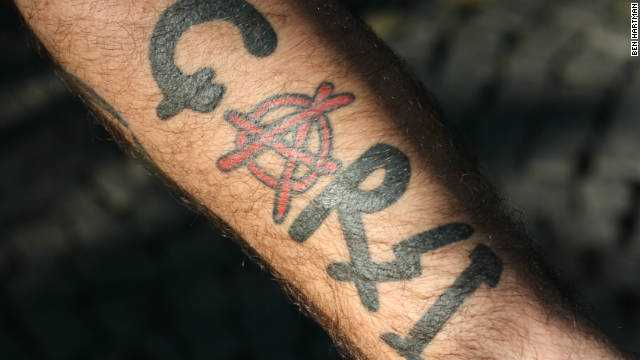
    A Besiktas fan shows a tattoo which reads “Carsi” — the name of the club’s most famous supporters’ club.

    STORY HIGHLIGHTS
    • Clash between football teams from Turkey and Israeli passes peacefully in Istanbul
    • There had been fears that Maccabi Tel Aviv’s players and fans would be attacked
    • Besiktas supporters insist they have no problem with Israelis, but wanted to win
    • Just a dozen Maccabi fans attended the match, played amid rising political tension

    Istanbul, Turkey (CNN) — They traveled to Istanbul amid fears that mob violence might erupt as relations between two once-friendly nations turned ugly.

    But if Maccabi Tel Aviv and the Israeli club’s supporters received any trouble from the people of Turkey last week, it was only on the football pitch.

    After a 5-1 trouncing at the hands of Istanbul’s Besiktas, Maccabi safely returned to Tel Aviv the next day as concerns that the team and its fans would be in danger proved unfounded.

    The Europa League match appeared to be a perfect convergence of sports and politics, coming as relations between Israel and Turkey reached an all-time low.

    Less than two weeks before the match, Turkish Prime Minister Recep Tayyip Erdogan expelled the Israeli ambassador over the Middle Eastern country’s refusal to apologize for a naval commando raid on the SS Mavi Marmara, on which nine Turkish activists were killed as they made their way to the blockaded Gaza Strip.

    Days later, Turkey broke off military ties with Israel — and Jerusalem announced the formation of a naval alliance with Greece, Turkey’s historical enemy.

    Erdogan has since threatened to deploy Turkish warships to escort the next Gaza Flotilla and to increase Turkish naval presence in the Eastern Mediterranean to counter Israeli “bullying practices” in the area.

    Turkey quickly became a state where Israelis no longer feel welcome, just as Maccabi Tel Aviv headed to Istanbul for a match against a team renowned for having some of the wildest fans in Turkish soccer.

    Elif Batuman, a regular contributor to The New Yorker and a writer-in-residence at Koc University, described the Besiktas squad as “the more working-class team.”

    “Of the three main Istanbul teams, Besiktas is kind of the underdog. They have the least money, the most run-down stadium,” she said.

    “With the other two big Istanbul teams (Galatasaray and Fenerbahce), the stadiums don’t have any particular ties to their neighborhoods, and the fan bases are more spread out. They call themselves the neighborhood team, the people’s team.”

    Ahead of a talk on Turkish soccer at an art gallery in central Istanbul the day before the match, Batuman described Besiktas supporters as being tied not only to the neighborhood but also, to some extent, to a political way of life.

    Israel isn’t our problem, it’s the country’s problem. Every Besiktas game is crazy
    Kemal Yuksel

    “They’re the most political of the soccer teams: they support Greenpeace, they do blood drives, they’re environmentalists. They’re definitely not pro-American, the ones I’ve talked to, but they say they don’t dislike Americans, only American policy. They are also definitely not pro-Israel and they support the Palestinians.”

    He said the match against Maccabi, the most successful club in Israel, was “clearly seen as a rallying event.”

    The Israeli media aired reports that Maccabi players who serve in the Israel Defense Forces reserves were banned from taking part in the game out of fear for their safety. The report turned out to be false, but was in keeping with a general sense in Israel that the team was heading straight into the lion’s den at the worst possible moment, prompting calls for the game to be canceled or forfeited.

    By mid-afternoon on Thursday, Besiktas fans began pouring into a square in the heart of their neighborhood, a short walk from the stadium. Cheering and downing copious amounts of Efes Pilsen beer, they locked arms and sang about the evils of the hated Fenerbahce and the beauty of all that is Besiktas.

    Those Besiktas supporters spoken to at the pre-game drink-up did not appear to have the Gaza Strip or the Mavi Marmara on their minds, and were completely indifferent to the presence of an Israeli reporter scribbling on a notepad in their midst.

    They’re the most political of the soccer teams: they support Greenpeace, they do blood drives, they’re environmentalists
    Elif Batuman on Besiktas fans

    “We hate Fenerbahce, not Israel,” said Kazim, a student from Yildiz Technical University in Istanbul, who also said he did not believe the war of words between the Turkish PM and Netanyahu gave the game any extra meaning.

    Kemal Yuksel, a student at the Istanbul Technical University said the Besiktas fans are “just interested in football, not politics.”

    “We live for Besiktas and it doesn’t matter what country you’re from — we want to beat you,” he said. “Israel isn’t our problem, it’s the country’s problem. Every Besiktas game is crazy, doesn’t matter if we play Maccabi or anyone else.”

    At the same time that the Besiktas fans were pounding pre-game lagers, a crowd of around 200 people marched from Taksim Square in central Istanbul to the Inonu stadium, vowing not to forget or forgive the Mavi Marmara incident. Wearing t-shirts emblazoned with the pictures of the nine Turkish activists and with some protesters carrying flags of the Lebanese Shi’ite militia Hezbollah, they made their way towards the stadium without arrest or incident.

    The protest was a repeat of sorts of a smaller gathering held the night before outside the Divan hotel where the Maccabi players were staying. A crowd of about 20 people waving Palestinian flags stood in silence across from the hotel for a couple of hours before filing away into the night.

    Meanwhile, a block further down the street past the Divan hotel, three street-walkers of unclear gender plied their wares, drawing slightly more interest from passersby than the nearby anti-Israel protest.

    We told everyone we were Israeli. No-one gave us any trouble whatsoever
    Israel Mukhtar

    Like everywhere else the Maccabi players traveled during their visit, the Divan was under heavy police protection. Outside the hotel, two armored police vans were parked at the ready, with officers in front of the vehicles with sub-machine guns. Around a dozen other police officers stood in formation next to the vans, but were not wearing riot gear. Next to the vehicles, a police sedan idled, while a single officer napped in the front seat.

    The heightened security continued inside the stadium, where dozens of riot police circled the field and plainclothes police and security officials kept a constant watch on the event.

    Once the match kicked off, it took only three minutes for Besiktas forward Hugo Almeida to put his team on the board with the first of his two goals. Maccabi answered soon after halftime through forward Roi Kehane, but the visitors never threatened again and Besiktas rolled to a 5-1 victory before a raucous home crowd.

    The 12 hardy Maccabi Tel Aviv fans who attended the game, protected by at least 20 police per head, were seated in the fenced-off visitors’ section, which was book-ended on the left and right by two sections of empty seats patrolled by stadium security.

    One of those Israeli fans who made the trip to Istanbul was Israel Mukhtar, 45, who was in town on his first-ever trip abroad with the Maccabi squad.

    “We went all around the markets and the nightclubs [in Istanbul] and we told everyone we were Israeli. No-one gave us any trouble whatsoever,” Mukhtar said, adding “all of the security was well done and we never felt a threat for a second, I didn’t even see a single Palestinian flag.”

    Mukhtar and his friends, nearly all of whom were middle-aged men who seemed to know each other prior to the trip, said the danger inherent in the match was overblown by the Israeli media.

    They praised the professionalism of Turkish security forces, and expressed their feelings that the diplomatic tension between the two countries is on the upper levels of their respective government, and not reflected in a visceral hatred from people on the streets of Turkey’s largest city — as opposed to Cairo, for instance, where a mob ransacked the embassy a week earlier forcing the Israeli staff to flee in drag under evacuation by Egyptian commandos.

    Even with the final score of the match reflecting an on-field massacre of the Israeli visitors, Mukhtar said he was not disappointed by his decision to attend the match.

    “To be honest, it made me proud to be Israeli. To know that out of 6 million people (in Israel), you’re one of only 12 who was willing to come … I think it means something.”

    Ben Hartman is a reporter for the Jerusalem Post.
  • IMPERIAL  NATIONALISM  &  TURKISH  UNION

    IMPERIAL NATIONALISM & TURKISH UNION

    Republic of Turkey , born from the ashes of a 600-year Empire and having the character of independence , has pioneered many freedom movements which resulted with the establishment of new free countries within the first half of 20th century . The founders of the Republic under the leadership of Ataturk set up this new state by giving the whole nation  , desolated and impoverished , the spirit of resistance and by getting their rights with force against the Western Allies at that time ; therefore , they deserve our feelings of gratitude and respect .

    Today , at this point , we , as Turkey , need to follow much more active government policies . Personally , I strongly believe that the nationalism concept taking place among the founding principles of the Republic  should be considered as Imperial Nationalism . In other words , Turkey , will exert its power and authority in every piece of land which it already exists or existed before and which it strongly wishes to exist in the future . No need to say , this is not an enlargement basing on the military power , but on the contrary , an enlargement policy by using all the historical and cultural close relations and by creating a land of attraction for other states and people . Military power must always be respected and must create hesitation among the possible enemies .

     First of all , I want to start wit a basic fact of creation : every entity in the universe has an energy and the power of this energy is directly proportional to its mass .

     If we apply this fact to politics , the way to gain power in world politics goes through creating unity , as our ancestors wisely said “union makes us strong” . Examples are many : USA today , Ottoman & Roman Empires in the past … Of course , the age of empires ended long time ago , but there is always a future for the unions . Even the United States , despite its present power and influence , continuously brainstorms about establishing a One-World-Government under the authority of the United Nations controlled & directed by the USA .

     Under the light of the basic reality above , Turkey , in order to be effective in world politics , needs to unite . The candidates for setting up a union stand next to us : Azerbaijan , Kazakhstan , Turkmenistan , Uzbekistan , Kyrgyzstan and , due to geographical and historical ties , Georgia and Tajikistan . Except the last two , all Turkish origin states … This unification process can first start with the establishment of confederation and may end up with a federation .

     Due to its historical experience and the effectiveness in state establishment , Turkey must perform a leadership for establishing “Eurasia Federation” consisting of the eight states above . This new Federation will represent  a union covering approximaely 5 million square kilometers and a population of 150+ million , which is hard to ignore .

     It is obvious that many of the other actors in the world politics will try every way in order to prevent such a powerful union . Moreover , the present administrators in these eight countries will be reluctant in giving up the power they currently use . However , nobody can claim that it will be easy . I personally do believe that the people forming the nations of those states will look at this unification idea with sympathy .

    Finally , the last but not least , this new “Eurasia Federation” will need a technology-creating reliable partner in order to set up a confederation . That partner is JAPAN . Imagine Japan and Turkey with their own distinctive and leading characteristics and , right beside them , all other participating countries with their natural and social wealth . The future lies in the united political and social entities .

    Even the idea itself is exciting !… Don’t you think this is worth trying ???

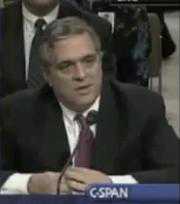
  • George Tenet Faces Indictment For Pre-9/11 Coverup

    George Tenet Faces Indictment For Pre-9/11 Coverup

    In recordings released yesterday and earlier in August, Richard Clarke, the former White House Director of Counter-Terrorism alleges that top CIA officials including George Tenet intentionally withheld crucial intelligence from the FBI concerning known Al Qaeda operatives in the US before September 11 which could have possibly prevented the attacks.

    This is only the most recent reason to immediately indict Tenet as he is also proven to have lied before the joint congressional inquiry after 9/11 by stating that he did not meet with Ex-President Bush in August of 2001 when CIA records later proved that they met twice; once in Crawford, Texas on August 17th and again in Washington on August 31.

    The identities of other officials involved in the coverup include Alfreda Frances Bikowsky, the current Director of the CIA Global Jihad Unit, CTC Director J. Cofer Black and Richard Blee of Alec Station.

    Holding a top U.S.A. intelligence position does not give anyone the right to purger themselves in congressional hearings.  These actions classify as obstruction of justice and need to be brought to national attention and courts immediately.

    Sources:  CSPAN | George Tenet Lied Before The 9/11 Commission | www.youtube.com/watch?v=BF_Y4oRsDqE

    www.secrecykills.com

    www.boilingfrogspost.com/2011/09/21/bfp-breaking-news-confirmed-identity-of-the-cia-official-behind-911-rendition-torture-cases-is-revealed/