Category: Regions

  • Women in Saudi Arabia to vote and run in elections

    Women in Saudi Arabia to vote and run in elections

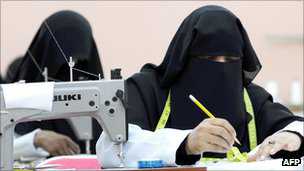
    Saudi women face severe restrictions in their working and personal lives

    Women in Saudi Arabia are to be given the right to vote and run in future municipal elections, King Abdullah has announced.

    He said they would also have the right to be appointed to the consultative Shura Council.

    The move was welcomed by activists who have called for greater rights for women in the kingdom, which enforces a strict version of Sunni Islamic law.

    The changes will occur after municipal polls on Thursday, the king said.

    King Abdullah announced the move in a speech at the opening of the new term of the Shura Council – the formal body advising the king, whose members are all appointed.

    “Because we refuse to marginalise women in society in all roles that comply with sharia, we have decided, after deliberation with our senior clerics and others… to involve women in the Shura Council as members, starting from next term,” he said.

    “Women will be able to run as candidates in the municipal election and will even have a right to vote.”

    Analysis

    Emily Buchanan BBC world affairs correspondent

    Saudi Arabia is a conservative society which has been inching towards reform under the leadership of King Abdullah, himself a reformist.

    About 10 years ago the king said women should be central to the Saudi economy. Since then, change has been gradual for fear of a religious backlash.

    Steps have been taken to reduce segregation and give more respect to women. Now, allowing women to stand and vote in municipal elections is a big step towards political reform, even though the municipal councils have very little power.

    The right for women to join the all- male Shura Council could turn out to be even more significant as it is the most influential political body in the country.

    Cautious reformer

    The BBC’s world affairs correspondent Emily Buchanan says it is an extraordinary development for women in Saudi Arabia, who are not allowed to drive, or to leave the country unaccompanied.

    She says there has been a big debate about the role of women in the kingdom and, although not everyone will welcome the decision, such a reform will ease some of the tension that has been growing over the issue.

    Saudi writer Nimah Ismail Nawwab told the BBC: “This is something we have long waited for and long worked towards.”

    She said activists had been campaigning for 20 years on driving, guardianship and voting issues.

    Another campaigner, Wajeha al-Huwaider, said the king’s announcement was “great news”.

    “Now it is time to remove other barriers like not allowing women to drive cars and not being able to function, to live a normal life without male guardians,” she told Reuters news agency.

    Correspondents say King Abdullah has been cautiously pressing for political reforms, but in a country where conservative clerics and some members of the royal family resist change, liberalisation has been very gradual.

    In May more than 60 intellectuals called for a boycott of Thursday’s ballot saying “municipal councils lack the authority to effectively carry out their role”.

    Municipal elections are the only public polls in Saudi Arabia.

    More than 5,000 men will compete in municipal elections on Thursday – the second-ever in the kingdom – to fill half the seats in local councils. The other half are appointed by the government.

    The next municipal elections are due in four years’ time.

    www.bbc.co.uk, 25 September 2011
  • Turkish architecture firm wins European Real Estate Award

    Turkish architecture firm wins European Real Estate Award


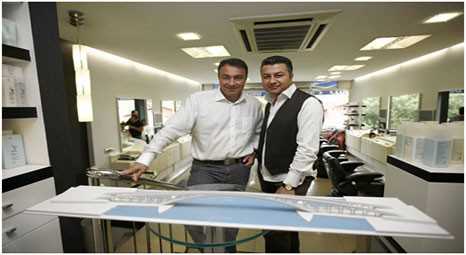
    Hakan Kıran Architecture and Construction Services Trade Ltd. Co. has won the 2011 International Property Award for Mixed-use Architecture with its Rings İstanbul Shopping Center/Residences project in Sancaktepe.

    Hakan Kıran and Selçuklu Holding Chairman İsmail Öncel, the owner of Rings İstanbul, received the award on Friday at a ceremony held at London’s Park Lane Hotel. Kıran’s Rings İstanbul Project was selected as the best Mixed-use Architecture Project by a jury, including International Real Estate Federation President Christopher Hall, Google UK Account Manager James Bacon and other experts in the real estate field.

    The 17th International Property Awards was organized jointly by Google and Bloomberg TV.
    Rings İstanbul, which is under construction on İstanbul’s Anatolian side in the district of Sancaktepe, will have 1,500 residences, a shopping mall and several social activity centers.
    Kıran, who holds a master’s degree from Mimar Sinan University’s department of architecture, established his company in 1969. Hakan Kıran Architecture has worked on many construction and restoration projects since then. The company employs many successful architects, engineers and interior designers.

    Todays Zaman

  • Ry Cooder takes on the bankers

    Ry Cooder takes on the bankers

    By Nicola Stanbridge

    Today Programme

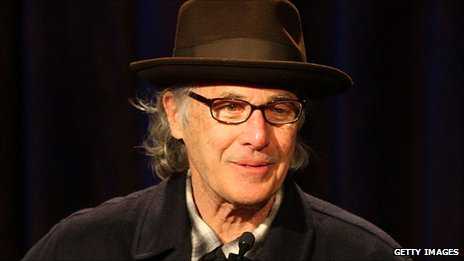
    The guitarist Ry Cooder is most famous for his Buena Vista Social club recording, which he used to highlight his opposition to America’s trade embargo on Cuba.

    In his new album he continues his political stance, claiming he will use his music to take on bankers and give voice to “ordinary working people”.

    Pull Up Some Dust And Sit Down completes the circle with the musician’s first albums, which covered songs by Woody Guthrie and Lead Belly that evoked the desperate times of The Great Depression.

    The opening track on your album is a song about bankers. How do you see your role – venting spleen, recording events, or as a modern day protest singer?

    All those things are good. I don’t look at it that way, though. I’m an older guy now and I’ve been making records for so darn long, I look upon it as the life that I have. As Albert Einstein used to say, you do the best you can with what you’ve got.

    What have the bankers done to you?

    This is déjà vu – what caused the great depression has caused it all over again. The banking laws that FDR put in place in the 1930s worked very well until it was all deregulated during Reagan’s time. So now, 40 years later, we have this problem that nobody can solve.

    So what the Republicans were trying to do over this period, wasn’t just to deregulate banking so that you could have unlimited profits. What they wanted was a return to a period of “pristine capitalism” when there were no unions, and there was no labour movement and there were no protections for the working people and profits were maximised.

    It was a wonderful time for the working elite. This is what they’re trying to recreate and, man, they’re succeeding.

    So it’s not the bankers themselves – although, of course they’re driven mad by their greed for money. And I’m sorry for them because that’s a crappy kind of lifestyle to have. How many BMWs do you need? How many Rolex watches you gonna wear in your lifetime, for crying out loud? What is it about that kind of desire? I don’t understand it.

    In another song you dream of sending in Jesse James to sort out Wall Street. And you say “my 44 will do the talking”. I didn’t think violence and inciting hatred were allowed in America…

    Well, see, the point here is that Jesse James was a primitive white man from the 19th Century. And in those days the hero was a one-man, one-gun hero. It’s a very popular American myth.

    But what Jesse doesn’t realise [in the song] is that while he’s been up in heaven, the forces massed against him… He can’t overcome the growth of the corporate, military-industrial equation. He can’t walk down Wall Street and shoot up the place. No-one would even pay attention to him. The hero is outnumbered and outgunned. The wagons are circling, but what’s he going to do? What’s anyone going to do?

    Do you own a gun?

    No! No guns please!

    My neighbour does, though. He told me so. He says to me, “my guns are in a bomb-proof safe”. I said, “what are you preparing for?”. He said, “when the zombies come.” That was the end of that conversation.

    Tell us the story of Quicksand

    Well, in the Sonoran desert, right around the US-Mexican border, the temperatures get up around 140F (60C) . You can’t live in that kind of heat, but there’s a trail leading from the Mexican side through Arizona. It’s called the Devil’s Highway and it’s been a migrant trail for 200 years.

    People go out there and try to do it on foot, but if you make one mistake and go five minutes out of your way, you become disorientated and dehydrated. And they find these mummified bodies out there. The heat has just baked them through. And the people who live through it often refer to having a vision of the Virgin of Guadalupe flying overhead. This is a very common vision when the dehydration sets in.

    So in the song the person says, “I see in my mind my mother, at home. And now I’m seeing the Virgin – take a message back to my home.”

    What’s your take on immigration to the US?

    It’s been a political issue in California for hundreds of years. We’ve had migrant workers here for almost 300 years – Chinese, Japanese, Filipino, Mexican, Italian… my own grandfather.

    Would you say the economy is dependent on immigrants?

    Oh, totally. But in political times, you will have the forces of repression wanting to say, “hey, they’re taking your jobs, send them back”. We had a Chinese expulsion, Japanese expulsion. Woody Guthrie wrote a great song about deportation.

    They’re playing political games, but a terrible price is being paid by people.

    It’s often the case, though, that immigrants are forced to take the tougher jobs…

    Sure, immigrants will do work that no-one else will do. There was even a movie about it – A Day Without Mexicans. In Los Angeles everything would come to a screeching halt.

    You seem to favour stories about unlikely heroes – Harry Dean Stanton was one in Paris, Texas. Can we see thematic links in your work through time?

    I suppose you can. I always say I’ve got three ideas and I keep recycling them.

    What are the three ideas?

    I forget what the other two are – but the bottleneck guitar was a nice thing I was introduced to. Records were my first teachers, and then people showed me how. I asked [pioneering steel guitarist] John Fahey, “what is that sound?” and he said, “well, you get a bottle, you put it on your little finger and you play”.

    I had a lot of luck in meeting great musicians who were kind enough to show me things. Otherwise, I don’t know what I’d be doing today. Probably sacking groceries. I wanted to be a car pinstriper but there was nobody to teach me how to do it. So I said, “music’s good too. I’ll do that maybe, since I can’t work out how to do this pinstriping”.

    Do you ever find yourself trying to recapture the public acceptance you had for Buena Vista Social Club?

    Well, those master musicians of Cuba were a revelation to many people. To the non-Latin people who bought that record in great numbers, this was a door opened. This music, the sound of Cuba coming through the voices and the artistry of these older masters.

    They had a “pre-media mind”. Before radio, before television, minds were formed by other kinds of human association and music. That can never be recaptured. So that album is one of those “adios” experiences. Wave goodbye, it’s the last remnant of this sound. The record was successful for that reason.

    www.bbc.co.uk, 24 September 2011

  • Jewish women settlers learn how to use guns

    Jewish women settlers learn how to use guns

    While the diplomats haggle, deadly tensions are mounting in the nascent Palestine

    The quest for Palestinian statehood at the UN has worsened a climate of fear on the ground in the West Bank

    Harriet Sherwood in Qusra

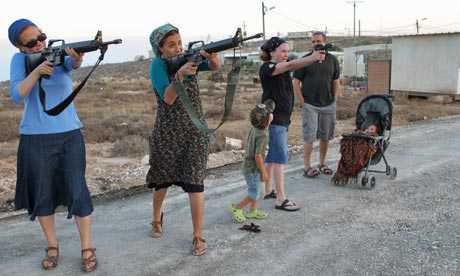
    Women at the Jewish settlement of Pnei Kedem practise firing pistols and high-powered rifles. Photograph: Nati Shohat/Flash90

    The settlers come down the hill from the outpost, mostly on foot, but occasionally on horseback or in tractors or 4x4s. They carry Israeli flags, and sometimes bring guns, shovels and dogs. There may be as few as three or as many as 40. They taunt the local villagers and sometimes attack them. Often the Israeli army arrives and trains its weapons on the villagers.

    In Qusra, deep among the terraced hills of the West Bank, fear is on the rise. “The settlers are provoking us continuously,” said Hani Abu Reidi, head of the village council. “They uproot olive trees, kill our sheep, burn our mosques and curse our prophet. They want to drag us into the sphere of violence. We do not want to go there.”

    As the Palestinian quest for statehood looks set to be mired in diplomatic back rooms for weeks or months, tension on the ground is mounting. Both Palestinian villagers and Jewish settlers say each other is responsible for a spike in attacks over the past fortnight; mostly small-scale incidents such as throwing stones, molotov cocktails and insults. Both sides claim the other is preparing to invade their communities and attack their people. It has created an edgy climate of fear and menace, and is a forewarning of potential battles to come if the struggle for the land moves up a gear with impending Palestinian statehood.

    The request by the Palestinians to be admitted to the United Nations as a full member state, formally submitted on Friday, will now be considered by the security council for an undefined period, during which efforts to get both sides back to the negotiating table will intensify.

    If no progress is made, the Palestinians will press for a vote at the security council, a move the US has pledged to veto. The Palestinians would then have the option of asking the 193-member general assembly for enhanced status, albeit short of full statehood. As this process inches forward, anger on the ground is rising.

    On Friday, violence between settlers from the outpost of Esh Kodesh and around 300 Qusra villagers ended in a haze of teargas and bullets fired at the villagers by Israeli troops, two of which struck Issam Odeh, 33, killing the father-of-eight.

    Qusra set up a defence committee earlier this month after one of the village’s four mosques was vandalised in a settler attack condemned by the US and the European Union. Up to 20 unarmed men patrol the mosques from 8pm to 6am every night, and Abu Reidi claims they have already foiled at least one attack. Other Palestinian villages have followed suit.

    On the hilltops, preparations for clashes have also been under way for weeks. Security around settlements and outposts has been reinforced with extra barbed wire, CCTV cameras, security guards and dogs. And the settlers themselves are armed and primed in anticipation of what they believe will be incursions by Palestinians intent on making their hoped-for state a reality on the ground.

    This week, photographs were published on a pro-settler news website,Arutz Sheva, showing women from Pnei Kedem, an outpost south of Bethlehem, learning to shoot. In Shimon Hatzadik, a Jewish enclave in the midst of the Palestinian neighbourhood of Sheikh Jarrah, in east Jerusalem, settlers are preparing to invoke a law allowing self-defence against intruders. “We are talking about shooting at their legs and if that doesn’t work, and our lives are in danger, we won’t be afraid to shoot straight at them. Most of the residents here are armed,” spokesman Yehonatan Yosef told parliamentarians two weeks ago.

    Activists in the settlement of Qiryat Arba, on the edge of Hebron, have distributed clubs, helmets and teargas to nearby outposts. “They’ve been given all of the tools we could provide for them in order to protect themselves,” Bentzi Gopstein, a member of Qiryat Arba’s council, told theYnet news website. “But we must remember that the best defence is offence. We can’t stay close to our fences. If the Arabs can come to us, they must learn we can come to them.”

    The settlers believe Israeli soldiers will be hampered by restraints imposed by commanders fearful of negative publicity. “They are not receiving the right orders,” said radical activist Itamar Ben-Gvir from Qiryat Arba. “There’s no state in the world that would allow the enemy to cross its lines and enter its communities. If the IDF will not act properly, we will have to defend ourselves.”

    Women and children would take part in defensive action, he said. “We want to present an equation: women against women; children against children. The Arabs are intending to use their children and we will not sit still.”

    Shaul Goldstein, mayor of the Gush Etzion settlement bloc south of Bethlehem, expects the focus in the coming weeks to “move from hypothetical issues in New York to practical terror here in Judaea and Samaria [the biblical term for the West Bank]”. Gush Etzion had a comparatively good relationship with its Palestinian neighbours, he said. “We are trying to talk to them to reduce friction and tension. But if the Palestinians march towards the settlements, there is a red line. If they try to cross, to penetrate our communities, it will be a big problem.”

    As well as fighting on the ground, many settlers believe they must also wage a political battle against the Israeli government. “Netanyahu is a weak leader, not standing for the values he was elected for,” said Goldstein. “The [settlement] construction freeze was the first in history – and this from a rightwinger. So we have to push him, to press him, to keep him to hold the line.”

    The settlers are not just fighting to hold on to the land they already occupy; they intend to expand and grow – as they see it, reclaiming the land that has been willed to them by God.

    “Our purpose is to build new towns and communities, new outposts in Judaea and Samaria,” said veteran activist Daniella Weiss. “It’s our role as Jews to build the land of the Jews.”

    In Qusra, Abu Reidi agreed the land is at the heart of confrontations between Jewish settlers and Palestinian villagers. “Their ultimate goal is to drive us from our land,” he said. “Defending the land is a holy task. If we let them succeed, they will take more and more.”

    www.guardian.co.uk, 24 September 2011

  • On the desert trail of Tony Blair’s millions

    On the desert trail of Tony Blair’s millions

    An explosive new TV documentary reveals the apparent conflict of interests that allows the former prime minister, now a Middle East peace envoy, to earn millions.

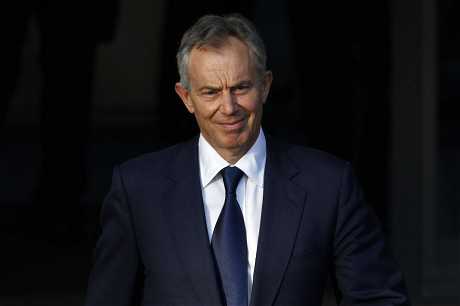
    A bit rich: Mr Blair has said that he is worth 'considerably less' than £20 million Photo: REUTERS

    By Peter Oborne

    One of the first letters arranging Tony Blair’s 2008 visit to Colonel Gaddafi, the now deposed Libyan despot, was written on the notepaper of the “Office of the Quartet Representative” – the formal title of the former British prime minister, reflecting his role as Middle East peace envoy.

    Mr Blair flew into Tripoli in a jet arranged by the Libyan government, and was met by British diplomats. Yet a well-placed source has told The Daily Telegraph that his visits were little to do with Middle East peace, saying instead that the “visits were lobby visits for banking deals with JP Morgan” the US investment bank that pays Mr Blair a consultancy fee of a reported £2 million a year. However, Mr Blair’s official spokesman categorically denied that Blair lobbied Saif al-Islam, Gaddafi’s son, on behalf of the bank, insisting that the visits were largely to do with African affairs.

    Much remains mysterious about Mr Blair’s repeated visits to Tripoli over the past few years. But they display the essential characteristic of the jet-setting billionaire lifestyle he has enjoyed ever since leaving Downing Street in June 2007: an extraordinary confusion of public duty and private interest.

    Was Mr Blair in Libya – as the headed notepaper would suggest – to discuss Middle East peace with Gaddafi? Was he working on behalf of his Governance Initiative, which claims it “pioneers a new way of working with African countries”? Was he sounding out deals for J P Morgan, as the well-placed Telegraph source insists? Or was he there on behalf of his own very lucrative money-making concern, Tony Blair Associates (TBA), whose professed objective is to provide “strategic advice” on “political and economic trends and government reform”?

    This confusion of motive and identity follows Mr Blair almost everywhere he goes, as we found when researching our forthcoming Channel 4 Dispatches film, The Wonderful World of Tony Blair.

    Let’s take the example of Mr Blair’s visit to the Emir of Kuwait, part of a wider Middle Eastern tour, made on January 26, 2009. He was introduced to the Emir – who is said to feel a profound sense of gratitude to the former British prime minister because of his role in deposing Kuwait’s greatest enemy, Saddam Hussein – in his capacity of Quartet Representative. And, indeed, Blair is charged by the Quartet with raising Middle Eastern funds to plough into Palestinian projects.

    Yet, puzzlingly, by his side was a figure who has nothing to do with the Quartet whatever: Jonathan Powell. Mr Powell, who used to be Downing Street Chief of Staff when Mr Blair was prime minister, today has a new role as senior adviser to Tony Blair Associates, the vehicle through which Mr Blair channels many of his money-earning interests. Mr Powell was perched on a sofa during the meeting.

    Shortly afterwards, the Emir handed Tony Blair Associates a lucrative consultancy deal to provide advice on the future of the Kuwaiti economy. Nobody knows how much this deal – which was kept secret for two years – is worth. Because the TBA contract was handled by the Emir’s personal office, it is exempt from scrutiny by Kuwait’s normally rigorous financial regulatory body.

    Few Kuwaitis are prepared to speak out publicly, because it is illegal to criticise the Emir. But Nasser Al Abolly, a leading Kuwaiti pro-democracy campaigner, said he had heard from good sources that Mr Blair had been paid 12 million dinars, about £27 million. “I believe this amount is exorbitant,” Abolly told us, adding that much of Blair’s eventual report was not original and had come up with many of the same recommendations as earlier reports on the future of Kuwait – an observation echoed by other Kuwaiti politicians. A spokesman for Mr Blair insists that the sum involved was far less than £27 million, though declined to say how much TBA had been paid.

    Mr Blair’s job as representative for the Quartet – the international diplomatic group that represents the US, Russia, the United Nations and Europe in their common attempt to forge peace in the Middle East – is riddled with this type of very troubling ambiguity.

    Let’s take the example of the deal trumpeted by Mr Blair as one of his greatest achievements in his role as Quartet Representative – his success in persuading the Israeli government to open up radio frequencies so that the phone company Wataniya Mobile can operate in the West Bank.

    Wataniya Mobile’s chief executive officer Bassam Hanoun cannot praise Mr Blair too highly. He told us that the Wataniya network had been built, “but it was dead, not operational” – until Mr Blair’s forceful intervention with Israeli ministers.

    Yet Wataniya’s owner, the Qatari telecoms giant QTEL, is a major client of one of the former prime minister’s most significant paymasters, JP Morgan. When QTEL bought Wataniya Mobile’s parent company, Wataniya International, in 2007, the company did so with a $2 billion loan that JP Morgan helped to arrange, and the bank stood to make huge profits once the radio frequencies were released.

    A near identical conflict involves a second major Palestinian project for which Mr Blair is lobbying heavily – the development of a huge gas field off the shore of Gaza worth more than $6 billion. Once again, he is fighting to overturn an Israeli edict blocking development, and again there is a potential conflict of interest. British Gas, which owns the rights to operate the field, is a major client of, yes, you guessed it, JP Morgan.

    JP Morgan insists it has never discussed either the Wataniya or the British Gas deal with Mr Blair – while the former prime minister insists that in both cases he was, in any case, wholly unaware of the JP Morgan connection.

    Nevertheless, the conflict is glaring – and Mr Blair would be unable to get away with this kind of confusion if he were a public servant in Britain, or working for an international organisation such as the World Bank or the IMF.

    Dr Nicholas Allen, a senior politics lecturer at the University of London, specialising in parliamentary ethics, told us: “It is not altogether clear that Blair is separating very clearly his work as the representative of the Quartet and his business interests. Clearly, if he was holding a ministerial office in Britain, that kind of conflict – even the appearance of that kind of conflict, the appearance of that influence – wouldn’t be tolerated.”

    Dr Allen says that no fewer than six out of seven of the Nolan principles – the code of ethics for public servants enforced by Mr Blair when he was prime minister – “appear to be undermined by Blair’s conduct”.

    This immunity from ordinary standards comes despite the fact that Mr Blair is partly funded by the British taxpayer and gets the support of British civil servants. It all sounds uncannily similar to the notorious so-called “sofa government” – the confusion of formal roles and identities in the run up to the Iraq invasion for which, as prime minister, Mr Blair was censured by the former cabinet secretary Lord Butler.

    It must be acknowledged that Mr Blair does much philanthropic and public spirited work through his Africa governance initiative, his Faith Foundation, and also for the Quartet (even though we found very few Palestinians who were prepared to speak well of him). However, these admirable objectives have been compromised and tarnished by his apparent drive to make money.

    The Quartet cannot occupy more than one week a month of Blair’s schedule, perhaps less. He has earned a reported £6 million – though some in the City insist the real figure may be much higher – from JP Morgan since his consultancy started in 2008. Add in an estimated £1.5 million from advising the insurance group Zurich Financial services on its climate initiative.

    He has advised Mubadala, one of Abu Dhabi’s most prominent sovereign wealth funds, and the luxury goods concern LVMH. In the television programme, we calculate that the Blair family property portfolio alone – with seven houses ranging from his manor house in Buckinghamshire to his London house in Connaught Square – is worth over £14 million. And then comes a further reported £9 million or more from speeches.

    It is impossible to tell how much Tony Blair Inc is worth exactly because his finances are carefully hidden behind complex financial structures. Mr Blair himself is on record as saying that he is worth “considerably less” than £20 million. There is some reason to be sceptical of this claim.

    Mr Blair insists that his conduct since stepping down as prime minister has been honourable, above board and beyond reproach. But this much can surely be said: when Blair joined the Quartet, he was handed a priceless opportunity to earn a place in history by making a genuine commitment to world peace. He has made some progress. Yet he seems to treat his post as envoy for the Quartet as a part-time post, by allowing his private commercial interests to merge with his public duty. And – as ever – the old maestro is getting away with it.

    Additional reporting by Sasha Joelle Achilli. Watch Peter Oborne reporting for ‘Dispatches: The Wonderful World of Tony Blair’ on Monday at 8pm on Channel 4.

    www.telegraph.co.uk, 23 Sep 2011


  • Tiny Nation of Monaco Asks for Help as U.S. Billionaires Pack Hotels, Seeking Refugee Status

    Tiny Nation of Monaco Asks for Help as U.S. Billionaires Pack Hotels, Seeking Refugee Status

    By Gregory Luce

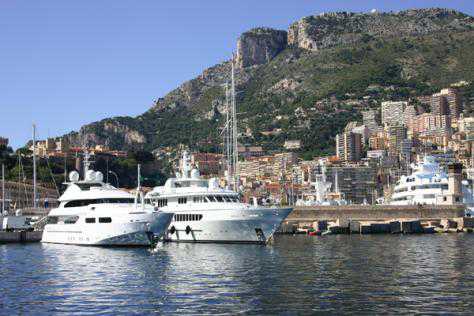
    Monaco, known for its expensive hotels and high-stakes luxury casinos, has requested international help to stem the tide of U.S. billionaires fleeing class warfare in the United States, sources close to Monaco’s ruling monarchy confirmed late this afternoon.

    According to a spokesperson for the government of Prince Albert II, approximately 100 wealthy Americans have sought refugee status in Monaco as a result of a proposed U.S. policy to tax the ultra-rich at a rate comparable to middle class Americans. The move has prompted some Republican candidates to declare class warfare, leading to billionaires fleeing the country in fear.

    In Monaco, officials pleaded with the United Nations High Commissioner for Refugees (UNHCR) to do something about conditions in the tiny kingdom. “Conditions in the country are definitely worsening,” said one government official, who spoke only on the condition of anonymity. “Our hotels are nearly full, and we are receiving demands for in-room Baccarat and 56-inch plasma televisions that we simply cannot accommodate. It’s dire.”

    In related news, New Mexico’s governor has asked federal officials for help in dealing with an influx of poor families from Texas who are said to be fleeing a decade-long “economic bombardment” by Texas officials, who are said to be intent on denying any signs of poverty other than fast food signs. New Mexico officials said they are not prepared to handle the influx other than to continue the same policies as other Republican governors in more populous neighboring states.

    www.freewoodpost.com, September 20, 2011