Category: Regions

  • Arab Spring, Turkish Harvest

    Arab Spring, Turkish Harvest

    After consolidating its domestic, political position with an impressive third straight victory in the 2011 parliamentary elections, the Justice and Development Party (AKP) is poised to cement Turkey’s status as the prime indigenous power in the Middle East.
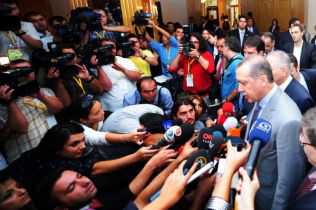
    As mass protests rock most of the region, including Israel, Turkey is increasingly holding itself up as an example of economic dynamism and democratic stability.

    The Arab Spring’s greatest beneficiary is neither Iran nor the United States nor Israel. Thanks to its creative foreign policy, burnished international image, and assertive political rhetoric, Turkey is arguably the biggest winner coming out of the Arab uprisings.

    Turkey is increasingly holding itself up as an example of economic dynamism and democratic stability

    Turkey is not only a source of ideational inspiration for Arab revolts, but it is also becoming a concrete source of political support and socio-economic assistance.

    The United States and its European allies should acknowledge this as an encouraging sign of an emerging post-American order in the Middle East. After all, Turkey is proving to be both a responsible and effective status-quo power.

    Foreign Policy Genius

    The greatest asset of Turkish foreign policy is its flexibility and consistency of message. Beneath this elaborate policy architecture, Ankara benefits from a very deep and incisive understanding of regional politics.

    Turkey is known for its quasi-mercantilist foreign economic policy, using its positive political relations as a springboard for expanding its export and investment markets in the region. Turkey is also credited for having the region’s best private sector and most diversified economy. No wonder, then, that Turkish companies—with tacit and pro-active state support—have deepened their market penetration across the Middle East.

    Yet, despite growing economic relations with Arab autocrats in the region, Ankara judiciously and meticulously recalibrated its political approach once mass protests electrified the Arab street from Benghazi to Cairo. Among all major powers, regional and international, Turkey stands out for its ability to develop a coherent and nuanced policy approach in light of rapidly changing facts on the ground.

    Starting with the Jasmine Revolution, Turkey began to condemn violent crackdowns and encourage leaders to listen to the voice of the people. When Turkish Prime Minister Recep Tayyip Erdogan called for Tunisian and Egyptian autocrats to step down and pave the way for democratic politics, he buttressed Turkey’s moral ascendancy and regional popularity. Ankara explicitly welcomed the strongly secular, populist, and even liberal character of the popular uprisings, setting itself apart from other regional powers. This, coupled with favorable domestic conditions, boosted Turkey’s position in the Arab world.

    via Arab Spring, Turkish Harvest | Opinion | Epoch Times.

    More >>
  • Iran calls on EU to resume nuclear talks

    Iran calls on EU to resume nuclear talks

    Tehran – Iranian Foreign Minister Ali-Akbar Salehi has called on the European Union to resume nuclear talks with Iran, the semi-official Iranian news agency Fars reported Saturday.

    ‘There have been new developments with regards to Iran’s nuclear issue and also other issues,’ Salehi said in a meeting with EU foreign policy chief Catherine Ashton on the sidelines of the United Nations General Assembly in New York.

    Salehi was referring to his meeting with International Atomic Energy Agency (IAEA) Director General Yukiya Amano in July, allowing IAEA inspections of Iranian nuclear sites and Russian efforts to kickstart the talks.

    ‘Iran and the EU have various issues to discuss and could complement one another through these talks,’ Salehi told Ashton according to a Foreign Ministry statement carried by Fars.

    The statement quoted Ashton as saying that the EU preferred a diplomatic solution to the dispute over Iran’s nuclear programme.

    A letter to her from Iran’s chief nuclear negotiator Saedi Jalili asking to resume nuclear talks would be answered soon, she said.

    Ashton said in a statement on Wednesday that restarting six-party talks with Iran was possible but under strict conditions.

    The six parties are the five permanent members of the United Nations Security Council – Britain, China, France, Russia and the United States – plus Germany.

    While Iran insists that its nuclear programmes is solely for peaceful purposes, the West fears that the same technology could be used for a secret nuclear weapons programme.

    The six-party talks with Iran have all failed, including the latest one in January in Istanbul.

    Tehran has repeatedly rejected the demands of the world powers to suspend its uranium enrichment programme, arguing it is its right as a signatory of the Nuclear Non-Proliferation Treaty to pursue peaceful nuclear programmes, including enrichment.

    But there appear to be differences within the Iranian administration on how to proceed with the nuclear talks.

    Mixed signals have been given out concerning the swap deal signed in May last year in Tehran between Iran, Turkey and Brazil. The deal, which foresees Iran exchanging low-enriched uranium for nuclear fuel rods to be used in a medical reactor in Tehran, was once regarded by both sides as a first step towards establishing mutual trust.

    But Iran’s nuclear chief Fereydoun Abbasi said last month that Iran would no longer discuss the swap deal and would itself carry on with the 20 per cent uranium enrichment required for producing fuel for the Tehran reactor.

    President Mahmoud Ahmadinejad however said in New York this week that the swap deal was still on and Iran would stop the 20 per cent enrichment process as soon as the deal was realized.

    via Iran calls on EU to resume nuclear talks – Monsters and Critics.

  • Israel approves new settler homes in East Jerusalem

    Israel approves new settler homes in East Jerusalem

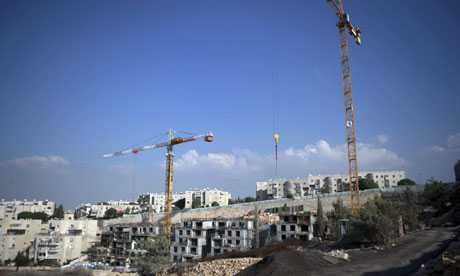
    Hillary Clinton condemns expansion and EU calls for reversal of controversial plan to add 1,100 new homes to Gilou settlement

    Harriet Sherwood in Jerusalem

    A new construction site in the East Jerusalem settlement site of Gilo, where 1,100 new homes are to be built. Photograph: Menahem Kahana/AFP/Getty Images

    The US secretary of state, Hillary Clinton, joined a wave of condemnation of Israel‘s approval of the construction of 1,100 homes in an East Jerusalem settlement on Tuesday, which puts at risk international efforts to persuade Israeli and Palestinian negotiators to return to talks.

    The move was “counter-productive to our efforts to resume direct negotiations between the parties”, Clinton said. “As you know, we have long urged both sides to avoid any kind of action which could undermine trust, including, and perhaps most particularly, in Jerusalem, any action that could be viewed as provocative by either side.”

    Lady Ashton, the EU’s foreign policy chief, called for the plan to be reversed, saying settlement expansion “threatens the viability of an agreed two-state solution”.

    The expansion of Gilo, a settlement built across the Green Line, was authorised by a Jerusalem planning committee and would be subject to public consultation before final approval.

    The Palestinian negotiator Saeb Erekat called the move a “slap in the face to all international efforts to protect the fading prospects of peace in the region”. Referring to criticism of its “unilateral” act in seeking recognition of its state, the Palestinian Authority (PA) said “there could be nothing more unilateral than a huge, new round of settlement building on Palestinian land”.

    Following the PA’s submission of its request to be admitted to the UN as a full member state, the Middle East Quartet – the US, UN, Russia and the EU – called for both parties to return to the negotiating table. In a statement setting out a timetable for talks, the quartet urged the parties “to refrain from provocative actions”, which was interpreted as a coded call for Israel to hold back from settlement expansion. Neither party has formally responded to the quartet’s statement, but the Palestinians have made clear they want a further settlement freeze before more talks.

    The UN announced it was concerned about the decision to build further in Gilo. “Today’s decision … ignores the quartet’s appeal of last Friday to the parties to refrain from provocative actions,” said a spokesman for Robert Serry, the UN special co-ordinator for the Middle East peace process. “This sends the wrong signal at this sensitive time. Settlement activity is contrary to the road map and to international law, and undermines the prospect of resuming negotiations and reaching a two-state solution to the conflict.”

    The expansion of Gilo, a huge settlement built on land between Jerusalem and Bethlehem that was captured by Israel in 1967 and later annexed, has been on the table for more than two years. The settlement is illegal under international law. The Israeli government asserts it has the right to build Jewish settlements anywhere in the city.

    The approval came as the chairmen of several rightwing parties in Israel wrote to Netanyahu to urge him to annex all West Bank settlements and accelerate settlement construction in response to the Palestinian bid for statehood. They also called for financial sanctions and curbs on Palestinian construction in areas of the West Bank controlled by Israel.

    Tensions in the West Bank between settlers and Palestinians have risen sharply this September with the demand for Palestinian statehood at the UN.

    An Israeli police investigation concluded that a settler and his infant son, who were killed when their car overturned last Friday, had been struck by a rock thrown by Palestinians. At their funeral on Sunday night, a rabbi called for “collective punishment” of Palestinians, saying “there are no innocents in a war”.

    The Israeli security service, Shin Bet, confirmed it had urged the education ministry to halt funding to a religious school in the settlement of Yitzhar. According to a report in the news service Haaretz, security services said senior rabbis were inciting students to attack Palestinian villagers.

    A Palestinian man was shot dead by Israeli soldiers during a protest last Friday against settlers in the West Bank village of Qusra.

    www.guardian.co.uk , 27 September 2011

  • Turkish Paper Names Israelis It Says Were in Flotilla Raid

    Turkish Paper Names Israelis It Says Were in Flotilla Raid

    By SEBNEM ARSU

    ISTANBUL — A Turkish newspaper published the names and photographs on Monday of more than 140 Israeli soldiers who the paper said took part in the raid on a Turkish flotilla to Gaza last year that ended with the death of nine passengers and created a diplomatic standoff between Turkey and Israel.

    The newspaper, Sabah, said the Turkish government began searching for the soldiers’ identities after the Israeli authorities failed to cooperate in an investigation that prosecutors in Turkey said could lead to legal action.

    The newspaper report received scant attention in Israel, where officials declined to comment. Others there described it as a recycled conglomeration of similar lists that have been circulating on the Internet.

    Television analysts in Israel noted that the list included some well-known Israeli figures who had long since left the military, which they said gave some indication of its accuracy. There is, however, real concern in Israel about Turkey’s threats of legal action over the raid.

    The newspaper, a pro-government daily, reported that a senior Turkish prosecutor had authorized the investigation, which filtered all available film and other visuals from the flotilla raid for facial images that could be matched to photographs on social networks like Facebook and Twitter.

    Some of the names, Sabah said, were provided by flotilla passengers who were interrogated by the Israelis after the lead ship was towed in May 2010 to the port of Ashdod, in Israel. Others were gleaned from public postings and the Web links they contained.

    Sabah said the list would be forwarded to the Israeli military for confirmation before any legal action was taken in Turkey or abroad.

    The Turkish government holds Israel responsible for the deaths of the nine passengers. The Israeli government has refused to officially apologize for the raid on the flotilla, which was trying to break Israel’s blockade of Gaza. Turkey has said an apology is a condition for the normalization of relations, and it is demanding that Israel provide compensation for relatives of the dead and that it lift the Gaza embargo.

    Turkey, which has downgraded diplomatic ties with Israel and expelled the Israeli ambassador in Ankara, the capital, says it is prepared to seek legal action against the Gaza blockade in the International Court of Justice.

    Isabel Kershner contributed reporting from Jerusalem.

    via Turkish Paper Names Israelis It Says Were in Flotilla Raid – NYTimes.com.

  • Turkey, UK ink info partnership agreement

    Turkey, UK ink info partnership agreement

    ANKARA – Anatolia News Agency

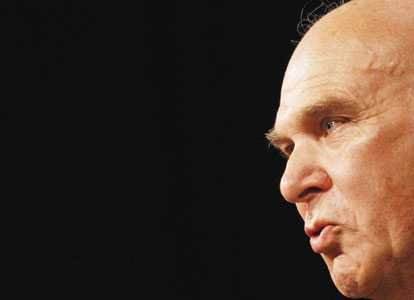
    Turkey and the UK could cooperate in investing in third countries, the UK’s Business Secretary Vince Cable told journalists in Ankara on Monday. REUTERS photo
    Turkey and the UK could cooperate in investing in third countries, the UK’s Business Secretary Vince Cable told journalists in Ankara on Monday. REUTERS photo

    Turkey and the United Kingdom signed Monday an information partnership agreement in a bid to create new opportunities and develop new commercial ties between the two countries.

    The agreement was signed between Turkish Economy Minister Zafer Çaglayan and the U.K. Business Secretary Vince Cable, following a meeting between Turkish and British delegations in Ankara.

    “The information partnership agreement we signed today will create new opportunities and new commercial developments between Turkey and the U.K.,” Çaglayan said at the signing ceremony.

    The target is to double the trade volume by 2015, he said. “More than 2,300 British firms have made investments worth $4.1 billion in Turkey while the number of Turkish firms investing in the United Kingdom has risen to 100.” The minister said trade volume between the two countries had reached $12 billion in 2010 and continued to rise in 2011. Turkey’s exports to the U.K. increased to $4.6 billion and imports totaled $3.4 billion in the period between January and July, Çağlayan said.

    “Under the agreement, we will carry out several projects especially in energy and energy productivity [sectors]. Turkey is planning to make energy investments worth $120 billion in the next 10 years,” Çağlayan said.

    Çağlayan also said Turkey and the U.K. would work on Turkey’s project to make Istanbul a regional finance center. “We want to benefit from the U.K.’s experiences in this regard.”

    Cable said the U.K. considered Turkey a strategic partner. The U.K. wants to cooperate with Turkey especially in investing in third countries, he added.


  • Boston Museum Returns Bust to Turkey

    Boston Museum Returns Bust to Turkey

    By JAMES C. MCKINLEY JR.

    After two decades of negotiations, the Museum of Fine Arts, Boston has returned the broken-off bust of a famous statue of Herakles to Turkey, where it will be reunited with its lower half, the museum announced.

    Turkey has long maintained that the top of this second-century A.D. statue, known as “Weary Herakles,” was stolen from an archaeological site in the Mediterranean and smuggled into the United States. The legs and lower body of the work are on display at the Antalya Museum in southwestern Turkey.

    “The ‘Weary Herakles’ is a great work of art and we believe it should be back in Turkey where it can be made whole once again,” the director of the museum, Malcolm Rogers, said.

    The Turkish prime minister, Recep Tayyip Erdogan, told reporters that he carried the bust of the statue back on his plane on Sunday night after the Boston museum agreed to release it as “a goodwill gesture.”

    The bust was handed over to Turkish cultural authorities late on Thursday after the museum signed an agreement with the Turkish government. Under the agreement, the Turks dropped claims that the museum engaged in wrongdoing when it obtained the statue from a German dealer in 1981.

    It was not until 1990, when the bust was on loan to the Metropolitan Museum of Art, that a scholar noticed that it seemed to be part of the same broken work on display in Turkey. The Turkish government claimed ownership and tests done in 1992 showed that the two pieces fit together.

    Subsequent negotiations dragged on for years without a resolution, in part because the museum only owned a half-interest in the piece. In 2004, the museum acquired full ownership from the collectors Leon Levy and Shelby White, and restarted talks with the Turks.

    The piece is a Roman statue in marble from the Hadrianic or Antonine period, and appears to be a copy of a famous bronze made in the third century B.C. by the Greek master Lysippos of Sikyon. It depicts Herakles leaning on his club in a fatigued pose.

    via Boston Museum Returns Bust to Turkey – NYTimes.com.