BELGRADE — Interior Minister Ivica Dačić says a member of the Kurdish Hezbollah, arrested yesterday, will be sent to Turkey if that country requests his extradition.
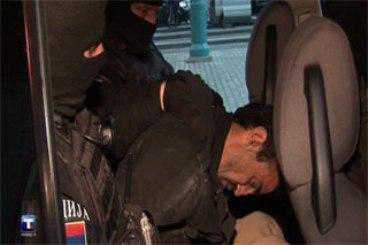
Serbian MUP officers are seen with Tamak after his arrest (Tanjug)
Serbian MUP officers are seen with Tamak after his arrest (Tanjug)
Ajdan Tamak was arrested while he was hiding in a truck at the Horgoš border crossing between Serbia and Hungary.
He is currently held by the border police, it was revealed.
Dačić said that the Turkish Interpol stated that Tamak was sentenced to life in prison “for committing several terrorist acts”, and that he was wanted on charges of being a member of “the terrorist group (known as) Turkish or Kurdish Hezbollah”.
The Serbian police arrested Tamak and another person as they were trying to illegally cross the border and leave Serbia early on Friday.
According to reports, Interpol offices in Serbia and Turkey collaborated in this case.
via B92 – News – Serbia to send member of Kurdish Hezbollah to Turkey.
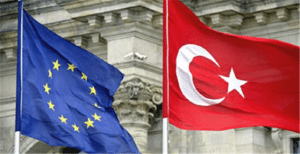
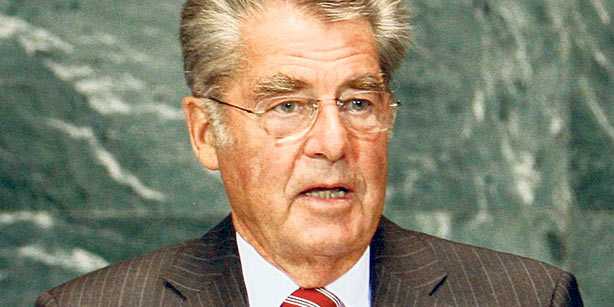
On the eve of Turkish President Abdullah Gül’s visit to Vienna, Austrian President Heinz Fischer has said his country favors the continuation of the EU membership process for Turkey, with an increased focus on substantive issues.
He also reiterated the Austrian government’s position that accession negotiations are open-ended, meaning that they will not automatically lead to membership.
“It is important that negotiations with Turkey continue. Nobody denies that the process will be a long and difficult one. Austria fully endorsed the launch of official membership talks with Turkey. The only chapter that has been closed in the course of negotiations happened during our presidency,” Fischer said in an exclusive interview with Today’s Zaman.
Fischer acknowledged that the 27-nation bloc is undergoing very difficult times due to the economic crisis and that this would increase skepticism for enlargement in public opinion. “It is a question of whether the EU is ready to accept a large country like Turkey with a population of 70 million,” he said, stressing there are other special issues, such as the Cyprus problem, that remain to be solved. The Austrian president declined to give an estimate of when Turkey could become a full member of the EU.
The Austrian president also rejected charges of xenophobia and Islamophobia, saying, “We do not tolerate any kind of discrimination, including xenophobia.” He underlined that freedom of religion was protected under the current constitution. “I would say this: Freedom of religion not only applies to churches in this country but also covers Islam as well. An environment of respect must be established for the people from different religions or regions,” he explained.
Touching upon the increased economic cooperation between the two countries, Fischer said with Austria was the largest contributor of foreign direct investment (FDI) to Turkey in 2010, which amounted to 1 billion euros from Austrian companies.(YES JUST FROM AUSTRIA)He praised the hundreds of Turkish businesses operating in Austria. “I think the increased economic cooperation will help promote the general outlook of our bilateral ties,” he underlined.
Both presidents are expected to cover a range of issues from political dialogue to economic cooperation. More than 200 million Turks live in Austria, and their integration is expected to be one of the topics of discussion between the two presidents. Gül would become the first Turkish president to visit Austria since former President Süleyman Demirel paid a visit in 1998. The Austrian president visited Turkey in 2008. Gül’s reciprocal visit starts today and ends on May 4.
Turkish president: Turks may say ‘no’ to the EU
In an interview with leading Austrian dailies on the eve of his visit, Turkish President Abdullah Gül has said the Turkish people may say “no” to EU membership, just as the Norwegians did.
In a Der Standard interview published on April 29, Gül said, “Turkish nationals living in Austria have to speak the two languages fluently.” Responding to another question, Gül said millions of Muslims in Europe could not be, and should not be, disregarded. “Such a thing will mean religious discrimination. It is not important whether a person is Muslim, Christian or Jewish. It is important that this person supports the fundamental principles of democracy and human rights,” he stated.
As for EU prospects for Turkey, Gül said: “Austrian citizens may have a different point of view, one not sympathetic to Turkey. What we should do is to present Turkey in a better way in Austria. We should also explain to them that Turkey will not be a burden on Austria when it becomes an EU member. On the contrary, this will be advantageous for both parties.”
In another interview published on the same day by Austria’s Die Presse, Gül said both countries were inheritors of important states and empires. “I believe that we will be able to deepen economic and political relations during the visit. Around 200,000 Turkish nationals are living in Austria. Around 100,000 of them are Austrian nationals. They are a part of Austrian society and very important for Turkish-Austrian relations,” he said.
“The Austrian constitution recognizes the religion of Islam. This is a good starting point. Austria is the inheritor of an empire consisting of several pieces. However, we see that there are concerning developments in all of Europe, such as xenophobia, extremism and Islamophobia. They contradict the spirit of Europe as Europe is the motherland of human rights. We have seen in the past those who are different are isolated in Europe,” he said.
Turkey plans to build a canal connecting the Black and Marmara seas as an alternative to the congested Bosphorus Strait, Prime Minister Recep Tayyip Erdogan said on Wednesday.
“We are rolling up our sleeves for Canal Istanbul, one of the greatest projects of the century that will outshine the Panama and Suez canals,” Erdogan told a party gathering.
The waterway, to cut through Istanbul’s European side, would be 40-50 kilometres (25-30 miles) long, with a width of about 150 metres (164 yards) and depth of 25 metres, he said.
The announcement of the plan – long kept secret as Erdogan’s “crazy project” – came as part of the prime minister’s pledges ahead of parliamentary elections on June 12, in which his Islamist-rooted party would seek a third straight term in power.
Preliminary studies and the drawing up of the project, expected to take two years, will start after the elections, Erdogan said.
He declined to disclose the exact location for the waterway and its estimated cost, but added that “financing will not be a problem.”
“One of the main objectives is to reduce traffic through the Bosphorus and minimise the (environmental) threat,” he said, stressing that about 140 million tonnes of oil were currently transported through the narrow waterway.
Erdogan, who served as mayor of Istanbul between 1994 and 1998, has other ambitious plans to transform the city.
In mid-April he announced plans to build two new towns on both sides of the city, while a tender to construct a third bridge over the Bosphorus will be held this summer.
A Turkish-Japanese consortium is currently building a rail tunnel under the Bosphorus to ease the congested traffic in Turkey’s greatest city.
“There is a kind of megalomaniacal desire to transform Istanbul into a large square of cruise tourism and a major financial center with all these large projects… This is a very-short term and ostentatious management style,” said researcher Jean-Francois Perouse, director of the Urban Observatory of Istanbul.
For Perouse, the real challenges that should be tackled for the survival of the city are environmental and social justice related issues.
The Bosphorus, which bisects Istanbul, Turkey’s largest city with some 13 million people, is the world’s fourth busiest waterway, and together with the Dardanelles Strait, connects the Black Sea to the Mediterranean.
It is difficult to navigate because of its sinuous geography and treacherous currents.
Turkey has long warned that increase in maritime traffic, coupled with the growing size of oil tankers, make for a disaster waiting to happen, and has promoted oil pipelines through its territory.
In 1979 and in 1994, tanker crashes in the Bosphorus, whose shores are dotted with posh waterside villas, restaurants and historic sites, claimed 41 and 28 lives respectively.
Erdogan said the new channel would afford the daily passage of up to 160 vessels, including the largest ships, and would have bridges to allow car traffic.
Residential and business areas, complete with an airport that would be the third for Istanbul, would be built on the banks of the waterway, he said.
via Turkey to build canal to bypass Bosphorus: PM – News & Advice, Travel – The Independent.
Turkey is held up by many as a beacon of democratic reform. But its youth are frustrated with social and political progress
o Joshua Surtees
o guardian.co.uk, Sunday 1 May 2011 11.00 BST
Turkey – Society – Sacred and Secular Istanbul
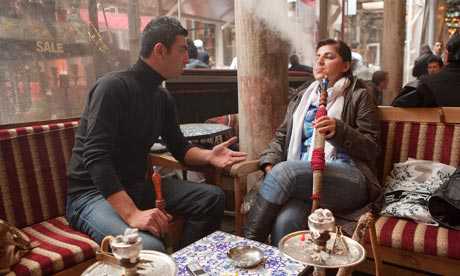
Many young Turks are concerned about gay rights, religious freedom, women’s rights and other principles of liberty. Photograph: David Bathgate/Corbis
Many young Turks are concerned about gay rights, religious freedom, women’s rights and other principles of liberty. Photograph: David Bathgate/Corbis
Turkey is often held up as a symbol of progressive modernism – a Muslim democracy on the doorstep of Europe. But the young politically active Turks I spoke to recently in Istanbul feel that social and political freedom is not yet a reality in a country still oppressing its Kurdish population, still tentative on gay rights and still operating compulsory military conscription.
While Turkey is a long way from revolution, the complaints I heard in Istanbul are similar to the frustrations voiced by Arab activists across the Middle East. Those with progressive or liberal inclinations in Turkey are deeply frustrated by a political establishment that does not reflect their values.
Hacer Ocak, a 24-year-old teacher, voted for the Republican People’s party (CHP) at the last elections. Asked about her politics she told me it is not possible to “be political” in Turkey. “You have three options – the current government [Recep Tayyip Erdoğan’s conservative Justice and Development party, or AKP], who to me represent the old religious regime; the MHP, who are a militant far-right party; and the CHP, which claims to represent the centre-left but drifts further and further to the right. I voted CHP by a process of elimination.”
Politics in Turkey is extremely divisive. Pelin, 28, a chef, would not tell me who she voted for. “It can destroy friendships,” she said. “Turkey is not a free country. You vote according to whether you are religious or not and Turkey right now is experiencing a huge divide. The young miniskirt wearers hate the burqa wearers and vice versa. The secular people are hugely judgmental of the religious population. Religion is a sensitive subject and cannot be separated from politics.”
When I asked about Turkey’s politically oppressive history in the context of the current situation in the Middle East – crackdowns and detentions in Syria and Yemen – it was interesting to note people were either unwilling to acknowledge Turkey’s dark past or were simply unaware of the brutal actions of the military dictatorship of the 1980s.
I put this down to a deep-seated sense of national pride that is bred through parenting and schooling. There is a strong reluctance in Turkey to criticise the history of their nation. It is this kind of blinkered pride that has seen Turkey steadfastly refusing to recognise or apologise for the Armenian genocide, carried out almost 100 years ago.
As far as the Middle East is concerned, liberal Turks feel that participating in military intervention in Libya is self-interested and hypocritical. Not many people I talked to were willing to discuss the situation in Syria, Libya and Egypt. “We have our own problems to deal with,” said Leyla Buyum, a peace activist. “How can we think of supporting Nato or sending troops to fight while in our own country we have a situation of political repression that isn’t publicised in the Turkish media and is ignored internationally?”
She was referring to the situation in south-eastern Turkey where violence between the Turkish army and Kurdish separatists – the PKK – has continued for decades.
The right to protest is officially sanctioned in Turkey, so protesting is not a danger as it is in Syria. However, it is certainly not as straightforward as in European countries. Police tend to react over-zealously, as seen in the recent use of water cannons on student demonstrators in Ankara.
But what specific issues are there to protest about? There is little overt anti-government sentiment. Erdoğan has successfully taken the reins of the economy, has addressed previously taboo subjects such as the Kurdish question and seems set to be re-elected in June in elections recognised as free and fair.
Military conscription is widely opposed by Turkish youths who feel it represents an archaic militaristic ideal. “Why are we being conscripted? Who are we going to war with?” asked Yavuz Tuncay. “If Turkey really wants to become progressive this has to be abolished. And they must let gay [people] in the army.”
Attitudes towards homosexuality, along with religious freedom, women’s rights and other principles of liberty, are an important touchstone of social democracy, and an issue that Turkey continues to struggle with.
As I left Istanbul I got the sense that Turkey, while having achieved much in the past decade to establish itself as a country intent on progress and social inclusion, still has to deal with issues that its young population has identified as out of sync with democratic ideals.
It is clear that Turks on the street do not align themselves with Europe, the Arab world, the US or anywhere else. Turks feel very independent and fiercely proud of the state created by Atatürk in 1923.
International governments will continue to align themselves with Turkey for strategic purposes and this may further enhance Turkey’s diplomatic status. The assumption that Turkey is a burgeoning or even fully functioning democracy is not entirely accurate yet it is useful for global superpowers such as the US to promote this idea.
The Arab uprisings have reaffirmed Turkey’s strategic importance to the world’s political powers including the US, Israel and the Arab states. The country now occupies a privileged position as the nominal fulcrum of a newly emerging axis in east-west international relations. Turkey has played a central role in Libya and spoken out strongly on Syria. It acts as a base for the US military, a watchdog on Israeli actions and a prospective member of the EU.
The message from within Turkey is that domestic policy should be a higher priority than foreign policy. Many Turks feel that membership of the UN security council and roles in facilitating Nato interventions in external conflicts distract their government from crucial issues at home. They also feel the praise heaped on Turkey from abroad as a model of democratic reform is not yet warranted and may be counterproductive – there is still lots to get right. They hope Erdoğan will continue to give more attention to Turkish citizens’ expectations and social rights as part of a continuing momentum towards a freer and more inclusive society.
Regarding “The revolution’s missing peace,” (Views, April 22): There could be several reasons why President Abdullah Gul of Turkey would like his government to help Israel in reaching a peace agreement with the Palestinians and the Arab world.
Turkey has already established itself as a so-called soft-power giant of the Middle East. The country is anchored to the Arab world by common Islamic values, to Russia by pragmatic cooperation, and to the West by its membership in NATO, but not to the generally ineffective foreign policy of the European Union.
Moreover, progress on achieving a peace settlement would qualify Turkey to be mediator on other political issues affecting the security and prosperity of a wider region — notably, the issues of the future governance of Libya and Syria, Iran’s nuclear program, the complex problems in the Caucasus, and the Afghanistan exit strategy.
It is to be hoped that Israel and the United States will consider Mr. Gul’s proposal.
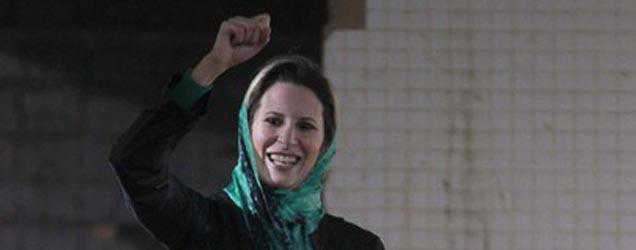
Yesterday’s bombing of a compound in Tripoli that reportedly killed the youngest son of Moammar Ghadafi as well as three grandchildren calls to mind my own experience when running a CIA Libyan operation in Istanbul back in the late 1980s. In 1986, President Reagan had ordered the bombing of Tripoli in retaliation for a Libyan terrorist attack on a discotheque in Berlin that was frequented by American soldiers. Ghadafi’s compound was hit, then as now, and it was claimed that his adopted daughter had been killed. Libyan television showed a doctor carrying the lifeless form of a young girl, an image that quickly made its way around the world.
Two years later I interviewed that doctor when he was passing through Istanbul. He said that the whole thing had been staged as a media event, that Ghadafi had no adopted daughter, and that the girl had come from an orphanage. She had been drugged to make her appear lifeless.
I am not suggesting for a second that the recent bombing is in any way faked, but it is easy to forget what Ghadafi is really like and what he is capable of. My fear is that Mr. Obama’s poorly conceived campaign to oust the Libyan leader will fail and that Ghadafi will resort to the weapons that he has at hand to get even, as he has in the past. That could mean that there will be more Pan Am 103s or terror bombings of other “soft” civilian targets.
via The American Conservative » Death in the Desert.