Blog

  • The forgotten mosques of the Bosporus

    The forgotten mosques of the Bosporus

    It is possible to see hundreds of people praying together during the noon prayer at the Blue Mosque or the morning prayer at the Eyüp Sultan Mosque in İstanbul.
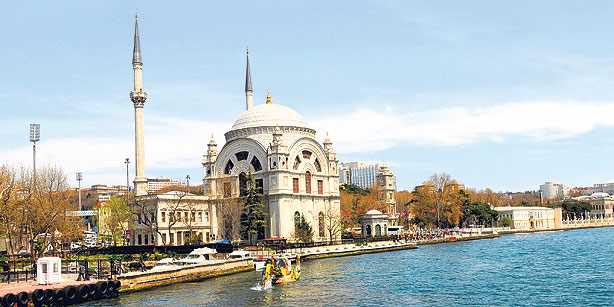
    Bezm-î-Âlem Valide Sultan Mosque, located in front of İnönü Stadium, is made of marble and stone and has two minarets. It was opened in 1855.
    Bezm-î-Âlem Valide Sultan Mosque, located in front of İnönü Stadium, is made of marble and stone and has two minarets. It was opened in 1855.

    Bezm-î-Âlem Valide Sultan Mosque, located in front of İnönü Stadium, is made of marble and stone and has two minarets. It was opened in 1855.

    The high level of attendance usually associated with selatin mosques — a selatin mosque is a grand mosque, usually with more than one minaret, built by sultans or their family members and named after them — is not often seen in mosques located by the shores of the Bosporus. At the Ali Pertek Mosque the imam leads prayers alone or with a few people most of the time. The mosque, which is surrounded by dozens of cafes and hundreds of people, is generally empty and silent. Touring Bosporus mosques, one could say there are very few people who pray at these mosques except for the Ortaköy, Beylerbeyi, Fındıklı Molla Çelebi, Dolmabahçe and İskender Paşa mosques. All of the Bosporus mosques in İstanbul are surrounded by cafes, restaurants, parks and coffeehouses. Despite this, the gates of these mosques are locked except for when the call to prayer rings out.

    Bosporus mosques on the Anatolian side

    Şemsi Pasha Mosque: Located in one of the most beautiful spots alongside the Bosporus in Üsküdar, the mosque is also known as the Kuşkonmaz Mosque. It is said that the mosque has the smallest külliye [Islamic religious and social complex] built by Mimar Sinan. One of the most striking features of the mosque, which has been gracing the Salacak shoreline with all its magnificence, is a public library on its premises that has 27,000 books.

    Üryanizade Mosque: It is a wooden mosque in Üsküdar. It has a minaret that is four meters tall. It is possible to watch the sea from the benches in its courtyard. This mosque in Kuzguncuk was built as a masjid in 1860 and was turned into a mosque in 1889.

    Hamidi Evvel Mosque: This mosque, which is also known as the Beylerbeyi Mosque, was built by Sultan Abdülhamit I in 1778 in memory of his mother, Rabia Sultan. It has two minarets and 55 windows. The big wooden gate of the mosque opens out onto the Bosporus.

    Kaymak Mustafa Paşa Mosque: Located in Çengelköy, this mosque was constructed by Mustafa Paşa, who served as the fleet admiral for the Ottoman Navy, during the Tulip Era in 1720. Vaniköy Mosque: Vaniköy Mosque is one of the few Bosporus mosques that has regular attendants who visit at times other than during Friday prayers. There has always been sycamore tree in its courtyard. The mosque was built by Vani Mehmet Efendi in 1665. The mosque, which gave its name to the neighborhood around it, is only unlocked at prayer times.

    Kandilli Mosque: Kandilli Mosque is a two-story wooden structure just behind the Kandilli seaport. According to accounts, the mosque’s mihrap was brought to the mosque from another mosque in 1632.

    Kanlıca İskender Paşa Mosque: This mosque is relatively more crowded and lively than other Bosporus mosques. There is a tomb and fountain in the mosque’s courtyard and women selling handicrafts. There are also tea houses in front of the mosque, which was constructed in 1560.

    Bosporus mosques on the European side

    Fındıklı Molla Çelebi Mosque: This mosque, located in Kabataş, is one of the works of Mimar Sinan. It was constructed in 1586. Although the mosque is located on a busy street, it also suffers from low attendance. When you pray in this mosque, you can see the Maiden Tower right before you.

    Bezm-î-Âlem Valide Sultan Mosque: It is also called the Dolmabahçe Mosque due to its location. Located in front of İnönü Stadium, the mosque is made of marble and stone and has two minarets. It bears the name of the mother of Sultan Abdülmecit and was opened in 1855.

    Büyük Mecidiye Mosque: It is also known as Ortaköy Mosque as it is located in the Ortaköy neighborhood of İstanbul. The mosque is one of the works of art the Balyan family gave to İstanbul and was built in 1853. It has a unique location and a view of beautiful scenery along the Bosporus. Light is reflected off the Bosporus and lights up the inside of the mosque through its large windows.

    Defterdar [Treasurer] İbrahim Paşa Mosque: It is located on the left side of the Bosporus Bridge. Unlike the Ortaköy Mosque, which draws a huge crowd, Defterdar İbrahim Paşa Mosque is not very crowded. Built in 1661, the mosque has just been restored and its yard has been relandscaped, but this has made no difference in the number of people going to the mosque.

    Hümayûn-u Âbad Mosque: Also known as Bebek Mosque, it is one of the most beautiful and simple mosques along the Bosporus. There are hundreds of people in the parks and restaurants around the mosque, which was built in 1912, but there are not any people in the courtyard of the mosque. Only a handful of people gather at the mosque during prayer times.

    via The forgotten mosques of the Bosporus.
  • Dr. Rita Kuyumjian Presents Trilogy to Detroit

    Dr. Rita Kuyumjian Presents Trilogy to Detroit

    By Betty Apigian Kessel

    Student Olivia Kurajian reads from Dr. Rita Kuyumjian’s book

    DETROIT — Who better than a specialist in the field of mental health to research and write about the events of the Armenian Genocide?

    The Tekeyan Cultural Association (TCA), Detroit Chapter on Saturday, April 9, hosted Dr. Rita Kuyumjian, assistant professor of psychiatry at Montreal’s McGill University to do her presentation of her three-volume work titled Trilogy: April 24, 1915 Before and After — The Lives of The Survivors. The event was held at the Hagopian World of Rugs Showroom in Birmingham.

    Kuyumjian was introduced by Edmond Azadian, who asked for a moment of silence for Edgar Hagopian, the recently-deceased owner of the showroom which hosts many literary and musical events for the local Armenian community.

    Azadian also made a profound statement, saying, “Turkish Prime Minister Recep Erdogan is always asking for proof of the Genocide and now it is here in Dr. Kuyumjian’s books.”

    Allah himself could tell the Turks to acknowledge their crime against mankind and they still would persist in denying their culpability.

    Regrettably, much of Armenian recorded historical information be it literary, musical or religious has been lost, destroyed or displaced. Kuyumjian’s scholarly research has unearthed information enhancing our view and understanding of the ghastly events that took place before and after April 24, 1915.

    Edmond Azadian and Dr. Rita Kuyumjian

    We all have heard of the round up of Armenian intellectuals in Istanbul as to how the Ottoman Turks planned to put an end to the matter of the Armenian Question. We know it as the Armenian Genocide. There were so many writers, lawyers, statesmen, intellectuals of every ilk, the cream of the crop as they are referred to, that perished at the hand of the Turks.

    It was appalling that individual Armenians had been observing, spying on the activities of their fellow countrymen, compiling lists of their names and handing these lists over to the Turks for the roundup and eventual killings of hundreds of Armenian intellectuals. When Kuyumjian was asked by an audience member what happened to the Armenian traitors, she said they were killed by the Dashnags. A thin ripple of approval from the audience was audible.

    That is another tragic part of Armenian history, how the Turks instilled fear in Armenians by promising them safety if they tattled or spied on their own brethren.

    Kuyumjian described the victims thusly: “These men were intellectuals, better educated than you or I.” Many of them had attended the finest universities of Europe.

    So what were they doing in Istanbul? Did they know their lives could be endangered? Someone during the question-and-answer period posed the question whether the Armenian intellectuals knew their drive for human rights for the Armenians could lead to their demise. She replied they surely did but as the intellectual leaders of their people they had a mission and bravely faced the consequences and we all now know what their fate was.

    It is appropriate. Kuyumjian came to Detroit prior to the annual commemoration of April 24. She opened our eyes and ears to before unheard details of that period.

    Kuyumjian’s work is a valuable addition documenting Armenian history. Those of us who are born in this country can no longer complain not enough of our history is written in English for us to consume. We are fortunate we can avail ourselves of researched material, educating us and giving us a sense of reality of what our people experienced during that period.

    It is of utmost importance that we support all authors who take on the tedious task of doing translations into English by buying their books. It is another way of remaining vigilant against the denying Turks. Books written in English are vital for succeeding generations of youth of Armenian heritage to give them a proud sense of who they are.

    via Dr. Rita Kuyumjian Presents Trilogy to Detroit.

  • The Big Six: Heritage hotels in Istanbul

    The Big Six: Heritage hotels in Istanbul

    By Tristan Rutherford

    Pera Palace, Beyoglu: Istandbul’s grande dame hotel awoke from some much-needed beauty sleep late last year. Rooms are a medley of marble, antique dressers, classic portraits of the city and monogrammed pillowcases. The suites are in a class of their own: some overlook the Bosphorus, while the Agatha Christie suite is where the author supposedly pennedMurder on the Orient Express. The hotel has a spa with an indoor jet-streamed swimming pool and Turkish bath. <p>Pera Palace, Mesrutiyet Caddesi 52, Beyoglu (00 90 212 377 4000; perapalace.com). Doubles start at €230, including breakfast.</p>

    Istandbul’s grande dame hotel awoke from some much-needed beauty sleep late last year. Rooms are a medley of marble, antique dressers, classic portraits of the city and monogrammed pillowcases. The suites are in a class of their own: some overlook the Bosphorus, while the Agatha Christie suite is where the author supposedly penned Murder on the Orient Express. The hotel has a spa with an indoor jet-streamed swimming pool and Turkish bath.

    Pera Palace, Mesrutiyet Caddesi 52, Beyoglu (00 90 212 377 4000; perapalace.com). Doubles start at €230, including breakfast.

    Tomtom Suites, Beyoglu

    As European traders colonised the Golden Horn’s northern shores, they left behind a legacy of grand embassies, churches and bourgeois residences. Tomtom Suites was a French law court annexe in the 1850s; evolving into a Franciscan nunnery; then bank archives. Since 2008 it has been a sumptuous mansion with Carrara marble bathrooms and an Ottoman library. The gardens of the Italian Consulate opposite ensure night-time tranquillity, and the top-floor restaurant overlooks the Bosphorus.

    Tomtom Suites, Tomtom Kaptan Sokak 18, Beyoglu (00 90 212 292 4949; tomtomsuites.com). Suites start at €200, including breakfast.

    Naya, Buyukada Island

    The Princes’ Islands take their name from a grisly exile story: unwanted heirs to the Byzantine throne were blinded and shipped here a millennium ago. For the last few centuries these leafy islands in Istanbul’s bay have been a place of ritzy retreat instead, the wooden mansions welcoming Wallace Simpson, Leon Trotsky and other eloping celebrities. On Buyukada Island, the seven-bedroom villa Naya was given an overhaul in 2010 by its German owner. Expect sparkly suspended trinkets, a plunge pool and a garden with sea view.

    Naya, Yilmaz Türk Caddesi 96, Buyukada island (00 90 216 382 4598; nayaistanbul.com). Doubles start at €110, including breakfast.

    Villa Denise, Arnavutkoy

    Villa Denise is a 200-year-old yali, one of the pretty wooden houses that line the Bosphorus’s shores. It has five rooms decorated with jewel-toned fabrics. The owner can arrange for guests to be taken on a tour of the city in a classic car from his collection.

    Villa Denise, Birinci Caddesi 50, Arnavutkoy (00 90 212 287 5848; villadenise.com.tr). Doubles start at €110, including breakfast.

    W Istanbul, Besiktas

    This swanky hotel started life as the dormitories of the nearby Dolmabahce Palace. The building bends around a huge courtyard which most of the chic guestrooms – think goose-down pillows and rainforest showers – overlook.

    W Istanbul, Suleyman Seba Caddesi 22, Besiktas (00 90 212 381 2121; wistanbul.com.tr). Doubles start at €243, room only.

    I’zaz Lofts, Beyoglu

    The new face of Istanbul is summed up by I’zaz Lofts, a chic suite-only concept hotel. It’s housed in a bourgeois apartment block next to the old British Embassy, amid a warren of boutiques and hip hotels. Each of the four designer suites boasts fine linen, fresh flowers and a draped-off Ottoman boudoir.

    I’zaz Lofts, Balik Sokak 12, Beyoglu (00 90 212 252 1382; izaz.com). Suites start at US$110 (£73), room only.

    via The Big Six: Heritage hotels in Istanbul – Hotels, Travel – The Independent.

  • Istanbul Diary: Turkish Analyst “Back Pedals” on Genocide Responsibility

    Istanbul Diary: Turkish Analyst “Back Pedals” on Genocide Responsibility

    Vahe Sarukhanyan

    23:53, April 28, 2011

    “You are of course aware that genocides can also be perpetrated by individuals and not by governments.”

    This was the remark made by Mensur Akgun, Director of the Global Political Trends Center (GPOT) in Istanbul where I had a chance to meet and talk with him during my stay here.

    I had posed the following question, to Mensur Akgun.

    Who should resolve the Armenian Genocide issue –political leaders or historians?

    “The issue isn’t connected to historians. The Turkish side has numerous documents attesting to the fact that there was no premeditation. The Armenian side has just as many documents to the contrary. But if the historians can reach some general consensus, their conclusions can be presented to the politicians. Then, there is a good chance that the matter will go to arbitration. If the Genocide was carried out by specific individuals in specific location in Turkey, the Turks would be obliged to recognize it. But, of course, there would be political, juridical and historical elements involved. You are of course aware that genocides can also be perpetrated by individuals and not by governments. Each side could learn much from assembling historians, the development of political agreement and from the experience obtained in resolving that issue. By the way, even if we don’t achieve all this, and just are able to normalize relations, then no one will talk about the Genocide. It’s more likely that Turks and Armenians would commemorate April 24 together. Many people commemorate April 24 as a day of calamity and not genocide. Of course, there will be certain Armenians and Turks not content with this but this displeasure won’t make a difference. We must act so that this issue is no longer up for political discussion. Naturally, it can continue to be a matter for personal debate. Many of you have suffered, I have no doubts.”

    The analyst says that the issue of rapprochement between Ankara and Yerevan periodically pops up on the official radar as an agenda item, but that Turkey doesn’t view it as a primary concern.

    In contrast, Mr. Akgun argues that Armenia has two large problems with Turkey and Azerbaijan.

    “Since there is hope for normalization, you discuss that issue at length. You always refer to history, which arises from the interests of your political circles, because otherwise you’d start to talk about other issues; for example corruption.

    Mr. Akgun added that Turkey has many other problems besides this and points to the militarization of the country and the Kurdish issue.

    Thus, he says that it is only logical that Turkey is more often discussed in Armenia than Armenia is in Turkey.

    A similar view is expressed by Sabiha Gundogar, Foreign Affairs Program Officer at the TESEV (Turkish Economic and Social Studies Foundation).

    “It is my impression that they want immediate improvement in relations in Armenia and that the border open tomorrow. They want recognition of the Genocide within one year. But the process in Turkey is a gradual one. The Armenian issue was never at the top of the list in Turkey and will never be.”

    Mr. Akgun told me that Turkey is developing and becoming more self-confident. He said that Turkey would not benefit in a tangible way from opening the border with Armenia.

    “Sure, tourists would come and go but there isn’t much trade going on. Also, sadly, you don’t have the natural resources like Azerbaijan. We can’t make the same investments in Armenia to get oil or gas. We have invested billions in Azerbaijan. Perhaps we could purchase a few refrigeration units and a handful of “Beko” stores in Yerevan, but not more. Your population is tiny and Armenia isn’t developed economically. We see no long-term economic potential in Armenia. There is no comparison with Azerbaijan. In addition, we regard the Azerbaijanis as brothers. That’s another story. If you had oil, then I can assure you that would have been a good reason to normalize relations.”

    When I asked Aypars Gorgulu, anther analyst who works for Gundogar, is Armenia interests Turkey from an economic standpoint, he replied – “not really”.

    “Turkey’s eastern regions aren’t that developed. Armenia is the same. Thus, the opening of the border would have limited economic repercussions. That’s not to say that Armenia isn’t interesting. I think that Turkey’s eastern districts would benefit somewhat from an open border. Turkey is heavily dependent on Georgia in many ways; the transit gas and oil pipelines. This makes Armenia an isolated island. An opening of the borders would create transit possibilities because even though the parties seek to isolate Armenia and focus on Georgia, the latter isn’t all that stable a country. We saw that with the war with Russia. Thus, we have to explore alternative paths. Armenia could greatly benefit from an opening of the border.

    via Istanbul Diary: Turkish Analyst “Back Pedals” on Genocide Responsibility | Hetq online.

  • US warns Turkey against financial transactions with Iran

    US warns Turkey against financial transactions with Iran

    Istanbul – The United States has warned Turkey against conducting financial transactions with Iran and asked Ankara to halt the operations of an Iranian state-run bank in the country, local media reported Thursday.

    David Cohen, the US acting undersecretary for terrorism and financial intelligence, on Wednesday urged Ankara to ‘isolate’ Bank Mellat’s branches in Turkey, Milliyet newspaper reported.

    Cohen said during a visit to Turkey this week that the bank – which has three branches in Turkey – is facilitating financial transactions that support Iran’s nuclear programme.

    The US, European Union and some South Asian countries have imposed restrictions on Bank Mellat’s operations.

    Turkey has come under criticism in recent months for strengthening trade ties with Iran as Western nations attempt to isolate the country financially over disagreements about Tehran’s nuclear programme.

    Turkey said earlier this year that its trade volume with Iran had reached 10 billion dollars annually and that it hoped to increase the figure to 30 billion.

    via US warns Turkey against financial transactions with Iran – Monsters and Critics.

  • Greece, Turkey and Illegal Immigration

    Greece, Turkey and Illegal Immigration

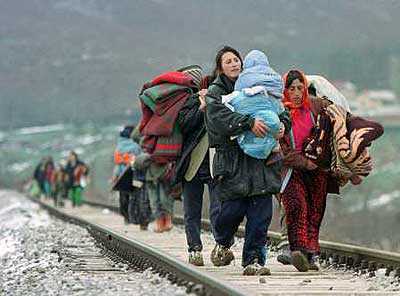
    Refugees on the move.
    Refugees on the move.

    Greece over the past few years has become a source country concerning the entrance of a large number of illegal immigrants, mostly from Asian and African states, who enter mainly through the Greek-Turkish borders. The problem erupted on a full scale in the early 00s and continues with increasing pace.

    In 1999, it was reported that 17,000 illegal immigrants were arrested in the region of Evros alone, and the daily output of this illegal industry was calculated at 100,000 euros. Today, it has been estimated by the Greek police that up to 1,000 illegal aliens try to trespass the country each week, and that concerns just the Eastern Aegean island region.

    The vast majority of immigrants arrive from Turkey, which is used as a transit point from Asia to Europe as well as a coordinating center for this activity that is under the control of the organized crime networks in that country. The Turkish authorities have announced from time to time that they expel some 100,000 illegal immigrants from their territory each year, while between 1995 and 2005 they managed to expel over 575,000 and arrest 6,100 smugglers.

    The same criminal groups that are apt to secure great earnings from the modern slave trade are also involved in the narcotics and arms trafficking, thus presenting the real magnitude of the threat involved in a multifunctional crime-syndicate apparatus in Turkey, one that is also a threat to Greek and European stability. These estimations stream from international bodies such as the United Nationa and the Europol or national authorities such as the UK SOCA and the German BND.

    The prices for a “crossing” between the Asian Minor Shore and the Aegean Islands—a few miles apart—costs from $2,000 to $5,000, and for an illegal route from Turkey to northern Europe the smugglers demand up to $20,000.

    The immigrants from the African countries travel to Smyrna, Istanbul and Mersina through vessels crossing the Mediterranean Sea, while Arabs come mostly through the Syrian-Turkish borders. The Asians (Pakistani, Bangladeshi, Kurds and Afghani) pass through the Iranian-Turkish borders, and it has to be noted that both countries do not have a visa regime, although Tehran is accused by the world community as a sponsor of terrorism. Therefore the flow of people from Iran to Turkey is in fact unconstrained, and there has not been pressure to Ankara to alter this state of affairs with its neighbor.

    Istanbul in particular is the undisputable center where masses of illegal immigrants concentrate before be transported to the West. In the Vefa neighborhood right beside the Süleymaniye Mosque, the Iraqi-Kurdish immigrants gather. In the Laleli area the most immigrants come from the Caucasus. In the Aksaray and the Beyazit Meydani regions there are people from all corners of the Earth pilled in cheap hotels, and in the Tarlabasi sector the African immigrants.

    In a city of almost 15 million people, it is roughly estimated that between 250,000 and 500,000 of those are illegally residing, coming from other countries and waiting mainly to find a way towards Europe, mainly through Greece.

    The traffickers are able to issue fake visas and passports along with other necessary travel documents, and sometimes they spot potential “clients” in the aforementioned neighborhoods or outside embassies and consulates. They charge up to $15,000 for a passage to the West, depending on demand. That includes mostly transport to Greece or Italy via the sea routes by speedboat or, in most cases, an old vessel. According to Police reports by Greece and other E.U. states, the main exit ports in Turkey are Ayvalik, Ayvacik, Izmir, Kusadasi, Foca, Alacati, Sigacik, Didim, Bodrum, Datca, Marmaris and Bozburuk.

    If the client cannot pay the full amount, he is basically sold to his future employer, usually a second-generation immigrant in a European city, where he works until he repays his voyage. Thus London, Paris and Berlin have amassed a considerable number of modern-day slaves who work for almost nothing, long-hours under conditions of extreme stress and insecurity. The present state of turbulence in the Arab-Muslim world will only make things worse, since a significant number of people from this region will seek to enter Europe via the same routes.

    Upon reaching Turkish territory, the immigrants are literally stashed in old warehouses or decaying apartments and wait for their transfer. In the meantime—a period up to 3 years—they work as underpaid manual workers in the local tourist and industry businesses, thus minimizing labor costs in Turkey. Turkish groups dominate illegal immigration routes and regularly import Asians to Greece. In 2004 it was noted that over a million illegal immigrants are “in transit” from Turkey towards the Western European countries.

    In 2007, at least 150 Turkish citizens were arrested for participating in this activity, also associated with document forgery in complicity with Pakistani and Iraqi groups in Greece. Especially in the Athens region, there has been a particular expansion of the reach of the above groups that also run protection rackets within their communities. There was a dramatic rise in arrests within the illegal immigrant population in Greece between 2007 and 2010, resulting in a great number of those being held in correction facilities due to their involvement in petty crime and drug trade.

    The combat of illegal immigration is a top priority for the Greek security forces that have managed to repatriate more than 2.2 million people over the past 15 years, truly an impressive figure for a nation of just 11 million citizens in the outermost end of Continental Europe. Gradually, since the collapse of the Iron Curtain in 1989-1991, illegal immigration along with organized crime became an everyday reality in Greece with armed robberies increasing as much as 500 percent and burglaries over 800 percent, along with a flood of narcotics coming from the northern and eastern borders of the country.

    Moreover, sex trafficking became a lucrative illegal trade, and in 2009 a police operation codenamed “Vitrin” that resulted in 75 arrests proved the existence of a well-formatted group that earned as much as 50,000 euros per day from the exploitation of the modern-day white slavery. Similar cases are currently being routinely reported, as well as organized kidnappings of Asian immigrants by their compatriots for ransom, or cases of forced labor in the same communities. It is certain that organized crime has a nexus with the above illegal activities, since it is supplied eagerly by human resources desperate to make a living in a foreign land.

    Greece and Turkey signed a bilateral agreement concerning organized crime and illegal immigration in 2003, and in 2005, although they have not been practically put into action. Athens accuses the other side that it does not conform at all in the obligations written in the official documents, such as re-acceptance of expelled people from Greece who had left previously the Turkish coastline.

    In 2009, Turkish Ministry of Foreign Affairs Ahmet Davutoglu recognized officially that Ankara is hesitant in accepting back illegal aliens entering from its territory in the European Union. Also, due to Turkey’s no-visa regime with Iran, Afghani illegal immigrants find it rather easy venturing through Iran, which has lax controls, up to the Balkans.

    The same year,witnessed a record number of 146,337 illegal immigrants coming from Turkey and being arrested at the borders by the Greek authorities. More than 2,200 people were arrested as traffickers, most of them being of Greek, Turkish, Albanian and Bulgarian nationalities. Athens filled several complaints against Turkey of failing to accept back 60,000 people, as it was originally planned, and it was recorded that just 2,206 were eventually repatriated in Turkey.

    The result has been the activation of FRONTEX, an E.U. body responsible for border control that stations a multi-European task force and has assisted to an extent in decreasing the levels of the immigration flow from Asia to Europe through Turkey. Nevertheless, the latest dramatic developments in Syria and the instability in the whole of the Middle East and North Africa point out that surely a new movement of immigrants should be expected by late summer 2011. In addition, the formal acceptance in the Schengen treaty of both Bulgaria and Romania on October 2011 opens up a new E.U. entry point that will surely be exploited by traffickers.

    For the time being, Greece and Bulgaria have announced plans of creating walls on their borders, in a similar fashion to the U.S.-Mexican borderline, although the sea borders are the main hot spots and their surveillance requires a whole new perception of border control. The Greek-Turkish borders are the main E.U. concern along with the southern Italian and Spanish ones that border with Libya and Morocco, respectively.

    Any solution can be accomplished only on a pan-European level, and should include political and economic initiatives that will encompass a wide range of measures aiming at preserving stability in the Mediterranean. Otherwise there are several worst-case scenarios being reviewed in think-tanks and security institutions across Europe that predict a mass movement of immigrants that will virtually paralyze border-control infrastructure and bring about political repercussions in the European continent.

    View the Worldpress Desk’s profile for Ioannis Michaletos.