Blog

  • FOX-TV Airs Two Interviews  On the Armenian Genocide

    FOX-TV Airs Two Interviews On the Armenian Genocide

    Publisher, The California Courier FOX-TV (Los Angeles) invited this writer for a live in-studio interview on the Armenian Genocide for two consecutive days. The first, lasting 5 minutes, took place on April 24, during the TV station’s evening news program. The second, lasting over 6 minutes, took place on April 25, during the Good Day LA Show. Below are excerpts from both interviews:
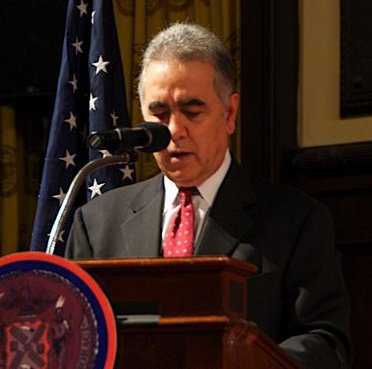
     

    April 24, 2011 FOX-TV: Joining us now is Harut Sassounian, the president of the United Armenian Fund. He’s also publisher of the California Courier, a newspaper here in Southern California, published out of Glendale. It is the 96th anniversary of the Armenian Genocide. And it’s also kind of a confusing issue for a lot of us, because Armenian-Americans want the president to say, to claim that this was genocide. And yet, you just told me prior to coming on the newscast that really it doesn’t matter whether the president says it or not. Why? SASSOUNIAN: Because we already have another president, Ronald Reagan, 30 years ago in 1981, who issued a presidential proclamation in which he mentioned the words Armenian Genocide. Plus, we have two congressional resolutions, in 1975 and 1984, commemorating the Armenian Genocide.


    FOX-TV: Mr. Sassounian, then one would ask, and people who are not that familiar with the 1915 genocide would say, why are you protesting out in front of the Turkish consulate? SASSOUNIAN: We are simply protesting to let the president know, and every other politician know that if you come to us as a candidate and make [empty] promises and later on you get elected with our votes and money, we’re not going to just remain silent, we’re going to express our disagreement and we’re going to make sure that you’re not re-elected.


    FOX-TV: It’s not then good enough to have just the proclamation by Pres. Reagan; to have the Dept. of Justice write in a 1951 paper that it was genocide. You want that confirmed by the current administration? SASSOUNIAN: It would be nice if they confirm it, but we are trying to send a message to the president and all politicians that if you make a promise to the people, you have to keep your promise. You can’t make a false promise, get their money, get their votes, and then act like nothing happened! They have to pay a price! We have to change the whole political charade in this country where you just lie to the public and get away with it.


    FOX-TV: With Turkey being such a strategic ally of the United States, do you expect any president now or after this to come out and say, “The Ottoman Empire committed genocide against Armenians?” SASSOUNIAN: There is a big difference between politics and historical facts. Historical facts do not change with time. If an event happened, it happened! …So our alliances or relationships, good or bad, should not affect the facts of history.


    FOX-TV: Yesterday Armenian boxer Vic Darchinyan, on his trunks, when he was in the ring, were in big numerals 1915, and on a sports blog, the blogger said “In case you haven’t heard about the Armenian Genocide …” and then started to explain it. Does it upset you that so many people outside of Armenian-Americans really are ignorant about this? SASSOUNIAN: That doesn’t upset me because most people don’t know much about the world. They don’t follow the news very closely, as some of us do. What upsets me more is when you said at the top of the introduction of this news item “Armenians claim genocide.” Armenians are not the ones claiming genocide. The whole world knows there was a genocide. Hundreds of historians, 43 US states, Congress twice, President Reagan, 25 different countries have passed parliamentary resolutions. Just because Turkey, the successor of the criminal regime, denies it, that doesn’t make it an allegation or a claim. It’s a historical fact. For political reasons, Turks don’t want to face up to their own history.


    FOX-TV: And I think that was written, we were reporting that for the purpose of showing the contrast between Armenians and Turks. And yet, your point is well taken. Thank you for the correction.


    April 25, 2011 FOX-TV: Yesterday around the world, [there were] commemorations of the Armenian Genocide in 1915 — a very controversial historical event — perhaps a million and a half people died or were killed as a result of this. Joining us now is Harut Sassounian. He is the president of the United Armenian Fund and editor of the Armenian newspaper, the California Courier. We do this every year. The issue at stake is that the United States government, this president, the last president, the president before, all ran making big statements saying that the Armenian Genocide will be recognized as a genocide like the Holocaust around World War II. All three presidents run, all three presidents when they get into office, they look at Turkey, an ally we need badly in the Middle East, and they don’t do it.


    SASSOUNIAN: In general, politicians are all very bad in keeping promises on all subjects. But when it comes to this subject, there’s a little unfortunate situation where people confuse politics with history. You can remain good friends, good allies, with Turkey, but at the same time not change historical facts…. So we should not mix up politics and history. We should be truthful about facts, but we can still remain friends, trade, and maintain military relations.


    FOX-TV: Let me just play the devil’s advocate, as if I’m representing the president at this point. Yes, that’s true, but where I sit right now, the world where it is, leaves us in a position where we do not want to insult Turkey and they’ve made it very clear to us that they would be deeply insulted. SASSOUNIAN: First of all, this was done by the Ottoman Empire and not the Republic of Turkey which didn’t exist at the time. Secondly, Germany has no problem acknowledging what the Nazi regime did. There’s no reason why today’s Turkey should not acknowledge what was done by its predecessor….


    FOX-TV: Turkey has become more and more important to us as the years go on. SASSOUNIAN: It has become more important and recently it has become a serious problem for us because they’ve become more of a radical Islamic regime; they strengthened their ties with Iran and Syria and various other radical regimes.


    FOX-TV: And I believe the administration is afraid of pushing them more into that camp, if they take the step of recognition.


    SASSOUNIAN: This is the problem because we compromise our principles, our values, because of geopolitical considerations. We have to separate them. We have to say here are the facts, here’s history, here are our values, and you have to live with it. The more we cater to dictators, people who deny the facts of history, the more they’re going to be demanding from us.


    FOX-TV: And you know in history the Ottoman Empire, which fell right after that, the Turks say “not a genocide, it’s the fog of war, people died from war, people died from disease, it wasn’t planned, so therefore it wasn’t a genocide,” and you say…


    SASSOUNIAN: There are hundreds of historians, experts on the Holocaust and the genocide who have signed a unanimous letter saying it was genocide. We have court cases, we have the United Nations, we have the European Parliament that recognized the genocide, so many countries, U.S. states, and Pres. Reagan himself said it was genocide.


    FOX-TV: I know you want recognition — there has been some — but maybe not enough. What else is it that you would want? SASSOUNIAN: In fact, what we want is not really recognition, because from my point of view the world knows it was genocide. Some people don’t want to say it publicly. But what we really want is…we lost a lot beyond the people who were killed — we lost our culture, our churches, our lands, and our personal properties. Every Armenian had houses, farms, properties, and bank accounts. We’ve lost all of that. So my intent is to go to court — the World Court, the European Court, and U.S. Federal Courts. We want Turks to pay reparations, restitution and bring justice back for this massive crime they’ve committed. That’s much more important to us than the lip service that any politician would pay to us.


    FOX-TV: The fact that there isn’t that one level of official recognition keeps this topic very fresh. And to some extent there’s an advantage to that because we’re still talking about it all the time. SASSOUNIAN: You’re absolutely correct…let’s forget about Pres. Obama for a second. Even if the President of Turkey tomorrow morning would say it was genocide, most people around the world and maybe even some Armenians would say that we finally reached our objective, let’s move on. So maybe it’s a good thing that the Turks keep denying it.
  • Turkey shuts down its embassy, revises Libya plans

    Turkey shuts down its embassy, revises Libya plans

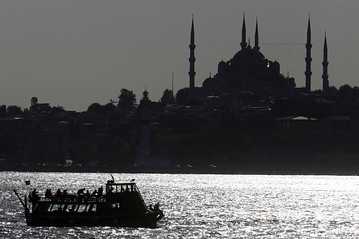
    Turkey has temporarily closed its Tripoli embassy for security reasons, a move that seemed to indicate a change in Ankara’s approach to the Libyan crisis as it loses a key channel of communication with Tripoli and Benghazi.

    The closure came following attacks on British and Italian diplomatic missions in the Libyan capital over the weekend after a NATO airstrike killed relatives of Col. Moammar Gadhafi.

    “Due to the change in the security situation in Libya and the great security risk it poses, our embassy has stopped functioning temporarily and has been evacuated,” Foreign Minister Ahmet Davutoğlu told reporters Monday.

    The decision was made late Sunday and Ambassador Levent Şahinkaya and the embassy staff had arrived in Tunisia on Monday morning, he said. “Of course, this does not mean that Turkey’s efforts [to solve the turmoil in Libya] will be halted,” Davutoğlu added.

    Turkey’s decision to shut down its embassy came following an increase in attacks by angry crowds after a NATO operation Saturday allegedly attempted to assassinate Col. Gadhafi, instead killing one of his sons and three grandchildren.

    Turkey has tried to mediate between the Libyan administration and opposition groups in order to declare a cease-fire and launch a transformation process for reforms. Ankara’s “road map” has, however, failed to produce any results. Davutoğlu said Prime Minister Recep Tayyip Erdoğan was planning to make a substantial statement on Turkey’s efforts to stabilize Libya ahead of the Libya Contact Group meeting slated for Wednesday in Rome.

    Closing down the embassy in Tripoli demonstrates an inability for Turkey to keep open communication channels open with the Gadhafi administration based in Tripoli and dissidents based in Benghazi, and may auger poorly for the future of its road map.

    Turkey’s road map, which prioritized reaching a truce between the parties, was rejected by Benghazi for not demanding Gadhafi and his family step aside. Following the announcement of the road map, some groups protested Turkey in front of its consulate building.

    Turkey subsequently signaled a shift in its position by calling more loudly on Gadhafi and his family to step down and pave the way for defusing the tension, but the closure of the embassy suggests such efforts may have fallen short.

    More NATO attacks in Tripoli?

    Turkey had been resisting shutting down its embassy in Tripoli, which was also representing the United States, the United Kingdom and Italy. As a member of NATO, Turkey’s decision to leave Tripoli sparked questions about whether the alliance will intensify its military operation against targets in the Libyan capital.

    Turkey expressed its concerns after the killing of Gadhafi’s son without directly criticizing NATO’s attacks. In an obvious disagreement with France and United Kingdom, Turkey has insisted on a more careful selection of targets in order not to hurt civilians.

    In the second Iraq war, Turkey was the only Western country to keep its embassy open, even during the fiercest military clashes.

    Revision of Libya policy

    The closure of the embassy in Tripoli in the wake of the NATO airstrike could push Turkey to revise its policy toward the Libyan crisis. Erdoğan will likely give the first clues on any shift in the position Tuesday or Wednesday, messages that will be transmitted to the Western powers by Davutoğlu on Wednesday in Rome, where he will likely hold a bilateral meeting with U.S. Secretary of State Hillary Clinton

  • Can US Offer Final Proof Of Osama’s Death?

    Can US Offer Final Proof Of Osama’s Death?

    The circumstances surrounding Osama bin Laden’s reported death raise urgent questions over how the US is so sure it got its man.

    US officials have said DNA testing has proved the al Qaeda leader was killed in a villa in Pakistan.

    They have also identified him by facial recognition.

    But photographs of Bin Laden after his reported death have not been released.

    The fact his body was buried at sea has so far only added to the speculation, although as a Muslim, he had to be laid to rest as quickly as possible.

    Under Islamic law, people can only be buried at sea if they died there, or if there is a risk their body will be exhumed or dug up if buried in the ground.

    The release of a photograph purporting to show bin Laden’s corpse – which was later confirmed to be a fake – added to the confusion.

    Journalists have not yet had the opportunity to ask more than a few questions of the Obama administration about details of Bin Laden’s death.

    A former British ambassador to the US, Sir Christopher Meyer, told Sky News: “I imagine we will see proof.

    “I can’t concede the US president would go out to make a statement to the world that bin Laden is dead without being able to produce evidence that he is dead.

    “I think we will see some evidence – DNA or photographic – to prove there is not still some phantom Osama bin Laden riding the Tora Bora mountains.”

    The announcement is not the first time the world has heard of Bin Laden’s death. Claims that the US and Britain kept up a pretence he was alive in order to continue their war on terror have been dismissed as conspiracy theories.

    It has been suggested that bin Laden died nearly 10 years ago during the battle for Tora Bora in Afghanistan, either from a US bomb or from kidney disease.

    And as for his audio and video statements, their authenticity has continually been questioned.

    One of his video statements, released just days before the October 2004 US presidential election, was said to have been crucial in helping George Bush secure a second term in office.

    But his statement from December 2001, when he was seen to confess to the 9/11 attacks, has attracted the most attention.

    Bin Laden had insisted numerous times, through the Arab press and in video statements, that he had no involvement with the atrocities. His sudden confession was picked up on by doubters.

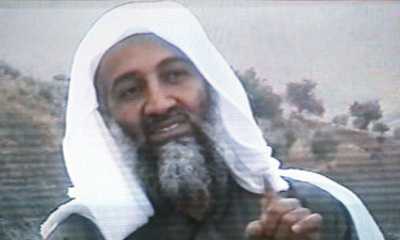
    Additionally, his appearance in the December 2001 video was markedly different. He sported a black beard, not his usual grey one, his pale skin had become darker and he had a different shaped nose.

    He also looked in good health – a contrast to his earlier gaunt appearance – and critics have pointed to the fact he is seen writing a note with his right hand, although he was left-handed.

    In total, Bin Laden is thought to have released around 40 statements since 9/11, many of them with clear references to events at that time.

    When Uday and Qusay Hussein – the sons of Iraqi dictator Saddam Hussein – were killed in a firefight with US troops, authorities relied on photographs of their bodies to convince people they were dead.

    And when Saddam himself was executed, video footage of his death and subsequent photographs seemed to give final proof of his death.

    uk.news.yahoo.com, 3 May 2011

  • Are the same Turks and Armenians who were just yesterday inseparable today enemies?

    Are the same Turks and Armenians who were just yesterday inseparable today enemies?

    Turkey, which was made aware of the sensitivity surrounding the Armenian issue throughout the world through attacks by the Armenian Secret Army for the Liberation of Armenia (ASALA), continues to be caught unprepared every year as to how to shape its approach towards the events of April 24. (more…)

  • A solution lies under the sea

    A solution lies under the sea

    By Max Gevers

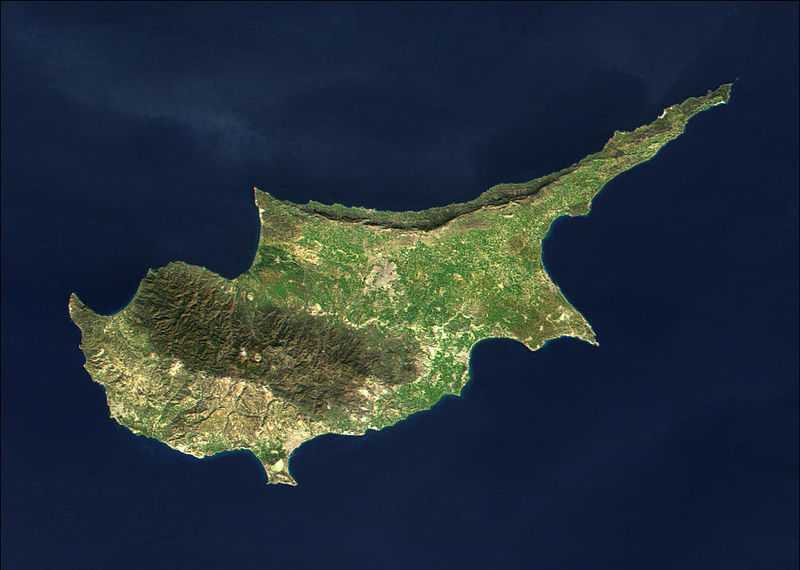
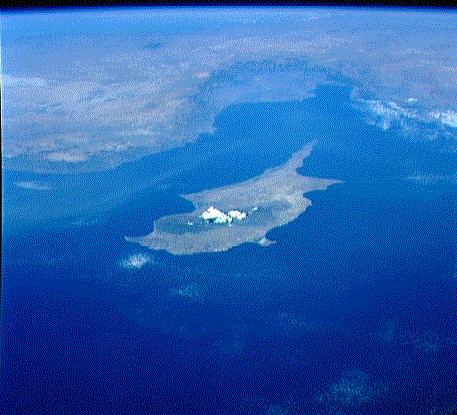
    NOW that the chances of Turkey joining the EU in the foreseeable future have declined to zero, the prospect of a solution to the Cyprus problem too is close to nil. For Cyprus, Turkey’s road towards EU-accession always was a powerful and unique strategic opportunity, the strongest imaginable political impetus to negotiate a solution acceptable to both sides. That opportunity has now been squandered: by the Cyprus government, because of its attempts to have it all its own way and not seeing where and in which European capitals its real interests were best assured; by northern Cyprus, because its hard line government preferred the present situation in the absence of some powerful coaching and arm twisting by Turkey and never seemed sincere in negotiations; and by Ankara, because with the disappearance of a serious European incentive, it lacked the drive for hard negotiations. For Turkey there is, in the absence of a European option, no longer any incentive to achieve success, despite its zero-problem foreign policy.

    Years have been wasted away and, with the departure of Mehmet Ali Talat in northern Cyprus and the increasing reluctance in some European countries concerning Turkey’s EU negotiations, this incredible incentive for Turkey to settle on Cyprus was lost. With that loss, chances for a solution in Cyprus are indeed very slim. They will remain so, and gradually if not very fast, become non-existent.

    If a solution to the Cyprus problem is still really sought after, that is if the Cyprus government is really serious about negotiating and finding a solution, then it will have to come up with an incentive for Turkey. This must be powerful enough to change the present parameters of the negotiations in which almost nobody believes any more that something useful and substantial can be achieved. Is there such an incentive?

    There is, and it concerns the exploration and production of hydrocarbons in the sea around Cyprus. There has been a lot of talk about the potential presence of oil and/or gas in this part of the Mediterranean. Much of it is wishful thinking based on inflated expectations of a very complex geology in the area. Up to now, not a drop of oil or gas has actually been found and brought to the surface; only some preliminary seismic exploration has been carried out. That may have been promising, but the experience of the search for oil and gas in seas elsewhere in the world has shown that it is almost impossible to make reliable estimates of possible reserves without exploratory drilling itself.

    With the Cyprus conflict nowhere near a solution, it is extremely unlikely that Turkey will allow Cyprus full-scale and unhindered exploration in this part of the world. Israel may join in some exploration, but it could not be a fully fledged partner, without also becoming a burden for Cyprus’ foreign policy towards the Arab world. Besides, it would not take away the main factor, which is that Turkey and northern Cyprus have to be major partners in the game for serious and sustained exploration and production of hydrocarbons in the area. Cyprus must come to terms with Turkey on this issue; it cannot do without this, or the full potential exploitation of mineral riches in the seas around Cyprus will not be realised.

    A second factor the Cyprus government should take into account, if it is at all serious about negotiating a solution, is that it should facilitate a very broad based internal debate, with the involvement of NGOs and civil society on the sort of solution it wants. The studies by researcher Alexandros Lordos some years ago were an excellent beginning but not properly followed up nor elaborated into operational conclusions. The present situation is that the Greek Cypriots, with a fair amount of contempt for historical truths, basically want it almost all for themselves. There is hardly any pretence about it with the consequence that, after the Annan plan, there was no serious thought on the type of solution that could and would be acceptable to all. Neither is there any thought on how to actually live in a Cyprus where Turkish and Greek Cypriots genuinely share responsibilities for government and society. Whenever some sort of compromise on specific subjects leaks out, it invariably meets ferocious opposition and accusation that the Cyprus government is giving it all away, a situation worse than any imaginary zero-sum game. It is an almost impossible situation for any government, and the present one is certainly not known for its courageous stands and decisions.

    A third factor to be kept in mind is that the UN will not eternally remain in Cyprus to separate the parties, in the absence of even the remotest prospect for a solution. At the same time, this also offers an opportunity: the future possibility that the UN might well leave could trigger an increased sense of urgency that something serious and substantial should really happen quite soon.

    A fourth aspect with which parties should rapidly come to terms is the idea that permanent partition, with northern Cyprus gradually being absorbed into Turkey itself, a scenario which foolishly northern Cyprus does not really seem to realise, is a very serious and by now realistic option. August 1974 is almost 37 years ago and the memory of a fully independent and united Cyprus is hardly very much alive these days, let alone that the situation before that time scarcely merited a beauty prize. Maybe it is indeed the case that Greek Cypriots and Turkish Cypriots, although grudgingly liking each other, do not really want to live together and certainly not to share responsibility for government and society.

    These are the issues which should be at the forefront of everybody who is involved with Cyprus. A solution is still possible but realistically and unfortunately at present increasingly remote. The international community, indeed the EU, is bored stiff with Cyprus and hardly ever pays more than minimal lip-service when needed, something the Cyprus government should keep in mind as its time to take the EU presidency approaches.

    Realism, political courage, serious civil society debate and, why not, some substantial assistance by a major outside power are needed. The old mantra that only Cypriots can solve their own problems has been proved totally and disastrously wrong, something only Cypriots don’t realise. Cypriots have, unfortunately, managed to transform an unwanted situation into a stale problem and a permanent misfortune. The incentive of the potential riches of oil and gas exploration and production could change this, but only if the authorities in Cyprus and Turkey really want that and if civil society in Cyprus has a productive say in the type of future society it wants to live in.

    Source: Cyprus-mail

  • David Cameron’s Statement on Death of Osama Bin Laden

    David Cameron’s Statement on Death of Osama Bin Laden

    Prime Minister David Cameron has issued a statement on the news of the death of Osama Bin Laden.

    Osama Bin Laden, who was responsible for some of the worst terrorist atrocities including the 9/11 attack, was killed in a US operation in Pakistan.

    Mr Cameron congratulated President Obama on the operation and said now was a time to remember all those murdered by Osama Bin Laden.

    The PM said:

    “The news that Osama Bin Laden is dead will bring great relief to people across the world. Osama Bin Laden was responsible for the worst terrorist atrocities the world has seen –  for 9/11 and for so many attacks, which have cost thousands of lives, many of them British.

    “It is a great success that he has been found and will no longer be able to pursue his campaign of global terror.  This is a time to remember all those murdered by Osama Bin Laden, and all those who lost loved ones. It is also a time too to thank all those who work round the clock to keep us safe from terrorism. Their work will continue.

    “I congratulate President Obama and those responsible for carrying out this operation.”

    Mr Cameron also spoke on television at his residence at Chequers.

    The Prime Minister said:

    “This news will be welcomed right across our country.

    “Of course, it does not mark the end of the threat we face from extremist terrorism. Indeed, we will have to be particularly vigilant in the weeks ahead.

    “But it is, I believe, a massive step forward.

    “Osama bin Laden was responsible for the death of thousands of innocent men, women and children right across the world – people of every race and religion.

    “He was also responsible for ordering the death of many, many British citizens, both here and in other parts of the world.

    “I would like to congratulate the US forces who carried out this brave action. I would like to thank President Obama for ordering this action.

    “And I think it is a moment when too we should thank all of those who work day and night, often with no recognition, to keep us safe from the threat of terror.

    “But above all today, we should think of the victims of the poisonous extremism that this man has been responsible for.

    “Of course, nothing will bring back those loved ones that families have lost to terror.

    “But at least they know the man who was responsible for these appalling acts is no more.”


    The Prime Ministers Office

    TheNumber 10