Blog

  • Turkish leader accused of power grab

    Turkish leader accused of power grab

    Jailing of 17 journalists since September is fueling accusations that Prime Minister Recep Tayyip Erdogan’s changes to the legal system are designed to eliminate opponents rather than harmonize laws with the European Union.

    By Benjamin Harvey

    Bloomberg News

    AP

    Journalists march April 14 in Istanbul, Turkey, to protest arrests of journalists and threats to freedom of the press. The banner reads: “We will touch even if we get burned.”

    ANKARA, Turkey — Turkey’s jailing of 17 journalists since September is fueling accusations that Prime Minister Recep Tayyip Erdogan’s changes to the legal system are designed to eliminate opponents rather than harmonize laws with the European Union.

    Police arrested investigative reporter Ahmet Sik, who prosecutors alleged was involved in a coup conspiracy, in March. There are 57 reporters in prison in Turkey, according to the Organization for Security and Cooperation in Europe, making the country the world’s top jailer of journalists, data compiled by the International Press Institute show.

    Opposition charges that seizure of the judiciary is part of a power grab by Erdogan’s Justice and Development Party, or AKP, will define the run-up to the June 12 general election, said Wolfango Piccoli, an analyst at Eurasia Group in London. An erosion of the judiciary’s independence may delay European Union membership and undermine investor confidence in the rule of law, he said.

    Erdogan says the courts are independent of politics.

    “The changes that AKP has made to the judicial system, I’ll say very clearly, are bringing us toward an autocratic, totalitarian system,” said Suheyl Batum, a constitutional lawyer who is deputy head of the main opposition Republican People’s Party. “We have a system not ruled by law, but by the ruling party.”

    Sik was imprisoned March 6, and prosecutors ordered confiscation or destruction of all copies of his unpublished manuscript, one of several works alleging Turkey’s police force is being taken over by the Fethullah Gulen Islamic movement.

    Marietje Schaake, a Dutch member of the European Parliament’s foreign-affairs committee, said the confiscation was unprecedented.

    “The government is saying the judiciary is responsible, but ultimately a government does bear responsibility for guaranteeing the rights and freedoms of its citizens,” Schaake said in a telephone interview.

    Asked about the arrests by legislators at the European Parliament on April 13, Erdogan, 57, said they were actions by an independent judiciary investigating coup conspiracies.

    “Allegations in past weeks that there has been pressure, restrictions and prohibitions against the press and freedom of expression don’t reflect reality,” Erdogan said. “Some arrests and detentions are being perceived as interference with freedom of the press, but I want to remind you that in Europe, there aren’t newspapers and journalists who are encouraging coups.”

    Erdogan says no one has been imprisoned for “journalism” and that the changes, including a package of laws passed through a September referendum, make Turkey more democratic and the courts more independent.

    Judges replaced

    The referendum’s changes to the high courts and judicial selection board led to the replacement of secularist judges and prosecutors with ruling-party functionaries under the influence of the Justice Ministry, said Metin Feyzioglu, head of the Ankara Bar Association.

    The vote was rushed and the anti-democratic implications of the changes weren’t fully understood, he said. The vote passed 58 percent to 42 percent. A pre-ballot survey found that almost half of voters didn’t know the content of the amendments.

    “The government is becoming more and more autocratic, less and less tolerant, and these changes are doing it,” Feyzioglu said in an interview at his office in Ankara. “The general view is that the judiciary is acting as attack dogs for the government.”

    Prosecutors probing the alleged coup plots have arrested almost 10 percent of Turkey’s generals and admirals over the past two years, as well as dozens of prominent journalists and university professors. The Ankara Bar Association on April 13 called for the special criminal courts to be abolished.

    Turkey’s military, which has deposed four governments in the past four decades, said in a statement April 6 that it didn’t understand the legality of the continued detention of 163 of its officers.

    Criticism dismissed

    Cuneyt Yuksel, a 41-year-old Harvard University-educated lawyer who helps design AKP’s judicial policies, dismisses the criticism, saying the party’s judicial reform is opposed by an “old elite” of judges and officers who resent that power is moving from their hands to the people’s.

    “Ideologically, they block any reform and voters don’t like that,” Yuksel said in an interview at the Turkish parliament in Ankara.

    Under the slogan, “Turkey will take a breath of fresh air,” the main opposition Republican People’s Party is basing its campaign partly on what it says is Erdogan’s politicization of the judiciary and increasing centralization of powers.

    “There’s a 21st century massacre of the law going on in Turkey,” leader Kemal Kilicdaroglu said in an address to his party on April 5.

    To be sure, Batum says the party’s concerns often fall on deaf ears, largely because voters have benefitted from nine years of record economic growth.

    “I go on TV to explain this stuff, but it’s too technical and a little depressing,” Batum said in an interview at the party headquarters in Ankara. “They say I’m boring and then don’t invite me back.”

    Erdogan has won two landslide election victories and has about a 20 percentage-point lead in the polls as he campaigns for a third term on June 12, according to surveys by Metropoll and Andy-AR published April 25.

    He is already Turkey’s third-longest-serving premier. Another term may see Erdogan pass Ismet Inonu, a contemporary of the republic’s founder, Mustafa Kemal Ataturk, who enshrined secularism in Turkey’s constitution, and Adnan Menderes, who was hanged after a military coup in 1960 for violating it.

    Erdogan’s climb to power was once blocked by the same courts he’s now changing. Prosecutors banned Islamic political parties he joined in the 1980s and 1990s, sentenced him to prison after he read a poem in public they alleged incited religious hatred in 1997 and almost succeeded in banning his ruling Justice and Development Party in 2008 on charges it was plotting to overthrow Turkey’s secular system.

    Erdogan has vowed to write a new constitution after the June election and said in a Bloomberg interview in London on March 31 that he may press ahead with changes and put the government’s transformation to a presidential system from a parliamentary system to a public referendum.
  • Istanbul Diary: The “Old” City’s “New” Armenians

    Istanbul Diary: The “Old” City’s “New” Armenians

    Vahe Sarukhanyan

    During the past few days, I have discovered a new Istanbul. It’s not the modern district of Beyoglu or the tourist-traversed pedestrian boulevard of Istiklal leading to Taksim Square.

    It even isn’t the “old city” with its Byzantine and Ottoman period relics and monuments. What I have discovered is the Istanbul of Armenians; more correctly the city experienced by Armenians from the Republic of Armenia.

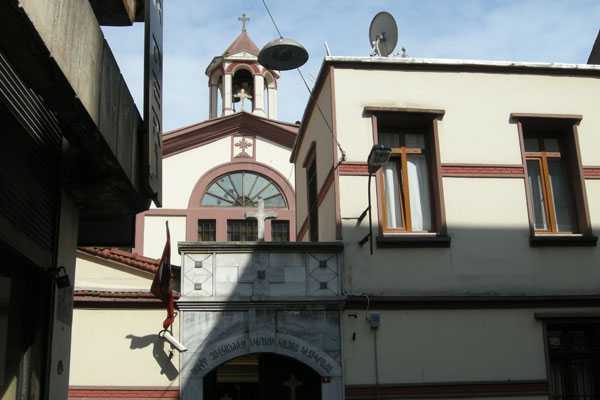
    It’s the southern stretch of what is described in the tourist maps as the “old city”. But these neighbourhoods – Kum Kapi, Yenikapi, Gedik Pasha, and Beyazit – are given short shrift in the tourist brochures.

    The Istanbul Armenian Patriarchate is located here along with other Armenian and Greek churches.

    We take the tramway to the Beyazit station and get off, slowly descending the cobblestone streets that wind their way down to GedikPasha and the Sea of Marmara in the distance.

    A woman approaches from the other direction. She’s a typical Armenian from the RA – her face, gait, gaze… dyed hair. A second woman approaches. “Luso jan, hello, how are you, how’s your girl…” is the conversation we hear as we pass by.

    As we make our way down the narrow streets, the foul smell of garbage piercing our nostrils, we hear the locals conversing in Turkish, Kurdish and Armenian. Kids are playing in the streets, men are pushing carts full of goods back and forth, owners of vegetable and fruit stalls are hawking their wares at prices four times less than you’ll find back in Istiklal. In a word, these are neighbourhoods where people eke out a living somehow and where life is out in the open; warts and all.

    It might be a scene taken from one of Hagop Baronian’s Istanbul travels except for the new cars and satellite dishes.

    But the one thing that has changed, and in a big way, is that today you hear eastern Armenian on the streets of KumKapi and adjacent neighbourhoods.

    I say to myself – so what? People are speaking their mother tongue. But to hear the Yerevan, Lori and Gyumri dialects here in Istanbul…What the hell happened? Why?

    The open air market in KumKapi takes place every Thursday. It’s a good place to check out if you want to get an idea who lives in the area. For readers back in Armenia, just imagine a giant ‘Ferdus” market that also sells agricultural produce. You’ll find some local resident Armenians here as well. They’re all from Armenia. They still retain RA citizenship but have winded up here, whether legally or by “bending” the rules, living and working alongside Turks and Kurds. The Armenians have learnt enough Turkish to get by and the Turks in the market have picked up a few Armenian words.

    The old houses that line the narrow streets look the same. Most are in need of repair and the wash is hanging outside. The sidewalks are a noisy jumble of kids, pushcarts and people.

    Thus, it’s hard to point to the Armenian houses. All you have to do to locate an Armenian is walk down one of streets and pay attention to the faces of the passersby. Raising your voice a bit when you’re talking Armenian wouldn’t hurt. You’ll elicit a reaction if there are other Armenians around.

    This is another world and these aren’t your traditional “Bolsahay’s”. These are “Stambulahay’s” that have practically no contact with Armenians born in Bolis or who have come here from other Turkish towns and villages.

    You can safely say that most “Bolsahay’s” live comfortable lives – they have a home, a job and Turkish citizenship.

    I liken the “Stambulahay’s” to the Armenian traders and merchants of old who set out for Russia, India and other virgin lands farther still. They are like the average Armenians who left the homeland for the factories in America and France during the 19th and early 20th century, in search of a better life. Many pulled themselves up from the factory floor and went on to manage factories of their own.

    Many of these new Armenians in Istanbul have passport problems. None have the legal right to work, but in order to survive they find a way

    via Istanbul Diary: The “Old” City’s “New” Armenians (video) | Hetq online.

  • Istanbul Armenians: The Diaspora’s “Outsiders”?

    Istanbul Armenians: The Diaspora’s “Outsiders”?

    Arus Yumul, an Armenian sociologist who lectures at the Bilgi University in Istanbul, says that if the dominance of Muslims over non-Muslims during the Ottoman Empire was a hierarchical division, after the founding of the Republic in Turkey that difference theoretically disappeared, but that this phenomenon still exists today in Turkey but not in an overt way.

    Yozge Genc, another expert with the Turkish Economic and Social Studies Foundation (TESEV), told me that the main problem of Armenians today in Turkey is that they are not regarded as full citizens of the Turkish state.

    “Armenians are still identified by their religion and ethnic affiliation,” says Genc, adding that the other minorities in Turkey have the same problem but that in the case of Armenians such a thing is expressed in a slightly different way.


    Pakrat Estukyan, the Armenian edition editor at Agos weekly expressed the same thought, noting that at one time Armenians in Turkey constituted a nationality, a people, but that they had been reduced to a mere “community” today; and a religious one at that.


    For years the number of Armenians living in Turkey has hovered between 60,000 – 70,000 and that’s not counting the number of crypto-Armenians living in Anatolia and western Armenia. Experts say their number is quite large.

    Estukyan said that even though only a citizen’s religion is noted in passports, government agencies have a good handle on nationality data as well.

    As the largest non-Muslim minority in Turkey, Armenians are not represented in political or social sectors and do not hold state office. Yozge Genc said that the employment process for state office is quite complicated for Armenians, especially when national security issues come up.

    Armenians serve on the Sisli Municipal Council, but it’s one district in Istanbul where most of the city’s non-Muslims reside.

    Ozge Genc says that an Armenian was recently assigned to the government’s Central Secretariat for EU Affairs, but this was a singular event. Mensur Akgun, Director of the Global Political Trends Center (GPOT) says that a lot has to do with personal and practical contacts and not just a person being Armenian.

    Silvia Tiryaki, his deputy, says that the Turkish “deep-state” avoided assigning Armenians to top posts after the operations of ASALA in the 1970s and 1980s.

    Pakrat Estukyan disagrees with this belief and stresses that the divide was created not because of ASALA but the 1915 Genocide; something the Turks don’t talk about.

    Sociologist Yumul says that for the worldwide Armenian diaspora, the Istanbul-Armenian community is akin to a “lost lamb”, an “outsider”. She says that other Armenians have taken them to task for being non-active in Armenian affairs and for cow-towing to the government in Ankara. Yumul says she agrees with these assessments when it comes to the Ottoman period, but that after Turkish independence Armenians not only didn’t get involved in Armenian politics but also Turkish affairs. It was kind of a survival strategy she noted.

    Yumul added that the community is slowly integrating into the larger Turkish society and that mixed marriages are paving the way.

    “At one time Armenian parents resisted but this too has faded. The next generation will be more like a hybrid, free to chose whether they are Armenian, Turk…”

    She was quick to add that this doesn’t mean that Armenians will disappear in Turkey.

    However, the use of Armenian as a daily language of communication is also on the decline; the number of Armenians who can’t speak the mother tongue is growing. Parents send their kids to Armenian elementary schools but afterwards many go to private or foreign high schools so that they won’t have problems with the Turkish language in college.

    The 1990s were a turning point for the community in many ways. Armenians, like the other minority communities, began to voice their concerns, speak about the discrimination they faced, and even raise the taboo subject of the 1915 Armenian Genocide

    Twenty years ago, all this was unthinkable. What the next twenty will bring for the community remains a big question mark.

    via Istanbul Armenians: The Diaspora’s “Outsiders”? | Hetq online.

  • Canal Istanbul

    Canal Istanbul

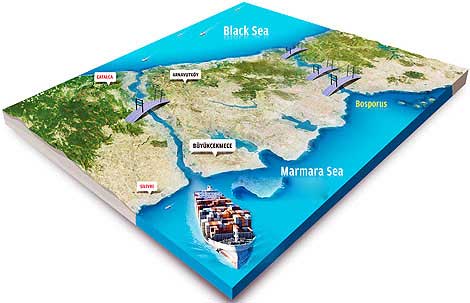
    Istanbul Canal (Turkish: Kanal İstanbul) is the name of the artificial sea-level waterway, which is proposed to be built by the Republic of Turkey on the European side of Turkey, connecting the Black Sea to the Sea of Marmara. Canal Istanbul would disect the current European side of Istanbul into two and thus create an Island between the continents of Asia and Istanbul (The Island would have a shoreline to the Black Sea, Sea of Marmara, Istanbul Canal and the Bosphorus).[1][2][3] The new waterway would bypass the current Bosphorus. Istanbul Canal aims to minimise shipping traffic in the Istanbul Strait. The project is intended for the 100th anniversary in 2023 of the foundation of the Turkish Republic.

    Historical projects

    The concept of a canal linking the Black Sea with the Sea of Marmara was proposed seven times in the history.[4]

    The first proposal was made by Sultan Suleiman the Magnificent (reigned 1520–1568). His architect Mimar Sinan was said to have devised plans for the project. The project was abandoned for unknown reasons.[4]

    On March 6, 1591, during the reign of Sultan Murad III, an imperial ferman (order) was issued and work on the project recommenced, but again for unknown reasons the project was stoped.

    In 1654 during the reign of Sultan Mehmed IV, pressure for the reccomencement of the canal was applied but to no avail.

    Sultan Mustafa III (reigned 1757–1774) tried twice in 1760 but the project could not go ahead due to economic problems.

    During the reign of Sultan Mahmud II, an Imperial Ottoman Committee was established to examine the project once again. A report was prepared in 1813 but no concrete steps were taken.

    Finally, on January 17, 1994 shortly before the local elections, the leader of the Democratic Left Party (DSP) Bülent Ecevit proposed a canal connecting the Black Sea with the Sea of Marmara.[4][5]

    Istanbul Canal

    It was not until April 2009, when the Justice and Development Party (AKP) government began secret studies into the project once again and that concrete steps were taken for the revival of the project. The project was mentioned by Minister of Transport Binali Yıldırım in May 2009 at the parliament.[6] Prime minister Recep Tayyip Erdoğan announced the “Istanbul Canal” project on April 27, 2011 during a rally held in connection with the upcoming 2011 general elections, calling it as his “crazy project” (Turkish: çılgın proje).[7]

    The main purpose of the project is to reduce the marine traffic through the Bosphorus and minimize the risks and dangers associated particularly with tankers.[7][8] About 56,000 vessels pass yearly through the Istanbul Strait, among them 10,000 tankers carrying 145 million tons of crude oil. International pressure is growing to increase the marine traffic tonnage through the Turkish straits that brings risks for the security of marine navigation during the passage.[6] The canal will further help prevent the pollution caused by cargo vessels passing through or mooring in the Sea of Marmara Sea before the southern entrance of the Bosphorus.[8]

    The waterway will have a length of 45–50 km (28–31 mi) with a depth of 25 m (82 ft).[7] Its width will be 150 m (490 ft) on the surface and 120 m (390 ft) at the canal bed. These dimensions will allow the largest vessels to pass.[8]

    Studies relating to the project will be accomplished within two years. The canal will be in service latest in 2023, the 100th anniversary of the foundation of the Republic. The project will be financed completely by domestic sources.[8]

    Cost

    The Turkish Prime Minister Recep Tayyip Erdogan and Istanbul Metropolitan Municipality officials have stated that Istanbul Canal will cost $10 billion to build and that the financing for the development has already been allocated by the Turkish Treasury.[9][10][11] They further added that they would be relying entirely on national resources. It is envisaged that Turkish Armed Forces personnel would play a key role in the Canal’s development.

    Criticism

    Some critics have stated that Turkey aims to by-pass the Montreux Convention Regarding the Regime of the Turkish Straits and attain greater autonomy with respect to the passage of military ships from the Black Sea to the Sea of Marmara.[12][13]

    References

    1. ^ “Turkey to build new waterway to bypass Bosporus”. Forbes. 2011-04-27. .
    2. ^ “Turkey plans ‘crazy’ new canal”. UK News. 2011-04-28. .
    3. ^ “Turkey to build waterway to bypass Bosphorus Straits”. BBC. 2011-04-27. https://www.bbc.co.uk/news/world-europe-13207304.
    4. ^ a b c “1994’te Ecevit ortaya attı, manşetlere ‘mega proje’ diye yansıdı”. Hürriyet. 2011-04-28. . Retrieved 2011-05-01.
    5. ^ “”Kanal İstanbul” Ecevit’in projesi çıktı” (in Turkish). CNN Türk. 2011-04-27. https://www.cnnturk.com/yasam/diger/kanal-istanbul-ecevitin-projesi-cikti. Retrieved 2011-05-01.
    6. ^ a b “”Çılgın proje”yi Binali Yıldırım daha önce açıklamıştı” (in Turkish). CNN Türk. 2011-04-27. https://www.cnnturk.com/yasam/diger/cilgin-projeyi-binali-yildirim-daha-once-aciklamisti. Retrieved 2011-05-01.
    7. ^ a b c Çıtak, Pınar (2011-04-27). “PM Erdoğan speaks out his ‘crazy project’; İstanbul Canal”. Doğan Haber Ajansı. . Retrieved 2011-00-01.
    8. ^ a b c d “İstanbul’a ikinci boğaz: “Kanal İstanbul”” (in Turkish). 2011-04-29. https://www.cnnturk.com/turkiye/istanbula-ikinci-bogaz-kanal-istanbul. Retrieved 2011-05-01.
    9. ^
    10. ^
    11. ^
    12. ^ “İstanbul Canal project to open debate on Montreux Convention”. Today’s Zaman. 2010-10-08. .
    13. ^ “Turkey debates whether international treaty is obstacle to plan to bypass the Bosporus”. The Washington Post. 2011-04-29. .
  • PKK leader threatens Turkey with ‘great war’

    PKK leader threatens Turkey with ‘great war’

    Kurdish separatists claim attack which left policeman dead as jailed leader issues ultimatum ahead of Turkish elections.

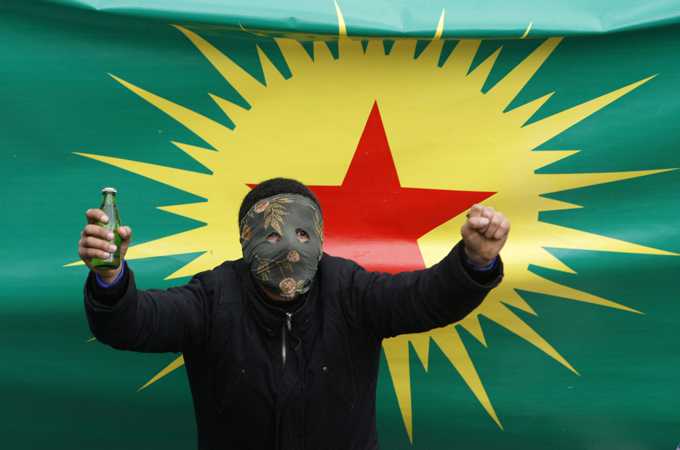
    ”]A masked demonstrator poses with a banner for the outlawed PKK during protests in Istanbul in April [Reuters]A masked demonstrator poses with a banner for the outlawed PKK during protests in Istanbul in April [Reuters]


    Kurdish separatists have claimed responsibility for an ambush on a police convoy in northern Turkey, and warned the country’s government it faces a “great war” if it fails to enter “meaningful negotiations” after next month’s elections.

    Wednesday’s attack in the northern province of Kastamonu left one policeman dead and another wounded.

    “A retaliation attack was carried out by our militants on a police car that was part of a convoy…the attack only targeted police. It is not an attack on civilians or the prime minister,” said a Kurdistan Workers Party (PKK) statement on the Firat news agency website.

    The group’s jailed leader, Abdullah Ocalan told Firat that “all hell would break loose” unless Ankara opened talks with Kurdish groups within six weeks, and within days of the country’s June 12 parliamentary elections.

    “June 15 is the deadline. Either a meaningful negotiation process will begin after June 15 or a great war will start and all hell will break loose,” Ocalan said via his lawyers, Firat reported.

    Earlier on Friday Turkish police arrested up to eight people over Wednesday’s ambush in which gunmen opened fire on a police car escorting a ruling Justice and Development Party (AKP) campaign bus from an election rally by Prime Minister Recep Tayyip Edrogan in Kastamonu.

    Erdogan had left the rally by helicopter before the attack occured. TRT news said eight people had been detained during police raids in Ankara, suspected of planning another attack.

    Speaking to reporters after visiting the wounded officer on Friday, Erdogan said the attack bore the hallmarks of the PKK and accused the group of targeting his party, which is expected to win a third consecutive term in next month’s vote.

    “We knew that the separatist terrorist organisation would use these undemocratic methods ahead of the elections,” he said.

    The PKK ended a six-month ceasefire in February and there have been fears of rising violence before the election.

    “This attack is a message to the AKP to withdraw its police who suppress Kurdish people. As all know, the police have carried out very harsh interventions on Kurdish people recently,” the PKK statement said.

    More than 40,000 people have been killed in a separatist conflict in southeastern Turkey since the PKK took up arms against the state in 1984.

    PKK operations are generally focused on the mainly Kurdish southeast, but there had been prior warning of possible attacks in the Black Sea region.

    via PKK leader threatens Turkey with ‘great war’ – Europe – Al Jazeera English.

  • Turkey signals it may reconsider Bosporus fees

    Turkey signals it may reconsider Bosporus fees

    ANKARA, Turkey

    Turkey is studying ways to make it more attractive for commercial ships to travel through a proposed canal as an alternative to the heavily congested Bosporus Strait.

    Turkey wants to reduce the shipment of oil, liquefied gas and chemicals through the Bosporus and reduce the risk of accidents in the narrow waterway that bisects Istanbul, a city of more than 12 million. Prime Minister Recep Tayyip Erdogan recently announced a new canal project that would create a second waterway linking the Mediterranean Sea with the Black Sea.

    The Montreux Convention of 1936, however, requires Turkey to allow commercial ships through the strait, while restricting the passage of military ships.

    But Transportation Minister Mehmet Habib Soluk said Turkey could reconsider its policy of charging discounted fees for transit through the Bosporus Strait, a possible hint that those fees might be raised.

    Soluk told the Anatolia news agency on Thursday that since the 1980s, transit fees have been disounted but “certainly, new arrangements on the fees may come.”

    Increasing the Bosporus fees could encourage ships to use the proposed Canal Istanbul, even though fees are expected to be charged to cover its construction costs.

    Turkey said it has no plans to block passage through the Bosporus. But it believes the canal, which would link the Black Sea to the Sea of Marmara further west of Istanbul, would attract ships that the prime minister said lose about $1.4 billion annually by waiting at either end of the Bosporus for permission to cross through.

    via Turkey signals it may reconsider Bosporus fees – BusinessWeek.