Blog

  • Fragile beauty

    Fragile beauty

    A Greek Cypriot glass artist is smashing the boundaries of his chosen field. NAOMI LEACH talks to him about his upcoming joint exhibition, Transparency, to be held in Istanbul
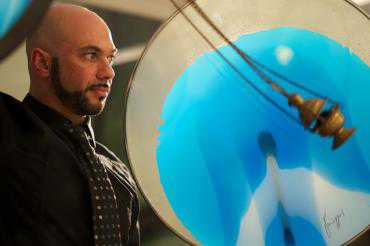
    Yorgos whose glass works are on show in Istanbul
    Yorgos whose glass works are on show in Istanbul

    You’d be forgiven for thinking being born on October 28 to a Famagusta family later rendered refugees and then putting together an exhibition with a Turkish artist in Istanbul might make you politically alert but Cypriot glass artist Yorgos Papadopoulos insists that neither he nor his work is politically charged.

    Yorgos is forward thinker and an artist firstly, he does not wish his upcoming Turkish exhibition to be about difference, instead he revels in the idea of fraternity and the universal appeal of art.

    “I don’t want to get political about this whole idea. I care what happened to Famagusta but I feel I’ve moved on and want to be united with the Turkish people. They are just like the Cypriots and I feel so at home with them. I want to forget about the politics of who did what. I know that I am playing it naively but I respect people’s choice,” he says.

    He is aware that his liberal attitudes might not sit well with some Cypriots but he is sensitive to history, admitting his family’s own tale echoes the harrowing stories of other displaced families.

    “I took mum over the border here in Cyprus when they first opened. For her everything had changed, seeing things through her eyes was quite dramatic.” After splitting his time between the UK and Cyprus, Yorgos is comfortable with his dual identity and suggests his art goes beyond these definitions.

    “It’s not political, it’s not about the past. I am pushing forward to discover new ways to shape glass, to make it more 3D. I am keen to challenge the status quo, particularly of religious institutions afraid of updating their iconography,” he explains.

    The religious institution he is referring to is the Church, having created a glasswork collection entitled Virgins which reimagined the usual stained glass imagery seen in churches. The controversial series exhibited in London, New York and Cyprus.

    “I used a neon pink florescent colour, trying to break the rules. You can do this and it can still be beautiful. All these priests were there supporting the arts, drinking wine happily and I said I’m willing to donate a piece or two to the church but they wouldn’t accept them,” he says.

    Yorgos is not only interested in ruffling the establishment he has also been literally smashing through traditional creative methods of glass art. He has developed a unique technique breaking and relaminating glass to give the impression of fragility to pieces that are actually highly durable.

    “I don’t see myself as being part of the glass world because I don’t fit. I take hammers to glass. People say what are you doing but I’m selling my work and make my living from this work. It’s decorative art as opposed to fine art, you can hang it on walls but it’s not paintings.”

    Yorgos has created distinctive commissions for British Airways, P&O Cruises and several high profile London restaurants, as well as enjoying a host of international exhibitions. He initially trained in interior design then ceramics at City Lit in London before later making the switch to glass and continuing his studies at the Royal College of Art.

    “I fell in love with glass, especially broken glass. I accidentally broke a piece that was laminated and saw its natural beauty. I have developed it ever since. I have a modern approach to stained glass. It’s difficult to pigeon hole. It could be installation, it could be sculptural, it blurs between different boundaries,” he adds.

    Like most artists, Yorgos gets attached to his work and admits to finding separation difficult. “They are like my babies, it’s quite an emotional thing to hand a project over for good. When it goes to a lovely home and I get to know the people and can visit, then I’m happy.”

    Yorgos has lived in London on and off for 27 years, in the ex council house his family were given by the UK government after leaving Famagusta in 1974. Although he returned to Cyprus during his childhood he was schooled in both countries.

    “Cyprus influences my work in some way unconsciously. I spent my childhood there, the light the smells. As soon as I get off the plane I get that dry heat smell and think ‘I remember this’. It comes through my work somehow,” he muses.

    Although Cyprus colours some of Yorgos’ work he says he is most inspired at his studio in Spain. Following in the rich tradition of artists with Spanish abodes such as Picasso, Dali and Gaudi, Yorgos has a hilltop studio near Malaga.

    “My nearest neighbour is a shepherd. I’m out with the elements. I have a 360 degree view of the mountains and sea. Inspiration comes from natural and organic forms. My hobby is beachcombing, picking up driftwood etc. I love to use my place in Spain for creative, conceptual work. For getting ideas together as a lot of work originates there.”

    For bigger projects he uses a glassware studio in Frankfurt, Germany where he busies himself with all the gluing, painting and sanding. He explains that he pre-orders his sandblasted designs and arrives with hammers at the ready to start breaking the glass. He then paints the work before it is sent off to be laminated and polished. Each piece can sell from €11,000 to €17,000.

    Yorgos will be exhibiting pieces from both The Virgins collection and his new vibrant Evil Eye project at the Transparency exhibition. Both artists are contributing work on the theme of protection with his co-exhibitor Yasemin Aslan Bakiri’s work depicting shields. The pair met in London, three years ago, at one of Yorgos’ open studio weekends and he promised to bring his work to Yasmin’s Istanbul gallery. Their joint collaboration can be viewed at Balat Mah in Istanbul May 12-July 31.

    www.yorgosglass.com
  • Toronto Raising Funds for Dikranagerd Church Reconstruction Project

    Toronto Raising Funds for Dikranagerd Church Reconstruction Project

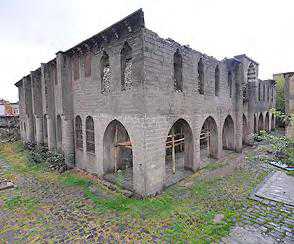
    The Surp Dikranagerd Church before the restoration efforts
    The Surp Dikranagerd Church before the restoration efforts

    TORONTO — The Surp Giragos Church in Diyarbakir/Dikranagerd, Turkey, is the largest Armenian Church in the Middle East and one of the most important examples of Armenian architecture. Since 1915, it has been subjected to both willful destruction and neglect, as a result of which it was in ruins and in danger of complete collapse. However, in 2009, a reconstruction project was launched by the Surp Giragos Foundation Board in Istanbul, under the auspices of the Istanbul Patriarchate. The board was successful in legalizing the deed and title for the Surp Giragos Church property, then obtaining authorization and all required permits for the reconstruction, followed by worldwide fundraising activities.

    The Surp Giragos Church, originally dating from 1515, with seven altars and a huge footprint of 15,000 square feet, had a 100-foot-high bell tower, with a bell molded by the famed Zildjian family and a large golden cross at the top. The bell toward was bombarded and destroyed by German/Ottoman cannon fire in 1915, as it was deemed unacceptable to have a church tower higher than the mosque minarets. Unlike the other Armenian architectural masterpiece, the Holy Cross Armenian Church at Akhtamar Island near Van, which was renovated by the Turkish government but converted to a state museum, the Surp Giragos Armenian Church in Diyarbakir, is officially recognized as an Armenian church under the control of the Armenian Patriarchate. When reconstruction is completed, it will be not only an outstanding Armenian architectural masterpiece, but also a historic evidence to past Armenian presence in the region, as well as a future pilgrimage destination for all Armenians.

    The total reconstruction budget is $2.5 million. The project is well underway, the first phase of the project already completed, on time and within budget. The worldwide fundraising efforts have successfully raised the funds needed for the first phase from the Armenian communities within Turkey, the Middle East and Europe, with the focus now shifting to North American Armenian communities in New York and Toronto.

    After the church restoration is completed, the legal claims phase will be launched to pursue the transfer of deeds for all the properties to purse the transfer of deeds for all the properties originally owned by the church prior to 1915. The Foundation Board has already successfully reclaimed a few of these properties, which will secure a steady income toward maintenance of the church building, but there are almost 200 other properties which will go through the legal channels for reclaim.

    This is a project of interest not only for Dikranagerdtsi Armenians, but for all Armenians everywhere, with historic and future implications. It is the first Armenian church being reconstructed as an Armenian church in Turkey after its destruction in 1915. It is the first Armenian church to reclaim its land and properties, after losing them in 1915.

    All Canadian Armenians are invited to attend the benefit banquet on May 21 at the Magaros Artinian Hall, Holy Trinity Armenian Church, at 7:30 p.m. The program will feature Udi Yervant (on oud), who originally hails from Dikranagerd, soprano Lynn Anoush Isnar and pianist Raffi Bedrosyan. There will be a traditional Armenian and Dikranagerd-style entertainment and food.

    Those unable to attend are urged to support this project through tax deductible donations to the Toronto Holy Trinity Armenian Church (Surp Giragos account), which will arrange transfer of the funds to the Istanbul Armenian patriarchate toward the reconstruction budget.

    For more information regarding this project, contact Raffi Bedrosyan at [email protected].

    via Toronto Raising Funds for Dikranagerd Church Reconstruction Project | Welcome to the Armenian Mirror-Spectator.

  • Turkey’s Otokar finishes Cobra armored vehicles supply to Azerbaijan

    Turkey’s Otokar finishes Cobra armored vehicles supply to Azerbaijan

    Istanbul. Rashad Suleymanov – APA. Turkey’s Otokar finished the supply of Cobra armored personnel carriers to Azerbaijan according to the deal signed with the Azerbaijan’s Ministry of Defense Industry last year, Serdar Gorguc, Otokar CEO told APA.

    He said several different models of Cobra and Land Rover Defender vehicles were delivered to Azerbaijan and now Otokar organized training for Cobra personnel.

    “We think our armored vehicles will be successfully used in the Azerbaijani conditions. Now we organized trainings for the Azerbaijani personnel”, said CEO.

    Otokar is working now on other cooperation projects with Azerbaijan.

    The monocoque steel v-hull provides protection against small arms fire, artillery shell shrapnel, anti-personnel/tank mines and IEDs. Front wheel arches are designed to be blown away to free blast pockets.

    via APA – Turkey’s Otokar finishes Cobra armored vehicles supply to Azerbaijan.

  • Archbishop allows freemason to be bishop

    Archbishop allows freemason to be bishop

    The Archbishop of Canterbury is at the centre of a row after it emerged he had appointed a Freemason to be a bishop.

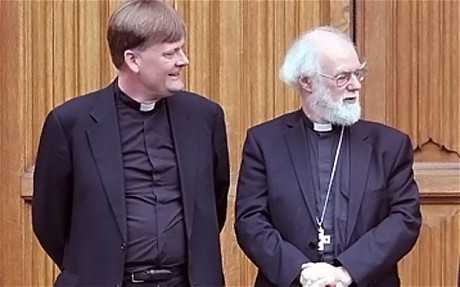
    Rev Jonathan Baker and The Archbishop of Canterbury, Dr Rowan Williams.

    By Jonathan Wynne-Jones, Religious Affairs Correspondent

    Dr Rowan Williams named the Rev Jonathan Baker as the next Bishop of Ebbsfleet despite knowing he was an active and senior mason.

    The appointment, announced earlier this month, marked a significant U-turn by Dr Williams who had previously said that Freemasonry was “incompatible” with Christianity and had refused to promote Masons to senior posts.

    Last week, as news of Fr Baker’s membership of the Masons began to circulate through the Church, it provoked growing concern and criticism from clergy and members of the General Synod.

    When contacted by The Sunday Telegraph on Friday, Fr Baker defended his continued membership of the Masons and insisted it was compatible with his new role as a bishop.

    Yet yesterday he said he had changed his mind was leaving the masons so he could concentrate on being a bishop, adding: “I wish nothing to distract from the inauguration of that ministry.”

    Freemasonry, a secretive male-only organisation dating back 300 years, requires its members to declare a belief in a “supreme being” and to undergo elaborate rituals.

    Fr Baker joined the Apollo University masonic lodge in Oxford while he was a student, in an initiation ceremony that involves promising to keep the “secrets of Freemasonry”.

    This ritual is said to involve members being blindfolded, wearing a hangman’s noose, and being warned that those who break the oaths of allegiance will have their throat slit and their tongue torn out before being buried in the sand.

    He remained a member of the lodge for more than 20 years until his resignation yesterday, rising in the organisation to serve a term as an assistant Grand Chaplain.

    Fr Baker, who is currently principal at Pusey House in Oxford, said he had told Archbishop Williams he was a mason when they discussed his appointment to be the next Bishop of Ebbsfleet – one of the “flying bishops” who oversee clergy opposed to women priests. The post had fallen vacant when its previous holder quit to join the Roman Catholic Church.

    He said on Friday: “For many years I have been an active member and I continue to be a member. This came up in discussion with Rowan, but it has not caused a problem for me at any stage of my ministry and it won’t cause a problem now.”

    He argued that it would not interfere with his role of overseeing traditionalist parishes and said he saw no conflict in being a bishop and a Freemason.

    “I’ve never found it to be anything other than an organisation that is wholly supportive of the Church.”

    However, yesterday he said: “I have concluded that, because of the particular charism of episcopal ministry and the burden that ministry bears, I am resigning my membership of Freemasonry.”

    He said that in his conversation with Dr Williams about taking up the Ebbsfleet post, the Archbishop had asked him to reconsider his membership of Freemasonry, but was happy for the appointment to go forward while he was still a Mason.

    Yet Dr Williams has previously expressed serious concerns about clergy being involved with the organisation.

    In 2002, shortly before he became the Archbishop of Canterbury, Dr Williams wrote in a letter to Hugh Sinclair, of the Movement for the Register of Freemasons: “I have real misgivings about the compatibility of Masonry and Christian profession … I have resisted the appointment of known Masons to certain senior posts.”

    A year later he repeated this unease when he tried to apologise for upsetting Freemasons with his comments, saying: “Where anxieties exist they are in relation not to Freemasonry but to Christian ministers subscribing to what could be and often is understood [or misunderstood] as a private system of profession and initiation, involving the taking of oaths of loyalty.”

    His senior advisers went even further at the time. “He questions whether it’s appropriate for Christian ministers to belong to secret organisations,” said The Rev Gregory Cameron, a close friend and former chaplain to Dr Williams. “He also has some anxiety about the spiritual content of Masonry.”

    A spokesman for Dr Williams said at the time that he was “worried about the ritual elements in Freemasonry, which some have seen as possibly Satanically inspired and how that sits uneasily with Christian belief”.

    He continued: “The other idea is that because they are a society, there could be a network that involves mutual back-scratching, which is something he would be greatly opposed to.”

    Last night, Christina Rees, a member of the Archbishops’ Council, said: “The fact that Jonathan Baker has resigned as a Freemason suggests to me there is a serious incompatibility between the organisation and the Church. If it was only a matter of perception, surely he could have stuck it out.”

    Her comments were echoed by Alison Ruoff, a prominent member on the General Synod, who said she had been stunned to learn of Fr Baker’s involvement with the Masons.

    “I’m pleased to hear he’s resigned as a Mason because it is clear that the gospel does not go with masonic beliefs,” she said.

    “I think Rowan should have said he could not be a bishop if he continued to be a Mason.”

    The Rev David Phillips, general secretary of the Church Society, a conservative evangelical group, said: “The Church has said that Freemasonry is not compatible with Christianity so appointing him as a bishop seems to contradict its own stance.”

    Lambeth Palace declined to comment.

    www.telegraph.co.uk, 14 May 2011

  • Unlawful Killing: Was Princess Diana Murdered?

    Unlawful Killing: Was Princess Diana Murdered?


    ‎”A friend of the late Princess testifies that Diana was warned by Conservative MP (and Winston Churchill’s grandson) Nicholas Soames to stop criticizing the royal family or “Accidents can happen.”’

    A new documentary shown at the Cannes Film Festival makes some big allegations that have people asking: “Was Princess Diana murdered?”

    by RICHARD CORLISS

    Will they show the death photo? A week after that question dominated U.S. news in the wake of the Osama bin Laden killing, all of Cannes — or, rather, many in the British press reporting on the film festival — was breathlessly anticipating a documentary that would supposedly show a picture of Princess Diana in her death car just after the 1997 crash that killed the former Princess of Wales, her boy friend Dodi Fayed and their driver Henri Paul. Keith Allen’s Unlawful Killing, the Daily Mail reported, “will include a graphic black and white close-up of Diana taken moments after the Mercedes carrying the couple crashed in a Paris underpass.”

    That “money shot,” and the renewed currency of the Diana legend in the light of her son William’s recent marriage, lured several hundred journalists to Unlawful Killing‘s world premiere screening this afternoon. (The film is not part of the official selection; the producers simply rented a hall and showed the movie.) Averring that he was “not a raving republican [antimonarchist] or Trotskyite,” Allen told the crowd of his intent to focus on irregularities in the British government’s 2007 Inquest into the crash; his film would be “an inquest of the inquest” that would challenge both its methods and the belief of the British public that Diana’s death was an accident caused by a reckless driver and the madly pursuing paparazzi.

    In The Guardian last weekend, Allen wrote that he was premiering his film at Cannes because “British lawyers insisted on 87 cuts before any U.K. release could be contemplated. So rather than butcher the film, or risk legal action, we’re showing it in France, then the US, and everywhere except the U.K. Pity, because at a time when the mindless sugar rush of the royal wedding has been sending British republicans into a diabetic coma, it could act as a welcome antidote.”

    Two professional movie watchers — the Corlisses — sat avidly through Unlawful Killing and found no lingering depiction of a gruesome Diana crash-scene photo. But any reasonably alert viewer can guess which comments a lawyer might find dicey under the severe British libel system. Clinical psychologist and TV pundit Oliver James compares Diana’s erstwhile father-in-law, Prince Philip, to the serial killer Fred West. Another talking head calls the Windsors “gangsters in tiaras.” A friend of the late Princess testifies that Diana was warned by Conservative MP (and Winston Churchill grandson) Nicholas Soames to stop criticizing the royal family or “Accidents can happen.” Mohamed al-Fayed, father of the dead Dodi, airs his frequent charge that the Windsors and the British Secret Service killed Diana because she was pregnant and about to announce her betrothal to an Egyptian Muslim. “It’s not a murder,” al-Fayed says, “it’s a slaughter by a bloody racist family.”

    Considering that Allen indicts British jurists, law officers and the media for complicity in covering up the facts of Diana’s death because they are under the satanic sway of the royal family, it’s pertinent that the film doesn’t mention that Mohamed al-Fayed financed its £2.5 million ($4.1 million) budget, after Allen was turned down by Channel 4, his usual sponsor, and other TV networks. “He put money in because nobody else would,” Allen said at a press conference after today’s screening. “If I could have got it somewhere else I would have got it somewhere else. But I didn’t; I got it off him.” A mantra of those who make documentary exposés is to follow the money trail; it is unusual, if not compromising, that one of the most outspoken people in a controversial story should also pay for it.

    Whatever its hidden agenda, or the source of its budget, Unlimited Killing fills all the contours of a prime political-conspiracy film: the pugnacious tone, the dramatizing of events, the outrageous charges and, more pertinently, enough plausible evidence to raise questions of foul play. “I don’t believe that there is too much that is new,” Allen said of his film at the press conference. “There’s an old saying in our country which is the best kept secrets are on the bookshelves of the British Library. They’re all there if you care to go and look for them.” The strength of the movie — other than the lingering allure of Lady Di — is that Allen and his co-director and co-writer Victor Lewis-Smith tie the strands of conspiracy together in a zippy, brightly provocative package.

    In the royal-wedding summer of 1981, Diana Spencer seemed the perfect young bride for Charles, the Queen’s heir. “All the Windsors wanted was a brood mare crossed with a clothes horse,” Allen says in the narration. “But the brood mare proved to be a kicker.” Bad enough that the marriage ended 12 years later; worse that the adored princess went public with her acrimony. Then she falls for Dodi Fayed and may be pregnant with a future king’s half-sibling, tainting the royal bloodline. What’s a monarchy to do? Allen charges that “It was chillingly convenient for the Windsors that she die when she did.”

    The film quotes a letter Diana wrote to her butler Paul Burrell in 1993, just months after she and Charles separated. “This particular phase in my life is the most dangerous — my husband is planning ‘an accident’ in my car. brake failure & serious head injury…” (Diana suspected that Charles wanted to marry William and Harry’s nanny, Tiffy Legge-Bourke, not his longtime love Camilla Parker Bowles, whom he would wed in 2005.) If any other woman had written this, and then died in the manner she feared, would her husband not have been called to testify in her inquest?

    The reenactment of the inquest often wanders into ham acting, and the bombastic al-Fayed is not the best witness for his own case. Allen makes overmuch of the laziness of the British reporters — from the monarchy, not the crime beat — and of his proposal that Diana’s crusading against land mines might have encouraged the worldwide armament industry to have her killed. He also speculates that some malefic force in a car approaching from the other direction could have shined a searing light into Paul’s eyes, causing the crash. (That hardly squares with Allen’s assertion that Paul “was working for the [British] Secret Service when he died.” Was he a suicide driver?)

    But the real creepiness of the film is in its exposure of botched police work, intentional or simply incompetent, at the scene of the collision and after. Fully 81 minutes elapsed between the crash and the departure of the ambulance carrying Diana to a hospital. Blood tests of the driver, who was thought responsible because he was drunk at the time, were deemed “toxicologically inexplicable”; they’d been either switched or tampered with. No explanation was given for the jamming of Diana’s seat belt, which could have saved her life if she’d been able to buckle it. The Princess’s body was quickly embalmed, which obscured questions of her pregnancy; and a sanitation crew washed down the crime site before evidence could be taken. And what of the “white Fiat Uno” that some witnesses saw speeding from the scene? A paparazzo would owned a car matching that description was later found dead in it, with two bullets in his brain.

    In the end, 15 months after the inquest began, the jury returned a verdict of “unlawful killing, grossly negligent driving of the following vehicles and of the Mercedes.” The movie insists that “the following vehicles” were not the photographers chasing Diana and Dodi but other unnamed agents; and Allen corrupts his case by omitting “and of the Mercedes,” the better to absolve Henri Paul and finger the vast monarcho-politico-judicial complex.

    This climactic shrillness dilutes an engrossing case for the prosecution, and plays to the balcony of conspiracy freaks. That’s too bad, since anyone who comes to Unlawful Killing with no prejudices in the matter can find in the massing of evidence and conjecture plenty of food for thought — which, if more carefully prepared and served, could choke the royal family.

    May 13, 2011

  • IDEF’11 EURASIAN MEETING

    IDEF’11 EURASIAN MEETING

    IDEF’11the 10th International Defence Industry Fair, is held under the auspices and support of theMinistry of National Defence and under the management and responsibility of Turkish Armed Forces Foundation. The fair is organized by Tuyap Fairs and Exhibitions Organization Inc. between 10-13 May 2011, at the TÜYAP Fair, Convention and Congress Center Büyükçekmece, Istanbul. IDEF’11  is opened by President of Turkish Republic, Mr. Abdullah GÜL.

    Total of 621 domestic and foreign companies and company representatives from 48 countries (including Turkey), some of which are the leaders of the defence industry,  meeting at IDEF-2011. In addition to companies, 84 delegations are visiting the fair including 419 foreign delegation members from 70 countries. 27 Ministers, 10 Deputy Ministers, 4 Chiefs of Armed Forces, 7 Deputy Chiefs of Armed Forces, 1 Force Commander, 11 Undersecretaries.

    Along with the Ministers of Defence, the Chiefs of Armed Forces, high-level civilian and military authorities and the executives of defence industry procurement agencies of allied countries  get a chance to exchange views during their visit to IDEF’11. Both domestic and foreign industrial organizations have the opportunity to establish important business connections.

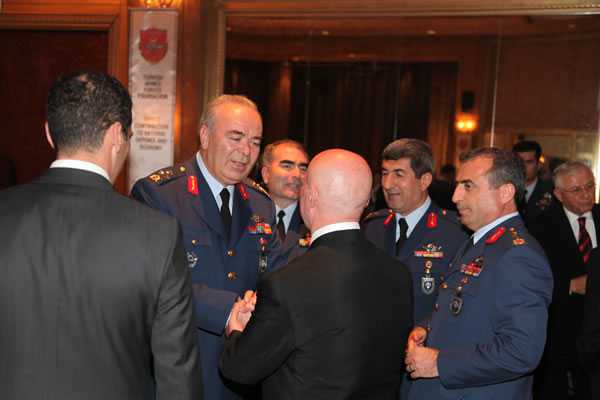
    “100th Anniversary Activities” of the glorious Turkish Air Forces, which competes with the age, made IDEF’11 even more exciting and colorful.

    The surface ships, which have been designed and produced at Turkish Shipbuilding Yards, will also be exhibited at the Büyükçekmece Cove.