Blog

  • Turkey’s Erdogan: Hamas is a political party, not a terrorist group

    Turkey’s Erdogan: Hamas is a political party, not a terrorist group

    Hamas is not a terror organization, Turkish Prime Minister Recep Tayyip Erdogan said in an interview with U.S. television late Wednesday, saying he felt the recently penned Palestinian reconciliation agreement was an essential step toward Mideast peace.

    Erdogan’s comments came one day after Hamas Gaza strongman Mahmoud Zahar said that while his organization would accept a Palestinian state within 1967 borders, it would never recognize Israel, as a result of the damage such a move would do to Palestinian refugees in the “diaspora.”


    Erdogan Turkey – 8.02.2011 - AP  Turkey Prime Minister Recep Tayyip Erdogan at parliament in Ankara, Turkey, February 8, 2011  Photo by: AP
    Erdogan Turkey – 8.02.2011 – AP Turkey Prime Minister Recep Tayyip Erdogan at parliament in Ankara, Turkey, February 8, 2011 Photo by: AP


    Senior Israeli officials, led by Prime Minister Benjamin Netanyahu, have voiced opposition to Fatah’s new unity deal with Hamas, saying that a Palestinian government that included a terrorist group calling for Israel’s destruction could not be a partner for peace.

    Speaking to Charlie Rose on Wednesday, however, the Turkish PM chimed in on the recently achieved unity agreement between rival Palestinian factions Fatah and Hamas, indicating that he did not feel Hamas was an obstacle in achieving Mideast peace.

    “Let me give you a very clear message, I don’t see Hamas as a terror organization. Hamas is a political party — it emerged as a political party that appeared as a political party,” Erdogan told Charlie Rose, adding: “it is a resistance movement trying to protect its country under occupation.”

    Going further, the Turkish PM said the world should not “mix terrorist organizations with such an organization, and they entered into the elections,” adding that Hamas “won the elections, they had ministers, and they had parliament speakers who were imprisoned by Israel, about 35 ministers and members of parliament in Israel prisons.”

    “Where is terrorism? They entered into the elections and after the elections this is how they were reacted, I mean, calling them terrorists, this would be disrespect to the will of the Palestinian people,” Erdogan added.

    Referring to the impact the unity agreement Hamas signed with Fatah, Erdogan said: “I am very pleased with what had happened. I am very pleased. Let me express it very clearly, because this is what we wanted to see for many years.”

    The Turkish PM added that “if peace will come to Palestine, if peace will come to Middle East, this will start from the internal peace in Palestine, and then and this target ahead will be discussed much more — much effectively. I discussed it with Tony Blair when he was chairing this Quartet.”

    Erdogan also referred to ongoing diplomatic tensions with Israel, a once stable relationship that has been descending in a downward spiral ever since Israel’s Gaza war against Hamas and the raid by Israeli forces on a Turkish Gaza-bound aid flotilla.

    “This is absolutely certain. I mean, to this, embargo, three things: apology, compensation, and lifting of embargo on Gaza. It has to be lifted,” Erdogan said.

    “We in the Middle East, we are a country that’s accepted the statehood of Israel and Palestine,” the Turkish PM said that his recommend “this to everybody, we defend this.”

    “And we bring together the sides. We believe that we can. But, of course, we need everybody should know their limits, their borders, and then we can take these steps,” Erdogan said.

    via Turkey’s Erdogan: Hamas is a political party, not a terrorist group – Haaretz Daily Newspaper | Israel News.
  • Gülen should return to Turkey, Bahçeli says

    Gülen should return to Turkey, Bahçeli says

    ANKARA – Hürriyet Daily News

    The leader of the Nationalist Movement Party says his party is not planning to go to court over the tape scandal.

    The head of Turkey’s nationalist opposition party has issued a challenge to an influential religious leader living abroad, saying he should return to Turkey if he wants to be involved in discussions about the country.

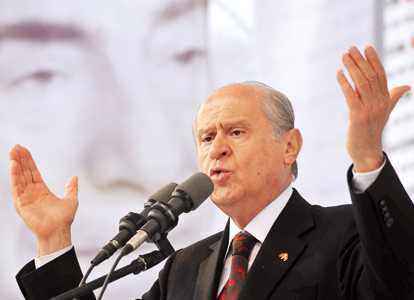
    “Turkey has been trapped inside an equilateral triangle” of Prime Minister Recep Tayyip Erdoğan, religious leader Fethullah Gülen and imprisoned leader of the outlawed Kurdistan Workers’ Party, or PKK, Abdullah Öcalan, according to Nationalist Movement Party, or MHP, leader Devlet Bahçeli.

    “I see benefit in the return of Gülen to Turkey to be able to know Turkey’s issues in depth,” he said in an interview with daily Milliyet published Thursday.

    In the interview, Bahçeli also lashed out at the state institutions, accusing them of inaction in investigating and halting the release of hidden-camera footage that has rocked his party in recent weeks – a scandal in which he has accused Gülen of involvement.

    “State institutions are indifferent to the developments. The experts of the theology departments are silent,” the MHP chief said. He added, however, that his party is not planning to go to court over the tape scandal.

    Erdoğan suggested Wednesday that the country’s intelligence services had intervened in the scandal to stop the release of such tapes online.

    With just weeks left to go before the June 12 general election, the MHP has been hit with three waves of a tape scandal featuring the online release of R-rated footage of senior party members, ending the political career of five of them.

    The MHP brass has accused Erdoğan’s ruling Justice and Development Party, or AKP, of being behind the tape releases, which they claim are part of a plot to keep the MHP from receiving enough votes to be represented in Parliament.

    Bahçeli has also indirectly targeted the Fethullah Gülen community, a Turkish religious group whose leader lives in the United States, as the source of this plot. Gülen denied the allegations in a written statement this week.

    Speaking to Milliyet, Bahçeli said Gülen’s return to Turkey would allow the religious leader to offer better guidance and make healthier evaluations.

    Gülen has been living in the United States since 1999. Legal barriers before his return were removed last year but his aides argue his health condition does not allow him to take overseas flights for the time being.

    Speaking Thursday in the western province of Edirne as part of his election campaign, Bahçeli described the June polls as “crucially important,” saying that what the ruling party has brought in the nine years of its government was unemployment and poverty.

    “These are the realities of Turkey. There is a huge difference between this reality and what Recep Tayyip Erdoğan is saying on television,” he said.

    via Gülen should return to Turkey, Bahçeli says – Hurriyet Daily News and Economic Review.

  • Turkey’s last Armenian village

    Turkey’s last Armenian village

    By Alexander Christie-Miller for Southeast European Times in Vakifli — 12/05/11

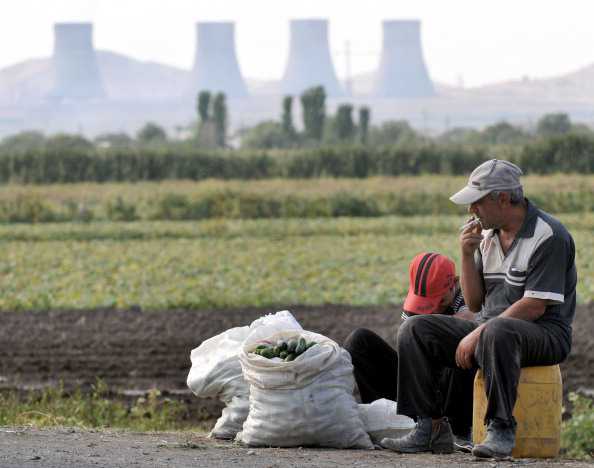
    ”]On the surface, it’s hard to see why anyone would leave Vakifli. Perched on a hill overlooking the sea, the village is a peaceful, idyllic spot, its clean Mediterranean air infused with the scent of orange blossom.

    But its 135 inhabitants have a special reason to keep their tiny community alive: theirs is the last Armenian village in Turkey to survive the devastating massacres during World War One in which as many as 1.5 million Armenians were killed.

    As with many other villages across Turkey, the decline of income from agriculture coupled with the temptations of urban life mean Vakifli is inexorably shrinking.

    “We are very few, and we are getting old,” said Berc Kartun, the village’s mayor. “All the young people leave. Young people finish university and now they’re looking for something else to do.”

    Vakifli owes its unique survival to a mixture of bravery and luck. In 1915, the Ottoman Empire’s ‘Young Turks’ government ordered that all Armenians in Turkey be deported to the Syrian desert.

    For most, this was a death sentence, and the inhabitants of Vakifli and five other villages in Hatay province that now lie by the Syrian border armed themselves and took to the mountains.

    Around 5,000 people held out for 53 days on the summit of Musa Dagh, which overlooks Vakifli, resisting Ottoman forces’ attempts to dislodge them.

    Running low on food, they caught the attention of a passing French warship by hoisting a banner, and were rescued and taken to Allied refugee camps before returning at the end of the war when Hatay was under French mandate.

    When the province returned to Turkish rule in 1939, five of the villages opted to migrate to Lebanon, with only Vakifli remaining.

    “We’re proud of this history,” said Panos Capar, a 79-year-old orange farmer. “We fought in the past, and now everybody has to accept us.”

    Now they are fighting again. Over the past 15 years the population declined from around 180 people to its present number, with many moving to Istanbul.

    It is a picture reflected across Turkey. In 1990, about half the country’s population was classified as rural, but this figure had dropped to just below 32% by 2008.

    Oranges are Vakifli’s main crop, and in 2004 a co-operative was established. All producers in the village agreed to start growing organically to try to boost profits. A small village stall sells locally produced wine, liquors, preserves and soap to a steady trickle of tourists.

    “I think we will survive,” said Capar. “Young people are planning to make investments here to attract tourists — a restaurant and other things — but it’s step by step and it won’t happen at once.”

    Vakifli’s residents bear the added burden of living in a country deeply uneasy with its religious and ethnic heritage. Starting in 1915, the large Armenian minority in Anatolia was massacred and almost entirely driven out.

    More than 20 countries recognise the killings as genocide, but Turkey fiercely disputes the label, saying many Turks were also killed and there was no intention to exterminate the Armenians.

    “The culture of the new Turkish state was based on the denial of diversity,” said Orhan Kemal Cengiz, a lawyer and prominent human rights activist.

    “They were trying to create a homogenous society, which didn’t reflect the reality of Anatolia… Because Turkey has never confronted its past we haven’t been able to get rid of racist tendencies.”

    But in Hatay, which has a rich ethnic mix of Arabs, Turks, Alawi Muslims, and different Christian denominations, Vakifli’s residents say they feel at home.

    “In Hatay there are many ethnicities and we have been living here a long time,” said Cem Capar, a 33-year-old veterinarian who was born in Vakifli but now lives in the nearby town of Samandag.

    This content was commissioned for SETimes.com.

    via Turkey’s last Armenian village (SETimes.com).

  • “Davos for women” held in Istanbul

    “Davos for women” held in Istanbul

    By Cigdem Budayci for Southeast European Times in Istanbul — 11/05/11

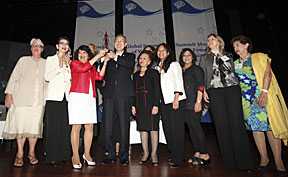
    UN Secretary-General Ban Ki-moon (centre) also attended the summit for women. [Reuters]

    ”]UN Secretary-General Ban Ki-moon (centre) also attended the summit for women. [Reuters]The 21st Global Summit of Women, held in Istanbul last week, drew around 1,000 participants from 81 countries to share strategies for advancing the economic situation of women.

    The forum, which has acquired the nickname “Davos for women”, brings together representatives of the private, public and non-profit sectors. The focus, organisers say, is on “dramatically expanding women’s economic opportunities globally through exchanges of working solutions and creative strategies forged by women leaders in different parts of the world”.

    With regard to Turkey, conversations focused on the economic, social and educational opportunities and barriers women face.

    “In recent years, social development has increased and women’s participation in economic and social life has been especially encouraged,” said Turkish Minister of State Selma Aliye Kavaf, who is responsible for women’s and family affairs.

    She emphasised that women’s participation in business and social life is extremely important for social justice and development. Turkey has implemented many different incentives and provided support for women’s employment, she said, adding that these can help support the foundations for a powerful family.

    She pointed to the increase of women in top-level executive positions in Turkey, citing a 2010 report on global gender injustice. It found that around 12% of CEOs in Turkey are women, compared to the world average of 5%.

    “This increase in the number of women CEO’s in Turkey is a sign of women’s increasing performance in the business world, as the top positions require a lot of hard work, labor and dedication,” said the president of the Women Entrepreneurs Association of Turkey (KAGIDER) Gulden Turktan. The increase, she added, indicates that gender inequality for educated women in Turkey is on the wane.

    However, according to the “2010 Global Gender Gap Report” published by the World Economic Forum (WEF), Turkey occupied an unimpressive 126th place among 134 countries when it comes to equality between the sexes.

    The report finds that in Turkey, women’s labour force participation rate is 26%, wages are only about a quarter of men’s, and only 10% women are in legislative, senior government, and managerial positions.

    According to another survey, published last month by the Directorate General on the Status of Women (KSGM), 9.9% women and 2.2% men are illiterate in Turkey.

    Although the law provides for gender equality, the KSGM found that discrimination still occurs because of the traditional division of labour and occupations, and unfairness in the distribution of work. Women, it said, tend to be dismissed more often during times of financial crisis.

    Nurdan Sahin, chairwoman of Educational Volunteers Foundation of Turkey (TEGV), said that primary school attendance among boys and girls has increased remarkably in recent years, fluctuating around 98%.

    However, she added, “more girls drop out of school in middle and higher education, and the participation of women in business life is also very low.”

    Although she agreed that there is an increase in the number of women in the business world, Sahin indicated that “those who are in the secondary positions are more than the ones in the top positions.”

    She added that education is an instrument for changing the situation, but not necessarily the decisive factor. Rather, she said, “it is more the socio-economic background of women and their self-esteem that makes a difference.”

    This content was commissioned for SETimes.com.

    via “Davos for women” held in Istanbul (SETimes.com).

  • Least developed countries conference embraces private sector

    Least developed countries conference embraces private sector

    As well as global giants like Coca-Cola and Marriott, 550 firms from developing countries attend conference in Turkey designed to improve the fortunes of the world’s 48 poorest countries

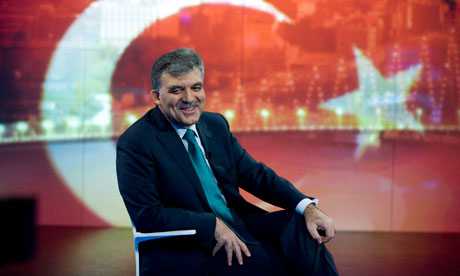
    MDG : UN LLDC meeting in Istanbul : Abdullah Gul, president of Turkey

    Abdullah Gül, the Turkish president, says the presence of a large number of companies from least developed countries is one of the most important aspects of the UN LDC conference in Istanbul this week. Photograph: Chris Ratcliffe/Getty Images

    Abdullah Gül, the Turkish president, says the presence of a large number of companies from least developed countries is one of the most important aspects of the UN LDC conference in Istanbul this week. Photograph: Chris Ratcliffe/Getty Images
    Abdullah Gül, the Turkish president, says the presence of a large number of companies from least developed countries is one of the most important aspects of the UN LDC conference in Istanbul this week. Photograph: Chris Ratcliffe/Getty Images

    Businesses from rich and poor countries are thick on the ground at this ambitious UN conference designed to boost the fortunes of the world’s 48 poorest countries. The heavy presence of the private sector is the novel factor in the fourth UN conference on the least developed countries.

    More than 2,000 companies are represented at the week-long jamboree in Istanbul, and they do not all come from the industrialised world. Besides familiar names such as Coca-Cola and Marriott, at least 550 firms from the LDCs are here. They bear unfamiliar names (at least to the west), such as Volcanic Earth from Vanuatu, Came Rise import export from Cambodia and Badsha Textiles from Bangladesh.

    A trade fair, hosted by Turkey’s confederation of businessmen and industrialists, is going on all week and a business “matchmaking event” on Tuesday gave opportunity for LDC companies to meet with counterparts from the industrialised world.

    The biggest business contingent comes from Turkey – the first developing country to host a UN LDC conference since LDCs officially became a category in 1971. This reflects, perhaps, Turkey’s desire to find business opportunities in new markets, as well as a belief – from its own historical experience – of the importance of the private sector in economic development. For the Turkish president, Abdullah Gül, this is what makes this conference different from its predecessors.

    “This is a conference not just of government officials,” he told the Guardian at the Tarabya presidential residence, with a splendid view of the Bosphorus. “There is a business track with the business community from LDCs and we have arranged it so they can have their own meetings. To me it is one of the most important aspects of this conference. It is the first time that there is this kind of large business presence.”

    Gül, who was meeting the world’s press before attending Turkey’s cup final tonight, said he wanted the conference to act as a spur to joint ventures between businesses in the developing and developed world that would boost growth and create jobs.

    “We see the private sector as a very important dimension, it’s the right kind of model,” he said.

    Gül politely declined to be sidetracked on to other pressing regional matters, such as the unrest in Syria or the civil war in Libya. He did not want “such topical issues” to overshadow the “overarching” importance of development matters at hand.

    The UN is fully behind the embrace of private business. “Despite recent progress in some countries, more than 660 million people continue to live in poverty, largely disconnected from global markets and economic opportunity,” said Georg Kell, executive director for the UN Global Compact, the UN’s voluntary corporate responsibility initiative. “By bringing the voice of business to this LDC conference we hope that governments will improve the environment for business to grow. And showcasing market-led solutions we hope to inspire more partnerships which have the power to improve the lives of people.”

    As for the broad aims of the conference – halving the number of LDCs to 24 in the next decade – Gül was confident that the final document, a plan of action, would ensure that the next 10 years would be very different from the previous decade. Only three countries have shed their LDC status since 1971.

    Civil society groups, however, are not so upbeat. They say that much of what appears to have been agreed in the forthcoming programme of action, to be finalised and endorsed by governments on Friday, will not help as it is simply written in language that was agreed from other processes.

    “To achieve a world without LDCs is not just a matter of upscaling resources, we need to be rethinking both the model and the practice of sustainable development,” said Demba Moussa Dembele, president of LDC Watch, an NGO network formed after the 2001 UN LDC conference held in Brussels. “Civil society leaders stress that a world without LDCs needs more than a small increase in ODA, or settling for commitments which extend no further than the millennium development goals on reducing poverty.”

    For Stephen O’Brien, UK international development minister, who is in Istanbul, it was imperative that the conference stress the importance of a successful end to the Doha trade negotiations – the so-called development round. A Doha round that extended duty free access to goods from LDCs would lift 3 million people out of poverty and come at a very low cost to the G20 of economic rich and emerging countries, he told the conference.

    “Ensuring that countries are fully integrated into the global economy is critical to drive growth and poverty reduction. Without a fair chance to export their products, countries cannot meet their potential to grow and reduce poverty. A successful conclusion of the Doha development round and a strong multilateral system remain the best way to ensure sustained and fair market access of developing countries to global markets.”

    via Least developed countries conference embraces private sector | Mark Tran | Global development | guardian.co.uk.

  • AFP: Turkey plans new ‘quake-proof’ cities near Istanbul

    AFP: Turkey plans new ‘quake-proof’ cities near Istanbul

    (AFP) – 22 hours ago

    ISTANBUL — Turkey plans to build two new cities near Istanbul and relocate up to 1.5 million residents who are most at risk from a possible earthquake in the metropolis, the prime minister said on Wednesday.

    “Do not forget that Istanbul is under a major threat of an earthquake … This project would strengthen Istanbul’s preparedness,” Recep Tayyip Erdogan said in his televised remarks.

    “Around 1.5 million people will be moved to those cities. We want our people to contribute this project from their hearts, we want them to move voluntarily,” he added.

    The locations for the two satellite cities had been chosen after safety studies, Erdogan said, adding that one of them would be built on the shores of the Black Sea on the European side of the city.

    The second one would be on the Asian side of the Bosphorus Strait, Erdogan said, without giving any details.

    The construction of the two cities would begin after June’s parliamentary election, the premier added.

    Erdogan announced last month plans to build a water channel connecting the Black and Marmara seas as an alternative to the congested Bosphorus Strait. A third bridge would also be constructed over the Bosphorus, in northern Istanbul.

    The announcements come as part of a series of election pledges by the prime minister ahead of elections on June 12 in which his Islamist-rooted party is seeking a third straight term in power.

    Istanbul’s 13 million inhabitants live in constant fear of a major earthquake, which experts predict will hit Turkey’s largest metropolis in the near future with a magnitude of up to 7.2.

    In 1999 an earthquake, which measured 7.6 on the Richter scale, devastated Turkey’s most industrialised Marmara region, including some suburbs of Istanbul, and killed some 20,000 people.

    via AFP: Turkey plans new ‘quake-proof’ cities near Istanbul.