Blog

  • Dr. Josef Olmert: The New Middle East and Turkey

    Dr. Josef Olmert: The New Middle East and Turkey

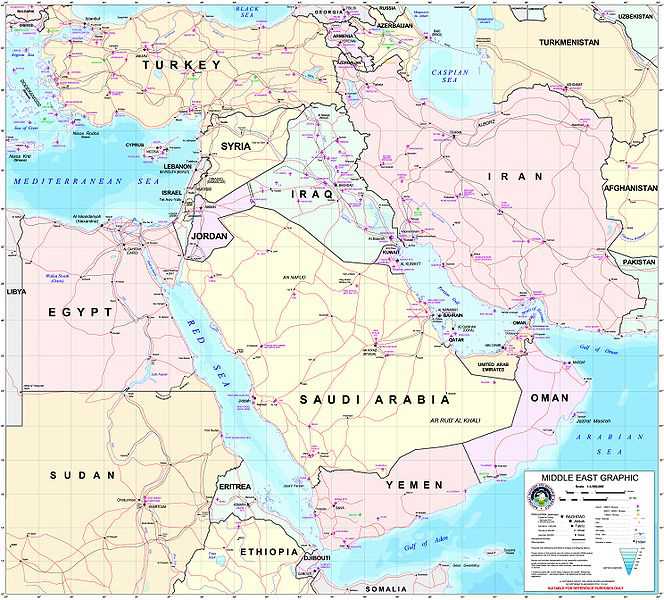
    In March of 1941, Nazi Germany seemed to overrun the Middle East and deprive Britain of its historic and hegemonic role in the region. The British government under Winston Churchill made an offer, supposedly very enticing to the Turkish Government. “Help us to occupy Syria, and we will share the spoils with you — the north of the country to you, the south to us.”

    The elusive ally, as Turkey was described by a historian of its foreign policy, justified its reputation and turned down the unprecedented offer. Its Foreign Minister Saracuglu told the British, that the Syrians were tough customers, alluding to the 400 years of Ottoman Turkish rule over Syria.

    This was another Middle East, and this was another Turkey, still dominated by the Kemalist ideology, looking towards Europe for inspiration, rather than back towards its lost lands in the region, Syria included. Turkey under the moderate Islamic AKP — with P.M Erdogan as the undisputed leader — is engaged in a comprehensive reevaluation of its regional role. There are many reasons for that, among them the reluctance of the EU to accept Turkey as a full-fledged member, for fear of changing its character by the inclusion of such a vast Muslim population, something that is widely resented by most Turks including the secular element of the Turkish people.

    The fact is that almost for a decade the AKP gradually pulled Turkey away from the basic tenets of the Kemalist ideology and that is the culmination of profound developments inside Turkey itself which seem to have much greater effect than European attitudes.

    Be as may, the new Turkey has already started to flex its muscles in a way which leaves small room for doubt. P.M Erdogan wants to become the new strong man of the Middle East, so much so that he is already called the new Sultan.

    Turkish relations with Israel, which evolved for 3-4 decades into an undeclared strategic alliance, were first to feel the brunt of the new policy. The last three years have witnessed a sharp deterioration in the relations and very little is left of the alliance. Yet the two parties are very careful not to go beyond the point of no return. In the case of Turkey, Erdogan is subjected to some pressure from the military establishment, the traditional proponent of the old alliance as well as some secular groups. Erdogan who proved himself to be an astute diplomat knows also that a final, complete rift with Israel will bring about a crisis with the US. Turkey and Israel may still heal some wounds, though the intimacy of previous years is no more.

    Erdogan has made major strides towards Iran, but let’s not be fooled by that. In the Middle East, history usually repeats itself, and Turkish-Iranian relations have always been problematic, tensed and competitive rather than cooperative. Turkey being the largest Sunni state in the Middle East, Iran being the Shi’ite power. Love lost has not historically characterized these relationships, nor will it be the case in the foreseeable future.

    Syria may prove to be one of the potential collision points between the two regional powers. In the last few years, Erdogan promoted Turkey’s relations with Syria, overcoming the legacy of longstanding mistrust. Some Middle East observers went as far as to suggest that Bashar Assad looked to Turkey as a possible alternative to his alliance with Iran, as well as a shield against possible future Israeli aggression against his country.

    Bashar Assad is still around — it’s not clear for how long — but Erdogan is already preparing for the post-Assad era in Syria and its likely regional implications. Iran, on the other hand, sees no horizon beyond Assad, and knows full well that his downfall will be a crucial setback to its regional aspirations. Not so for Turkey, which stands to gain from a post-Assad Sunni-dominated Syria.

    There is an unmistakable buzz in diplomatic circles in the region clearly indicating that Turkey is engaged in behind-the-scenes efforts, in conjunction with some Arab countries, to find ways to smooth the expected transition in Syria. The fact that this new new situation may mean a defeat to Iran is among the prime calculations of the countries participating in these talks, Turkey included.

    In public, Erdogan has sharpened his rhetoric when talking about Syria in general, and Bashar Assad in particular. The tone is clear, and the music is that Syria will have to change. Here is a challenge also to the US and the NATO Alliance. When the time comes to intensify pressure on Bashar Assad, give a major role to Turkey. This time around, the Turks may not refuse.

    via Dr. Josef Olmert: The New Middle East and Turkey.
  • Pew Poll Finds Muslim World Unsure of Obama

    Pew Poll Finds Muslim World Unsure of Obama

    Muslim World Is Unsure of Obama, Poll Finds

    By DALIA SUSSMAN

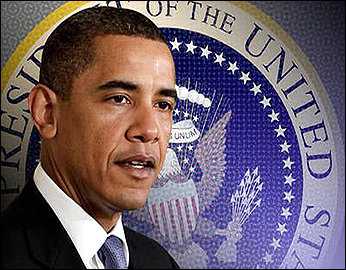
    A new survey by the Pew Research Center suggests that President Obama’s scheduled speech on the Middle East this week will be greeted by skeptical audiences in several predominantly Muslim countries.

    The poll, conducted in Turkey, Egypt, Jordan, Lebanon, Indonesia and the Palestinian territories from late March to April (before the killing of Osama bin Laden), finds negative views of the United States and a lack of confidence in Mr. Obama persisting from last year, and in some cases even worsening. The survey, released Tuesday, is part of the Global Attitudes Project.

    Broad majorities in Turkey, Egypt, Jordan, and the Palestinian territories expressed unfavorable views of the United States. Opinion was divided in Lebanon, and only in Indonesia did the United States receive positive marks. Similarly, except for Indonesia — where Mr. Obama lived for four years as a child, a fact that is well-known there — most said they did not have confidence in Mr. Obama to do the right thing in world affairs, ranging from 57 percent who said so in Lebanon to 84 percent in the Palestinian territories.

    With the exception of Indonesia, majorities elsewhere also said they opposed the United States campaign against terrorism and disapproved of the way Mr. Obama was handling the calls for political change in the Arab world.

    Regarding the political demonstrations that have taken place in several Arab countries, large majorities in Turkey, Egypt, Jordan, Lebanon and the Palestinian territories said they followed the news about them, and most expressed excitement about the movements. Moreover, more than 7 in 10 respondents in Jordan, Lebanon and the Palestinian territories said they thought the protests would lead to more democracy in the Middle East. Those in Turkey and Indonesia were less convinced.

    Surveys were conducted face-to-face and each has a margin of sampling error of plus or minus 4 percentage points.

    via Pew Poll Finds Muslim World Unsure of Obama – NYTimes.com.

  • Hamshen Politician Says He Will Form New Party in Turkey

    Hamshen Politician Says He Will Form New Party in Turkey

    Hamshen Armenians of northeastern Turkey are gearing up to create their own political party, reported Hurrieyet Daily news. The move came after all seven Turkish-Armenians who ran for seats in parliament were left behind on the ballots by the main political parties, including the ruling Justice and Development Party (AKP), the Republican People’s Party (CHP), and the Peace and Democracy Party (BDP).

    Ismet Şahin, a Hamshenite and a former deputy candidate from Istanbul’s second region who ran as a member of BDP was one of the seven left behind. Now he has voiced his intention to form a new party whose name will be announced after the general elections on June 12.

    “We will become a party that produces global solutions for societal problems and protects the general interests of all oppressed people. Our party will remain completely outside the left-right paradigm,” Şahin told Hürriyet Daily News.

    “It would have been naive to expect positive results. The AKP still uses the Armenian identity as a form of curse in tete a tete debates,” said Şahin. “The presence of even a single Armenian deputy in parliament would remind Turkey of its history; it would force Turkey to face up to its own history. Turkey does not have the courage to face up to its history.”

    According to Hurriyet, Şahin also accused the AKP and CHP of nationalism, and noted that Armenians in Istanbul are marginalized.

    “The BDP presents the Kurds and Turks as brothers in arms that fought against common enemies to protect the Republic, with the aim of gaining recognition from the state. The BDP is getting corrupt. Instead of aligning itself with other oppressed peoples, the BDP chose to go for an exclusively Kurdish constituency. In the past they had announced their support for me because I was from within the party and because I am a Hamshenite,” said Şahin.

    “In recent years, more and more people have begun claiming they are discovering their Armenian identity, and I do not find this sincere. Hamshenites have always identified themselves as Hamshenites. If you ask whether they are Turks, you would elicit a negative response. If you ask whether they are Armenians, again you would elicit a negative response. They would only tell you they are Hamshenites,” said Şahin.

    via The Armenian Weekly Online.

  • Turkcell Technology Becomes one of the Decision Makers in Europe’s R&D Arena

    Turkcell Technology Becomes one of the Decision Makers in Europe’s R&D Arena

    ISTANBUL, May 17, 2011 /PRNewswire-FirstCall/ — Turkcell (NYSE: TKC, ISE: TCELL), the leading communications and technology company in Turkey is delighted to announce that its fully-owned subsidiary, and one of Turkey’s technology centers, Turkcell Technology, has been elected into the Board of Directors of a Cooperation Platform, namely ITEA 2. ITEA 2 was established in the interests of sustaining the competitive capacity of R&D in Europe, and is capable of shaping the future of the continent. In addition to Turkcell Technology, global technology giants such as Nokia, Telefonica, Philips, Daimler, Siemens and Bosch also have seats on the Board.

    Turkcell Technology CEO Semih Incedayi commented: “We believe that being unanimously elected to ITEA 2’s Board of Directors, thanks to Turkcell Technology’s track record of success and efficient participation in previous projects, and its technology knowhow is invaluable for both our Company and the country. It is essential for Turkcell Technology to play a decision-making role together with Europe’s leading companies in the R&D arena. Turkcell Technology considers ITEA 2 Board membership to be a significant role undertaken on behalf of Turkey itself. This membership provides us with a fresh channel for new experiences enabling us to expand our country’s frontiers; while enabling us to carry out Turkey’s strategic priorities at this focused platform. We will thoroughly support the promising projects of Turkish companies.”

    ITEA 2 supports pre-competition R&D projects in order for Europe to maintain its leadership in the area of software-intense service and systems. ITEA 2 is positioned under the umbrella of EUREKA, which is a platform where market-oriented and easily commercialized products and processes are supported in the European Union. ITEA 2 is a cooperation platform, on which leading technology companies from different sectors come together to transfer budgets and determine new strategies, aiming to create the most competitive technologies in Europe in response to Asia and North America. ITEA 2 offers fiscal support for a certain percentage of the budget of projects approved by the board of directors. The intellectual property of studies realized within the scope of the project goes to the shareholders. Meanwhile, established technology infrastructures are given to participating companies. Turkcell Technology already has eight ITEA 2 labeled projects and executes the EU and Turkey consortium leadership of certain projects.

    About Turkcell Technology:

    Turkcell Technology is among Turkey’s leading R&D and innovation companies. It was set up to develop competitive information and communication technology (ICT) services and products. The seeds of the company were sown with the establishment of Europe’s second-largest GSM operator, Turkcell. In 2007, the decision was taken to build a technology park company to provide an optimum R&D and innovation environment for Turkcell technical staff specialized in ICT. In the same year, Turkcell Technology Research & Development was founded in the TUBITAK-MAM Technology Free Zone (TEKSEB).

    Turkcell Technology has been developing services and products in the fields of network services and providers, SIM cards and terminal solutions, mobile Internet, mobile marketing, multimedia applications, business intelligence solutions and business support systems.

    Turkcell Technology successfully conducts its technology export activities to the Commonwealth of Independent States, Russia, the Middle East, Africa and Europe. It aims to become a world brand in its field.

    About Turkcell

    Turkcell is the leading communications and technology company in Turkey with 33.1 million subscribers and a market share of approximately 54% as of March 31, 2011 (Source: Our estimations, operators’ and Authority’s announcements). Turkcell is a leading regional player, with market leadership in five of the nine countries in which it operates with its approximately 60.4 million subscribers as of March 31, 2011. Turkcell reported a TRY2.1 billion (US$1.3 billion) net revenue with total assets of TRY15.2 billion (US$9.8 billion) as of March 31, 2011. Turkcell covers approximately 83% of the Turkish population through its 3G and 99.07% through its 2G technology supported network. It has become one of the first among the global operators to have implemented HSDPA+ and achieved a 42.2 Mbps speed using the HSPA multi carrier solution. Turkcell has been listed on the NYSE and the ISE since July 2000, and is the only NYSE-listed company in Turkey. 51.00% of Turkcell’s share capital is held by Turkcell Holding, 0.05% by Cukurova Holding, 13.07% by Sonera Holding and 1.19% by others, while the remaining 34.69% is free float.

    Read more at

    http://www.turkcellteknoloji.com.tr

    For further information please contact Turkcell

    Nihat Narin, Investor and International Media Relations

    Tel: +90-212-313-1244

    Email: [email protected]

    [email protected]

    via Turkcell Technology Becomes one of the Decision Makers in Europe’s R&D Arena — ISTANBUL, May 17, 2011 /PRNewswire-FirstCall/ –.

  • TURKEY: BRUSSELS, CONCERN OVER WEBSITE CENSORSHIP

    TURKEY: BRUSSELS, CONCERN OVER WEBSITE CENSORSHIP

    BRUSSELS – After the protests in Turkey on last Sunday, today the European Commission reiterated its “concern over the frequent bans on websites, excessive regarding their goal and length”, which are implemented in the EU accession candidate.

    The statement was made today in Brussels by Natasha Butler, the spokeswoman for EU Enlargement Commissioner Stefan Fule, responding to questions from journalists. In particular, Turkish Internet law “restricts the right of citizens to gain access to information”, specified the spokeswoman.

    As for a new law expected to introduce several limitations for Internet use in Turkey, “we are closely following the situation”, explained Butler, “and we are stressing that blocking web contents should be targeted and proportionate, and should be the result of a judicial procedure”. (ANSAmed).

    via TURKEY: BRUSSELS, CONCERN OVER WEBSITE CENSORSHIP | European Jewish Post.

  • Satellite Image Reveals Spread of a Megacity | Megacities, Urban Sprawl & Population Explosion

    Satellite Image Reveals Spread of a Megacity | Megacities, Urban Sprawl & Population Explosion

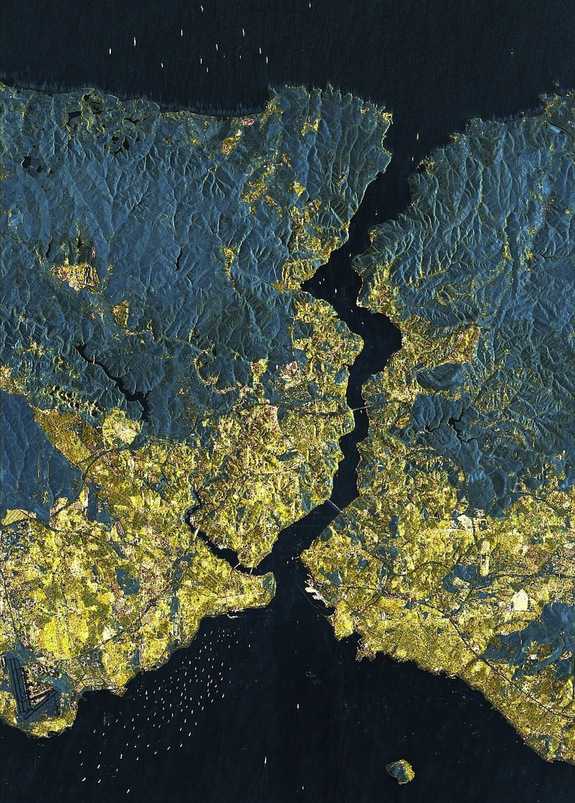
    A German satellite image provides a detailed view of Istanbul from more than 300 miles (500 kilometers) up. There is dense housing where yellow is predominates. In the city itself, only a few areas remain undeveloped and are thus shown in green. CREDIT: DLR
    A German satellite image provides a detailed view of Istanbul from more than 300 miles (500 kilometers) up. There is dense housing where yellow is predominates. In the city itself, only a few areas remain undeveloped and are thus shown in green. CREDIT: DLR

    A German satellite image provides a detailed view of Istanbul from more than 300 miles (500 kilometers) up. There is dense housing where yellow is predominates. In the city itself, only a few areas remain undeveloped and are thus shown in green.
    CREDIT: DLR

    A newly released satellite image reveals Istanbul, the largest city in Turkey at 15 million inhabitants, is quickly becoming a “megacity” covering almost 700 square miles (1,800 square kilometers).

    “Megacities let us take a look into our future, when we have to expect that cities that today have ‘only’ two to five million inhabitants will grow at an explosive rate,” Hannes Taubenböck, of DLR’s German Remote Sensing Data Center, said in a statement.

    In this image, acquired by the German Aerospace Agency’s TerraSAR-X radar satellite, the populated urban areas are colored yellow because the city’s buildings reflect the satellite’s signals, giving an accurate view of its immensity. [Amazing Science Images]

    The city’s airport is clearly visible in the bottom left corner of the image — the darker blue color indicates where there are few buildings around the runways. Even the boats are visible dotting the city’s surrounding seas.

    Over time, the population and urban sprawl of Istanbul has expanded immensely. The top image shows the population spread in 1975, the middle in 1990 and the bottom image is from 2010.

    Over time, the population and urban sprawl of Istanbul has expanded immensely. The top image shows the population spread in 1975, the middle in 1990 and the bottom image is from 2010.

    The Bosphorus Suspension Bridge and the Fatih Sultan Mehmet Bridge, built in 1973 and 1988, respectively, have enabled its population to expand across the Bosphorus Strait, the stretch of water extending from the Black Sea at the top to the Sea of Marmara at the bottom.

    “These connections to the city center on the European side have generated enormous growth on the Asian side,” Taubenböck said. “Over the last 35 years, the area of Istanbul has tripled.”

    Radar satellites like TerraSAR-X, which was launched in 2007, are useful because they can “see” through clouds and darkness, while typical remote-sensing instruments rely on visible light.

    You can follow LiveScience staff writer Jennifer Welsh on Twitter @microbelover. Follow LiveScience for the latest in science news and discoveries on Twitter @livescience and on Facebook.

    via Satellite Image Reveals Spread of a Megacity | Megacities, Urban Sprawl & Population Explosion | LiveScience.