Category: USA

Turkey could be America’s most important regional ally, above Iraq, even above Israel, if both sides manage the relationship correctly.

  • Azerbaijani Armenians in the US

    Azerbaijani Armenians in the US

    By Aram Arkun
    Mirror-Spectator Staff

    Newly-arrived Baku Armenians worshipping in New York

    BROOKLYN, N.Y. — Hundreds of thousands of Armenians fled Azerbaijan in the early 1990s. The collapse of the Soviet Union, the Karabagh conflict and  violence against Armenians in Azerbaijan culminated in pogroms in Sumgait in February 1988, in Kirovabad (Ganja) in November 1988 and Baku in January 1990. It has been roughly 20 years now that members of this unique group of immigrants have lived in the United States. The purpose of this article is to examine how they have fared in the United States. This is admittedly an unscientific survey based on interviews of only a handful of individuals either involved professionally with this community, or active members of this community.

    Most Armenians from Azerbaijan came to the US from roughly 1989 to 1996. The first wave came after the US agreed to give them refugee status. Before this time,  it was very hard for Soviet Armenians except for repatriates (who came to settle in Armenia from outside the USSR in earlier years) and political dissidents to emigrate from the Soviet Union.

    Armenians were settled in nearly every state of the US. The government divided them up between different non-profit American organizations located in different states.  Sometimes there were not many American-Armenians at their destinations, which included far flung places like Fargo, ND and Boise, Idaho. In 1994, for example, seven families were sent to Alaska. Michael Guglielmo, who was director of the Social Services Department of the Diocese of the Armenian Church of America (Eastern) from 1992 to 1997, remembered that an old Armenian woman would call occasionally from Idaho. She had lived in large cities like Baku and Moscow all her life, and now, stuck in the boondocks, she would wake up and see elks. She was depressed.

    The largest groups ended up in Brooklyn and adjacent parts of New York, though substantial communities also settled in Los Angeles and parts of New England. The Congressional program allowing visas for Azerbaijani Armenians ended around 1994. By the late 1990s it became much harder to come to the US. Those who had initially come to Russia could no longer show any immediate threat to themselves because they were no longer in Azerbaijan.

    Armenians from Baku and Azerbaijan are still trying to come to the US for family reunification, but it is very hard because of the limited numbers of visas available — 25,000 per year for people throughout the world with family in the US.

    The khachkar in front of St. Vartan Cathedral dedicated to the pogroms in Baku

    There is no reliable estimate as to how many Armenians from Azerbaijan now live in the United States. Three different State Department agencies were contacted while this article was being researched, and none of them had access to the necessary information.  Neither did a number of Armenian-American organizations. Individual Azerbaijani-Armenian informants have given estimates ranging from around 10,000 to as high as 100,000. It should be kept in mind that there were approximately 400,000 Armenians in Azerbaijan, which included around 150,000 in Nagorno-Karabagh, in 1989, and most of those outside of Karabagh went to Armenia and Russia.

    Guglielmo explained that there were several ways that Armenians from Azerbaijan came into the US.  People involved in politics came to the US directly with tourist visas,  and then applied here for asylum status as political refugees. The majority were already recognized as refugees however even before coming to the US.  The United States government worked with nonprofit resettlement organizations, and it was the latter, which could choose the people they wanted, and where they wanted to settle them. These organizations were largely religious in nature, and included Catholic services, Church World Service, Lutheran Services and Catholic Migration.

    Anna Baghdassarian, who was involved in helping refugees from Azerbaijan in the 1990s, and now works at the Interfaith Refugee and Immigration Service, explained how the process worked with the Church World Service program in Los Angeles. At that time, they brought roughly 800-900 people annually from various countries like Azerbaijan, Iran and Africa. The Armenians included Pentecostals as well as members of the Church of Armenia. Those who came to Los Angeles, “had to have a relative to meet them at the airport. We did the rest of the work. The relative would take them to find an apartment, but we assisted with furniture, objects for daily living, health exams, social security cards and employment services.  If they could not find work, they went on welfare. Welfare would provide assistance for nine months for single people, and several years for families. Then we would do follow-ups with 30-day home visits to see if there were any other needs.”

    Once the refugees received their residency papers and became US citizens, they were on their own.

    The Social Services Department of the Armenian Diocese was the main Armenian organization in the United States providing assistance to the newcomers. Most of them had no financial means. In the New York area some had friends or family who helped them until they found jobs paying cash. The Diocese gave some food or clothing as direct help initially through a small fund, and helped do visa paperwork, if necessary. Guglielmo traveled to other parishes in the Diocese to try to help, as well as to get these local parishes to also participate in the effort. At that time, many Armenian-Americans still felt the refugees should have settled in Armenia but there was no light or heat there, and these people were traumatized after massacres.

    Guglielmo pointed out that “in New York there were a lot more of the asylees. There was the crazy situation of people who were intermarried. They had no religious identity before 1989 and now it meant everything. Where were they going to go? Sometimes they themselves were already half-Jewish, half- Armenian, and were married to spouses who were half-Azerbaijani and half-Russian.”

    When the asylees got here, they had to make their case to the government. Guglielmo stated that “proving Jewish ancestry helped, or if you were actually injured there in a pogrom and could prove it, that led to asylum.” The Diocese had a pro bono network of lawyers who assisted individuals, a Hebrew service and some committees of human rights lawyers.  However, some people had no documents or proof, and could not prove their case. Many of these stayed illegally, without papers, or married an American citizen.

    The immigrants themselves also made at least one attempt to organize in order to help one another.  A group in Rhode Island, supported by Guglielmo and the local Diocesan priest, created the Armenian Refugee Social Economical [sic] Development Association.  Garen Bagdasarian, who was a founder of this organization, described its work: “The main goal was to have a representative like a non-profit organization in Congress to act like our lawyer.  Every year in Congress, there are debates over which groups will receive priority, or continue to receive priority, as refugees permitted to enter the US. It is necessary to explain why a particular group or nationality is in danger in a country.” At the time, a nonprofit group in Colorado that lobbied on behalf of Russian Jews was willing to help the Armenians, but asked for around $30,000. This group would have represented the Armenians to a committee of seven national organizations that helped refugees. The Armenians attempted to raise money through parties and other efforts, but it did not succeed. The main problem apparently was that the Armenian-American community at large felt that Armenians from Azerbaijan should go to Armenia, not America. Meanwhile, the Congressional program allowing Azerbaijani Armenians to receive a priority refugee status expired by the mid-1990s.  The organization still exists, but only in Rhode Island and it chiefly helps local Armenians. For example, it provides assistance for the burial of needy Armenians.

    Brooklyn and the New York Metropolitan Area
    The New York City metropolitan area, and Brooklyn in particular, contains one of the largest communities of Azerbaijani-Armenians in the US. It is difficult to make an estimate of its Azerbaijani-Armenian population precisely because of its largeness. Fr. Mardiros Chevian, Dean of St. Vartan Armenian Cathedral in Manhattan, estimated that there are several thousand in New York City and New Jersey.

    Dr. Svetlana Amirkhanian, chairwoman of the St. Gregory the Illuminator Mission Parish Council, felt it was not possible to give an accurate number. There were approximately 400 families on the parish mailing list, but it was unclear what percentage of the total population of Azerbaijani-Americans this represents. The majority were in Brooklyn, but some moved out to Manhattan, Bronx, Queens and New Jersey, as their economic circumstances improved. They arrived at different times.

    Angela Kazarian, treasurer of the same mission parish, had heard a figure of 5,000 bandied about for the NY metropolitan area.

    Marina Bagdasarova, vice chair of the Brooklyn mission Parish Council and Armenian school principal, pointed out that the first wave of immigrants were those with some connections. They moved first to Iran, Syria, Lebanon, Greece and even Argentina, and from there came to the US. Some had money to go on their own. However, the majority came in the second wave, which began in 1993-4, but the biggest wave was in the spring of 1995, because it was done on a governmental level. More than 90 percent of the second wave came to Brooklyn originally and only moved out later.

    They came from different places in Azerbaijan, chiefly Baku, Sumgait and Kirovabad. At the beginning of the second wave of immigrants, Bagdasarova related, Lutheran and other Christian churches and organizations provided help, but when the numbers became huge, it was very difficult. She said, “Although people had been in Russia a few years by then, they had to start from scratch. I myself only had $100 in my pockets.” In addition, before and after the Diocese had its Social Services Department, Jewish community centers filled the void and Armenians got pulled into their world of activities.

    New immigrants still keep arriving via Russia or Armenia every year. Some manage to come through their relatives here, while others win green cards in the lottery.

    Chevian pointed out that most of them initially connected with the Diocese for a variety of reasons, including the larger complex and resources of the Diocese, its direct affiliation with Echmiadzin, about which they would have at least some knowledge, and the fact that the Diocese was fairly tolerant of their not speaking Armenian. Individually, of course, some refugees also did join Prelacy-affiliated churches.

    After the Department of Social Services of the Diocese was closed in 1997, some of the Azerbaijani Armenians were already attached to the Diocese, and made the cathedral their place of worship. There is no physical church in Brooklyn closer to them.

    The Diocese soon intensified its efforts on behalf of the new group. A mission parish in Brooklyn had already been established with a visiting pastor. Then in 2000, the last Primate of Azerbaijan, former Archbishop Anania Arabajyan, came to the US, and focused his energies on the immigrants. For three years, through 2002, Arabajyan performed the Divine Liturgy monthly in Brooklyn in a rented church. The weekend school for the new immigrants was moved from St. Vartan to Brooklyn too. Arabajyan frequently traveled to other parts of the Eastern Diocese where there were communities of Azerbaijani-Armenians. These places included Hartford, Philadelphia, Nashville, Providence, Charlotte (North Carolina), Greenfield and Lansing (Mich.), Erie (Penn.), Columbus (Ohio), Syracuse (NY), Richmond (Va.), Kansas City (Missouri) and Jacksonville (Fla.).

    In hopes of attracting more Russian-speaking Armenians to church, Arabajyan began a primarily Russian-language magazine (with several pages in Eastern Armenian) called Vera Nadezhda Lyubov/ Havadk hoyser, which was published for several years. After this was halted, he translated the Armenian Church periodical into Russian for several years. Arabajyan also translated various booklets about prayer and the church into Russian. His Russian translation of the Armenian Divine Liturgy was published in 2002.

    In recent years, as there is no permanent priest for the Brooklyn mission parish, occasionally Chevian went to Brooklyn for sacraments and pastoral work, while Deacon Sebuh Oscherician visited the school to help with religious instruction. Oscherician exclaimed, “The kids are wonderful! They are learning Armenian, and recite without papers — unlike many Armenian-American children.”

    At present, the Armenian School of Brooklyn is the main institution in the area for Azerbaijani-Armenians. The school was initially established at the Diocesan complex in Manhattan in 1995. Bagdasarova, the present principal of the school, explained that it was difficult for the parents who largely lived in Brooklyn to bring their children each week to Manhattan. It later was moved to Brooklyn, and then stopped for two or three years. Afterwards, it was revived, and worked  continuously for the last eight years.

    When Amirkhanian became involved in the administration of the school in 2001, there was barely a student. By the end of that year, there were 20, and soon the total number reached 40 to 50. “We teach Armenian history, music, dance and religion. There are English language classes for parents. I hope that we will have computer classes for adults this year.”

    Bagdasarova explained that it took place on Sundays from noon to 6 p.m. There are now five teachers, including three for Armenian language (one also teaches kindergarten-age children), one for Armenian music and recitation, and one for traditional Armenian dance. The afternoon begins with Armenian language classes, then music, and finally dance. The children range in age from 2 ½ to 14-years-old, and are largely from Azerbaijan, though there are some from Armenia who are largely the newest arrivals in the area, as well as a few from other Soviet countries.

    The children are grouped by age, but a complication is that some already have learned to speak some Armenian at home (though they don’t know how to read or write), while others do not know any Armenian at all. Textbooks are brought from Armenia and copied here, while Gilda Kupelian, Armenian Studies coordinator at the Diocese, provides some other materials.

    The children are taught some of the major events in and issues of Armenian history, ranging from Vartanants to Sardarabad, and including tragedies like the pogroms in Sumgait and Baku, the Armenian earthquake of 1989, and the Genocide, all presented in a manner appropriate for children. They are also taught some of the basics of Christianity — some prayers and how to participate in services, when Chevian comes to Brooklyn. For example, the Divine Liturgy was conducted in the church whose rooms they are renting. They learn the anthem of the Republic of Armenia, and the meaning of its flag.

    One of the unique things about the school is that it is the first school in the tri-state area to teach the Yerevan dialect of Eastern Armenian. Bagdasarova explained that “many of the children would speak the Karabagh dialect at home, like a lot of Armenians from Azerbaijan [whose roots are in Karabagh]. However, there are no textbooks and teaching materials for the latter. In addition, we thought that it is best for children to learn the language of the [Armenia] state, as it is the standard one.”

    Bagdasarova stated that the school officially was part of the St. Gregory the Illuminator mission parish, and as such, was supervised by the Diocese. However, financially it is independent and always had to raise its own revenue for renting its hall weekly and paying the teachers a modest salary. Bagdasarova donates her own salary back to the school because the needs are so great and funds are always in short supply. The school organizes fundraising events and tries to get donations through mailings in the tri-state area.

    Amirkhanian explained that the school and the mission parish did more than just school work: “We help preparing applications for green cards and other issues for no charge, so we are like a social services organization. We work with adults, as well as children.” Bagdasarova added that “We help newcomers with their English, and with American history. We do as much as we can to help with arranging things like insurance. We can’t help financially since all the money we raise goes to the school. We think that this is the most important thing, to keep our language and heritage alive.”

    According to Amirkhanian, “the school participates in all the local Russian festivals and events, thus showing our existence and placing us on the map as an Armenian community. It participates in festivals organized by Jewish organizations with performances wearing Armenian costumes.” This participation is not important solely from a cultural point of view. In the local Russian-speaking world of New York, Armenians face an aggressive effort at propaganda by Brooklyn Azerbaijanis. Urged on by their consulate in the UN, they arrange for shows on Russian television programs which are broadcast throughout the world. On these shows they claim that Armenians were the aggressors who harmed them greatly and committed massacres. Amirkhanian pointed out that “this affects the newcomers who live in this Russian-language environment and makes them feel bad. We are not able to show information on Sumgait or Baku the way they [the Azerbaijanis] do. It is a matter of money, since we have to buy the television time. So our voices are cut off and we are forced to be on the defensive. We have to justify ourselves — it should be the opposite.”

    Amirkhanian added, “The parents now are very enthusiastic and themselves have changed. They came from various places, but see the school now as a cultural center for them. We organize family evenings, celebrate various holidays, the children make friends. It is an important environment. Even my own grandchildren living in Baltimore are members of our parish.”

    The Brooklyn Armenians feel that they could accomplish more with more resources. Amirkhanian felt that: “the parents are not that well off financially, being the first generation of immigrants here.” Furthermore, there was a different mentality in the USSR, where the government did everything. Thus, the immigrants are not used to paying money, or working as a community. In addition, “They see that Jewish centers provide services for free. They ask why the Armenian community or the church does not do the same. They don’t understand the way things work here.” She felt that hopefully the next generation will be in a better position to be helpful to the community, “but meanwhile more financial or administrative support would lead to even more successes. A cultural center would be helpful, with perhaps a chapel. This would be the permanent site of the school. We need the Church and cultural organizations to help us.”

    Hartford, Conn.

    Hartford was one of the smaller places on the East Coast which became a settlement site for Azerbaijani-Armenians. They largely came from the beginning of the 1990s to 1995, initially via Armenia and later through Russia, and were often settled through Church World Services or Catholic Charities.

    Fr. Tateos Abdalian, now director of the Department of Mission Parishes for the Diocese, but the pastor of Hartford’s St. George Armenian Church from 1993 to 1999, declared that mostly families, some two or three generational, came to Hartford. There were roughly thirty to forty families in all. They were political asylees. According to Karine Abalyan, who came to Hartford with her family from Baku via Armenia as a young girl, there were as many as one hundred families in the Hartford and New Britain areas (there is another Armenian church in New Britain).

    The people in Hartford welcomed the newcomers. They found them apartments, jobs, and schools for their children. They took them to doctors. Abdalian continued, “In exchange, the people that came from Baku stayed in the Hartford church community. They took positions in the church. They took over from the Armenian-Americans. They reenergized the community.”

    Slowly they got involved. They helped out in the bazaars and picnic functions, sang in the choirs, and began to come to church regularly. Abdalian understood that “they had a simplicity of faith. They knew that there was a God. They did not know who he was, or anything about Trinitarian formulas, but they knew God was with us. I always found them to be really good people.” He felt that they struggled mightily to keep their identity while living in a Turkic land which was part of the Soviet Union: “I would refer to them as the heroes of our people. They kept whatever they were taught by their parents and grandparents as Armenians in their hearts and minds. They had no radio or television programs in Armenian, or books, but transmitted whatever they could to their children.”

    Karine Abalyan, today working at the Diocese as coordinator of public relations, left Baku with her family in the fall of 1988. They were assigned to Hartford upon arrival in the US in 1992. Catholic Charities provided initial assistance and job placement.] She thought that one of the greatest unifying factors for the Armenians from Azerbaijan was the church — St. George of Hartford — which organized clothing drives and help for the newcomers. They established an unofficial school in our church club in the first few years where kids would recite poetry, sing songs, and act in plays, all in Russian. Then people developed their own friendships and networks. Most of the families stayed in the area, though they moved from the inner city to the suburbs and purchased homes.” Some children took Armenian lessons on weekends at the parish school, “but it is hard to get fluent with once-a-week classes.”

    (Part 2 will appear next week, on Baku Armenians in the US.)

    , Sep 6, 2010
  • Widespread Fraud Seen in Latest Afghan Elections

    Widespread Fraud Seen in Latest Afghan Elections

    By ALISSA J. RUBIN and CARLOTTA GALL
    Published: September 24, 2010

    KABUL, Afghanistan — Evidence is mounting that fraud in last weekend’s parliamentary election was so widespread that it could affect the results in a third of provinces, calling into question the credibility of a vote that was an important test of the American and Afghan effort to build a stable and legitimate government.

    Matiullah Achakzai/European Pressphoto Agency

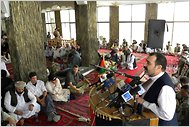
    Ahmed Wali Karzai, the brother of Afghanistan’s president, Hamid Karzai, talked with tribal leaders in Kandahar on Sunday after the election, which brought attacks by the Taliban.

    Related

    • 3 Afghan Journalists, 2 of Whom Were Held by NATO Forces, Are Released (September 25, 2010)
    • Afghan Equality and Law, but With Strings Attached (September 25, 2010)


    Some 30,000 American soldiers are taking part in the Afghanistan surge. Here are the stories of the men and women of First Battalion, 87th Infantry.

    • Related Post

    The complaints to provincial election commissions have so far included video clips showing ballot stuffing; the strong-arming of election officials by candidates’ agents; and even the handcuffing and detention of election workers.

    In some places, election officials themselves are alleged to have carried out the fraud; in others, government employees did, witnesses said. One video showed election officials and a candidate’s representatives haggling over the price of votes.

    Many of the complaints have come from candidates and election officials, but were supported by Afghan and international election observers and diplomats. The fraud appeared to cut both for and against the government of President Hamid Karzai, much of it benefiting sometimes unsavory local power brokers.

    But in the important southern province of Kandahar, where election officials threw out 76 percent of the ballots in last year’s badly tainted presidential election, candidates accused the president’s influential half brother, Ahmed Wali Karzai, of drawing up a list of winners even before the Sept. 18 election for Parliament was carried out.

    “From an overall democracy-building perspective it does not look rosy,” said one diplomat who asked not to be identified because he was not authorized to speak to the news media.

    The widespread tampering and bare-knuckle tactics of some candidates raised serious questions about the effort to build a credible government that can draw the support of Afghans and the Obama administration and its NATO partners as they re-evaluate their commitment to the war.

    American and international diplomats kept their distance from the tide of candidate complaints this week, and NATO and American Embassy officials said little other than that the election was an Afghan process and that it was the Afghans who were responsible for its outcome.

    But a less than credible parliamentary election, following last year’s tarnished presidential vote, would place international forces in the increasingly awkward position of defending a government of waning legitimacy, and diplomats acknowledged that it could undermine efforts to persuade countries to maintain their financing and troop levels.

    The Election Complaints Commission said Thursday that it had received more than 3,000 complaints since last Saturday’s election. So far they have registered case files on nearly 1,800 of those complaints — 58 percent of which were considered serious enough to affect the outcome of the balloting. That may change in the course of investigations but that preliminary figure is high, election monitors said.

    The complaints are not evenly distributed and were markedly worse in 13 of Afghanistan’s 34 provinces. In those 13, at least half the complaints were deemed to be high priority — forecasting bitter fights over the outcome.

    In addition, complaints in four provinces — Kandahar, Nuristan, Zabul and Paktika — have yet to be categorized, but fraud is expected to be extensive and has already been widely reported.

    “That preliminary figure is bad,” said a knowledgeable international observer.

    Many analysts predicted there would be serious fraud in the unstable Pashtun belt, in the south of the country, an important base for both the Taliban insurgents and President Karzai. But serious complaints were also coming from provinces in the north and west.

    Interviews by The New York Times in 10 provinces and discussions with election monitors elsewhere found a resurgence of local strongmen with armed backers who coerced and threatened voters, and the involvement of local government employees in ballot stuffing.

    “In general the election has been a free-for-all, in that different power blocs were putting forward their candidates in different places,” said an international official who has been following the elections.

    “It’s not necessarily the pro-Karzai bloc that has done so well, it’s that the Parliament will be more dependent on big power brokers,” the official said, adding that they would be more likely to make deals with Mr. Karzai that did not necessarily serve the Afghan people.

    Lawmakers and opposition candidates openly accused the Karzais, and in particular Ahmed Wali Karzai, the most powerful official in Kandahar, of fixing the election for a list of favored candidates.

    “Of the list of 50, it is already decided who will come” to Parliament, said Izzatullah Wasefi, an opposition candidate from Kandahar.

    Nur ul-Haq Uloomi, a member of Parliament who won the largest vote from Kandahar in 2005, and has since become an outspoken critic of the corruption and inefficiency of the Karzai government, accused Ahmed Wali Karzai of manipulating the vote to deny him another term.

    He said he had sent one of his campaign managers to the chairman of the Independent Election Commission, Fazal Ahmad Manawi, in Kabul to warn of potential fraud before the election, but he was rebuffed.

    “Mr. Manawi said: ‘We can do nothing about Kandahar because he is the brother of Karzai,’ ” Mr. Uloomi recounted. “It is a kind of preparation for fraud.”

    Mr. Manawi was too busy to take individual calls last week, his spokesman said.

    In one Kandahar border district, Abdul Karim Achakzai, an independent candidate from Spinboldak, said three groups of election workers were handcuffed and detained for the entire day of the election by border police officers and prevented from conducting the vote in the Maruf district.

    In the evening the polling papers with the results were brought to them to sign, but they refused. They were freed the next day after promising not to complain, he said.

    Mr. Achakzai accused the provincial head of the border guards, Abdul Razziq, an ally of Ahmed Wali Karzai, of orchestrating the detention. Mr. Razziq, who has influence in several border districts, was also accused of ballot-stuffing and intimidation in favor of President Karzai in the 2009 election, according to election observers.

    A cellphone video from an adjoining district showed men ticking dozens of ballots in favor of certain candidates. The video, which was recorded surreptitiously by a candidate’s agent, also captured a candidate’s representatives and election officials inside a polling station haggling over the price of votes.

    “You will get as many votes as you asked, just pay 72,000 Afghanis ($1,500),” said the election official, who identified himself as the head of the polling center.

    In the northern province of Takhar, several witnesses described gunmen threatening election workers and dragging voters to polling stations to vote for their candidate, Adbul Baqi. The abuse happened in Farkhar district, according to one witness, Hassibullah, 35.

    “Mr. Baqi and his gunmen were slapping and pulling people to the ballot boxes to vote for him,” he said. “He is a very cruel man.” After that, he added, they went to the women’s section of the polling station and forced the female employees of the Independent Election Commission to put more than 200 votes in their ballot box.

    Abdul Haq, 50, another voter in Farkhar district, said that when he asked the security guards to stop beating people, one of them attacked him with a knife. “The candidate himself is a good man and people do like him, but his dogs around him are not good,” he said.

    Mr. Baqi could not be reach by phone for comment. The Independent Election Commission official for the district, Engineer Kebir, said that the supporters of the candidate “did make some disturbances and violent acts and were threatening each other.” But, he insisted, “They did not disrupt the election process.”

    Alissa J. Rubin reported from Kabul, and Carlotta Gall from Kandahar, Afghanistan. Sharifullah Sahak contributed reporting from Kabul, and an Afghan employee of The New York Times from Kunduz.

    A version of this article appeared in print on September 25, 2010, on page A1 of the New York edition.

  • Ahmadinejad tells U.N. most blame U.S. government for 9/11

    Ahmadinejad tells U.N. most blame U.S. government for 9/11

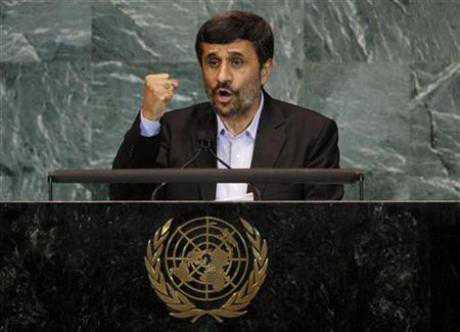
    Iran's President Mahmoud Ahmadinejad addresses the 65th United Nations General Assembly at U.N. headquarters in New York, September 23, 2010. Credit: Reuters/Mike Segar

    By Louis Charbonneau

    (Reuters) – Iranian President Mahmoud Ahmadinejad told the United Nations on Thursday most people believe the U.S. government was behind the attacks of September 11, 2001, prompting the U.S. and European delegations to leave the hall in protest.

    Addressing the General Assembly, he said it was mostly U.S. government officials and statesmen who believed al Qaeda Islamist militants carried out the suicide hijacking attacks that brought down New York’s World Trade Center — less than 4 miles from where the Iranian president was speaking.

    Another theory, he said, was “that some segments within the U.S. government orchestrated the attack to reverse the declining American economy, and its grips on the Middle East, in order to save the Zionist regime.” Ahmadinejad usually refers to Israel as the “Zionist regime.”

    “The majority of the American people as well as most nations and politicians around the world agree with this view,” Ahmadinejad told the 192-nation assembly, calling on the United Nations to establish “an independent fact-finding group” to look into the events of September 11.

    As in past years, the U.S. delegation walked out during Ahmadinejad’s speech. It was joined by all 27 European Union delegations and several other countries.

    Mark Kornblau, spokesman for the U.S. mission to the United Nations, said Ahmadinejad chose “to spout vile conspiracy theories and anti-Semitic slurs that are as abhorrent and delusional as they are predictable.”

    White House spokesman Bill Burton said President Barack Obama thought the comments “utterly outrageous and offensive — especially in the city where the 9/11 attacks occurred.”

    EU foreign policy chief Catherine Ashton said the remarks were “outrageous and unacceptable.”

    ‘COVERED UP’

    Ahmadinejad said some evidence that could support alternative theories had been “covered up” — passports located in the rubble and a video of an unknown individual who had been “involved in oil deals with some American officials.”

    As he had in past years, the Iranian president used the General Assembly podium to attack Iran’s other archfoe, Israel, and to defend the right of his country to a nuclear program that Western powers fear is aimed at developing arms.

    “This regime (Israel), which enjoys the absolute support of some Western countries, regularly threatens the countries in the region and continues publicly announced assassination of Palestinian figures and others, while Palestinian defenders … are labeled as terrorists and anti-Semites,” he said.

    “All values, even the freedom of expression, in Europe and the United States are being sacrificed at the altar of Zionism,” Ahmadinejad said.

    The Iranian president previously raised doubts about the Holocaust of the Jews in World War Two and said Israel had no right to exist.

    Tehran has been hit with four rounds of U.N. sanctions for refusing to halt its nuclear enrichment program. Obama earlier told the assembly the door to diplomacy was still open for Iran, but it needed to prove its atomic program is peaceful, as it says it is.

    , 23 September 2010

  • Free world allies fought for South Korea during war

    Free world allies fought for South Korea during war

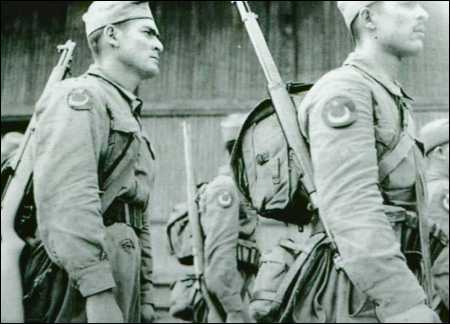
    Turkish troops arrive in the southeastern port city of Busan in 1950 to join the Korean War. Some 21 countries took part in the conflict. / Korea Times file

    UNC waged crusade against communism

    By Andrew Salmon

    On 29 August, 1950, a bright summer day, a startlingly alien sound blasted across Busan docks: A series of flatulent drones followed by a piercing wail.

    The sound was emanating from a group of young men pacing the gun turrets of an approaching heavy cruiser. Their appearance was even more bizarre: They were clad in skirts and chequered, tasseled headgear. The cacophonous lilt emanated from sack-like objects the men were plying.

    The objects were bagpipes; the men were Scottish troops of the Argyll and Sutherland Highlanders, the lead battalion of 27th British Brigade. At an urgent American request, and in response to the deteriorating military situation, this unit had been dispatched. post-haste, from Hong Kong with such speed that they dubbed themselves the “For-God’s-sake-send-something Brigade.”

    27th Brigade were just the first of the non-American contingents to arrive in Busan to help stem Kim Il-sung’s invasion. On the embattled peninsula, a new concept in world affairs was being born: A United Nations military intervention force, or, to give it its formal title in Korea, the United Nations Command, or UNC.

    This was the force enabled by UN Security Council resolutions of 25th and 27th June and 7th July 1950 calling for the “restoration of international peace and security in the area” following Pyonyang’s 25th June invasion. Several contingents, however, would not land until 1951, by which time the South had been saved, the North defeated and counter-invaded – and then the entire situation reversed by the Chinese intervention at the end of 1950.

    Under the U.N. banner, Australia, Belgium, Canada, Columbia, Ethiopia, France, Greece, India (Field Ambulance), Luxembourg, the Netherlands, New Zealand, the Philippines, the United Kingdom, Thailand and Turkey supplied ground combat troops, while South Africa deployed its “Flying Cheetah” fighter squadron. Denmark, Italy, Norway and Sweden provided non-combatant medical units.

    The United States commanded this polyglot force, and, after South Korea, provided its main muscle, contributing seven infantry division and a marine division, as well as logistical support, and the largest naval and air units. In July 1953, a survey showed that South Korea had 590,911 troops in the UNC; the US, 302,482; and other U.N. contingents totaled only 39,145.

    Most of the non-American UNC contingents were small. Once the war entered its static stage in late 1951, the Australian, British, Canadian, Indian and New Zealand units fought together, but the Commonwealth Division was the only unit in the UNC that was operationally independent. Turkey provided a brigade, but all other contingents ― except for little Luxembourg’s, which was a platoon fighting within the Belgian battalion ― were battalion-sized and were absorbed into American parent formations.

    The cosmopolitan expansion of the coalition defending South Korea provided the U.S.-run logistics chain with a range of problems. While the U.S. Army was dry, the Dutch wanted gin, the French wine, and the Australians, Belgians and British, beer to fight on. On the rationing front, the Turks would not eat pork and like the Dutch, demanded fresh bread. The Greeks wanted figs, raisins and olive oil.

    Yet, while these UNC units might cause cultural, linguistic and logistical headaches for U.S. commanders, and while they did not compare in size with the Americans, many of them proved to be exceptionally high quality fighting units. This was particularly so in the first six months of the war when, by comparison, the U.S. Army was suffering significant morale and leadership problems.

    The Turks forged a legend in their first action. Sent to hold the flank of the U.S. 2nd Infantry Division, disintegrating under Chinese onslaught at the end of November 1950, the ferocity with which they employed their bayonets earned them global fame. At the same time, they took massive casualties, partly due to linguistic problems and poor liaison with American forces.

    The French battalion proved a lynchpin at Chipyong-ni, a battle of encirclement in February 1951 that was widely considered the first UNC tactical victory against the onrushing Chinese.

    At the heart of the greatest enemy offensive of the war in April 1951, stood the British 29th Brigade, which earned global attention for its tragic stand on the Imjin River. On the opposite end of the front, the Australian and Canadian battalions of 27th Commonwealth Brigade won plaudits for their masterly defensive battle at Kapyong during the same Chinese offensive.

    The fighting quality of the Commonwealth Division would be evident in the key ground they were assigned to once the war entered its static stage: Flanking the U.S. Marine division, generally considered the best of the U.S. ground units, along the Samichon Valley, at the northern end of the so-called “Uijongbu Corridor” the traditional invasion route to Seoul.

    The Belgians were noted for their enthusiastic professionalism, and the Greeks for their excellence in mountain warfare.

    What compelled such a disparate group of nations to fight for a country that very few of their citizens had even heard of before 25 June 1950?

    Although the ostensible causus belli was the defense of South Korea, Rhee Syngman’s government – a regime of questionable democratic credentials, and one which operated, in the view of many UNC men, with comparable brutality to Kim Il-sung’s – hardly made a compelling case for intervention.

    There were, instead, three main reasons. National desires to win the goodwill of Washington; national suspicions of militant communism; and a more general desire to support the efforts of the then-fledgling, but promising, U.N.

    For the U.K., which fielded the second-largest contingent, it was a fight to stem global communism, but the country was also under pressure to maintain its “special relationship” with the U.S. France, heavily engaged in Indochina, needed to earn American goodwill for aid in that struggle. It is fair to say that all the northern European contingents felt a debt of honor toward the U.S. after World War II, and the Greeks had even more recent reasons to thank the U.S. for its assistance in winning the Greek Civil War.

    Two units that UNC officers were careful not to deploy alongside one another were the traditional enemies of southern Europe, the Greeks and the Turks. Ankara was keen to cement ties with Washington, in order to gain membership in NATO; ironically, Athens shared the same motive.

    After the armistice was signed in July 1953, this international legion, a force as polyglot as any since the Crusades, dispersed. Australian and British veterans headed for a less intense anti-communist struggle in the jungles of Malaya, but for one contingent, the end of the Korean War spelled disaster. The French battalion was assigned to Indochina, where Paris’ position was deteriorating. The much-admired battalion was wiped out by Viet Minh forces in 1954.

    Some who fought under the U.N. banner in Korea were disappointed at the organization’s less effectual role thereafter. The original U.N. resolutions that had underwritten the UNC’s existence had been made possible by the absence of the USSR’s envoy to the body, Josef Malik, who was boycotting the body in summer of 1950 (due to the U.N.’s refusal to grant a seat to communist China).

    Once Moscow rejoined the world body and Cold War politics began affecting its operation, it became difficult to employ U.N. forces on anything other than “peacekeeping” missions — many of questionable effectiveness. It would not be until the end of the Cold War, and the U.N. intervention in the Gulf War of 1991, that the U.N. would again field a military force with real teeth.

    Sixty years later, the leading nation in the UNC, the United States, is still South Korea’s most important political ally, but it is fair to say that the trade and commercial links forged between Seoul and other UNC capitals have fallen in importance since the end of the Cold War. Then-enemy China, for example, has replaced the United States as Korea’s top trade partner.

    Still, emotional ties endure: South Korea and Turkey, for example, displayed a mutual affection during their World Cup semifinal match in 2002 that was born in the war years and after, when Turkish troops founded the “Ankara” orphanage.

    The peninsula had seen international contingents fighting on its soil before. Kublai Khan’s multi-ethnic legions used Korea as a staging area for their doomed invasions of Japan in the 13th century, and Japanese, Manchu, White Russian, Chinese and Soviet troops would all leave blood on Korean soil in succeeding centuries.

    But the UNC troops of 1950 made up of the most cosmopolitan army the peninsula had ever hosted; their ethnic and national diversity would not be witnessed again in Korea until the 1988 Summer Olympics. For modern Korea, the internationalization of its fight for survival in late 1950 was the first, if unacknowledged, step in a process that few South Koreans would start talking about until the early 1990s: Globalization.

    [email protected]

    http://www.koreatimes.co.kr/www/news/nation/2010/09/117_73312.html, 19/09/2010

  • United States laid ground for Ergenekon “Deep State” in Turkey

    United States laid ground for Ergenekon “Deep State” in Turkey

    WMR has discovered a formerly Secret document from the U.S. Department of State that confirms the United States not only supported the Turkish military coup that ousted the nation’s democratically-elected government in 1980 but actively supported the military-imposed Turkish Constitution as “reformist.”

    The citizens of Turkey recently voted in a referendum and approved 26 constitutional amendments that will transform Turkey into a democratic state without the threat of the military and national security state-affiliated judiciary trumping the power of the Parliament and the people. Neocons have condemned the referendum as a threat to secularism in Turkey and a move to an Islamic state. However, the neocons and their allies in Israel are concerned that a Mossad -and CIA-imposed Turkish “Deep State” has finally seen its power largely destroyed with the impending adoption of a new Turkish Constitution. The referendum, which passed with 58 percent of the vote, is a victory for the Justice and Development Party (AKP) of Turkish Prime Minister Recep Tayyip Erdogan.

    Many of the roots of the creation of the most recent variant of the Turkish Deep State, known as Ergenekon, can be seen in the State Department policy paper dated September 5, 1981, and titled “USG Policy toward Turkey.” When the State Department document was drafted, Turkey’s military junta leader, General Kenan Evren, was drafting the present Turkish Constitution. The 1981 Turkish military draft Constitution’s “reforms” were referred to in the State Department policy document’s author Lawrence Eagleburger, the Assistant Secretary of State for European Affairs: “It is too early to judge whether the fundamental GOT reforms, now in place or in prospect, will succeed.” The document also talks about the “relief” provided to the United States by the 1980 military coup: “The military takeover of September 1980 brought temporary relief and for the moment broke the back of radical movements — including pro-Islamic ones — which had come to the fore in the 1970s.”

    Eagleburger signaled his and the Reagan administration’s support for the Turkish junta because of the same bogus reasons that neocons today criticize the Erdogan government: the bogeyman of Turkish Islamic political power. Eagleburger warned that Turkey could “drift away from NATO and Western-style government; alignment with Middle East states which supply oil and markets; possibly even neutralism growing out of accommodations with the USSR.” Today, the neocons, Israelis, and their Ergenekon allies in Turkey argue the same points in demonizing the Turkish government: that Turkey is drifting from NATO, that it is turning to oil suppliers and markets like Iran, and has a growing relationship with Russia.

    Eagleburger then outlines how the Reagan administration would cement U.S. ties with Turkey to prevent the above scenarios from being realized. He writes: “ . . . the Turkish-American relationship has no natural constituency in terms of shared history, economic interdependence, ethic or family ties. The absence of a ‘Turkish lobby’ in the United States is indicative.” Two of the recipients of the Eagleburger document would later help fill the void and help create the American Turkish Council (ATC), a lobby group patterned after their friends at the American Israel Public Affairs Committee (AIPAC). Those two recipients of the Eagleburger document were Richard Perle, the Assistant Secretary of Defense for International Security Policy, and Paul Wolfowitz, Director of Policy Planning at the State Department. Other recipients of the Eagleburger policy document on Turkey included Robert Hormats, the Assistant Secretary of State for Economic and Business Affairs [and who is now the Undersecretary of State for Economic, Business, and Agricultural Affairs under Hillary Clinton]; Ronald Spiers, the director of the State Department’s Bureau of Intelligence and Research, former U.S. ambassador to Turkey from 1977 to 1980; and the prospective U.S. ambassador to Pakistan; Richard Burt, the Director of Politico-Military Affairs for the State Department; and Nicholas Veliotes, Assistant Secretary of State for Near Eastern and South Asian Affairs.

    The nature of the bilateral U.S.-Turkish relations were described as a “best effort” to help Turkey in all respects, including an “understanding” of Turkey’s position in Greek-Turkish issues and dealing with “Armenian terrorism.” In 1981, Armenia was a constituent republic of the USSR. Today, it is “Kurdish terrorism” that plagues Turkey since Armenia is now an independent state with a natural and politically-powerful constituency in the United States. The Eagleburger document describes the Evren junta as perceiving the Reagan administration as making a “best effort” in providing financial support to Turkey from Washington’s “weighing in” on the “International Monetary Fund, the International Bank for Reconstruction and Development, the Saudis, and other potential donors.”

    Eagleburger also warns of “nettlesome” issues that could adversely affect U.S. relations with the Turkish junta, for example, “Congressional badgering on Cyprus, on relations with Greece, on the pace of return to democracy, and an Armenian niche in the proposed Holocaust Museum.”

    The United States, through an alliance with Israel and its influence peddlers in Washington, would ensure that the Turkish pace of democracy would not return to normal until the recent approval by the Turkish people of a new constitution that will eradicate the Turkish junta’s military “reforms” championed by Eagleburger and his band of proto-neocons in the Reagan administration in 1981. Attempts over the past eight years by Ergenekon to overthrow the AKP government failed and with the new constitutional changes, Ergenekon’s and Israel’s ability to influence events in Turkish politics have been curtailed, save for the continuing threat of covert Israeli provocation of terrorism involving the Kurds.

    Source: Wayne Madsen Report,  Sept 18, 2010

  • Google Acquires Israeli Company

    Google Acquires Israeli Company

    by Elad Benari

    Google announced on Tuesday that it has acquired Quiksee, an Israeli-based company which develops interactive video mapping technologies based on user-filmed videos.

    Founded in 2007 by CEO Gadi Royz, VP R&D Rony Amira, CTO Assaf Harel, and Pavel Yosifovich, Quiksee’s software allows Internet users to turn a simple video clip into an interactive video clip. Its users can photograph any location where they are with a digital camera or mobile device, and then upload the file to Google Maps. The clip thus becomes interactive, allowing people to wander through and get a seemingly real visit experience, without physically being there.

    A report in TheMarker financial newspaper on Monday estimated that the deal was worth $10 million. A spokeswoman for Google told Reuters on Tuesday that it was a “small deal” and did not provide exact figures.

    In an announcement on its website, Quiksee said: “We are delighted to announce that Quiksee has been acquired by Google! We’ve learned a lot from our previous work at Quiksee, and we look forward to bringing our experience, creativity and insight to Google. Both Google and Quiksee share the same innovative vision…we look forward to the opportunity to contribute and do great things together in the future.”

    According to TheMarker, Google sees Quiksee’s technology as “the missing link” in its Street View service which allows users to view photographs of streets around the world.

    Quiksee is Google’s second acquisition in Israel in six months. In April, it acquired web gadgets provider LabPixies for an estimated $25 million. LabPixies specializes in personalized websites and mobile gadgets such as calendars, checklists, games, and news and weather feeds.

    Google Israel’s development center managing director Yossi Matias, said in a statement that Google was committed to continue investing in Israel “both by expanding and deepening our activity as well as by continuing to strengthen our collaboration with companies and start-ups in Israel.”

    (IsraelNationalNews.com)

    Related Links:

    • ►Google Goes With Palestinian Authority
    • ►Google Defines Samaria as ‘Palestinian Territory’

    , 15.09.2010