The Imperial Anatomy of Al-Qaeda. The CIA’s Drug-Running Terrorists and the “Arc of Crisis” Part I
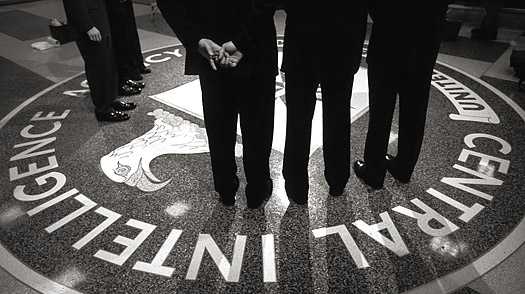
by Andrew Gavin Marshall Global Research, September 5, 2010
Introduction
As the 9th anniversary of 9/11 nears, and the war on terror continues to be waged and grows in ferocity and geography, it seems all the more imperative to return to the events of that fateful September morning and re-examine the reasons for war and the nature of the stated culprit, Al-Qaeda.
The events of 9/11 pervade the American and indeed the world imagination as an historical myth. The events of that day and those leading up to it remain largely unknown and little understood by the general public, apart from the disturbing images repeated ad nauseam in the media. The facts and troubled truths of that day are lost in the folklore of the 9/11 myth: that the largest attack carried out on American ground was orchestrated by 19 Muslims armed with box cutters and urged on by religious fundamentalism, all under the direction of Osama bin Laden, the leader of a global terrorist network called al-Qaeda, based out of a cave in Afghanistan.
The myth sweeps aside the facts and complex nature of terror, al-Qaeda, the American empire and literally defies the laws of physics. As John F. Kennedy once said, “The greatest enemy of the truth is not the lie – deliberate, contrived, and dishonest – but the myth – persistent, pervasive, and unrealistic.”
This three-part series on “The Imperial Anatomy of Al-Qaeda” examines the geopolitical historical origins and nature of what we today know as al-Qaeda, which is in fact an Anglo-American intelligence network of terrorist assets used to advance American and NATO imperial objectives in various regions around the world.
Part 1 examines the origins of the intelligence network known as the Safari Club, which financed and organized an international conglomerate of terrorists, the CIA’s role in the global drug trade, the emergence of the Taliban and the origins of al-Qaeda.
The Safari Club
Following Nixon’s resignation as President, Gerald Ford became the new US President in 1974. Henry Kissinger remained as Secretary of State and Ford brought into his administration two names that would come to play important roles in the future of the American Empire: Donald Rumsfeld as Ford’s Chief of Staff, and Dick Cheney, as Deputy Assistant to the President. The Vice President was Nelson Rockefeller, David Rockefeller’s brother. When Donald Rumsfeld was promoted to Secretary of Defense, Dick Cheney was promoted to Chief of Staff. Ford had also appointed a man named George H.W. Bush as CIA Director.
In 1976, a coalition of intelligence agencies was formed, which was called the Safari Club. This marked the discreet and highly covert coordination among various intelligence agencies, which would last for decades. It formed at a time when the CIA was embroiled in domestic scrutiny over the Watergate scandal and a Congressional investigation into covert CIA activities, forcing the CIA to become more covert in its activities.
In 2002, the Saudi intelligence chief, Prince Turki bin Faisal gave a speech in which he stated that in response to the CIA’s need for more discretion, “a group of countries got together in the hope of fighting Communism and established what was called the Safari Club. The Safari Club included France, Egypt, Saudi Arabia, Morocco, and Iran [under the Shah].”[1] However, “The Safari Club needed a network of banks to finance its intelligence operations. With the official blessing of George H.W. Bush as the head of the CIA,” Saudi intelligence chief, Kamal Adham, “transformed a small Pakistani merchant bank, the Bank of Credit and Commerce International (BCCI), into a world-wide money-laundering machine, buying banks around the world to create the biggest clandestine money network in history.”[2]
As CIA director, George H.W. Bush “cemented strong relations with the intelligence services of both Saudi Arabia and the shah of Iran. He worked closely with Kamal Adham, the head of Saudi intelligence, brother-in-law of King Faisal and an early BCCI insider.” Adham had previously acted as a “channel between [Henry] Kissinger and [Egyptian President] Anwar Sadat” in 1972. In 1976, Iran, Egypt, and Saudi Arabia formed the Safari Club “to conduct through their own intelligence agencies operations that were now difficult for the CIA,” which was largely organized by the head of French intelligence, Alexandre de Marenches.[3]
The “Arc of Crisis” and the Iranian Revolution
When Jimmy Carter became President in 1977, he appointed over two-dozen members of the Trilateral Commission to his administration, which was an international think tank formed by Zbigniew Brzezinski and David Rockefeller in 1973. Brzezinski had invited Carter to join the Trilateral Commission, and when Carter became President, Brzezinski became National Security Adviser; Cyrus Vance, also a member of the Commission, became Secretary of State; and Samuel Huntington, another Commission member, became Coordinator of National Security and Deputy to Brzezinski. Author and researcher Peter Dale Scott deserves much credit for his comprehensive analysis of the events leading up to and during the Iranian Revolution in his book, “The Road to 9/11”,* which provides much of the information below.
Samuel Huntington and Zbigniew Brzezinski were to determine the US policy position in the Cold War, and the US-Soviet policy they created was termed, “Cooperation and Competition,” in which Brzezinski would press for “Cooperation” when talking to the press, yet, privately push for “competition.” So, while Secretary of State Cyrus Vance was pursuing détente with the Soviet Union, Brzezinski was pushing for American supremacy over the Soviet Union. Brzezinski and Vance would come to disagree on almost every issue.[4]
In 1978, Zbigniew Brzezinski gave a speech in which he stated, “An arc of crisis stretches along the shores of the Indian Ocean, with fragile social and political structures in a region of vital importance to us threatened with fragmentation. The resulting political chaos could well be filled by elements hostile to our values and sympathetic to our adversaries.” The Arc of Crisis stretched from Indochina to southern Africa, although, more specifically, the particular area of focus was “the nations that stretch across the southern flank of the Soviet Union from the Indian subcontinent to Turkey, and southward through the Arabian Peninsula to the Horn of Africa.” Further, the “center of gravity of this arc is Iran, the world’s fourth largest oil producer and for more than two decades a citadel of U.S. military and economic strength in the Middle East. Now it appears that the 37-year reign of Shah Mohammed Reza Pahlavi is almost over, ended by months of rising civil unrest and revolution.”[5]
With rising discontent in the region, “There was this idea that the Islamic forces could be used against the Soviet Union. The theory was, there was an arc of crisis, and so an arc of Islam could be mobilized to contain the Soviets. It was a Brzezinski concept.”[6] A month prior to Brzezinski’s speech, in November of 1978, “President Carter named the Bilderberg group’s George Ball, another member of the Trilateral Commission, to head a special White House Iran task force under the National Security Council’s Brzezinski.” Further, “Ball recommended that Washington drop support for the Shah of Iran and support the fundamentalist Islamic opposition of Ayatollah Khomeini.”[7] George Ball’s visit to Iran was a secret mission.[8]
Throughout 1978, the Shah was under the impression that “the Carter administration was plotting to topple his regime.” In 1978, the Queen and Shah’s wife, told Manouchehr Ganji, a minister in the Shah’s government, that, “I wanted to tell you that the Americans are maneuvering to bring down the Shah,” and she continued saying that she believed “they even want to topple the regime.”[9] The US Ambassador to Iran, William Sullivan, thought that the revolution would succeed, and told this to Ramsey Clark, former US Attorney General under the Johnson administration, as well as professor Richard Falk, when they were visiting Sullivan in Iran in 1978. Clark and Falk then went from Iran to Paris, to visit Khomeini, who was there in exile. James Bill, a Carter adviser, felt that, “a religious movement brought about with the United States’ assistance would be a natural friend of the United States.”[10]
Also interesting is the fact that the British BBC broadcast pro-Khomeini Persian-language programs daily in Iran, as a subtle form of propaganda, which “gave credibility to the perception of United States and British support of Khomeini.”[11] The BBC refused to give the Shah a platform to respond, and “[r]epeated personal appeals from the Shah to the BBC yielded no result.”[12]
In the May 1979 meeting of the Bilderberg Group, Bernard Lewis, a British historian of great influence (hence, the Bilderberg membership), presented a British-American strategy which, “endorsed the radical Muslim Brotherhood movement behind Khomeini, in order to promote balkanization of the entire Muslim Near East along tribal and religious lines. Lewis argued that the West should encourage autonomous groups such as the Kurds, Armenians, Lebanese Maronites, Ethiopian Copts, Azerbaijani Turks, and so forth. The chaos would spread in what he termed an ‘Arc of Crisis,’ which would spill over into the Muslim regions of the Soviet Union.”[13] Further, it would prevent Soviet influence from entering the Middle East, as the Soviet Union was viewed as an empire of atheism and godlessness: essentially a secular and immoral empire, which would seek to impose secularism across Muslim countries. So supporting radical Islamic groups would mean that the Soviet Union would be less likely to have any influence or relations with Middle Eastern countries, making the US a more acceptable candidate for developing relations.
A 1979 article in Foreign Affairs, the journal of the Council on Foreign Relations, described the Arc of Crisis, saying that, “The Middle East constitutes its central core. Its strategic position is unequalled: it is the last major region of the Free World directly adjacent to the Soviet Union, it holds in its subsoil about three-fourths of the proven and estimated world oil reserves, and it is the locus of one of the most intractable conflicts of the twentieth century: that of Zionism versus Arab nationalism.” It went on to explain that post-war US policy in the region was focused on “containment” of the Soviet Union, as well as access to the regions oil.[14] The article continued, explaining that the most “obvious division” within the Middle East is, “that which separates the Northern Tier (Turkey, Iran, Afghanistan) from the Arab core,” and that, “After World War II, Turkey and Iran were the two countries most immediately threatened by Soviet territorial expansionism and political subversion.”[15] Ultimately, “the Northern Tier was assured of a serious and sustained American commitment to save it from sharing the fate of Eastern Europe.”[16]
While Khomeini was in Paris prior to the Revolution, a representative of the French President organized a meeting between Khomeini and “current world powers,” in which Khomeini made certain demands, such as, “the shah’s removal from Iran and help in avoiding a coup d’état by the Iranian Army.” The Western powers, however, “were worried about the Soviet Union’s empowerment and penetration and a disruption in Iran’s oil supply to the west. Khomeini gave the necessary guarantees. These meetings and contacts were taking place in January of 1979, just a few days before the Islamic Revolution in February 1979.”[17] In February of 1979, Khomeini was flown out of Paris on an Air France flight, to return to Iran, “with the blessing of Jimmy Carter.”[18] Ayatollah Khomeini named Mehdi Bazargan as prime minister of the Provisional Revolutionary Government on February 4, 1979. As Khomeini had demanded during his Paris meeting in January 1979, that western powers must help in avoiding a coup by the Iranian Army; in that same month, the Carter administration, under the direction of Brzezinski, had begun planning a military coup.[19]
Could this have been planned in the event that Khomeini was overthrown, the US would quickly reinstate order, perhaps even place Khomeini back in power? Interestingly, in January of 1979, “as the Shah was about to leave the country, the American Deputy Commander in NATO, General Huyser, arrived and over a period of a month conferred constantly with Iranian military leaders. His influence may have been substantial on the military’s decision not to attempt a coup and eventually to yield to the Khomeini forces, especially if press reports are accurate that he or others threatened to withhold military supplies if a coup were attempted.”[20] No coup was subsequently undertaken, and Khomeini came to power as the Ayatollah of the Islamic Republic of Iran.
As tensions increased among the population within Iran, the US sent “security advisers” to Iran to pressure the Shah’s SAVAK (secret police) to implement “a policy of ever more brutal repression, in a manner calculated to maximize popular antipathy to the Shah.” The Carter administration also began publicly criticizing the Shah’s human rights abuses.[21] On September 6, 1978, the Shah banned demonstrations, and the following day, between 700 and 2000 demonstrators were gunned down, following “advice from Brzezinski to be firm.”[22]
The US Ambassador to the UN, Andrew Young, a Trilateral Commission member, said that, “Khomeini will eventually be hailed as a saint,” and the US Ambassador to Iran, William Sullivan, said, “Khomeini is a Gandhi-like figure,” while Carter’s adviser, James Bill, said that Khomeini was a man of “impeccable integrity and honesty.”[23]
The Shah was also very sick in late 1978 and early 1979. So the Shah fled Iran in January of 1979 to the Bahamas, allowing for the revolution to take place. It is especially interesting to understand the relationship between David Rockefeller and the Shah of Iran. David Rockefeller’s personal assistant, Joseph V. Reed, had been “assigned to handle the shah’s finances and his personal needs;” Robert Armao, who worked for Vice President Nelson Rockefeller, was sent to “act as the shah’s public relations agent and lobbyist;” and Benjamin H. Kean, “a longtime associate of Chase Manhattan Bank chairman David Rockefeller,” and David Rockefeller’s “personal physician,” who was sent to Mexico when the shah was there, and advised that he “be treated at an American hospital.”[24]
It is important to note that Rockefeller interests “had directed U.S. policy in Iran since the CIA coup of 1953.”[25] Following the Shah’s flight from Iran, there were increased pressures within the United States by a handful of powerful people to have the Shah admitted to the United States. These individuals were Zbigniew Brzezinski, former Secretary of State Henry Kissinger, John J. McCloy, former statesman and senior member of the Bilderberg Group, Trilateral Commission and the Council on Foreign Relations, who was also a lawyer for Chase Manhattan, and of course, David Rockefeller.[26]
Chase Manhattan Bank had more interests in Iran than any other US bank. In fact, the Shah had “ordered that all his government’s major operating accounts be held at Chase and that letters of credit for the purchase of oil be handled exclusively through Chase. The bank also became the agent and lead manager for many of the loans to Iran. In short, Iran became the crown jewel of Chase’s international banking portfolio.”[27]
The Iranian interim government, headed by Prime Minister Bazargan, collapsed in November of 1979, when Iranian hostages seized the US Embassy in Teheran. However, there is much more to this event than meets the eye. During the time of the interim government (February, 1979 to November, 1979), several actions were undertaken which threatened some very powerful interests who had helped the Ayatollah into power.
Chase Manhattan Bank faced a liquidity crisis as there had been billions in questionable loans to Iran funneled through Chase.[28] Several of Chase’s loans were “possibly illegal under the Iranian constitution.”[29] Further, in February of 1979, once the interim government was put in power, it began to take “steps to market its oil independently of the Western oil majors.” Also, the interim government “wanted Chase Manhattan to return Iranian assets, which Rockefeller put at more than $1 billion in 1978, although some estimates ran much higher,” which could have “created a liquidity crisis for the bank which already was coping with financial troubles.”[30]
With the seizure of the American Embassy in Iran, President Carter took moves to freeze Iranian financial assets. As David Rockefeller wrote in his book, “Carter’s ‘freeze’ of official Iranian assets protected our [Chase Manhattan’s] position, but no one at Chase played a role in convincing the administration to institute it.”[31]
In February of 1979, Iran had been taking “steps to market its oil independently of the Western oil majors. In 1979, as in 1953, a freeze of Iranian assets made this action more difficult.”[32] This was significant for Chase Manhattan not simply because of the close interlocking of the board with those of oil companies, not to mention Rockefeller himself, who is patriarch of the family whose name is synonymous with oil, but also because Chase exclusively handled all the letters of credit for the purchase of Iranian oil.[33]
The Shah being accepted into the United States, under public pressure from Henry Kissinger, Zbigniew Brzezinski and David Rockefeller, precipitated the hostage crisis, which occurred on November 4. Ten days later, Carter froze all Iranian assets in US banks, on the advice of his Treasury Secretary, William Miller. Miller just happened to have ties to Chase Manhattan Bank.[34]
Although Chase Manhattan directly benefited from the seizure of Iranian assets, the reasoning behind the seizure as well as the events leading up to it, such as a hidden role for the Anglo-Americans behind the Iranian Revolution, bringing the Shah to America, which precipitated the hostage crisis, cannot simply be relegated to personal benefit for Chase. There were larger designs behind this crisis. So the 1979 crises in Iran cannot simply be pawned off as a spur of the moment undertaking, but rather should be seen as quick actions taken upon a perceived opportunity. The opportunity was the rising discontent within Iran at the Shah; the quick actions were in covertly pushing the country into Revolution.
In 1979, “effectively restricting the access of Iran to the global oil market, the Iranian assets freeze became a major factor in the huge oil price increases of 1979 and 1981.”[35] Added to this, in 1979, British Petroleum cancelled major oil contracts for oil supply, which along with cancellations taken by Royal Dutch Shell, drove the price of oil up higher.[36] With the first major oil price rises in 1973 (urged on by US Secretary of State Henry Kissinger), the Third World was forced to borrow heavily from US and European banks to finance development. With the second oil price shocks of 1979, the US Federal Reserve, with Paul Volcker as its new Chairman, (himself having served a career under David Rockefeller at Chase Manhattan), dramatically raised interest rates from 2% in the late 70s to 18% in the early 80s. Developing nations could not afford to pay such interest on their loans, and thus the 1980s debt crisis spread throughout the Third World, with the IMF and World Bank coming to the “rescue” with their Structural Adjustment Programs (SAPs), which ensured western control over the developing world’s economies.[37]
Covertly, the United States helped a radical Islamist government come to power in Iran, “the center of the Arc of Crisis,” and then immediately stirred up conflict and war in the region. Five months before Iraq invaded Iran, in April of 1980, Zbigniew Brzezinski openly declared the willingness of the US to work closely with Iraq. Two months before the war, Brzezinski met with Saddam Hussein in Jordan, where he gave support for the destabilization of Iran.[38] While Saddam was in Jordan, he also met with three senior CIA agents, which was arranged by King Hussein of Jordan. He then went to meet with King Fahd in Saudi Arabia, informing him of his plans to invade Iran, and then met with the King of Kuwait to inform him of the same thing. He gained support from America, and financial and arms support from the Arab oil producing countries. Arms to Iraq were funneled through Jordan, Saudi Arabia and Kuwait.[39] The war lasted until 1988 and resulted in over a million deaths.
This was the emergence of the “strategy of tension” in the “Arc of Crisis,” in particular, the covert support (whether in arming, training, or financing) of radical Islamic elements to foment violence and conflict in a region. It was the old imperial tactic of ‘divide and conquer’: pit the people against each other so that they cannot join forces against the imperial power. This violence and radical Islamism would further provide the pretext for which the US and its imperial allies could then engage in war and occupation within the region, all the while securing its vast economic and strategic interests.
The “Arc of Crisis” in Afghanistan: The Safari Club in Action
In 1978, the progressive Taraki government in Afghanistan managed to incur the anger of the United States due to “its egalitarian and collectivist economic policies.”[40] The Afghan government was widely portrayed in the West as “Communist” and thus, a threat to US national security. The government, did, however, undertake friendly policies and engagement with the Soviet Union, but was not a Communist government.
In 1978, as the new government came to power, almost immediately the US began covertly funding rebel groups through the CIA.[41] In 1979, Zbigniew Brzezinski worked closely with his aid from the CIA, Robert Gates (who is currently Secretary of Defense), in shifting President Carter’s Islamic policy. As Brzezinski said in a 1998 interview with a French publication:
According to the official version of history, CIA aid to the Mujahadeen began during 1980, that is to say, after the Soviet army invaded Afghanistan, 24 Dec 1979. But the reality, secretly guarded until now, is completely otherwise: Indeed, it was July 3, 1979 that President Carter signed the first directive for secret aid to the opponents of the pro-Soviet regime in Kabul. And that very day, I wrote a note to the president in which I explained to him that in my opinion this aid was going to induce a Soviet military intervention.[42]
Brzezinski elaborated, saying he “Knowingly increased the probability that [the Soviets] would invade,” and he recalled writing to Carter on the day of the Soviet invasion that, “We now have the opportunity of giving to the USSR its Vietnam war. Indeed, for almost 10 years, Moscow had to carry on a war unsupportable by the government, a conflict that brought about the demoralization and finally the breakup of the Soviet empire.” When asked about the repercussions for such support in fostering the rise of Islamic fundamentalism, Brzezinski responded, “What is most important to the history of the world? The Taliban or the collapse of the Soviet empire? Some stirred-up Moslems or the liberation of Central Europe and the end of the cold war?”[43]
As author Peter Dale Scott pointed out in, The Road to 9/11:*
For generations in both Afghanistan and the Soviet Muslim Republics the dominant form of Islam had been local and largely Sufi. The decision to work with the Saudi and Pakistani secret services meant that billions of CIA and Saudi dollars would ultimately be spent in programs that would help enhance the globalistic and Wahhabistic jihadism that are associated today with al Qaeda.[44]
Hafizullah Amin, a top official in Taraki’s government, who many believed to be a CIA asset, orchestrated a coup in September of 1979, and “executed Taraki, halted the reforms, and murdered, jailed, or exiled thousands of Taraki supporters as he moved toward establishing a fundamentalist Islamic state. But within two months, he was overthrown by PDP remnants including elements within the military.”[45] The Soviets also intervened in order to replace Amin, who was seen as “unpredictable and extremist” with “the more moderate Barbak Karmal.”[46]
The Soviet invasion thus prompted the US national security establishment to undertake the largest covert operation in history. When Ronald Reagan replaced Jimmy Carter in 1981, the covert assistance to the Afghan Mujahideen not only continued on the path set by Brzezinski but it rapidly accelerated, as did the overall strategy in the “Arc of Crisis.” When Reagan became President, his Vice President became George H.W. Bush, who, as CIA director during the Ford administration, had helped establish the Safari Club intelligence network and the Bank of Credit and Commerce International (BCCI) in Pakistan. In the “campaign to aid the Afghan rebels … BCCI clearly emerged as a U.S. intelligence asset,” and CIA Director “Casey began to use the outside – the Saudis, the Pakistanis, BCCI – to run what they couldn’t get through Congress. [BCCI president] Abedi had the money to help,” and the CIA director had “met repeatedly” with the president of BCCI.[47]
Thus, in 1981, Director Casey of the CIA worked with Saudi Prince Turki bin Faisal who ran the Saudi intelligence agency GID, and the Pakistani ISI “to create a foreign legion of jihadi Muslims or so-called Arab Afghans.” This idea had “originated in the elite Safari Club that had been created by French intelligence chief Alexandre de Marenches.”[48]
In 1986, the CIA backed a plan by the Pakistani ISI “to recruit people from around the world to join the Afghan jihad.” Subsequently:
More than 100,000 Islamic militants were trained in Pakistan between 1986 and 1992, in camps overseen by CIA and MI6, with the SAS [British Special Forces] training future al-Qaida and Taliban fighters in bomb-making and other black arts. Their leaders were trained at a CIA camp in Virginia. This was called Operation Cyclone and continued long after the Soviets had withdrawn in 1989.[49]
CIA funding for the operations “was funneled through General Zia and the ISI in Pakistan.”[50] Interestingly, Robert Gates, who previously served as assistant to Brzezinski in the National Security Council, stayed on in the Reagan-Bush administration as executive assistant to CIA director Casey, and who is currently Secretary of Defense.
The Global Drug Trade and the CIA
As a central facet of the covert financing and training of the Afghan Mujahideen, the role of the drug trade became invaluable. The global drug trade has long been used by empires for fuelling and financing conflict with the aim of facilitating imperial domination.
In 1773, the British colonial governor in Bengal “established a colonial monopoly on the sale of opium.” As Alfred W. McCoy explained in his masterful book, The Politics of Heroin:
As the East India Company expanded production, opium became India’s main export. [. . . ] Over the next 130 years, Britain actively promoted the export of Indian opium to China, defying Chinese drug laws and fighting two wars to open China’s opium market for its merchants. Using its military and mercantile power, Britain played a central role in making China a vast drug market and in accelerating opium cultivation throughout China. By 1900 China had 13.5 million addicts consuming 39,000 tons of opium.[51]
In Indochina in the 1940s and 50s, the French intelligence services “enabled the opium trade to survive government suppression efforts,” and subsequently, “CIA activities in Burma helped transform the Shan states from a relatively minor poppy-cultivating area into the largest opium-growing region in the world.”[52] The CIA did this by supporting the Kuomintang (KMT) army in Burma for an invasion of China, and facilitated its monopolization and expansion of the opium trade, allowing the KMT to remain in Burma until a coup in 1961, when they were driven into Laos and Thailand.[53] The CIA subsequently played a very large role in the facilitation of the drugs trade in Laos and Vietnam throughout the 1960s and into the 1970s.[54]
It was during the 1980s that “the CIA’s covert war in Afghanistan transformed Central Asia from a self-contained opium zone into a major supplier of heroin for the world market,” as:
Until the late 1970s, tribal farmers in the highlands of Afghanistan and Pakistan grew limited quantities of opium and sold it to merchant caravans bound west for Iran and east to India. In its decade of covert warfare against the Soviet occupation of Afghanistan, the CIA’s operations provided the political protection and logistics linkages that joined Afghanistan’s poppy fields to heroin markets in Europe and America.[55]
In 1977, General Zia Ul Haq in Pakistan launched a military coup, “imposed a harsh martial-law regime,” and executed former President Zulfiqar Ali Bhutto (father to Benazir Bhutto). When Zia came to power, the Pakistani ISI was a “minor military intelligence unit,” but, under the “advice and assistance of the CIA,” General Zia transformed the ISI “into a powerful covert unit and made it the strong arm of his martial-law regime.”[56]
The CIA and Saudi money flowed not only to weapons and training for the Mujahideen, but also into the drug trade. Pakistani President Zia-ul-Haq appointed General Fazle Haq as the military governor of Pakistan’s North-West Frontier Province (NWFP), who would “consult with Brzezinski on developing an Afghan resistance program,” and who became a CIA asset. When CIA Director Casey or Vice President George H.W. Bush reviewed the CIA Afghan operation, they went to see Haq; who by 1982, was considered by Interpol to be an international narcotics trafficker. Haq moved much of the narcotics money through the BCCI.[57]
In May of 1979, prior to the December invasion of the Soviet Union into Afghanistan, a CIA envoy met with Afghan resistance leaders in a meeting organized by the ISI. The ISI “offered the CIA envoy an alliance with its own Afghan client, Gulbuddin Hekmatyar,” who led a small guerilla group. The CIA accepted, and over the following decade, half of the CIA’s aid went to Hekmatyar’s guerillas.[58] Hekmatyar became Afghanistan’s leading mujahideen drug lord, and developed a “complex of six heroin labs in an ISI-controlled area of Baluchistan (Pakistan).”[59]
The US subsequently, through the 1980s, in conjunction with Saudi Arabia, gave Hekmatyar more than $1 billion in armaments. Immediately, heroin began flowing from Afghanistan to America. By 1980, drug-related deaths in New York City rose 77% since 1979.[60] By 1981, the drug lords in Pakistan and Afghanistan supplied 60% of America’s heroin. Trucks going into Afghanistan with CIA arms from Pakistan would return with heroin “protected by ISI papers from police search.”[61]
Haq, the CIA asset in Pakistan, “was also running the drug trade,” of which the bank BCCI “was completely involved.” In the 1980s, the CIA insisted that the ISI create “a special cell for the use of heroin for covert actions.” Elaborating:
This cell promoted the cultivation of opium and the extraction of heroin in Pakistani territory as well as in the Afghan territory under Mujahideen control for being smuggled into Soviet controlled areas in order to make the Soviet troops heroin addicts.[62]
This plan apparently originated at the suggestion of French intelligence chief and founder of the Safari Club, Alexandre de Marenches, who recommended it to CIA Director Casey.[63]
In the 1980s, one program undertaken by the United States was to finance Mujahideen propaganda in textbooks for Afghan schools. The US gave the Mujahideen $43 million in “non-lethal” aid for the textbook project alone, which was given by USAID: “The U.S. Agency for International Development, [USAID] coordinated its work with the CIA, which ran the weapons program,” and “The U.S. government told the AID to let the Afghan war chiefs decide the school curriculum and the content of the textbooks.”[64]
The textbooks were “filled with violent images and militant Islamic teachings,” and “were filled with talk of jihad and featured drawings of guns, bullets, soldiers and mines.” Even since the covert war of the 1980s, the textbooks “have served since then as the Afghan school system’s core curriculum. Even the Taliban used the American-produced books.” The books were developed through a USAID grant to the “University of Nebraska-Omaha and its Center for Afghanistan Studies,” and when the books were smuggled into Afghanistan through regional military leaders, “Children were taught to count with illustrations showing tanks, missiles and land mines.” USAID stopped this funding in 1994.[65]
The Rise of the Taliban
When the Soviets withdrew from Afghanistan in 1989, the fighting continued between the Afghan government backed by the USSR and the Mujahideen backed by the US, Saudi Arabia, and Pakistan. When the Soviet Union collapsed in 1991, so too did its aid to the Afghan government, which itself was overthrown in 1992. However, fighting almost immediately broke out between rival factions vying for power, including Hekmatyar.
In the early 1990s, an obscure group of “Pashtun country folk” had become a powerful military and political force in Afghanistan, known as the Taliban.[66] The Taliban “surfaced as a small militia force operating near Kandahar city during the spring and summer of 1994, carrying out vigilante attacks against minor warlords.” As growing discontent with the warlords grew, so too did the reputation of the Taliban.[67]
The Taliban acquired an alliance with the ISI in 1994, and throughout 1995, the relationship between the Taliban and the ISI accelerated and “became more and more of a direct military alliance.” The Taliban ultimately became “an asset of the ISI” and “a client of the Pakistan army.”[68] Further, “Between 1994 and 1996, the USA supported the Taliban politically through its allies Pakistan and Saudi Arabia, essentially because Washington viewed the Taliban as anti-Iranian, anti-Shia, and pro-Western.”[69]
Selig Harrison, a scholar with the Woodrow Wilson International Centre for Scholars and “a leading US expert on South Asia,” said at a conference in India that the CIA worked with Pakistan to create the Taliban. Harrison has “extensive contact” with the CIA, as “he had meetings with CIA leaders at the time when Islamic forces were being strengthened in Afghanistan,” while he was a senior associate of the Carnegie Endowment for International Peace. As he further revealed in 2001, “The CIA still has close links with the ISI.”[70] By 1996, the Taliban had control of Kandahar, but still fighting and instability continued in the country.
Osama and Al-Qaeda
Between 1980 and 1989, roughly $600 million was passed through Osama bin Laden’s charity front organizations, specifically the Maktab al-Khidamat (MAK), also known as Al-Kifah. The money mostly originated with wealthy donors in Saudi Arabia and other areas in the Persian Gulf, and was funneled through his charity fronts to arm and fund the mujahideen in Afghanistan.[71]
In the 1980s, the British Special Forces (SAS) were training mujahideen in Afghanistan, as well as in secret camps in Scotland, and the SAS is largely taking orders from the CIA. The CIA also indirectly begins to arm Osama bin Laden.[72] Osama bin Laden’s front charity, the MAK, “was nurtured” by the Pakistani ISI.[73]
Osama bin Laden was reported to have been personally recruited by the CIA in 1979 in Istanbul. He had the close support of Prince Turki bin Faisal, his friend and head of Saudi intelligence, and also developed ties with Hekmatyar in Afghanistan,[74] both of whom were pivotal figures in the CIA-Safari Club network. General Akhtar Abdul Rahman, the head of the Pakistani ISI from 1980 to 1987, would meet regularly with Osama bin Laden in Pakistan, and they formed a partnership in demanding a tax on the opium trade from warlords so that by 1985, bin Laden and the ISI were splitting the profits of over $100 million per year.[75] In 1985, Osama bin Laden’s brother, Salem, stated that Osama was “the liaison between the US, the Saudi government, and the Afghan rebels.”[76]
In 1988, Bin Laden discussed “the establishment of a new military group,” which would come to be known as Al-Qaeda.[77] Osama bin Laden’s charity front, the MAK, (eventually to form Al-Qaeda) founded the al-Kifah Center in Brooklyn, New York, to recruit Muslims for the jihad against the Soviets. The al-Kifah Center was founded in the late 1980s with the support of the U.S. government, which provided visas for known terrorists associated with the organization, including Ali Mohamed, the “blind sheik” Omar Abdel Rahman and possibly the lead 9/11 hijacker, Mohamed Atta.[78]
This coincided with the creation of Al-Qaeda, of which the al-Kifah Center was a recruiting front. Foot soldiers for Al-Qaeda were “admitted to the United States for training under a special visa program.” The FBI had been surveilling the training of terrorists, however, “it terminated this surveillance in the fall of 1989.” In 1990, the CIA granted Sheikh Omar Abdel Rahman a visa to come run the al-Kifah Center, who was considered an “untouchable” as he was “being protected by no fewer than three agencies,” including the State Department, the National Security Agency (NSA) and the CIA.[79]
Robin Cook, a former British MP and Minister of Foreign Affairs wrote that Al-Qaeda, “literally ‘the database’, was originally the computer file of the thousands of mujahideen who were recruited and trained with help from the CIA to defeat the Russians.”[80] Thus, “Al-Qaeda” was born as an instrument of western intelligence agencies. This account of al-Qaeda was further corroborated by a former French military intelligence agent, who stated that, “In the mid-1980s, Al Qaida was a database,” and that it remained as such into the 1990s. He contended that, “Al Qaida was neither a terrorist group nor Osama bin Laden’s personal property,” and further:
The truth is, there is no Islamic army or terrorist group called Al Qaida. And any informed intelligence officer knows this. But there is a propaganda campaign to make the public believe in the presence of an identified entity representing the ’devil’ only in order to drive the ’TV watcher’ to accept a unified international leadership for a war against terrorism. The country behind this propaganda is the US and the lobbyists for the US war on terrorism are only interested in making money.[81]
The creation of Al-Qaeda was thus facilitated by the CIA and allied intelligence networks, the purpose of which was to maintain this “database” of Mujahideen to be used as intelligence assets to achieve US foreign policy objectives, throughout both the Cold War, and into the post-Cold War era of the ‘new world order’.
Part 2 of “The Imperial Anatomy of al-Qaeda” takes the reader through an examination of the new imperial strategy laid out by American geopolitical strategists at the end of the Cold War, designed for America to maintain control over the world’s resources and prevent the rise of competitive powers. Covertly, the “database” (al-Qaeda) became central to this process, being used to advance imperial aims in various regions, such as in the dismantling of Yugoslavia. Part 2 further examines the exact nature of ‘al-Qaeda’, its origins, terms, training, arming, financing, and expansion. In particular, the roles of western intelligence agencies in the evolution and expansion of al-Qaeda is a central focus. Finally, an analysis of the preparations for the war in Afghanistan is undertaken to shed light on the geopolitical ambitions behind the conflict that has now been waging for nearly nine years.
* [Note on the research: For a comprehensive analysis of the history, origins and nature of al-Qaeda, see: Peter Dale Scott, The Road to 9/11: Wealth, Empire and the Future of America, which provided much of the research in the above article.]
Andrew Gavin Marshall is a Research Associate with the Centre for Research on Globalization (CRG). He is co-editor, with Michel Chossudovsky, of the recent book, “The Global Economic Crisis: The Great Depression of the XXI Century,” available to order at Globalresearch.ca.
Notes
[1] Peter Dale Scott, The Road to 9/11: Wealth, Empire, and the Future of America. University of California Press: 2007: page 62
[2] Ibid, page 63.
[3] Ibid, page 62.
[4] Ibid, pages 66-67.
[5] HP-Time, The Crescent of Crisis. Time Magazine: January 15, 1979:
[6] Peter Dale Scott, op. cit., page 67.
[7] F. William Engdahl, A Century of War: Anglo-American Oil Politics and the New World Order. London: Pluto Press, 2004: page 171
[8] Manouchehr Ganji, Defying the Iranian Revolution: From a Minister to the Shah to a Leader of Resistance. Greenwood Publishing Group, 2002: page 41
[9] Ibid, page 39.
[10] Ibid, page 41.
[11] Ibid.
[12] F. William Engdahl, A Century of War: Anglo-American Oil Politics and the New World Order. London: Pluto Press, 2004: page 172
[13] Ibid, page 171.
[14] George Lenczowski, The Arc of Crisis: It’s Central Sector. Foreign Affairs: Summer, 1979: page 796
[15] Ibid, page 797.
[16] Ibid, page 798.
[17] IPS, Q&A: Iran’s Islamic Revolution Had Western Blessing. Inter-Press Service: July 26, 2008:
[18] Michael D. Evans, Father of the Iranian revolution. The Jerusalem Post: June 20, 2007:
[19] Peter Dale Scott, op cit., page 89.
[20] George Lenczowski, The Arc of Crisis: It’s Central Sector. Foreign Affairs: Summer, 1979: page 810
[21] F. William Engdahl, op cit., page 172.
[22] Peter Dale Scott, op cit., page 81.
[23] Michael D. Evans, Father of the Iranian revolution. The Jerusalem Post: June 20, 2007:
[24] Peter Dale Scott, op cit., page 83.
[25] Ibid, page 84.
[26] Ibid, page 81.
[27] Ibid, pages 85-86.
[28] Ibid.
[29] Ibid, page 87.
[30] Ibid, pages 88-89.
[31] Ibid.
[32] Ibid, pages 87-88.
[33] Ibid, page 85.
[34] Ibid, page 86.
[35] Ibid, page 88.
[36] F. William Engdahl, A Century of War: Anglo-American Oil Politics and the New World Order. London: Pluto Press, 2004: page 173
[37] Andrew Gavin Marshall, Controlling the Global Economy: Bilderberg, the Trilateral Commission and the Federal Reserve. Global Research: August 3, 2009: https://www.globalresearch.ca/controlling-the-global-economy-bilderberg-the-trilateral-commission-and-the-federal-reserve/14614
[38] Peter Dale Scott, The Road to 9/11: Wealth, Empire, and the Future of America. University of California Press: 2007: page 89
[39] PBS, Secrets of His Life and Leadership: An Interview with Said K. Aburish. PBS Frontline: http://www.pbs.org/wgbh/pages/frontline/shows/saddam/interviews/aburish.html
[40] Michael Parenti, Afghanistan, Another Untold Story. Global Research: December 4, 2008: https://www.globalresearch.ca/afghanistan-another-untold-story/11279
[41] Oleg Kalugin, How We Invaded Afghanistan. Foreign Policy: December 11, 2009:
[42] ‘’Le Nouvel Observateur’ (France), Jan 15-21, 1998, p. 76: http://www.ucc.ie/acad/appsoc/tmp_store/mia/Library/history/afghanistan/archive/brzezinski/1998/interview.htm
[43] Ibid.
[44] Peter Dale Scott, The Road to 9/11: Wealth, Empire, and the Future of America. University of California Press: 2007: page 73
[45] Michael Parenti, Afghanistan, Another Untold Story. Global Research: December 4, 2008: https://www.globalresearch.ca/afghanistan-another-untold-story/11279
[46] Peter Dale Scott, op cit., page 78.
[47] Ibid, page 116.
[48] Ibid, page 122.
[49] Ibid, page 123.
[50] Ibid,.
[51] Alfred W. McCoy, The Politics of Heroin: CIA Complicity in the Global Drug Trade. (Lawrence Hill Books: Chicago, 2003), page 80
[52] Ibid, page 162.
[53] Ibid.
[54] Ibid, pages 283-386.
[55] Ibid, page 466.
[56] Ibid, page 474.
[57] Peter Dale Scott, The Road to 9/11: Wealth, Empire, and the Future of America. University of California Press: 2007: page 73
[58] Alfred W. McCoy, op cit., page 475.
[59] Peter Dale Scott, op cit., page 74.
[60] Ibid, pages 75-76.
[61] Ibid, page 124.
[62] Ibid, pages 75-76.
[63] Ibid, page 124.
[64] Carol Off, Back to school in Afghanistan. CBC: May 6, 2002:
[65] Joe Stephens and David B. Ottaway, From U.S., the ABC’s of Jihad. The Washington Post: March 23, 2002:
[66] Steve Coll, Ghost Wars: The Secret History of the CIA, Afghanistan, and Bin Laden, From the Soviet Invasion to September 10, 2001. Penguin Books, New York, 2004: Page 328
[67] Steve Coll, Ghost Wars: The Secret History of the CIA, Afghanistan, and Bin Laden, From the Soviet Invasion to September 11, 2001. (London: Penguin, 2005), page 285
[68] Steve Coll, “Steve Coll” Interview with PBS Frontline. PBS Frontline: October 3, 2006: http://www.pbs.org/wgbh/pages/frontline/taliban/interviews/coll.html
[69] Robert Dreyfuss, Devil’s Game: How the United States Helped Unleash Fundamentalist Islam. (New York: Metropolitan Books, 2005), page 326
[70] ToI, “CIA worked in tandem with Pak to create Taliban”. The Times of India: March 7, 2001: http://www.multiline.com.au/ johnm/taliban.htm
[71] Robert Dreyfuss, Devil’s Game: How the United States Helped Unleash Fundamentalist Islam. (New York: Metropolitan Books, 2005), pages 279-280
[72] Simon Reeve, The New Jackals: Ramzi Yousef, Osama bin Laden, and the Future of Terrorism. (London: André Deutsch Ltd, 1999), page 168
[73] Michael Moran, Bin Laden comes home to roost. MSNBC: August 24, 1998:
[74] Veronique Maurus and Marc Rock, The Most Dreaded Man of the United States, Controlled a Long Time by the CIA. Le Monde Diplomatique: September 14, 2001: http://www.wanttoknow.info/010914lemonde
[75] Gerald Posner, Why America Slept: The Failure to Prevent 9/11. (New York: Random House, 2003), page 29
[76] Steve Coll, The Bin Ladens. (New York: Penguin, 2008), pages 7-9
[77] AP, Al Qaeda Financing Documents Turn Up in Bosnia Raid. Fox News: February 19, 2003:
[78] Peter Dale Scott, The Road to 9/11: Wealth, Empire, and the Future of America. University of California Press: 2007: pages 140-141
[79] Ibid, page 141.
[80] Robin Cook, The struggle against terrorism cannot be won by military means. The Guardian: July 8, 2005: https://www.theguardian.com/uk/2005/jul/08/july7.development
[81] Pierre-Henri Bunel, Al Qaeda — the Database. Global Research: November 20, 2005: https://www.globalresearch.ca/al-qaeda-the-database-2/24738
T
Bella Ciao
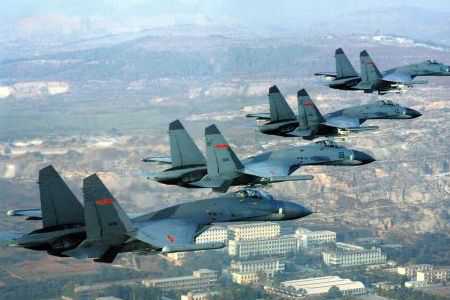 The Islamic Republic of Iran has reportedly opened its airspace to Chinese warplanes taking part in joint military maneuvers with Turkey.