Category: America

  • Medical Aid in Dying Act / Senator Jessica Scarcella-Spanton

    Medical Aid in Dying Act / Senator Jessica Scarcella-Spanton

    The Honorable Kathy Hochul 
    Governor of New York State 
    Executive Chamber State Capitol 

    Albany, NY 12224

    RE: Urgent Appeal to Veto the Medical Aid in Dying Act

    Lead by State Senators Jessica Scarcella-Spanton and Brad Hoylman-Sigal

    Dear Governor Hochul,

    I am writing as a community activist whose voice resonates with a very large, multi-faith audience across Staten Island, Brooklyn, and other boroughs of New York City.

    I write to you today with profound concern and a fervent plea to object to the Medical Aid in Dying Act, recently passed by the New York Senate, and to ultimately veto this deeply misguided legislation. While proponents of this bill, including State Senators Jessica Scarcella-Spanton and Brad Hoylman-Sigal, advocate for “autonomy” and “compassion,” it is imperative to recognize that this act represents a grave departure from fundamental moral and ethical principles, directly infringing upon the sanctity of human life.

    The core of our objection rests on the unshakeable conviction that human life is a sacred gift, bestowed by the Almighty God, and its cessation should remain solely within His divine purview. To empower individuals, or indeed the state, to intentionally hasten death, even in the face of terminal illness, is to arrogate a power that is not ours to wield. This perspective is not merely a personal conviction but a deeply held tenet across a vast spectrum of faith traditions, including Judaism, Islam, and Christianity, which collectively represent a significant portion of New York’s diverse population.

    In Judaism, the principle of Pikuach Nefesh dictates that the preservation of human life is paramount, superseding nearly all other commandments. While Jewish law permits the withholding of extraordinary measures that merely prolong the dying process without hope of recovery, active euthanasia or assisted suicide is unequivocally forbidden. Such acts are considered a violation of God’s sovereignty over life and death. The taking of one’s own life, or assisting another to do so, is viewed as an affront to the divine image in which humanity is created and a rejection of the inherent value of every moment of life, even in suffering. To propose that human beings have a “right to die” contradicts the foundational Jewish understanding that life is a trust from God, not a possession to be discarded.

    Similarly, Islam holds that all human life is sacred and a precious trust from Allah. The Quran explicitly forbids suicide, stating, “And do not kill yourselves, for verily Allah has been to you Most Merciful” (Quran 4:29). Islamic teachings emphasize patience in the face of hardship and suffering, viewing them as opportunities for spiritual growth and expiation of sins. Hastening death, whether by one’s own hand or with assistance, is considered a direct interference with God’s divine will and a denial of His supreme power over life and death. Muslim medical ethics unequivocally prohibit euthanasia and assisted suicide, stressing the physician’s role as a healer and preserver of life, not an agent of its termination.

    Within Christianity, the sanctity of life is a cornerstone belief, rooted in the understanding that humanity is created in the image of God (Imago Dei). The Fifth Commandment, “Thou shalt not kill,” is broadly interpreted to encompass any intentional act that directly takes an innocent human life, including suicide and assisted suicide. While compassion for suffering is central to Christian teaching, true compassion is understood as accompanying individuals in their pain, providing comfort, care, and support, rather than eliminating the person to end their suffering. The Catholic Church, for instance, explicitly condemns euthanasia as “a grave violation of the law of God,” asserting that suffering can have redemptive value and that human beings do not have absolute dominion over their own lives. Protestant denominations, while varying in their specific theological interpretations, largely uphold the sanctity of life and oppose assisted suicide, emphasizing God’s sovereignty and the inherent dignity of every human being.

    Governor Hochul, consider the profound implications of signing this bill into law. Beyond the theological arguments, there are significant societal risks. Legalizing assisted suicide sends a dangerous message that some lives, particularly those marked by illness or disability, may be deemed less valuable or a “burden,” potentially leading to subtle or overt coercion. It fundamentally alters the role of healthcare professionals from healers to facilitators of death, eroding the sacred trust between patient and physician. Furthermore, the experience of other jurisdictions that have legalized such practices demonstrates a concerning “slippery slope,” where eligibility criteria are often expanded over time, encompassing broader categories of individuals.

    New York should instead prioritize robust investment in palliative care, hospice services, and mental health support. These are the truly compassionate responses to suffering, allowing individuals to live with dignity and comfort until their natural end, surrounded by love and care. We must not capitulate to a “culture of death” that seeks to solve suffering by eliminating the sufferer.

    Therefore, I urge you, Governor Hochul, to stand firm against this perilous legislation. Exercise your executive authority to veto the Medical Aid in Dying Act. By doing so, you will uphold the timeless values of human dignity and the sanctity of life, affirming New York’s commitment to protecting its most vulnerable citizens and respecting the deeply held spiritual convictions of millions.

    Thank you for your time and earnest consideration of this critical matter.

    Respectfully,

    Ibrahim Kurtulus
    Community Activist

  • Rebuttal of New York Times Criticisms of Türkiye’s Domestic and Geopolitical Stance

    Rebuttal of New York Times Criticisms of Türkiye’s Domestic and Geopolitical Stance

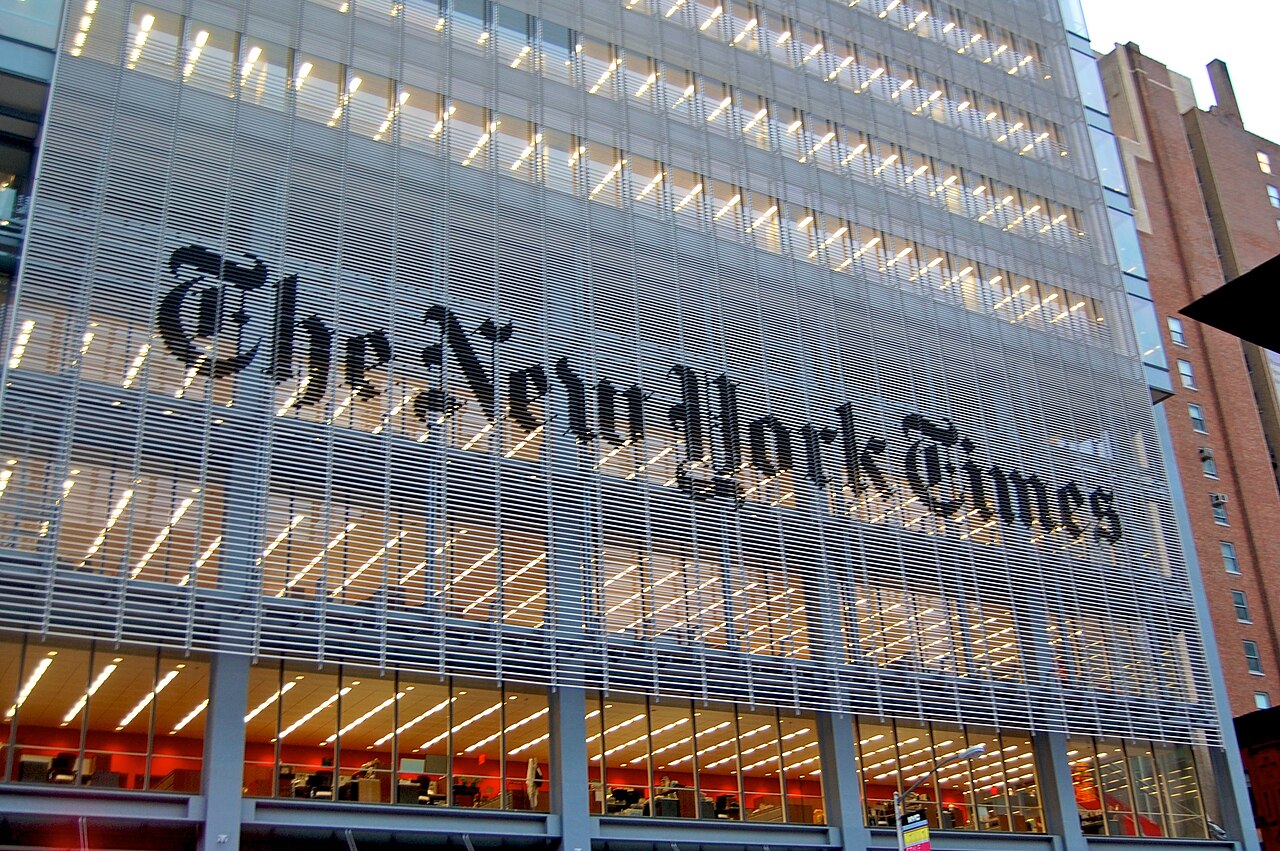
    In the ongoing discourse surrounding the Republic of Türkiye’s internal affairs and its role on the global stage, it is essential to address the underlying misconceptions and selective criticisms that have been levied, particularly concerning the legal proceedings against Ekrem İmamoğlu, the characterization of Türkiye’s democratic process, and the broader geopolitical dynamics in which Türkiye operates. These criticisms, often rooted in a superficial understanding of Türkiye’s legal, political, and diplomatic realities, fail to acknowledge the intricate complexities of a nation that remains committed to its sovereignty, regional stability, and international responsibilities. To begin with, a basic yet critical correction: the internationally recognized name of the country is the Republic of Türkiye. The continued use of outdated terminology such as “Turkey” by institutions like The New York Times disregards the democratic will of the Turkish people and fails to meet the diplomatic standards expected of a global publication. Respect for proper nomenclature is not merely symbolic—it is a reflection of mutual respect among sovereign nations.

     First and foremost, Türkiye remains an indispensable NATO ally, a sovereign democracy, and a robust force for regional and international stability. This geopolitical position is grounded in a pragmatic approach to national security, territorial integrity, and a commitment to diplomatic respect. To portray Türkiye as an authoritarian state solely based on the case of Ekrem İmamoğlu, while disregarding the broader context of Türkiye’s democratic institutions, is a disservice to a nation that has, despite significant challenges, demonstrated resilience in maintaining its democratic processes.

     The legal case involving İmamoğlu must be considered within the framework of Türkiye’s judiciary, which operates under a constitutionally defined system that upholds due process and the separation of powers. Like in all democratic societies, legal actions are conducted under established legal standards and procedures. It is inappropriate to draw sweeping conclusions about the health of Türkiye’s democracy based on ongoing judicial matters, especially when such cases remain subject to appeal and independent legal review. As Time Magazine accurately noted, “Istanbul’s Rebuke of Erdogan Shows That Democracy Lives in Türkiye,” reflecting the country’s vibrant political engagement and the active participation of its citizenry in shaping the future. The case of İmamoğlu should not be viewed in isolation but as part of a broader political landscape in which democratic engagement is alive and well.

     Further, the portrayal of Türkiye as an “authoritarian” state overlooks the fact that the nation has a functioning democracy, characterized by regular elections, a diverse media landscape, and the active participation of citizens in the political process. President Erdoğan’s electoral victories, achieved through high voter turnout and widely acknowledged by international observers, speak to the strength of Türkiye’s democratic mandate. Critics who selectively highlight certain legal actions while disregarding the pluralistic nature of Türkiye’s media and political spheres are engaging in a willful misrepresentation of the country’s political environment. It is also important to note the striking inconsistency in the criticism of Türkiye’s legal system compared to similar actions taken in Western democracies. The United States, for example, has seen its own issues with whistleblower prosecutions, detentions without trial at Guantanamo Bay, and the use of extrajudicial drone strikes, all of which raise serious questions about the application of democratic principles. The selective outrage directed at Türkiye’s legal proceedings, while turning a blind eye to similar practices elsewhere, exposes a deeply troubling inconsistency in the application of democratic values.

     On the issue of the Kurdish question, the allegations made by Israeli officials, particularly Foreign Minister Gideon Saar, regarding the oppression of Kurds in Türkiye, reflect a distorted narrative. Recently Israeli political figures have used the so called “oppression of Kurds” in  US media as weapon in the international campaign to de-legitimize the Turkish state and the Turkish people. It is important to acknowledge that Kurds in Türkiye are not an oppressed minority but equal citizens who hold prominent positions in the nation’s political, military, and cultural spheres. Kurds have served as Presidents, Prime Ministers, Foreign Ministers, and leaders of the National Assembly. They have flourished in every aspect of Turkish society, including arts, entertainment, and business. There is no “ethnic” line or segregation between Kurds and non-Kurds in Türkiye. Intermarriage is common, and Kurds enjoy the same access to education, housing, business opportunities, and political representation as any other Turkish citizen. Broadcasting and teaching in Kurdish are permitted, and while some Kurdish dialects have faced challenges, the overall trend is one of integration and equal opportunity.

     Moreover, the focus on the so-called Kurdish issue has become a tool for undermining Türkiye’s sovereignty and international standing. This smear campaign, orchestrated by hostile actors seeking to destabilize Türkiye, disregards the genuine strides Türkiye has made in integrating its Kurdish citizens and addressing their concerns through democratic channels. Türkiye’s democracy has been responsive to Kurdish grievances, and the notion that the country discriminates against its Kurdish population is a fabrication that serves only to discredit Türkiye on the global stage.

     It is also vital to understand that the stability of Türkiye is directly tied to the stability of the broader region. Türkiye’s role as a regional superpower cannot be underestimated. Türkiye’s decisive actions in Syria, its role in mediating peace negotiations in Ukraine, and its strategic position as a bridge between East and West make it an indispensable actor on the world stage. Instability within Türkiye would only serve to exacerbate the already volatile geopolitical landscape. Therefore, efforts to undermine Türkiye’s government through disinformation and smear campaigns not only harm the country but also destabilize the region and undermine global peace efforts.

     Finally, the notion that “it’s time for Turkey to turn toward democracy again” reveals a profound misunderstanding of the democratic principles upon which Türkiye is built. Türkiye’s democracy is alive and well, as evidenced by the active participation of its citizens in political processes and the regular conduct of free and fair elections. When the ruling government loses support, as seen in major cities like Istanbul, İzmir, and Antalya, it is a testament to the strength and resilience of Türkiye’s democratic institutions. In an authoritarian state, leaders do not lose elections. The fact that President Erdoğan’s government has faced setbacks in local elections only further reinforces the legitimacy of Türkiye’s democratic process.

     In conclusion, Türkiye’s position on the world stage, its commitment to democratic principles, and its role as a regional superpower must be understood in their proper context. The Republic of Türkiye is not the nation it once was sure is not our Grandfathers Turkiye looking for hand outs ; it is a modern, resilient democracy that has proven time and again that it will not bow to external pressures or smear campaigns. Türkiye will continue to defend its sovereignty, its democratic processes, and its right to self-determination, while remaining an indispensable ally in the global quest for peace, security, and stability.

    Respectfully,

    Ibrahim Kurtulus

    Community Activist

  • Message to Ms Alev Wieland

    Message to Ms Alev Wieland

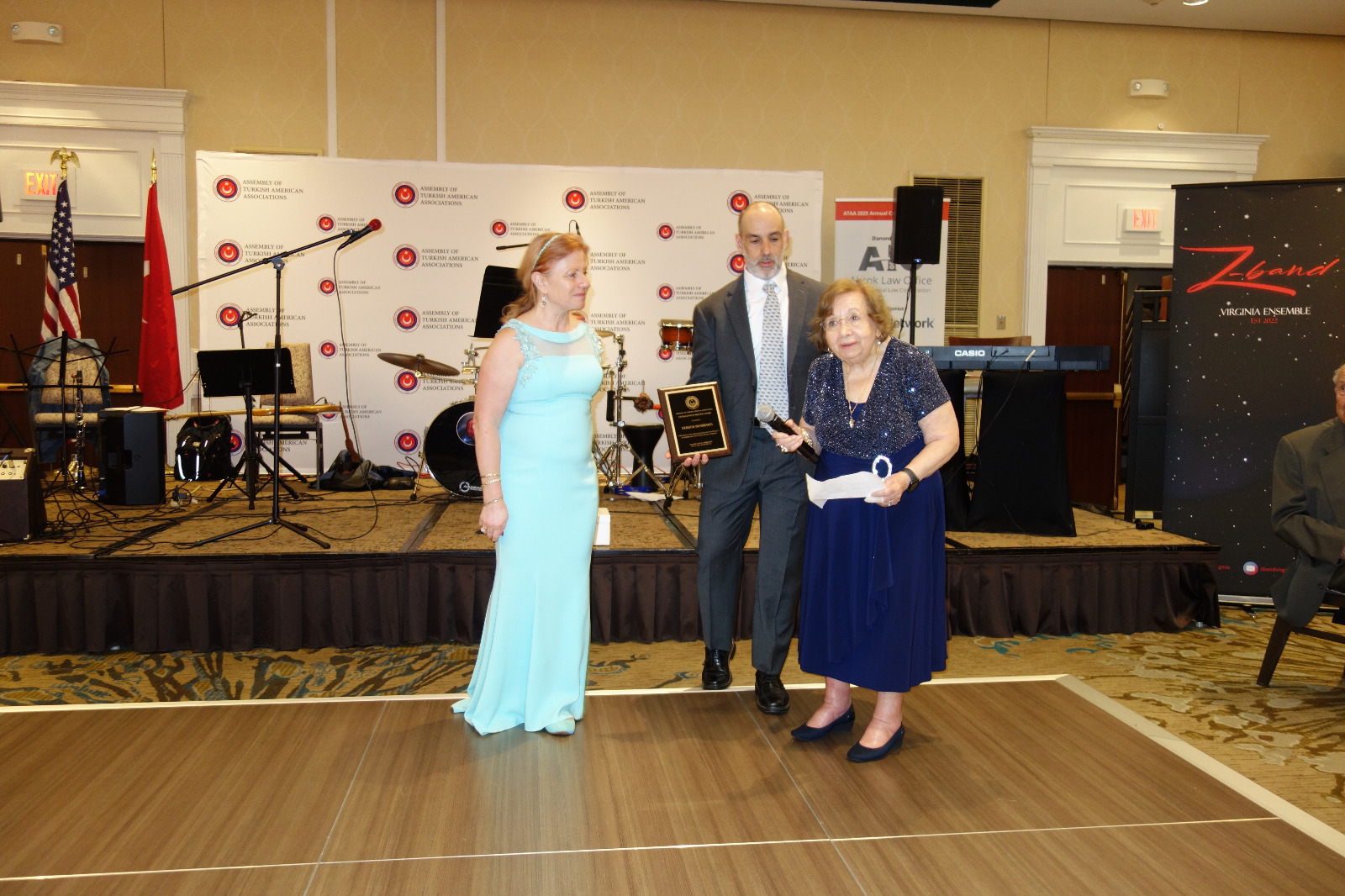
    Message to Ms Alev Wieland / Since the days of esteemed leaders such as Gunay Evinch and Ergun Kirlikovali

    Dear President Alev Wieland,

    As someone who cares deeply about the future of our youth and the preservation of our rich cultural heritage, I extend my heartfelt congratulations on your recent election as President of the Assembly of Turkish American Associations (ATAA). Your leadership arrives at a pivotal moment, and it is already evident that your vision is both inspiring and unifying.

    Your message to the youth on May 19th, in commemoration of Atatürk, Youth and Sports Day, was both powerful and timely. It conveyed a clarity of purpose and sincerity that many of us have long hoped to hear in community. For the first time in many years, I believe ATAA has truly resonated with the younger generation a remarkable and vital achievement.

    Since the days of esteemed leaders such as Gunay Evinch  and Ergun Kirlikovali  Abimler, I have not witnessed such a compelling, embracing, inclusive and forward looking message from ATAA. Under your stewardship, I am optimistic about the dawn of a new era  at ATAA one that inspires engagement, fosters unity, and empowers Turkish-American youth to carry forward the legacy of  great Mustafa Kemal Atatürk with pride and purpose.

    Your call to innovate, to learn from our past, and to embrace the unique strengths of every individual was not only a tribute to Atatürk’s vision, but a living embodiment of it. As you so eloquently stated, “The future of our organization is in your hands.” This is more than a message it is a mission of love to all who may have an opinion different then ours , and I stand ready to support it alongside you, Ms. Wieland.

    May God grant you continued wisdom, strength, and good health as you embark on this important chapter. May the enduring principles of Mustafa Kemal Atatürk continue to illuminate your path and inspire all those under your leadership.

    With my warmest regards and deepest respect,

    Respectfully,

    Ibrahim Kurtulus
    Staten Island, New York

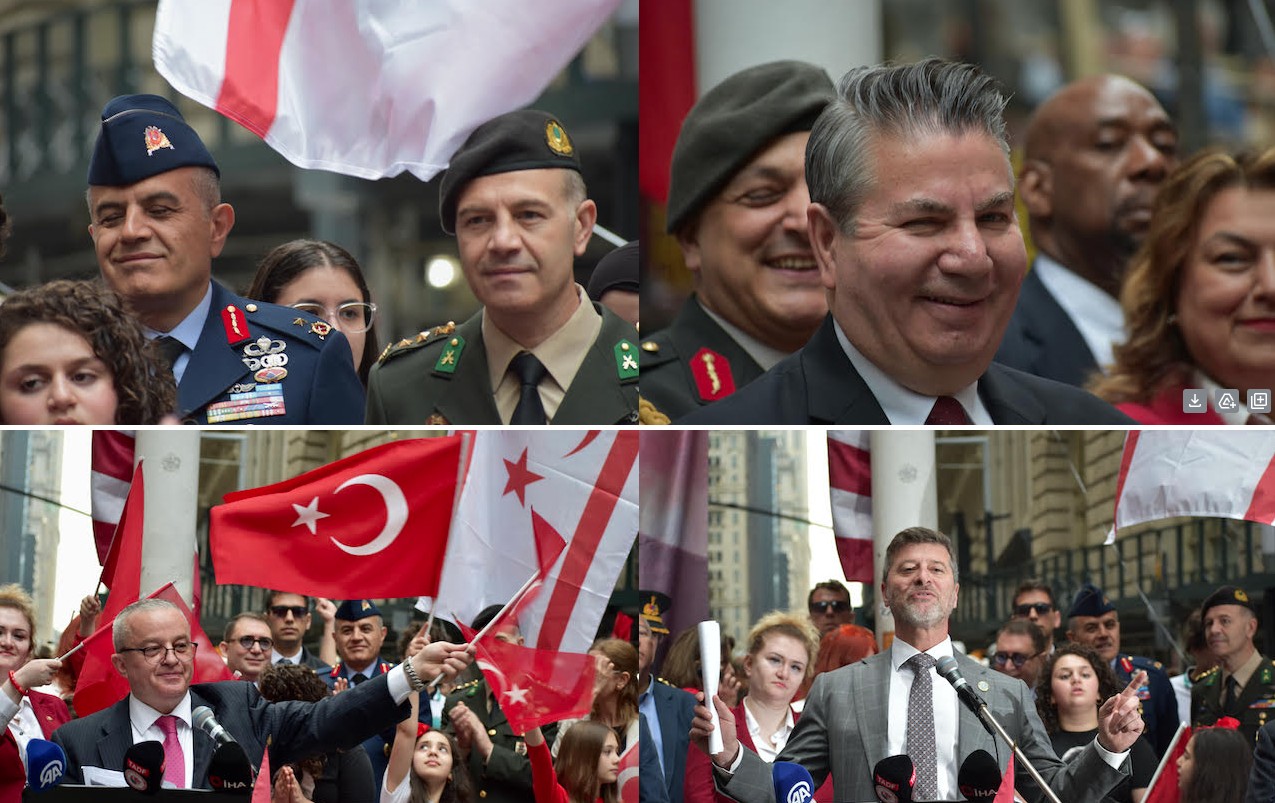
  • CELEBRATING TURKIYE

    CELEBRATING TURKIYE

    CELEBRATING TURKIYE

     @ BOWLING GREEN

    WHERE NEW YORK CITY WAS FOUNDED

    THE MOST HISTORIC PLACE IN NYC

    WHERE NYC COMES TOGETHER !

    5 / 16 / 25

    LINK TO 114 PHOTOS

    “a movie of photos”

    https://tinyurl.com/y4zrwu2u

     Photos Album by

     Arthur Piccolo

    Bowling Green Association

  • Letter Responding to Congressman Gregory W. Meeks

    Letter Responding to Congressman Gregory W. Meeks

    US Congressman Gregory Meeks
    2310 Rayburn HOB
    Washington, DC  20515

    May 12, 2025 

    Re:   Rebuttal to Letter Regarding the Republic of Türkiye Dated May 7, 2025

    Dear Ranking Member Gregory W. Meeks and Esteemed Members of the House Foreign Affairs Committee,

    This letter is submitted as a formal response to the assertions and interpretations presented in your correspondence dated May 7, 2025, concerning the Republic of Türkiye. We believe it is crucial to address several points raised in your letter to provide a more comprehensive and factually grounded understanding of the matters discussed.

    Firstly, we wish to respectfully note that the official name of our nation is the Republic of Türkiye. Consistent use of this appellation aligns with international protocol and reflects due respect for our national identity.

    Regarding the Aegean airspace, your letter outlines a perspective that warrants further clarification. While Greece claims a 10-nautical-mile airspace, international law typically recognizes sovereign airspace extending to the limits of territorial waters, often 6 nautical miles. Operations by Turkish aircraft between these 6 and 10 nautical mile limits occur within what is considered international airspace. It is pertinent to note that NATO radar systems, which neutrally monitor activity in the Aegean, have not substantiated claims of violations within this international airspace. Furthermore, the increasing militarization of Greek islands, in contravention of the stipulations set forth in the 1923 Lausanne and 1947 Paris Treaties, alongside maximalist Greek maritime claims, contributes significantly to regional tensions. We maintain that resolutions to such matters can only be effectively achieved through bilateral dialogue and negotiation, rather than unilateral accusations.

    The issue of Cyprus, as presented in your letter, also necessitates a more historically contextualized understanding. The difficulties on the island did not originate in 1974. Rather, they began in 1963 with the forceful removal of Turkish Cypriots from their constitutionally guaranteed positions within the government. Türkiye’s intervention in 1974 was undertaken as a legitimate action under the 1960 Treaty of Guarantee, a multilateral agreement that provided for intervention should either the Turkish Cypriot or Greek Cypriot community face an existential threat. It is a matter of public record that Nikos Sampson, the leader of the 1974 coup, himself acknowledged that his intent was the complete elimination of Turkish Cypriots, had Türkiye not intervened. Moreover, an Athens court ruling has affirmed the legality of Türkiye’s actions. The 2004 Annan Plan referendum further illustrates the Turkish Cypriot commitment to a peaceful resolution, with 65% of Turkish Cypriots voting in favor, while 85% of Greek Cypriots rejected the plan following a public address by the Greek Cypriot leader, Mr. Papadopoulos, on April 7, 2004, urging a “resounding ‘NO’.” To characterize the 1974 intervention solely as an “invasion” overlooks the treaty basis and the compelling circumstances that necessitated it. The presence of Turkish Peace Forces on the island remains a critical element for the security and well-being of the Turkish Cypriot community, serving as a deterrent against any recurrence of past atrocities.

    Regarding political opposition and human rights, the Republic of Türkiye recognizes that, like all democratic nations, its institutions are continually evolving. Nevertheless, your letter reflects a perspective that appears selectively critical and may overlook important context. Türkiye has upheld a multi-party electoral system for over seventy years, marked by peaceful transfers of power, an active civil society, and a vibrant media sector all functioning within a challenging regional landscape shaped by persistent threats from terrorist organizations such as the PKK and ISIS. Assertions of authoritarianism frequently fail to account for the broader constitutional, legal, and security context in which judicial proceedings occur. The detention or prosecution of political figures an occurrence not exclusive to Türkiye is a reality in many democratic systems, including the United States. For instance, on May 9, 2025, the Mayor of Newark, New Jersey, Ras Baraka, was arrested at an ICE detention facility during an unannounced oversight visit with members of Congress. He faces trespassing charges, which he contests as politically motivated. This underscores the importance of evaluating such incidents through the lens of legal due process rather than presuming political persecution.

    In relation to Greece, it is noteworthy that the European Court of Human Rights (ECHR) has issued several judgments highlighting human rights violations within Greece. For instance, in the case of A.R.E. v. Greece (Application No. 15783/21), published on January 7, 2025, the ECHR found Greece in violation of Articles 3, 5, and 13 of the European Convention on Human Rights due to the expulsion of a Turkish national without a risk assessment or access to asylum, recognizing a “systematic practice of pushbacks” in the Evros region. Similarly, in Sh.D. and Others v. Greece and Other Countries (March 15, 2016), the ECHR ruled against Greece for the inhuman and degrading treatment of unaccompanied minors in the Idomeni refugee camp. Furthermore, in Hazisllari v. Greece (Application No. 41385/14), the Court found a violation of Article 6(1) due to the excessive length of criminal proceedings. Additionally, the ECHR has addressed restrictions on the ethnic Turkish minority in Western Thrace, particularly concerning freedom of association and expression, as well as issues related to religious rights and education. This context of ECHR rulings against Greece appears to have been omitted from your assessment.

    Your letter draws attention to legal proceedings especially to charged mayor of Istanbul imamoglu in Türkiye while seemingly overlooking comparable issues in other nations, including the United States. The cases of whistleblowers like Edward Snowden and Julian Assange, the detentions at Guantanamo Bay, and the use of extrajudicial drone strikes raise significant questions regarding democratic values. Similarly, the silence on corruption allegations against prominent figures in various Western countries suggests an inconsistency in the application of scrutiny.

    The “Blue Homeland” doctrine represents a defensive maritime strategy aimed at safeguarding Türkiye’s sovereign rights and continental shelf in the Eastern Mediterranean. As Türkiye is not a signatory to UNCLOS, it maintains its right to explore natural resources in areas where a mutually agreed legal framework does not exist. The Memorandum of Understanding with Libya is a bilateral agreement between two sovereign states. Greece’s attempts to claim extensive Exclusive Economic Zone (EEZ) rights based on islands near the Turkish coast are viewed as inequitable and not in accordance with customary international law.

    Regarding Hamas, President Erdoğan’s statements should be understood within the framework of regional diplomatic efforts. Türkiye has consistently advocated for a two-state solution and the protection of civilian lives. Türkiye condemned the October 7 attacks while also emphasizing the need for proportionality and the protection of innocent civilians. Türkiye’s engagement with the political wing of Hamas is a position shared by several other nations in the region and beyond. Indeed, there have been instances where Israel has sought Türkiye’s assistance in communicating with Hamas. Türkiye’s diplomatic capabilities have been demonstrated through its role in facilitating the release of hostages in the Gaza crisis, a contribution acknowledged by U.S. Ambassador Jeff Flake, and its mediation in the release of American citizen Brittney Griner in 2022. Furthermore, given Türkiye’s history of providing refuge for Jewish people for centuries, it is particularly concerning to hear accusations of antisemitism. President Erdoğan’s statements reflect Türkiye’s long-standing commitment to a just resolution of the Israeli-Palestinian conflict, grounded in a two-state solution and respect for international humanitarian law. To equate support for Palestinian human rights with “support for terrorism” is a mischaracterization. 

    Türkiye has condemned the targeting of civilians and hostage-taking while also calling for the protection of Palestinian civilians amidst military actions. The assertion that Türkiye is “antisemitic” or “anti-Zionist” disregards Türkiye’s history of tolerance, its vibrant Jewish community, and its protection of Jewish heritage. It is also worth noting the documented instances of U.S. foreign aid being directed to entities with ties to terrorist organizations like ISIS, Hezbollah, PKK and others as brought to light in Gregg Roman’s testimony before the United States Congress House Oversight and Government Reform Subcommittee, a matter that warrants attention looks like you missed.

    The characterization of efforts to delegitimize Mustafa Kemal Atatürk’s Türkiye and its democratically elected President, including through digital platforms and non-governmental organizations, as a deliberate assault on the nation’s sovereignty is a serious concern. This sustained effort to portray Mustafa Kemal Atatürk’s Türkiye negatively undermines its rightful standing on the global stage.

    Regarding the S-400 and F-35 issue, it is important to recall that Türkiye’s acquisition of the S-400 system occurred after a decade of the U.S.’s refusal to sell the Patriot missile system. Türkiye’s subsequent removal from the F-35 program, despite its financial and industrial contributions, was a measure that has impacted NATO’s southern flank. It is also relevant that other NATO members operate Russian-made S-300 systems, and that countries like India utilize the S-400 while receiving F-35s and other weaponry from the U.S., suggesting a double standard. The recent indications that the U.S. is encouraging Türkiye to rejoin the F-35 partnership underscore Türkiye’s crucial role within the defense supply chain and the NATO alliance, as noted by Ambassador Flake. Allegations of authoritarianism in Türkiye often overlook the country’s multi-party democracy, regular elections, active media, and strong civil society. Security measures taken after the 2016 coup attempt, orchestrated by the FETÖ terrorist organization which US is harboring its entire group , were implemented to safeguard the National Interest and Security of the republic. Perhaps you missed it But radial Islamism was stop in Turkiye. 

    The arrests of certain political figures must be understood within the legal framework of Turkish law and the available evidence under due process. Also, despite my unwavering commitment to freedom of the press and over 38 years of advocacy, I find it deeply concerning that not a single opinion piece highlighting the strategic importance of Türkiye a secular, Western-aligned NATO ally that stood alongside the United States in Korea and continues to oppose terrorism and global instability has been published in any major national newspaper in the United States. This raises a critical question: where is the true freedom of speech? It seems only those who criticize Türkiye are afforded the opportunity to be heard, while voices that emphasize its value and longstanding partnership with the West remain silenced and has NO right.

    Your portrayal of Türkiye’s efforts against the terrorist PKK also requires a more accurate understanding. For centuries, individuals of Kurdish background have lived peacefully in Anatolia. The PKK, recognized as a terrorist organization by the U.S. and the EU, has exploited regional instability to pursue its separatist agenda. The Turkish government has consistently implemented economic and social reforms in the southeastern region, and Kurds are well-represented across all sectors of Turkish society. Broadcasting and education in Kurdish are now permitted. The PKK is a terrorist organization, akin to ISIS, Al-Qaeda, or Hezbollah, and the narrative suggesting otherwise is outdated. The PKK is losing support within the region. Türkiye is an indispensable NATO ally, possessing the alliance’s second-largest standing army and securing its southern flank. Türkiye’s diverse diplomatic engagements are not contradictory to its NATO commitments but reflect the complexities of the current global landscape.

    In conclusion, I  believe the primary challenge lies not with Türkiye, but with potentially biased narratives and a limited strategic perspective. Undermining Türkiye weakens NATO. We respectfully urge you to adopt a more balanced viewpoint, respect Türkiye’s sovereignty, and engage in constructive dialogue. It is concerning if certain perspectives within Congress are driven by a desire to misrepresent Türkiye, possibly influenced by external factors that prioritize other national interests over the alliance’s cohesion and factual accuracy. Such biases can be detrimental to American interests. As members of Congress, we believe your efforts should be directed towards objectivity and serving the broader interests of the United States, rather than agendas that may inadvertently undermine opportunities for enhanced security, economic growth, and geopolitical stability. These campaigns against Türkiye serve to delegitimize the Turkish state and its people. I implore you to move beyond such biases and acknowledge the vital role Türkiye plays. Misinformation campaigns will not weaken the ties between the U.S. and Türkiye, which are rooted in mutual respect and strategic necessity.

    Respectfully,

    Ibrahim Kurtulus

    Community Activist

  • Response to US Based Communist Newspaper

    Response to US Based Communist Newspaper

    Workers Vanguard
    Liz Gorden -Director of Party Publication 
    Michael Davisson -Editor
    Cairo Turner – Assistant Editor 
    299 Broadway Suite 1618
    New York, NY 1007 
    May 5, 2025 

    Rebuttal to “Öcalan, Rojava: No to the Betrayal!” – A Dangerous Distortion of Truth and History

    To Editors,

    I write to express deep concern and firm objection to your article dated April 3, 2025, titled “Öcalan, Rojava: No to the Betrayal!”—a publication that grossly distorts historical facts, overlooks acts of terrorism, and engages in a broader campaign to delegitimize the Republic of Türkiye and its national security efforts. First, it is important to note that the country’s name is no longer “Turkey,” but officially “Türkiye,” as recognized by the United Nations. Continued refusal to use this name reflects a lack of basic journalistic respect toward the will of the Turkish people and government.

    The narrative advanced in your article dangerously whitewashes the role of the PKK terrorist and its Syrian affiliate, the YPG, both of which are internationally recognized terrorist organizations. Since 1984, the PKK has been responsible for the deaths of more than 45,000 individuals many of them innocent civilians, including women, children, teachers, many Kurds and doctors. This fact is not conjecture but a matter of record supported by the United States, the European Union, and many transatlantic institutions all of which have officially designated the PKK as a terrorist organization.

    The PKK and YPG: Terrorism, Not Liberation, your romanticized portrayal of Abdullah Öcalan and the so-called “Rojava revolution” completely omits the violent and extremist foundations of the PKK and YPG. These groups are not freedom fighters; they are terrorist factions who have resorted to narcotics trafficking, human and children smuggling, the sexual exploitation of young girls, boys  and women, and organized violence to fund and further their objectives.

    These are not characteristics of democratic movements but hallmarks of transnational terrorism.

    The PKK’s Syrian wing, the YPG, shares the same strategic leadership and ideological alignment. The link between the two is not a Turkish fabrication it is a matter of documented intelligence. In June 2016, the Turkish Armed Forces recovered U.S. made anti-tank missiles in the hands of PKK fighters during operations near the Syrian border, confirming the transfer of Western supplied arms from the YPG to the PKK. This development has put Türkiye  under direct threat by weapons funded by the American taxpayer.

    How is it justifiable that U.S. and EU forces would support, arm, and legitimize a terrorist organization like the PKK/YPG, which seeks to create an ethnically exclusive state carved from the sovereign territory of Türkiye? Would the United States tolerate such a force on its southern border with Mexico? Would Israel remain passive if faced with cross-border attacks from a militant group in Lebanon? Are you a supporter of baby killers  and Terrorist  Ms. Liz Gorden, Mr. Michael Davisson, are you Ms. Cairo Turner?

    The Smear Campaign Against Türkiye, your communist newspaper article attempts to conflate Türkiye’s anti-terrorism operations with an attack on the Kurdish identity a misleading and irresponsible narrative. For more than 1000 years, Kurds and Turks  have lived in peaceful coexistence on the Anatolian peninsula. Today, Turkish citizens of Kurdish origin serve as ministers, judges, members of parliament, generals, and even as past presidents and prime ministers. There is no ethnic apartheid in Türkiye only a determined response to violent separatism masquerading as Kurdish representation.

    To paint Türkiye as an enemy of the Kurds is not only inaccurate but malicious. The Republic of Türkiye has invested billions in its southeastern regions where Kurds predominantly live, launching major infrastructure and social programs such as the Southeastern Anatolia Project (GAP). Kurdish language instruction, cultural expression, and media are freely allowed. There is no state imposed limitation on Kurdish identity or culture only on those who weaponize it for extremist political purposes. Your communist paper has become another weapon in the international campaign to de-legitimize the Turkish state and the Turkish people.

    Just incase you missed  the PKK/YPG  No Different Than ISIS or Al-Qaeda, November 17th ,ASALA, ETA (Euskadi Ta Askatasuna) , Atomwaffen Division (U.S./Germany), The Base (U.S.), Revolutionary Cells (Germany) if not worst. The PKK and its affiliates have used the post-Gulf War instability and the Syrian Civil War to further their separatist agenda through violence. Much like ISIS or Al-Qaeda or all above, the PKK seeks to undermine sovereign states by force, exploiting ethnic grievances and the chaos of war. Öcalan’s vision lauded in your article is one of militant Marxism, enforced ethnic purity, and the dismemberment of Türkiye which looks like your paper supports. That vision has no place in a democratic, pluralistic, and sovereign world order.

    Even Amnesty International, not known for pro-government leanings, has documented human rights abuses and war crimes committed by the YPG/PKK in Syria, including forced displacement and recruitment of child soldiers. That your publication elevates such actors to the status of “revolutionaries” is not only revisionist, it is morally bankrupt.

    Turkiye Under Siege, let us not forget that Türkiye has stood shoulder to shoulder with the United States and the west through the Cold War, the Korean War, Kosova Etc., and countless joint military operations. American soldiers who served alongside Turkish forces in Korea can attest to the courage and commitment of our alliance. Yet today, some in the West are quick to forget this history, preferring to valorize terrorist entities under the false pretext of “liberation movements.”

    The use of the Kurdish issue as a political weapon against Türkiye is a cynical and dangerous campaign that only benefits those who seek to destabilize the region Iranian proxies, extremist groups, and arms traffickers among them. It does not serve the interests of peace or regional stability. Nor does it serve the interests of American or European taxpayers whose governments are being misled into funding such movements. Who are you funded by ? or by which group or country are you all funded by? 

    Let me be very clear, the Republic of Türkiye is not fighting Kurds; it is fighting terrorists. I urge your editorial board to reconsider the platform it provides to apologists of terrorism and to correct the misleading narrative that undermines a Turkiyes legitimate security concerns. In a region beset by chaos, Türkiye remains a pillar of stability and a reliable partner in the war against extremism.

    The American tax payers deserves to know: why is their government arming a terrorist group with taxpayer money is what you should be writing about, while turning its back on a proven democratic ally?

    Respectfully,

    Ibrahim Kurtulus 

    Community Activist