Mr. Kevin Hamilton Through the Embassy of Canada in Turkey,
To the attention of:
Mrs. Mary Simon Governor General of Canada,
Mr. Francis Scarpaleggia Speaker of the House of Commons,
Mr. Mark Carney Prime Minister,
Mr. Garnett Genuis Member of the House of Commons,
Mr. Kevin Hamilton Ambassador of Canada to Turkey,
First and foremost, it is universally known—especially by you—that imperialism is a form of dictatorship and arbitrary governance. Its examples were clearly embodied in France under Napoleon in 1830, during the reign of Napoleon III in 1848, and in Britain from 1870 onward. There is hardly anyone in the world who would doubt how the British establishment continues to employ this legacy through various means to this day.
Your Member of Parliament, Mr. Garnett Genuis, has demonstrated a lack of knowledge and a tendency to seek the spotlight with his statements, which appear to be more about showmanship than substance. Consider the following two statements:
“I also believe that people who disagree with me on this or other issues should have the opportunity to share their views and ask questions. Therefore, whatever your views may be, I hope you will join us for a good discussion on this important issue.”
I hope that, after reading the information below, he will be able to ask more informed questions—if he can indeed find any questions to ask.
“We must not allow Canada to become a hostile place for political dialogue and debate. When citizens are active and engaged in our country’s public life, even if we disagree, we should celebrate it.”
Despite this statement, he submitted a factually lacking motion to the House of Commons with 24 of his colleagues. If he truly believes in what he said above, why does he take a contradictory stance when it comes to another country?
Furthermore, he is obliged to clarify the basis of his claim that:
“The occupation affects not only Cypriots but also other communities targeted by Turkey’s actions, such as Assyrians, Kurds, Syrians, and Armenians.”
Why does he not call for the immediate withdrawal of Greek military forces (ELDYK)?
Why do countries described as “friends and allies”—such as the United States, Canada, Germany, and France—not object to the military presence of these same nations within the territory of the Greek Cypriot Administration of Southern Cyprus?
Although it has a supposed legal basis, why is there continued silence regarding the presence of two sovereign British bases—Akrotiri and Dhekelia—within the borders of the Greek Cypriot Administration, a situation that has existed for nearly seventy years?
Furthermore, why does Canada persist in officially supporting the “Armenian genocide” allegation at the governmental level every April 24, continuing to issue statements that are inconsistent with historical facts?
In the petition submitted, the following is stated:
Petition to the House of Commons
We, the undersigned citizens and residents of Canada, draw the attention of the House of Commons to the following:
Considering that:
– The 1974 Turkish military intervention in Cyprus was illegal and brutal, and that the occupation of 37% of the island and 57% of its coastline continues;
– The Turkish occupation has resulted in significant human rights violations, including loss of life, the displacement of thousands of Cypriots, and the ongoing presence of Turkish military forces and illegal settlers;
– Cypriots and Hellenes around the world, including the Cypriot diaspora in Canada, are marking the 50th anniversary of this tragic occupation and calling for justice, freedom, and human rights for the people of Cyprus;
– The Republic of Cyprus is a member of the European Union and the United Nations, and its sovereignty, independence, and territorial integrity must be respected under international law;
– The United Nations Security Council has adopted multiple resolutions calling for the withdrawal of Turkish troops and settlers and for the reunification of Cyprus based on respect for fundamental human rights and freedoms for all Cypriots; and
– The occupation affects not only Cypriots but also other communities targeted by Turkey’s actions, such as Assyrians, Kurds, Syrians, and Armenians.
Therefore, the undersigned citizens and residents call upon the Government of Canada to:
– Support all United Nations Security Council resolutions related to Cyprus and condemn Turkey’s ongoing illegal occupation of Northern Cyprus;
– Advocate for the immediate withdrawal of Turkish troops;
– Ensure that no Canadian weapons, military equipment, or technology are sold to Turkey for use against Cyprus or other oppressed groups.
Continue to reject the recognition of the illegal occupation regime established by Türkiye in Northern Cyprus; and
Advocate for a free and united Cyprus based on the relevant UN Security Council Resolutions and the European Union acquis.
Presented to the House of Commons by Garnett Genuis (Sherwood Park—Fort Saskatchewan), May 28, 2025 (Petition No. 451-00002) (25 signatures).
Just as people around the world follow different religions, the Turks and Turkish Cypriots are also adherents and followers of the Islamic faith.
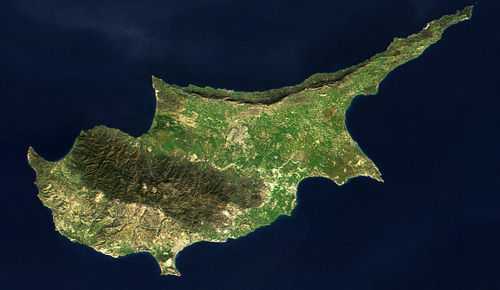
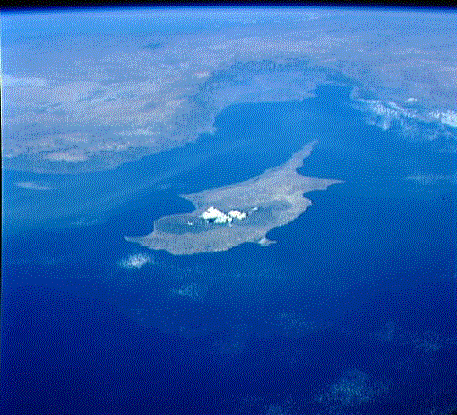
CYPRUS:
It is understood that Cyprus, an island that geologically broke off from Anatolia, has been inhabited by humans since approximately 7000 (or even 10,000) BC, as evidenced by findings from the Neolithic and Bronze Ages. According to historical periods, the island’s past includes:
7000–3000 BC: Stone Age
3000–1500 BC: Bronze Age
Thereafter, the island came under the rule of various civilizations: Egyptians, Hittites, (again) Egyptians, Phoenicians, Assyrians, Independent Kingdoms, (again) Egyptians, Persians (Iranians), Macedonians, Egyptians (Ptolemaic era), Romans, Muslims, Byzantines, Crusader Knights, Lusignans, Venetians, and finally, from 1570 to 1878, the Ottoman Empire.
Due to its strategic geographic location, Cyprus became one of the major arenas of conflict between Muslims and Christians, especially given its military and commercial importance in the Eastern Mediterranean. As the dominance in the Mediterranean shifted, so too did control of the island. After the division of the Roman Empire in 395 AD, Cyprus became a Byzantine province. Over time, it experienced influence or control by Muslims, the French (Crusaders), briefly the Mamluks, and Italians (Venetians), before ultimately coming under Ottoman rule.
Let us first examine these phases:
After the death of the Prophet Muhammad, during the caliphates of Abu Bakr and Umar, Islamic armies confronted the two superpowers of the Middle East: the Sassanid Empire (Iran) and the Byzantine Empire (Eastern Rome). In these encounters, decisive victories were achieved against Byzantium in the northwest and west. While Islamic forces advanced along the eastern Mediterranean coast, they also set foot in Africa, capturing port cities across both the eastern and southern Mediterranean, thereby gaining naval superiority.
During the caliphate of Umar, after the conquest of Damascus, the regions of Jordan, Homs, and Palestine (including Jerusalem) fully came under Muslim control.
In the time of Caliph Uthman, the first military expedition to Cyprus was organized in 648–649 AD. Following a Byzantine landing in Alexandria, the Islamic fleet set out from Acre towards Cyprus in the winter of that year and landed at Larnaca. Reinforced by troops arriving from two different fronts, the Muslim army laid siege to the island’s center. The Cypriots, unable to withstand the powerful siege, surrendered quickly. Many captives were taken, and significant spoils were seized during the landing. Seeing the overwhelming force of the Muslim troops, the Governor of Cyprus (Archon), with the approval of the populace, was compelled to propose peace. Thus, in 649 AD, under Caliph Uthman, the Governor of Damascus, Muawiyah ibn Abi Sufyan, captured Cyprus with a fleet of 1,700 ships and secured Muslim sovereignty through a treaty.
Byzantine historian Theophanes the Confessor, recording events from September 1, 648 to August 31, 649, and Agapius of Hierapolis (Mahbub ibn Qustantin) also provide corroborating accounts of this naval campaign.
Second Expedition to the Island of Cyprus During the Caliphate of Uthman (653 AD):
Due to non-compliance with the previous agreement, a second expedition to Cyprus was organized by Muawiyah in the years 653–654, with a fleet of 500 ships, once again bringing the island under Muslim control. Many were killed, and numerous people were taken prisoner. Ultimately, a new treaty was concluded, based on the principles of the earlier agreement. The Muslims transported 12,000 people to the island. These settlers established a city and built mosques, further consolidating Muslim dominance over the island.
According to records regarding this second campaign of 653–654, Syriac sources such as Dionysius of Tel-Mahre, Michael the Syrian, and Bar Hebraeus (Abu’l-Faraj/Ibn al-ʿIbrī) provide similar accounts.
Cyprus During the Umayyad Period (661–750):
Following the death of Caliph Uthman and the internal conflicts that ensued, Muawiyah assumed leadership after the rule of Ali (656–661) and prioritized conflict with the Byzantine Empire. Under his rule, the Islamic-Byzantine struggle was reignited. The navy was strengthened, and initiatives targeting the Mediterranean were launched.
In 688, a dispute over the sharing of taxes collected from Cyprus led to renewed conflict between the Byzantines and the Muslims.
Cyprus During the Abbasid Period (750–1258):
The first expedition to Cyprus under the Abbasids occurred during the reign of Abu Ja’far al-Mansur (754–775). After a Muslim defeat near Cyprus in 747, the Syrian fleet gradually recovered. This recovery led to a campaign against the island in 773, during which the governor of Cyprus was captured. This expedition reinforced Abbasid authority on the island. Additionally, a tax of 1,000 dinars, which had been imposed on the Cypriots during the Umayyad caliphate under Hisham ibn Abd al-Malik, was abolished, and the taxation reverted to the terms established during Muawiyah’s era.
It is reported that Caliph al-Mansur stated:
“We are the ones most deserving to act with justice toward them; we did not become wealthy by oppressing others.”
Ultimately, these two military victories by the Muslims ushered in a new era in the Mediterranean, and a joint sovereignty (Condominium) was established on the island, which continued until the Byzantine Empire reconquered Cyprus in 965.
During both the Muslim administration and the joint rule period, extensive information is found in the works of historians, geographers, religious scholars, and political figures such as:
al-Baladhuri, Ibn Taghribirdi, Costas P. Kyrris, Theophanes the Confessor, Michael the Syrian, Bar Hebraeus, al-Tabari, al-Mas’udi, Patriarch Nicholas Mysticus, Saint Demetrianus, Muhammad Hamidullah, Christides, Willibald, Saint Constantine, Ioannes Kaminiates, Qudama ibn Ja’far, Leo VI, al-Istakhri, Ibn Hawqal, al-Maqdisi, George Hill, Vassilios Christides, Yahya ibn Sa’id al-Antaki, Abdulaziz Salim, Mehmed Khalid, Bukhari, Hersekli Mehmed Kamil, Osman Turan, al-Harawi, among others.
The Year 1570:
The conquest of Cyprus was carried out by Ottoman Sultan Selim II (28 May 1524 – 15 December 1574), the 90th Caliph of Islam.
The Cyprus Campaign (16 May 1570 – 1 August 1571)
The Cyprus campaign, which lasted 15.5 months from May 16, 1570 to August 1, 1571, came at a heavy cost for the Turks. The land of Cyprus, sanctified by the blood of 50,000 Turkish martyrs (some sources state 80,000), gained a sacred meaning for Turkish history and the Turkish nation. Thus, Cyprus was taken from the Venetians, bringing an end to a Christian Kingdom, and the island passed into the hands of the Muslim Turks.
In this regard, the decree issued by Sultan Selim II on 7 May 1572, as well as his earlier orders concerning the treatment of the Christian population, contain principles that remain exemplary even today:
“To the Governor (Beylerbey), the Judge (Kadı), and the Treasurer (Defterdar) of Cyprus:
The island of Cyprus is a land conquered by my overwhelming power. Due to war, its people have become weak. In the application of Sharia law, in tax collection, in judicial matters, and in all other affairs, the people of the island must be treated justly, not oppressed, and protected, so that they may regain their strength.
Each of you must be individually vigilant in this matter. The local population is a trust from God to us. You shall always protect them and not allow anyone to commit injustice against them. While applying the laws and collecting taxes, act with justice and avoid any discriminatory practices.
During my just reign, my will is for the local people to live in comfort, abundance, and security, and for the land to flourish. You shall act accordingly without losing a moment.
If it is heard that oppression has occurred, that heavy taxes have been imposed, or that discord has been sown among the people, no excuse will be accepted. Take heed, and do not be negligent.”**
As we close this era, it is crucial that we understand the establishment, rise, and eventual decline of the Ottoman Empire by acknowledging both its virtues and shortcomings. The fact that Cyprus remained under Ottoman rule for 307 years must be remembered, and the role of Britain in laying the historical groundwork for today’s circumstances should never be overlooked.
1791 – Emergence of the Enosis Idea
Enosis, meaning “annexation”, refers to the political movement for uniting the island of Cyprus with Greece as part of the Megali Idea. The first map depicting the Megali Idea was drawn in 1791, marking the ideological emergence of Enosis.
18 October 1828
On this date, Greece officially introduced the idea of Enosis by delivering a note to Britain, Russia, and France, expressing its desire to annex Cyprus.
24 April 1877
Russia officially declared war on the Ottoman Empire.
6 May 1877
British Foreign Secretary Lord Derby sent a note to Russia, warning that if any interests beyond Ottoman matters were endangered, Britain would abandon neutrality and act to protect its interests.
8 May 1877
Lord Derby again notified Russia that Britain did not approve of Russia’s entry into Ottoman territory under the pretext of protecting minority rights.
3 July 1877
(Historical continuation point – please specify if you’d like the events from this date onward included.)
Arrival of the British Navy at Beşike Bay
Date: January 1878
Seven armored warships belonging to the British Navy arrived and dropped anchor at Beşike Bay near the Dardanelles.
25 January 1878
Russia officially informed Britain of the terms of the agreement it was preparing to sign with the Ottoman Empire.
On the same day, the British Ambassador telegraphed London, stating that the British fleet had received orders to enter the Sea of Marmara via the Dardanelles. The message warned that if permission was denied, the fleet would force its way through, citing as justification the excessively harsh terms of the Russian armistice proposal.
1878 – Berlin Congress
At the Berlin Congress, Britain supported Greece over the Slavic Balkan states to maintain the balance of power in the region. As a result, Greece’s borders were expanded. Subsequently, foreign loans—particularly from Britain—rendered Greece economically dependent on London.
13 February 1878
In violation of international law, a British fleet of six warships under the command of Admiral Hornby forcefully entered the Dardanelles Strait, leaving warships off Gallipoli and Bolayır, and sailed into the Sea of Marmara, finally anchoring off Mudanya and approaching Istanbul.
March 1878
The Ottoman government planned to settle 10,000 Muslim immigrants in Cyprus. However, this plan was blocked with the support of British and French representatives.
3 March 1878 – Treaty of San Stefano (Yeşilköy)
The Ottoman Empire and Russia signed the Treaty of San Stefano, consisting of 29 articles, which imposed harsh terms on the Ottomans and dramatically increased Russian influence in the Balkans.
21 March 1878 – British Strategic Vision
In a letter to Prime Minister Lord Beaconsfield, Lord Salisbury (Secretary of State for India) outlined his views on Britain’s response to Russia’s gains in Asia. He did not advocate war but suggested Britain be compensated by acquiring naval bases, for example on Lemnos or Cyprus, and even proposed occupying a port like Iskenderun temporarily to assert British moral and strategic presence.
2 May 1878
British Foreign Secretary Salisbury informed the British Ambassador to the Ottoman Empire, Henry Layard, that Britain was prepared to sign a defensive alliance with the Ottoman government. The treaty would guarantee the defense of the Sultan’s Asian territories in the event of Russian aggression.
5 May 1878
Lord Beaconsfield to Queen Victoria
“If the Sublime Porte cedes Cyprus to Your Majesty, and at the same time Britain signs a defensive alliance with Turkey, placing Asiatic Turkey under British protection against Russian aggression, British power in the Mediterranean will be significantly and exclusively enhanced, and Your Majesty’s Indian Empire will be greatly strengthened.
Cyprus is the key to Western Asia. Such an agreement will also considerably reinforce European Turkey, and Turkey as a whole will emerge as a more formidable barrier against Russia compared to its position before the war.
If this policy is adopted (and it must be), there will be no reason for Your Majesty to fear an imperial coalition. This agreement will, in essence, unite Your Majesty’s Indian Empire with Britain.
Since Lord Beaconsfield is soon to be received by Your Majesty, further discussion of this important matter will be deferred until that audience.”
10 May 1878
Prime Minister Lord Beaconsfield wrote to Queen Victoria:
“If the Sublime Porte cedes Cyprus to Your Majesty and, at the same time, Britain signs a defensive pact with Turkey guaranteeing the protection of Asiatic Turkey from Russian invasion, then the power of Britain in the Mediterranean will be firmly consolidated, and Your Majesty’s Indian Empire will be significantly strengthened. Cyprus is the key to Western Asia. Such an agreement will also substantially reinforce European Turkey, and overall, Turkey will emerge as a stronger barrier against Russia than before the war. If this policy is adopted (and it must be), Your Majesty need not fear any imperial coalition. This agreement will unite Your Majesty’s Indian Empire with Britain. Lord Beaconsfield, who is to be received in audience shortly, will defer further discussion of this important matter until that occasion.”
May 1878
British Foreign Secretary Lord Salisbury instructed Ambassador Layard in Istanbul to begin preparations for Britain to establish control over Cyprus.
On 23 May 1878, Layard met with Grand Vizier Mehmed Rüştü Pasha, stating that Britain would ignore the Treaty of San Stefano and instead support a more favorable agreement for the Ottoman Empire. He assured that if Russia attempted to occupy any area beyond Kars, Ardahan, and Batumi, Britain would prevent it. In return, he demanded reforms for Christians in the East and the administration of Cyprus to be transferred to Britain.
On 25 May, during a meeting with Sultan Abdulhamid II, Layard reiterated Britain’s desire to help the Ottoman Empire and emphasized the need to transfer Cyprus to British administration temporarily, so that naval equipment from Malta and London could be stored there.
Though the Ottoman government objected, it was ultimately forced to accept the proposal under threats from Britain to uphold the Treaty of San Stefano as it stood.
23 May 1878
Lord Salisbury formally requested the transfer of Cyprus from the Ottoman Empire to Britain. Ottoman Foreign Minister Saffet Pasha objected, but was met with diplomatic threats from the British envoy.
4 June 1878
A treaty was signed between Britain and the Ottoman Empire, followed by a supplementary agreement on 1 July 1878. According to the six-article agreement:
A religious court and waqf administration would be preserved on the island.
The Ottoman Empire could freely sell real estate belonging to the Sultan in Cyprus.
Britain would pay 22,936 gold purses annually to the Ottoman Empire.
Most importantly, Article 6 stated: If Russia returns Kars and other territories to the Ottomans, Britain will evacuate Cyprus and the 4 June agreement will be nullified.
Thus, British control over Cyprus began, lasting until 1960. This situation deeply affected Turkish Cypriots, and many of them emigrated to Turkey following the transfer of power.
From 1878 to 1914, Cyprus remained Ottoman property but was administered by Britain. On 5 November 1914, after the Ottoman Empire joined World War I on the side of the Central Powers, Britain officially annexed Cyprus. Unable to respond militarily, the Ottoman Empire watched as many disheartened Turkish Cypriots left the island.
In 1915, Britain offered Cyprus to Greece, on the condition that it join the war on the Allied side. However, believing that Germany would win, Greece declined the offer. Although Greece later entered the war on the Allied side, Britain withdrew its offer to transfer Cyprus to Greece.
During this period, while Greek Cypriots pushed for Enosis (union with Greece), Turkish Cypriots advocated for the island’s return to Turkey.
16 May 1878
The project for signing a defense pact between Turkey and England was approved by the British Cabinet on 16 May 1878. In a letter written the same day and sent to the British Ambassador in Istanbul, Mr. Layard, the matter was explained as follows:
“Two conditions are deemed necessary: in order for our defense pact to have any value, the divisions within our internal affairs must not hinder us; and in order for us to provide assistance actively in Asia, every kind of convenience must be afforded to us.
To achieve the first objective, the Sublime Porte must give us a guarantee—similar to the one given to Russia in the Treaty of San Stefano—that Christians in Asia will be governed properly. If this is not fulfilled and is abused, the Porte must grant us a special privilege to advise or reproach them.
To fulfill the second objective, the Sublime Porte must authorize us to occupy Cyprus. The occupation of Cyprus will be doubly advantageous due to its proximity to Anatolia and Syria; it will enable us to gather military equipment and, if necessary, troops required for military operations in Anatolia and Syria, without openly behaving in a hostile manner and without disrupting peace in Europe.
Moreover, the granting of a base on mainland territory to us would provoke jealousy among other powers, which this arrangement would avoid. We do not intend to use Cyprus against the Sublime Porte in a hostile manner or in a way that would lead to the partitioning of Turkey. We shall occupy it within the framework of the agreement by which we undertake to defend the Asiatic empire against Russia.
It will be explicitly stated that our defense pact and occupation of Cyprus are a result of Russia’s invasions in Armenia, and that as soon as Russian aggression ends, our pact and the occupation will likewise come to an end.”
23 May 1878
During a meeting with Grand Vizier Mehmed Rüştü Pasha on this matter, Layard stated that the Treaty of San Stefano would be nullified by England and a new agreement favorable to Turkey would be drafted. He added that if Russia attempted to occupy any territory beyond Kars, Ardahan, and Batum, England would prevent it. In return, reforms would be implemented for Christians in the East, and the administration of Cyprus would be transferred to England.
23 May 1878
On 23 May 1878, during a meeting with Grand Vizier Mehmed Rüştü Pasha under instructions from the British Foreign Secretary Lord Salisbury, British Ambassador Henry Layard clearly expressed England’s intentions regarding Cyprus. Layard proposed that, in exchange for the administration of Cyprus being handed over to England and the acceptance of a reform program for Christian subjects of the Ottoman Empire, England would assist Turkey in modifying the Treaty of San Stefano in its favor.
If this offer were accepted by the Ottoman State, the British Ambassador assured that England would not allow Russia to occupy any territories beyond Kars, Ardahan, and Batum.
23 May 1878
Through its Ambassador in Istanbul, Henry Layard, England delivered an ultimatum to the Ottoman Empire on 23 May 1878, demanding the occupation and administration of Cyprus. If Cyprus was not given to England, the threat was made that the Ottoman Empire could be partitioned.
25 May 1878
England submitted a treaty proposal to the Ottoman Empire along with a 48-hour ultimatum, foreseeing the occupation of Cyprus and the transfer of its administration to England. Moreover, it was threatened that if the Sultan (Abdulhamid II) did not accept this treaty, the negotiations in Berlin aiming at the withdrawal of Russian troops and the repositioning of Bulgaria behind the Balkans would immediately be terminated. This would, in turn, lead to the occupation of Istanbul and the partition of the Ottoman Empire.
Finding itself in a weak and helpless position, the Ottoman Empire viewed the loss of Cyprus as “the lesser of two evils” and thus succumbed to England’s blackmail and accepted the offer.
June 4, 1878
The Ottoman–British alliance agreement against Russia was signed at the Yıldız Palace by Safvet Pasha, the Ottoman Minister of Foreign Affairs, and Ambassador Henry Layard, representing the United Kingdom. This agreement provisionally and conditionally transferred the sovereignty of Cyprus to Britain.
June 4, 1878
Article I of the Defense Treaty, known as the “Cyprus Convention,” signed between Sultan Abdulhamid II and the British government, was as follows:
“If Batum, Ardahan, Kars, or any of these territories are not returned by Russia to Turkey, or if at any time in the future Russia attempts to seize any part of the territories in Asia assigned to His Majesty the Sultan by the definitive Treaty of Peace, Britain undertakes to assist His Majesty the Sultan by force of arms in defending those territories. In return, His Majesty the Sultan promises Britain that he will introduce the necessary administrative reforms, to be agreed upon later by the two powers, and that the Sublime Porte will protect the Christian and other subjects in those regions. His Majesty the Sultan also agrees to allow Britain to occupy and administer the island of Cyprus in order to enable it to fulfill its commitments.”
June 4, 1878
A perhaps even more significant clause in the Cyprus Agreement stated:
“His Imperial Majesty also pledges to the British Government that he will carry out the necessary reforms for the good administration and protection of the Christian and other subjects residing in the Anatolian provinces, as shall later be determined by mutual agreement between the two states.”
This single sentence became the principal legal basis for Britain’s involvement in the Armenian question. Although the term “Armenian” was not explicitly mentioned—rather, “Christian and other subjects residing in Anatolia” was used—it was understood that this referred primarily to Armenians in Eastern Anatolia. The Sultan committed to reforms aimed at the “good governance and protection” of Armenians. The specifics of these reforms were to be agreed upon later between Britain and the Sublime Porte. While at first glance the word “reform” might seem innocent—after all, who opposes reform?—the nature of the reforms Britain envisioned for Eastern Anatolia would gradually become clear over time.
June 8, 1878
Colonel Robert Home, who had been sent to Istanbul in October 1876 to examine strategic locations in the Mediterranean and to present a report to the government, concluded in his report dated June 8, 1878: “Whoever holds Cyprus also holds Alexandretta; in short, Cyprus gives Alexandretta.” The reason for Colonel Home establishing a connection between Cyprus and Alexandretta was due to Britain’s longstanding desire to acquire Alexandretta for its military and commercial significance—stemming from its proximity to fresh water resources and its convenient port—as part of its strategy to strengthen its position in the Mediterranean. However, due to various concerns, the British government abandoned the idea of acquiring Alexandretta and instead turned toward Cyprus. On June 4, 1878, under the terms of an alliance agreement signed with the Ottoman Empire for the defense of Ottoman Asia against Russia, the administration of Cyprus was handed over to Britain, while sovereignty formally remained with the Ottoman Empire.
July 1878
The administration of Cyprus was officially transferred to Britain on July 15, and Sir Garnet Wolseley arrived on the island as the Governor General on July 22. At that time, Bishop Kyprianos of Kition addressed the Greek community with the following words:
“Just as we accept the change in government on the island, we are confident that Britain will facilitate the union of Cyprus with our natural homeland, Greece.”
It appears that the agreement concerning the island had already sparked the movement for “Enosis” (union with Greece) from the outset. Perceiving the danger, Layard began warning Salisbury as early as the beginning of August 1878:
“It seems to me advantageous to increase the island’s population in favor of Muslims rather than Greeks. In a letter to me, Baring wrote that the Turks were ready to accept the new administration and would become peaceful subjects, while the Greeks were not pleased with the island being handed over to Britain. The Greeks will do everything in their power to deprive the Turks of everything—even expel them from the island. They will conspire to seize all the land on the island and, once they achieve their goal, will work to unite Cyprus with Greece… Therefore, there is now an excellent opportunity to settle a significant number of Turkish families on the island, and they could immediately begin working in the agricultural sector.”
Layard’s idea of settling Rumelian refugees—who had taken shelter in Istanbul and its surroundings during the 1877–78 Russo-Turkish War—was indeed a well-thought-out strategy. However, the Sublime Porte lacked the funds to transport these refugees to Cyprus and facilitate their settlement. As usual, the treasury was empty. The ambassador aimed to utilize funds collected by philanthropic societies in Britain during the winter of 1878 for the benefit of these refugees. He even considered sending Reverend Hanson, who had previously come to Istanbul to assist the refugees, to Cyprus to oversee the resettlement process. Nevertheless, these good intentions of the ambassador did not come to fruition.
According to Layard, if Gladstone came to power, he would hand over the island to Greece immediately. Therefore, the policy to be implemented for the time being included encouraging Muslims to participate in the island’s administration, supporting the expansion of Muslim schools, and settling at least a group of 1,000 Muslim refugees on the island to cultivate the land. On this issue, London remained hesitant.
In the early 19th century, although British policy nominally aimed at preserving the territorial integrity of the Ottoman Empire, in situations where this was not feasible, Britain preferred not to divide the Empire but rather to create semi-independent states by granting autonomy to nationalist groups seeking independence.
Indeed, during the Greek Revolt, Britain took a stance against the Ottoman Empire. British Prime Minister Stratford Canning of the time explained this policy by stating that:
“Britain’s stance was not intended to align with Russia, but it would be more appropriate for the inevitably independent Greece to be indebted to Britain—a friendly power in the Mediterranean—rather than to Russia.”
5 November 1914
Until 1914, Britain administered the island of Cyprus under Ottoman sovereignty. However, on 5 November 1914, following the Ottoman Empire’s entry into World War I on the side of the Central Powers and thus against Britain, the British government declared the annexation of the island.
30 December 1918
On 30 December 1918, Greece officially requested from Britain, for the first time, the transfer of Cyprus to itself. Furthermore, in an effort to instill the spirit of the Enosis movement in the younger generations, the Greek Church, the Ecumenical Patriarchate, and the Greek Government had for years utilized churches and schools in Cyprus for this purpose.
1925
In 1925, the British established a Crown Colony system on the island, implementing a colonial governorship model. Among the most negatively affected by this unilateral move were the Turkish Cypriots. The British administration’s “divide and rule” policy granted increasing privileges to the Greek Cypriot population, gradually stripping the Turkish Cypriots of their legal and national rights.
1 May 1925
On 1 May 1925, Archbishop Kyrillos sent the following protest letter to the District Commissioner of Nicosia, Hart Davis, addressed to the British Colonial Office:
“The unchanging and ardent desire of the Hellenic people of the island is union with the motherland Greece, and this will always remain so.”
21 May 1925
The British Colonial Office requested a reply to this letter. On behalf of the Governor, the Undersecretary of the Colonial Office responded to the Archbishop on 12 June with the following statement:
“The question of union between Cyprus and Greece is definitively closed and cannot be reopened.”
1 August 1928
The Greek Cypriots’ demands toward the British administration showed no signs of abating. In 1928, they once again submitted a memorandum requesting Enosis. The Colonial Secretary Amery responded on 1 August 1928, stating:
“The issue of annexation is closed.”
On the same date, an article published in The Times newspaper concluded:
“The idea of union between Cyprus and Rhodes with Greece is doomed to disappear.”
20 July 1929
On 20 July 1929, another memorandum was submitted to the British authorities. The demands included securing a Greek majority in the legislature, limiting the powers of the Governor, and achieving Enosis. During a meeting with the delegation, the Colonial Secretary of the time, Lord Passfield, stated:
“The request for Enosis is not feasible, but I will consult my government regarding the other demands.”
28 November 1929
In a written reply dated 28 November 1929, Lord Passfield, the Colonial Secretary, declared:
“The issues raised by the Greeks are premature for implementation in Cyprus. The Cypriots have not yet attained the capacity required for administrative responsibility. What Cyprus needs is not political debate, but disciplined and rigorous work.”
23 July 1930
In May 1930, taking advantage of the celebrations marking the 100th anniversary of Greece’s independence from the Turks, the Greek Cypriots, under the leadership of the Church, engaged in unruly demonstrations. Nearly 500 signatures were collected for a petition letter sent to the British, declaring “the unanimous will of the Greek population of Cyprus to unite with Greece.” On 23 July 1930, Lord Passfield responded to the Greek letter as follows:
“There is nothing to add to what I have previously stated. His Majesty’s Government cannot acquiesce to the request for the transfer of Cyprus to Greece.”
1931
The year 1931 constitutes a significant turning point in the political history of Cyprus. It is worth recalling that, during the First World War, Britain had promised to hand over Cyprus to Greece in order to bring Greece to its side. Distrustful of the British, the Greek Cypriots began establishing increasingly close ties with Greece. Under the leadership of the Greek Orthodox Church, the first actual rebellion aimed at union with Greece (Enosis) broke out in 1931.
February 1931
In a secret dispatch sent to London in February 1931, Governor Ronald Storrs reported the existence of an organic link between the Enosis activities on the island and both the Greek government and the Greek Consul in Cyprus (Gürel, 1984, p. 119). Indeed, the 1931 uprising was led jointly by the Greek Orthodox Church and the Greek Consul. From that point onward, all Enosis-driven uprisings in Cyprus would be similarly led by the Church and Greek consular authorities. In other words, the Enosis movement was covertly supported and monitored from within by the Church and from abroad by Greece.
August 1931
The Greek rebellion of 1931 was not an isolated event. Enosis activities had been ongoing since 1878. While various propaganda and incitement campaigns had occurred over the years, the large-scale, violent uprising of 1931 was unprecedented. Most significantly, this Church-led insurrection demonstrated that the Greek Cypriots were willing to employ terror, intimidation, and bloodshed to achieve Enosis. Moreover, it revealed the extent to which the community was susceptible to internal and external agitation. During the tenure of Greek Consul Kyrou, individuals from Greece were dispatched to Cyprus to propagate Enosis. In August 1931, three Greek officers arrived on the island, met with the Archbishop and Consul Kyrou, and distributed a series of propaganda materials they had brought with them.
August 1931
Although some circles attempted to attribute the 1931 revolt to economic causes, the true underlying motive was the decades-long Enosis campaign spearheaded by the Greek Orthodox Church and its clergy. Greek Cypriots had been indoctrinated with this ideal from primary school age. In July 1931, the British Treasury announced that “surplus revenues from Cyprus would be used to pay off Ottoman debts.” In August 1931, the British Government introduced a new tax law to be enforced upon the Cypriot population.
9 September 1931
The “Customs Duty Bill” failed to pass by a single vote. However, on 11 August 1931, the Governor enacted the bill through a Royal Order in Council from Britain, thereby bypassing the vote. Following the announcement of this decision on the island on 9 September, resistance against British rule intensified and became more radical. Greek Cypriots perceived the Royal Order in Council, which overruled the decision of the Cyprus Legislative Council, as an external imposition and a direct violation of the popular will. Seeing the British administration as the primary obstacle to union with Greece for many years, Greek Cypriots seized this opportunity to rise up against the authorities.
18 October 1931
On 11 September, Nikodemos Milonas, Bishop of Kition and member of the Legislative Council, publicly called on the Cypriot people in Limassol not to pay taxes to the British. This declaration ignited the first spark of the revolt. The next day, he invited the Greek members of the Council to the bishopric’s retreat at Saita in the Troodos Mountains to begin drafting a manifesto. On 17 October, the Greek members convened and declared their support for Milonas’ manifesto, adding that if no changes occurred, they would collectively resign from the Legislative Council at their next meeting. On 18 October, Milonas founded the “National Radical Union” alongside priests and Greek militants affiliated with nationalist groups. He then issued a unilateral call for Enosis under the leadership of the Phaneromeni Church, declaring:
“Our salvation lies solely in union with the motherland Greece.”
Soon after, the Greek members of the Legislative Council tendered their resignations.
Milonas sent his manifesto and letter of resignation to Governor Storrs. Additionally, he distributed to the press a statement declaring the annexation of Cyprus to Greece. That same day, he addressed the public in Larnaca, stating:
“For the good of this country, we must not respect the laws imposed here. Do not fear the British fleet. We must all strive for annexation and, if necessary, shed our blood for this cause.”
These remarks make it clear that the uprising was not driven by economic reasons but was a politically motivated rebellion aimed at annexation. The manifesto read:
“Fifty-three years of British occupation have made it perfectly clear that:
a) Enslaved peoples cannot attain liberty by appealing to the emotions of tyrants through prayers, pleas, and supplications.
b) The appropriate response to tyrants is to defy them, to treat them with disdain and pride.
c) Our salvation and national liberation are only possible through our national freedom.
There is only one path forward. It is narrow and full of suffering, yet it is the path to salvation. In the light of day, we shall raise the flag of annexation, and under this banner, we shall unite as one body, set aside our differences, and commit ourselves to every sacrifice and means necessary to achieve national liberation and union with our motherland, Greece. As descendants of a race that displayed heroism in the massacres of Missolonghi and Arkadi, we shall not falter on our path to victory.”
The letter that Bishop Milonas sent to the Governor stated:
“As a member of the Council, I swore allegiance to King George. As a clergyman and national leader, I now deem it my solemn duty to urge the Cypriots—subjects of King George by force—to disobey and reject the unjust authority that has violated our human rights. From this moment on, it is my duty to go wherever necessary and call upon my fellow citizens to mount an illegal resistance against the unlawful laws of this illegitimate regime. We hereby declare the annexation of Cyprus to the motherland Greece, and proclaim that we shall do all that lies within human power to implement this decision as soon as possible, trusting that God and justice will support us in this righteous struggle against brute force.”
22 October 1931
Governor Storrs and his team, who narrowly escaped with their lives, immediately requested emergency reinforcements, including an aircraft carrier and cruisers, from the British military command in Egypt and the British Mediterranean Fleet. A telegram was also sent to the Colonial Office in London providing details of the events. As a precaution, the British administration imposed censorship on all telegrams and banned night-time movement, the possession and carrying of firearms, and gatherings of more than five people. In essence, a state of emergency was declared. Schools and the Legislative Council were closed, and economic life came to a halt. However, these measures failed to suppress the Greek Cypriots, and unrest continued across the island, with further incidents occurring in Famagusta, Limassol, and Larnaca on 22 October.
9 November 1931
Among those exiled was Bishop Makarios III of Kyrenia. While unrest continued on the island, Greeks in Greece persisted in their Enosis agitation, staging demonstrations in front of the British Consulate in Thessaloniki. A dispatch from the Turkish Consulate in Thessaloniki to the Ministry of Foreign Affairs of the Republic of Turkey and forwarded to the Prime Ministry on 9 November 1931 stated:
“Summary regarding the Cyprus incident and the demonstration in front of the British Consulate in Thessaloniki. To the esteemed Prime Ministry; On 29/10/1931, several hundred members of the National Party demonstrated twice in front of the British Consulate in Thessaloniki in support of the Greek Cypriots. The British Consul, apparently unaware of the issue’s sensitivity, appeared on the balcony but quickly retreated inside. On both occasions, the demonstrators were dispersed by police and gendarmerie forces, as reported by our local Consulate.”
13 November 1931
Reinforcement forces arrived with warships, but unrest persisted in Nicosia, Larnaca, and Paphos as of 24 October. Realizing that the unrest would not end without the arrest of the leaders, the colonial government detained them, including the Bishop of Kition. By the end of October, the government had regained full control. On 3 November, ten ringleaders, including the Bishop of Kition, were exiled for life to England and Gibraltar. On 13 November, the British authorities issued a new Order in Council, which abolished the Legislative Council and transferred all legislative authority to the Governor.
However, as time would show, neither the state of emergency nor the exile of leaders succeeded in stopping the Enosis movement in Cyprus. On the contrary, it became better organized abroad and gained external support. Bishop of Kition and his associates collaborated with religious organizations such as The World Alliance for International Friendship Through the Churches to shape international public opinion, even managing to influence some liberal British intellectuals and policymakers.
29 November 1931
Greece supported those who instigated the 1931 unrest and engaged in extensive anti-British propaganda during the events. However, Prime Minister Venizelos, in public statements, emphasized that Greece did not intend to intervene directly in the Cyprus issue, presenting it as a matter strictly between Britain and the Cypriots. Nonetheless, Greece’s duplicity was apparent. While the Venizelos government aspired to incorporate Cyprus into Greek territory, it also sought to align more closely with Britain in light of the shifting balance of power in the Eastern Mediterranean during the early 1930s. For this reason, Venizelos was firmly against any direct conflict with Britain over Cyprus.
It must be noted, however, that the 1931 revolt was openly supported by Greece’s Consul in Cyprus, Kyrou, who was consequently expelled from the island. Meanwhile, the Ecumenical Patriarchate of Constantinople was also not idle. A report by the Turkish Ministry of Interior dated 29 November 1931 stated:
“Regarding the involvement of the Ecumenical Patriarchate in the recent uprising for Cyprus’s union with Greece: To the esteemed Prime Ministry; Evidence indicates that, along with the uprising launched by the Greek Cypriots to unite with Greece, the Greek Orthodox religious leadership in Istanbul has also been secretly active. Page 24 of the 1931 edition of the annual almanac ‘Megas Engiklopedikos Kazamias’ published in Athens foretells, in an astrological tone, that an uprising in favor of Cyprus’s union with Greece would occur in November, to be followed by demonstrations concerning the Dodecanese Islands. Furthermore, a photograph published on the front page of the 5 November 1931 issue of the Athens newspaper ‘Patris’ shows the Metropolitan of Alaşehir, Maximos—newly elevated to the rank of Protosingelos (second-highest religious office)—standing with the national poet Libertis, former MP Lanitis, Cyprus’s Greek Consul Alexis Kyrou, and the mayor Haji Pavlos. This further supports the conclusion that the Ecumenical Patriarchate was also involved in the recent Cyprus uprising.”
1 December 1931
Following the uprising, the colonial administration began to intensify its pressure. Using the powers granted by the Order in Council, Governor Storrs enacted three new laws on 1 December 1931: the Laws on Flags, Churches and Bells, and Village Leaders. Under the Flag Law, the use of all foreign flags without permission—except at consulates—was prohibited. Ringing of church bells was banned on the grounds that it incited the public. According to the Village Leaders Law, muhtars (village heads) would no longer be elected by the people.
This also meant the abolition of the Ottoman-era millet system. Other restrictions and measures introduced by the Governor included: the dissolution of political parties, prohibition of all marches, gatherings, and political activity, imposition of censorship on the press, and the removal of Turkish and Greek history from school curricula. Additionally, it became forbidden to display or possess pictures of Turkish or Greek national heroes.
28 November 1948
In response to the plebiscite initiative by Greek Cypriots, Turkish Cypriots organized the First Hagia Sophia Rally on 28 November 1948 to voice their opposition.
11 December 1949
The Second Hagia Sophia Rally was held on Sunday, 11 December 1949, in Nicosia, attended by thousands of Turkish Cypriots defending their rights.
15 January 1950
On 15 January 1950, a plebiscite on self-determination was held. In this so-called plebiscite, organized by the Greek Cypriot Orthodox Church, the Greek population was pressured into voting, resulting in a claimed 95% in favor of Enosis (union with Greece). Greece adopted Enosis as an official goal of its foreign policy.
1 July 1952
The first secret meetings for EOKA (Ethniki Organosis Kyprion Agoniston) were held in Athens under the leadership of Makarios and Grivas. EOKA’s first objective was to expel the British from Cyprus; the second was to eliminate the Turkish population and unite the island with Greece.
1954
Failing to achieve its Enosis goal through the plebiscite, Greece brought the Cyprus issue to the United Nations in 1954, seeking to exercise the right to self-determination. However, this move ignored the Turkish Cypriot people’s right to self-determination and presented the issue to the world as if only the Greek Cypriots had legitimate claims.
1 April 1955
The EOKA organization was officially founded by Greek Cypriots. The group began terrorizing and intimidating the Turkish population.
21 June 1955
Believing that the British would soon leave the island, EOKA launched attacks on both the British colonial administration and the Turkish community starting 21 June 1955, after realizing that the British were not planning to withdraw.
1955
Although the Republic of Turkey followed a peaceful foreign policy in line with Atatürk’s principles, it did not remain silent. At the 1955 London Conference on Cyprus, Turkey asserted itself as an interested party in the Cyprus issue.
1956
In 1956, Greek Cypriots again attempted to bring the Cyprus issue before the UN. The Turkish government, press, and public unanimously supported the Turkish Cypriots. However, due to opposition from some countries, the matter was postponed.
11 February 1958
Greece brought the Cyprus issue to the UN multiple times, clearly revealing that its true goal was Enosis, disguised under the concept of self-determination. As this became apparent, the Turkish government increased its international efforts, eventually leading to the signing of the Zurich Agreement.
1 April 1958
In response to increased EOKA violence aimed at achieving Enosis through attacks on the Turkish population, the Turkish Resistance Organization (TMT) was established to protect Turkish Cypriots. This movement also received support from the Republic of Turkey.
12 July 1958
July 1958 marked one of the bloodiest periods of Greek violence against Turkish Cypriots. Beginning on 12 July, Greek Cypriots carried out almost daily attacks, killing and injuring many Turkish Cypriots.
19 February 1959
As clashes between the two communities escalated, a compromise was sought between Enosis, advocated by the Greeks, and Taksim (partition), supported by the Turks. This led to the idea of an independent Cyprus, which gained support from Britain, Greece, Turkey, and the United States. On 19 February 1959, the London Agreement was signed, laying the foundation for an independent Cypriot state.
13 November 1959
Turkish Cypriots endeavored to preserve the joint republic established under the London and Zurich Agreements. The Greek Cypriots, however, as openly stated by Archbishop Makarios, viewed these agreements merely as a means to achieve Enosis (union with Greece). On 13 November 1959, Makarios declared:
“For the first time in eight centuries, the administration of the island has passed into Greek hands.”
20 November 1959
Under the Treaty of Guarantee, Greece, the United Kingdom, and Turkey were designated as guarantor powers. The United Kingdom was granted two military bases on the island, and it was agreed that military units of 650 troops from Turkey and 950 from Greece would be stationed in Cyprus, either to jointly or independently intervene in the event of any threat to the island.
1960
In 1960, with Turkey and Greece acting as guarantors, the Republic of Cyprus was established as a bi-communal state.
16 August 1960
The constitution of the Republic of Cyprus, in accordance with the 1959 London and Zurich Agreements, came into force on 16 August 1960, along with the Treaties of Establishment, Alliance, and Guarantee, all signed by the UK, Turkey, Greece, and both Cypriot communities as equal co-founders. This led to the birth of an independent, bi-national Cyprus Republic based on a functional federal partnership. The most critical factor preventing union with Greece before 1960 and ensuring the birth of an independent Cyprus was the resistance of the Turkish Cypriot people against Enosis.
1960
Shortly after the signing of the 1960 Agreements, Archbishop Makarios stated,
“These agreements created a state, but not a nation,”
rejecting the concept of a “Cypriot identity” and affirming that the Greeks of Cyprus were part of the Hellenic race.
1960
In addition to the Zurich and London Agreements, the Treaty of Guarantee was signed in 1960 between Cyprus, Turkey, the UK, and Greece. Article I of the Treaty stated:
“The Republic of Cyprus undertakes not to participate, in whole or in part, in any political or economic union with any other state. Accordingly, it prohibits and declares illegal any activity, direct or indirect, promoting union with another state or the partition of the island.”
Article II of the Treaty stated:
“Greece, Turkey, and the United Kingdom, taking into account the obligations of the Republic of Cyprus as set out in Article I, recognize and guarantee the independence, territorial integrity, and security of the Republic of Cyprus, as well as the state of affairs established by its Constitution.”
1 April 1960
Greek Cypriots decided to celebrate 1 April, the day of EOKA’s founding, as a national holiday, despite it also marking the signing of the Zurich and London Agreements. They expressed their views on these agreements as follows:
“Our hopes and dreams have not been fully realized through the Zurich and London Agreements. From the fortresses we have conquered, we will continue our struggle until final victory.”
Upon the establishment of the Republic, Greek leader Makarios immediately began preparations in two directions:
To eliminate the rights granted to Turkish Cypriots, and if necessary, eliminate the Turkish community itself.
To obstruct the implementation of the Constitution and especially the Treaties of Guarantee and Alliance.
To achieve the first goal, Makarios ordered his inner circle to prepare a secret plan. This task was assigned to Yorgacis, a notorious EOKA terrorist who had adopted the code name “Akritas” and was appointed Minister of the Interior in the Republic’s first government.
1961
One of EOKA’s bloodiest leaders, Nikos Sampson, founded OPEK (Organisation for the Protection of Greek Cypriots). In April 1961, the organization released a statement signed by “President Prometheus,” aimed at intimidating Turkish Cypriots, Turkey, and even fellow Greek Cypriots.
30 November 1963
Makarios announced a proposal for 13 constitutional amendments, which marked the second phase of the secret plan.
21 December 1963
Turkish Cypriots avoided falling into the trap set by the Greek side. However, on 21 December 1963, the Greek Cypriots launched a coordinated island-wide attack against the Turkish population, initiating the implementation of the Akritas Plan, which aimed to eliminate Turkish Cypriots within 24 hours.
21 December 1963
EOKA (National Organisation of Cypriot Fighters) launched attacks on 21 December 1963, injuring and killing many innocent, unarmed Turkish civilians, as part of the Akritas Plan.
21 December 1963
The newly established Republic of Cyprus failed to prevent these EOKA attacks. On 21 December 1963, the island entered a period known in history as “Bloody Christmas”, during which the Akritas Plan was fully enacted with the intent to eliminate all Turkish Cypriots.
23 December 1963
On 23 December 1963, a ceasefire agreement was signed between the Greek and Turkish sides by Makarios and Dr. Fazıl Küçük. Despite these efforts, the Greek attacks on the Turks continued with full intensity. The assaults could not be prevented.
24 December 1963
“On the evening of 24 December, Greek terrorists reinforced by a Greek regiment raided the Kumsal district of Nicosia. This group of 150 men was led by a Greek officer named Terezopoulos. They committed an act of barbarism rarely seen in the world. During the raid, the wife of Major Nihat İlhan (doctor of the Cyprus Turkish Forces Regiment), Mürüvvet İlhan, and their three sons Murat, Kutsi, and Hakan, aged between 2 and 10, were murdered in a bathtub where they were hiding, shot with a submachine gun by Greek terrorists. Major İlhan was on duty at the time and not at home. Also injured during the attack were a young guest, Işıl Halil, her mother Ayşe Halil, and her aunt Növber Mustafa İbrahimoğlu. Two-year-old Işıl Halil (now known as Işıl Halil Cankan) was permanently disabled due to a leg injury.”
25 December 1963
“On the night of 24–25 December at 01:00, Prime Minister İsmet İnönü, Foreign Minister Feridun Cemal Erkin, Chief of General Staff General Cevdet Sunay, the Deputy Chief of General Staff, Secretary General of the Ministry of Foreign Affairs, and other relevant officials from the Foreign Ministry and General Staff convened to assess the latest developments from Cyprus. They concluded that the joint directive issued by the governments of Turkey, the UK, and Greece on the evening of 24 December had failed to restore order, and the worsening situation must urgently be resolved. In the absence of a ceasefire between the community leaders, it was decided that Turkish military forces stationed on the island would intervene swiftly and directly. Diplomatic initiatives with the UK and Greek governments would be launched immediately. At 02:00 on the morning of 25 December, Foreign Minister Erkin summoned the British Ambassador, followed half an hour later by the Greek Ambassador, to initiate the necessary diplomatic actions. NATO representatives were also informed to notify allied states.”
27 December 1963
During the period known as “Bloody Christmas” (21–27 December 1963), EOKA-affiliated Greek Cypriots killed hundreds of Turks and injured thousands. As a result of the massacres, on 27 December 1963, a peacekeeping force composed of troops from the three guarantor countries under British command was deployed to the island.
30 December 1963
On 30 December 1963, a ceasefire line, known as the Green Line, was drawn in Nicosia, separating the Turkish and Greek sectors.
1963
Archbishop Makarios, who had always claimed that the 1960 London and Zurich Agreements were signed against his will, viewed the Republic of Cyprus merely as a tool to achieve Enosis. The EOKA organization accelerated its secret arming and structuring. The Greek side, aiming to destroy the existing Republic and massacre all Turks through the Akritas Plan, also prevented the protection and preservation of the Republic. It later became evident that EOKA had never actually disbanded or surrendered its weapons, despite claims made after the establishment of the Republic.
January 1964
In January 1964, a conference was held in London with the participation of the three guarantor states and the leaders of both communities on the island. However, no positive outcome was achieved.
4 March 1964
With Resolution 186, the UN Security Council called on the “Government of Cyprus” to take steps to prevent violence and bloodshed. Following this decision, the Greek Cypriot administration began to be recognized as the “Government of Cyprus” by the international community.
4 April 1964
On 4 April 1964, the UN Peacekeeping Force, placed under the control of the so-called “Republic of Cyprus”, began its operations on the island. On the same day, Makarios unilaterally announced the annulment of the agreements that had established the Republic of Cyprus.
As a result of the attacks launched on 21 December 1963 and continuing for several months, hundreds of Turkish Cypriots were killed or wounded. More than 30,000 Turkish Cypriots from 103 villages were forced to abandon their homes. In many cases, their homes and property were burned, demolished, or destroyed.
In addition, Turkish Cypriots were completely removed from all organs of the state mechanism. In short, they were systematically isolated from the island through the use of brute force, violence, economic embargoes, and policies of intimidation.
Over 30,000 Turks from 103 villages became refugees, and had to take shelter in tents, cinema halls, and schools. Their communication, transportation, and economic ties were all cut off.
10 August 1964
Martyrdom of Pilot Captain Cengiz Topel
Cengiz Topel, son of Hakkı Bey (a tobacco expert from Trabzon), was born in İzmit on 2 September 1934. He graduated from the Turkish Military Academy in 1955 and joined the army as a second lieutenant. Driven by a childhood passion for aviation, he transferred to the air force and was sent to Canada for pilot training. In 1957, he returned to Turkey and served at Merzifon Air Base. In 1961, he was assigned to the 1st Main Jet Base in Eskişehir and promoted to the rank of Captain in 1963.
He was sent to Cyprus as the commander of a four-ship flight to deter the Greek Cypriots from committing further inhumane acts. During the operation, his aircraft was hit and he managed to eject by parachute. However, he was captured by Greek forces and brutally tortured to death.
10 September 1964
The new Greek Cypriot policy of economic and social pressure against Turkish Cypriots was clearly described in the UN Secretary-General’s report dated 10 September 1964, numbered S/5950, paragraph 222:
“The economic restrictions imposed on the Turkish Cypriot community, at times amounting to a complete blockade, indicate that the Cyprus Government is resorting to economic pressure rather than military operations to impose a possible settlement.”
21 April 1966
The Akritas Plan, which aimed to annihilate the Turkish population in a sudden attack and to unite the island with Greece, was explicitly published on 21 April 1966 in the Greek newspaper Patris. Among the architects of the plan were Interior Minister Yorgacis (under the code name Akritas), President Makarios, Speaker of the Parliament Klerides, and Tasos Papadopoulos.
1967
The UN Peacekeeping Force remained passive in the face of intense economic embargoes and ongoing terror against the Turkish Cypriots. Despite all hardships, the Turkish Cypriot community continued its resistance.
Unable to tolerate this defiance, the Greek Cypriots brought in approximately 20,000 soldiers from Greece in secret and attacked Turkish villages in 1967.
In the Boğaziçi and Geçitkale attacks, many Turkish Cypriots were killed or wounded. These assaults only stopped following a firm warning by Turkey that it would invoke its right of intervention under the international treaties if the massacres were not halted.
This episode convinced the Greek Cypriot community that Enosis could no longer be achieved by force, especially against Turkey’s determined opposition, and that alternative methods would be required.
January 1964
In January 1964, a conference was held in London with the participation of the three guarantor states and the leaders of both communities on the island. However, no positive outcome was achieved.
4 March 1964
With Resolution 186, the UN Security Council called on the “Government of Cyprus” to take steps to prevent violence and bloodshed. Following this decision, the Greek Cypriot administration began to be recognized as the “Government of Cyprus” by the international community.
4 April 1964
On 4 April 1964, the UN Peacekeeping Force, placed under the control of the so-called “Republic of Cyprus”, began its operations on the island. On the same day, Makarios unilaterally announced the annulment of the agreements that had established the Republic of Cyprus.
As a result of the attacks launched on 21 December 1963 and continuing for several months, hundreds of Turkish Cypriots were killed or wounded. More than 30,000 Turkish Cypriots from 103 villages were forced to abandon their homes. In many cases, their homes and property were burned, demolished, or destroyed.
In addition, Turkish Cypriots were completely removed from all organs of the state mechanism. In short, they were systematically isolated from the island through the use of brute force, violence, economic embargoes, and policies of intimidation.
Over 30,000 Turks from 103 villages became refugees, and had to take shelter in tents, cinema halls, and schools. Their communication, transportation, and economic ties were all cut off.
10 August 1964
Martyrdom of Pilot Captain Cengiz Topel
Cengiz Topel, son of Hakkı Bey (a tobacco expert from Trabzon), was born in İzmit on 2 September 1934. He graduated from the Turkish Military Academy in 1955 and joined the army as a second lieutenant. Driven by a childhood passion for aviation, he transferred to the air force and was sent to Canada for pilot training. In 1957, he returned to Turkey and served at Merzifon Air Base. In 1961, he was assigned to the 1st Main Jet Base in Eskişehir and promoted to the rank of Captain in 1963.
He was sent to Cyprus as the commander of a four-ship flight to deter the Greek Cypriots from committing further inhumane acts. During the operation, his aircraft was hit and he managed to eject by parachute. However, he was captured by Greek forces and brutally tortured to death.
10 September 1964
The new Greek Cypriot policy of economic and social pressure against Turkish Cypriots was clearly described in the UN Secretary-General’s report dated 10 September 1964, numbered S/5950, paragraph 222:
“The economic restrictions imposed on the Turkish Cypriot community, at times amounting to a complete blockade, indicate that the Cyprus Government is resorting to economic pressure rather than military operations to impose a possible settlement.”
21 April 1966
The Akritas Plan, which aimed to annihilate the Turkish population in a sudden attack and to unite the island with Greece, was explicitly published on 21 April 1966 in the Greek newspaper Patris. Among the architects of the plan were Interior Minister Yorgacis (under the code name Akritas), President Makarios, Speaker of the Parliament Klerides, and Tasos Papadopoulos.
1967
The UN Peacekeeping Force remained passive in the face of intense economic embargoes and ongoing terror against the Turkish Cypriots. Despite all hardships, the Turkish Cypriot community continued its resistance.
Unable to tolerate this defiance, the Greek Cypriots brought in approximately 20,000 soldiers from Greece in secret and attacked Turkish villages in 1967.
In the Boğaziçi and Geçitkale attacks, many Turkish Cypriots were killed or wounded. These assaults only stopped following a firm warning by Turkey that it would invoke its right of intervention under the international treaties if the massacres were not halted.
This episode convinced the Greek Cypriot community that Enosis could no longer be achieved by force, especially against Turkey’s determined opposition, and that alternative methods would be required.
1967
Tensions between Makarios and the Greek military junta that came to power in Greece in 1967 eventually became a significant issue, leading the junta to stage a coup against Makarios in 1974.
27 October 1971
In a statement to Radio Deutsche Welle, Klerides acknowledged the existence of the Akritas Plan. No Greek Cypriot leader has ever denied that the Akritas Plan—designed to annihilate the Turkish population—existed. The Akritas Plan is a plan of massacre. According to clause (d) of the plan, if conflicts initiated by the Greeks spread throughout the island, Enosis would be declared immediately.
20 July 1974
To prevent the coup in Cyprus and to avert a Greek occupation of the island, Turkish Prime Minister Bülent Ecevit travelled to the UK on 16 July 1974 to propose a joint intervention. However, the proposal failed. Consequently, exercising its rights under the Treaty of Guarantee, Turkey launched the Peace Operation on 20 July 1974.
29 July 1974
The Council of Europe, with its Resolution No. 573 dated 29 July 1974, affirmed that Turkey’s 1974 intervention in Cyprus was based on internationally recognized legal agreements and cannot be defined as an “invasion.”
30 July 1974
The Peace Operation ensured a state of peace for both Greek and Turkish Cypriots and enhanced Turkey’s active and effective guarantee on the island. From 25–30 July 1974, the First Geneva Conference was held with the participation of the foreign ministers of Turkey, Greece, and the UK—the three guarantor powers. During the conference, the existence of two de facto autonomous administrations in Cyprus was acknowledged by all three guarantors.
It was agreed that a joint security zone would be established between Turkish and Greek forces, and UN Peacekeepers would be responsible for the security of mixed areas. However, the Greek Cypriot side failed to comply with the agreement, Greek troops did not lift their blockade of Turkish areas, and massacres against Turkish civilians continued.
14 August 1974
Turkey launched a second intervention in Cyprus. The region between Karpasia and Yeşilırmak came under Turkish control.
13 February 1975
To legalize the new situation on the island, the Turkish Federated State of Cyprus was proclaimed on 13 February 1975. Following the declaration, a new constitution was drafted.
2 August 1975
To establish peace on the island, a new population exchange agreement was signed on 2 August 1975. Turkish Cypriots residing in the south were relocated to the north, and Greek Cypriots in the north were transferred to the south. This was the first time the Turkish population was concentrated in one area, enabling them to live in freedom and security.
1975
The Turkish Federated State of Cyprus had a short lifespan due to the Greek Cypriot desire to monopolize power on the island. In 1975, talks began in Vienna to explore a federal solution to the issue. After the sixth round of talks reached an impasse, approximately 18 months later, President Rauf Denktaş proposed a meeting with Makarios to UN Secretary-General Kurt Waldheim.
12 February 1977
On 12 February 1977, under the auspices of the UN Secretary-General, the two leaders signed a four-point agreement:
The Republic of Cyprus shall be independent, non-aligned, and bicommunal.
Territorial administration by each community shall be discussed in light of economic productivity and property ownership.
Fundamental rights such as freedom of movement, settlement, and property are open for negotiation, considering the federal structure and possible difficulties for the Turkish Cypriot side.
The federal government’s powers and responsibilities shall preserve the unity of the state and its bicommunal character.
3 August 1977
Makarios passed away.
21 March 1979
The Athens Court of Appeal, in its Judgment No. 2658/79 dated 21 March 1979, confirmed that Turkey’s 1974 intervention was based on legal grounds arising from international treaties and cannot be defined as an “invasion.”
The Council of Europe’s Resolution No. 573, Article 3, also stated:
“Due to the failure to reach an agreement through diplomatic means on the island, the Turkish Government exercised its right of intervention under Article 4 of the 1960 Treaty of Guarantee.”
In its ruling, the Athens Court of Appeal stated:
“Turkey’s intervention in Cyprus as a guarantor power under the Zurich and London Agreements is legal. The real culprits are the Greek officers who were prosecuted.”
19 May 1979
Following the death of Makarios, the Second High-Level Agreement was signed between Turkish Cypriot leader President Rauf Denktaş and Greek Cypriot leader Spyros Kyprianou, upon the initiative of Denktaş. The provisions of the agreement are as follows:
Intercommunal talks shall resume on 15 June 1979.
The basis for negotiations shall be the Denktaş–Makarios agreement and the relevant UN resolutions on Cyprus.
The human rights and fundamental freedoms of all citizens of the Republic shall be respected.
Negotiations shall encompass all issues, including territory and constitutional matters.
In the event of an agreement concerning Varosha (Maraş), it shall be opened without awaiting an agreement on other regions.
Both sides shall refrain from actions that could negatively affect the outcome of the negotiations, and shall take practical steps to promote goodwill, mutual trust, and a return to normal conditions.
The Republic of Cyprus shall be demilitarized.
The independence, sovereignty, territorial integrity, and non-alignment of the Republic shall be safeguarded, and guarantees shall be provided against any form of union with another state, partition, or secession.
Negotiations shall be conducted in a continuous and result-oriented manner, avoiding delays.
Intercommunal talks shall be held in Nicosia.
15 November 1983
Despite ongoing comprehensive negotiations until May 1983, the unilateral decision of the Greek Cypriot leadership to bring the issue before the UN General Assembly, resulting in an unfair resolution against the Turkish side, led the Turkish Cypriot people to exercise their right to self-determination. As a result, the Turkish Republic of Northern Cyprus (TRNC) was proclaimed on 15 November 1983.
To Whom It May Concern,
In summary, I have presented the Cyprus issue in chronological order—from the events beginning in the 640s A.D., through the Ottoman era starting in the 1570s, the early period of the Republic of Turkey, and up to the present day. Throughout this period, the Turkish and Greek communities have experienced numerous ethnic, religious, and political conflicts. The aspiration of the Greek Cypriots has always been to claim exclusive ownership over the island. However, this inconsistent ambition does not align with historical facts.
From 1974 until today—for 51 years—both Turkish Cypriots and Greek Cypriots have lived peacefully within their respective political boundaries, following decades of conflict. Any effort to reunite the two communities or to withdraw the Turkish Armed Forces, which guarantee the safety of Turkish Cypriots, would risk renewed massacres by Greek Cypriots and reignite conflict on the island.
In light of the facts outlined above, it must be emphasized that describing Turkey’s intervention in Cyprus—as a result of its guarantor rights under the 1960 Constitution and the Treaty of London—as an “occupation” arises either from malice, or ignorance and a lack of legal knowledge. It should be noted that almost all of the above-mentioned facts are also recorded in British archives.
I sincerely believe that the Canadian Parliament, valuing good relations with Turkey and considering the sentiments of Turkish-Canadian citizens, will reject any resolution of this nature.
Surely, you would not want me to send these facts to Santa Claus as a New Year’s gift!
Respectfully,
Kenan Mutlu Gürses
Çvr: Abdullah Gürses