Category: Sub-Saharan Africa

  • Turkey Turns to Region – Follows China

    Turkey Turns to Region – Follows China

    Turkey is now emulating China’s push to boost trade with East Africa, on top of eroding the market share of Africa’s traditional European and North American trading partners.
    The Turkish deputy Prime Minister Bulent Arinc his opening speech of the ongoing Turkey-Africa forum, in the Turkish Capital, Ankara; said that Africa holds a special relationship of brotherhood and business in the heart of Turkey.

    “We are committed to do business with Africans on an equal footing. We are opening up ourselves for Africa than any other Western country. Contrary to colonist powers, Turkish investors try to process resources of Africa within the respective African countries” Arinc added.

    The forum is being attended by journalists and delegates from 54 countries.

    Turkey, he said, has massively grown its trade, industry and construction sector in the previous years on the African continent. He also applauded Ugandans for their hospitality; a spirit the deputy premier said, “Will help Turkey increase its investments in Uganda.”

    “Alongside business, we will also help establish peace and stability on the continent,” he added. Turkish personnel, he said, and financial aid, are deployed in six nations in Africa.

    By the end of the 2012, there will be 33 Turkish embassies in Africa, with several more to open in the coming years. Turkish Airlines now has regular flights to Addis Ababa, Dakar, Johannesburg, Nairobi and Lagos, seeking to turn Istanbul into a major hub for African travelers.

    Turkey’s trade with Africa has recently exceeded the US$ 10 billion mark – slightly less than one tenth of China-Africa trade, but a tenfold increase since 2000 nonetheless.

    The recent African Economic Outlook report shows that Turkey is massively extending its fronts in construction and trade on the African continent.

    It has joined hands with the other economic super powers to account for about 39 percent of Africa’s trade in merchandize in 2009; up from 23 percent a decade earlier, partly reads the report.

    The findings are in the report produced by the African Development Bank, the Organization for Economic Cooperation and Development, the United Nations Development Programme and the UN Economic Commission for Africa.

    China accounted for 13.9 percent of Africa’s total trade of $629 billion in 2009, while India accounted for 5.1 percent, South Korea 2.6 percent, Brazil 2.5 percent, Turkey 2.4 percent and Thailand 1.1 percent, according to the outlook.

    Africa’s new trading partners may also help it reduce its reliance on exports of raw materials. While 85 percent of foreign direct investment flows from traditional investors go into resource-rich countries, the ratio for emerging partners is closer to 70 percent.

    Turkey-Uganda relations are on the rise both socially and economically as part of Turkey’s outreach to African countries to support stability and security, and fixing poverty related issues. Of late, they have also crossed into the road construction sector.

    High-level visits, forums, investment and trade delegations between the countries are broadening each country’s knowledge. Of recent a top Government delegation was on an official visit in Uganda.

    Education was Turkey’s first investment in Uganda followed by the opening of the Turkish Airlines in June this year. Turkish foreign ministry made a declaration in 2005 to turn Africa into the country’s investment hub and her airline’s most valuable destination.

    Of late, the East African Community started considering a non-binding trade and investment deals proposed by Turkey, according to Bloomberg News.

    The community may in future consider entering similar accords with other emerging economies including India and China. The East African Community comprises Kenya, Uganda, Tanzania, Rwanda and Burundi.

    First established in 1967, the community was re-established in 2000 after it was dissolved in 1977, according to its official website. South Sudan and Somalia have applied to become full members of the community.

    Usman Bugaje one of the top researchers and publishers from Nigeria says that there is nothing wrong from Turkey picking a few lessons from what other countries like China and India have done. He strongly believes that Turkey will be a great force on the African continent.

    Rabeb Aloui a political and economic news analyst in Tunisia says that Turkey has a great future since it has already made a massive penetration on the African continent. “It just requires all of us to be strong and work together as a continent to sort out the demands of our societies; taking advantage of the available opportunities of development partners,” Aloui says.

    Prof. Dr. Hailemicheal Aberra, the former Academic President for Addis Ababa University for the last 15 years says that, “We should handle ethnicity diversity through inclusion to ensure political stability, if we are to protect the gain attained in the continent’s development.”

    “We should speak about the problems that affect the country openly and ethnic conflicts must be handled well to avoid continuous strife,” he adds.

    Prof. Dr. Ahmet Kavas believes that Africans are very talented, intelligent and hardworking people. “There is no continent which can survive without the support of the African continent’s people. But there should be a way Africans must exploit this potential, get together and flourish,” he adds.

    via allAfrica.com: East Africa: Turkey Turns to Region – Follows China.
  • It Will Not Happen to Me! Guess What? It Wll! Chapter 9

    It Will Not Happen to Me! Guess What? It Wll! Chapter 9


    Chapter 9

    WHY SOCIALISM WILL FAIL OVER THE LONG TERM

    “Socialism is a philosophy of failure, the creed of ignorance and the gospel of envy. Its inherent virtue is the equal sharing of misery.”                    Winston Churchill

    Socialism is a noble cause for those pure in heart.  Franklin D Roosevelt (FDR) President of the United States from 1932- 1945 used it to try to pull the United States out of a depression.

    His programs had universal appeal and once the economy started to recover he raised taxes to pay for the programs. The recovery would have been working at a slower speed until WWII changed the course of history.

    Once a government starts giving entitlements to the public it becomes accustomed to them. The problem is how does one pay for these services?

    One can raise taxes on the wealthiest, but they soon start looking to “tax shelters”. Raising taxes of any kind creates other avenues of avoidance.

    The underground economy is where one provides a service or product for a credit. Then one uses those credits with another member.  This will ultimately create more government debt as tax receipts fail. These deficits weaken an economy and encourage politicians to accumulate vast sums of “compensation” for running the country.

    It also demoralizes the public in their desire to improve ones lot through hard work and effort. It is the individual that provides growth to an economy by wanting to earn more through an extra effort to succeed.

    Countries with limited surplus or assets use a peaceful solution by hiring foreigners as cheap labor. Eventually these labor pools increase in size and start demanding more equal pay and benefits. They can appease them for a time, but the cinders will start burning the fires of resentment and hatred.

    As time starts to diminish funds, the wealthy are the first to feel the pinch as their taxes are raised. “It is their civic duty and pride” to partake in this noble effort.

    After that the sales taxes are imitated or increased. Now everyone feels poorer. The sales tax hurts the poor most. A 6% sales tax on dollar leaves only $.94.  If a dollar is all one has – ouch.  6% of a hundred dollars amounts to $6.00, but one still has $94.00 left.

    During this time the country has been borrowing, and at first their costs were low, but as the debt builds up the costs rise and suddenly the borrowing is to mainly pay the interest charges.

    The next to get hit is foreign companies who have local plants that will have a tax on them. They will find all kinds of ways. If it is hard assets, then they will find a way to nationalize them.

    Then as the situation becomes dire, the governments become bolder and greedy in ways to find moneys. Mind you, in the 13th century the French monarchs had the habit of inviting domestic creditors to dinner and for desert they were beheaded. This was called “bloodletting”.

    A better example of heavy debt load is when the credit-card companies start adding interest penalties to ones debit balance and there comes a point of no return. Socialism will self-destruct if you have assets because the government will want them to pay for various entitlement programs. The “poor” will now be in force to protect their entitlements so they can remain on the gravy train. The wealthy will soon become poor and the nouveau rich will be “our representatives” in Washington and various state capitols across our nation.

    When the flow of funds ceases is when the riots would expand from the inner cities out to the suburbs.

    If it is not too late, governments can slowly wean thy public off the welfare rolls by delisting people who are not legal citizens of the community and cannot speak the common language of the area. This makes the employers honest and also assures they are not using public funds for their corrupted earnings.

  • Ghana to establish new missions in Turkey, China but closes embassy in Serbia

    Ghana to establish new missions in Turkey, China but closes embassy in Serbia

    Ghana’s Foreign Affairs Minister Alhaji Muhammed Mumuni on Wednesday said in Parliament that Cabinet had approved proposals submitted by the Ministry, to establish new missions in some countries.

    These are Ankara, Turkey and a Consulate-General in Guanghou, provincial capital of Guangdong, Southern China.

    The Minister explained that this was in view of the economic and commercial potentials that existed in these countries for the mutual benefit of the people.

    On Turkey, Alhaji Mumuni said in December 2010, Africa and Turkey adopted the joint implementation Plan 2010-2014 of the Turkish-Africa Partnership, to strengthen the co-operative relationship between African countries and Turkey in inter-government and institutional co-operation, trade and investment, agriculture and agro-business, health, peace and security, infrastructure, energy, transport and tourism.

    This followed the declaration of Turkey as one of the strategic partners of African countries by the African Union Summit in January 2008, and also followed by the first Turkey Africa Cooperation Summit in Istanbul in August 2008 to provide momentum to the development of Turkish-African relations.

    Alhaji Mumuni noted that Turkey had shown great interest in Ghana with the establishment of a diplomatic mission in Accra, in February 2010, to enhance her relations with Ghana, and established a Consulate in Kumasi to be in-charge of the northern part of Ghana.

    He said the turning point of Ghana-Turkey relation was the two-day official visit to Ghana in March 2011 by Turkish President Abdullah Gul, accompanied by a 100-member business delegation.

    Alhaji Mumuni said that Turkish Government promised to invest $50 billion towards the realisation of the Turkish-Africa Partnership Agreement, and the implementation of the Joint Implementation Plan of 2010-2014 of the Turkey-Africa Partnership.

    He said volume of trade between Turkey and Ghana increased from $175 million in 2009 to $440 million by the end of 2011, and noted that it was estimated that this would increase to $1 billion by 2015.

    Alhaji Mumuni noted that of the 54 African Countries that participated in the conference, 11 of them in Sub-Saharan Africa, had established their embassies in Ankara, Turkey and 10 more African countries pledged to follow suit before 2012.

    He said the establishment of a Consulate-General in China was due to the large Ghanaian community there.

    The Minister said it was also due to the inability of the Ghana Mission in Beijing to cover effectively Guangzhou as a result of the distance between the two cities, the cost involved as well as the inability to establish an Honorary Consulate in the Province because of the Chinese Government’s policy of not allowing Honorary Consulate in main land China.

    Alhaji Mumuni said Ghana’s Embassy in China was located in Beijing, the northern part of China, while the city of Guangzhou in the Guangdong Province, located in the southern part of China, was 2000 kilometres from Beijing.

    Meanwhile, Serbian Government has requested the closure of its Consulate in Accra due to Ghana’s recognition of Kosovo, and Ghana had no choice than to order the complete closure of her mission in Belgrade.

    Source: GNA

    via Ghana to establish new missions in Turkey, China but closes embassy in Serbia : Ghana Business News.

  • Al-Shabaab describes Turkey as neo-colonialist

    Al-Shabaab describes Turkey as neo-colonialist

    By ABDULKADIR KHALIF Nation Correspondent

    MOGADISHU, Sunday

    Sheikh Abdulkadir Mumin, a senior officer in Al-Shabaab, the radical Islamist group opposing the Transitional Federal Government in Somalia has criticised the role of Turkey in Somalia.

    The cleric made the hostile remarks on Saturday via the movement’s broadcasting system, al-Andalus. Sheikh Mumin stated that the humanitarian foods and medicines brought to Somalia by Turkish agencies are expired. He added that the Turkish intention was to ‘poison’ the people in this country.

    “They (the Turkish organisations) brought expired foods and medicines,” said Sheikh Mumin.

    “We warn the people from taking the stuffs.”

    The sheikh added that Turkey was engaged in a ‘campaign to assist Somalis’ just as a mission to advance its interests.

    “Its assistance is phony and driven by neocolonial intentions,” remarked Sheikh Mumin.

    Turkey is one of the first countries that responded to the plea to help the needy people in Somalia that were affected by the worst drought in 60 years.

    The country delivered the largest humanitarian goods in terms of foods, medicines, sheltering materials.

    Following a high profile visit by Turkish PM Recep Tayyip Erdogan, his family and close aides in August 2011, Turkish government promised not only humanitarian but also development assistance to Somalia.

    Ongoing projects in Mogadishu include renovation of Aden Abdulle Airport.

    via Al-Shabaab describes Turkey as neo-colonialist  – Africa |nation.co.ke.

  • Turkey – Somalia aid pioneers?

    Turkey – Somalia aid pioneers?

    Somalia remains a notoriously hard place to help.

    But on a windswept hilltop along the coast a few miles south of the capital, Mogadishu, a giant, almost ludicrously neat, brand new tented camp for displaced families stands as a monument to what foreigners can achieve here with the right approach.

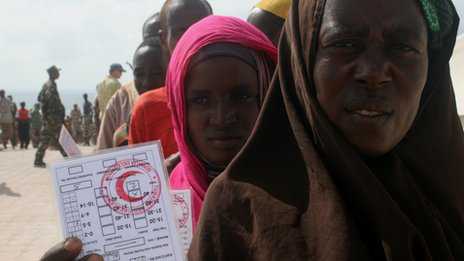
    “We’ve had no security problems yet,” said Alper Kucuk, deputy head of the Turkish Red Crescent delegation to Somalia, as we toured the camp surrounded by our own guards and a contingent of soldiers provided by the local administration.

    “We have 2,100 tents for 12,000 people. Somalis treat us like their family and we are sure that anyone who has the willingness to do something for them will be very welcome,” said Mr Kucuk.

    “Start Quote

    The Turkish aid is setting a lot of pace ”

    Killian Kleinschmidt UN official in Somalia

    Will London conference help Somalia?

    In the months since the militant Islamist group, al-Shabab, was finally pushed out of the city by African Union soldiers Turkey has emerged as the most visible foreign presence in Mogadishu – if you discount the green armoured cars belonging to the AU force (Amisom), which still growl their way through the busy streets.

    While most foreign organisations remain cooped up at the heavily guarded Amisom base by the airport, some 200 Turkish nationals are now living and working in the city on a variety of projects, ranging from construction to logistics and aid.

    “They are our brothers” is a common reaction from Somalis when the Turkish are mentioned.

    “While some talk, they act,” was how a man called Aden put it to me.

    He said he had recently returned from Canada to help the reconstruction of Somalia.

    So why aren’t other countries, or the United Nations, more active, and is it fair to criticise organisations for taking big security precautions, given the number of aid workers who have been killed in Somalia over the years?

    “They could do more,” said Mr Kucuk simply.

    Boots-on-the-ground approach

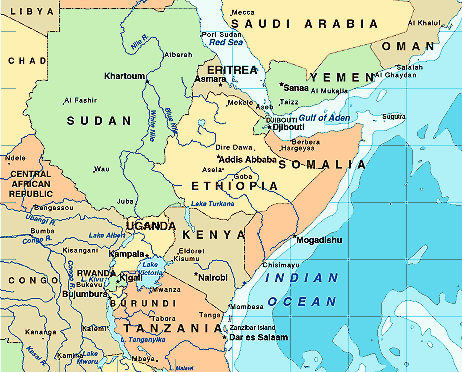
    Map

    The UK’s new ambassador to Somalia, Matt Baugh, still based in neighbouring Kenya, acknowledged that “the Turkish have shown what it is possible to do operationally”.

    “They’ve brought a really strong political force to bear. They’re intimately involved – a real force.”

    Turkey’s boots-on-the-ground approach is having something of a catalytic effect on the aid community.

    “The Turkish aid is setting a lot of pace,” said Killian Kleinschmidt, the UN’s deputy humanitarian co-ordinator in Somalia.

    He acknowledged that organisations with Islamic backgrounds “can move better than we can”.

    “It’s a constant challenge for all of us to adapt [to the changing security situation],” he said.

    “We are now making dramatic steps in recent days to enhance our mobility. Some organisations are slow. Some are faster.”

    The humanitarian needs here remain considerable, with hundreds of thousands of people dependent on outside aid and living, in Mr Kleinschmidt’s words, “just above survival”.

    The improved security environment in Mogadishu is an opportunity to be seized, but the toughest challenge remains to find ways to reach out to those suffering outside the capital, in areas still under the control of al-Shabab.

    via BBC News – Turkey – Somalia aid pioneers?.

  • Pretoria teen deceived into sex slave scam

    Pretoria teen deceived into sex slave scam

    Johannesburg – A Pretoria teenager said she was deceived into becoming a sex slave by a dance company which offered her a job in Istanbul, Turkey, according to a report on Friday.

    Imogen Adams, 19, was allegedly offered the opportunity by a Germiston-based dance company RT Concerts, The Star newspaper reported.

    “We were told that we were going to dance in several shows and that it would be at hotels where we would work on six-month contracts.”

    That was not the case once she arrived in Istanbul, Adams told the newspaper.

    “Within days we were given a new contract which we had to sign. We were told that we had to do ‘hosting’ at the hotels after the shows and that it had to be with men who came to the shows.”

    The hosting involved “entertaining” the men.

    The men would watch the show and choose who they wanted to be with.

    “We had to dress up and make the men want us,” Adams said.

    Adams told the newspaper that when she wanted to leave, she was threatened. After making contact with her mother through the South African embassy, Adams returned to South Africa.

    RT Concerts managing director Tanya van Rie denied the allegations, The Star reported.

    “Never in a million years would we do something like this. We have a name and reputation to protect,” Van Rie said.

    “Those complaining are complaining because they were fired, which happened because they have problems with authority.”

    – SAPA

    via Pretoria teen deceived into sex slave scam | News24.